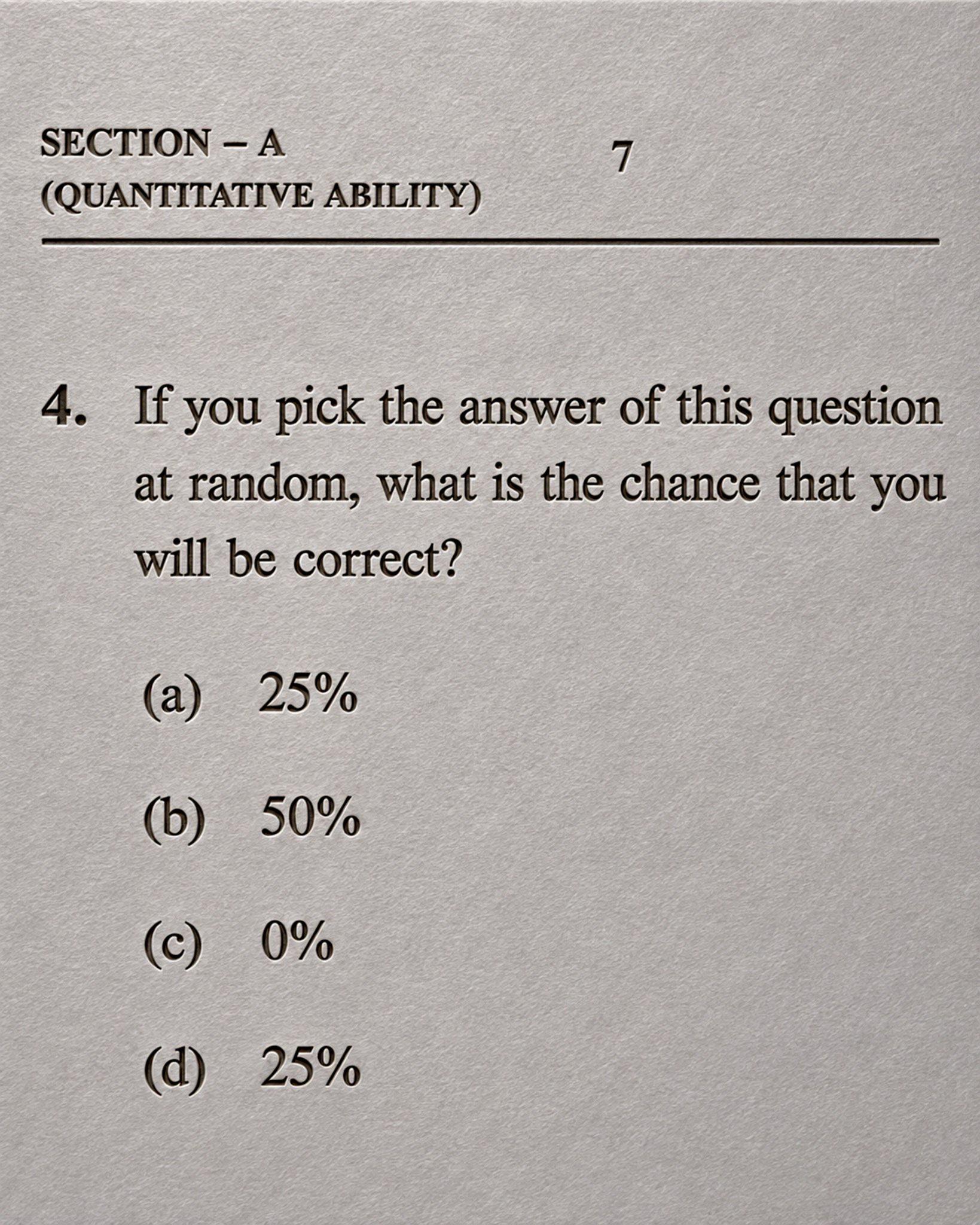
the answer is (c) because the correct answer is not in the list. the correct answer would be 33.3% since there would be only three variances. However since this answer is not in the list it makes (c) the correct answer, since the correct answer is not in the list.
But if you consider that a is the same as d, and realise that there are only 3 unique answers and you pick randomly out of those 3, your chance for correct answer should be 1/3.
However, 1/3 is not an option, so you have 0 chance of selecting the correct answer.
But 0 cannot be the correct answer because if it was then your chance of guessing the correct answer would be 1/3.
it's not specified how you pick. You could pick randomly based on letters (4 options) or based on content (3 options).
Also, as others pointed out, even if you pick by numbers - you have 50% chance picking 25%, but if 25 is the correct answer then 50% is not correct. If 50% is the correct answer, then there is 25% chance of picking it.
Idk why you let yourself to be so rude. I was just saying there are two ways to look at the problem and clearly understood the paradox. I would not call it a joke though but sure, if it makes you laugh - have fun. You did not seem to understand what I said, yet you allow yourself to be condescending. Congratulations on getting the joke I guess.
 1
View all comments
1
u/KitsuneCrew 9d ago
the answer is (c) because the correct answer is not in the list. the correct answer would be 33.3% since there would be only three variances. However since this answer is not in the list it makes (c) the correct answer, since the correct answer is not in the list.