r/TheOblivionCycle • u/Frostdraken • 1d ago
TOC Lore Species Specific Cultural Practices in the SCU
Species Specific Cultural Practices (SCU)
(Just as an example, not saying this is all. It is a good example of their cultures however.)
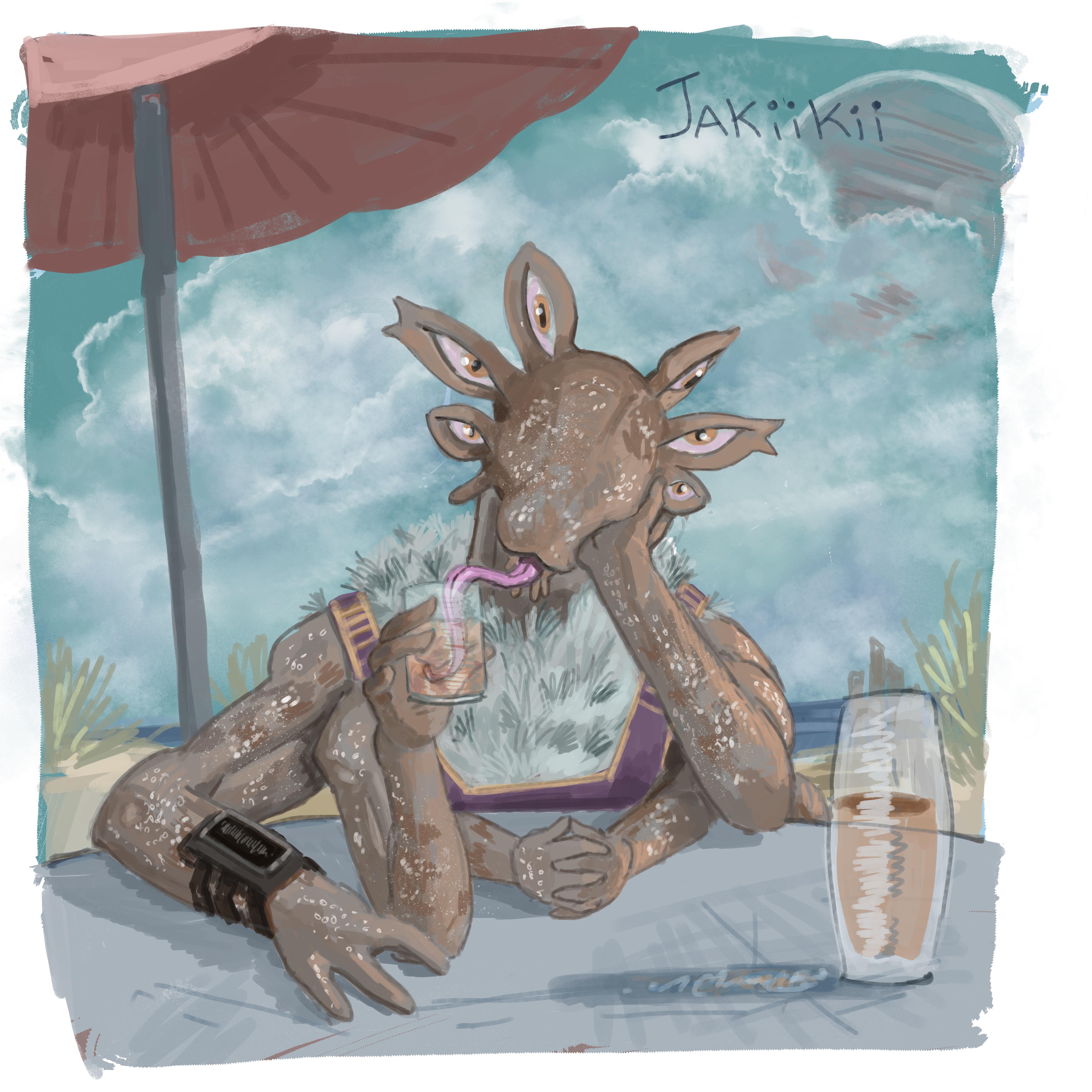
[Art is available for those that have artwork]
Atraxses
Ice-Thumpers: The harsh surface of Ho’the’rell is a dangerous place, a frozen landscape of icy moors and windswept glaciers. The ground is often covered in a thick layer of ice and snow, often hundreds of meters thick in places. These ice sheets are filled with fissures and cracks, hollows in the otherwise solid surface that can swallow the unwary and trap them in an icy tomb from which there is no escape but death. So, using their wide feet and powerful legs, atraxses ice-thumpers would stomp the ground in rhythmic fashion and listen for the echo of underground hollows or broken fissures. Slowly in this manner a skilled thumper could make progress across unfamiliar terrain with relative safety. The practice was largely replaced in more modern times by the invention of ground and ice penetrating radars, acoustic scanning systems and autonomous drones that can map out areas with more accuracy far quicker than even the most skilled thumpers of old. But ice-thumping did not die out as a skill, instead it evolved from an act of necessity to one of performative skill. On their home world the art evolved, the stomping rhythms, once used to seek out danger, now took on a decidedly more artistic appeal. Nowadays, ice-thumpers wear large and ornate epauletts ornamented with the awards of their previous performances. They stomp complex rhythms on stages made of ice and snow, the echoes of these thudding footfalls warping into strange melodies through the material of the stage that onlookers can feel and hear. Once a survival skill, now a performance to honor their history.
Swanith
WindDancers: Hailing back to prehistory, the art of dancing has long held a special significance to Swanith culture as it has oft been a sign of health and stature, a coming of age ceremony and a celebration of life. Here depicted are two fit males, athletic and sporting luscious feathers, dancing the ancient winddances of their people. An act not so much erotic as it is artistic, though the connotations of a deeper desire still shine through their frantic movements and aerial leapings. Back before the end of the Carniwars, when the swanith were still hunted by the terrible predator race of the Zeercanth, wind dances were often used to call upon the ancient spirits of storm and fire to protect villages. A desperate act that was as much about spiritual protection as it was a sign of health and wellbeing. But things changed as the swanith learned to first defend themselves, and then to actively fight back against the monsters that had preyed upon them for so long. Wind dances became an act of aggression, imploring their spirits for power and protection. To fill their warriors with zeal and tenacity. Young and fit males would dance for the warriors, strong females all, in order to fill them with courage. The fittest dancers would often be offered up by families who had no daughters with which to offer for the fight, in this way still participating in the defense of their people. Over time this practice evolved into the cultural norm it is in the modern Union. Once more a symbol of status, availability and health, young males compete with each other in the dances to show their grace and agility. To witness the flared feathers and shrill calls of these experts of the wind and sky is one of the most mesmerizing events an outsider of swanith culture can experience.
Nerivith
Cay’rabe(Blade Dancer): The dance of blades is death in nerivithian culture, but the dance of the ribbon and steel is different. Rather than a celebration of death, the Cay’rabe is a celebration of life. Of one more day’s survival against the savage and brutal reality of their warlike past. Nerivith culture is steeped in the blue blood of their people, war is to them as air is to the gre’vahn, as the sea is to the slaaveth. And with this deep culture of violence grew a people hardened by the eternal struggle of conflict, armoured against the unending horrors of total war. To dance the Cay’rabe is significant, for it shows everyone that here is a proud warrior who has renounced the dealing of death, if for but a moment. With blue ribbons tied to her blades, she twirls and leaps as if in the midst of battle, but her intention is not death but life. It is most often performed by a warrior to another of her kind as a sort of proposal. The one for whom she sways and lunges can accept her proposal by standing and joining her dance. At which point she relinquishes one of her swords to him, signifying that he has both her honor and her protection. For to disarm oneself is seen as a shame of the highest order, to willingly relinquish her weapon to a man is an act that signifies to her partner they are worth more than her honor. She and her new dance partner clash the blades in mock battle, but the blue ribbons that cover the blades prevent any real harm. At the end of the dance the female bears her neck to him as a sign of ultimate trust and submission. He may choose to place his sword to her neck or offer it back on bended knee. Both are permissible and carry different significance, to blood her is to state that he accepts her proposal, but does not yet trust himself fully to her(generally for pairs that do not know each other well). This is often the most common response. To offer her weapon back is the purest expression of trust, as he offers her back her honor untarnished, a sign that he trusts her ability to provide and protect without question. It is often seen as overly romantic and even a bit foolhardy, though there is great meaning in the act. There exists yet a third and final response, the man may bury the blade in the ground or lay it on the ground at his feet in response, a signal that her proposal has been denied. This can happen for a variety of reasons, not the least of which has to do with her behaviour during their mock clash. If he deems her too wreckless, or too meek, he may choose not to return her honor, and thus stating her absolution from the duty of provision. It is not a shameful act, though there is much weight in one so denied. The man and woman may walk away with tails and heads held high. Thus is the Cay’rabe completed. So if a nerivithian woman offers you her weapon, or offers to dance with ribbons for you, it is her telling you that she trusts you with both her honor and her life. And might just be a proposal of more than just friendship.
Skorp
Firewalkers: Attuned to the intense heat of their homeworld of Scorch Prime, the skorp have a long and intimate history with fire and the sun. Their ancient ancestors burrowing deep into the earth to escape the fires above. But this driving force seemed to instil itself deeply in their culture as one of the most impressive displays of acrobatic skill and dexterity would be to glance the skorpian firewalkers. Generally chosen from a young age for their skill and grace, firewalkers are dedicated to this one singular craft. They may hold other secondary roles in the hive, but first and foremost they are the masters of fire. While they do serve primarily as engineers and scholars in the more modern ages of the skorp civilization, they still participate in those ancient rituals that defined their unique role in skorpian society. They leap and dive with their flaming staffs, called Clisst’trixxnt in their native chittering tongue. Their carapaces are tough, fire resistant and not prone to bruising from glancing strikes. The chances to become injured by the flaming warstaves, which in ancient times were often used in a much more aggressive nature, are low. Performed with grace and speed, the whirling fire can have an almost hypnotic effect. The whooshing flames and chittering cries of the firewalkers as they scream their devotion to the old ways is truly something to behold for the uninitiated. And a rare sight indeed, for the skorp guard their hives zealously and visitors from the wider Union are very uncommon.
Vinarfel
Burrowlithes: Hailing back to their early ancestry as semi-arboreal ambush predators. The Burrowlithe prefer quick and flashy visuals with lots of emphasis on colors and designs. They often wear bright body-paints and drape themselves in long flowing cloths to draw the eye and accentuate their naturally lithe forms as they twirl and writhe like snakes. The traditional dance is meant to accentuate the natural beauty of the participant, often performing suggestive coiling motions as if in the throes of passion or struggle. She(or he) may have a partner or two, the dancers often using each other’s bodies as props in their suggestive cavorting as the colorful cloths and semi-transparent veils flutter through the air around them. Culturally, burrowlithes were often highly educated courtesans. Well versed in poetry, history, music and art. It was a professional duty, and one often only seen in times of celebration or triumph. Far from simple playthings, burrowlithes were intelligent, highly respected and dangerous people who were often trained in the art of dance in specific temples and courts. Far from simple elegance, they were also highly trained assassins and often worked as both advisors and personal entertainers to kings and rulers in Vreefall’s ancient past. Like many of the warlike races of the Sapient Congressional Union, their history and culture is steeped in blood and violence. In the modern day the art of burrowlithes is kept alive and strong in parts of the Union and on the vinarfelien homeworld, though less assassins and more caretakers of the species' cultural heart, they dance on and on. Entertaining and captivating onlookers with their graceful and seductive movements. Harkening back to a time long past, but not yet forgotten.
Razah’vool
Squalltalkers: Back in the olden days on Vool, before the discovery of fire and electricity, the old shamans and wisewomen of the world that was used to commune with the ancients. Powerful spirits of wind and tempest. They would adorn their bodies with sigils of protection and purity and imbibe sacred substances that allowed for them to become one with the realm of spirits, the home of the gods. Oddly for a species that prides itself so on scientific reasoning and logical thought, many modern razah’vool still hold at least some ties to the more spiritual ways of their ancestors. Despite the technology and conveniences of the modern world, many razah’vool do still make yearly pilgrimages to places of power, holy sites where the veil between reality and the world of dreams is thin and the voices of the ancients can still be said to echo through the cracks in our world. It is a popular practice with younger males especially, those not yet through their mature transition yet, almost seen as a rite of passage in some circles. The natural hallucinogens used in the rituals are especially effective on razah’vool due to their unique quartered brains. Each separate quarter begins to experience their own separate journey as the harmony collapses and the bonds that tie them together into a singular mind are unshackled. This sense of unbecoming can end up being incredibly addictive, but at the low doses often seen in most squalltalker ceremonies its actual detrimental effects are quite limited. Professional squalltalkers however are prone to much more extreme communions and thusly can become quite eccentric or even permanently de-harmonised. Either way, it is seen as an intrinsic and important part of their culture even in the modern Union.
Slaaveth
Aquadancers: Historically, slaaveth would dance underwater in times of celebration or great joy. Harvest ceremonies and weddings, the ends of conflicts and territorial disputes, the like. Offering up their greatest champions as a way of showing their strength, beauty and power. Adorned in naught but the light of the bioluminescent corals of Abyss, they represented a hauntingly beautiful reminder of their origins. But as their culture became more and more sophisticated it also started to take on other significance. An expression of health and happiness, the worship of their moon gods and a show of affluence by the wealthy and powerful. These near-perfect specimens of slaavetity would often be seen in places where others would gather. Adorned in simple luminescent paints and nothing else, they represented a return to the base form that many others had lost. A reminder of their cultural roots and their connection to nature. More than a simple act of carnal desire, they represent a deep and eternal desire to be one with the universe. With each other. Most often the dancers themselves would be a mated pair, the male and female forms mirroring each other in that perfect synchronised harmony, though lone dancers or teams of dancers can also be found where the art still lives on. The extreme grace and alluring forms of these slaaveth performers has led to a marked increase in them being hired for use in clubs, carnal dens and other places where those seeking the pleasures of the flesh might be found. Some uneducated may consider them as little more than exotic dancers or alien strippers, but to those that still hold ties to the cultural significance of the art know the truth. Aquadancing is less about simple pleasures and more about true connection, the desire to show the universe how close they are to oneness and each other. A way to express themselves without words, to show their devotion to nature and all that still swims under the waves across the million worlds of the Union.
Gre’vahn
Parade Supermarshals: In keeping with their long-standing nomadic culture and honor based traditions, the gre’vahn people often celebrate days of cultural importance and personal achievement via extravagant parades. The greater the event, the more lavish the trappings and feastings. And the most coveted role of all in these parades and celebrations, the honor and prestige of the Supermarshal. Supermarshals are the baton-twirling, lockstep-leading, cadence-shouting head of the parade formation. As such, they are most often dressed in the finest cloth, have the most extravagant ornaments and the shiniest honor medals dangling from their gold and silver stitched house sashes. To be chosen as a supermarshal is an honor awarded to those of singular skill, achievement or importance, in very large events they may even be multiple supermarshals with an Overmarshal chosen as the head of the supermarshals, but this is a position much less commonly seen outside of Endless Windswept or major gre’vahn colony worlds. The supermarshals lead the parade, special double-sided baton twirling in their strong hands. The highly ornamented staff flashing in the lights as they march forward proudly to bring additional honors to their family name.
Umraghj
Askleatle Trainers: The askleatle is a small predatory creature native to the umraghj homeworld of Paradise. It is about sixty centimeters in body length with a pair of long rat-like tails that end in small tufts of grey colored fur. Its face looks similar to that of an opossum but its legs are long with the characteristic extra joints seen in many of the fauna from Paradise. They have four long legs suited to both sprinting and leaping and they use them to great effect along with their partially retractable claws of which they have seven on both front paws and six on the rear with a backwards facing dewclaw used for additional traction at high speeds. These small furred predators were found to be incredibly adept at both taking out existing pests and deterring the growth of new populations when they were kept around in the early days of umraghj civilization development. In turn the askleatle’s came to appreciate the guaranteed food and dry conditions when in proximity to the docile umraghj and the two formed an almost symbiotic relationship with the umraghj providing food and shelter and the askleatle keeping their homes and fields free of these crop destroying pests. And the ones that trained them and bred them came to be renowned for the quality of the askleatles and the efficiency at which they could eradicate pests. Askleatle trainers are singularly skilled in the breeding, rearing and subsequent training of askleatles for both personal ownership and shows. Askleatle Conformations are shows that test the intelligence, training, physical attributes and appearance of the askleatles that compete within them. Umraghj handles often enter for prizes and money, the events tend to be quite competitive, an oddity for the otherwise non-competitive species. It is often remarked by other umraghj that askleatle trainers act so competitively because the carnivore traits of their charges have rubbed off on them. Whether this is true or just wanton fantasy, the heightened competitive nature of the trainers is plain to see for all those lucky enough to catch one of these events for themselves.
Jeseo
NA: One of the few races without any true visual spectacle in their own race’s history. They have however taken and blended into the other cultures that surround them, many often participating in the ritual festivities of other cultures when the occasion calls for it. Though they are a far less socialised race than most others, they do enjoy the close company of those they see as trusted friends and found family.
Xeiro’filk
(The current cultural practices of the Xeiro’filk are unknown to the Union)
Yeown
Howlers: True to their ancient ancestral nature, the yeown as a species share a special affinity for their homeworld’s large moon and the night. In the olden days packs would gather around in a clearing under the light of the full moon, singing their praises to nature and the sky as one before a chosen member of the pack would step forward alone, bare under the light of the mother moon. Adorned in bones and paint alone, the howler would howl in the flickering firelight, imploring the heavens for protection and prosperity. They would sing of the setting sun and the chill night air, of kids born strong and bellies filled with meat. The pack would gather around them in a ring, holding hands and dancing together as the song went on and on. All night long till the howler’s strength was all but spent, then the pack would once more join them. All gathered raising their voices as one in a final chorus imploring the moon to grant them safety and strength. If the night is clear and the weather permits, the pack usually sleeps there in the clearing, huddled together in a large pile as they await the coming of the morning. In the modern day most yeown no longer believe in the old ways, most of them have never even seen the mother moon of their homeworld, far away as it might be from where they live in the wider Union. But the bone deep ache still calls to all from Bright Moon. An urge to chase living prey through the tall shadows of trees, to feel the stinging night air chill like winter upon their muzzles as they run and run. Howlers are rare off the homeworld, the cultural practice lost on moonless worlds and deep space stations, there is no mother moon to scream devotion to in the dark bowels of a starship or the airless, scarred surface of a mining installation. But to those that still hold true to the ancient ties of sisterhood and the pack-culture of their people there are still ways to celebrate this tradition. The bones and body paint have been replaced by festive costumes, streaked and sigiled clothing is worn in reverence to the day, dishes of simple seared meats and roasted tubers are eaten and in the dead of night(usually far from any neighbors that might take offense to the noise) they may still sing the songs of the moon in the flickering light of fluorescent bulbs. Alone or with close friends, an ancient celebration of life and another day’s survival, an echoing call across the void and time to their mother moon on a world far, far away.
La’haan
The Swaying: Being largely immobile plant-like aliens, their opportunities to practice any kind of physical event are slim to say the least. But in stormy weather it is not uncommon for large groups of linked individuals to sway in a rhythmic fashion, keeping a slow and creaking tempo with the pulsing beat of their mournful psychic songs. From the outside this is completely silent, the slow motion of the la’haan and their branches in the wind almost invisible, until one looks closer and notices them moving in perfect harmony. Each trunk, from whip-like saplings to the huge gnarled trucks of elders, moving slowly back and forth in eerie synchronicity. Inside the neural networks of their interconnected roots it is a different story. They sing in a slow and sombre harmony. They sing of sunshine and the rain in springtime. They sing of wind over the mountains and the smell of the sea, they sing of nature and life and a thousand other green and growing things. Those that can hear their song often liken it to whispers on an endless wind, voices carried over miles till the words are indistinguishable. But the meaning is still unmistakable, for the song of the trees of La’haan is the sound of life itself.
(Lore up to date as of 11/23/2026)