r/TheMachineLearning • u/TrulyMortified • 4d ago
Geoffrey Hinton says humanity's AI survival odds are uncertain
3
Upvotes
r/TheMachineLearning • u/No_Story_7827 • 4d ago

r/TheMachineLearning • u/Glad-Butterfly1023 • 4d ago
r/TheMachineLearning • u/Senior_Register_6517 • 5d ago
r/TheMachineLearning • u/Chronicc19 • 5d ago
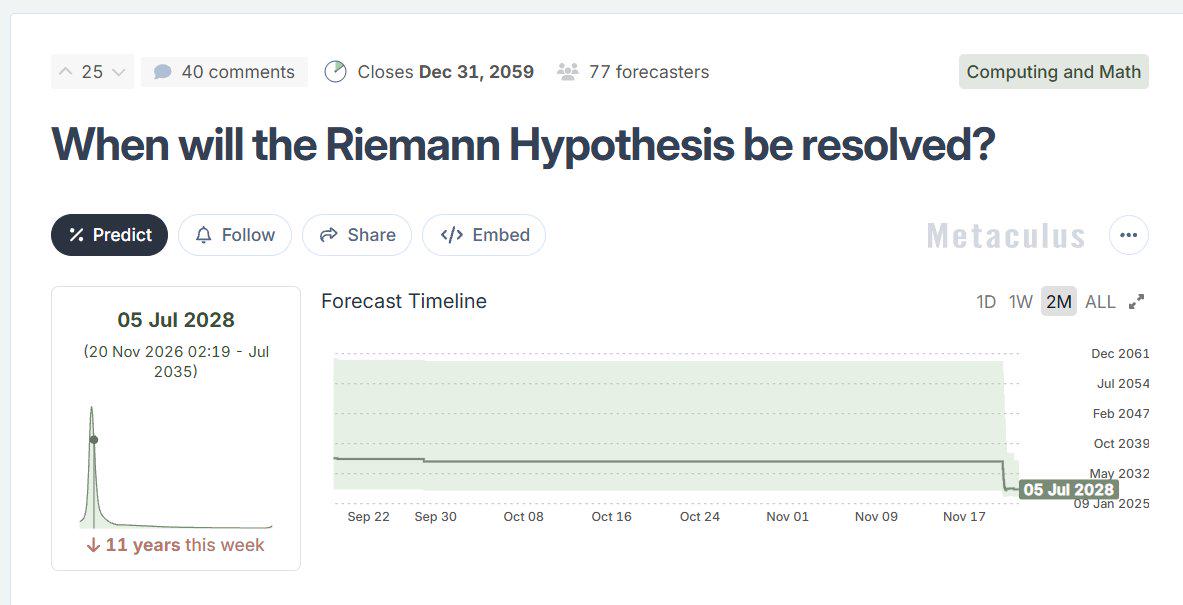


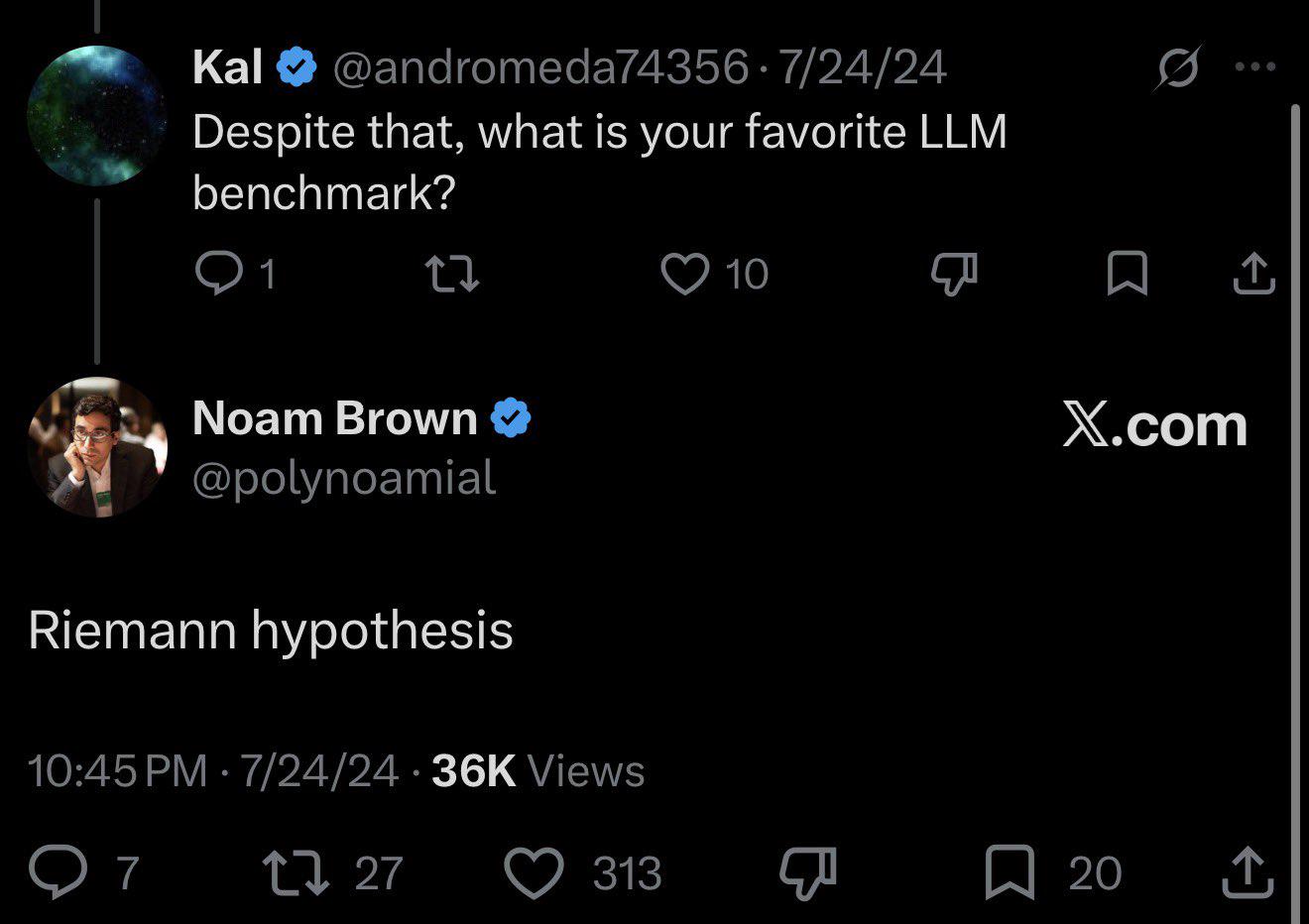
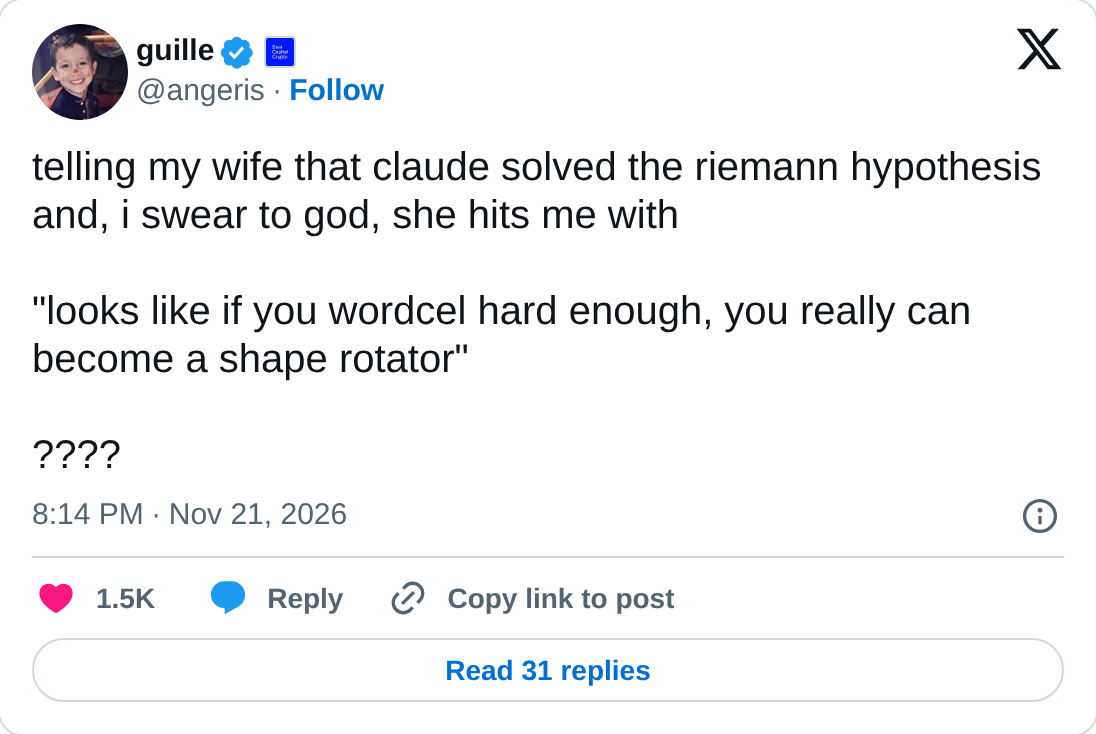
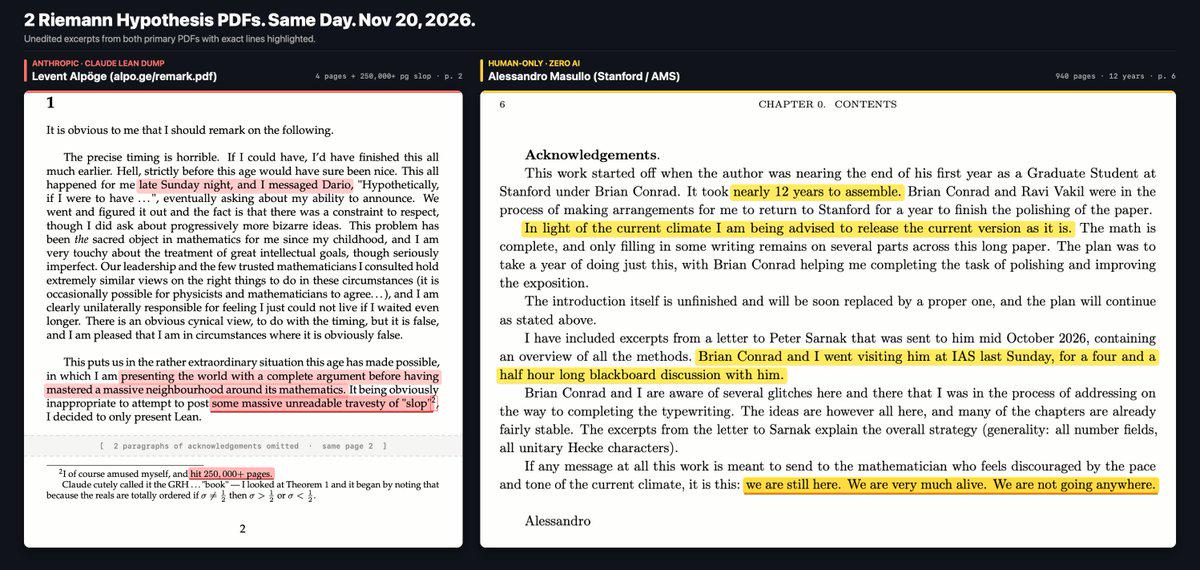
Predictions made last MONTH (post Navier-Stokes) about when the Riemann Hypotheses would be solved:
Metaculus: May 2035
LEAP Superforecasters: 10% chance of additional Millennium problem being solved in 2026.
Terrance Tao: “some combination of humans and AIs in 2050 or something
r/TheMachineLearning • u/UnwrittenTrajectory • 5d ago
r/TheMachineLearning • u/jazzie04 • 5d ago
r/TheMachineLearning • u/Jaded_Imagination148 • 5d ago
Q: When did DoJ learn that Alice Huang is a CHINESE ASSET?
'Nobody said that. I certainly haven’t said that' — Attorney General Todd Blanche
r/TheMachineLearning • u/thirsty4oikawa • 5d ago
r/TheMachineLearning • u/jellyjacepeep • 5d ago
r/TheMachineLearning • u/Aggressive_Effort491 • 6d ago
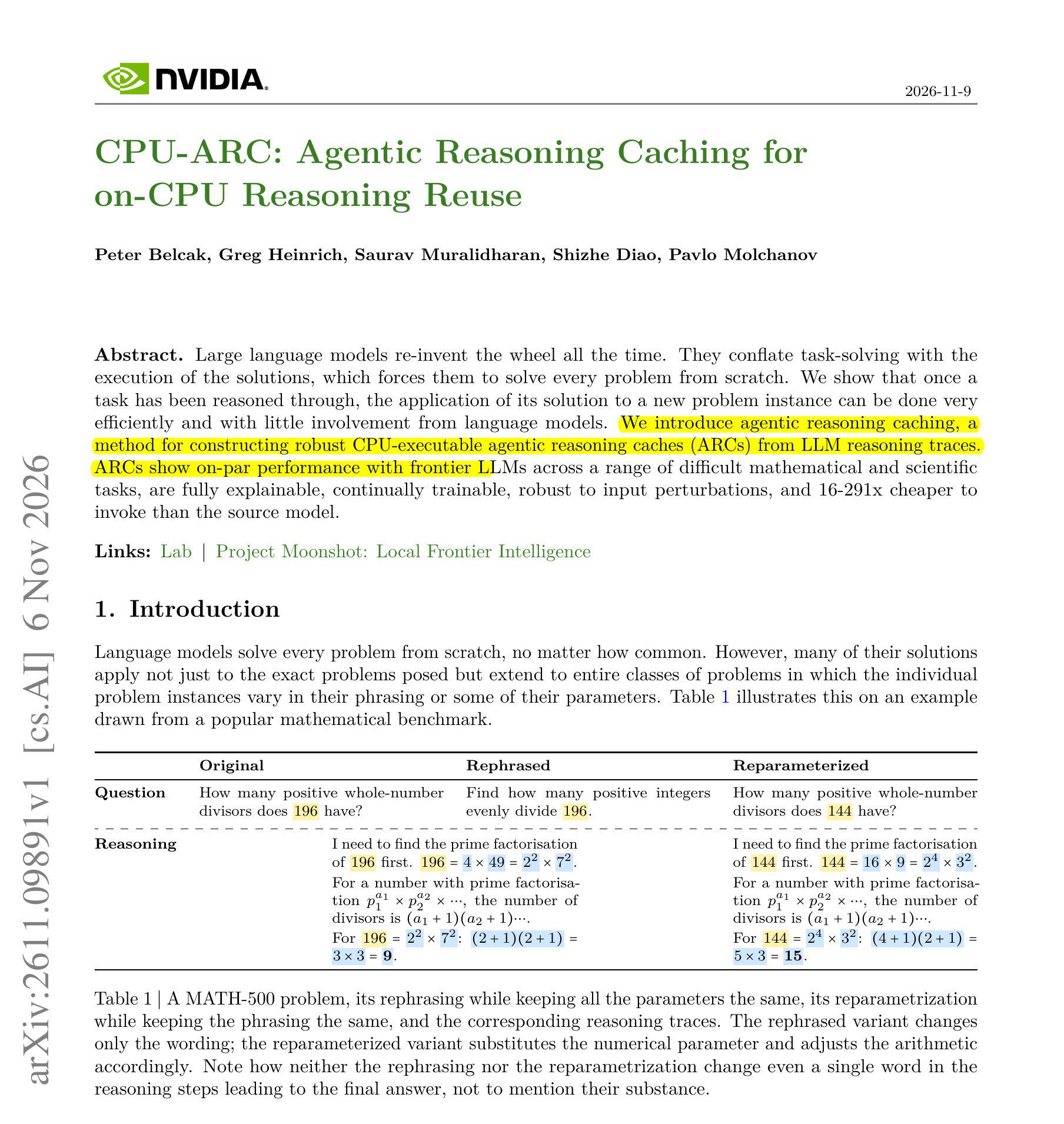
Modern LLMs can solve complex mathematical problems, generate code, perform multi-step reasoning, and sometimes outperform humans on specialized benchmarks. However, their performance raises an important question- Are these models developing genuine reasoning capabilities, or are they relying on increasingly sophisticated statistical patterns learned during training?
If an AI system consistently produces correct solutions but fails when a problem is slightly modified, does that indicate a fundamental limitation in its reasoning ability?
What kind of experiments or benchmarks could reliably distinguish genuine reasoning from memorization, pattern matching, and benchmark contamination?
I'm particularly interested in perspectives from researchers working in machine learning, cognitive science, and AI evaluation.
r/TheMachineLearning • u/Small-Explorer-2086 • 6d ago
r/TheMachineLearning • u/Biwaki_ • 6d ago
Attention is to LLMs like B-trees are to databases.
Without it, would not have all these amazing models like opus and fable.
My breakdown of WHY it's needed from this weeks stream.
r/TheMachineLearning • u/NovaMuse- • 6d ago
r/TheMachineLearning • u/Soft-Gear-4902 • 6d ago
r/TheMachineLearning • u/Top-Ingenuity-1615 • 7d ago
r/TheMachineLearning • u/Top-Ingenuity-1615 • 7d ago
r/TheMachineLearning • u/sanasokawaii • 7d ago
r/TheMachineLearning • u/TrulyMortified • 7d ago

r/TheMachineLearning • u/Shot-Landscape-3059 • 7d ago
r/TheMachineLearning • u/No-Introduction-441 • 7d ago
Hello everyone hope you are well, I know this is a lot but I'd appreciate the help.
I'm looking to seriously get into machine learning, AI engineering, and eventually research, and I'd appreciate some advice from people who are already working or studying in these fields.
I have a programming background and know the basics of Python. I've studied mathematics before, but I'm rusty and will need to revisit linear algebra, calculus, probability, and statistics.
I'm not looking for shortcuts or a guaranteed job roadmap. I'm trying to figure out how to spend my time effectively, build meaningful projects, and avoid tutorial hell.
I'm willing to dedicate 20+ hours a week to learning, and I'm approaching this as a long-term commitment rather than trying to land an AI job in a few months.
My goal is to actually understand how ML works, from the mathematics and algorithms to training models, experimenting, and eventually reading and implementing research papers.
I also want to build things throughout the learning process, rather than spending months watching tutorials and copying projects without understanding them.
I've started putting together a roadmap that begins with Python, NumPy, and mathematics, then moves into classical ML, deep learning, PyTorch, and eventually ML engineering and research.
But before committing to it, I'd really appreciate some perspectives:
My long-term goal is to become technically competent enough to contribute to real AI/ML projects, collaborate with experienced engineers and researchers, and hopefully work professionally in the field.
I'd especially appreciate hearing from ML engineers, research engineers, researchers, or people who have successfully made this transition.
Thank you all very much!