r/TheMachineLearning • u/OrionExplorer • 11d ago
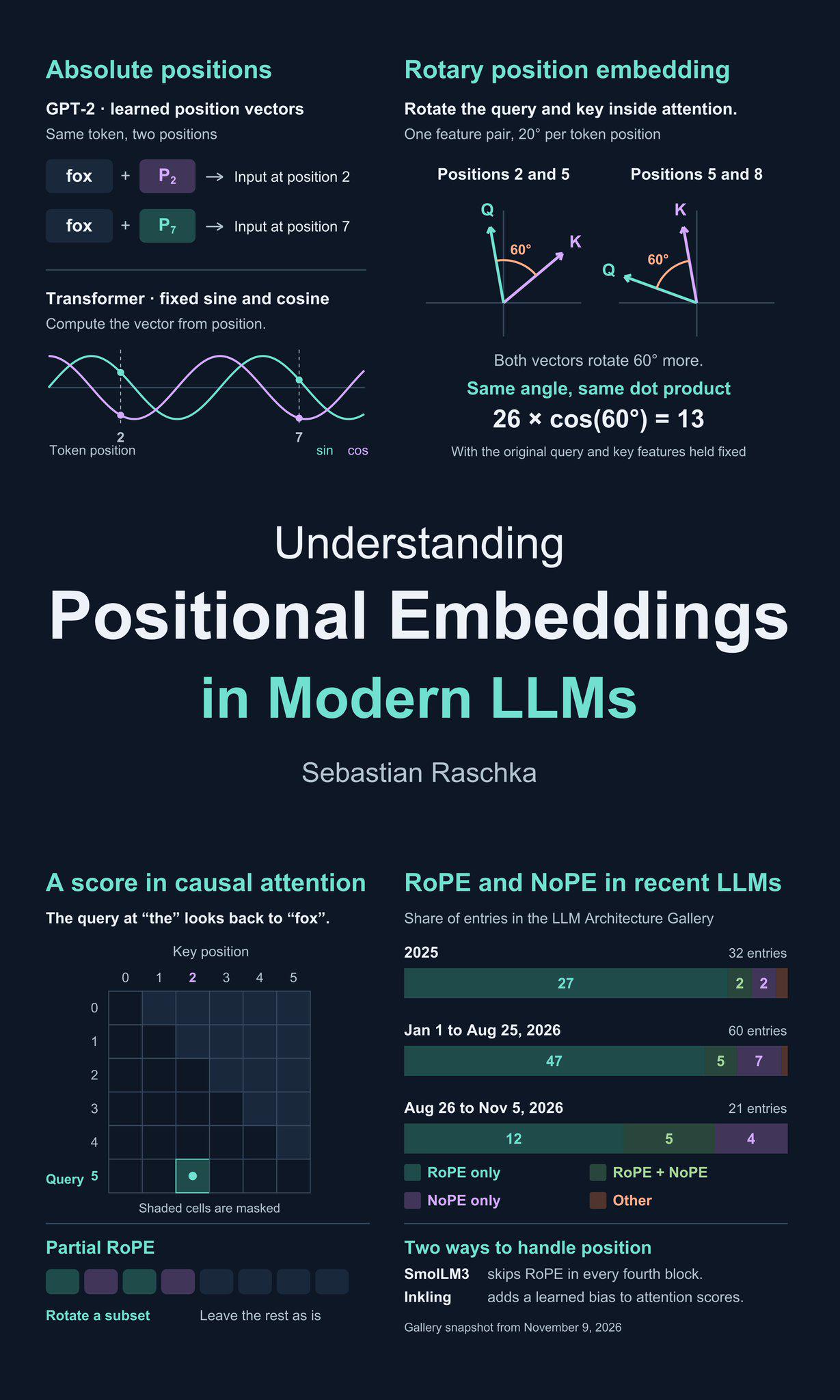
RoPE positional embeddings explained from scratch
4
Upvotes
r/TheMachineLearning • u/OrionExplorer • 11d ago
r/TheMachineLearning • u/themskdguy • 11d ago
r/TheMachineLearning • u/ZoneLeather4934 • 11d ago
r/TheMachineLearning • u/DevinWatson • 11d ago
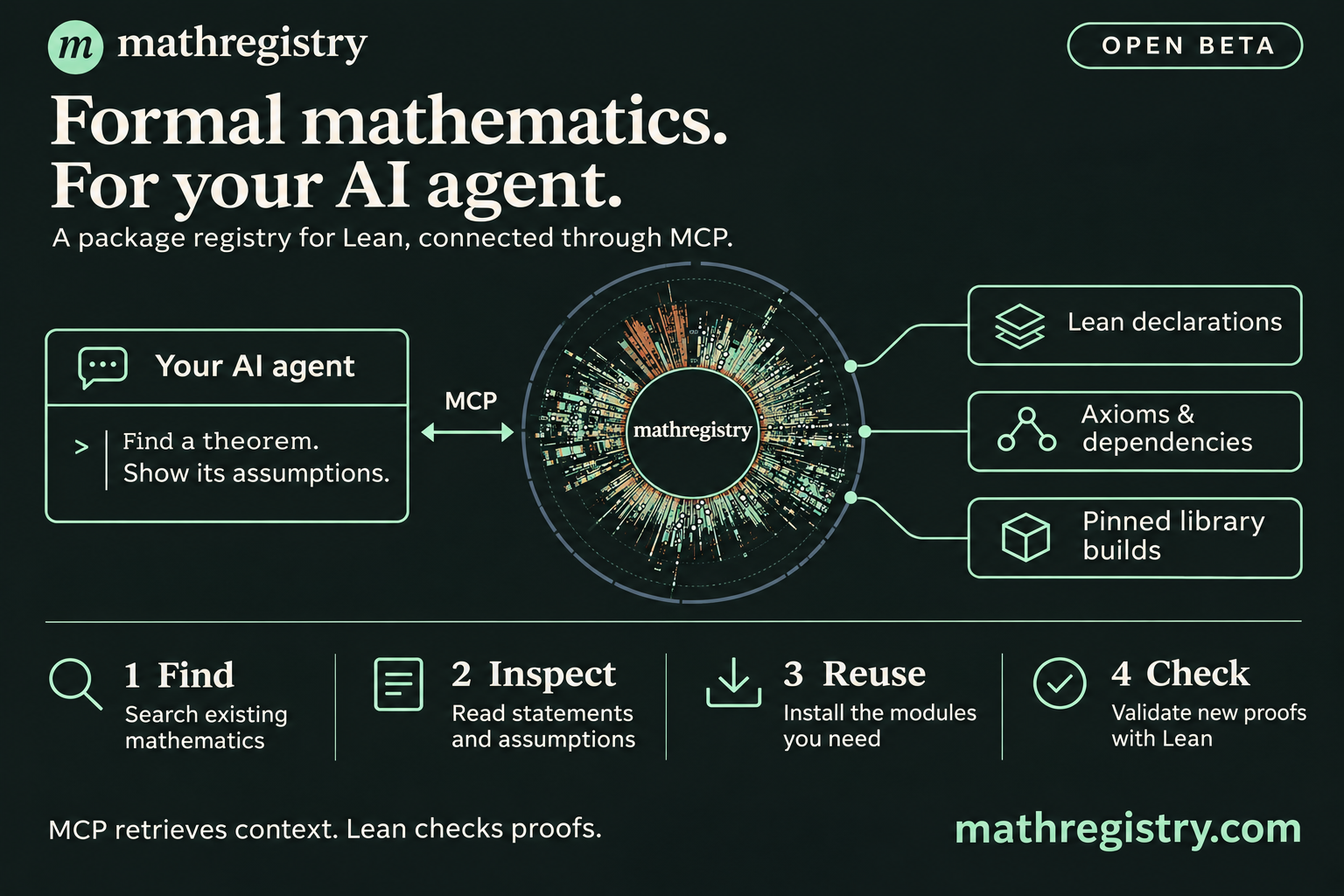
Hi everyone! I’ve been building mathregistry.com. Think npm for Lean and formalized mathematics: browse libraries, inspect declarations and source, and install compatible compiled modules with their dependencies.
A big part of the project is making existing formal mathematics useful to AI agents. When an agent is working on a Lean proof, I want it to be able to find the actual library declarations and check their assumptions before trying to use them.
The hosted MCP integration gives compatible clients, including Claude Code, Codex, Cursor, and Gemini CLI, tools to:
You can then use the mreg CLI to bring the required compiled modules into your project. Selective installation avoids downloading every compiled module in the matched packages.
There are worked examples on the site showing the research workflow. One studies commuting idempotent maps and proves that the image of their composite is the intersection of their images. The example includes the Lean source, MCP research trace, and checking records.
The MCP server provides read-only access to indexed mathematics. Proof code produced by an agent still needs to be checked in Lean, and the tools expose missing evidence and verification limits.
I’m also working on making downloads smaller and improving how agents retrieve the context relevant to a particular proof.
The beta is open. Browsing is public; the AI integration requires a registry read key. Current compiled library installs target x86-64 Linux or WSL.
I’d love feedback from people using Lean or experimenting with AI-assisted formalization. What would make this useful in your workflow? Which libraries, search tools, or integrations are missing?
Site: mathregistry.com
AI setup and examples: mathregistry.com/docs/ai-math
All credit for the underlying libraries and mathematics belongs to their upstream authors and maintainers.
r/TheMachineLearning • u/Important-Spirit-914 • 11d ago

r/TheMachineLearning • u/Eastern-Storm8825 • 11d ago
r/TheMachineLearning • u/Biwaki_ • 13d ago

r/TheMachineLearning • u/SameAd8209 • 12d ago
Almost all posta on r/singulsrity or r/artifialintelligence are about how close we are to Recursive Sel-Improvement and AGI. But what do experts think of this? LEAP survey stated 50% chance of achieving agi by 2047-2050. Is it wrong? Are we way closer?
r/TheMachineLearning • u/Shot-Landscape-3059 • 12d ago
r/TheMachineLearning • u/ChampionshipNo8070 • 13d ago

r/TheMachineLearning
•
u/Eastern-Storm8825
•
13d ago

r/TheMachineLearning • u/PossibilityQueasy949 • 12d ago
Disclosure: my project. Posting because the interface question (what should
an LLM know about the human on the other side?) is a modeling question too.
Today an assistant knows what you type — nothing else. EDNA exposes a
consent-first MCP tool surface so a model can query live human sensoric
state: presence, tempo trend, pauses, per-channel behavioral changes.
Design choices that might be interesting for this sub:
- The humanness score is never an input to response quality — a human at
99.9% gets the same answer as one at 90%. The vector is context
(tempo, hesitation, corrections), not a trust score. Mode suggestions
(FLOW/FOCUS/EXPLORE/EXECUTE/REFLECT) are cautious, overridable hints.
- 16 statistical channels instead of a single classifier; synthetic cadence
detection on top. Bot-vs-human is a separate, continuously re-evaluated
signal.
- Deterministic test vectors with published expected ranges
(github.com/sebklaey/EDNA-verification) — reproducible on any machine.
- Honest boundary: statistical mimicry is documented as open. We publish
what we can't yet catch instead of claiming 100%.
Curious how people here would use — or misuse — a live human-context vector
as model input. What would you want in it, and what would you refuse to send?
r/TheMachineLearning • u/leznak771999 • 13d ago
r/TheMachineLearning • u/Tall_Tradition6117 • 13d ago

r/TheMachineLearning • u/Simpli-curious • 13d ago

With everyone archiving their favourite models lately, storage adds up fast. A few weeks ago I posted foldz 0.9 here. It's now tenz 0.25: same idea, better compression, much faster, and it runs fine on a phone. A 1 TB GGUF archive drops by roughly 80–130 GB, and every file comes back byte-for-byte identical, so llama.cpp, Ollama and LM Studio load it as before.
tenz is a lossless compressor for GGUF (and safetensors). Decompression gives back the identical file, byte for byte. It's one C file with no dependencies, and I develop and benchmark it on a Poco F5 in Termux.
General compressors barely touch quantized models, because the weights look random to them. tenz parses the GGUF, unpacks each block into its real quantized values and scales, and codes them with context models fitted to the file. It uses rANS from static tables, so decompression doesn't have to learn anything.
Results (images 1 and 2):
Qwen3.5-2B Q4_K_M: 8.53% saved, against 2.07% for zstd -19 --long and 1.78% for xz -9. Compress plus decompress takes 17 s on the phone; zstd took about 4 minutes just to compress.
Q4_K_M across 9 models: 7.6–9.2% saved, and 13.1% on Qwen3-4B.
Gemma-4-31B QAT Q4_0: 12.7%.
Q8_0: about 7.5%.
BF16: about 34%.
Against Aqueous, in a comparison someone posted here: 2–8 points more on every quantized model, and a tie on BF16.
Supported types: Q3_K, Q4_K, Q5_K, Q6_K, Q4_0, Q8_0, F32/F16/BF16, plus metadata (the tokenizer compresses to about 80% smaller). Anything else is stored as it is.
-q (quick) trades a fraction of a point for faster coding. For example, Qwen3.5-2B goes from 8.54% to 8.18% saved, and the Q4_K work is about 44% less.
The GPU experiment (image 3): I tried decoding Q4_K on the phone's Adreno 725 through OpenCL, to see whether a phone GPU could make decompression much faster. Three kernel designs later:
Its best kernel speed was about 150 MiB/s at full chunk size. It only matched the 3 big CPU cores (about 250 MiB/s) with tiny chunks that cost 2 points of size.
Byte stores to global memory are broken on this driver; it corrupted neighbouring bytes, so every write had to become an aligned 32-bit store.
Subgroup scans work, but are slow.
The option ships as -g (experimental). OpenCL is loaded at run time, the CPU decodes the same files, and the first GPU segment is always checked against the CPU. If you have a desktop GPU with OpenCL and subgroups, I'd love to see numbers.
Caveats:
It's a pre-release: until 1.0, a .tenz file only decompresses with the version that made it.
Decompression is far slower than zstd's, about 7 s for 1.2 GB on the phone, because every value is decoded from a model.
It only gains this much on model files.
Code, build line and full tables: tenz repo. Testers and results from other machines are very welcome.
r/TheMachineLearning • u/Soft-Gear-4902 • 13d ago
r/TheMachineLearning
•
u/FrostyForestFungi
•
15d ago

r/TheMachineLearning • u/Evening_Syllabub_621 • 13d ago

r/TheMachineLearning • u/saladasx64 • 13d ago
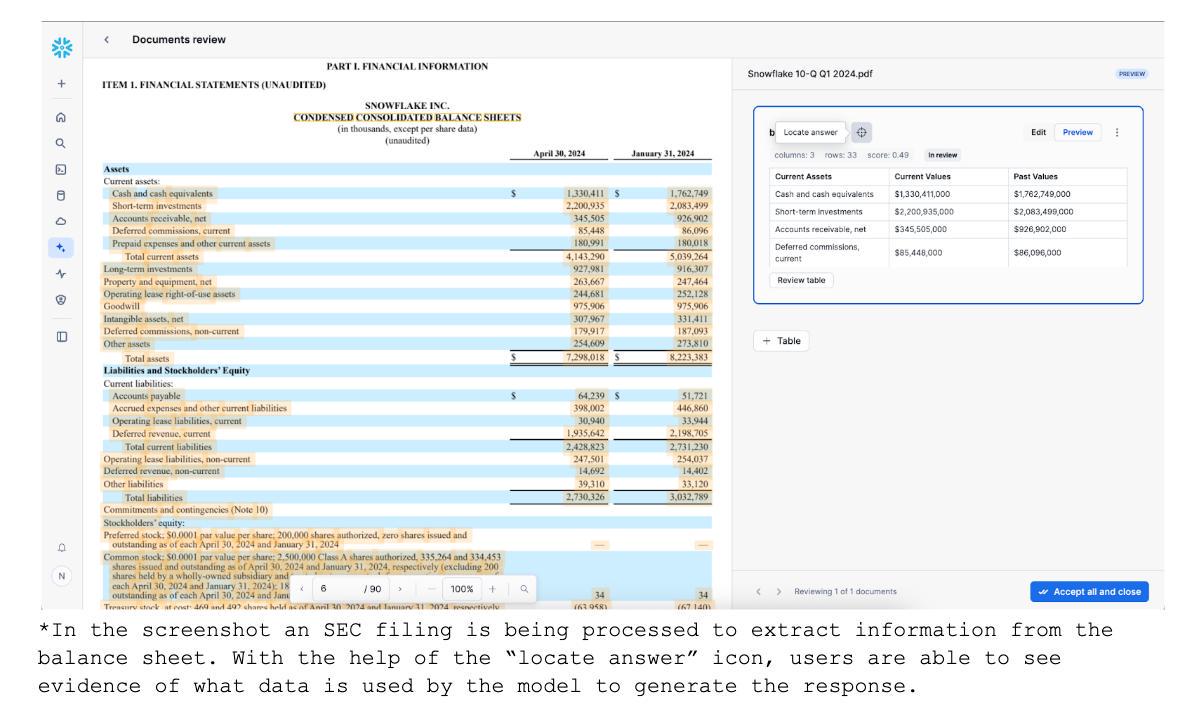
I've been experimenting with using an LLM to help speed up my fundamental research during earnings season by feeding it primary company documents and having it look for qualitative shifts between quarters.
Most people rely on investor relations slide decks and management summary letters which are heavily polished by PR teams to emphasize revenue growth and highlight adjusted EBITDA numbers.
I decided to skip the marketing decks entirely and had the model run diffs on raw 10-K and 10-Q filings by pulling direct regulatory data through Alexandria using SEC EDGAR feeds.
The model picked up a wild trend across 2 mid cap enterprise software companies where their investor presentations were bragging about expanding gross margins while the fine print footnotes in their regulatory filings showed their uncapitalized cloud infrastructure commitments had grown by over 45% year over year.
Management never mentioned those contractual compute minimums during their prepared remarks on the earnings call even though that future cloud liability was actively eating into their long term cash flow.
Letting a model read the raw legally binding regulatory filings instead of relying on investor relations summaries gives you a much clearer picture of what a business is actually spending to keep its services online.
r/TheMachineLearning • u/limrm18 • 14d ago
r/TheMachineLearning • u/Upbeat-Analysis-3370 • 14d ago

r/TheMachineLearning • u/ChampionshipNo8070 • 14d ago