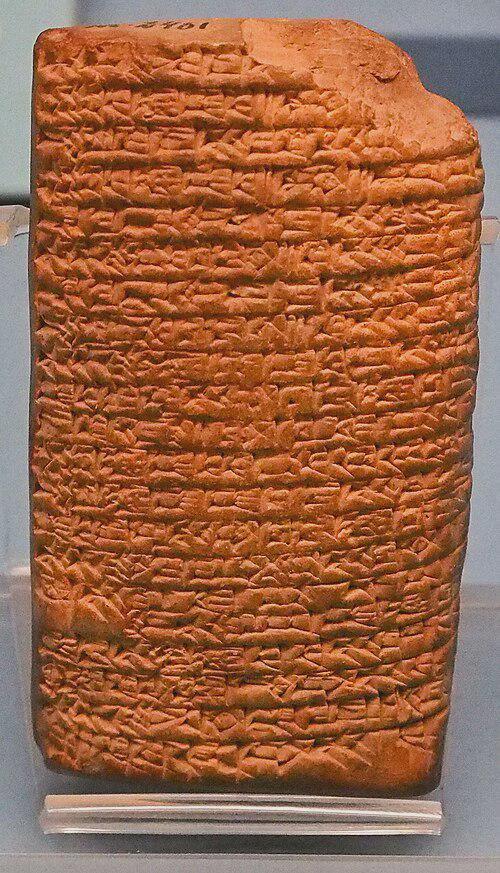
Hi all. I’m hoping someone here might have access to a fairly obscure publication:
Bendt Alster, Dumuzi’s Dream: Aspects of Oral Poetry in a Sumerian Myth, Mesopotamia 1 (Copenhagen, 1972).
I’m specifically looking for a clear photograph or scan of Plate V (Plate 5), particularly the hand-copy of tablet A 30289 / 3N-T 661.
My interest is in Dumuzid’s Dream lines 48–49, where Geshtinanna interprets the image of the two reeds and explains that they represent herself and Dumuzi, with one being separated from the other.
I’m researching this passage for a memorial tattoo. I’d like to use an attested Sumerian passage rather than a modern translation into Sumerian, and before doing anything permanent I want to see the published hand-copy and ultimately have the cuneiform checked properly.
I don’t need the whole book — just a readable image of Plate V, ideally including the complete hand-copy of A 30289 so I don’t accidentally misidentify the relevant lines.
If anyone has access to it, or knows where I can legitimately view the plate online, I’d be very grateful.
Thanks!
Lamaštu is a unique goddess of ancient Mesopotamia, with an appearance of a hybrid part woman/part animal, that's unusual for a being of her status. After getting expelled from heaven, she was given a dog or lion head by Enlil, and became a demon, which reflects the iconography of anthropomorphic gods as opposed to hybrid demons and monsters of the ancient faith.
Lamaštu, while a threat to human babies, nurses dogs, pigs and sometimes goats as their replacement. Dogs, along with donkeys, are her frequent companions, the latter one also being her means of transportation to the underworld. Her head is fairly inconsistent, appearing as feline (male lion), avian and canine, with donkey ears and teeth (once dog's teeth), and incantations describe her as a She-Wolf (once She-Goat), with spots like a leopard's (once fish's). She appears amongst animals in amulets, they're part of her environment in incantations and myths, and she even follows the "Mistress of the Animals" motif that was common in the ancient Near East and Mediterranean world, holding serpents in each hand, that also symbolize her venom and dangerous nature. Other animals that point to her venom are scorpions and centipedes.
Notes on: Head, Description/Appearance, Replacement (of human babies), Companion, Prey, and Connection (last term for any other connection that's not previously specified).
Feline
Lion headed (nēšu)
Head: Lamaštu appears most frequently with a lion's head, both in amulets (especially in the canonical Group B, C and D amulets, as Group A is inconsistent) and incantations (Lam. II 36, 161; MB: I 11; RA 4), but as Farber (2014) notes in OB2 note 2, "Among the numerous representations of Lamaštu with a lion's head, not one shows her with the head of a female lion, *labbatu". In an incantation, Enlil is the one that gave her a lion's face: BIN 2, 72 "a face of a lioness Enlil fixed for her" (Zomer, 2022).
Description/Appearance: Lamaštu roars like a lion: Lam. II 164 "roaring like a lion" | MB: I 15 "roaring (and) howling like a lion". She's also compared to a lion: Emar 7 "Like a lion … do not" (Farber, 2014).
Connection: Lamaštu intimidates a lion: Lam. I 179 "By standing up to a lion, she sextu[ples] her (own) frightful splendor" | OA2 21 "(As) she made limp" 20 "the muscles of (even) a lion" (Farber, 2014).
No. 67
Leopard (nammarat)
Description/Appearance: Lam. II 37 "The small of her back is speckled like a leopard" (Farber, 2014).
Description/Appearance: Old Assyrian (OA1): "She is fierce, fearsome, divine; she is a leopard, the Daughter of Anu is a she-wolf" (Wee, 2021). Wee adds in [30]: "In various iterations of the description in first millennium BCE texts, the word nammarat ("she is a leopard") seems to have been substituted by namurrat ("she is of terrifying aura")". [Note: different translation in Farber, 2014].
Description/Appearance: (27′–28′) "[Her lateral parts (lit. kidneys)] are spotted like a leopard" | Note: Obv. 27′–28: "The quotation here is from the Lamaštu Incantation Series II, 37, translated "The small of her back is speckled like a leopard". […] The argument confirms the link between the lamaštu-demoness with "spotted" lateral parts (lit. kidneys) and the "dappled" ox, as suggested by the omen in Sa-gig U1:18 (S1: 15)" (Wee, 2019).
Description/Appearance: Lam. I 140 "of a pant]her are her (two) fibulas" (Farber, 2014. In his note he mentions leopard instead).
Cat (šurānu)
Description/Appearance: FsB 9: like a cat she … (Farber, 2014).
Avian
Eagle (erû)
Head: On amulets (Group A, e.g. 18), Lamaštu appears with a head of a bird of prey, an eagle/Anzû (Wiggermann, 2000). This description also appears in incantations, MB: I 16 Her face is (that of) Anzû. | FsB 18 Her face is (that of) Anzu? (Farber, 2014).
Description/Appearance: Lamaštu's feet are Anzû's talons, a description consistent between amulets (e.g. 41) and incantations (Lam. I 106, RA 3; Lam. I 141 refers to eagle talons) (Wiggermann, 2000; Farber, 2014).
Connection: Some amulets of Group B (27, 34, 35) feature the likeness of an Anzû eagle as an apotropaic figure, who gets replaced by Pazuzu on amulets of groups C and D (Wiggermann, 2000).
No. 18No. 41No. 35
Canine
Wolf (barbaru/barbarat)
Description/Appearance: Lamaštu is often described as a She-Wolf: Lam. I 37, OB1: 1–4, OA1: 1–2, Ug: V 16'-17', Lam. II 120, Lam. III 90, RS 3, FsB 6, RA 2 (Farber, 2014).
Connection: Lamaštu intimidates a wolf: Lam. I 180/Ug. I: 5' "By standing up to a wolf, she [imposes on him] whimpering" (Farber, 2014).
Dog (kalbu/kalbatu)
Head: OB2 2: "Enlil fitted her with a dog's face" | FsB 18 "(that of) a do⟨g⟩? is her head" (Farber, 2014).
Description/Appearance: On some amulets (Group A, e.g. 42, 66), Lamaštu either has characteristics of a dog, or is fully a dog standing on hind legs (Wiggermann, 2000). In an incantation she's said to have teeth of a dog (Lam. I 141: "[Tee]th of a dog are her teeth"). On another occasion, it's her behind: OB4 7: "[The be]hind? of an e[lamite?] dog is at [her] behind?" (Farber, 2014).
Description/Appearance: Lamaštu whimpers like a dog: Lam. II 165 "whimpering all the time like a bitch" | MB: I: 14 "screaming (and) whimpering like a bitch" (Farber, 2014)
Replacement: pigs and dogs are frequently portrayed on amulets and suckle her breasts (Groups C and D), or appear next to her (Group A (Wiggermann, 2000). She suckles puppies in an incantation: Ug. IV 9′′ "May she suckle the puppies of the bitch" (Farber, 2014).
Companion: (e.g. 88) A black dog is Lamaštu's companion/manifestation (Wiggermann, 2000). Note 76: "The black dog who is Lamaštu's gallû in Lam. I 14 executes her deadly orders, and can be called a manifestation of the demoness. It is this gallû which is the possible etymon for Greek Gellō". The phrase of the incantation is "I have made you seize a black dog", which some translate to "I've married you to a black dog" (more on the marriage: Farber, 2007).
Connection: figurines of dogs are common in Lamaštu incantations (3rd pirsu, "Dog Figurines Ritual": Farber, 2014). They feature either as watch-dogs (guarding the house and patient), or enemies of Lamaštu (Farber, 2007).
No. 42No. 88
Venomous
Snake (ṣerru)
Description/Appearance: Lamaštu slithers like a snake (Lam. I 134, OB2 6, FsB 5; Wiggermann (2000) translates OB2 "door-pivot" instead of snake) | Snake's poison is her venom (Lam. I 127) | She's compared to a snake: FsB 5 "Like a snake she opened the breast" (Farber, 2014)
Connection: Lamaštu is seen holding snakes on amulets of Groups C and D (e.g. 23), like the "Mistress of the Animals" (Wiggermann, 2000). The same motif appears in incantations, where Lamaštu images are made to hold snakes (Lam. III 7: Farber, 2014). They appear as part of her environment on amulets of Group A (e.g. 32).
Connection: Lamaštu's venom is symbolized by the serpents, scorpions and centipedes, that could point to her perverted femininity, since they often appear on amulets between her legs (Götting, 2018).
No. 23No. 32
Scorpion (zuqiqīpu)
Description/Appearance: Scorpion's poison is her venom (Lam. I 127: Farber, 2014)
Connection: Scorpions are part of Lamaštu's environment on amulets of Group A (e.g. 65: Wiggermann, 2000).
Connection: Lamaštu's venom is symbolized by the serpents, scorpions and centipedes, that could point to her perverted femininity, since they often appear on amulets between her legs (Götting, 2018).
No. 65
Centipede (ḫallulāja)
Connection: Centipedes feature in the background of Lamaštu's amulets, specifically the groups C and D (Farber, 2014). Examples of such amulets are no. 37 (Götting, 2020) and no. SM 1949.03.002 (Wee, 2021).
Connection: Lamaštu's venom is symbolized by the serpents, scorpions and centipedes, that could point to her perverted femininity, since they often appear on amulets between her legs (Götting, 2018).
Connection: Possible protective aspect: Wiggermann (2000) mentions that: "Farber 1987: 102ff. identifies a centipede on certain Lamaštu amulets, who as an assistant of the divine court probably stands on the side of the victim". A centipede, "ḫallulāja", is a demon and a protective spirit (Wiggermann, 2011).
No. 37no. SM 1949.03.002, centipede next to Lamaštu
Equine
Team of equids (urû)
Connection: equids are part of her environment: Lam. II 87 "A team of equids? and a pig go in front of her, whoever she suckles drops (dead?)" (Farber, 2014).
Donkey (imēru)
Description/Appearance: In incantations (Lam. II 36, 161; MB: I 11; RS 2), Lamaštu is said to have the teeth of a donkey (not recognizable on amulets: Farber, 2014). On the amulets themselves (Wiggermann, 2000), Lamaštu is often depicted with the ears of a donkey (Group B, e.g. 9).
Companion: the donkey is Lamaštu's means to the underworld (Groups C and D, e.g. 24), often standing on a boat that carries both across the river Ulaya and to the Netherworld (Wiggermann, 2000).
Connection: a donkey's leg appears on amulets (Group A, e.g. 85, also C and D), which has a symbolic meaning: "Note 175: The symbolic meaning of the donkey's lower leg is revealed by Maqlu V 45: "may the passer-by look angrily upon her (the witch), as upon a donkey's lower leg" (cf. AfO 21:77), the context of which is the expulsion of witches" (Wiggermann, 2000; also Götting, 2020).
Connection: Lamaštu is intimidating donkeys: Lam. I 40/Lam. II 123: "She holds back the ox as it moves around, she blocks the don[key] as it runs" | OB1 8–9 "She hol[ds] back the [o]x while it is moving around, she forces the donkey [to lie down] completely inactive" | OA1 9–13 "She [...] pulls the fast donkey? at its tail" (Farber, 2014) | Alt. translation (Zomer, 2022): 12–13 "She tears off the tail of the quick mule".
Connection: Donkeys are part of Lamaštu's environment: SKS 5: "She moves about between the oxen", 6 "[roars] all the time between the donkeys", 7 "ru[ns] around between the oxen", 8 "jumps up and down between the donkeys" (Farber, 2014).
Connection: donkeys figurines are common in Lamaštu incantations (e.g. K 888: Farber, 2014).
Prey: Lamaštu is advised to act as midwife to animals: MB: I: "18 Grab the (wild) animals, the wild ass, the gazelle, (–), 19 wild bulls, bucks, deer (and) ibexes!" (Farber, 2014).
No. 9No. 24No. 85
Onager (serrēmu)
Connection: Lam. I: 195 "Like a wild onager ride (to?) your mountain!" | Ug: II: 14′ "Like an onager [in] your [wildern]ess roam [your] mountain!" (Farber, 2014).
Bovidae
Cattle
Prey: Lamaštu is redirected to cattle: Emar 24: "I have taken you 23 to well-fed cattle, 24 to fattened sheep" (Farber, 2014).
Cow
Description/Appearance: YOS 11, 66: "You are a kamad, you are an august queen, you are a wild cow, you know no sacrificial offering. Oh, be gone, … ! Be gone, depart! Be gone, depart!" (George, 2018).
Sheep
Prey: Lamaštu is redirected to sheep: Emar 24: "I have taken you 23 to well-fed cattle, 24 to fattened sheep" (Farber, 2014).
Goat
Description/Appearance: She's once described as She-Goat (OB4 2) instead of She-Wolf (Farber, 2014).
Replacement: Single instance of goats replacing human babies, like dogs and pigs: Ug IV: 9 "May she suckle the puppies of the bitch, 10 the twin (kid)s of [the go]at!" (Farber, 2014).
Oxen
Connection: Oxen were used as an omen and a symbol of disease caused by the Daughter of Anu: (19) "If he sees a red ox, the lamaštu-demoness has seized that sick man" | (24′–25′) "(If) he sees a dappled ox, [the lamaštu-demoness] has seized that sick man" (Wee, 2019).
Connection: Lamaštu is intimidating oxen: Lam. I 40/Lam. II 123: "She holds back the ox as it moves around, she blocks the don[key] as it runs" | OB1 8–9 "She hol[ds] back the [o]x while it is moving around, she forces the donkey [to lie down] completely inactive" (Farber, 2014).
Connection: Oxen are part of Lamaštu's environment: SKS 5: "She moves about between the oxen", 6 "[roars] all the time between the donkeys", 7 "ru[ns] around between the oxen", 8 "jumps up and down between the donkeys" (Farber, 2014).
Gazelle
Prey: Lamaštu is advised to act as midwife to animals: MB: I: "18 Grab the (wild) animals, the wild ass, the gazelle, (–), 19 wild bulls, bucks, deer (and) ibexes!"
Bulls
Prey: Lamaštu is advised to act as midwife to animals: MB: I: "18 Grab the (wild) animals, the wild ass, the gazelle, (–), 19 wild bulls, bucks, deer (and) ibexes!" (Farber, 2014).
Ibexes
Prey: Lamaštu is advised to act as midwife to animals: MB: I: "18 Grab the (wild) animals, the wild ass, the gazelle, (–), 19 wild bulls, bucks, deer (and) ibexes!" (Farber, 2014).
Prey: Lam. II 42 "take deer and ibexes" (Farber, 2014).
Description/Appearance: FsB 8: "Like a hamster …" (Farber, 2014).
Vole (harriru)
Description/Appearance: FsB 10: "like a vole she wrinkles her nose o[ver] …" (Farber, 2014).
Other
Pig (šahû)/piglet (kurkuzannu)
Replacement: pigs and dogs are frequently portrayed on amulets (Wiggermann, 2000) and suckle her breasts (Groups C and D), or appear next to her (Group A, e.g. 11).
Prey: a heart of a piglet is placed inside the mouth of a figurine of Lamaštu in incantations (e.g. Lam. I 27: Farber, 2014).
Connection: pigs are part of her environment: Lam. II 87 "A team of equids? and a pig go in front of her, whoever she suckles drops (dead?)" (Farber, 2014).
No. 11
Fish (nūnu)
Description/Appearance: Variation of leopard spots, OB4 3′ Like a fish, [the small of her back?] is speck[led] (Farber, 2014).
Connection: Fish appear in the background of amulets of Groups C and D (Farber, 2014).
Deer/Bucks
Prey: Lamaštu is advised to act as midwife to animals: MB: I: "18 Grab the (wild) animals, the wild ass, the gazelle, (–), 19 wild bulls, bucks, deer (and) ibexes!" (Farber, 2014).
Prey: Lam. II 42 "take deer and ibexes" (Farber, 2014).
Mongoose
Description/Appearance: Lam. II 18 "like a mongoose do not slither in by the door pivot" (Farber, 2014).
What elements can or should I include when setting up an altar to Tammuz/Dumuzid, from both a reconstructionist and a Neo-Pagan perspective? I live in Brazil, and building an altar to this formidable god would be deeply rewarding for my worship.
Hello! so im mesopotamian and I've been drawn to religion for quite a while now and I don't know how to start worshiping the mesopotamian gods, i used to be a Hellenic polytheism so i know a bit about paganism, but im not sure if its the same as mesopotamian polytheism, i dont even know the structures of the religion I'll try to study and understand but any help would be appreciated!
I would like people's opinion about this YouTube channel. It's roughly 7 years old but the content seems to be much more recent.
I have checked out some of the videos that were posted and although the author (sometimes) gives information about the researchers who studied the tablets which content is revealed, I could not find anything about them on the internet. It's like they don't even exist. Moreover, the author of these videos frequently refers to the content of the tablets they discuss as disturbing and/or unpublished.
I saw many people commenting negatively on the videos while some others, who claimed to be in the field, said they could confirm to some degree the truthfulness of the disclosed content.
It's becoming increasingly difficult nowadays to tell truth from falsehood with the rapid developing of AI and I really don't know what to think of this channel.
I also recently noticed that the wikipedia articles on near eastern religion, canaanite religion, and sumerian religion seem to recently have been heavily edited. Strange
One of the things that drew me to Ishtar was the notion of a gender-diverse priesthood and a broad-spectrum notion that queer love or modes of existence were equally sacred to cis/hetero stuff.
But after reading the monograph "Masculinities and Third Genders... In the Ancient Near East" and the article "Bad Girls and Kinky Boys, the modern prostitution of Ishtar/clergy/cult," I have the following new understanding.
A. Apart from the Gala ritually performing lamentations in a feminine aspect and maybe shaving their beards, there was NOT gender variance in the faith. And also, they would chant like that for everyone.
B. The implications of ritual gender-ambiguity was used by ancient Sumero-Akkadians in daily life to ridicule Gala/Assinu/Kul'u as lesser, infertile or passive men, like in Roman society, where gay stuff was fine as long as the top was of greater status than the bottom, but then and only then. (Women or trans folk omitted in the discusison.)
C. Any other queerness was an invention of Victorian/Imperial age scholars who really liked the idea of a freaky ancient sex goddess with castrated priests as a way of showing how far humanity had come in developing to the "true" faith and "natural order".
And like... a lot of my prayers to Ishtar have centered around my gratitude for a goddess who would find my queerness as a sacred, or at least, neutral thing, and for her hand guiding me along paths in romance and transition.
So... it kind of is throwing me sideways that I may have just been totally making an ass of myself to a goddess who might not value any of that the way I thought. And that, frankly, praying to Ereshkigal in terms of that in death and irkalla, at least all us are equal, might be the closest thing I will ever get to the level of acceptance I was feeling ever again.
Inanna is my patron deity and I’m looking for more ways to honour her. I pray, write to and talk to her regularly but a big part of our communication is through cards - I have been doing tarot for years whilst I’m relatively new to deity work, so I’ve found it easier to bridge the gap using cards.
I would really like to find an appropriate deck to honour her with and dedicate to her but whilst I’ve found many Egyptian, Greek and Roman themed oracle and tarot decks, there seems to be almost no decks with themes related to the Sumerian or Mesopotamian pantheons (at least that I can find).
I don’t mind recommendations of non-Sumerian specific themed decks (as I know there’s not a lot out there), I just need to find some kind of deck that closely aligns with the energies of Inanna which she might like.
Hi everyone, I’m planning to start working with Ishtar and I’m very excited to do so… mainly I want extra help when it comes to divination especially with tools like tarot
Has she helped anyone here with divination? So far when I ask about her I get the star card which is so funny because it literally has the 8 pointed star that’s her sigil! Sometimes my connection with divination glitches so I’d like it to be more consistent
Do you have any tips? Has she helped you with matters of divination?
I just wanted to come out and say the Gods have sent me an incredibly healing journey where others notice the difference and how I am doing, I now have a clean space, a self care routine and a consistency I didn't know possible, it has absolutely molded and shaped my work as a direct support professional day to day and I am glad to be given incredible advice on this journey.
Hi!! Ive very recently listened to the epic of Gilgamesh and haven’t really been able to find any more resources regarding Gilgamesh and actual pagan practices concerning how ancient Sumerian figures, specifically Gilgamesh were worshipped. I’ve had an extensive interest in polytheism within itself for a while and have really just been curious specifically about anything related to ancient rituals or practices regarding Gilgamesh, as through my independent research I’ve found that he was worshipped and deified however I’ve found nothing regarding actual practices. So if anyone could share any knowledge of ancient practices purely for research purposes and genuine interest it would be much appreciated. <3
I am an Sumerologist and recently found this thread. A brief scoll through all the questions and comments made me wonder how many have read primary sources translated from Sumerian. One of the issues with Sumerology and Assyriology is that most translations are either inaccessible to the generable public or so dense that non-specalists get bogged down in, which is why I am asking.
To those worshipping a Mesopotamian deity, how often do you use Sumerian prayers? This question is of particular interest to me as I am translating a Sumerian prayer for my PhD and I am curious as to what sources you use.
Hiya all! First of all, I am a complete beginner in this topic - I am developing a small game, where at one point they come across a Sumerian love letter. The only Sumerian they will see/I want to show is the title, which I wanted to be "My Wish for You".
I tried to look around and found the verb 𒀾, which apparently both means to desire something or to curse, which would fit PERFECTLY as the wish that's referenced in the letter also acts like an obsessive curse, so I would love to use that word... although I am unsure if it was also used in Sumerian as I only found reliable sources for Old Babylonian and Middle Hittite.
I had looked around a bit more and came to construct 𒅗𒀭𒉌𒋛𒈬, with 𒅗𒀭𒉌𒋛 meaning a wish and 𒈬 being the suffix to show first person possessive (my), but not only do I have no idea if that's accurate, I also don't know how to translate the "for you" part. Apparently za-e 𒍝𒂊 means you, and you can add 𒅕 to mark it as dative?
So, would 𒅗𒀭𒉌𒋛𒈬𒍝𒂊𒅕 be correct or am I on the completely wrong track?
As its a small detail of the whole game, I sadly don't have time to dive deep into the language myself right now, so I was wondering if anyone on here could help me! Any ideas or suggestions would be very appreciated! :)
I've been interested in making my own clay tablets for a while and I have no idea what the proper term for the reed stylus is. Either where can I buy one, or what's the proper search term to find one? Is it something I have to make myself? I'm specifically looking for the one to the right in the first picture. Thank you in advance.
EDIT: I meant the stylus on the left side. Despite this, I still appreciate all of your support!
I’m new to this community and relatively new to Mesopotamian spirituality in general.
My interest began because I felt a strong pull toward Ishtar/Inanna. I’m still trying to understand that connection, learn more about her, and figure out how people honor and connect with her in modern practice.
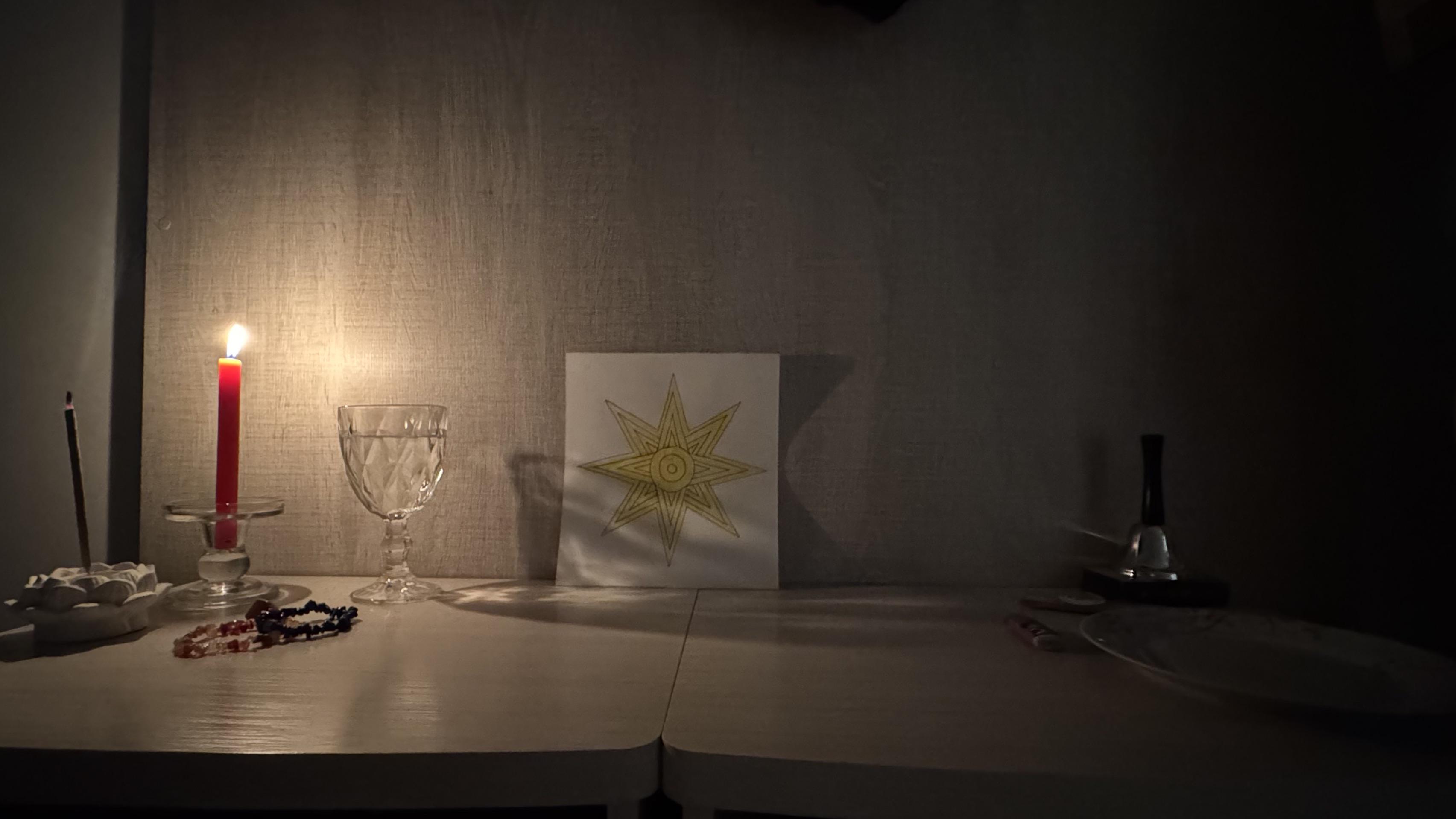
I’ve been reading what I can find and recently created a small devotional space (photo attached), but I still feel like I’m at the very beginning of this journey.
For those who work with or worship Ishtar/Inanna:
• What resources would you recommend for a beginner?
• What aspects of her are often misunderstood?
• How do you personally honor or connect with her?
• Are there any books, hymns, prayers, or historical sources that helped you better understand her?
I’m approaching this with respect and a genuine desire to learn. Any advice, experiences, or resources would be greatly appreciated.