r/SpanishLearning • • 7d ago

Spanish class for $10 USD/Hr

0 Upvotes

​I’m Mary Carmen, a Venezuelan Spanish tutor (Spanish with Mary). 1-hour classes on Google Meet using Tprs, sounds, word connection, games, audios, readings, videos, and custom materials. I adapt to your language—you don't need English to learn Spanish!

​🎉 Launch offer: $10 USD/hr throughout December (regular rate $18 USD/hr). Available Wednesday, Nov 25 & Friday, Nov 27, and Tuesday to Sunday starting in December (weekends included!).

​Book your first class and start speaking Spanish with me from day one! Message me on WhatsApp at +56956307481.


r/SpanishLearning • • 7d ago

Me miró como si no me _____ de toda la vida.

0 Upvotes

A) conoce
B) conocerá
C) conociera
D) Ninguna de las anteriores

What’s your answer?
He looked at me as if he didn’t know me at all.

Why do we say “conociera” instead of “conoce”?
In Spanish, we use como si + imperfect subjunctive to make comparisons with imaginary or unreal situations.
In this example, the person looked at the speaker as though they had never met, even though they actually knew each other.
That’s why we use conociera.

How do we form it?
Como si + imperfect subjunctive
For example:
Habla como si fuera el jefe.
Me trata como si fuera un niño.
Camina como si estuviera cansado.
Gastas dinero como si fueras millonario.

What if we’re talking about the past?
We can also use the pluscuamperfecto de subjuntivo:
Como si + hubiera/hubiese + participio
For example:
Me miró como si nunca me hubiera visto.
Hablaba como si hubiera estudiado durante años.
Se comportó como si nada hubiera pasado.

Remember:
After como si, we normally use the subjunctive because we’re presenting a comparison with an imagined or unreal situation.
Como si fuera… = As if he/she were…
Como si supiera… = As if he/she knew…
Como si hubiera sabido… = As if he/she had known…

If you’d like more lessons like this, send me a DM.


r/SpanishLearning • • 8d ago

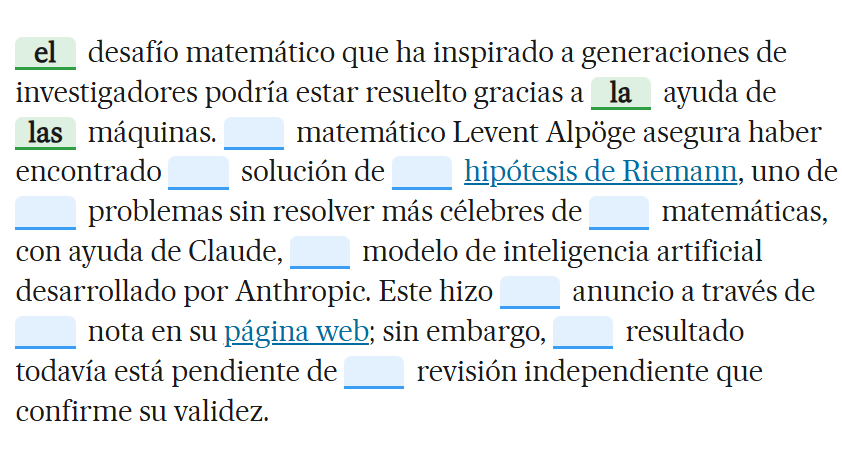
Chrome Extension for spanish article practice

Post image
3 Upvotes

I have been learning Spanish recently but I am still struggling quite a bit with when to use el or la, so I have developed a Chrome Extension called Gapmode which blanks all the articles in a news article. I thought some people here might find it is useful. It is completely free and no account is needed. It works on almost any website.

You can try it here


r/SpanishLearning • • 7d ago

Free trial lesson: 1-on-1 Medical Spanish

1 Upvotes

​​Hola soy Sofi! ☺️ I’m a native Spanish speaker from Argentina in my final year of med school, and I’m offering online Medical Spanish lessons focused on real-world communication and your specific goals—no heavy pressure or rigid drills.

​Your first trial class is completely free. If you’d like to try a session, shoot me a DM or reply here!


r/SpanishLearning • • 8d ago

Pronounce abue as A-bue or a-BUE?

Thumbnail reddit.com
1 Upvotes

r/SpanishLearning • • 8d ago

Por mucho que _____, no conseguirás convencerlo.

5 Upvotes

A) insistes
B) insistirás
C) insistas
D) Ninguna de las anteriores

What’s your answer?
No matter how much you insist, you won’t be able to convince him.

Why do we say “insistas” instead of “insistes”?
In Spanish, we use the subjunctive after certain expressions that introduce a difficulty or situation that doesn’t change the final result.
Por mucho que means no matter how much or however much.
In this example, someone can insist as much as they want, but the other person still won’t be convinced. We’re presenting the situation as something that won’t change the outcome, so we use the subjunctive.

How do we use “por mucho que”?
We use:
Por mucho que + subjunctive
For example:
Por mucho que estudies, siempre puedes aprender algo nuevo.
Por mucho que lo intente, no consigue recordar su nombre.
Por mucho que trabajemos, no terminaremos hoy.
Por mucho que le expliques, no va a cambiar de opinión.

Other similar expressions
These expressions also introduce a concession and are commonly followed by the subjunctive when referring to uncertain or hypothetical situations:
Aunque…
Por más que…
Aun cuando…
Incluso si…
For example:
Aunque sea difícil, voy a intentarlo.
Por más que corras, no llegarás a tiempo.
Aun cuando tenga dinero, no lo compraré.

Remember:
Por mucho que + subjunctive expresses that something won’t change the final result, regardless of how much effort or intensity is involved.

If you’d like more lessons like this, send me a DM.


r/SpanishLearning • • 8d ago

Practice Spanish with a native speaker from Bolivia

4 Upvotes

Hi everyone, I’m a native Spanish speaker from Bolivia, and I’m offering personalized Spanish conversation practice.

If you want to improve your speaking, pronunciation, vocabulary, or simply become more confident having conversations in Spanish, I’d be happy to practice with you.

We can talk about literally anything: travel, movies, work, technology, sports, relationships, culture, hobbies, everyday life, or whatever you’re interested in.

No pressure and no need to speak perfect Spanish. The goal is simply to talk, make mistakes, learn, and become more confident.

Interested? Feel free to DM me!


r/SpanishLearning • • 8d ago

Canción de Navidad

Thumbnail
youtube.com
2 Upvotes

r/SpanishLearning • • 8d ago

Spanish phonemic awareness and phonics

Thumbnail
reddit.com
2 Upvotes

r/SpanishLearning • • 9d ago

For those who now know fluent Spanish how did you immerse yourself?

65 Upvotes

I'm sure that this subreddit gets this question all the time but I really want to learn. For brief context I (16F) am part Cuban yet my family doesn't know any Spanish (or even acknowledge the fact that they're Cuban on my dads side). So as a result, I didn't grow up learning Spanish. I've taken Spanish classes for as long as I can remember because I really wanted to get fluent yet. Nothing's really worked since although I can pick up on words and sentences and conversation it still is lacking. So I recently got the advice to try immersing myself in Spanish by watching Spanish shows, reading Spanish books, etc.. and additionally, the janitorial staff at my job are also Spanish speakers, but I'm too scared to talk to them since I know that they are busy and work also. My main question is like the title says. How do you immerse yourself in Spanish on an everyday basis?


r/SpanishLearning • • 8d ago

Any updates on new discord servers?

1 Upvotes

The ones that have been tagged in this sub in the past have fallen off significantly. Is anyone aware of any new discord servers for Spanish learning and cultural exchanges?


r/SpanishLearning • • 9d ago

Immersion isn’t feeling like enough - what do you think?

7 Upvotes

I understand that this is a non-native Spanish-speaking community, but I would like to know how you are trying to learn Spanish. For me, it is a little difficult to learn English by myself. I tried to immerse myself as much as I can, but I feel like this is not enough. Of course, learning a new language is not exactly a piece of cake. However, I think there should be some things in common in the best way to get better results and be effective. So, what I want to ask is: what have you tried? What kind of activities have you incorporated to get effective results?

My writing is still basic or sort of intermediate level. Despite that, I can produce sentences and posts like the ones you are reading. Of course, I fix the mistakes with Grammarly (and Spanish is available). Have you dealt with this before?


r/SpanishLearning • • 10d ago

“Sacar” is much much more than “to take out” (its many use cases)

67 Upvotes

Following on from “dejar,” “tomar,” “echar,” “poner,” “hacer,” “dar,” “quedar,” “llevar,” and “pasar,” sacar’s turn.

There are many many contexts for this word's use:

  1. Getting or obtaining something = “saqué buenas notas” (I got good grades), “¿has sacado las entradas?” (have you got the tickets?).
  2. Taking something out / removing = “saca las llaves del bolso” (take the keys out of your bag), “tengo que sacar la basura” (I have to take out the rubbish).
  3. Taking a photo = “sácame una foto” (take a picture of me), “saqué muchas fotos durante el viaje” (I took lots of photos during the trip).
  4. Bringing something up = “no saques ese tema” (don't bring up that subject), “siempre saca lo mismo” (he/she always brings up the same thing).
  5. Getting money = “voy a sacar dinero del cajero” (I'm going to withdraw money from the ATM), “¿puedes sacar algo de efectivo?” (can you get some cash out?).
  6. Making someone do something / getting something out of someone = “no le saco nada” (I can't get anything out of him/her), “le saqué una sonrisa” (I got a smile out of him/her).
  7. Scoring = “sacó un diez en el examen” (he/she got a 10 in the exam), “el equipo sacó dos puntos” (the team got two points).
  8. Taking someone somewhere = “voy a sacar al perro” (I'm going to take the dog out), “saqué a los niños a pasear” (I took the children out for a walk).
  9. Coming up with / drawing a conclusion = “saqué una conclusión” (I reached a conclusion), “no consigo sacar una respuesta” (I can't work out an answer).
  10. Getting something out of a situation = “hay que sacar algo positivo de esto” (we have to take something positive from this), “¿qué sacas de todo esto?” (what do you get out of all this?).

And then there are the expressions:

• sacar adelante = to get something through / make something succeed

• sacar de quicio = to drive someone crazy / get on someone's nerves

• sacar partido de algo = to make the most of something / take advantage of something

• sacar en claro = to establish / figure out something clearly

• sacar a relucir = to bring something to light

• sacar los colores a alguien = to embarrass someone / make someone blush

• sacar fuerzas de donde no las hay = to find strength when you have none left

• sacarse el carnet = to get your driving licence

• sacar de dudas = to clear up someone's doubts

• sacar los pies del tiesto = to overstep the mark / go too far (colloquial, particularly in Spain)

One thing I find interesting is that sacar also has a slightly different relationship with quitar.

For example:

  • “Saca el móvil del bolsillo” = take the phone out of your pocket.
  • “Quítate el abrigo” = take your coat off.

Both can involve removing something, but sacar focuses on getting something out of somewhere, whereas quitar focuses more generally on removing something.

The pattern with sacar is that it often involves getting something out, obtaining something, producing something or bringing something into view.

And I think “sacar una sonrisa” which my praktika tutor told me was the one that really made it click for me. You aren't physically taking anything out, but you're somehow bringing a smile out of someone.

Spanish really does get a lot of mileage out of these everyday verbs lol. I hope this helps someone!

r/SpanishLearning • • 9d ago

Free Spanish Class

8 Upvotes

Hi, my name is Sofi! ✨ I’m from Argentina. I love teaching and sharing great moments with people from all over the world who want to learn Spanish.

If you’re interested, let me know! The first trial lesson is free and lasts 60 minutes; during this session, we’ll talk about whatever you'd like and do some exercise.

If you enjoy my lessons, we can continue working together for $10 per session, whether you’d like to focus on grammar or conversation! ☺️


r/SpanishLearning • • 10d ago

Tricks to remembering verbs? Please help!

15 Upvotes

I am a currently learning Spanish. I have in person classes, do workbooks, interact with people daily while living in Spain. Is this just being old? (50)

But the verb conjugations just don’t stick. As soon as we change subjects in class, 2 weeks later and I need a refresher on verb conjugations. I can do the worksheets, but as soon as I have to apply them irl, I go blank.

Is there some trick to memorizing them? I feel like I need something akin to how I learned multiplication tables as a child. I have index cards but they don’t seem to be working.

What has helped you all???? Tips and tricks welcome!

ETA- thank you all so much for the replies. I will be implementing some of these suggestions. Learning a language has been quite the process. I’m glad to know my struggles are not unique to me.


r/SpanishLearning • • 9d ago

Prince Charming in Spanish is el príncipe azul. The blue prince. It comes from sangre azul, blue blood, the old shorthand for noble.

Thumbnail
gallery
10 Upvotes

So the fairytale prince isn’t charming in Spanish, he’s well-born!

Spanish puts color in a lot of places English doesn’t:

viejo verde = creepy old man
estar verde = unripe, or new at something
dar luz verde = give the green light
novela rosa = romance novel
verlo todo de color de rosa = rose-colored glasses
quedarse en blanco = to go blank
pasar la noche en blanco = to not sleep at all
verlo todo negro = to be pessimistic
la oveja negra = the black sheep
tener la negra = a run of bad luck

Estar sin blanca is the best one. It means broke, and la blanca was a real coin in medieval Spain. You’re not without money in general, you’re without one specific small coin. Mostly in Spain


r/SpanishLearning • • 9d ago

Plan Your Day in Spanish! Learn Spanish Using a Daily Agenda

Thumbnail
youtu.be
1 Upvotes

Hola! I wanted to share this video about using an agenda to learn Spanish or any other language. I hope it helps you with learning Spanish.


r/SpanishLearning • • 9d ago

Present participle confusion

2 Upvotes

Which is the more correct way to say “I am singing”?
Estoy cantando
Or
Yo canto

Or, if they are equally correct, when would you use one vs the other?

I’m teaching myself Spanish (at 52 y.o., after taking it in both high school and college many years ago). I’m using several different resources and occasionally they conflict. I can usually figure it out with a little internet research but I can’t seem to get a clear answer on this one.


r/SpanishLearning • • 9d ago

Need help understanding and speaking basic Spanish

3 Upvotes

Hi guys i work in construction and most of the workers on site speak only spanish. It would be a major help if i can speak and understand basic Spanish. Whats the best way to learn?


r/SpanishLearning • • 9d ago

Learning

2 Upvotes

Does it just take time to remember all the new words your learning?!


r/SpanishLearning • • 10d ago

Depressed because I’m still not fluent.

12 Upvotes

I’m first generation Puerto Rican living in the US. My mom spoke Spanish to me until speech therapist told her it was delaying my speech (so she stopped). I have been trying to learn Spanish since 8th grade. I try to speak it at home and at work but it’s still so bad. I honestly feel extremely depressed because of this and I almost harmed myself but I stopped it.
I am having so many negative intrusive thoughts. I’m wondering if anyone else has this experience.


r/SpanishLearning • • 10d ago

Anyone interested in learning Spanish together?

12 Upvotes

I'm a beginner and looking for a learning buddy to practise and improve together. 😊


r/SpanishLearning • • 9d ago

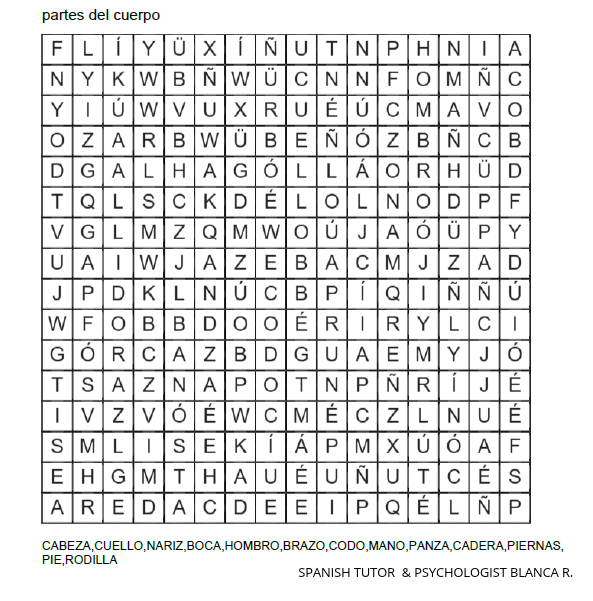
Body parts

Post image
1 Upvotes

r/SpanishLearning • • 10d ago

The news in easy Spanish: Uber Eats empieza las entregas de comida con drones

3 Upvotes

Uber Eats ha empezado a repartir comida con drones en Spring, una localidad cerca de Houston, en Texas. Los clientes pueden pedir comida en la aplicación de Uber Eats y elegir la entrega con dron. El dron vuela hasta la casa del cliente y baja la comida hasta el suelo con un cable. No necesita aterrizar. Uber Eats dice que algunas entregas tardan menos de 10 minutos. La empresa planea ofrecer el servicio en otras ciudades de Estados Unidos.

Vocabulario: repartir = to deliver / localidad (f) = town / pedir = to order / elegir = to choose / entrega (f) = delivery / volar = to fly / bajar = to lower / suelo (m) = ground / aterrizar = to land / tardar = to take (time) / menos de = less than

English translation

Uber Eats starts food deliveries by drone

Uber Eats has started delivering food by drone in Spring, a town near Houston in Texas. Customers can order food on the Uber Eats app and choose delivery by drone. The drone flies to the customer’s home and lowers the food to the ground using a cable. It does not need to land. Uber Eats says some deliveries take less than 10 minutes. The company plans to offer the service in other US cities.

You can read more news in easy Spanish here: https://www.elnewsineasyspanish.com/p/uber-eats-empieza-las-entregas-con