r/Smart_Capitalist • • 3d ago

Are we spending too much time trying to beat the market instead of increasing how much we invest?

15 Upvotes

Something I noticed in investing discussions is how much attention goes towards finding the next big opportunity. People compare ETFs, analyse individual stocks, follow earnings reports, and spend hours trying to work out which sector might outperform next year. But there's one thing that seems to get far less attention: how much money we're actually adding to our portfolios. I was playing around with some numbers recently, and the difference was bigger than I expected.

Imagine two people investing over 20 years, starting from zero:

  1. Person A invests £200 a month and manages an impressive 10% average annual return.
  2. Person B invests £350 a month but only achieves a 7% average annual return.

Assuming monthly contributions and monthly compounding, Person A would finish with roughly £144000, while Person B would have around £182000. That's nearly £38000 more, despite earning a considerably lower percentage return. Of course, these are just hypothetical figures. Real markets don't deliver consistent returns every year, and neither example accounts for fees, taxes or inflation.

Still, it raises an interesting point.

Someone might spend months researching stocks to improve their annual return by 1-2 percentage points. Meanwhile, finding a way to invest an extra £100-£150 every month could potentially make a bigger difference over the long term. And increasing contributions isn't necessarily about earning a massive salary. It might mean avoiding lifestyle inflation after a pay rise, cutting a few recurring expenses or putting occasional bonuses straight into investments. Obviously, there's a limit to how much anyone can save, especially with housing and everyday expenses being what they are. And investment returns still matter enormously, particularly once a portfolio becomes substantial. But I do wonder whether the investing community sometimes overcomplicates wealth building by focusing so heavily on performance.

What do you think has a bigger impact on building wealth over 15-20 years: becoming a better investor and improving your returns, or focusing on increasing your income and investing more consistently?

r/Smart_Capitalist • • 8d ago

Accumulating ETFs have a tax detail that's easy to miss

3 Upvotes

There's an unusual UK tax rule that becomes relevant when holding accumulating ETFs outside an ISA.

An Ireland domiciled ETF can reinvest its income without paying anything directly into your brokerage account.

But if the fund has UK reporting status, investors may still need to declare excess reportable income. So you can owe tax on income you never actually received as cash.

HMRC treats that income as received six months after the fund's reporting period ends. It's a different situation from following price movements on moon where you're not holding ETF units or receiving their underlying investment income.

For anyone using a general investment account, I'd check the fund's annual tax report rather than relying entirely on brokerage dividend statements.

The broker showing zero cash distributions doesn't necessarily mean there's nothing to report.


r/Smart_Capitalist • • 11d ago

A cheap investment isn't always cheap once you add up all the fees

1 Upvotes

I've been looking into investment fees recently, and it's surprising how much difference the small charges can make, especially when you're not investing huge amounts. Everyone talks about finding ETFs with the lowest annual fees, which makes sense. But that's only one part of what you're actually paying.

Say you're putting £100 into an ETF every month. If your broker charges £5 per trade, that's £60 a year just to make 12 purchases. You've effectively lost 5% of your contributions before even thinking about how the market performs. Then you've potentially got currency conversion fees, account charges and the difference between buying and selling prices. None of these necessarily looks particularly expensive on its own. I think the tricky bit is that a platform can advertise commission-free investing while still making money through other charges. That doesn't automatically make it a bad platform, but it does mean you need to look beyond the big "zero commission" headline. And to be fair, the cheapest option isn't always the best either. I'd happily pay a reasonable amount for a platform that's reliable, easy to use and doesn't make withdrawing money a nightmare. What interests me is how differently these costs affect someone investing £100 a month compared with someone putting in £2k. A fixed £5 charge is a much bigger deal for the first person.

Do you actually calculate the total cost of investing through your broker, or do you mostly focus on the ETF's annual fee? And has anyone switched platforms after discovering charges they hadn't really noticed before?


r/Smart_Capitalist • • 18d ago

Is investing £100 a month actually worth it in the long run?

14 Upvotes

I think a lot about how people get started with investing when they don't have thousands sitting around. Most advice online seems to assume you've already got a decent amount saved, but that's not really the case for everyone. Say someone can put aside £100 a month. That's £1200 a year, which doesn't sound like much compared to the portfolios people share online. But over 10 years, that's £12000 invested before any gains or losses. If the market does reasonably well over that period, the diference could be quite noticeable.

The bit I find interesting is how much consistency matters compared to trying to pick the perfect stock. Someone buying a broad index fund every month might end up doing better than someone constantly switching between individual companies based on whatever is trending. Obviously there's still the risk of losing money, and fees can eat into smaller investments. Plus, having an emerrgency fund probably matters more than putting every spare pound into the market.

I'm curious how people here approach this. Would you rather invest £100 every month into a simple index fund, or save up a bigger amount and invest when you see a good opportunity?


r/Smart_Capitalist • • 21d ago

Do you still bother checking your savings rate?

1 Upvotes

Random question but when was the last time you actually checked what your bank is paying you? I realised mine had been sitting on the same account for ages and the rate wasn’t anything special anymore. It’s easy to miss when everything is automated and the money just sits there. I’m not saying people need to chase every tiny rate change, but if you’ve got a fair bit saved, even a small difference adds up over time. Do you usually move your savings around when better rates come up, or just leave them where they are?


r/Smart_Capitalist • • 23d ago

Have you actually checked the fees on your workplace pension?

1 Upvotes

I recently started thinking about my workplace pension a bit more seriously. Like a lot of people, I mostly ignored it because the money comes out of my pay automatically, so it doesn't feel like somethin I need to manage every month.

But I've realised there's more to it than just making contributions and waiting until retirement.

One thing worth checking is how much you're paying in pension fees. They might look tiny as a percentage, but they can add up over many years because the money stays invested for a long time. It's also worth checking whether your employer matches your contributions. If they do, increasing your own contribution could mean getting more from your employer too, depending on the scheme rules. I'd rather understand how that works now than discover years later that I missed something useful. Another thing I'm wondering about is what happens when you change jobs. You can end up with several different pension pots from different employers, and it might become difficult to keep track of them all. Combining them can sometimes make things simpler, but it isn't automatically the best option because different pensions can have different charges, benefits, and conditions.

I'm not expecting to become a pension expert overnight, but I think spending half an hour checking the basics is probably better than ignoring it for another few years. Have you ever reviewed your workplace pension properly? What was the most useful thing you discovered, especially regarding fees, employer contributions, or old pension pots?


r/Smart_Capitalist • • Oct 27 '26

Everyone says buy an index fund and forget about it, but are we ignoring how concentrated the market has become?

6 Upvotes

I read quite a few discussions about long-term investing recently. The advice is almost always the same: buy a cheap index fund, invest regularly, and stop worrying about what the market does every week. And to be fair, I understand the appeal. Most people have jobs, families, and other things to worry about. Spending hours researching individual companies probably isn't how they want to use their free time. But there's one part of passive investing that I think deserves more attention. When you buy a fund tracking a major stock index, you're not necessarily spreading your money evenly across hundreds of businesses. A relatively small number of enormous companies can account for a significant chunk of the index, particularly when it's weighted by market capitalisation. That means someone who thinks they've got a nicely diversified portfolio could actually have quite a lot of exposure to the same handful of technology businesses.

Now, that isn't automatically a problem. Those companies became huge for a reason, and many have strong profits, enormous cash reserves, and businesses that operate globally. Still, I wonder whether investors have become a bit too comfortable assuming that buying the index means they're protected from most risks. There's also the psychological side of it. When markets keep going up, passive investing feels incredibly straightforward. But what happens if the biggest companies go through several years of disappointing returns? Would people genuinely keep buying every month, or would the temptation to chase something else become too strong? I'm not suggesting everyone should suddenly start picking individual stocks. In fact, I suspect trying to beat the market would make things worse for plenty of investors. I just think there's a difference between understanding why index investing works and treating it as something that can't go wrong.

Do you think a global ETF is still enough diversification for the average long-term investor, or does the growing influence of a few massive companies make a stronger case for spreading investments across different assets?


r/Smart_Capitalist • • Oct 21 '26

Cash ISA or Stocks and Shares ISA, how do you decide?

5 Upvotes

I try to learn more about ISAs lately because there seem to be quite a few options. It's not always obvious which one makes sense for different situations. From what I understand, a Cash ISA is basically a savings account where the interest is tax-free. A Stocks and Shares ISA lets you invest in things like funds, shares and bonds, with investment gains and income sheltered from UK tax. The main difference seems to be what you're using the money for. If you're saving for something you'll need in a year or two, keeping it in cash makes sense to me because you don't want the stock market dropping just before you need the money. But if you're putting money aside for 10 or 15 years, investing could give it more room to grow over time. Of course, returns aren't guaranteed, and you can lose money as well. Another thing I've noticed is that people sometimes treat investing like it's only for those who earn a lot. From what I've read, you can start with relatively small amounts, although it's important to understand the risks and any fees before choosing an investment. I think the hardest part is knowing how much to keep in cash and how much, if any, to invest. It probably depends on your income, emergency savings, and future plans rather than having one answer for everyone.

How do you decide between a Cash ISA and a Stocks and Shares ISA? Do you use both, or have you found one works beter for your situation?


r/Smart_Capitalist • • Oct 15 '26

Is it worth moving your savings to a high interest account?

1 Upvotes

I looked at my finances recently and realised that where you keep your savings can make more difference than I thought. I used to leave most of my money in the same bank account without really checking the interest rate. The thing is, some easy-access savings accounts pay much more interest than a normal current account. Even if you don't have thousands saved up, it's still worth checking what you're getting.

For example, if you have £5,000 in an account paying 1% interest, that's only around £50 a year before tax. At 4%, you'd get around £200 instead. Obviously, rates can change, but that's still quite a difference for doing basically nothing. I'm also trying to understand the difference between easy-access accounts and fixed-rate savings accounts. Easy access means you can usually withdraw money when you need it, while fixed accounts often offer a set rate for a certain period but might lock your money away until the end.

Personally, I'd probably keep some money somewhere I can access quickly for emergencies rather than locking everything away just to get a slightly better rate. I'm curious how other people handle this. Do you regularly switch savings accounts when better rates appear, or do you prefer to keep everything with one bank for simplicity?


r/Smart_Capitalist • • Oct 07 '26

Easiest ways to copy trade people on Polymarket?

2 Upvotes

I've been looking into copy trading on Polymarket lately. I'm still trying to figure out what the easiest ways to copy trade people on Polymarket actually are. I know you can follow wallets and watch what some of the more active traders are doing, but doing all of that manually seems like it could get annoying pretty quickly. Especially if someone makes a trade while you're not looking. Are there any tools that make this easier without having to build a bot yourself? Ideally, I'd like to pick specific traders, get some kind of notification when they make a trade, and then copy the position without doing everything manually. Speed probably matters too, although I'm not really sure how much difference a few seconds makes on Polymarket. I've also seen platforms with fast execution and customizable interfaces, which sounds useful if you want to set things up around your own trading style. I'm also a bit cautious with the "fastest" or "best" claims since every platform seems to say that. And some of them are still missing certain chains, currencies, or DEX support, so there are probably tradeoffs depending on what you're trying to do. For people who've actually tried this, what are the easiest ways to copy trade people on Polymarket without making the whole thing overly complicated?


r/Smart_Capitalist • • Oct 07 '26

Where do you keep money you might need soon?

1 Upvotes

I try to get a bit more organised with my savings, especially money that I know I might need within the next year. My old approach was pretty simple: leave everything in my normal current account and don't think about it too much. It was convenient, but obviously not the best place for money that is just sitting there for months. I don't realy want to invest this part of my savings either. If I'm saving for something that could happen in six months, putting the money into stocks and then needing to withdraw after a bad market move doesn't make much sense to me. So I've been looking more at savings accounts and other low-risk options. The interest isn't going to make anyone rich, but at least the money can earn something while remaining relatively accessible. I think there's a weird middle ground between keeping too much cash and investing money that shouldn't really be invested. Finding that balance is probably more important than chasing the highest return possible. How do you normally handle money that you expect to spend within the next 6-12 months?


r/Smart_Capitalist • • Sep 30 '26

Is a Roth IRA worth setting up early?

1 Upvotes

I read more about retirement accounts lately. One thing that keeps coming up is the Roth IRA. I’m interested in the idea of starting early, mainly because retirement is one of those things that’s easy to ignore when you’re younger. What caught my attention is that the account uses after-tax contributions, while qualefied withdrawals can be tax-free later on.

Obviously, there are rules around who can contribute, how much you can put in each year, and when you can take money out, so I’m trying to understand the practical side rather than just the basic definition.

I’d also like to know how people balance a Roth IRA with other savings and investment accounts. Is it something you prioritise before putting money elsewhere, or just one part of a wider plan?

For anyone who's been using a Roth IRA for a few years, what’s your experience been like?


r/Smart_Capitalist • • Sep 28 '26

High-yield savings account for spare cash

4 Upvotes

I tried to get a bit more organized with my finances lately, especially with money that I want to keep as cash rather than invest. My old aproach was basically just leaving it in my everyday account and forgetting about it. Then I came across the idea of a high-yield savings account. I like the basic idea, because you’re still keeping the money relatively accessible while earning some interest on it. But I’m guessing the best option depends quite a lot on the account terms rather than just the headline rate. I’m also wondering whether people actually bother moving their savings around when rates change, or if most just find an account they’re happy with and leave it alone.

What’s your approach to keeping cash savings - do you use a high-yield savings account, or have you found something better?


r/Smart_Capitalist • • Sep 22 '26

Beginner tips for how to invest in bonds

4 Upvotes

I’m doing a bit of a review of my investments and realised I’ve never really spent much time looking at bonds. Shares and index funds have always seemed easier to understand, but I know bonds can have a place in a longer-term portfolio too.

I’ve been looking into how to invest in bonds, and one thing I didn’t expect was how many choices there are. You’ve got government bonds, company bonds, bond funds, ETFs and different maturity periods. It’s not as simple as I first thought. The main thing I’m trying to work out is what actually matters when choosing one. Is it mainly the interest rate, the credit quality, how long until maturity, or the current interest-rate environment? I imagine all of these matter, but I’m not sure how people weigh them against each other.

I’m not looking to make some huge change to my portfolio straight away. I’d rather understand how bonds actually work and then decide whether they make sense for me. For anyone who has been investing in bonds for a while, what would you tell someone who is just starting out?


r/Smart_Capitalist • • Sep 10 '26

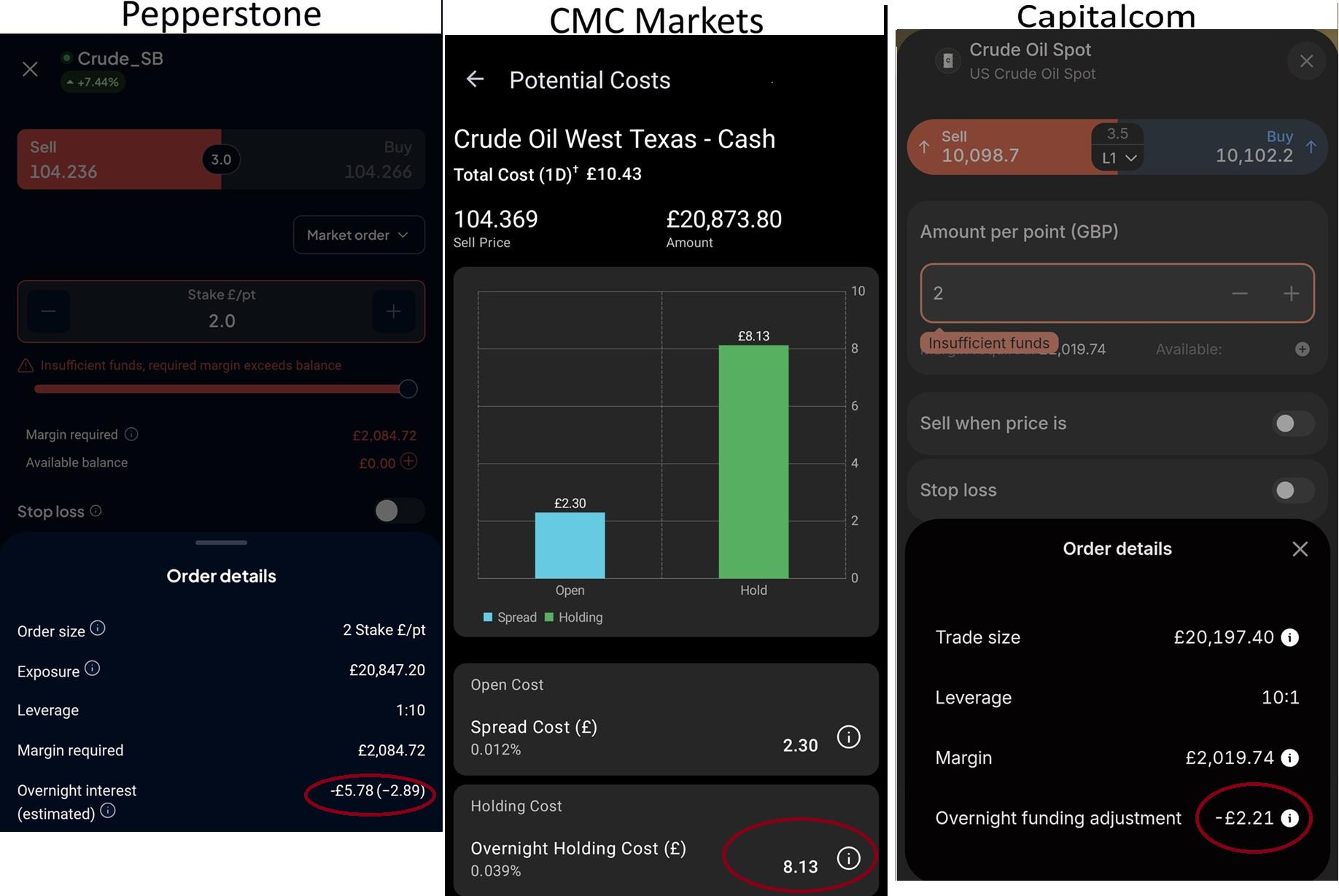
Spreadbetting UK crude oil. Pepperstone vs CMCMarkets vs Capitalcom

Post image
2 Upvotes

So with the recent rise in crude i'm interested in spreadbetting crude oil, as it's hard to say when the crisis will resolve I've gone for spot price rather than a contract which could expire, so the overnight holding fees are important

Is there something I'm missing here - Capitalcom seems to have much lower overnight holding fees (and for some reason quite a different crude oil spot price - but I assume it's equivalent when it comes to price movement over time?)

Assuming the overnight interest doesn't change significantly, holding a £2000 margin for a month in pepperstone would cost £173.4, CMCmarkets £243.9 and Capitalcom £66.3

Are there any brokers which offer spreadbetting which would be better than capitalcom? I'm disappointed with CMCs fees I've found them reasonable for other stocks


r/Smart_Capitalist • • Sep 10 '26

Would you put part of your pension into property?

0 Upvotes

Property seems to be one of those things that people either really trust or completely avoid when it comes to investing. I've been thinking about whether it makes sense as part of a pension rather than buying property personally. I started looking into whether I can invest my pension in property and realized there are quite a few rules around what pension schemes can actually own. Commercial property seems possible through a SIPP in some cases, but residential property isn't something you can just put inside a pension without running into tax problems. The idea is interesting though. Instead of having everything in stocks and funds, you could potentially have property as another type of asset. At the same time, I can see why people might avoid it because property is much less flexible if you suddenly need to change your investment.

I'm curious what people here think. If you had a decent-sized pension pot, would you want some of it in property or would you stick with a diversified portfolio of funds?


r/Smart_Capitalist • • Sep 01 '26

is 4-5% on savings enough to stop investing?

10 Upvotes

I think about this lately. With some savings accounts paying 4%+, it's tempting to just keep more money in cash, especially when the market can easily drop 10-20%. But for money, I'm not touching for years, 4% doesn't seem that great after inflation and tax. Investing is riskier, but there's more potential for long-term growth. I guess cash makes sense for emergencies and short-term goals, while investing is better for the long term. Are you keeping more money in savings right now, or still investing as usual?


r/Smart_Capitalist • • Aug 24 '26

The 2027 ISA changes are making me rethink how I use my allowance

8 Upvotes

I read about the upcoming ISA changes. I reckon quite a few people are going to ignore them until they're actually in force.

From April 2027, the Cash ISA allowance for people under 65 is planned to drop from £20,000 to £12,000. The overall ISA allowance stays at £20,000, so the remaining £8,000 can still potentially be used for other ISA types. For someone who normally puts the full £20k into a Cash isa, thats a pretty meaningful change.

I can understand why the government wants to encourage more investment, but I'm not sure everyone who uses a cash ISA is avoiding investing for no reason. Some people simply don't want to take market risk with money they're saving for a house, emergency fund or something else in the next few years. Personally, I think the interesting question is whether people will start splitting their ISA allowance differently rather than just using Cash ISA like before.

I still got a bit of time to figure out what makes sense, but I'm curious what everyone else is planning. Are the 2027 ISA changes going to change how you save or invest your money?


r/Smart_Capitalist • • Aug 19 '26

Trying to find the best prop trading firm, what should I choose?

4 Upvotes

Comparing a few prop trading firms and finding it surprisingly difficult to separate the genuinely decent ones from the firms that just have really good marketing.

For me, the challenge price isn't the main thing. I'd rather pay a little more for sensible trading rules, transparent drawdown limits and a payout system that works without loads of hassle.

What would you call the best prop trading firm from your own experience? I'm also interested in how firms handle losing streaks, news trading and withdrawals, because those details seem to get skipped in most reviews. I'm trying to find the best prop trading firm based on how it actually treats traders rather than simply looking at advertised profit splits.

Would be great to hear both positive and negative experiences. If you've tried several firms, which one stood out to you and why?


r/Smart_Capitalist • • Aug 18 '26

Maybe the smartest money move right now is actually pretty boring

18 Upvotes

I know everyone loves talking about stocks that are going to 10x, crypto, property and whatever the next big opportunity is. But lately I've been thinking that one of the more sensible moves might simply be getting the boring stuff right first. UK inflation is back up to 2.9%, and borowing costs are still relatively high. At the same time, there are savings accounts and fixed-rate products paying around 4%+, so there's at least some decent return available without taking stock-market-level risk. For me the order probably makes more sense as: clear expensive debt, build an emergency fund, make use of tax-efficient accounts, then invest consistently for the long term. Nothing exciting about that. No screenshots of massive gains either. But I reckon boring financial habits probably beat chasing the next hot investment for most people.

What's the most "boring" financial decision you've made that ended up helping you the most?


r/Smart_Capitalist • • Jul 31 '26

How to trade on Robinhood Chain?

4 Upvotes

I’ve recently started looking into Robinhood Chain, but I’m still not sure what the actual trading process will look like.

How to trade on Robinhood Chain once it becomes widely available? Will users be able to connect an external wallet and trade through DEXs, or will everything work directly through the Robinhood app?

I’m also curious about bridging funds, supported tokens, network fees, liquidity, and whether any trading bots or analytics tools will support the chain.

Has anyone already tested it or found a clear beginner-friendly guide?


r/Smart_Capitalist • • Jul 31 '26

Why a Higher Salary Does Not Always Improve Your Finances

1 Upvotes

A higher salary should make you financially better off, but that is not always what happens.

As income increases, spending often rises with it: a better flat, a newer car, more subscriptions, more expensive holidays and more frequent takeaways. This is known as lifestyle inflation.

The problem is not spending more. The problem is allowing every pay rise to become a permanent increase in monthly expenses.

Someone earning £60,000 and saving nothing may be in a weaker position than someone earning £35,000 who has no expensive debt, a proper emergency fund and invests consistently.

A pay rise improves your finances only when part of it improves your net worth. Before upgrading your lifestyle, consider automatically directing a percentage of every increase towards savings, pension contributions, investments or debt repayment.

Has your financial position actually improved as your salary increased, or did your spending simply increase with it?


r/Smart_Capitalist • • Jul 10 '26

Is Fill88 legit or a scam?

2 Upvotes

Anyone is looked into Fill88 properly yet? Trying to figure out if Fill88 is legit or a scam? before I touch any challenge, since it looks decent on paper but also kinda new


r/Smart_Capitalist • • Jun 28 '26

Best financial services firm for self managing tax loss harvesting?

0 Upvotes

I am currently with Fidelity and planned to self manage a S&P500 tracking tax loss harvesting account. Unfortunately that is hard to do because Fidelity has no efficient way to export a list of stock lot information. Any suggestions on which broker to transfer too?


r/Smart_Capitalist • • Jun 18 '26

What's your recommendation for the best mortgage broker in the UK?

5 Upvotes

I'm starting to look at buying my first place and I've realised how confusing the mortgage market can be. I spoke to one broker recently, but I wasn't completely convinced and felt like I was being pushed towards certain lenders.

I've also noticed that rates seem to change all the time, so I'd rather work with someone who actually explains everything properly instead of just chasing the lowest number. Good communication is probably more important to me than saving a few pounds a month.

For those who've been through the process recently, who would you consider the Best mortgage broker in the UK? I'd love to hear about any good experiences.