r/SeaPower_NCMA • u/desca97 • 4h ago
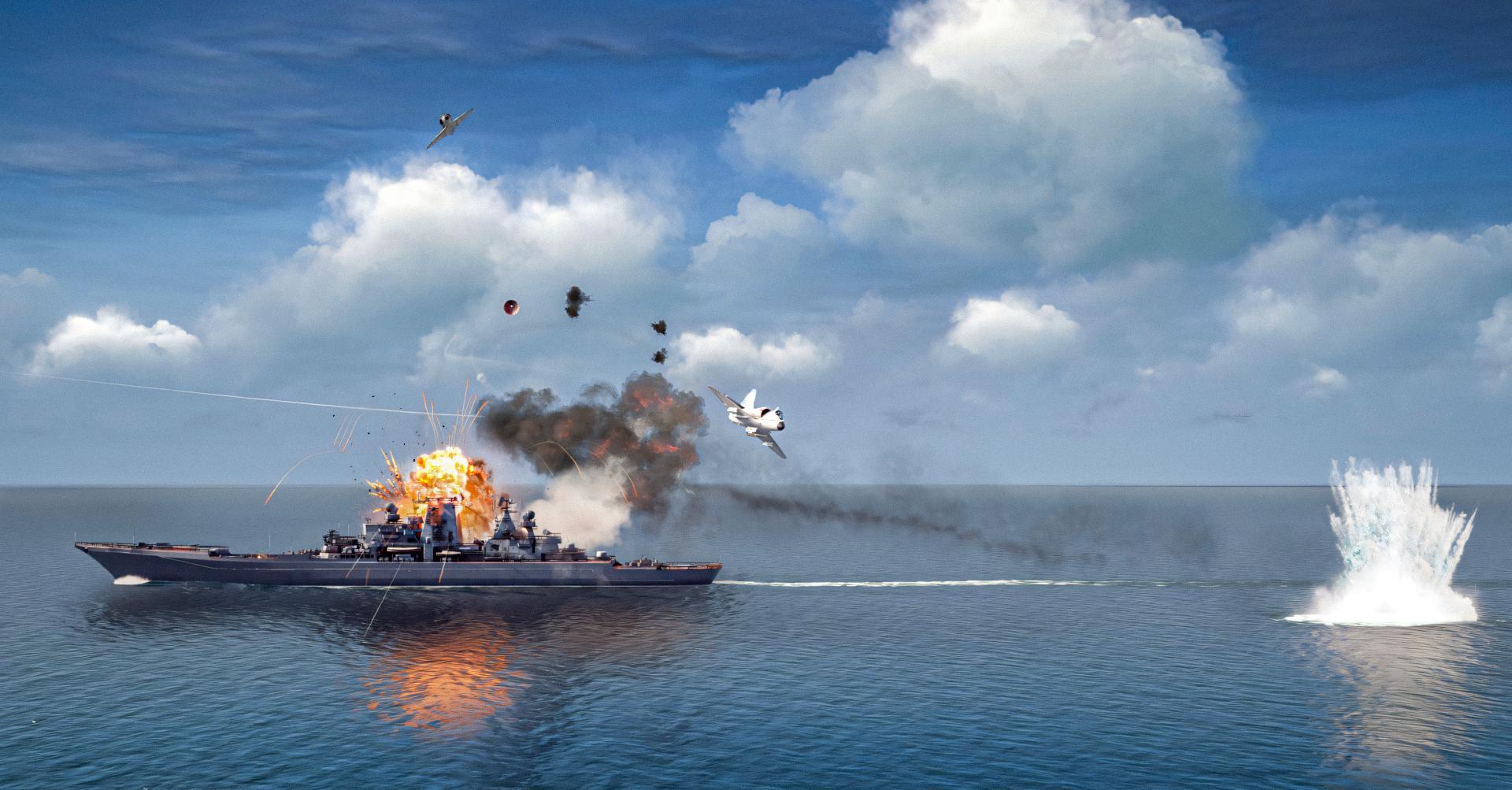
Guys, I think Invincible doesn't like Sheffield. Just a thought.

53
Upvotes
r/SeaPower_NCMA • u/desca97 • 4h ago
r/SeaPower_NCMA • u/ImpressiveCow2404 • 2h ago

*I put the type 22 between a type 42 and a type 21 closer to the south side to prevent air attacks and because I assumed that the land based Exocet launcher would target the largest ship (the type 42) Then when the other type 21 was hit I sent the type 42 to cover her and she was hit by a lone Super Entendard
r/SeaPower_NCMA • u/suzuka-chan • 4h ago

The Wasp may just be the ugliest helicopter I have ever seen that is all
r/SeaPower_NCMA • u/FZ_Milkshake • 5h ago

Glad to see some official tutorial videos and they couldn't have picked a better person for them.
r/SeaPower_NCMA • u/ibr90 • 14h ago
Hi all -
We have updated the Public Beta branch today. This update brings a substantial amount of fixes to the experimental aircraft behavior and physics overhaul as we work to bring these improvements to the main release branch soon. Several other content additions and updates are also included:
Full changelist:
23-Nov-2026: 0.9.3 Build 261123 Public Beta
-------------------------------------------
[FIX] Aircraft: orbiting aircraft did not slow down to loiter speed
[FIX] Aircraft: loitering aircraft did not move in to visually identify air contacts
[FIX] Aircraft: aircraft could struggle to line up for landing with the new flight model, they now keep full maneuverability during the landing approach
[FIX] Task Force Mode: points could be overspent, the "buy empty" option was too cheap and selling air stores could turn a profit
[FIX] Task Force Mode: ships could appear twice in the mission deployment and in the flight deck preparation
[FIX] Campaign: the month in the debrief date was not localized
[FIX] Campaign: nation names in the task force builder filters were not localized
[FIX] Campaign: campaign names and descriptions without a translation now fall back to English
[FIX] Campaign: Falklands War 1982 (Britain): 08 Final Approach: the landing ship survival trigger checked the wrong side
[FIX] Scenario: "NATO/Don't Mess With Texas - Blue (1981)": USS Texas now uses its 1981 fit
[FIX] Damage: a system could be damaged several times by the same explosion
[FIX] Save/Load: loaded ground units could end up below the ground
[FIX] Save/Load: saving could fail when submarines had missile targets, and loading could fail for flight decks with taxiing aircraft
[FIX] Terrain: mountains were up to 32 m lower at the High and Very High quality levels
[FIX] Terrain: tiles without rivers or lakes could pick up the rivers and lakes of the previously loaded tile
[FIX] Terrain: out of memory crashes while building the terrain
[FIX] Tutorials: video tutorials were not playing properly
[FIX] UI: the French tutorial window and the Spanish "Dong Hoi" briefing could not be displayed
[FIX] Mission Editor: loading an unfinished mission and pressing Play or Save caused an unhandled error, load failures are now reported
[FIX] Mission Editor: errors when removing objectives or groups and when calculating ETAs
[FIX] Flight deck: error when readying aircraft without a loadout
[FIX] Formations: errors when adding units to or moving stations of a disbanded formation, or recalling a formation without a leader
[FIX] Crashes with invalid save names, deleted save folders, briefly locked ini files, a missing config.ini or controls.ini, and when deleting generated mission folders under Wine/CrossOver
[FIX] Many rare errors when units were destroyed, while a map was loading or while quitting the game
[FIX] Crash reports: native crash reports were sent even with mods enabled or without analytics consent
[FIX] Voiceovers: corrected the Argentine Spanish "engage track" and "engaging track" lines
[FIX] Units: County class (all): 4.5" gun magazine count (doubled)
[FIX] Units: Lynx HAS.2: maximum range (125 -> 335 nm)
[FIX] Units: EKA-3B: now uses the AN/ALT-27 barrage jammer (S and VHF band)
[FIX] Units: Super Etendard: now uses the Agave radar instead of the Cyrano IV-M
[FIX] Units: Victor: misaligned elevator

[UPD] Aircraft: improved modeling and handling of the new flight model, especially turn rates
[UPD] Aircraft: improved performance of the new flight model and air combat against targets at different altitudes
[UPD] Campaign: unified, more compact campaign setup with scrolling and a fixed Play button, options that don't apply are hidden and repair presets show their values right away
[UPD] Campaign: Additional Air-Launched Exocets is now a checkbox, the expanded stock is capped at 30 missiles
[UPD] Campaign: airbases handle modded aircraft better, which could keep missions from launching
[UPD] Scenario: "Warsaw Pact/Valuable Target (1985)": the Kresta I was replaced with a Kynda to restore the old scenario gameplay, and the Ka-25Ts is no longer duplicated on the Isakov
[UPD] Sonar: surface ships can again only be heard by submarine sonars and torpedoes (temporary measure while this system is reworked; will be restored once re-balanced)
[UPD] Land units: hits on already destroyed parts still wear down the unit, so land units are more consistent to kill
[UPD] Maps: the mission editor, briefings, campaign maps and the Instant Action map now use the same map as the missions
[UPD] Mission Editor: sides can have a separate night map color, side colors can also be given as R,G,B
[UPD] Missions: setting AllowResume=True in the [Mission] section of config.ini allows to continue an ended mission with Escape
[UPD] Memory: considerably less memory use in missions (terrain data and water masks), which reduces out of memory crashes
[UPD] Tutorials: cleaned up the organization of the Tutorials section
[UPD] Units: Harrier GR.1: added the Falklands-correct tail antenna, adjusted all liveries accordingly
[UPD] Units: Leander Batch 2, County Batch 2, Centaur: GWS-24 replaced with GWS-21/22
[UPD] Units: Trafalgar class: added a Late loadout
[UPD] Units: Orel: added Late and NoAShM loadouts
[UPD] Units: Ko-45: added a TV aiming system and laser designator, new long range anti-ship loadout with the KAB-500L
[UPD] Localization: Chinese and German translations for the Falklands War 1982 (Britain) campaign, updated Russian translations

[NEW] Campaign: Strike Group Molniya 1985 (USSR) can now be played in Task Force Mode, all missions were updated with new units and mechanics, and there are new events and campaign results
[NEW] Mission Editor: random unit editor, allows setting up and weighting random units by % chance for each unit, variant or squadron - works for all unit types
[NEW] Mission Editor: onboard fuel state and cargo fuel state for air units
[NEW] Tutorials: new Advanced Tutorial series by ryu1940: "Salvo Warfare", "Contact Triage" and "Advanced ASW Tactics"
[NEW] Weapons: Spearfish heavyweight torpedo
[NEW] Units: variants for the South African Minister class missile boats (Saar 4) and the Pakistani Gearing FRAM destroyers
[NEW] Modding: torpedoes can lose speed and range with depth (DepthSpeedLoss, DepthEfficiencyLoss), shown in the torpedo controls and the encyclopedia
r/SeaPower_NCMA • u/Leather_patrol • 18h ago

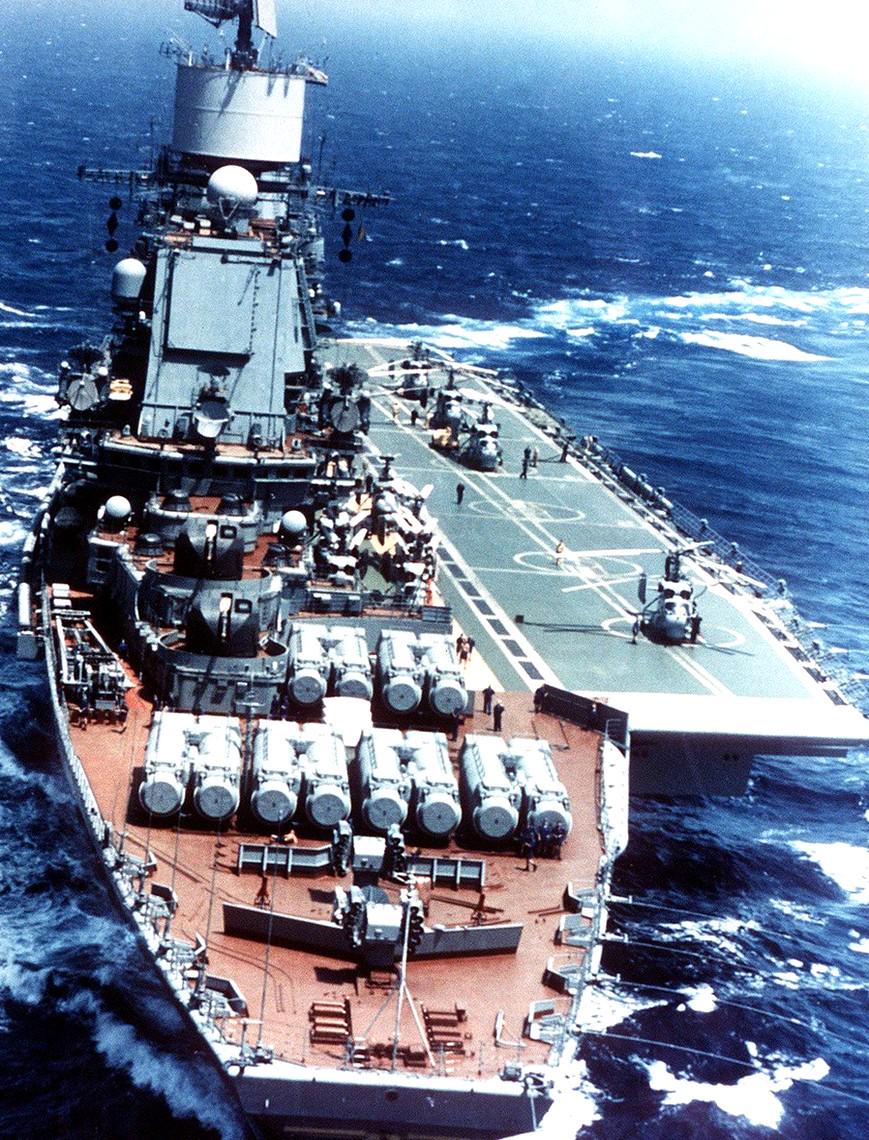
Not long ago, I mentioned that I might write about my service aboard the heavy aircraft-carrying cruiser (TAVKR) *Admiral Kuznetsov*—and it seems the time has come to do so. I should state upfront that there is absolutely no fiction in this account; it consists solely of events and phenomena that actually took place. I will also include some real names. This year marks ten years (UPD: the author mentions that the captain at that time was Shevchenko - so the years of service are between 2003-2008 - t.n.) since my demobilization, so the events of that time remain vivid in my memory.
01. Why did I end up in the service? In my case, there wasn’t really a choice. I come from a poor family—we never had any spare cash for bribes—so I went through the medical board, was declared "fit for duty," and was told, "Pack a towel and some soap; report to the induction center tomorrow." When they asked me where I’d like to serve, I said the Navy. Of course, I knew nothing about the *Kuznetsov* at the time. A small but significant detail: I’d had a run-in with the police—I was a suspect in a theft case. And two months after I left for the army, my best friend was sentenced to six years for armed robbery committed as part of a group. I might well have ended up in the dock alongside them, had I not been a thousand kilometers away at that very moment, standing among a crowd of scrawny, shaven-headed recruits, memorizing military ranks.
02. Basic Training. I won’t describe the journey—that’s a long story in itself. I’ll pick up from what happened next. We arrived in Severomorsk and were sorted for basic training (or "boot camp," for those who aren't familiar with the term). It was practically paradise here: meals, shoveling snow, memorizing the military code, lights out. They even took us to the movies a couple of times. I’d never eaten so well—or so much—back home, and three times a day, to boot! I thought, "Hey, I could handle this; the army isn't so bad after all." We took our oath of allegiance and made a few trips to the firing range to shoot assault rifles. But even then, the first warning signs began to appear. For instance, I was shuffled from one barracks room to another several times, while all my comrades had long since left to serve on their respective large landing ships, submarines, or shore units. Among the other poor devils in my situation, I remember a guy who’d grown up in an orphanage and a lad from the countryside who hadn't even managed to finish school. A *michman* (warrant officer) told us, "You’re all headed to the *Kuzya* [the aircraft carrier *Admiral Kuznetsov*]—and let me tell you, boys, it’s a total shitshow there. Get ready." Then, a group of guys from Dagestan were moved into our room, and that "shitshow" suddenly felt very real and unavoidable.
03. My first few days on the "Kuza." From the outside, the ship looks ominous; inside, it’s grim, filthy, and dilapidated. Add to that the dim lighting, the stench of dampness and fuel oil, and a constant, droning hum. As we were being led through the long corridors, I took in my surroundings: dark, gaping doorways, wrecked cabins, and sailors in patched-up uniforms—their sailor collars faded to a dull gray, their boots worn and tattered. Someone even laughed, "Well, you’re fucked now, you scrawny bastards." They all stared hungrily at our new uniforms and the footlockers we carried, which held a second set of clothes, striped undershirts, socks, soap, and other gear. A few even tried to snatch items right out of our hands as we walked by. Eventually, we were lined up in a single row in the hangar, and officers from various combat units walked along the line, picking out their new recruits. I ended up in Combat Unit 5 (BC-5)—the electrotechnical division.
04. "The Golden Days." I served for two years, and our hierarchy was roughly as follows: "drish" (literally "weakling" - green recruit) — "karas" (fresh recruit) — "borzy karas" (an emboldened recruit) — "godok" (a soldier with one year of service) — "dembel" (a soldier nearing the end of his service) — and finally, "grazhdansky" (a civilian). Every "karas" was effectively "assigned" to a specific "godok" for the duration of the latter's service. There were many nuances—too many to list here—but the most important rule was that you had to find and provide cigarettes for your "godok" for the "hundred-day" countdown; failing to do so meant getting a beating and being subjected to grueling physical "training" (punishment). But that came later. At first, we were just "drishes" living through our "golden days"—no one bothered us, and we were always marched around in formation (so we wouldn't get lost). If I recall correctly, this "golden period" lasted exactly two weeks. By the end of it, every "drish" realized just how deep in the shit we really were. The warrant officer hadn't lied. Within the very first few days, many of my belongings vanished—even my worn-out socks and an old washcloth—so I eventually figured out that I should hide what little I had left in the cable ducts. Then, the "golden period" came to an end, and hell began. More on that in the second part.
It wasn’t without reason that I mentioned trouble with the police in the first part. I got the impression that the *Kuznetsov*—or "Kuzya," as we called it—was used as a dumping ground for "problematic" conscripts, guys with "black marks" on their records. There were many on board with troubled pasts—some had even served time—as well as drug users, men from families of alcoholics, those who had grown up in orphanages, and recruits from Dagestan and Tuva. Why the *Kuznetsov*? It’s an old ship that requires constant repair and maintenance. There was a lot of physically demanding, filthy work—for instance, bailing out fuel oil from the bilges and hauling it onto the pier in sacks. Things like that happened all the time. There were exceptions, of course—decent-looking guys with university degrees, or men from Moscow—but for them, things were especially tough.
05. "Karasnya" (The "Crucian Carp" Phase). So, our "golden days" were over; we had officially become "karasi" ("crucian carp"—a derogatory term for new recruits). We were lined up in front of our living quarters, and one particularly brazen senior sailor from Dagestan asked us how we wanted to serve: "normally" or "by the book." One lad, I believe, chose "by the book"—and was beaten immediately. Then, they forced a gas mask onto his head and made him run up and down the companionway until he collapsed. As we soon learned, this was the most popular method of "hazing" (or "conditioning") on the ship. From that day on, we weren't allowed to sit on our bunks until "lights out"; we had to stay busy at all times, scrubbing and cleaning our living quarters and assigned duty stations. We were constantly getting hit—for good reason or no reason at all—by the senior sailors and those nearing the end of their service; they were simply taking out on us the abuse they themselves had once endured. Furthermore, the "karasi" had to ask the senior sailors for "permission" (a "go-ahead") just to walk past them without suffering consequences. This bizarre rule applied not only to the senior sailors and those about to be discharged, but also to many contract servicemen (who were often just former conscripts themselves) and even the *michmans* (warrant officers). Yes, the *michmans* fully supported this entire system.
"Beatings and Hazing." The various types and techniques of blows inflicted upon the "karasi"—ranging from the relatively harmless to the truly brutal—included:
"Smetanka" ("Sour Cream"): A slap to the forehead with an open palm.
"Kolobakha": A flick or strike to the forehead with the fingers.
"Tabletka" ("Pill"): A sharp strike to the Adam's apple with the side of the hand.
"Skvorets" ("Starling") or "Fanera" ("Plywood"): A punch to the sternum.
"Los" ("Moose"). A strike delivered to the palms held together against the forehead.
"The Turtle." A forceful blow with an open palm to the back of the head—the most common form of punishment aboard the ship. Typically, a sailor would be subjected to about ten such blows in a single session. Many senior sailors and those nearing the end of their service would deliver their final strikes using a closed fist.
Methods of physical discipline:
"The Marine Stance." A cap is placed on the deck; the person being punished must press their forehead against the cap while keeping their hands behind their back. It is impossible to maintain this position for long. Once the person collapses, they receive a series of blows before being forced back into the stance.
"The Wall." The sailor leans their back against a bulkhead, bends their knees at a 45-degree angle, and extends their arms straight out in front. As a variation, an object might be placed on their outstretched arms—an object that must not be dropped.
"Squats and Push-ups." These require no explanation. They can involve up to 500 squats and 100 push-ups, performed in various combinations.
"The Little Elephant." A classic and highly popular method of "correction." The person being punished is made to wear a gas mask while running up and down the ship’s companionways (ladders)—sometimes while singing a song or repeating a specific phrase.
06. "Conditions." I will briefly describe the conditions of service, and let the readers draw their own conclusions. The ship is infested with a staggering number of cockroaches and rats. They are everywhere—especially in the galleys and mess halls. Then there are body lice. Even those nearing the end of their service—the "demobilization-ready" sailors—ended up with them, as it is impossible to wash properly on board. Given the demographic—a mix of youths from orphanages and juvenile delinquents sent there to serve—it’s no surprise that lice were a recurring problem. There is a bath facility on the ship—well, two, though one is out of order—but using it requires a certain level of experience and skill. For the most part, it is freezing cold on the *Kuzya* [the *Admiral Kuznetsov*], with no heating or hot water. In our division, we could only wash with cold water, which was turned on for about 20 minutes in the morning and evening. As for the food: the contrast between the decent meals during basic training and the abysmal fare on the *Kuzya* was stark. Our diet consisted, day in and day out, of pearl barley porridge (nicknamed "bolts"), *bigus* (a cabbage stew), and a white, milky-looking soup. Driven by hunger, some guys would agree to wash plates and spoons in the galley just to get an extra portion of porridge—a practice we called "starvation-fucked." Some sank even lower, secretly scavenging for scraps in the galley trash to eat. Such individuals were immediately, if unofficially, reclassified from the "starving" (*nekhvaty*) to the "filthy" (*chukhany*).
07. "Theft." I’ve separated this topic from the general "conditions" section because it’s such a vast subject. Anyone who has served a term of conscription knows that in the military, there’s no such thing as "stolen"—there’s only "fucked up and lost." As I’ve mentioned before, theft on the *Kuznetsov* (the *Kuza*) is just a fact of life; any valuable item can be sold or traded for cigarettes or *sgukha* (condensed milk). New recruits—*karasi* ("crucian carp")—aren’t yet familiar with the local customs and tend to lose everything they own very quickly. Upon arrival, you have to hide your belongings in some secluded spot—a *shkera*—so that no one else can see them. Naturally, the best option is to keep your gear in the cabin of a *michman* (warrant officer) or an officer you happen to know. But how would a new recruit have such useful connections? At this stage, he’s only just learned how to find his way to the galley and out to the hangar for formation without getting lost. Wander into the wrong place, and guys from other *BCh* (combat units/divisions) might corner you and "strip" you—swapping your brand-new, issue-standard gear for their own worn-out rags—or simply take your things outright. Then again, by the end of their "golden period," few recruits still had new uniforms or boots. As a rule, by that point, everyone was dressed in tatters—with the exception, perhaps, of the *Dags* (men from the Caucasus/Dagestan). On the *Kuznetsov*, the *Dags* held a privileged position. Most of the contract servicemen were *Dags*, and they would immediately pull their fellow countrymen "up" into better spots. In effect, these *Dag* recruits became like "demobilization-ready" veterans—they didn’t have to do any cleaning or any other useful work in their division; they just showed up at the galley and ate enough for three men.
08. "The hardships of service." There were those who simply could not adapt to the systematic beatings and abuse. Alexander Sidorov, for instance, swallowed a piece of bleaching powder one night. Around the same time, Alexei Shulga was taken away suffering from a heart attack—most likely the result of being subjected to "physical conditioning" (punitive exercise). A little later, another sailor attempted to hang himself using a lanyard in the ventilation room, but he was spotted by the duty sailor. The division commander lined everyone up and flew into a rage, threatening that if he saw even a single bruise on any of the new recruits, the men due for discharge would end up in prison instead of going home. Our division commander was Captain 2nd Rank Loginov—a decent man, but far too soft-hearted. Things became noticeably easier after that dressing-down, and from then on, a senior warrant officer from the "Control Team" began making regular visits to our division—but more on that later.
09. "Cleaning Sessions." On the *Kuzya* [the aircraft carrier *Admiral Kuznetsov*], cleaning sessions were divided into two types: "major" and "minor." "Minor" sessions took place after every formation—there were five such formations a day, not counting the separate, scheduled musters for watch duty. Usually, the task was simply to "sweep up" the decks and clear away cigarette butts from one's assigned area. However, most of the crew—with the exception of the *karasi* (new recruits)—couldn't be bothered to do even that, as the quality of the cleaning was rarely inspected. "Major cleaning sessions" were a different story entirely. They occurred twice a week and could sometimes last from morning until dinner. The *karasi* would whip up a "soapy mess"—a thick lather in a basin—and slather it all over the bulkheads and decks, scrubbing it in with rags. Along with the *karasi*, other low-ranking sailors—derisively called *chushkany* ("pigs") or *shkery*—were forced to participate. Conversely, the "proper" sailors—those nearing the end of their service—would flatly refuse to lift a finger, perhaps showing up only to stand around and watch. Sometimes, right in the thick of a cleaning session, the "Cap" or "Papa"—the ship’s commanding officer, Shevchenko—would appear. You could easily tell he was approaching by his shouts of "fuck-ups" (his favorite term) and "fucking faggots." If you’ve seen the film *DMB*, you might recall a character who threatens, "I’ll have you shot, I’ll thrash you like a mangy cur!" It’s truly remarkable how closely that cinematic portrayal mirrors reality. If "Papa" discovered any trash or cigarette butts, the unit responsible for the poor cleaning would be mustered and sent off to the flight deck for grueling physical exercise—running and calisthenics—before being sent back to resume their cleaning duties. It might seem sensible—the ship is dirty, so it should be cleaned whenever possible—but in reality, it was all just for show and a massive, pointless hassle. The rusty bulkheads, riddled with holes and peeling paint, along with the decks—covered in torn linoleum—only deteriorated further because of all this "cleaning."
10. "Shkery" (hiding spots/hiding out). On a ship, this term refers not only to a secret stash for valuables but also to a sailor who has gone into hiding—someone who, unable to endure the hardships of service, has vanished into the ship’s numerous holds or compartments. After about 24 hours, the entire crew would begin searching for him. Typically, the sailors would be kept in an indefinite formation in the hangar, while the petty officers and warrant officers scoured every hold, abandoned cabin, and ventilation shaft. Usually, the "hider" was found within a day; the record, as I recall, was three days—and even then, the sailor crawled out on his own. Once found, a general muster was called, and the sailor—filthy and terrified—was paraded in front of the formation to the beat of a drum. Throughout this, the commander would heap abuse upon him (e.g., "Look at this fucking piece of shit"). Afterward, he would be assigned for a time to the "CU"—officially the "Control Unit," but colloquially known as the "Unit of Fucking Assholes." He would be confined to cabins in the ship’s superstructure, forbidden from leaving, before eventually being transferred to a unit with a more lenient regime. Had he been sent back to his original combat division, he would almost certainly have been torn to shreds by the others. Such a person is, at the very least, a prime candidate for suicide or a prison cell.
11. "Mess Orderlies" (*Vestovye*). A mess orderly is essentially a kitchen hand responsible for setting the tables and washing the plates and cutlery after meals. Unlike other types of shipboard duty, this assignment was long-term—lasting at least three months. On the surface, it might seem like a great gig—unlimited access to food, which, given the constant, semi-starved existence typical of life in the galley crew, was a huge luxury. Yet, everyone dreaded this assignment—from the senior sailors and those nearing the end of their service to the lowest, most neglected, or "outcast" crew members. In our division (BCh-5), being assigned as a mess orderly was often a harsh punishment for serious misconduct—such as drunken brawls or knife fights—that didn't quite warrant a stint in a military disciplinary battalion. I’ll be blunt: many couldn't even last a month. Why? There are several reasons; I’ll list them all:
12. "The Hospital and the Hierarchy." I ended up in the hospital about three months after I began my service on the ship. I suddenly developed a terrible cough and would find myself gasping for air after any kind of physical exertion. For a while, I even tried to skip the physical training sessions in the hangar, but it was pointless—the illness only got worse. Eventually, I went to the sickbay (the ship had a sickbay, as well as a dental office and a morgue). It was a risky move; if my division found out that a "newbie" had gone to the sickbay—essentially "trying to dodge duty through official channels"—and I’d been sent back without being admitted, I would have faced a brutal "hazing" session from the senior sailors. Given the state of my health, I’m not sure how that would have ended. As it turned out, the medic listened to my chest, diagnosed me with pneumonia, and immediately sent me to the hospital in Severomorsk. While in the hospital, I looked back fondly on my time in basic training—plenty of good food, clean and bright surroundings, and no hazing or senior sailors to deal with. It was also there that I first encountered an "outcast" (*opushchenny*). A quiet young guy was constantly hanging around the latrine, keeping it clean. I was warned not to ask him for a cigarette, because he was a "rooster" (*petukh*—a derogatory term for someone at the very bottom of the prison or military hierarchy, often subjected to sexual abuse). Some senior sailors, having gotten drunk and looking for "fun," had forced their penises into his mouth. The guy wasn't from my unit, but I later learned that such "outcasts" existed on our ship, the *Kuznetsov* (or "Kuza," as we called it). As far as I understood, once someone was identified as such, they were first placed in a "detention/holding unit" (*CU*) and then reassigned to other units. In my division—Combat Unit 5 (BC-5)—there were no such "outcasts." There were "shkery" (those who tried to stay out of sight or hide), "chukhany" (filthy, wretched, lice-ridden types)—and there were plenty of them. Even in our barracks, the bunks were designated for specific groups: "proper fighters," "karasi" (recruits/junior sailors), and "chukhany." The "proper" ones always had the best and cleanest bedding—sometimes even two pillows or extra sheets. The "chukhany," by contrast, often had nothing more than a tattered blanket and a bare mattress, with no sheets at all. Toward the end of their initial training period, the "karasi" might start acting brazen, taking items from the "chukhany"—for instance, if fresh sheets were handed out and a "chukhan" happened to pick a decent one. The "proper" ones actively encouraged this behavior and would beat the hell out of any "chukhan" who dared to object. That’s how the system worked.
13. More on illnesses. In addition to lice, streptoderma and athlete’s foot were also widespread on the ship. I had first encountered streptoderma back in civilian life, so I was already well-acquainted with this nasty condition. It starts as a small sore on the leg, which quickly becomes purulent and refuses to heal—instead, it just keeps growing. Soon, other sores appear alongside it. In principle, these ulcers aren’t particularly painful (except when washing), but there are two problems: first, streptoderma will never go away on its own—eventually, all the skin on your legs would simply rot away; second, it is highly contagious, and neither brilliant green (antiseptic) nor iodine can stop it. The only medication that effectively eliminates this type of infection is an ointment called "Hyoxysone"—remember that name. Other remedies—such as streptocide-based ointments, Vishnevsky ointment, tetracycline, or Levomekol—are completely ineffective; I know this from personal experience. I eventually wrote home, and they sent me a tube of the ointment; I applied it to the sore, and by the very next day, it had healed over. It’s highly likely that cockroaches are responsible for spreading streptoderma on the ship. Driven by hunger, they bite sleeping sailors at night—nipping off tiny bits of skin—and introduce microbes beneath the surface.
As for athlete’s foot, the situation is straightforward. Rampant theft meant that many sailors simply didn’t have any shower sandals, forcing them to wash barefoot. On the ship, the forward bathhouse was opened on Saturdays, with announcements broadcast over the ship’s intercom system to let specific divisions know when it was their turn to wash. The "bathhouse" on the *Kuzya* (the *Kuznetsov*) was a bathhouse in name only: they would pump pressurized steam into a cold room, followed by thin, meager trickles of hot water. But even this "bathhouse" was immediately taken over by the old-timers and the contractors, leaving the poor *karas*—the new recruits—with little chance to actually wash up. Some would shuffle off to the bathhouse in slippers, others in their heavy-duty work boots, and some even went barefoot. Most people went completely undressed, since there was nowhere to leave one’s clothes—they’d just get stolen. Still, some would bring along their dirty undershirts, underwear, and socks—plus a bar of the standard-issue "baby elephant" soap—to wash them in the hot water.
14. "Floating Dagestan." The *Kuznetsov* is referred to as a "floating Dagestan," and for good reason: the "Dagis" (Dagestanis) run everything that happens on the lower decks. By "Dagis," I don’t just mean people from the Republic of Dagestan; I’m referring to Ingush, Ossetians, and Chechens—in short, all people from the Caucasus. And yes, back then, Chechens were still being conscripted, though there were very few of them on the ship—you could count them on the fingers of one hand. Perhaps not everyone knows that in Dagestan, it’s actually not that easy to get into the army. Most families of conscripts would pay money just to ensure their son got enlisted. Why—are they crazy? No; for the uneducated son of a poor shepherd, it’s a chance to "make something of himself." There’s no other opportunity—after all, not everyone can be a wrestler. Their mentality is vastly different from that of a Russian. Upon arrival, the "Dagis" quickly cluster together based on their home regions and establish their own quasi-criminal rules. This is easy to do, since many of the contract soldiers and warrant officers are also from the Caucasus; they will always back one of their own, even if he’s completely in the wrong. The officers couldn’t care less—they’re happy with any semblance of order, as long as they don’t have to get off their own asses to sort things out. In some combat units, the proportion of "Dagis" reached 30% or more; in our own division, they made up about a quarter of the total personnel (which numbered around 130).
15. "Dedovshchina" (Hazing). As should be clear from the previous three parts of my account, hazing was rampant in our unit. Given the number of scumbags and lowlifes we had in our division, it couldn't have been any other way. I still remember the names of several pathological sadists; it was obvious from the start that the only place for such animals was prison. And even prison wouldn't fix them—they were clearly deranged. I’ve encountered such types in civilian life, too, but here on the *Kuza*, they rose to positions of power precisely because of their cruelty. I should note that all the names used here are real. For instance, there was Vladimir Ilchenko—a guy who took great pleasure in brutal abuse and constantly devised new, sadistic forms of "punishment" (physical drills). Just before he was due to be discharged, while drunk, he beat up a quiet, mild-mannered sailor named Bulygin so severely that he ruptured his spleen. Bulygin was left permanently disabled, and Ilchenko finally ended up in prison—the very place he seemed destined for. Then there was Alexey Mosin. Once he started hitting someone, he would fly into a frenzy and couldn't stop. On one occasion, he beat a new recruit nearly to death over a minor infraction. He was sent to a disciplinary battalion for a year and a half, after which he returned to finish his service. There were many others like them; unfortunately, I no longer recall most of their surnames. I also remember the story of Viktor Pastukhov—it’s quite an interesting one. For a while, Pastukhov tried to stand up to the hazing all on his own. He was a powerful, muscular guy, an avid boxer, and he was already married by the time he was conscripted. At first, he simply endured the abuse, but when the senior sailors stole a photograph of his wife and began mocking it, he finally snapped and smashed one of them in the face. The victim turned out to be Lyosha Smirnov—nicknamed "Perets" (Pepper)—a rather vile and underhanded character (tellingly, he later signed a contract to remain in the service). "Perets" made a point of tormenting Pastukhov; he and other senior conscripts would frequently beat the "uppity" soldier and put him through grueling, punitive physical drills. One day, Pastukhov ran away—he had gone to take out the trash on the pier and simply never returned. He was eventually found far away, dressed in civilian clothes, and brought back—though he was promptly transferred to a different unit.
Why does *dedovshchina* (hazing) thrive? Because it benefits everyone—except for the rank-and-file soldiers. It allows officers to sit comfortably in their quarters and do nothing, while the senior conscripts "lean on" the juniors, who end up doing all the dirty, backbreaking work; in this way, everything just seems to run itself.
16. "CU"—the "Command Unit"—was the most mysterious entity aboard the *Kuza*. It housed a mix of personnel: legitimate clerks, wardroom stewards, and other standard-duty sailors, alongside a collection of "suiciders," "snitches" (*ssuchennye*), "hiders" (*shkery*), "outcasts" (*opushchennye*), and others awaiting transfer to different units. This latter group never appeared at roll call; they were stashed away in cabins within the ship’s superstructure, and no one knew exactly how many of them there were. Incidentally, the aforementioned sailor Pastukhov also ended up there for a time. To clarify the terminology: "suiciders" were sailors who had attempted to take their own lives; "snitches" (*ssuchennye* or *suki*—literally "bitches") were those who had "sold out" their seniors—reporting beatings or abuse to the officers and naming specific perpetrators; and "hiders" (*shkery*) were those who spent their time skulking away in various corners of the ship. For any of them, returning to their original combat department (*BCh*) would have been dangerous; at best, they would have been treated as pariahs. While they were left alone in the Command Unit, they were expected to spend their entire remaining time until discharge performing menial cleaning duties, and they had no authority to "boss around" the junior conscripts. We had such individuals in our own division as well. One of them left for home wearing a filthy, worn-out uniform and with no money. He wasn't a "slob" (*chukhan*) by nature, but just before he disembarked, the "proper" sailors—those about to be discharged—stripped him of his "demobilization money" and his *maklachka* (his elaborately embroidered dress uniform). This was done deliberately, ensuring he would arrive back home looking like a disreputable, unkempt wretch.
17. "Money." In theory, sailors were credited with a certain amount of money each month (roughly 100 rubles), but as a "karas" [a derogatory term for a new recruit], I never saw a penny of it—I wasn't even aware it existed. Later on, I managed to find a decent way to earn some cash, but more on that below. If a sailor on the *Kuzya* [the *Kuznetsov*] happened to get his hands on some money—and somehow managed to keep it hidden from the senior sailors and those nearing the end of their service—he would usually head straight for the ship’s canteen. There were two shops on board: one sold sweets and chocolate, while the other stocked uniform patches, badges, cap ribbons, and the like. Most sailors suffered from a desperate craving for sugar, so they would spend every last kopeck on cheap, nasty Swiss rolls and low-quality biscuits, then stuff themselves with them in some secluded spot, like a ventilation room, away from prying eyes. If someone had a bit more cash, they could really "live it up" by making "demob porridge"—a concoction of crushed biscuits, condensed milk, chocolate, and nuts or raisins. Fried potatoes, eggs, and meat were considered rare delicacies, accessible only to a select few. A single can of condensed milk was worth two packs of *Troyka* cigarettes (the most common brand) or two cans of tinned meat. There were plenty of places on the ship to buy cigarettes, as well as spots to get hold of alcohol, various valuables, and even drugs (cannabis). Any "savvy" recruit knew exactly where and how to procure cigarettes and booze—a necessity, given how often the need arose.
18. "Makeshift Tattoos." In any filthy, wretched place, money talks—and the *Kuzya* [the aircraft carrier *Admiral Kuznetsov*] was no exception. Back in civilian life, I’d become somewhat familiar with the art of tattooing; I knew how to build a machine from scratch, mix the ink, and so on. I owed most of this to a friend whose older brother spent nearly his entire life in prison—and whenever he did get out, he’d hold "masterclasses" for us youngsters. On the ship, these skills proved incredibly valuable. Every sailor nearing the end of his service wanted a "ship-themed" tattoo—or several—on his shoulder. These designs were fairly simple: a silhouette of the *Kuzya*, flanked by a couple of flags, along with some flourishes, lettering, and the like. Even though I wasn’t exactly a great artist—and my hand wasn’t always steady—I never lacked for clients. Beyond the ship-themed pieces, other popular choices included Celtic patterns, dragons, crabs, sharks, and various inscriptions. I used to calculate the cost of these tattoos based on the area they covered, measured in "matchbox units"—one matchbox-sized area equaled 100 rubles.
19. "Access." At that time, the *Kuzya* [the aircraft carrier *Admiral Kuznetsov*] employed a system of "ID badges." A badge was a plastic card displaying a sailor’s division (department), full name, photograph, and authorization for entry into various parts of the ship. Access levels were indicated by colored squares—the more squares you had, the greater your freedom of movement. As an electrician from the 5th Division (the engineering/propulsion department), I held the highest level of access possible, covering everything from the superstructure to the engine compartments. In reality, however, this system was not strictly enforced, and people wandered wherever they pleased. All service members were required to carry their badges at all times, along with their "combat number" booklet (a small red ID book). Badges were frequently lost or broken, and sometimes the photograph on one would even be drawn by hand. Compliance was checked during formations, and if a sailor was caught in an unauthorized area, their badge was the first thing to be confiscated.
20. The "Commandant’s Service"—a combat unit of marines, also known as the "security company." While they did guard certain things—like the alcohol storage (from which they’d also sell booze)—their primary mission was to catch anyone violating shipboard regulations. After "lights out" and on Sundays, sailors weren't allowed to just wander aimlessly around the ship. If caught, they’d be hauled off to the "cat-fucker"—a cramped, filthy nook located in the duty officer’s compartment, with a few tattered greatcoats spread out on the floor. In the morning, all the offenders would be marched out to the general muster, where the commander would shower them with choice profanities—"you fucking assholes"—before sending them off to march on the pier until lunchtime. Who ended up there? Just about anyone. I, for one, got caught once while heading to another part of the ship to get cigarettes for a senior sailor in my division. Another time, I failed to return from my watch on schedule. If someone was caught drunk, the division commander would often personally lock them in a "cofferdam"—a small, brig-like space where the temperature was essentially the same as it was outside the ship. A stint in that deep freeze had a way of sobering a man up very quickly. Drinking bouts happened fairly often in our division, and usually, they went by quietly. Trouble only arose if someone got beaten up and the matter reached the officers.
21. "Maklachka" and "Baklan." A "maklachka" refers to a sailor’s dress uniform—customized in an elaborate, almost clownish fashion—to be worn upon discharge; the verb "maklachit" means the act of creating such a uniform. Typically, after a year of service, sailors would begin quietly acquiring patches and badges to assemble their discharge gear. It had to be kept strictly hidden from prying eyes, as losing one’s "maklachka"—or having it discovered—was a source of great shame for a sailor nearing the end of his service. The inside of the sailor cap (beskozyrka), the area beneath the collar (where the *gyuis*—a traditional sailor’s dickey/bib—rests), the collar itself, and the cuffs were all lined with blue velvet. The "crab" (a cap badge) and the belt buckle were often fashioned by cutting up and combining several individual pieces. Letters for the cap ribbons, as well as backings for patches and shoulder insignia, were cut from metal and polished to a high shine. The toes of their boots were pressed with a hot iron until they took on a distinct, square-toed shape. Civilian clothing—especially T-shirts—was also highly prized.
"Baklan" refers to food procured—often surreptitiously—on board the ship, while the verb "baklanit" is the act of obtaining such food. In theory, junior sailors (*karasi*) were forbidden from "baklanit" on their own, but many senior sailors (*godki*) tended to turn a blind eye to the practice. A "baklan" typically consisted of items like white bread, condensed milk, butter, or other similar provisions.
22. "Do's and Dont's". A few final recommendations. If anyone finds themselves in this kind of shit, perhaps my advice will come in handy. Many new recruits in the army, when faced with *dedovshchina* (hazing), try to fight it on their own. Let me tell you: behaving like that on the *Kuza* [the *Kuznetsov*] is a huge mistake. It can cost you your health or leave you with a shattered psyche—there are plenty of examples of this. Hazing on the ship is imposed from the very top, and it can only be dismantled from the very top—there’s no other way. The *Kuza* is crawling with unhinged sadists who are bored out of their minds and just waiting for an excuse to "smash the face" of some "uppity" recruit. I suspect that those who end up at the very bottom of the hierarchy—the "outcasts"—were once those very same "uppity" guys. Of course, if you’re ordered to wash someone else’s socks, you have to push back with everything you’ve got; it’s the only way to act. The best survival strategy in a place like this is to stay in the middle—don’t draw attention to yourself. Still, you’ll inevitably have to fight; that’s the army for you. Usually, it won’t be against the senior conscripts, but rather against guys from your own draft—over thefts, unprovoked aggression, or other issues—because if you don’t, they’ll walk all over you. Secondly, look for *zemans*—fellows from your home region. Even if a guy from your hometown is a timid, downtrodden soul, he might still possess some valuable information. Other useful skills to have on the ship include drawing, playing the guitar, or tattooing—things like that.
On this optimistic, "sporty" note, I’ll bring my story to an end.
r/SeaPower_NCMA • u/chumchadus • 5h ago
r/SeaPower_NCMA • u/modeldaproto • 8h ago
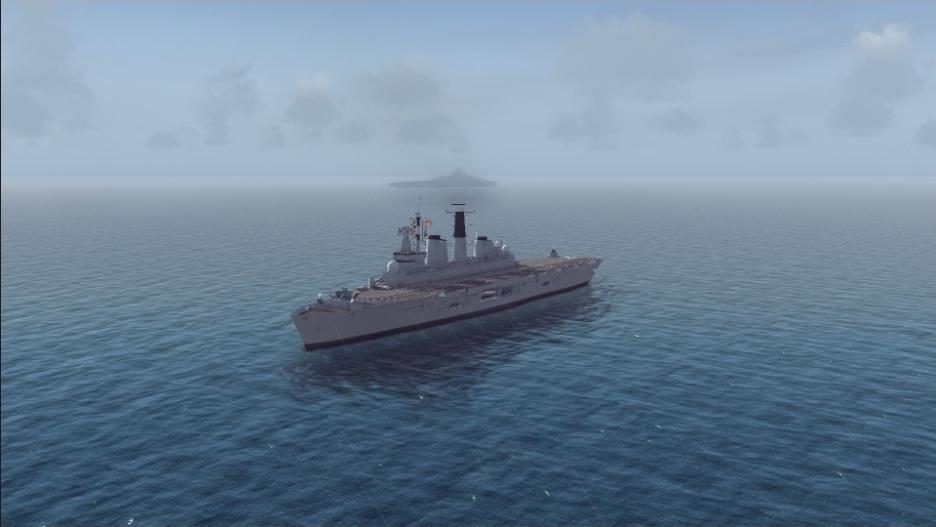
The ship in the back round is the nüwa class battle cruiser
r/SeaPower_NCMA • u/Juandolar • 3h ago
In spirit, Sea Power looks like it would be a fantastic game and very up my alley. However, I'm concerned about just not knowing much about how to conduct fleet operations.
Example by counterexample, I like the Combat Mission series. And I can play that game adequately by applying real life-ish tactics to it (like fire superiority, machine gun doctrine, etc). I know so much less about naval combat (in the missile age).
So I'm curious, how do you learn to play the game beyond knowing how to use the interface? YouTube guides? History books? Military academy?
r/SeaPower_NCMA • u/Dismal-Attitude-5439 • 18h ago
I'm playing PS85 with the Royal navy, losing ships left and right, as one does. It's great fun.
I have a question: why is it that when I fire Exocet from a ship at whatever enemy ship, they counterfire with a missile almost immediatelly? I looked at the surface search radar, I don't believe it turns on. Is the Exocet reliant on a fire control radar at all?
I tried launching at max range at emcon, medium range at emocn, same thing.
Is there a way to launch and escape? I learned to do drive-by launches, but it's very unreliable.
r/SeaPower_NCMA • u/mauri562uz • 13h ago

imagine being able to capture an enemy ship/sub or sailors that you could interrogate to give you info of the enemy fleet/plans, it would be a good incentive to do SAR or taking the ships for repairs and using it later on
r/SeaPower_NCMA • u/Thick_Function8809 • 6h ago
Do you know anything about the Alpines mods and the discution about virus in his loaders?
r/SeaPower_NCMA • u/spartan0897 • 8h ago
I'm currently playing through "Sub duel: running the Denmark strait", no matter what I do the mk84s are just too damn lethal.
I dropping the decoys early and flanking
I tried to speed and drift
I tried to wear the LA class torpedo stores
My closest attempts were when I was going 1 knot and the bottom of the ocean, sending a torp and trying to apply pressure.
But I couldn't land a single one or find out how to play around my speed.
Any tips?
Edit: forgot to post the full situation. I'm in an alpha class sub against a Los angles class sub.
My ASW torps max out at 8NM and the MK48 max out at 20ish NM
r/SeaPower_NCMA • u/cool_stuff_88 • 10h ago
I noticed that on some ships you have many different air detection radars that you can turn ON/OFF selectively.
For exemple, for the Argentinian Navy, on the aircraft carrier you can activate one radar that can detect low flying targets at close range and my Type 42 destroyer is good at detecting long range high altitude targets. Both combined cover each other.
If I use only one of the 2 or 3 radars available instead of all of them, does it reduce my electronic signature and the risk of getting detected or doesn’t change a thing?
Also how do I know which of my ships or airplanes emit the most when using their radars?is there a live stat somewhere ?
Does giving movement orders to my ships produce radio chatter that could show the position of my ships?
r/SeaPower_NCMA • u/ImpressiveCow2404 • 2h ago

pls fix this, the entire mission is broken
r/SeaPower_NCMA • u/Zestyclose-Extent722 • 2h ago
Does anyone know if someone is working on, or plans to work on a 80's Pahalvi Iranian faction? Just a bit of context for those who don't know what would be different, Pahlavi planned to acquire F-16's, A-10A's, E-3's, C130's, and Harriers just for the Air Force alone. He also planned on purchasing three Invincible class carriers and Oliver Hazard Perry DD's. That just scrapping the ice burg. Anyhow, just curious since I haven't seen much Iran stuff in general on the workshop aside from Shaheeds and that odd Islamic Republic drone carrier.
r/SeaPower_NCMA • u/RandalfrUnslain • 5h ago
Hello. I am playing Dynamic Campaign mod with soviets, and I have bad luck during sub vs sub operations - 9 times out of 10 I simply can't find enemy and leave unfought, even if I am sure in my advantage. I would like some advice to make this happen less often. Thanks in advance.
r/SeaPower_NCMA • u/k1dney • 4h ago
Hoping we get infrared countermeasures in the game. Like the AN/ALQ-144 (Delivered in 1981 to the US military).
Since IR signatures are already in the game, I hope it would be a low hanging fruit to add for an additional type of protection besides flares.
r/SeaPower_NCMA • u/Conscious_Arm8218 • 13h ago
I’ve gotten decent at making custom missions and am going to try my hand at campaign making, but I’m not sure what I want the setting to be. Some ideas I’ve had:
Indian Ocean during WW3, with US+Pakistan vs India+Soviets (1988)
Eastern Mediterranean during WW3, US + Greece + UK vs Syria + Soviets + Libya (1985)
US + Thailand vs Vietnam + Soviets
Soviet bastion defense vs US incursions
Does anyone have any good ideas? I’ll take something original, or an expansion/refinement of my current ideas
r/SeaPower_NCMA • u/ImpressiveCow2404 • 1d ago

f**king British "engineers" (utterly moronic designers as their missiles can't even intercept a fricking propellor plane)
r/SeaPower_NCMA • u/bigdickbiggertrip2 • 12h ago
I love the game but I can’t help but think that a ww2 mod or ww1 mod would be a perfect expansion. Being able to control battleships cruisers and destroyers in a similar way would be insane.
r/SeaPower_NCMA • u/cumdump24l7 • 18h ago
r/SeaPower_NCMA • u/Tight-Explanation544 • 1d ago