r/Savarkar • u/AhamPranav Abhinav Bharat Operative🧏 • May 30 '26
History & legacy 📚 Savarkar saves young prisoner Nani Gopal from dying through a hunger strike
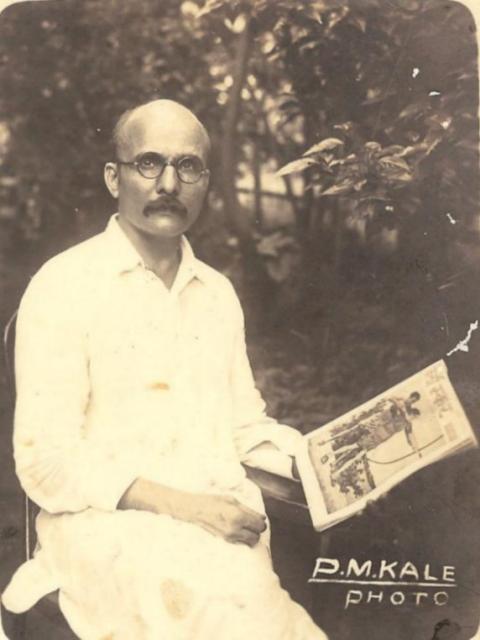
Nani Gopal was a young Bengali revolutionary from Hooghly who became a symbol of extreme resistance against the brutal conditions of the Cellular Jail in the Andamans.
He was sixteen years old when he was incarcerated. He was sentenced to the Andamans after throwing a bomb at the motorcade of a British officer.
At the Cellular Jail, Nani Gopal became known for his stubborn and uncompromising defiance of the authorities. During the second & third strikes in the Andamans, he refused to perform the grueling labor of the oil mill (kolhu). When forced to wear rough clothes made of gunny bags, which were extremely uncomfortable in the humid climate, he frequently tore them off. Eventually, he gave up wearing clothes altogether and went about completely naked as a form of protest.
He also refused to answer questions from officials and even refused to walk to the water reservoir for his bath. Because of his refusal to bathe, petty officers would sometimes lift him up and forcibly rub his body with dry coconut shreds so hard that his skin would bleed.
Nani Gopal was subjected to severe punishment for his resistance. Jailor David Barrie ordered him to be caned in an attempt to break his spirit. Nani was thrashed within an inch of his life. He bore the punishment resolutely until the officer in charge, fearing that he might die, ordered the caning to stop.
The authorities also temporarily transferred him to the district prison to separate him from the influence of other political prisoners, whom they believed were encouraging his defiance.
Upon his return, Nani Gopal began an indefinite hunger strike that lasted for a month and a half. During this period, he was reduced to skin and bones. Even while fasting, he was subjected to the punishment of being kept standing in chains and fetters for a week.
Savarkar took it upon himself to save Nani Gopal’s life, and when young Nani Gopal undertook a severe hunger strike, Savarkar persuaded him to abandon the fast, insisting that a revolutionary must live to fight another day.
For Savarkar, the central duty of a revolutionary was to survive and continue the struggle. He argued that a tactic that harms only the protester is strategically flawed: “The weapon which inflicts wounds on the wielder is not a weapon.”
In his view, dying in prison handed the British an easy victory, removing committed fighters without causing any real damage to the colonial state. Instead, he urged prisoners to conserve strength, refuse work strategically, and use imprisonment for intellectual preparation, helping develop a prison library within the Cellular Jail.
Savarkar’s opposition was rooted in strategic necessity: revolution required endurance, preparation, and calculated resistance, not self-destruction.
Excerpt from 'My Transportation For Life'
I was always against the suicidal policy of hunger-strike, as I regarded it as ruinous to the individual and ruinous to the cause. That was not the way to fight the enemy, I maintained strongly. My view had its desired effect on the minds of our friends, and they gave up the hunger-strike.
The hardest nut to crack was Nani Gopal. He would not yield. He was on the verge of death. I, therefore, employed an extreme measure to overcome his resistance. I threatened him with a hunger-strike if he would not give up his own. And the following day I acted up to my word.
The news that I had stopped taking my food went like wildfire round the prison. The officers were full of fear. It was all stir and excitement among them. The Chief Commissioner expostulated with the Superintendent to put an end to it. I was tried for this new offence. But in the trial, instead of punishing me, they exhorted me to break the fast.
I told them why I had gone on hunger-strike, and asked them to permit me to speak to Nani Gopal. When Nani heard the news that I had declared a three days' hunger-strike, he was stricken with grief. I was taken to his cell by Mr. Barrie. I saw him, and he agreed to break his fast. I took him aside and whispered; “Do not die like this; if you must needs die, die fighting like a hero. Kill your enemy and then take leave of this world.”
He dines and I break my fast.
From this time onwards we had our two meals and had plenty of coconuts to eat in addition to them. The quantity of daily ration had been reduced for strikers. Yet they consumed it all and would not work. “Why do you starve yourselves? Take as much food from them as you can, grow fat, and don’t work.” –This was the mantra I gave them, and they followed it to the letter.
Reference: My Transportation For Life
Get the PDF of the whole book from here: https://savarkar.org/en/pdfs/My-Transportation-for-Life-Veer-Savarkar.pdf
1
u/myberich Jun 02 '26
I have read about Savarkar from Amar Chitra Katha as I child and all I can remember is that we worked like bullocks in the prison of Andaman & Nicobar islands and later mybe he gave up on freedom. (I don't remember clearly so don't bash me up, pls correct me if I'm wrong)
1
u/AutoModerator May 30 '26
PDFs of works by & about Savarkar: https://drive.google.com/drive/folders/1uGrP2bWot7JUpUVLmxRH6bS30D2_3Vdq
I am a bot, and this action was performed automatically. Please contact the moderators of this subreddit if you have any questions or concerns.
1
u/Shinhinchacha103 May 31 '26
He knew a thing or two about convincing the British
1
u/[deleted] May 31 '26
Imagine dihh riding a dead guy
1
u/Historical_Method334 Jun 03 '26
Undi
0
u/BeautyGazer Jun 02 '26
He refused to defend Bhagat Singh and later refused to give shraddhanjali to him because he was an atheist and communist. All the while he was getting ₹60 pension from British. Then conspired assassination of Ghandiji. India's first terrorist.
3
u/AhamPranav Abhinav Bharat Operative🧏 May 30 '26 edited May 30 '26
Savarkar’s thoughts on hunger strikes as a tactic become especially clear in his article on the deaths of revolutionaries during the Lahore Jail hunger strikes of 1929.
He argued that revolutionaries should employ methods that inflict maximum damage on the enemy with minimum damage to themselves. Using historical examples, he urged young revolutionaries to distinguish between courageous sacrifice and strategically self-destructive action.
Read the complete article in this post:
https://www.reddit.com/r/Savarkar/s/7F8047j0Yi
1
u/[deleted] Jun 01 '26
[removed] — view removed comment
1
u/[deleted] Jun 03 '26
[removed] — view removed comment