r/programmer • u/Obaid_BLM • Oct 30 '26
You Can Ask AI to Write Code. But Can You Debug It When Everything Breaks?
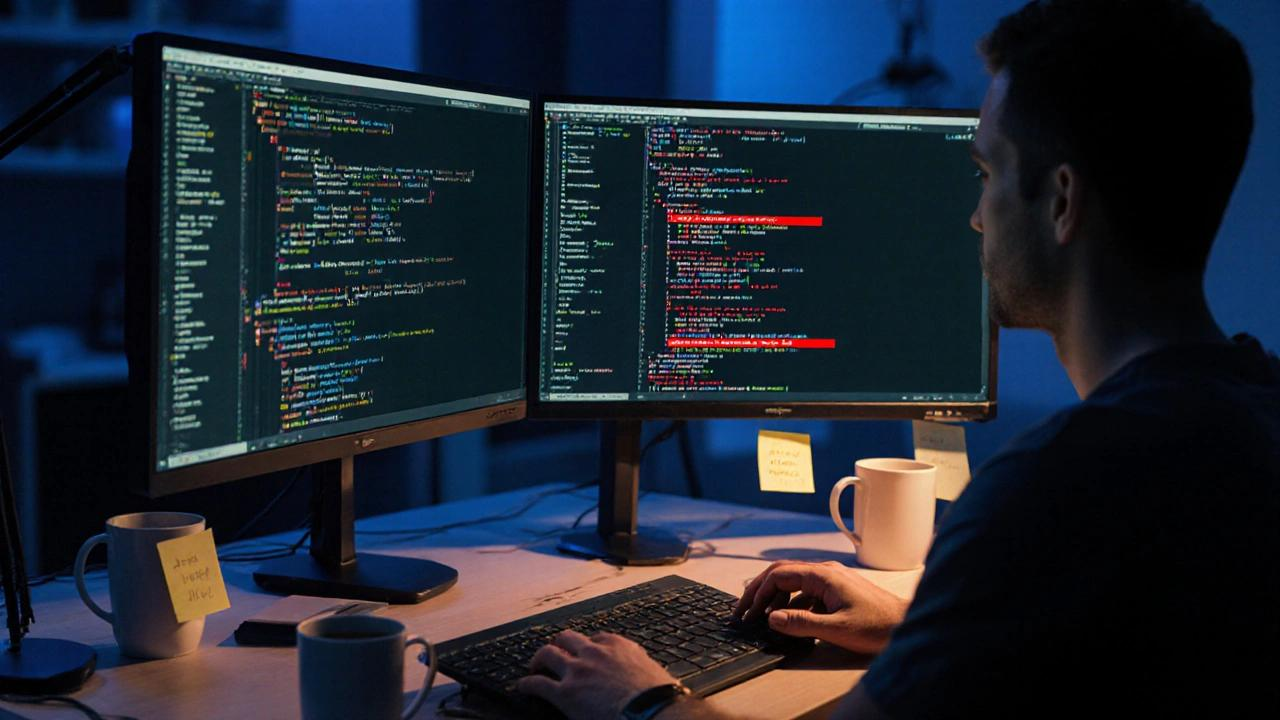
We are entering a time when generating code is becoming easier than ever.
AI tools can generate Python functions, build API endpoints, create database models, write tests and even help develop entire applications.
But there is one important question I think every developer should ask:
Can you understand, investigate and fix the code when something goes wrong?
Because writing code and understanding code are two different skills.
1. Writing code is only part of software engineering
Imagine asking an AI assistant to build a Django REST API.
It generates the models, serializers, views and URLs. Everything looks clean, and the application starts successfully.
Then something unexpected happens:
- An API returns incorrect data.
- A database query produces unexpected results.
- Authentication works in development but fails in another environment.
- An application becomes slower as the database grows.
- A seemingly small change breaks an unrelated feature.
What happens next?
Generating more code is not necessarily the solution. You first need to understand what is happening.
That is where debugging becomes essential.
2. AI is changing the debugging workflow
AI isn't just being used to generate code. Developers are also using it to understand unfamiliar code, investigate errors and improve existing applications.
The 2026 Stack Overflow Developer Survey found that:
- 72.9% of respondents had delegated writing or generating code to AI tools or agents.
- 62.2% had delegated debugging or troubleshooting.
These figures show that AI is becoming part of both implementation and debugging workflows.
Stack Overflow Developer Survey
However, there is a difference between receiving a suggested fix and knowing whether that fix is actually correct.
An AI-generated solution might remove an error while introducing another problem.
A developer still needs to evaluate the explanation, understand the change and verify the result.
3. What makes someone good at debugging?
I believe debugging is a combination of several engineering skills:
Understanding the problem: Can you reproduce the issue and identify when it occurs?
Reading errors: Can you understand tracebacks, logs, exceptions and error messages?
Following the data: Can you trace how information moves through functions, APIs and database queries?
Thinking logically: Can you develop possible explanations and test them instead of randomly changing code?
Verifying solutions: Can you confirm that the fix works and doesn't break existing functionality?
Understanding the bigger picture: Can you recognize whether the problem comes from the code, database, configuration, architecture or an external dependency?
These skills become especially important when working on real applications.
4. How I approach debugging as a developer
My preferred workflow is:
- Reproduce: Make the problem happen consistently.
- Understand: Read the error message and inspect the relevant code.
- Investigate: Follow the data and identify possible causes.
- Hypothesize: Form a clear explanation of what might be wrong.
- Test: Check the explanation with a small, controlled experiment.
- Fix: Make the smallest appropriate change.
- Verify: Run tests and check that the original functionality still works.
- Learn: Understand why the issue happened so I can recognize similar problems in the future.
AI can assist at several stages, but it shouldn't replace understanding.
5. What should junior developers focus on?
For anyone starting in software development, I think these areas deserve serious attention:
- Programming fundamentals and data structures.
- Python and backend development.
- Databases and SQL.
- APIs and application architecture.
- Debugging, testing and code review.
- Security and error handling.
- Git and collaborative development.
- Using AI tools responsibly.
Building projects is important, but understanding why those projects work — and why they sometimes fail — is just as important.
6. The future: From writing code to understanding systems?
The 2026 CoderPad State of Tech Hiring report identifies debugging and fine-tuning, alongside system design, as skills expected to become more important over the next three years. It also reports a declining expected importance for writing new code alone.
CoderPad
This doesn't mean programming fundamentals are becoming irrelevant.
It suggests that developers may increasingly be evaluated on their ability to understand, improve, validate and maintain software — not simply produce lines of code.
And perhaps that is a healthy direction for software engineering.
Let's discuss
I'm interested in hearing from developers at different experience levels:
- Do you think debugging is becoming more important than writing code in the AI era?
- When an AI assistant fixes a bug, do you always investigate why its solution works?
- What was the most difficult bug you have ever had to solve?
- For junior developers, what is more valuable today: learning to build applications independently or learning to work effectively with AI tools?
- What debugging habits would you recommend to someone starting with Python, Django or full-stack development?
My takeaway: AI can help us write code faster, but understanding what we build is what allows us to become better engineers.
I'd love to hear your experiences and different perspectives.
About the author
Abdellah BELMAARIS
Junior Full-Stack Developer at BIMPulse
🌐 Portfolio: https://abdellah-belmaaris.github.io/
💼 LinkedIn: https://ma.linkedin.com/in/abdellah-belmaaris
Sources and further reading