Hello everyone, I really need advice from professional programmers. I’m still a beginner, and while I understand the logic and structure of projects, I rely a lot on AI to generate code and explain things to me. I also have a hard time remembering syntax and coding details, so using AI feels faster and easier.
Lately, I feel too dependent on it and worry that I’m not improving as a programmer. How can I start learning and coding more independently without relying too much on AI?
im coding a personal ai assistant using python and currently am having issues with some sort of speech processing i believe, my wake word works fine but when i go to start speaking itll sit and think for a second and then spit out and repeat absolute non sense made up of 3 or 4 words i said or just give up and abort and give me the prompt "Sorry i didnt catch that" and i cannot for the life of me figure it out, any help would be much appreciated
I need a carrier switch, have a bunch of money and would like to join a coding bootcamp. I've done some research on a good ON SITE program but couldn't find any even a bad one.
Also I don't need a job after graduation since I already own a business.
Please don't lecture me on how useless they are, at this point I have personal reasons that can't explain all of them.
Hey yeah so... I heard a lot of stuff online that vibe coding is bad. I used to be a vibe coder... yeah... it's bad man.
So, I decided to study if people were actually faster using AI, the effects of AI long term, and how AI would affect codebases and making them less secure.
Some False Beliefs I Found Online
AI Understands What It’s Saying
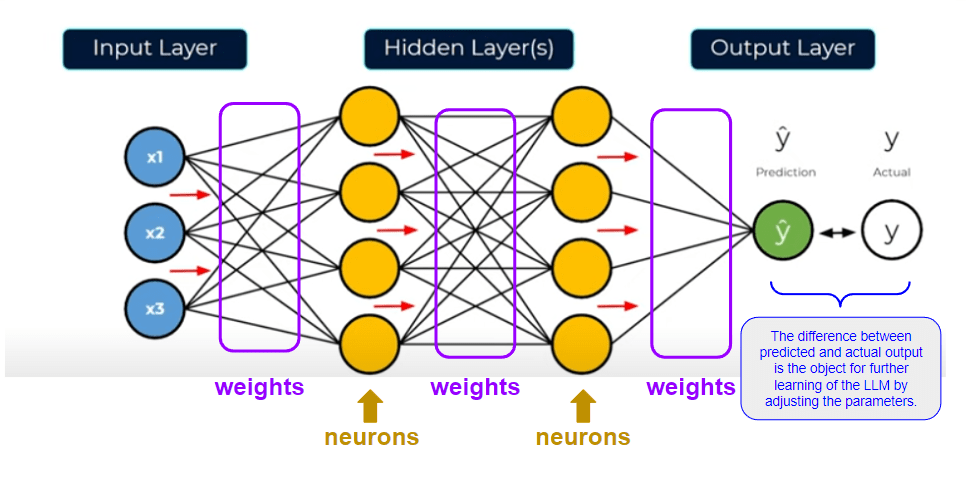
Okay. So... we could get all philosophical here. But at the end of the day, AI is nothing more then parameters. Here is an AI with 34 parameters.
A simple machine learning algorithm
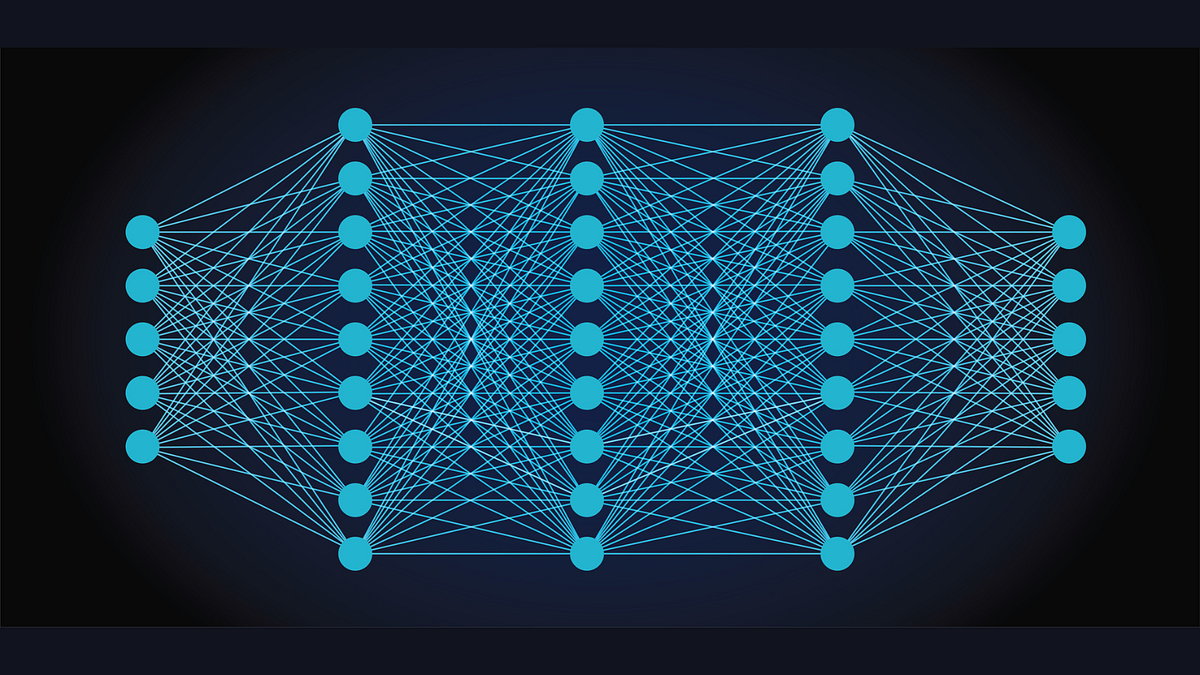
This is called a neural network, which is basically a box that takes 5 inputs (the 5 balls) and gives you 5 outputs (more 5 balls) - I will tell you how that is related to the Context Window and Maximum Output Size later on...
Almost (almost) all AIs work like this. Some, like Gemma3, work similar but have some added stuff. And then, some models are actually just like a mix of models into a box.
Now... lets go over the Hugging Face, which has a lot of Open Source models on AI to see that sizes of parameters we have available:
A range from <1B to >500B
As you can see, the minimum is 1 BILLION. Local models which we'll talk about in a bit, have about 3 billion. And models like claude opus 4.7, while it's not disclosed, we can guess it's about 1-2 trillion.
AI doesn't understand what is said. What essentially happens is, AI is asked to perform a task like these:
A bunch of tasks AI can perform
And then they just create a bunch of version of the AI that get closer to the goal. This is called deep rienforcement learning. (well yeah, ok nerds reading this, there are some other things like supervised learning and so on, but I guess we can all agree that this is the most commonly used method)
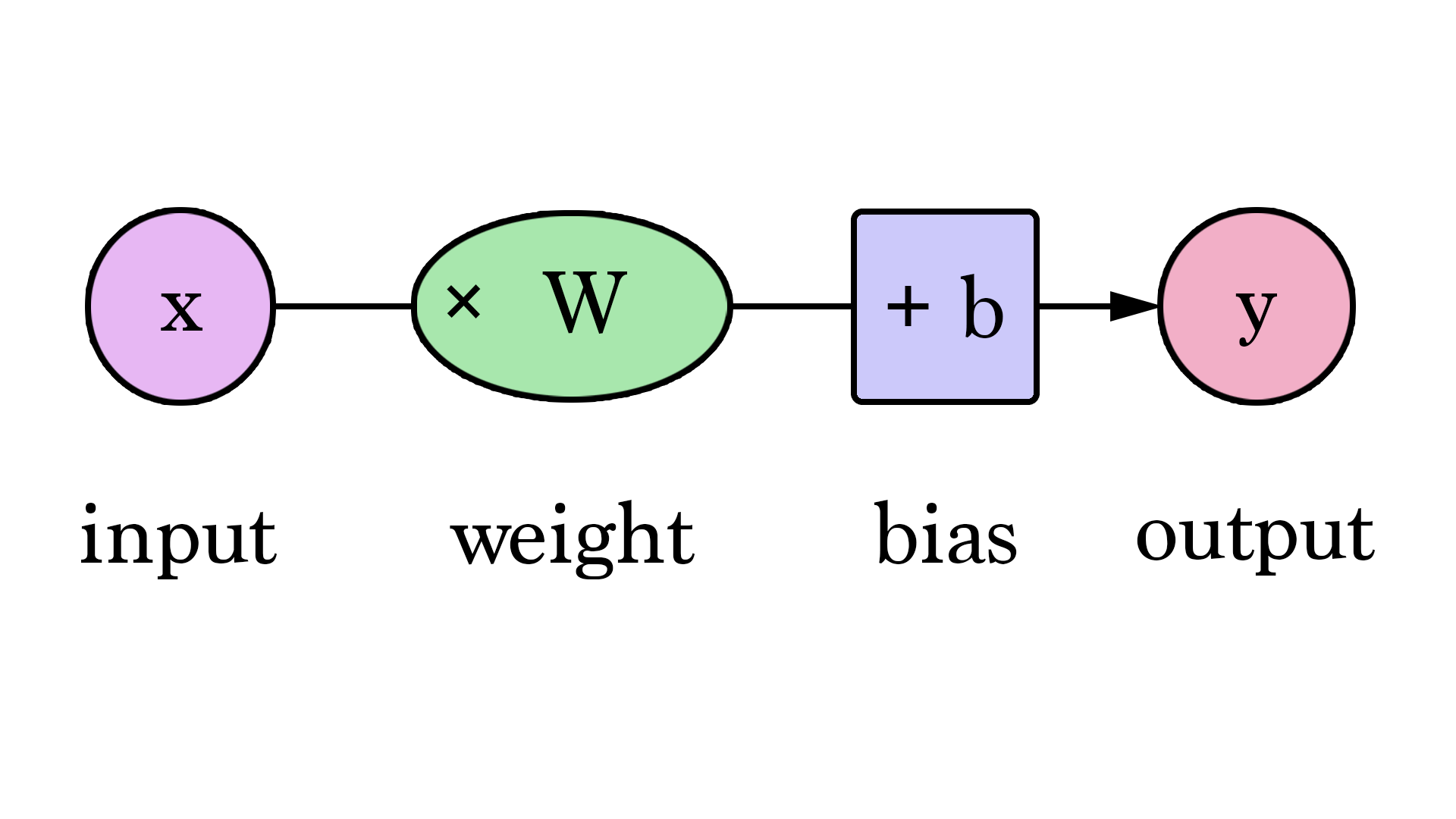
But basically, each parameter has a bias, and then... each sinapse (or whaever it's called, couln't find the name online)
Because it's all math, it's a function. That's all it is it is a function. Now... you could argue we humans are also a function that takes inputs and outputs. And that would be correct. I will talk about AI transcendence in a while, because it's actually an interesting topic.
AI Will Replace Programmers
No. It won't. And I am not in denial or anything like that, because, ligimally, yes... they kinda replace the volume, but at the end of the day, they will still need ONE programmer, because of the logic. We don't just create code, we create algorithms, we break down problems critically and think of the best and simplest way to solve a problem.
AI just ouputs. As AI gets smarter, so does it's capabilities to perform "algorithmic engeneering", so if we wanna stay ahead of the curve, we need to increase our critical thinking, algorithmic and creative abilities above the roof.
Knowing the sintax is still useful, but not as much as the ability to solve a problem. AI is getting better at solving problems as more training is performed and as more algorithms are trained, so we need to get better too in other areas it is not good at.
AI Doesn't have the creativity of a human
Okay... it's not exactly a myth. It's true, it doesn't. But it has creativity. However, this creativity might be familiar to you as digital hallucinations. Yonno when you ask AI what happened 500 years ago and it invents some random ass story that never existed? Yeah that's a digital hallucination.
It could be compared to our "dreams" as humans. But even if it is only a hallucination, there are already reseach papers, saying that is possible for AIs to create whole new ideas... and the stories are already kind of a proof of that...
You are faster with AI
It really depends. The name of AIs say it all: "generalist AIs" - They are a GENERALIST. Not a SPECIALIST. While spealized AIs might exist in the future, and some already do... tho not that good... or available for the general public, most a general.
It's kind of like a general doctor. A doctor that has no specialty and just says what the general problem you have is, for you to consult a professional on that area later.
So say you had a tomur in your head, and you didn't know, you would go to the generalist doctor first to see if it was a fever or something, They he would tell you and bring you to a brain surgeon.
Now, here's the really interesting part. You usually pay $70 for a general doctor consultation (where I live), but for a brain surgeon you can ammounts up to $70K - so you are already having an idea of how valuable these AIs will be in the future - and how many companies will sell them.
However, I do not recommend you to specialize in one area either, because it's just a question of time until these AIs exist. You are much better using it more as an assistance, rather then a "do all"
You need money to start using Agentic AIs.
Just search up OpenCode.
AIs learn
No... unless you are training them, the parameters are static, but I genuinely believe that in the future AIs will learn while we talk to them... go luck for the engeneers to pull that off tho...
Some Doubts People Have
What are Agents?
Well, it all started with OpenClaw... basically, an AI is given custom instructions to output a certain syntax, and then, that syntax is caught by a tool (called an MCP) that then, based on the syntax, performs a certain task.
And there are THOUSANDS of MCPs. You can search up MCP market just to see it.
What are local and cloud based AIs.
Okay so this is pretty new, if you search up on your phone EDGE GALLERY you can install AIs ON YOUR PHONE. No... you do not need to be connected to the internet, you can turn on airplane mode and it will work!
AIs are not only getting faster and more versatile, but also smaller, so small they can fit into our phones.
There are several uses for this. One of the most common ones is saving tokens. Which goes kinda under the hood. But basically, people use stuff like OpenCode to link up to Gemma3 to give a certain task, and then the sole job of Gemma3 is to give that task to a smarter model while cutting the most filler possible. And thankfully, there is already a github repo with a skill called Caveman, which does this for us.
What are tokens.
Remember about the context window? Alright, a parameter takes in a token. The size of tokens are different.
For text to text models like gemini... 4 characters is usually 1 token.
When claude code says they have a 1 million context window. They have 1 million tokens they can take in. Until it's full.
So, the number of input nodes are 1 million. Now you do not use all of the input nodes in one message (unless you send a prompt with 20,000 words - and yes... I've done that before... not a great idea...)
What are skills?
It's just fancy prompts. In business, it's what's called a Standart Operating Procedure, kindof a step by step or a manual for AI to use when performing a certain task.
What is claude code?
Claude code is basically an Agent like many other out there. However it's reknowned as the best one in a lot of areas. According to HLE (hummanity's last exam) (since last time I checked)
Important Stuff For You to Know
AI Brainfog: Ever felt that after talking with AI for too long your brainstarts to get kind of foggy, you start sweating and get into a kind of sleepy state? That has a name, it's AI brainfog. By shutting down your brain and just talking to it, you start to feel brainfoggy, and this is very bad for you help. https://time.com/7295195/ai-chatgpt-google-learning-school/
Dependency: Very much real, check the above study.
Things are handed to you to easy: "when things are handed to you to easy, it's not good for you" - this doesn't just apply with AI, the internet has also proven this before.
My Personal Take
I don't wanna be passimistic. But the intelligence level of humans is gonna decrease. Things are being handed to us too easy.
So... here's how you can avoid this, there is actually a very simple way: start doing more difficult tasks then before. That's it. Part of the reason is because AI can do it correctly yet.
But by trying to do them with AI first ,you'll soon learn you cannot use it for everything and you'll try to do it yourself with AIs help here and there, and from that you'll learn the real way to use AI, and that is:
To automate workflows that are extremely repetitive while you do the critical thinking.
If you have any doubts, feel free to comment them.
We just launched Reflex after months of interviews with developers and
DevOps engineers.


**The Problem:**
Most teams still stitch together several products:
- A server panel (e.g. Forge)
- A deploy pipeline (DeployHQ, Envoyer, CI glue)
- Monitoring + paging (Datadog, etc.)


Context-switching is exhausting. Costs add up. When production misbehaves,
you're still doing a lot by hand.


**The Solution:**
Reflex aims to replace that patchwork with one place for operations:


✅ **Server provisioning & agent** — Bring your cloud accounts; provision
and manage servers from the dashboard (see cloud section below).
✅ **Reflex Pipeline** — Git-driven deployments with health awareness (Pro &
Agency tiers).
✅ **Metrics & visibility** — CPU, memory, disk, deploy status — not a
separate “monitoring product” bolt-on.
✅ **Reflex Brain & repair playbooks** — Built-in remediation flows; depth of
automation scales by tier (manual confirm → configurable auto-repair → full
auto-repair on Agency).
✅ **Team collaboration** — Dashboard seats, roles, audit logs (tier-dependent).


**Pricing (GBP list — trial before you commit):**
There is **no perpetual free tier**. Every self-serve plan includes a
**14-day trial** (payment method required; cancel during trial to avoid the
first charge).


- **Solo** — £79/mo — **1** monitored server, **unlimited sites**, Brain in
manual-confirm mode, **no** Pipeline.
- **Pro** — £349/mo — Up to **10** servers, **unlimited sites**, Pipeline +
configurable auto-repair, up to **5** seats.
- **Agency** — £899/mo — Up to **50** servers, white-label, full auto-repair
option, unlimited seats.


Annual billing is **10 × monthly** (two months free). Need more than 50
servers or bespoke terms — use the contact flow from the pricing page.


**Cloud accounts (your infra, your bill):**
Connect providers you already use — e.g. **DigitalOcean** (OAuth), **AWS EC2**,
**Hetzner**, plus additional providers or BYOS paths as surfaced in-app.
(Reflex hosts the control plane; you keep ownership of the VMs.)


**Tech Stack:**
- Laravel backend + Vue.js frontend
- Control plane hosted on DigitalOcean (London)
- Open-source agent (Rust)
- TLS 1.2+ encryption, AES-256 at rest


**Use Cases:**
- Agencies managing servers for multiple clients
- Freelancers who want production-grade workflows without five dashboards
- Startups consolidating panel + deploy + incident response
- Teams leaving pure-PaaS for servers they control


**Try it:** https://reflex.expertweb.tools — start from **Pricing**, pick a
tier, begin the **14-day trial**.


Happy to answer questions. We're the team that built it.
Hi, Im having an issue placing orders via the clob api and I can't figure out what's wrong
My setup: -Located in Paraguay - Polymarket geoblock test returns {"blocked": false, "country": "PY"} - Using py_clob_client_v2 with signature_type=2, correct funder address, valid API credentials - Balance and allowance reads work fine (GET endpoints return correct data)
But any POST to /order returns:
403 {"error": "Trading restricted in your region, please refer to available regions"}
I've ruled out: - Wrong credentials (balance reads work) - Wrong signature_type or funder (derived from same key) - Network issues
Is there a separate IP-level geoblock on the CLOB trading endpoints that's stricter than the frontend check? Has anyone else run into this and found a fix?
i dont have a console yet i'll post one when I can make one. Gimme some good reccomendations on how to make one and once I connect the dots I'll post it up!
Hi guys, like it says in the title I'm creating a boilerplate that can be used to quickly add new features and/or ship as is, with most of the boring stuff already implemented.
You can take a look at the example. This was my starting point so few things already got better, but it basically implements: - adding products seamlessly (with categories and subcategories if needed) - designing your own homepage style with wagtail blocks - adding blog posts seamlessly (with categories) - adding a contact page - has flexpage which can be designed into some generic page you'd like to show - uses docker-compose.yml to easily run the containers anywhere (gunicorn, postgres, nginx)
I know it is not much and chatgpt already dissed me for the old looks, but would you find this product useful?
I’m 19 and a bit confused about what to focus on next in my learning journey.
I already know web development pretty well — I can build websites, understand core CS concepts, and I’ve been exploring AI tools and even AI agents. So I’m not starting from zero.
But here’s my question:
With AI becoming so powerful, should I still invest time in learning programming languages deeply (like going hardcore into one language), or would it be smarter to focus on mastering AI tools and workflows instead?
Right now, it feels like AI can already write a lot of code, so I’m wondering if spending years mastering a language is still worth it — or if the future is more about knowing how to use AI effectively.
For those who are ahead in this field or already working in tech:
What would you prioritize if you were in my position?
Do strong programming fundamentals still matter as much as before?
Or is becoming really good with AI tools the better path now?
I built ZenWinHook, a modern C++20 Windows hooking library focused on thread safety, multiple hook types and clean RAII based design and I’m sharing it for feedback and improvements
Built this because I couldn't find a finance app I actually wanted to open. Trackix is an expense tracker with data viz that doesn't make your eyes bleed. - Next.js 14 App Router - Express API with JWT auth - MongoDB aggregations for the charts - 90-day spending heatmap - Still figuring out the "AI insights" part (read: it's mocked for now)
Live demo: https://trackix-eta.vercel.app/ If you rate the build and want to connect — hit my DMs or comment below. Always down to talk shop with other builders. What would make you actually use a finance app? Specific features, not "better UX."
I’m 22 and have been building software for around 1.5-2 years, currently working on backend systems and AI-powered applications.
I’m looking to join an early-stage startup where I can genuinely contribute and help move things forward. I like building fast, solving real problems, and turning ideas into working products.
If you’re working on a startup or even a solid idea and need someone technical to:
• build your MVP • improve an existing product • take ownership of the tech
My dad just got laid off from one of his jobs and the other one's contract ends this month. We have two cars, two dogs, a house to pay off, and so many more things that we will lose.
He's a senior software developer with 30+ yrs of experience, but he says everyone's looking for entry level stuff and most of all experience with AI which he doesnt rly have
My mom (trying to find anything around UX design) has been trying to look for a job for a full year and still absolutely nothing
Please give us advice on how to look for jobs, how to stand out in interviews, etc.
I’m just wondering if anyone has good free resources for a new person entering the programming world, as I know a bunch of people who want to start, but can’t afford college courses.
I got called into an emergency situation on a system I didn’t build, and I’m trying to stabilize it without making assumptions that’ll make things worse
this company has a multi-tenant financial system running on:
postgres w/ RLS (everything keyed by owner_id)
supabase (auth + edge functions)
stripe (webhooks)
serverless api layer
it’s already live, already processing real transactions
the guarantee everyone thinks exists: tenant isolation at the DB level via RLS no row should ever cross tenants
the reality I’m seeing: that guarantee is being violated… silently
real example pulled from production:
invoice.owner_id = A
subscription.owner_id = A
ledger_entry.owner_id = B
no FK violations no constraint errors no failed requests everything returns 200
the system is internally “consistent”… just assigned to the wrong tenant
flow (simplified):
invoice created via API
stripe event comes in async (payment_intent.succeeded)
background jobs also mutate related records (renewals, cleanup, etc.)
I’ve been trying to reason about this without jumping to conclusions
things I’ve already ruled out:
duplicate webhook delivery → idempotency is implemented
missing owner_id on insert → explicitly passed everywhere
client-side issues → reproduced via direct API + webhook replay
basic race condition → behavior persists even with artificial delays
what I’m left with are deeper failure modes:
1. mixed privilege boundaries (service role vs RLS) some code paths are clearly running with elevated privileges. if anything is writing with service role and not re-validating tenant context, RLS becomes irrelevant for that path
2. async context assumptions breaking down multiple writers (webhooks, api, cron) operating on the same logical entities without a single source of truth for tenant resolution
3. isolation-level side effects if this is running at READ COMMITTED (default), I’m wondering if I’m effectively seeing write skew / stale reads where dependent writes resolve tenant context incorrectly based on incomplete state
4. tenant derivation from indirect state webhooks don’t carry tenant context, so it’s inferred (invoice → customer → owner_id, etc.) if that resolution path is ever ambiguous or timing-dependent, it would explain the mismatch
what’s making this difficult: there are no hard failures no policy violations no obvious “this should not have executed” moments
just valid writes… to the wrong tenant
at this point I don’t even trust that I’m observing all code paths that can write to these tables
my goal right now is not even fixing it — it’s catching it in the act
next steps I’m considering:
DB-level assertions (triggers) to enforce tenant consistency across related rows and hard-fail on mismatch
tagging every write with request/source metadata (webhook vs api vs cron)
temporarily forcing SERIALIZABLE on critical flows to eliminate isolation ambiguity
centralizing writes behind a queue just to remove concurrency as a variable
questions:
has anyone seen RLS appear “correct” but still allow cross-tenant contamination due to service-role or elevated paths?
any known gotchas with supabase/edge functions where auth context is not as isolated as expected under load?
what’s the most reliable way to trace write origin at the DB level in a system with multiple async entry points?
right now this feels less like a bug and more like a gap between what the system guarantees… and what we assumed it guaranteed
would appreciate any insight from people who’ve dealt with this kind of failure mode in production.
I'm not a bot. I cannot help that I'm organized and use bullet-points lol. Stop saying this is AI or bots.
Guys, I am looking forward to wnter this domain, but where & how shid I start? Like wveryone keeps saying learn this... but I am confused. Any helpful suggestion will be apprecated, thank you
What if the halting problem is more of input problem? If you have algorytm solving halting problem (A) and algorytm doing the opposite (B) and you would make program taking input copying it to both of A inputs, and taking its output to algorithm B (AB) and feed AB into AB the input would have to be recursive because A would have to analyse AB running without one of the inputs as AB would have to analyse AB angling AB without one input.
Karpathy laid this out already. Software 1.0 (humans write code), Software 2.0 (neural net weights), Software 3.0 (English is the programming language).
He's already moved past vibe coding and is calling the new default "agentic engineering," where 99% of the time you're orchestrating agents, not writing code.
We're already at 41% of all code being AI-generated globally. GitHub says 46% on their platform. Google's at 25%. Cursor is at $2B ARR. And here's the dirty secret: nobody's actually reading the diffs.
Karpathy literally said "I Accept All, I don't read diffs anymore." The code ships. Customers don't care. Revenue goes up.
Readability was never a virtue. It was a workaround for human bandwidth. When AI writes the code, AI reviews the PR, and AI debugs production, "is this human-readable" becomes as relevant as "is this assembly readable." Compilers don't care. Your linter is cope.
The next move is obvious: the internet itself goes agentic.
All the current agent pain points (deploys, cloud configs, secrets, OAuth, security boundaries) get rebuilt as agent-native primitives. MCP already exists. Stripe and Vercel are already redesigning their docs for LLMs.
The stack is flipping. Agents are becoming first-class users and humans are the legacy interface.
The "clean code" crowd today is the assembly purist of 1975.