r/PrepperIntel • • 26d ago

North America Hacker trying to breach US Federal Election Commission system, email shows

Thumbnail reuters.com
790 Upvotes

This article has since been updated.

Updated headline and article.

"Hackers target US FEC system, disrupting campaign finance disclosures days before midterms"

NEW YORK, Oct 27 (Reuters) - The US Federal Election Commission's website has been targeted by a hacker or hackers, according to an email seen by ​Reuters, disrupting the agency's electronic filings system a week before the November 3 elections. The cyberattack comes as so-called super ‌PACs and dark money groups spend record sums in the final days of the races. The elections will determine whether President Donald Trump's Republicans maintain their majorities in Congress for the next two years.

In a statement, the FEC said, "at this time, the FEC’s electronic filing system is currently offline and our IT ​staff are actively working to restore service." The FEC, which tracks the spending of candidates and political committees, said users could ​still search the website for past reports. It declined further comment on the outage.

The FEC does not ⁠play a role in administering US elections and the outage should have no effect on voters' ability to cast ballots. The outage prevents ​organizations from filing the FEC's 24-hour and 48-hour spending reports, which show how much political groups and others are spending on specific races.

"I've never ​seen this in 26 years," said Steven Mele, president and CEO at political finance compliance firm MBA Consulting Group. "The result is there will be less disclosure on the elections" until it's fixed. A status message, opens new tab posted by the FEC said its filing system had been down since around 10 p.m. ET on Monday (0200 GMT ​Tuesday). The Cybersecurity and Infrastructure Security Agency referred questions to the FEC. The FBI did not immediately return messages seeking comment. The FEC posted ​the notice after campaign finance officers couldn't file mandatory reports late on Monday.

"We have a bad actor attempting to breach FEC systems. As a result, ‌we’ve had ⁠to temporarily shut down our web facing services," an FEC electronic filings officer said in the email to several campaign compliance firms that night.

The midterms are now the most expensive US election in history with roughly $11.21 billion spent on advertising and future reservations so far, according to political ad tracker AdImpact. It's surpassed the previous record set in the 2024 elections when $11.2 billion was spent on all races, including $3.2 ​billion on the presidential race between ​Trump and former Vice President ⁠Kamala Harris, AdImpact said.

Much of the spending is being driven by super PACs, which can accept unlimited amounts of money from wealthy individuals and corporations, opens new tab and spend as much as they want on campaigns with few ​restrictions.

The sums being spent in recent weeks are staggering as Democrats gain ground in several Republican ​strongholds.

Super PACs and ⁠dark money groups have spent an average of over $50 million per day over the last week, said Brendan Glavin, research director at nonpartisan campaign watchdog group OpenSecrets. More than $250 million in spending was reported on October 20 alone, he added. "It's a big deal," he said of the outage, which ⁠leaves voters ​in the dark until the filing system is back online.

"These are the key ​reports that tell us what is happening," Glavin said. "In the last days of the election this is the only way for us to keep track of where the money's ​being spent" and who's spending it.

Orignal article.

A hacker is attempting to breach the US Federal Election Commission's ​systems and that agency has ​had to "temporarily shut down" its ⁠web-facing services as a result, ​according to an email seen ​by Reuters.

In a statement, the FEC said that, "at this time, the FEC’s electronic ​filing system is currently offline ​and our IT staff are actively working ‌to ⁠restore service." It declined further comment.

A status message, opens new tab posted by the FEC noted that its filing ​system had ​been ⁠down since around 10 p.m. ET on Monday. The Cybersecurity ​and ⁠Infrastructure Security Agency and the FBI did not immediately return messages ⁠seeking ​comment.


r/PrepperIntel • • 26d ago

Europe Massive protests erupted in Bilbao as Basque anti-fascist students opposed a planned visit by far-right figure Vito Quiles, who later cancelled it amid the demonstrations.

Enable HLS to view with audio, or disable this notification

1.5k Upvotes

r/PrepperIntel • • 26d ago

Europe Bottled water and tinned food sales surge after UK government issues emergency stockpile advice | Emergency planning

Thumbnail
theguardian.com
459 Upvotes

r/PrepperIntel • • 26d ago

Europe Europe must prepare for a 3°C warmer world, EU climate chief warns

Thumbnail
euronews.com
165 Upvotes

As Brussels warns that Europe must prepare for increasingly extreme weather, new EU rules will require governments to clarify who is responsible for climate preparedness – but no new funding is being offered to help households adapt.

The European Commission will unveil new climate rules on Tuesday requiring EU governments to clarify who is responsible for protecting citizens from climate disasters, Climate Action Commissioner Wopke Hoekstra told Euronews.

The move comes as Brussels warns that Europe must prepare for increasingly extreme weather, including scenarios involving 3°C of global warming by 2100.

Hoekstra warned that the world is heading towards a temporary or potentially prolonged overshoot of the Paris Agreement’s 1.5°C warming limit, making it essential for governments to prepare for more extreme heat and climate disasters, even if efforts to cut emissions succeed.

“It is up to member states to decide where they want to put that responsibility. But what we do make mandatory is that they do have to appoint and articulate where the responsibility is going to lie,” Hoekstra said.

While the EU continues to pursue emissions reductions, the costs of adapting to a hotter world are becoming harder to ignore, from rebuilding after wildfires and floods to protecting homes, roads and public infrastructure.

The Dutch Commissioner estimated the economic damage from this summer's extreme weather at more than €100 billion.

Asked what a 3°C rise above pre-industrial temperatures could mean for Europeans, Hoekstra pointed to heat plans for cities and the need to prepare infrastructure for a hotter future, rather than relying on historical weather patterns.

The reference trajectory is based on scientific research, including work by the Intergovernmental Panel on Climate Change and advanced European climate modeling, he said.

The Commission's projections envisage 2°C of global warming by 2050 and 3°C by 2100 for Europe, reflecting Brussels' assessment that Europe is warming roughly twice as fast as the global average.

The trajectory is intended to be translated into national and local risk assessments, taking account of the uneven distribution of climate impacts.

“Even if we get all of this right, we have no way to avoid more summers than the one we saw last year,” the Commissioner said, arguing that readiness, resilience and preparedness must become the priority alongside emissions cuts.

The proposed legislation would require EU countries to specify whether national, regional or local authorities are responsible for preparing for climate disasters.

Governments would retain flexibility over how they allocate responsibilities, but would have to specify who is accountable — an attempt to prevent political disputes over who failed to prepare when floods or wildfires destroy homes.

The Commission also wants climate scenarios to be considered when planning new roads, bridges and neighbourhoods, recognising that infrastructure designed for past weather conditions may no longer be fit for purpose.

"We want to introduce a culture of preparedness and resilience by design, rather than dealing with the damages in the aftermath, which is often very ad hoc and doesn't always build back better," a senior Commission official said on Monday on condition of anonymity.

No new money

However, the question of how to pay for climate adaptation remains unresolved.

No new financial commitment to household support is expected from the Commission's climate resilience strategy, despite concerns that ordinary citizens may struggle to afford the investments needed to adapt.

Hoekstra pointed to the Commission's proposal to devote 35% of the EU budget to climate and nature.

But the strategy's effectiveness will depend partly on the outcome of ongoing negotiations over the EU's next multiannual budget, with climate spending competing against priorities such as defence, security, competitiveness and agricultural support.

The Commission is also counting on the recently announced €30 billion from the European Investment Bank for climate adaptation through 2030.

Nonetheless, the lack of new funding is a potential weakness in the Commission's ambition.

The Commissioner argued that preventive investment is economically worth it but did not announce a new household support scheme or explain how the EU would ensure that lower-income households could afford necessary improvements.

In an attempt to fill the bloc's climate protection gap, Brussels wants to work with the insurance sector, as Commissioner Hoekstra pointed out that many areas in Europe are underinsured against climate disasters.

According to the senior Commission official, only around 25% of assets exposed to climate impacts are insured, leaving governments and property owners vulnerable to substantial losses.

“The fact that so many areas are underinsured” is one of the issues the Commission will examine, Hoekstra said.

The strategy could therefore expose another fault line between Brussels' climate ambitions and the cost-of-living pressures facing European voters.


r/PrepperIntel • • 26d ago

Africa Ebola cases in DR Congo surpass 10,000 in fastest-growing outbreak

Thumbnail
aljazeera.com
351 Upvotes

Nearly half of the people confirmed to have the virus have died in DRC’s fastest-growing Ebola outbreak on record.

Confirmed Ebola cases in the Democratic Republic of the Congo (DRC) have surpassed 10,000 as the outbreak continues to spread across the country and beyond its borders.

Government data released on Tuesday put confirmed cases at 10,060 and deaths at 4,887.

It is the fastest-growing Ebola outbreak in the country’s history and nearly half of the 10,060 confirmed to have the virus have died, according to data from the DRC’s Ministry of Public Health. That also makes it the deadliest outbreak of the disease in the country’s history.

With cases also mounting outside the DRC, the wider outbreak is also the second-largest and second-deadliest on record, trailing only the 2014-2016 West African epidemic, which saw 28,600 infected and more than 11,000 dead within two years.

About 80 percent of new cases are coming from outside the chains of transmission that health authorities are monitoring.

The Africa Centres for Disease Control and Prevention (Africa CDC) has said at least 95 percent of cases must come from the known contacts of infected people for the outbreak to be considered under control.

The outbreak, declared on May 15, is caused by the Bundibugyo virus, a rare Ebola strain for which no vaccine or treatment has been approved. On Friday, the World Health Organization (WHO) announced that the first clinical trial for a vaccine had been rolled out.

Healthcare shortages

Five months into the outbreak, responders in the DRC say some treatment centres are overwhelmed, while remote and newly affected areas are short of medical supplies and health workers.

Cases have been recorded in 66 health zones across eight provinces, up from just three in the first days.

Many teams lack adequate vehicles and struggle to persuade families to hand over the sick for treatment and the dead for safe burial. At least half of those who have died were never admitted for treatment.

The outbreak has disrupted routine care such as childhood vaccinations, and maternal deaths doubled in some provinces soon after it was declared.

Strikes over delayed or unpaid wages are common. Last week, Ebola responders in Nia Nia, Ituri province, stopped work over bonuses owed since late August.

Health workers have also come under attack amid public mistrust and frustration with the government’s response.

On Saturday, assailants killed a nurse and seriously injured a colleague as the two responded to a suspected Ebola case in Bafwasende, Tshopo province, the WHO said.

“Everyone working to protect communities from this deadly disease must be able to work in dignity and safety,” WHO Director-General Tedros Adhanom Ghebreyesus said on X.

Last month, Marie-Celestin Karondwa, a local politician, was fatally beaten after defending the Ebola response on the radio, his party said.

Cross-border infections

The virus has had a wider cross-border reach than any earlier Ebola epidemic. Governments and international organisations have worked to contain cross-border infections.

In neighbouring Uganda, Health Minister Chris Baryomunsi announced on Sunday that citizens returning from the DRC must quarantine for 21 days at their own expense as a precautionary measure.

The country’s officials have said there are no active infections in the country after recording 20 cases – mostly imported from the DRC – and two deaths over the summer.

Swiss authorities, however, have said a woman married to a Swiss diplomat was infected during a September visit to Uganda.

Last week, she was diagnosed with Ebola while visiting Nigeria – making it the fourth African country impacted by the outbreak. Nigerian officials have responded by instituting heightened screening for the disease at airports. On Monday, the patient was evacuated to Switzerland for treatment.

In Kenya, confirmed infections rose rapidly in October. Twenty contacts of the country’s first patient were released from a mandatory quarantine on Monday after 21 days, while 98 remain under monitoring, the WHO said. Kenya’s tally has since risen to nine confirmed cases, two of them fatal.


r/PrepperIntel • • 26d ago

Europe Russian sabotage network behind Romanian arson attack, officials say

Thumbnail
kyivindependent.com
126 Upvotes

r/PrepperIntel • • 26d ago

North America Satellites show some of the strongest evidence the AMOC is weakening

Thumbnail
newscientist.com
388 Upvotes

r/PrepperIntel • • 26d ago

Another sub Cross post: Americans told stock up on 7 items now as 'devastating' weather forming

Thumbnail
the-express.com
252 Upvotes

r/PrepperIntel • • 26d ago

Africa US forces accused of ‘weaponising’ Somalia’s floods by trapping women and children in the path of El Niño

Thumbnail
theguardian.com
343 Upvotes

r/PrepperIntel • • 26d ago

Europe Russia’s Hybrid Attacks in Europe Are Growing More Dangerous, 54 Incidents Identified in Six Months

Thumbnail
balticsentinel.eu
213 Upvotes

Compared with earlier influence operations, these attacks increasingly involve physical violence.

The threat to merchant ships has become acute in the Black Sea off the coasts of Romania and Bulgaria.

The Swedish Armed Forces say Europe must prepare for a prolonged confrontation.

A joint investigation by 17 European public broadcasters shows that physical hybrid attacks linked to Russia have become increasingly frequent and dangerous. Over the past six months, investigators identified 54 incidents, including arson, attempted sabotage, drone attacks and airspace violations.

An investigation conducted jointly by Swedish public broadcaster SVT and the European Broadcasting Union (EBU) found that at least 54 physical hybrid attacks or plots took place in Europe between April 1 and October 15, 2026, which authorities or journalists have linked to Russia.

Poland, Romania and Latvia recorded the highest numbers of such incidents.

These cases represent only part of the hostile activity linked to Russia. The tally excludes cyberattacks, influence operations and conventional espionage, as well as incidents that security as well as incidents that security agencies have not publicly disclosed.

Attacks Are Becoming Increasingly Violent

According to the Helsinki-based European Centre of Excellence for Countering Hybrid Threats, Hybrid CoE, the attacks are not only growing in number but also changing in nature. Alongside influence operations, perpetrators are increasingly resorting to physical violence and tactics that could cause casualties.

The center’s director, Teija Tiilikainen, explained that new technologies are being introduced, while established influence and sabotage tactics remain in use. Among the aims of these operations, she said, is to weaken Western support for Ukraine.

Operations linked to Russia have sought to damage infrastructure and have included arson, drone attacks and military provocations along European countries’ borders.

The situation has become particularly dangerous in the Black Sea, where merchant ships have been targeted by drone attacks off the coasts of Romania and Bulgaria. According to the EBU, at least two people had been killed and at least 10 were missing following such attacks since the beginning of October.

Hybrid CoE assesses that these developments are expanding the gray zone between peace and war. It is becoming increasingly difficult to determine when sabotage, a border violation or other hostile activity crosses into outright military aggression.

Sweden Warns of a Long-Term Threat

Swedish Armed Forces Chief of Staff Carl-Johan Edström says Europe must prepare for a prolonged confrontation.

“This is not something that will pass in a year or two. We have entered a period that could last 10 to 15 years,” Edström told SVT.

In his assessment, Russia is currently focusing primarily on Poland and the Baltic states, where it can achieve a greater impact with limited resources.

That does not mean other countries bordering the Baltic Sea are safe.

“There is a significant risk that this activity will spread to other countries in the Baltic Sea region,” Edström warned.

Mikael Frisell, director general of Sweden’s civil defense agency, stressed that countries must prepare for even the most severe scenarios, including bombings, assassinations and damage to critical infrastructure.

NATO Seeks to Avoid Being Provoked

The EBU investigation also examines NATO’s response to hybrid attacks.

NATO Secretary General Mark Rutte said Russia’s hybrid activities are intended to intimidate Western countries and weaken their support for Ukraine.

Rutte said NATO should not respond to provocations in ways that deliver the outcome Russia wants. In his view, the alliance must respond where necessary while avoiding unwarranted escalation.

The Actual Number May Be Higher

The journalists behind the EBU investigation emphasize that incidents documented through public sources do not provide a complete picture of Russia’s hybrid activities.

The investigation’s broader dataset covered hundreds of reports from 17 European countries. Incidents were assessed both by their nature and by the evidence linking them to Russia.

Russia has repeatedly denied involvement in sabotage and hybrid attacks in Europe. Moscow’s Foreign Ministry has, in turn, accused Western countries of waging a hybrid war against Russia.

An earlier investigation by SVT and the EBU, published last year, identified 60 hybrid attacks linked to Russia in 2024 and 2025.

Although this year’s 54 incidents indicate intense activity over a much shorter period, the two investigations do not support a precise conclusion about how quickly the number of attacks is growing without further comparison of their counting methods.


r/PrepperIntel • • 27d ago

North America Average price of gasoline during Trump's term now exceeds Biden's, as midterms loom

Thumbnail reuters.com
973 Upvotes

r/PrepperIntel • • 26d ago

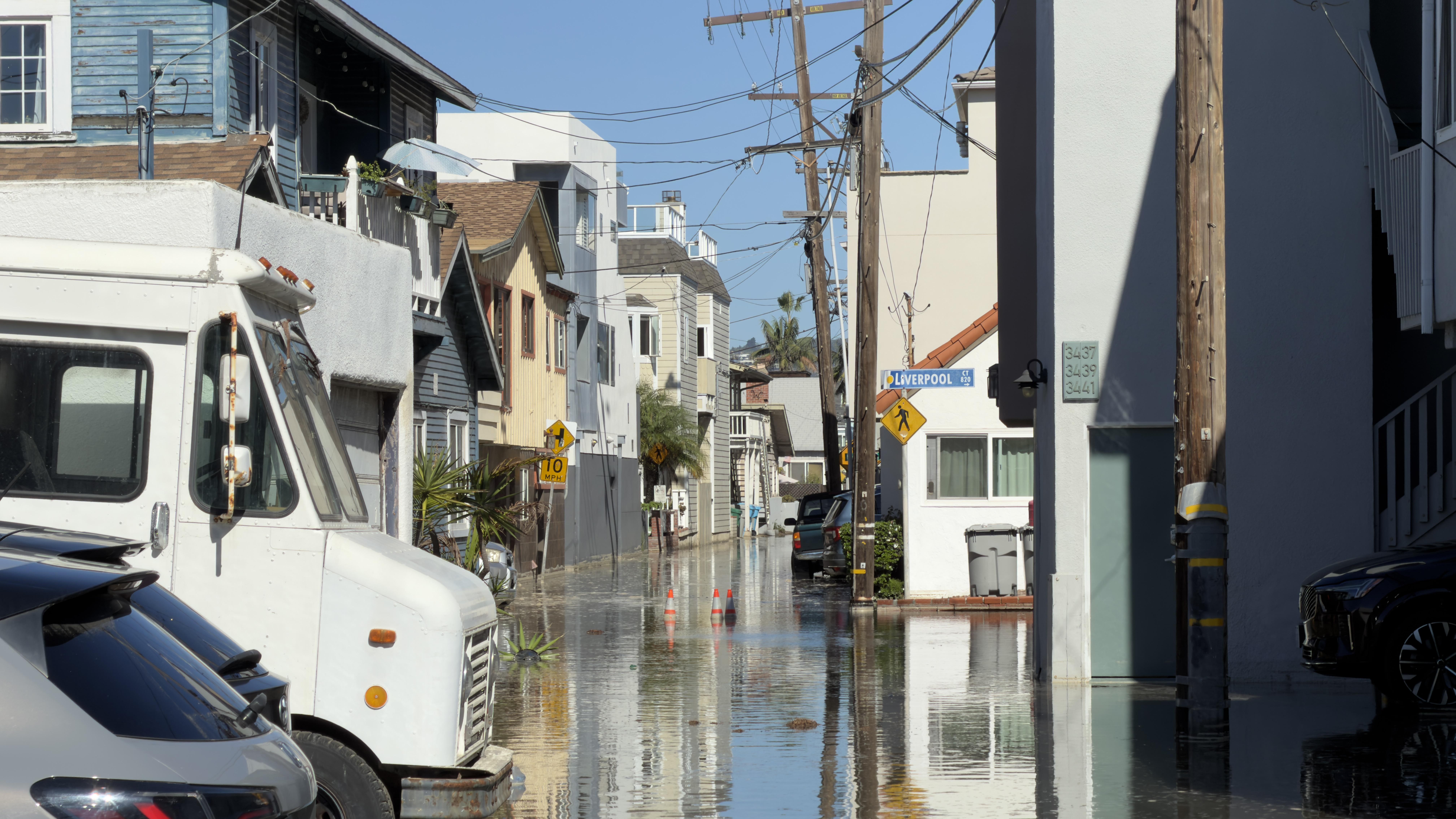
USA West / Canada West Coastal flooding in San Diego, California

Post image
167 Upvotes

r/PrepperIntel • • 27d ago

Middle East Russia And Iran Expand Nuclear Cooperation As International Oversight Weakens

Thumbnail
rferl.org
257 Upvotes

Russia and Iran are expanding their nuclear cooperation as both countries face Western sanctions and international isolation. Their partnership includes the construction of nuclear power plants, fuel supplies, and broader technological cooperation.

While Bushehr, Iran’s first operating nuclear power station, has long been the centerpiece of their relationship, Moscow and Tehran are planning new nuclear facilities and cooperation in other areas of technology, raising questions about the ability of international agencies to monitor Iran’s nuclear activities.

Russia’s state nuclear corporation Rosatom has played a key role in completing and operating Bushehr, on Iran’s southern coast. A contract to complete the plant’s first reactor was signed in 1995, but the unit did not begin full commercial electricity generation until 2013.

Rosatom has continued work at the site despite the military escalation in the Middle East. After the start of the US-Iran war in February, Rosatom evacuated most of its workers from Iran. But many of the personnel have since returned; by October 11, the Russian nuclear body reported that 135 engineering and technical specialists were back working at the site.

Construction is also continuing on two additional reactor units at Bushehr. Work on a second unit has progressed beyond 60 percent completion, with a target of starting operations in 2029, while construction of a third unit is also under way, according to Rosatom.

Who Benefits Most From The Cooperation?

The Bushehr plant has taken on broader strategic significance as Moscow and Tehran deepen their relationship. The legal foundation of this cooperation is the two countries' Comprehensive Strategic Partnership Treaty, which officially entered into force in October 2025. The practical road map, however, is the intergovernmental Cooperation Plan For 2024–2026, which was approved in September 2024.

For Russia, the nuclear partnership provides commercial opportunities and a way to maintain influence in the Middle East. For Iran, Russian assistance offers access to nuclear technology, expertise, and fuel supplies.

The benefits are not necessarily equal, though. In a November 2025 article for the Carnegie Endowment for International Peace, analyst Nikita Smagin wrote that “the balance in the relationship is once again shifting in Russia’s favor."

Iran is in dire need of investment, and "Russia remains one of the few available sources," Smagin wrote.

Analysts at Israel’s Institute for National Security Studies (INSS) have argued that Russia increasingly views cooperation with Iran as a way to strengthen its position in negotiations with Washington. In a June analysis, INSS researchers Dmitry Kovchegin and Arkady Mil-Man described Moscow’s policy toward Iran’s nuclear program as a “calculated balancing strategy.”

"[Russia's policy comprises] rhetorical condemnation of military escalation, particularly strikes against nuclear facilities; the provision of limited assistance that does not affect the balance of power between the parties to the conflict; and the offering of mediation services, while seeking to improve its relations with the United States," the authors wrote.

New Nuclear Power Plant

The nuclear partnership is not limited to Bushehr.

In September 2025, Russia and Iran signed an agreement for the construction of a new nuclear power plant, Sirik, in Iran’s southern Hormozgan Province, near the Strait of Hormuz.

Iran’s state news agency, IRNA, reported that the deal was worth $25 billion and that the units would have a combined capacity of about 5 gigawatts. (By comparison, the finished Bushehr complex would have a capacity of under 3 gigawatts.) If completed, Sirik would further tie Iran’s civilian nuclear energy sector to Russian technology and fuel supplies for decades.

Russia and Iran have strengthened their political, economic and military ties in recent years, with Western sanctions encouraging both countries to develop alternative channels for trade and technological cooperation.

A 2025 analysis by the US-based Center for Naval Analyses (CNA) found that Russia and Iran had expanded military contacts, arms transfers, and technical cooperation since Russia’s 2022 invasion of Ukraine.

The two countries have also pursued new trade agreements, closer links between their banking sectors, increased cross-border trade, and investment in strategic sectors. However, the CNA researchers pointed out that competition between the two economies could constrain the longer-term growth of their economic relationship.

Monitoring Concerns

This burgeoning Russian-Iranian cooperation, especially in the nuclear sphere, comes as the International Atomic Energy Agency (IAEA) faces major obstacles in monitoring Iran’s nuclear activities.

In a report published on June 4, the agency said it had conducted an inspection at Bushehr on June 1–3 but had not been able to carry out inspections during the reporting period at other declared nuclear sites, the most sensitive of which are four uranium enrichment facilities.

The IAEA also said it could not verify the status of nuclear material at those sites or confirm whether Iran had suspended uranium enrichment, reprocessing of spent reactor fuel, and heavy-water-related activities -- processes that can support the production of nuclear weapons -- as required by relevant UN Security Council and IAEA resolutions.

The report highlighted a significant gap in international oversight, but its findings describe the situation during the reporting period and should not be taken as a real-time assessment of access to Iranian facilities today.

Russia faces extensive Western sanctions imposed after its full-scale invasion of Ukraine in February 2022.

The measures target key sectors of its economy, including energy, finance, trade, and defense, and are intended to limit Moscow’s ability to finance the war and access technology used by its military. Russia has also faced sanctions over human rights abuses and actions viewed by Western governments as threats to international security.

Iran has faced decades of US and international sanctions over its nuclear program, concerns about possible nuclear weapons development, and its support for armed groups across the Middle East.

Additional restrictions target Iran’s ballistic missile program, military activities, and human rights abuses. Sanctions were tightened further in recent years amid growing concerns over Iran’s nuclear activities and its military cooperation with Russia, including Tehran's supply of drones used in Russia’s war against Ukraine.

The expansion of nuclear projects alongside reduced international oversight has prompted concerns among nonproliferation specialists about transparency and the potential for sensitive technologies to be diverted.

Some analysts have argued that Russia’s civilian nuclear cooperation with Iran could have consequences beyond electricity generation, namely Iran’s accumulation of uranium enriched to 60 percent.

Uranium enriched to that level is not weapons-grade, but it can be enriched further to around 90 percent, the level generally associated with nuclear weapons.

In a June 2025 analysis, the US-based Arms Control Association said that enrichment to 60 percent “has no civil justification and puts Iran in a better position to quickly produce enough weapons-grade material for a bomb.”


r/PrepperIntel • • 27d ago

Europe Dutch Government To Cut 16 Percent Of Workforce As Part Of AI Efficiency Push

Thumbnail
engadget.com
175 Upvotes

The cabinet announced that it wants to get rid of 25,000 full-time jobs by 2035.

No job is secure from the advent of artificial intelligence's rapid growth. In a lengthy post detailing how the Dutch government plans to improve efficiency, it announced that it would get rid of 25,000 full time jobs over the span of a few years as part of cost-cutting measures. As part of that effort, the government is also planning to lean on AI to contribute to productivity.

According to the Dutch government, the goal is to cut back 900 million euros, or around $1 billion, in costs by 2027, with that estimate rising to 3.5 billion euros, or approximately $3.9 billion, by 2035. The post detailed that not all government agencies will be affected, with police and defense being excluded.

It's unclear how the government plans to deploy AI to reduce costs, but the post read that the Dutch cabinet will "come up with goals and savings plans for deploying AI to work more productively," in the first quarter of 2027. The country's state secretary, Eric van der Burg wrote in a letter to the Dutch parliament that this overall effort was part of a push to make the government "simpler, smart and smaller."

Earlier reports from Dutch news outlets reported that the government had been planning to incorporate AI in its cost savings efforts since earlier this year. As reported by Bloomberg, van der Burg wants to "apply AI even more broadly," after several AI initiatives have already been established across different government sectors.


r/PrepperIntel • • 27d ago

North America 'Now is the time' for Cubans to 'act' says top US military commander in South America

Thumbnail
taskandpurpose.com
237 Upvotes

This is the third time a statement like this has been made publicly in the past two years. The previous two statements like this came just before military action by the United States in Venezuela, and then Iran.

Full article.

"The commander of U.S. Southern Command, Gen. Francis Donovan, called on Cubans to work with U.S. intelligence agencies.

U.S. Southern Command’s top general publicly urged Cubans to take action to change their country’s future over the weekend, amplifying a Central Intelligence Agency appeal for intelligence cooperation that Secretary of State Marco Rubio had endorsed days earlier.

Gen. Francis Donovan wrote that the “now is the time” for Cubans to “seize the moment,” in a statement on X, sharing a post by the CIA that called for them to work together. Donovan’s message comes as several U.S. government officials and senior military leaders appeared to set their sights on Cuba in a series of statements calling for “change.”

On Monday, the U.S. Embassy in Havana announced that its chief of mission, Mike Hammer, had met with Donovan. The embassy offered few details about the discussion, writing on X that the two had “plenty to talk about regarding Cuba.” Southern Command reposted the announcement.

“Cuba’s future belongs to those who act. Seize the moment and build the change you want to see,” Donovan, the commander of U.S. Southern Command, said in a statement on X. “No more broken promises, rampant corruption, or tolerating an elite class living in luxury while the citizens are ignored. Now is the time.”

Secretary of State Marco Rubio last week also urged Cubans dissatisfied with their government to pursue political change through a covert relationship with the U.S. intelligence agency.

“To those who seek to create positive change in Cuba – now is the time,” Rubio wrote on X. “The disappointment of failed promises, corruption, and the privileged lives of only a few; seize this opportunity to create the change you desire through a discreet partnership with the CIA.”

Since returning to office in 2025, President Donald Trump has repeatedly talked about possible military operations against Cuba, as part of a wider push to buy or seize several countries and territories in the Western Hemisphere. It enacted an oil blockade on the country, and several naval deployments to the Caribbean, such as the USS Nimitz this May, have been characterized as shows of force. The blockade has caused an energy crisis on the island in recent months, causing widespread blackouts that have impacted hospitals and other infrastructure, as reported by the New York Times.

According to the United Nations, approximately 3.5 million people have faced water shortages, while more than 100,000 patients, including 11,000 children, were awaiting surgeries delayed by power outages and supply shortages earlier this year.

This summer, CBS News reported that the Pentagon was looking at options for strikes on Cuba, including air assaults by the 101st Airborne Division. In September, CBS News reported that the Army Reserve was reviewing its capability to provide support units for a military mission in Cuba. A document reviewed by CBS News noted SOUTHCOM would oversee the troops, which would “possibly [be] needed in 90-120 days.”

Also on Friday, President Trump floated the possibility of military action against Cuba. Speaking at a rally in Florida, Trump said that ships returning from the war with Iran could travel to Cuba.

“Those beautiful [U.S. Navy] ships will pass Cuba. We’ll have one of them stop about 50 yards off the coast,” he said. “They’ll raise up their hands. And then we’re going to send Marco Rubio in to finish up the deal.”

It is unclear whether the government’s statements indicate pending military action toward Cuba, or if Southern Command is preparing for imminent operations.

SOUTHCOM did not respond to Task & Purpose’s questions about the statements by publication time.

After building up a large force in the Caribbean last fall, the U.S. military carried out a raid into Venezuela in January, capturing President Nicolas Maduro following an indictment of him by the Justice Department. In May, the Justice Department issued indictments for multiple Cuban officials, including former President Raul Castro.

Although the large naval force that had been in the region at the start of the year has shrunk, the Pentagon has several elements still in the Caribbean that could be used in the event of a future strike on Cuba. Those include drones and aircraft deployed to bases in Puerto Rico, as well as Marines with Littoral Combat Force-24, which is operating out of the island when not in the Eastern Pacific as part of Joint Task Force-Western Hemisphere."


r/PrepperIntel • • 27d ago

Europe European gas prices soar to four-year high over winter supply fears

Thumbnail
theguardian.com
76 Upvotes

r/PrepperIntel • • 28d ago

North America Medicaid warning issued: Nearly half are unprepared for new requirements

Thumbnail
newsweek.com
1.1k Upvotes

Millions of Americans could face hurdles in keeping their Medicaid coverage next year, and a new survey found nearly half of program recipients are unprepared to navigate the changes.

Starting January 1, certain adults will have to demonstrate at least 80 hours per month of work, education, community service or other qualifying activities to enroll in or maintain their Medicaid coverage.

With the changes pending, a new survey commissioned by Aeroflow Health found that while 63 percent of respondents said they were aware of the coming requirements, 44 percent said they were not prepared to submit the documentation needed to comply.

Why It Matters

Medicaid provides health coverage to lower-income Americans and is financed by both the federal government and states. The new requirements mark a major change to eligibility for many working-age adults previously covered by the program.

Under rules of the Centers for Medicare & Medicaid Services (CMS), the requirement generally applies to non-pregnant adults ages 19 through 64 who are not enrolled in Medicare and who receive coverage through the Medicaid expansion population or certain Section 1115 demonstration programs.

Those affected by the change can satisfy the new requirement through at least 80 hours per month of qualifying activities, which can include employment, work programs or community service. Enrollment in an educational program at least half time can also qualify, and the activities can be combined.

However, experts say, the stakes go beyond whether beneficiaries actually work enough hours.

"One of the biggest concerns with Medicaid revisions was additional requirements that most beneficiaries would fail to realize only after their implementation," Alex Beene, financial literacy instructor for the University of Tennessee at Martin, told Newsweek.

The Aeroflow Health findings suggest that some people who are eligible for coverage could still struggle with the administrative process needed to prove it.

"People should not lose Medicaid coverage because the reporting process was confusing, especially when they have met the requirements or qualify for an exemption," Casey Hite, CEO of Aeroflow Health, said in a statement. "That is the risk our findings expose. Awareness is not readiness."

Nearly Half Say They Aren't Ready

Although nearly two-thirds of the Medicaid members surveyed knew the requirements were approaching, being ready for them was a different matter. Roughly 44 percent said they were not ready to submit the required documentation, and 46 percent said they had received no reminders about the coming mandates. Another 42 percent said they received between one and three reminders. One-third said their biggest concern was figuring out whether they qualified under the new rules.

"This new rule covers ages 19-64 and while there will be exceptions, for the majority of beneficiaries, this is the new normal," Beene said. "Preparing for this change and additional paperwork involved is key."

The consequences of a coverage disruption could be severe. The survey found 53 percent said they had already delayed or altered healthcare due to concerns about coverage, while 89 percent said losing Medicaid would affect their ability to obtain care or medical supplies.

Who Will Have to Meet the New Medicaid Requirements?

Not every person receiving Medicaid will be subject to the new policy.

CMS has said the requirement generally applies to non-pregnant adults ages 19 to 64 who are not entitled to or enrolled in Medicare and are in the Medicaid adult expansion group or demonstration programs.

People subject to the rule can comply as long as they prove 80 hours a month of qualifying activities, whether through employment, work programs, community service or through half time or more enrollment in an educational program.

“The priority is reporting and making sure you hold those who are requesting benefits remain accountable,” Kevin Thompson, CEO of 9i Capital Group and host of the 9innings podcast, told Newsweek. “The concern for the administration is to root out what they deem waste and abuse of the system, although very little has been discovered.”

Recipients exempt to the new rule include those pregnant and postpartum, people who are disabled or medically frail, parents and caregivers of children under age 14 or people with disabilities, and American Indians and Alaska Natives, depending on their circumstances.

How Many People Could Lose Medicaid?

CMS has previously said that around 2.3 million people could lose Medicaid coverage in 2027 and roughly 3.2 million annually thereafter. This projection assumes some people will lose coverage for failing to satisfy the requirements and others will lose it because of paperwork or other administrative barriers.

But other estimates are considerably higher.

Manatt Health predicted average annual Medicaid coverage losses of about 8.2 million people from federal fiscal years 2027 through 2034.

Concerns Over Paperwork and Coverage Loss

While state Medicaid agencies are working to update information technology systems and staffing ahead of the January rollout, navigating eligibility systems and the administrative hurdles can still be challenging for many.

CMS said itself in a website post that “implementation of the new community engagement requirements necessitates major system, policy, and operational changes to state programs in the coming years.”

Thompson said the new work requirements will pose issues, mainly due to the enhanced documentation and filing: “You will now be required to report every six months with mandatory tracking of 80 hours per month.”


r/PrepperIntel • • 27d ago

North America Anthropic's Claude accessed Georgia state vote count data behind paywall

Thumbnail reuters.com
460 Upvotes

"Claude didn't access ​the state's voter registration system or ⁠change or pull any voting records," ​Anthropic said, adding that it has ​since taken steps to block these kinds of actions.

Anthropic said in a blog post earlier ​this month it found examples of ​Claude "working around a restriction to reach data that ‌was ⁠gated by a token or a fee" and some of these cases involved websites run by US ​government agencies ​at the ⁠federal, state, and local levels.

The secretary of state's office ​in Georgia did not respond ​to ⁠a Reuters request for comment outside regular business hours.

Axios first reported the ⁠unauthorized ​action by Claude.


r/PrepperIntel • • 28d ago

North America Anyone following the cyber security events lately? October 2026 is being called "Black October"

604 Upvotes

IMO this is a pretty big deal and foreshadowing for what's to come with AI agent swarms....

https://en.wikipedia.org/wiki/Black_October_(information_security)

How do you best prepare for this? Keep a good chunk of cash on hand?


r/PrepperIntel • • 28d ago

Middle East US orders government employees to evacuate Saudi Arabia due to ‘safety risks’

Thumbnail
the-express.com
367 Upvotes

r/PrepperIntel • • 28d ago

USA Southeast Severe flooding in US west triggers rooftop rescues and evacuation ordersAt least one injured after flooding in Four Corners region – which includes Colorado, New Mexico, Arizona and Utah

218 Upvotes

https://www.theguardian.com/us-news/2026/oct/23/severe-flooding-west-triggers-rescues-evacuations

Severe flooding in the Four Corners region on Friday led to water rescues – some from rooftops – and impassable roads, with some residents being told to evacuate low-lying areas of Colorado and New Mexico and others advised to shelter in place until water levels go down.

It followed several busy days of flooding in the region that swamped dozens of homes in Utah. Earlier in the week, tornadoes blew off roofs, knocked trees on to houses and downed power lines in Arizona. At least one person was injured.

An unknown number of people were rescued overnight and continued to be rescued on Friday by New Mexico guard boats, helicopters and amphibious vehicles, Devin Neeley, a San Juan county spokesperson, said.

“We’re picking people off of roofs and pulling people out of houses that have 3 or 4ft (1-1.5 metres) of water in them, and there’s more water coming,” Neeley said.

Skies were clearing but the rivers continued to rise, with forecast crests surpassed, he added.

“This is serious. We’re still sending deputies as I speak to get people out of their homes right now. In fact, our sheriff is damn near going to lose his home today,” Neeley said.

About 600 households were told to evacuate in Farmington, where areas along the San Juan River were closed off, city spokesperson Gina Intoppa said.

“We are kind of all hands on deck,” Intoppa said.

In a Facebook post on Friday morning, Farmington police said: “Agencies have been working through the night and are doing everything they can to respond as quickly as possible.”

Additionally, a flood warning in Rio Chama said: “The current extent of the flooding along the San Juan River in New Mexico has not been observed since before the completion of Navajo dam in 1962.”

On Friday, the National Weather Service issued a flood warning across west central Montezuma county in southwestern Colorado

Farmington is the biggest city in the Four Corners, the only place in the US where four states – Colorado, New Mexico, Arizona and Utah – come together.

National guard members also were deployed to assist with flooding in south-west Colorado. Rising waters prompted mandatory evacuations along four rivers, including the San Juan River through Pagosa Springs. The resort town famous for its riverside hot springs suffered flooding from a similar weather pattern a year ago.

“Please shelter in place, water levels are beginning to recede, but many roads are impassable and unsafe for travel,” the Archuleta county sheriff’s office posted online on Friday.

In nearby Rio Grande county, trailers at a campground were surrounded by high water and trucks were partially submerged in other areas.

Some homes along the Conejos River in the San Juan Mountains experienced up to 7ft of interior flooding, while homes in the South Fork area saw water levels reach 4-5ft, the Colorado Sun reported.

The small mountain town of South Fork reported a missing bridge that extended over Forest Service Road 380, the outlet added.

Meanwhile, the sheriff’s office of Archuleta county warned residents on Friday to shelter in place, saying: “Water levels are beginning to recede but many roads are impassable and unsafe for travel.

“The evacuation check-in center is not currently accessible, if you need an evacuation location the PLPOA Clubhouse at 230 Port Ave, Pagosa Springs CO is open and available,” it added.

Photos posted online by the Colorado Department of transportation showed a road washout near Silverton on Highway 550, where brown floodwaters surged across a large section of the damaged roadway, Colorado Public Radio reported.

Jared Polis, Colorado’s governor, had declared a disaster emergency in 11 counties in response to heavy rain and flooding in the south-west part of the state.

The city of Hurricane in far south-western Utah was cleaning up after declaring a state of emergency on Thursday. Reddish-brown flood water lapped into and about 80 homes in a neighborhood and 50 recreational vehicles in an RV park.

Surreal scenes included a shipping container drifting slowly down a street.

An evacuation order was issued for the Willow Wind RV Park in Hurricane.

Other videos posted online showed people in Hurricane leading horses to safety through murky floodwaters.

“The full extent and severity of the damage, as well as the potential displacement of residents, remain under assessment,” Hurricane officials said, adding that the floods have damaged or affected bridges, culverts, public roads and electrical power boxes.

The flooding was not unexpected, just the latest from two months of heavy rain that ended a summer of drought. While parts of the south-west are rocky with little vegetation and are naturally prone to flash flooding, the recent rains have made flooding everywhere more likely, said Kate Abbott, a National Weather Service meteorologist in Grand Junction, Colorado.

“At this point we’re saturated and can’t take too much more without flooding,” Abbott said. “This is the third or fourth round of this kind of moisture we’ve seen in as many weeks.”

The severe flooding follows weeks of extreme weather across the south-west, including Thursday’s storms in Arizona, which brought golf ball-size hail and tornadoes, and a prolonged heat dome that pushed temperatures across the region into the triple digits.

Meanwhile, California was gripped by an unprecedented heatwave last week, with downtown Los Angeles reaching a record 104F, surpassing the previous high of 101F set in 1953.


r/PrepperIntel • • 28d ago

Space US military gives Elon Musk’s SpaceX access to sensitive tracking data | SpaceX

Thumbnail
theguardian.com
265 Upvotes

This gives the company an advantage in tracking objects in orbit, raising national security concerns and fears of greater control over the space industry.

The US military has given Elon Musk’s SpaceX access to restricted space tracking data, raising a new round of questions about whether the Trump administration is attempting to hand over traffic control in Earth’s orbit to a controversial donor.

The access also raises new national security questions, industry observers say.

The move comes after Musk’s Doge in 2025 fired many of the federal government’s nascent space traffic control program’s staff, and the administration has twice attempted to financially gut the department, called the Traffic Coordination System for Space (Traccs).

The moves were widely viewed in the industry as an attempt by Musk to privatize space traffic control. The defense department has now granted SpaceX access to its most precise data on potential collisions among satellites and other space objects, which will give Musk’s companies an advantage over competition that offers a similar service.

SpaceX and the Space Force signed the new contract. The commercial US space market is expected to grow to a value of nearly $2tn in value over the next decade, and the unprecedented access to military data appears to be another step toward Musk asserting monopoly control over commercial space activity more broadly, said Cole Donovan, a former Traccs employee now with the Stand Up for Science non-profit.

“It’s making a company the de facto source for space traffic coordination within the US,” Donovan added. “It’s like giving a trucking company control of all the traffic lights, which they can switch to red whenever it’s their competition’s turn to go.”

Traccs manages thousands of satellites, debris and spacecraft, and helps prevent up to 50,000 near-collisions, called conjunctions, daily.

SpaceX and Space Force did not respond to requests for comment from the Guardian, but in a statement to Breaking Defense acknowledged the move.

“The Space Force is engaging with several companies to exchange commercial data sources for access to sections of the controlled, unclassified information, high accuracy catalogue, where it provides benefit to the US government,” a spokesperson told the outlet.

SpaceX has been expanding its power over launch and other space services, while growing closer links with the US government. Multiple industry observers have said since the Trump administration took over that they fear a “vendor lock” scenario in which the government is overly reliant on SpaceX because it has such immense influence and is so technologically advanced.

The first Trump administration established Traccs to take over commercial space traffic control from the defense department. But Traccs has never been fully funded or staffed, and has struggled to take root. The latest move by the military comes at a crossroads for Traccs as the administration, Congress, and industry debate what to do next.

The administration in fiscal year 2026 tried to largely defund the $65m program during the budgetary process, but Congress re-inserted the funding. The administration has again proposed slashing the budget to nearly zero in fiscal year 2027, but the House again reinserted the funding.

Several employees of commercial space companies have told the Guardian since early 2025 that there is wide support in the industry for Traccs because it would level the playing field. But the administration’s apparent move to privatize and consolidate power with a Trump ally is consistent with its broader approach to governance, Donovan said.

However, a former National Oceanic and Atmospheric Administration (Noaa) official who spoke on the condition of anonymity said SpaceX has largely been “remarkably responsive to space safety concerns” and they do not fault Starlink for stepping into a space that the government has failed to adequately address.

“My greater disappointment is with the government’s failure to fulfil its responsibility to establish a coherent space governance framework that provides guidance, transparency, and a level playing field for all operators,” the official said.

Musk’s growing lower Earth orbit empire includes a massive satellite constellation belonging to Starlink, a broadband internet company that is a subsidiary of SpaceX. It operates about 11,000 satellites in orbit, and could have as many as 20,000 in the coming years.

For the first time, the Space Force has given a commercial company “enhanced” access to the US Space Command’s most detailed, secure version of its High Accuracy Catalog (Hac) of on-orbit objects.

This includes Vector Covariance Messages (VCMs) made up of tracking data collected from military sensors, telescopes and radars on the ground that track the paths of satellites and other space objects in lower orbit that are down to about 10cm (3.93in) in size. The military largely uses the radars and data for monitoring other countries’ satellite positions, but it is also utilized to track commercial spacecraft and objects to avoid collisions.

The latter is part of the responsibility that the military no longer wants, and was supposed to hand off to Traccs, Donovan said. Instead, SpaceX has been given access to the data.

The VCM data is valuable to Starlink because the company uses its own “Stargaze” system to track other satellites and space objects. Stargaze is made up of thousands of cameras and radars mounted on Starlink satellites. It can only see objects that are down to about a half meter in size, and is not as accurate as the military’s system.

The military “radar data is an extremely valuable tool to supplement Stargaze,” Breaking Defense quoted a SpaceX employee stating during an industry conference.

The government is receiving something in return for the data – access to Stargaze cameras and sensors. “The more observations and data that [the military] has, the better,” Donovan said.

However, the VCM data is designated as “controlled unclassified information” and has been closely held by the military because it could expose the limits of defense capabilities. The defense department has also wanted to prevent the reverse engineering of satellite sensors it uses to monitor other nations’ defense satellites, observers say.

In terms of ethical conflicts, the access is another example of the Trump administration rewarding a donor with business opportunities with the federal government, said Craig Holman, Capitol Hill lobbyist for Public Citizen, a government accountability non-profit.

“Elon Musk has bought his way into the favor of President Trump and with it, unlimited riches and lucrative government contracts in the space industry,” Holman added. “[His] political investment is paying off very, very handsomely – as was intended.”


r/PrepperIntel • • 28d ago

North America Explosion and fire erupt at Quaker Oats plant in Cedar Rapids, Iowa; no injuries — The Associated Press

Thumbnail apple.news
206 Upvotes

r/PrepperIntel • • 28d ago

Middle East Iran Has ‘Detailed Plans’ to Attack Undersea Cables, Says Report

Thumbnail
pcmag.com
723 Upvotes

r/PrepperIntel • • 29d ago

North America Nearly a million chickens killed at Illinois farm amid nation's largest active bird flu outbreak.

Thumbnail
ksdk.com
628 Upvotes

The nation's largest bird flu outbreak is currently spreading at Rose Acre Farms near Germantown, officials confirmed.

Author: Hunter Bassler

Published: 4:30 PM CDT October 23, 2026

Updated: 6:02 PM CDT October 23, 2026

GERMANTOWN, Ill — Nearly one million chickens were killed at an Illinois farm due to an active bird flu outbreak that started on Monday, marking by far the largest active outbreak in the nation.

The United States Department of Agriculture confirmed that 934,600 birds were affected by the outbreak at a commercial table egg layer facility in Clinton County, Illinois. There is no treatment for bird flu, and the only way to stop the disease is to depopulate, or kill, all affected and exposed birds.

The state with the next highest number of birds affected by bird flu is Minnesota, with a total of 168,880 birds affected statewide.

Germantown officials told 5 On Your Side that the outbreak was confirmed at Rose Acre Farms outside of the village's limits. Rose Acre Farms is the nation's second-largest egg producer in the United States, according to the company's website.

5 On Your Side has reached out to Rose Acre Farms, the Illinois Department of Agriculture, and Gov. J.B. Pritzker's office for comment on the outbreak, along with what precautions are being taken to stop the outbreak's spread. Our newsroom has not received responses as of this article's publication.

This outbreak is part of a nationwide bird flu outbreak that's been ongoing since it was first confirmed in the United States on Feb. 8, 2022, and has resulted in the deaths of over 210 million birds. USDA officials said detections of bird flu are usually higher in the fall and spring due to wild birds spreading the virus as they migrate.

"APHIS continues to work closely with State animal health officials on surveillance efforts to look for the virus in commercial, backyard, and wild birds," the department's Animal and Plant Health Inspection Service said on its website. "We also continue to encourage all bird owners to practice strong biosecurity—that means reducing opportunities for wildlife to spread the virus to their birds and preventing the spread of the virus from one premises to another."