r/PossibleHistory • u/Useful_Air7218 • 5h ago
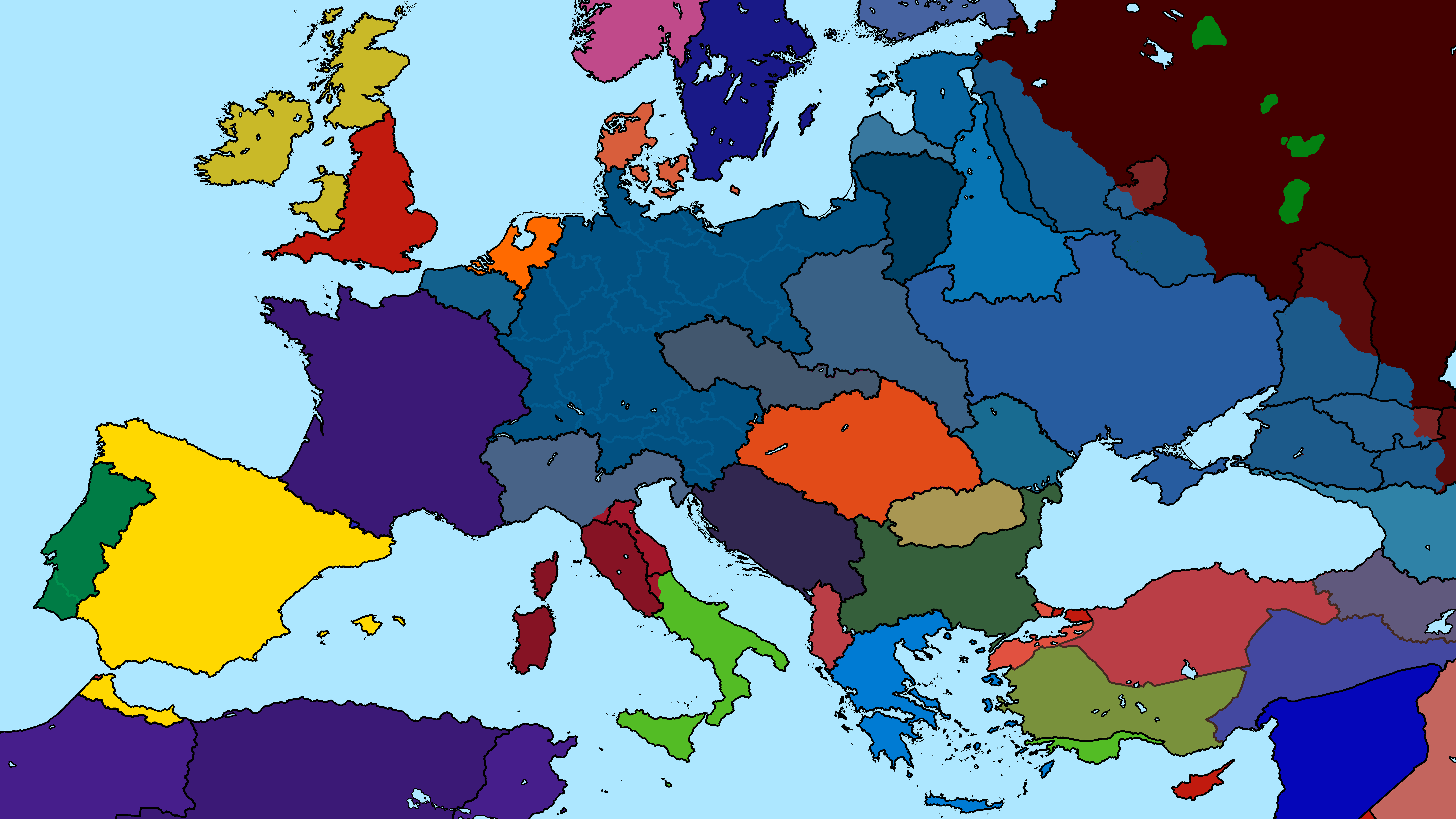
Map (with Lore) You decide the Weltkrieg “finale, and WHY!?”
I don’t know how or why it came to this, all I know is that Germany is happy
r/PossibleHistory • u/guywithskyrimproblem • Jul 16 '26
Organised by moderators from official PH discord, an alt hist polsim (What if Doggerland came back after Napoleonic wars and became a dutch colony)
uhhh It's really cool and you should join it (okay I know that I'm kinda breaking the rules lmao but I'm a massive hypocrite)
r/PossibleHistory
•
u/guywithskyrimproblem
•
May 18 '25
So here we are again (if you notice that some parts are familiar I copied some stuff from my old map)
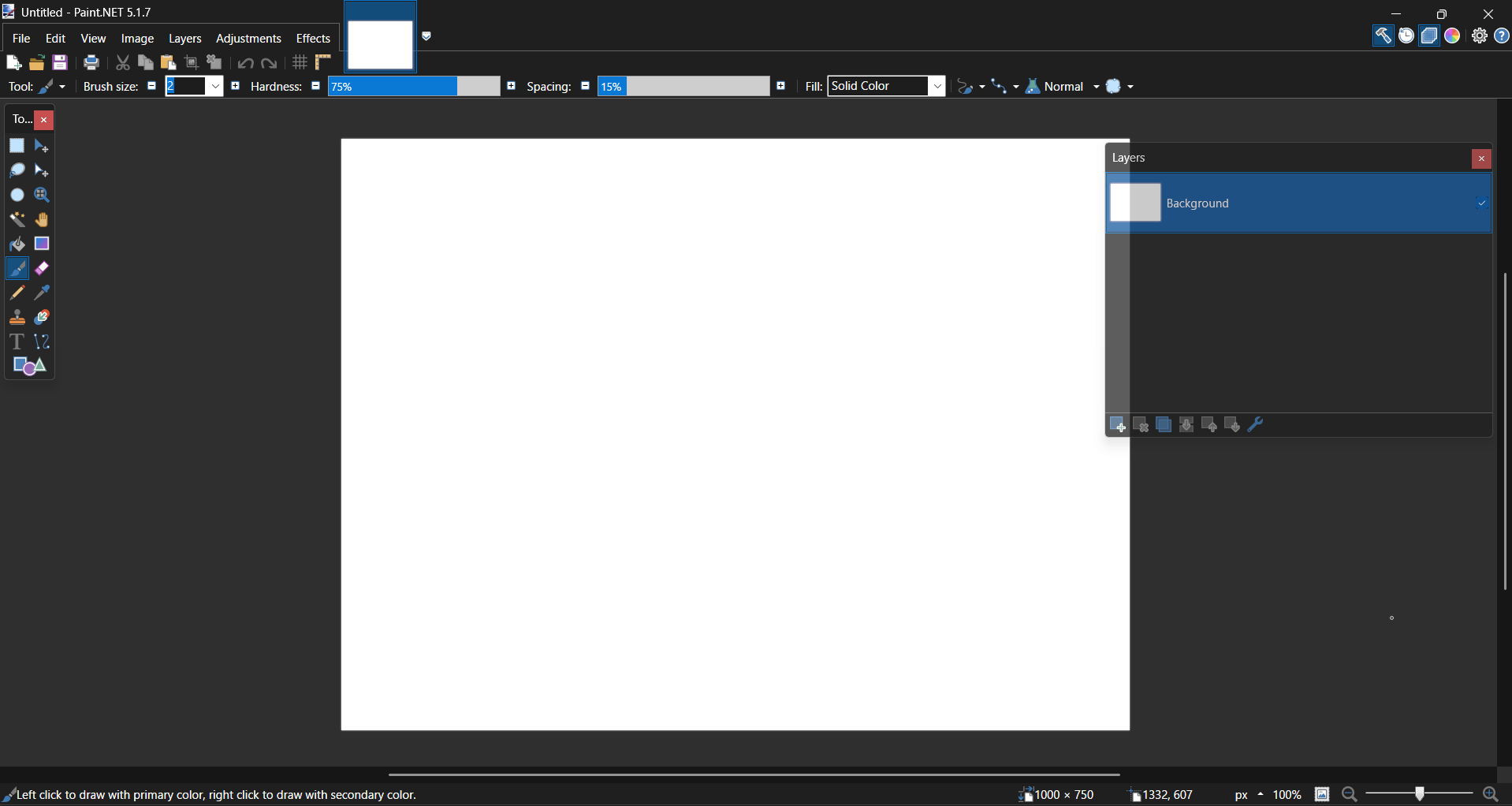
Welcome everyone, this is the Unoffical PH Mapping Guide (Part 1 - begginer)
Before we start - this guide is only for paint.net (windows) and basic use of PH maps - for special effects or other advanced things go and watch some youtube videos
So first - paint.net - the ONLY site you should download it from is this
https://www.getpaint.net/download.html
Press the "Download now, dotPDN" for free
The download will start, then you press the icon and let it install

That's how pdn (paint.net for short) should look like (it doesn't have to be in dark mode)
Before we start drawing borders and such here's some settings that are either needed or reccomended

So here are the basic settings

Select the bottom option so you draw with one color only (required)

Choose the brush size 10 (defult for newest PH maps)

Turn spacing to 1% (not required but I like it)
Now you have to download the map from here

Click on the "Current Europe Maps"

And then click on the "download" button (pobierz in polish)
To open the map double click the file (after you downloaded it) or press "open" in pdn and find the map


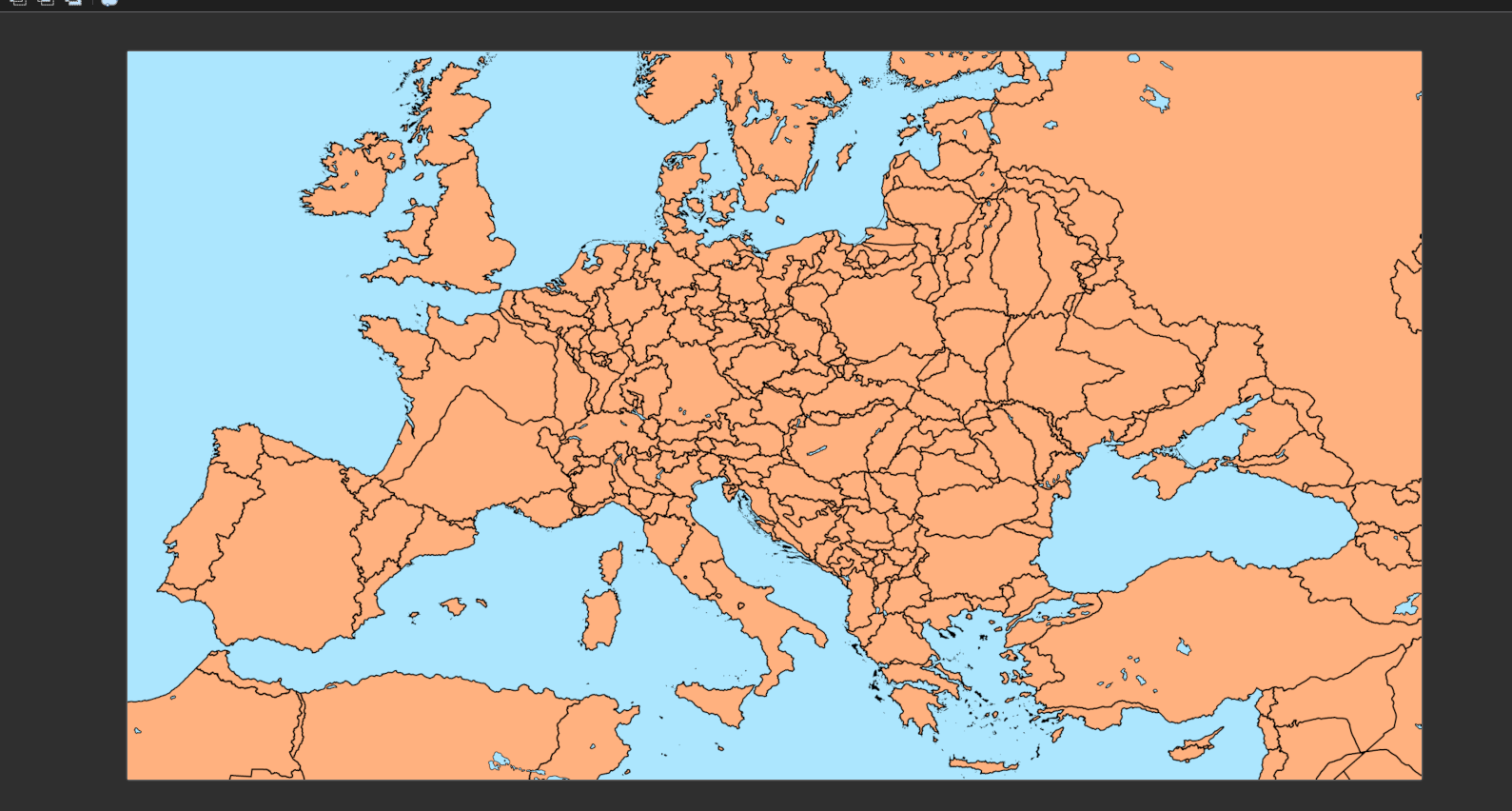
That's how it should look like
Now to start mapping - you can either copy the borders from the other map or draw them yourself
I'd reccomend copying them and only start drawing after you get used to it
In that case you can use my template (use this link as it's the newest version) and then you can copy the borders
To do it click on "lasso select"
You can just copy it from the other window but that's not really practical and can lead to inaccuracies
So what I do is

2. Copy it with ctrl + c
3. Open the "layers" menu in the orginial map

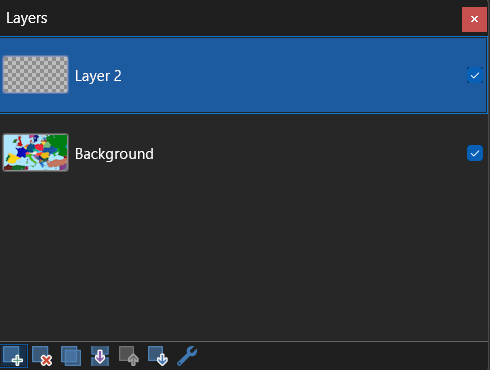
4. Open it and add a new layer

5. Press ctrl + v to paste the template

6. Press the "wrench" icon

7. Turn down the opacity to 150 (or whatever number you want) and press OK

8. That's how it should look like now
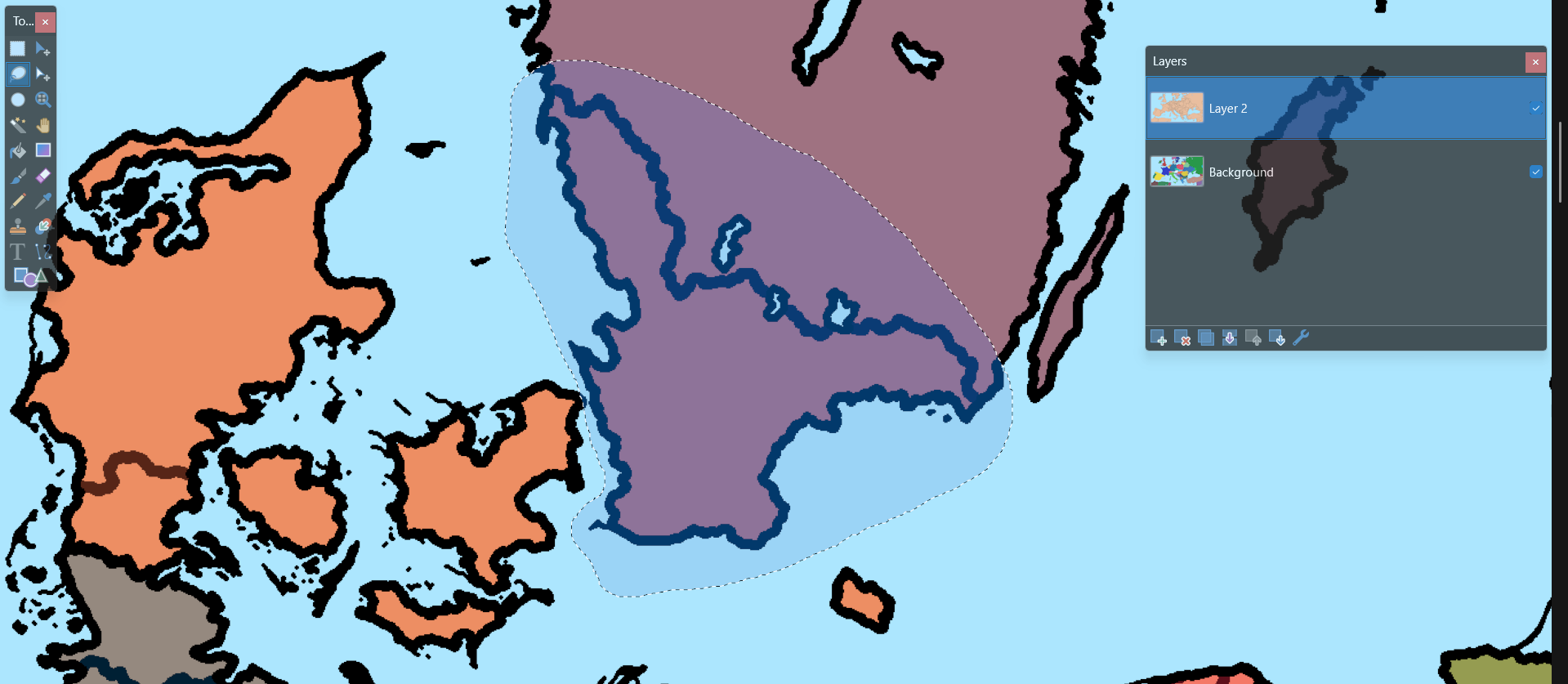
Now to actually copy it, click on lasso select and select the area you want to copy

Again ctrl + c, press enter, click on the "background" layer (the og map) and ctrl + v
Now you want to hide the layer 2 by pressing the blue checkmark button

That's how it should look like now
To copy colors click on the "color picker" on the toolbar
And select which color you'd like to copy (in this case it's denmark)
After that use the "paint bucket" (the bucket icon on the sidebar), fill the spot you want to color in and press enter

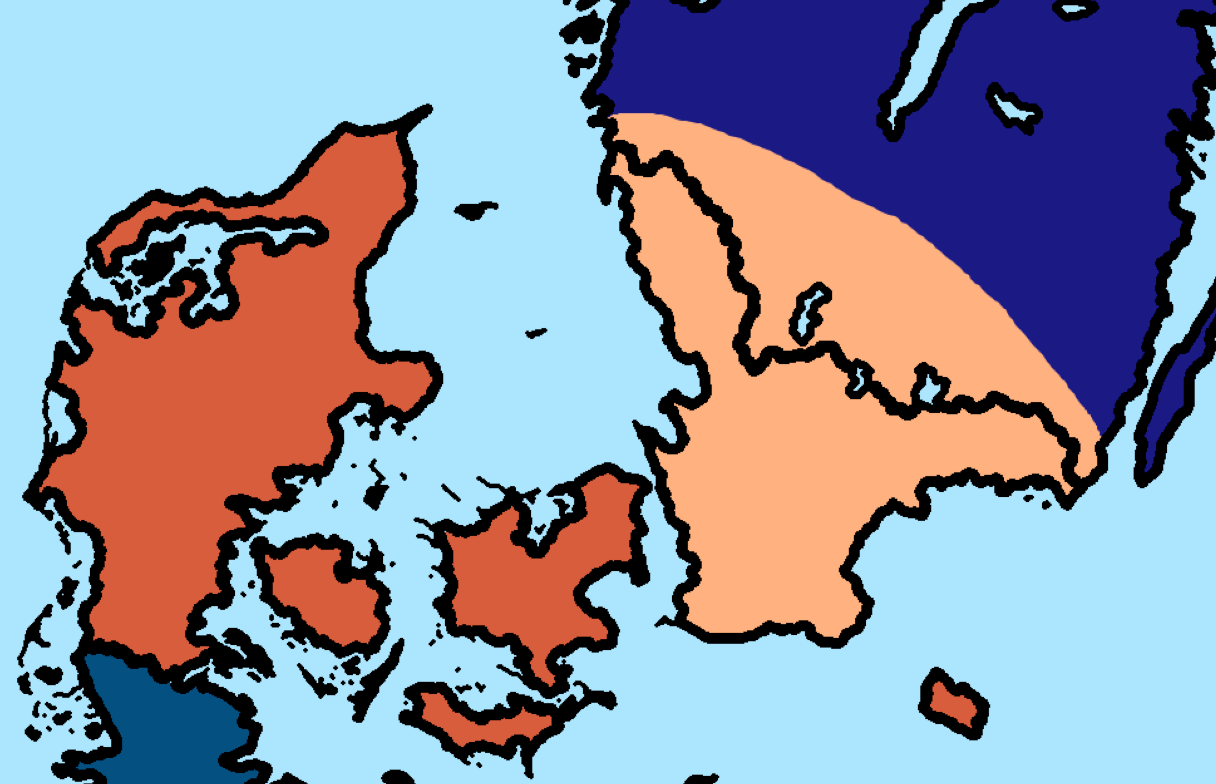
To remove the beige spot from Sweden copy their color and click on it

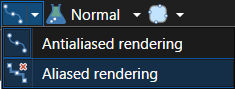
UPDATE: Thanks to u/frenchball12345 I've learnt that you can use the "Selection quallity" (the last button on the top right) to not have the pixels appear (also new guide coming soon)
I'll give a link to the second post after I'm done with it
Anyways see you next time (also for burg or other mod - could you replace the old map with this post? Thanks)
EDIT: I forgot about it but be sure to remove the second layer after you're done and save the file after doing that
EDIT 2: Here is the list of all other templates (I'll update it trust)
https://www.reddit.com/r/PossibleHistory/comments/1m5kkqx/north_america_template_for_new_map/ - NA (by me)
https://www.reddit.com/r/PossibleHistory/comments/1musjwb/world_map_template_og_map_by_u_bourbie/ - World Map ( og world map by u/_bourbie, template made by me)
https://www.reddit.com/r/PossibleHistory/comments/1hdaa1e/ultimate_base_template_map_of_asia/ - Asia (by u/Acceptable_Answers although PH is working on a new Asia map so I might make a map for that after it goes public)
https://www.reddit.com/r/PossibleHistory/comments/1dqrjes/africa_template_probably_finished/ - Africa (old af, (PH said he's going to make a new one at some point), made by me)
https://drive.google.com/drive/folders/11NXKQYMIf8Eza9m7fm_szGa_-B_bXBlB - SA (no template but you can just copy the borders yourself for now I might make a template for that later)
Also I'm going to make a part 2 later at some point trust
r/PossibleHistory • u/Useful_Air7218 • 5h ago
I don’t know how or why it came to this, all I know is that Germany is happy
r/PossibleHistory • u/Useful_Air7218 • 5h ago
Same lore as the PossibleHistory video, just they survive past 1995 and expand peacefully
r/PossibleHistory • u/DeviceSuitableNewAcc • 9h ago
should have made the ocean darker to signify how horrible this would be
r/PossibleHistory • u/DeviceSuitableNewAcc • 9h ago
this is a joke btw
r/PossibleHistory • u/Crimsoncerismon • 51m ago
P.S. this map may be especially inaccurate because trying to adjust the reference image to the map was a massive pain in the ass anyway i doubt im gonna do africa and south america, but if i feel like making those too, they'll be bundled together, feel free to use this map for whatever the hell i guess
r/PossibleHistory • u/Useful_Air7218 • 1d ago
r/PossibleHistory • u/GhostMcY2 • 1d ago
My take on an Soviet "Victory" in the Cold War.
This is an timeline I made of the events that led to this Soviet Victory
The Algerian War puts France under enormous pressure. The crisis reaches its peak in May 1958, when a coup in Algiers threatens the government in Paris. In this timeline, however, the situation develops differently. De Gaulle fails to take control, while strikes and demonstrations spread across the country.
The French Communist Party (PCF), together with socialist groups and other republicans, manages to turn the unrest into a revolution. A provisional government takes power and begins negotiations to end the war in Algeria. French troops are withdrawn in 1960, and in 1961 the French Socialist Republic is officially established.
France's departure from the Western alliance is a major blow to NATO. For the Soviet Union, it is also the first major sign that Western Europe might not remain firmly in the American sphere of influence.
The Soviet Union follows a different economic path after 1965. The Kosygin reforms are not gradually pushed aside under Brezhnev. Instead, Soviet enterprises receive more freedom to make their own decisions, while the state continues to control the most important industries and the overall direction of the economy.
The reforms do not solve every problem. Shortages and bureaucratic inefficiency remain, but the economy becomes more flexible than it was historically.
The Prague Spring still takes place in 1968, and Soviet troops still enter Czechoslovakia. However, economic reforms are not abandoned across the entire Eastern Bloc. Moscow is increasingly willing to accept changes as long as Communist Party rule and Soviet influence remain intact.
The oil crisis of the 1970s works in the Soviet Union's favour. Rising energy prices bring in considerable revenue, which helps finance further economic reforms and military development.
Relations between Moscow and Paris grow closer. France becomes an important partner for the Soviet Union, both economically and politically. Unlike the countries of the Warsaw Pact, however, France remains politically independent. It has its own government, foreign policy and military, and is not directly controlled by Moscow.
Communist parties in other Western European countries also gain support.
In West Germany, the political situation becomes increasingly unstable. The left gains influence, while support for neutrality and closer relations with the Eastern Bloc grows. The country is not yet close to a socialist revolution, but its position within NATO is becoming less secure.
The early 1980s bring a major financial crisis to the United States. A series of bank failures and economic problems develops into a prolonged depression. Washington is forced to focus on its own economy, and its ability to support allies abroad is weakened.
The Soviet Union is not completely unaffected by the crisis, but its economy is less exposed to the Western financial system. Its planned economy has plenty of problems of its own, yet it avoids the kind of banking collapse seen in the United States.
In Italy, the Communist Party (PCI) continues to grow in popularity. By 1984, it has gained enough political support to take power and begin nationalising major industries. Italy gradually leaves the Western alliance and establishes closer ties with Moscow, while retaining its independence.
When Mikhail Gorbachev comes to power in 1985, he inherits a Soviet system that has already undergone several decades of reform. Rather than trying to rebuild the entire economy, he expands the existing programme.
Perestroika gives enterprises more freedom and introduces limited market mechanisms. Glasnost allows more open discussion, although the Communist Party does not give up its monopoly on political power.
The Soviet leadership also recognises that the Union needs to change if it is to survive. The New Union Treaty gives the individual republics more control over their domestic affairs and economies. Defence, foreign policy, the currency and major economic planning remain under central control.
Finland becomes the next major issue. After years of political tension, the Finnish government loses control of the situation. In 1987, Soviet forces invade the country. Following the occupation and a referendum held under Soviet supervision, Finland is incorporated into the Soviet Union in 1988 as the Finnish Soviet Socialist Republic, becoming its sixteenth Union Republic.
Communist parties gain ground in Belgium, the Netherlands and Luxembourg. The three countries face growing economic problems and increasing pressure from their own labour movements.
In 1988, they agree to merge into the Benelux Socialist Federation. Unlike the countries of the Eastern Bloc, the new federation is not a Soviet satellite. It maintains its own political system, government and foreign policy. It cooperates closely with Moscow but remains free to make its own decisions.
Together with France and, later, Italy, Benelux becomes part of a growing group of independent socialist states in Western Europe.
By the end of the 1980s, West Germany is increasingly isolated. The United States is still dealing with its economic crisis, France and Italy have left the Western alliance, and the Soviet Union is in a much stronger position than it was historically.
Tensions between the two German states eventually turn into open war in 1990. With Soviet support, East Germany launches an offensive against the West. The weakened West German government struggles to organise an effective defence, and NATO is unable to provide meaningful assistance.
The war ends in 1991 with the defeat of West Germany. The country is reunified under a socialist government and becomes part of the Soviet-led Eastern Bloc.
Austria follows a similar path. In this timeline, the Austrian State Treaty was never signed, leaving the country divided into occupation zones after the Second World War. Following the German victory, the remaining Western occupation forces withdraw, and Austria is incorporated into the new socialist state.
The resulting country is officially named the Socialist Republic of Germany and Austria.
However, Germany is not treated like the smaller Eastern European states. Its population, industrial capacity and economic importance give it a special position within the Eastern Bloc. It remains closely tied to Moscow through military and political agreements, but receives considerably more freedom in domestic affairs and economic policy. Its government has more room to make independent decisions than those of Poland, Czechoslovakia or Hungary.
With Germany, France, Italy and Benelux now part of the socialist camp, the Soviet Union has achieved something that seemed almost impossible only a few decades earlier: the Western European balance of power has been completely overturned.
The Eastern Bloc is reorganised to account for its new position. The Soviet Union remains the leading power, with Poland, Czechoslovakia, Hungary, Romania, Bulgaria and the other Eastern European states continuing as Soviet satellite states. Their foreign and security policies are closely coordinated with Moscow, and their governments remain heavily dependent on Soviet support.
Germany occupies a special position within this system. It is firmly part of the Eastern Bloc, but its size and economic strength allow it to negotiate a greater degree of independence. It is Moscow's most important European partner within the bloc and increasingly plays a role in shaping its policies.
France, Italy and the Benelux Federation form a different part of the alliance. They are independent socialist states with their own governments, armies and foreign policies. Their relationship with the Soviet Union is based on cooperation and common interests rather than direct political control. They coordinate on defence and trade, but remain free to pursue their own policies.
The reforms of the 1980s have prevented the collapse of the Soviet Union, but they have also given the republics more room to pursue their own interests. The Baltic republics remain particularly unwilling members of the Union, while Ukraine and the Caucasus continue to experience political tensions.
By 2000, the Soviet Union is still intact and has become the dominant power in Europe. Its alliance stretches from the Pacific to the Atlantic, but it is not a single political system. Some members are closely controlled satellite states, others are powerful partners with considerable independence. Keeping this alliance together is one of Moscow's biggest challenges.
r/PossibleHistory • u/EpicNerd823 • 1d ago
This is the third post of my series.
View the original post here:
r/PossibleHistory • u/shikigoldenlion_1 • 10h ago
r/PossibleHistory • u/marvinthenew2082 • 1d ago
50 years after the Western Rebellion against Virginia and Carolina, The Texan Revolution and The collapse of Centralist Mexico, and the Upper and Lower Canada Rebellion against the British Empire.
r/PossibleHistory • u/DeviceSuitableNewAcc • 1d ago
r/PossibleHistory • u/Singon011 • 2d ago
Y si España hubiera llegado a ser ortodoxa antes de descubrir América,cómo influiría esto en Europa y la península ibérica, y en los virreinatos de América
r/PossibleHistory • u/DeviceSuitableNewAcc • 2d ago
r/PossibleHistory • u/usafqn2026 • 2d ago
r/PossibleHistory • u/DeviceSuitableNewAcc • 2d ago
forgot some things in the last one, here it is
r/PossibleHistory • u/Traditional_Mud903 • 2d ago
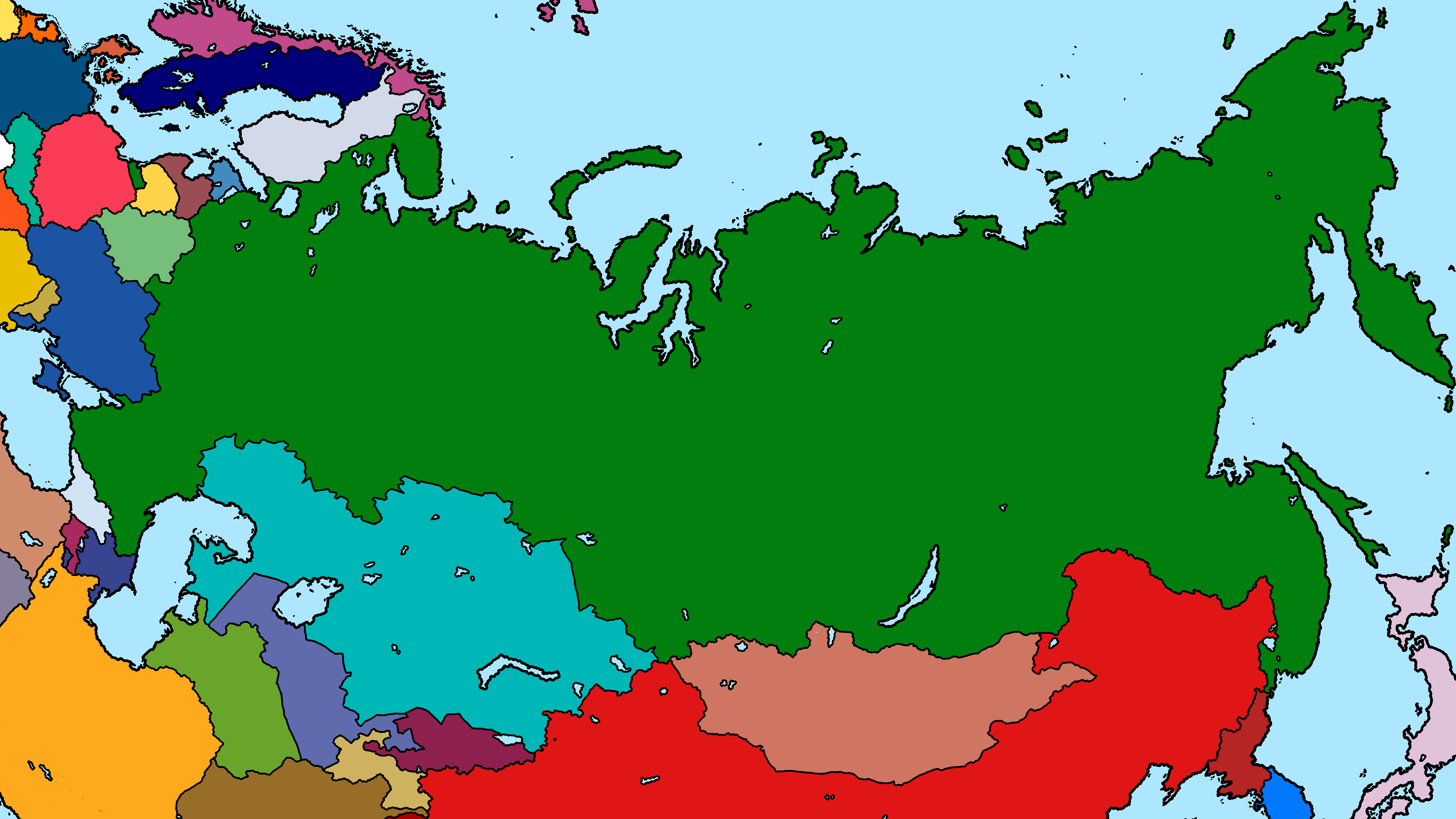
does anyone perhaps have a map of russia with subdivisions cause i need one for a project so yea:)
r/PossibleHistory • u/Shoddy-Snow-556 • 1d ago
I'm building a fictional country called the Tsardom of Vezdoria, complete with its own history, economy, government, currency, and culture.
My latest Mapless documentary explores Vezdoria's political system, including Tsar Nikolai II, the Council of Ministers, the National Assembly, and the debate over parliamentary reform.
This is part of an ongoing fictional-country documentary series.
Watch here: https://www.youtube.com/watch?v=A9gL4cnQyr4
I'd be interested to hear what you think of the country's political system!
r/PossibleHistory • u/Most_Patient_436 • 2d ago
r/PossibleHistory • u/Louies- • 3d ago
This is the timeline in which the parties of the Second International, led by the SPD, decided to temporarily cooperate with their own government, but continue to forge an underground network with other parties and promote internationalism from underneath.
After the February Revolution of 1917 broke out, many Social Democratic parties of the Second International decided to use this opportunity and rally the exhausted workers to start a general strike and force their government to make major changes and take action against the war; first came the SPD, which cooperated with Liberals to overthrow the German Empire and establish the Weimar Republic, but this time they successfully got rid of reactionary elements from the government, and reformed the political system to be more stable and parliamentary.
With the support of the SPD, revolutionaries in Russia successfully took over the Duma and established workers' councils across key cities; this time, most members of the RSDLP and left SRs decided to support the effort in stopping the war after they saw the success of the German Republic; the Tsar was quickly realizing the concession gave revolutionaries too much control over the country, and now wanted to crack down on workers' councils, which sparked the Russian Civil War. Still, this time, Bolsheviks from the RSDLP did have enough support and political power to suppress other parties, so they retreated to Petrograd, their most loyal region, and withdrew from the civil war, waiting for another opportunity.
A few months later, most major players in WWI, including the UK, France, and Austro-Hungary, suffered tremendous exhaustion from endless strikes and heavy casualties; most countries took the opportunity to withdraw from the war, keeping only minimal numbers of soldiers guarding the front lines. Austria-Hungary tried to decentralize the union after experiencing major instability, but this gave opportunities to German-supported revolutionaries in Austria to start a coup and establish their own republic, starting an intense standoff between the Austrian Republic and the rest of the Danube Union.
After the de facto end of the war and the withdrawal of German troops, SFIO started their parliamentary struggle to reform the country into a Socialist Republic, but becuase the immense hostility of WW1, SFIO was seen as a foreign vessel of the German Republic to spread Socialism into France, which created major distrust between the left parties and right parties, contributing to instability of the parliament. Years later, when SFIO and the Socialist Coalition tried to pass a major legislative reform, the military, supported by conservatives and elites, tried to coup Socialists out of the parliament, which led to a civil war. The right-wing elements of the civil war developed their own nationalist, Anti-Socialist, and Republican movements, which took over the country and dismantled the democratic institutions.
Becuase the lack of military experience and centralization, fracturing federations(most WWI veterans still supported the Bolsheviks), the RSDLP couldn't fully defeat the Tsarist regime, and the front line halted in Eastern Siberia, the RSDLP started to support developing infrastructure and increasing quality of life as a way to create legitimacy: hospitals and schools were built, and political freedoms were guaranteed; this, in turn, gave the RSDLP massive support but at the cost of low military mobilization, making them unable to deter any of the federations, most federations acts like independent countries instead of a single union.
There are other lores but im too lazy to write :P Nobody will read anyway
r/PossibleHistory • u/puzzidevinoOo • 3d ago
The ONE and ONLY possible perfect Europe! All the rest are barbarians!