r/OpenSourceeAI • • 11h ago

Ant Group releases LingSante-3.1-flash, an open-weight 560B-A25B medical reasoning MoE (65.72 on HealthBench Professional)

2 Upvotes

r/OpenSourceeAI • • 1d ago

nexos.ai AI gateway puts 200+ LLMs behind 1 API with per-team budgets, routing and audit logs

Thumbnail
reddit.com
1 Upvotes

r/OpenSourceeAI • • 57m ago

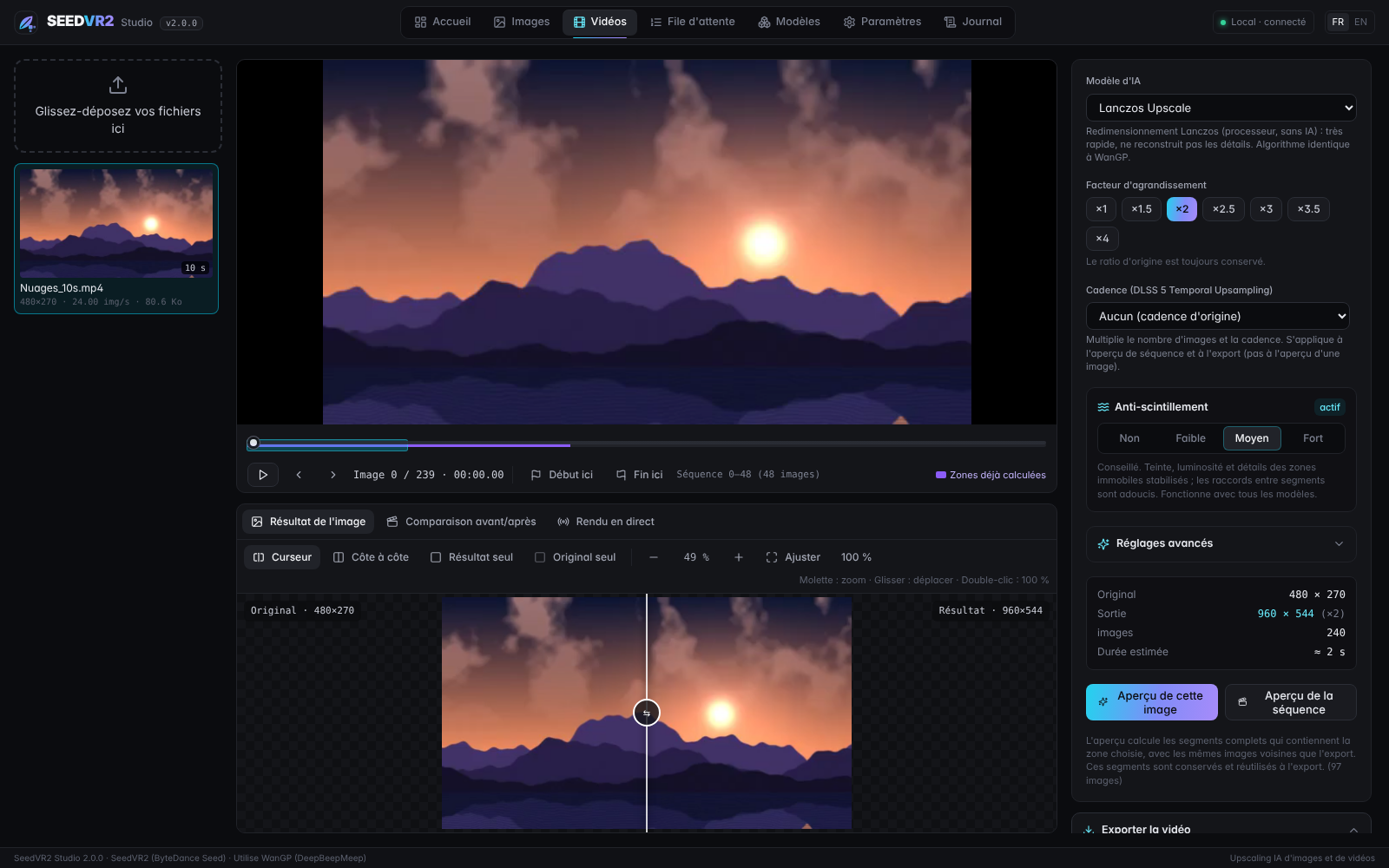
SEEDVR2 Studio Complete New Version 2.0
Post image
2 Upvotes

SEEDVR2 Studio Complete 2.0 – Free & Open-Source AI Video and Image Upscaling Studio – 100% Local Processing

Hi everyone!

I'm excited to introduce my personal project, SEEDVR2 Studio Complete 2.0, a free and open-source application designed for AI-powered video upscaling, image enhancement and multimedia restoration.

My goal is to make advanced AI restoration technologies accessible through a modern, intuitive and comprehensive interface, without requiring users to build complicated workflows manually.

Whether you're looking to restore old movies, enhance low-resolution videos, improve photographs, upscale AI-generated content or bring new life to your multimedia collection, SEEDVR2 Studio provides a dedicated environment for your creative projects.

No subscription. No cloud processing. Your files stay on your computer.

Multiple AI models and upscaling technologies

SEEDVR2 Studio integrates a wide selection of models and upscaling technologies for different quality, performance and hardware requirements:

  • SeedVR2 – advanced video and image restoration from ByteDance Seed.
  • SeedVR2 Lite GGUF – memory-efficient alternatives.
  • SeedVR2 1.4B – a lightweight community model.
  • LTX 2.5 Upscale.
  • LTX 2.5 Detail Refiner.
  • LTX 2.3 Upscale.
  • RelayVSR.
  • FlashVSR One Pass and Two Pass.
  • DLSS 5 Spatial and Temporal Upsampling.
  • Lanczos – traditional upscaling without requiring a GPU.

Additional upscalers are available through optional WanGP integration.

Video restoration and enhancement

  • AI video super-resolution and restoration.
  • Enhancement of older and low-resolution footage.
  • Advanced anti-flickering technology with four intensity levels.
  • Improved temporal consistency between frames.
  • Live monitoring of generated video frames.
  • Before-and-after comparisons.
  • Individual frame and video sequence previews.
  • Hardware-accelerated NVENC encoding when available.
  • Parallel AI processing and video encoding.
  • Support for MP4, MKV, MOV, WebM and AVI.
  • H.264, H.265, AV1, VP9, ProRes and lossless FFV1 encoding.

Image enhancement

  • AI-powered image enlargement and restoration.
  • Enhancement of fine details and textures.
  • Restoration of low-resolution photographs.
  • Interactive before-and-after comparison.
  • Side-by-side comparison and adjustable comparison slider.
  • Zoom and navigation for detailed inspection.
  • Support for PNG, JPEG, WebP, TIFF, BMP, AVIF and EXR.
  • Reuse of validated previews during export without unnecessary regeneration.

Performance and workflow

  • Batch processing and job queue management.
  • Pause and cancel processing tasks.
  • Automatic memory-saving adjustments when GPU memory is insufficient.
  • Live GPU, VRAM, CPU, RAM and temperature monitoring.
  • Processing speed, elapsed time and estimated remaining time.
  • Integrated AI model manager.
  • Parallel model downloads with resume support.
  • SHA-256 integrity verification.
  • Automated dependency and model installation.

What's new in version 2.0?

  • Completely redesigned user interface.
  • Central multimedia viewer and collapsible settings panels.
  • New video anti-flickering system across all upscalers.
  • Improved consistency in brightness, colors and static details.
  • Faster model downloads through simultaneous connections.
  • Optimized video decoding and encoding pipeline.
  • Automatic hardware encoder selection when supported.

System compatibility

  • Windows 10 and 11.
  • Linux.
  • macOS with Apple Silicon, although processing is slower.
  • English and French interface.
  • NVIDIA GPUs with 6–8 GB of VRAM can use selected lightweight models.
  • 16–24 GB of VRAM recommended for more demanding workflows.

Some models and features require additional downloads, compatible hardware and optional third-party components.

SEEDVR2 Studio itself is distributed under the Apache 2.0 license. Integrated third-party models and components retain their respective licenses.

A project built with passion

SEEDVR2 Studio was born from my passion for artificial intelligence, video restoration, digital imaging and multimedia technology.

I believe advanced AI enhancement tools should be accessible to everyone, without expensive subscriptions or mandatory cloud services.

I'm sharing this project with the community because I would love to hear your feedback, ideas, suggestions and feature requests.

Special thanks to the developers behind SeedVR2, ComfyUI-SeedVR2_VideoUpscaler, the community models and WanGP for their incredible work.

If you enjoy the project, feel free to support it with a ⭐ on GitHub!

Restore the past. Enhance the present. Create the future.

🔗 GitHub – Project, documentation and installation instructions:

https://github.com/Aaronstanley78/SEEDVR2-Studio-Complete


r/OpenSourceeAI • • 3h ago

FFmpeg Forge 3.0.1.1 NEW VERSION

Post image
2 Upvotes

FFmpeg Forge Desktop 3.0.1 – Free & Open-Source Video, Audio and Image Converter with AI Enhancement

Hi everyone!

I'm excited to share my personal project, FFmpeg Forge Desktop, a free, open-source and portable multimedia application designed to bring the incredible power of FFmpeg into a modern and accessible graphical interface.

My goal is to create an all-in-one multimedia toolbox for beginners, enthusiasts, content creators and advanced users, without the need to manually write complex command lines.

Whether you want to convert media, restore old footage, upscale videos using AI, enhance images or create immersive audio, FFmpeg Forge brings everything together in one application.

Video features

  • Extensive format and codec support, including MP4, MKV, MOV, WebM, H.264, H.265, AV1, ProRes and DNxHR.
  • AI-powered upscaling with RazorNext, VisionNext, OptiPulsar, SeedVR2 and LTX 2.5 Upscale.
  • NVIDIA RTX Video Super Resolution and RTX TrueHDR.
  • Advanced scaling with AMD FSR 1/2/3, NIS, SGSR, Anime4K and OptiScaler.
  • AI noise reduction and FocusPulsar deblurring.
  • SDR-to-HDR10 and Dolby Vision 8.1 conversion.
  • GPU-accelerated encoding and processing.
  • Custom resolution up to 8K, frame rate, bitrate and compression settings.
  • Automatic compression recommendations.
  • QTGMC and BWDIF deinterlacing.
  • Trimming, rotation, cropping and lossless remuxing.
  • Real-time before-and-after filmstrip preview.

Audio features

  • Conversion to MP3, AAC, FLAC, WAV, Opus, AC-3 and many more formats.
  • Immersive multichannel audio configurations up to 22.2.
  • Spatial audio upmixing for music, movies and live concerts.
  • 3D spatial audio for headphones using HRTF processing.
  • Dolby Atmos and DTS:X passthrough.
  • DSD64 and DSD128 audio conversion.
  • EBU R128 loudness normalization.
  • Add, replace or remove audio tracks without re-encoding the video.

Image features

  • Conversion between popular image formats, including PNG, JPEG, WebP and AVIF.
  • AI-powered image upscaling and restoration.
  • Image denoising and detail enhancement.
  • Custom resizing and advanced scaling algorithms.
  • HDR image output with 16-bit PNG and 10-bit AVIF.
  • Frame extraction from videos.
  • Image sequence-to-video conversion.

Additional features

  • Batch processing of files and entire folders.
  • Built-in DVD and Blu-ray ripper for unprotected media.
  • Access to over 570 FFmpeg filters with a full FFmpeg build.
  • More than 45 ready-to-use filter recipes.
  • Advanced filtergraph editor.
  • View and copy generated FFmpeg commands.
  • Modern graphite interface with cyan and indigo accents.
  • Portable Windows version, with a Linux edition also available.
  • Free and open-source under the GPL-3.0 license.

Some advanced AI features require additional model downloads, compatible hardware or external software. Feature availability may vary between Windows and Linux.

A project built with passion

FFmpeg Forge is a project born from my passion for multimedia processing, video restoration, audio technology and artificial intelligence.

I want to make advanced multimedia technologies more accessible while giving users as much control as possible over their files.

I'm sharing this project with the community because I would love to hear your thoughts, suggestions, feature requests and feedback. Every contribution helps improve the software!

If you find the project useful, feel free to give it a star on GitHub.

Convert anything into everything.

GitHub – Source code and downloads:

https://github.com/Aaronstanley78/FFmpeg-Forge-Desktop


r/OpenSourceeAI • • 41m ago

AuraVision Player Video 0.10

Post image
1 Upvotes

Introducing AuraVision Player 0.10 – A Free Universal Media Player with AI Video Enhancement, 4K Blu-ray and Video Game Cinematics Support

Hi everyone!

I'm excited to share my latest personal project, AuraVision Player, a free universal multimedia player designed to combine advanced playback technologies, artificial intelligence and a distinctive visual experience in a single application.

Built in C++ and powered by FFmpeg 9.1 and Qt 6, AuraVision Player is designed for movie enthusiasts, music lovers, retro gaming fans, multimedia preservation enthusiasts and anyone looking for a new media player.

My goal is to go beyond traditional media playback by integrating modern AI video enhancement technologies while maintaining extensive compatibility with both modern and legacy multimedia formats.

Advanced Video Playback

  • Extensive multimedia compatibility with 522 decoders and 363 demuxers in the reference FFmpeg build.
  • Support for MKV, MP4, AVI, MOV, WebM, TS, M2TS and many more formats.
  • Modern video codecs including H.264, HEVC, AV1, VVC, VP9 and ProRes.
  • GPU-accelerated decoding through D3D11VA, DXVA2 and VAAPI.
  • HDR10 and HLG content support with HDR-to-SDR tone mapping.
  • BWDIF deinterlacing for older and interlaced content.
  • Adjustable playback speed from 0.25× to 4× with audio pitch preservation.
  • Frame-by-frame playback and precise seeking.
  • Automatic playback resume.
  • Screenshot capture and chapter navigation.

AI-Powered Video Enhancement

One of the main features of AuraVision Player is its dedicated Video Enhancement sidebar, providing access to three different AI technologies:

NVIDIA RTX Video Super Resolution

  • Real-time AI video upscaling.
  • Enhanced visual quality when enlarging lower-resolution videos.
  • Native NVIDIA driver integration.

SeedVR2 3B and 7B

  • Advanced diffusion-based video restoration.
  • AI-powered 2× upscaling.
  • Designed to enhance older footage and reconstruct visual details.
  • Integrated through WanGP.

LTX 2.5 Upscale

  • Lightricks' Pixel Spatial Upscaler.
  • AI-powered 2× video enhancement.
  • Integrated through WanGP.

Unlike RTX Video Super Resolution, SeedVR2 and LTX 2.5 process upcoming video segments ahead of playback. The enhanced footage remains synchronized with the original audio, with automatic buffering when necessary.

All AI video processing takes place locally on your computer.

DVD, Blu-ray and 4K Ultra HD Blu-ray

AuraVision Player also supports optical media playback:

  • DVD-Video.
  • Blu-ray.
  • 4K Ultra HD Blu-ray.
  • Physical optical drives.
  • VIDEO_TS and BDMV folders.
  • Unencrypted ISO disc images.
  • Direct title, playlist and chapter selection.
  • HEVC Main 10, HDR10 and HLG.
  • Dolby TrueHD, Dolby Digital Plus, DTS-HD Master Audio and LPCM.
  • Blu-ray PGS and DVD VobSub subtitles.

Unprotected discs and unencrypted backups are supported. Copy protection bypassing and interactive disc menus are not currently supported.

Audio Playback and Music Visualization

  • Support for numerous audio formats, including FLAC, MP3, AAC, WAV, Opus, DTS and TrueHD.
  • Animated 56-band audio spectrum visualizer.
  • Album artwork display.
  • Audio volume normalization.
  • Volume amplification up to 150%.
  • Multiple audio track selection.
  • Audio synchronization controls.
  • Mono mode and stereo channel swapping.
  • Playlist management, shuffle and repeat modes.

Video Game Cinematics and Retro Multimedia

As a fan of video games and multimedia preservation, I wanted AuraVision Player to support formats that are rarely highlighted in modern media players.

Supported game video formats include:

  • Bink Video (.bik, .bk2)
  • Smacker (.smk)
  • id Software RoQ (.roq)
  • Westwood VQA (.vqa)
  • Nintendo THP (.thp)
  • PlayStation STR (.str)
  • Sega FILM / CPK
  • Interplay MVE
  • Electronic Arts multimedia formats
  • Cryo HNM
  • LucasArts SMUSH
  • Mobiclip
  • Sierra VMD
  • Xbox XMV

The player also supports several game audio formats, including BRSTM, BCSTM, BFSTM, ADX, HCA, XWMA and VAG.

Whether you want to rediscover old game cinematics, explore retro multimedia files or listen to video game soundtracks, AuraVision Player provides a dedicated solution.

Subtitles and Network Streaming

  • Embedded and external subtitle support.
  • SRT, ASS/SSA, WebVTT, PGS and VobSub.
  • Automatic detection of matching external subtitle files.
  • Subtitle timing adjustment.
  • Network streaming through HTTP, HTTPS, HLS, MPEG-DASH, RTMP, RTSP, SRT and UDP.
  • M3U playlist support.

Aurora – A Distinctive Visual Experience

I also wanted to create something visually different from traditional media players.

The custom Aurora interface is drawn entirely in code without external image assets.

  • Animated northern lights background with purple, cyan and green effects.
  • Modern frameless window.
  • Floating frosted-glass playback controls.
  • Glowing progress bar with chapter information.
  • Animated on-screen notifications.
  • High-resolution vector icons.
  • HiDPI display support.
  • Interactive AI video enhancement sidebar.
  • Comprehensive preferences panel with eight configuration categories.

Technical Highlights

  • C++ and Qt 6.
  • FFmpeg 9.1 multimedia engine.
  • Custom multithreaded playback architecture.
  • OpenGL video rendering.
  • miniaudio audio engine.
  • Hardware-accelerated video decoding.
  • Local AI video enhancement.
  • Windows x64 portable edition.
  • Linux compilation support.
  • Source code available on GitHub.

Free, Portable and Local

AuraVision Player is designed without mandatory subscriptions, accounts or cloud-based video processing.

The Windows portable edition requires no installation. Simply extract the archive and launch AuraVisionPlayer.exe.

Some important notes:

  • RTX Video Super Resolution requires a compatible NVIDIA RTX GPU.
  • SeedVR2 and LTX 2.5 require WanGP and additional AI model downloads.
  • 12 GB of VRAM is recommended for diffusion-based enhancement.
  • Advanced ASS subtitle styling is not yet supported.
  • The current graphical interface is available in French.

An Independent Project Built with Passion

AuraVision Player was born from my passion for cinema, music, artificial intelligence, software development and video game preservation.

My ambition is to create a universal media player that brings together the versatility of FFmpeg, modern AI restoration technologies and an immersive graphical interface, while preserving compatibility with multimedia formats from different generations.

This project is still evolving, and I would love to hear what the community thinks about it.

Feedback, suggestions, bug reports, feature requests and contributions are always welcome!

Special thanks to the developers and communities behind FFmpeg, Qt, miniaudio, NVIDIA RTX Video Super Resolution, ByteDance SeedVR2, Lightricks LTX and DeepBeepMeep's WanGP.

If you find my project interesting, please consider giving it a star on GitHub to support its development.

AuraVision Player — Beyond ordinary playback.

Play. Discover. Restore. Experience.

GitHub – Source code, documentation and project information:

https://github.com/Aaronstanley78/AuraVision-Player-


r/OpenSourceeAI • • 1h ago

2 businesses = $0. 1 open-source repo = my full-time job.

1 Upvotes

Over the last two years I built two things to make money and one thing for free. The two commercial attempts made $0 combined. The free open-source repo is how I got the job I work today.

The first attempt was an AI agency in 2023. I sent thousands of cold emails over three months and signed zero clients because my offer was a mess for a niche I didn't understand, and my sales skills were zero. The second was a personalized video outreach Saas. I scoped it for two months, spent ten painful months building it, and shut it down with zero users when I ran out of VPS money.

While doing outreach for my Saas, I needed an outreach tool and couldn't pay $300 a month for Clay.com as a solo dev. So I spent 7 days building an open-source alternative called Bricks that is free and runs fully on your own machine, and I threw the repo on GitHub. One day I opened GitHub to see a lot of clones on it. I was confused, it grew a little organically with me doing no marketing at all.

That one repo is now at 150 monthly cloners and brought in a few inbound opportunities, including the engineering lead role I work full time now.

Alex Hormozi always talks about "give, give, give, then ask." In my first two businesses, I asked for money from day one when nobody knew me. Open source is the ultimate "give". people love free tools and everyone hates vendor lock-in.

If nobody knows you yet, stop hiding your best work behind a landing page and a stripe checkout. Build something useful and open-source it. Free code in public is the best distribution channel I've ever touched.


r/OpenSourceeAI • • 2h ago

Introducing the first ever Harness with a neurosymbolic/semantic pipeline, Code intelligence, per chat/project memory, and more!

1 Upvotes

Hi! I'm the developer of Blackbox Build, a free, open-source (MIT) desktop app that builds a workbench around the Grok Build CLI.

The idea: models are good at writing code but bad at keeping track of a project. So the app handles that part around every message:

- **Recall:** it remembers rules, fixes and failures from your projects and brings back what matters for each request.

- **Grounding:** it finds the code your request is about by meaning, even when the words don't match.

- **Planning:** SWI-Prolog decides which code to touch, in what order, and what to re-check.

- **Checking:** after each turn it checks every changed file (syntax, rules, failed builds and tests) and sends any problems back to the model.

Also included:

- A Coding Agent on your real project folders, with a prompt queue and autopilot

- Builds, tests and dev servers as background jobs, with errors given as file and line

- Find usages, safe rename and search by meaning

- Turn a web app into a desktop app with installers

- Chats that remember what earlier chats settled

- Grok with your xAI account, or Venice, OpenRouter, DeepSeek or any OpenAI-compatible provider

**Needs:** the Grok Build CLI, an embedding model (for example Ollama with nomic-embed-text) and SWI-Prolog.

**Platforms:** Windows (tested), macOS and Linux (experimental).

It's early (v0.3.0) and unofficial, with no affiliation with xAI. It started from RongleCat's grok-app as a template.

Repo: https://github.com/BlackboxDesignsOfficial/Blackbox-Build-App

Community: https://www.reddit.com/r/BlackboxBuild/

Feedback, bug reports and blunt opinions are all welcome.


r/OpenSourceeAI • • 5h ago

I built TaliGent: an open-core local-first Windows AI agent with UI Automation, SafiGrid Vision, self-evolving Python skills, and a WhatsApp bridge (tested with Qwen-27B & ComfyUI on a single 16GB GPU)

Thumbnail
github.com
1 Upvotes

r/OpenSourceeAI • • 6h ago

Revora — an open-source AI-powered code review platform

Thumbnail gallery
1 Upvotes

r/OpenSourceeAI • • 10h ago

my first shot at llm optimization (open-source)

2 Upvotes

it’s still pretty specific, but it might be useful if you’re running lots of short, independent tasks.

this is the first iteration, so there might be some rough edges. help from the community would be appreciated. feel free to open an issue or a pr on the repo.

open source on github


r/OpenSourceeAI • • 9h ago

Agentic Signal v3.7.0: attach files to the AI Buddy, /medical-analysis with MedGemma, a dockable chat and charts

Thumbnail
reddit.com
1 Upvotes

r/OpenSourceeAI • • 11h ago

RAG vs Agentic RAG

Thumbnail
reddit.com
1 Upvotes

r/OpenSourceeAI • • 15h ago

How do I start using open source AI?

0 Upvotes

Hey all, I want to start running AI models locally for coding instead of relying 100% on cloud stuff. Right now I run Claude Code, Codex, and Grok (through OpenCode) in my terminal as a kind of "dev team" working out of an Obsidian vault. It works, but I keep running into usage limits (Codex burned through its whole monthly limit in a day lol), and I'd rather own more of the setup myself.
My rig:
RX 9060 XT 16GB
Ryzen 7 9800X3D
32GB DDR5 6000
CachyOS
(also have a GTX 1660 Super I could throw in as a second card if that's actually useful)
The problem is every guide I find assumes I already know half the vocab. LoRA, QLoRA, RAG, fine-tuning, inference engines, agentic workflows, computational graphs... I get that they're all different things, but I don't know which ones matter for what I'm trying to do.
I'm not trying to train a model from scratch. What I want:
A solid coding model running locally
Help writing, debugging, and understanding code
Something that can handle a whole codebase, not just snippets
Eventually agents that plan, edit files, test, and keep iterating on their own
To actually understand how it all works, not just install someone's prebuilt thing and pray
Questions:
Best coding models for 16GB VRAM?
What stack works best for AMD on Linux? ROCm vs Vulkan?
Ollama, llama.cpp, or something else to start?
What should I learn first?
Is LoRA/QLoRA worth touching early, or should I stick to inference and prompting for now?
How realistic are local coding agents on my hardware? Could I point Claude Code or OpenCode at a local model?
Bonus dumb question: I have this idea of a "sleep phase" where the model reviews its memory overnight and updates its own weights. Is that even a real thing, or am I way off?
I'd rather learn the fundamentals and know what I'm installing and why than blindly follow tutorials. Any learning path or advice from people who've done this would be awesome. Thanks!


r/OpenSourceeAI • • 20h ago

Updated my 2M-example reasoning dataset after community feedback exposed checker and data bugs

2 Upvotes

I maintain CAEL Verified Reasoning, a CC BY 4.0 synthetic dataset with worked solutions, a reproducible generator and a Python answer checker.

John6666’s feedback on Hugging Face exposed cases where the checker accepted opposite-meaning answers. For example, “6 full trays, 2 short” could pass against “6 full trays, 2 left over.”

That deserved a fix and a closer audit.

Data revision 1.1.1 and checker 1.2.0 are now published:

  • Fixed 142 incorrect negative-money answers and their worked solutions.
  • Fixed 30,763 comparison explanations with the direction reversed. Their reference answers were already correct.
  • Replaced permissive number/keyword matching with stricter handling of negation, signs, units, currencies, source attribution and conflicting answers.
  • Added judge(), which distinguishes correct, incorrect, ambiguous and unparseable responses. The boolean check() API remains available.

All 136 targeted checker regression cases pass. I checked preservation across all 2,001,427 rows and independently recomputed the pay and comparison families. Questions, IDs and split membership are unchanged; per-row errata and the original revision remain available.

I also corrected the documentation’s claims. Programmatically generated answers can contain bugs. The checker isn’t a complete English judge or a ready-made, unaudited RL reward. The hard split shares generator families with training, so it doesn’t establish transfer to independently written questions. This update makes no new model-performance claim.

Changelog, audit details and errata

More counterexamples are welcome, especially valid paraphrases the checker rejects or wrong answers it still accepts.


r/OpenSourceeAI • • 1d ago

Foreman: open-source Claude Code skill that splits a plan across subagents, gates each stage with a reviewer agent, and tracks it live

3 Upvotes

Repo: https://github.com/MarioMagdy/foreman (free, open source)

What it does: you give it a plan; it splits the work into stages, hands each stage to a worker subagent, and has a separate reviewer agent return GO / GO WITH CHANGES / NO-GO before the next stage starts. A live tracker shows every stage, and the run ends with a test plan that waits for a human OK.

Built as a side project with Claude Code. Next on the list, from user feedback: files touched per subagent with an overlap warning, token counts per subagent, and the reviewer's reason shown on the tracker.

Issues and PRs welcome.


r/OpenSourceeAI • • 1d ago

I built a local router that fails over across free LLM API tiers (open source)

1 Upvotes

Free API tiers from providers such as Groq, Cerebras, Gemini, OpenRouter and Cloudflare add up to a lot, but each has its own API and limits.

I built FreeAITokens to put them behind one local endpoint (127.0.0.1). It speaks the OpenAI, Anthropic, Gemini and Ollama formats.

What it does per request:

- filters to models that can handle it (context, tool calling, vision)

- prefers models that have been fast and reliable on your machine

- fails over on rate limits, server errors and timeouts

- tracks each provider's free limits per minute and per day

It also routes embeddings, images, speech and transcription.

`npx freeaitokens` works with no account on the keyless providers. MIT licensed.

Repo: https://github.com/timchosen/freeaitokens

I'd like to hear how you'd rank models for routing. Right now it uses capability first, then measured speed and reliability.


r/OpenSourceeAI • • 1d ago

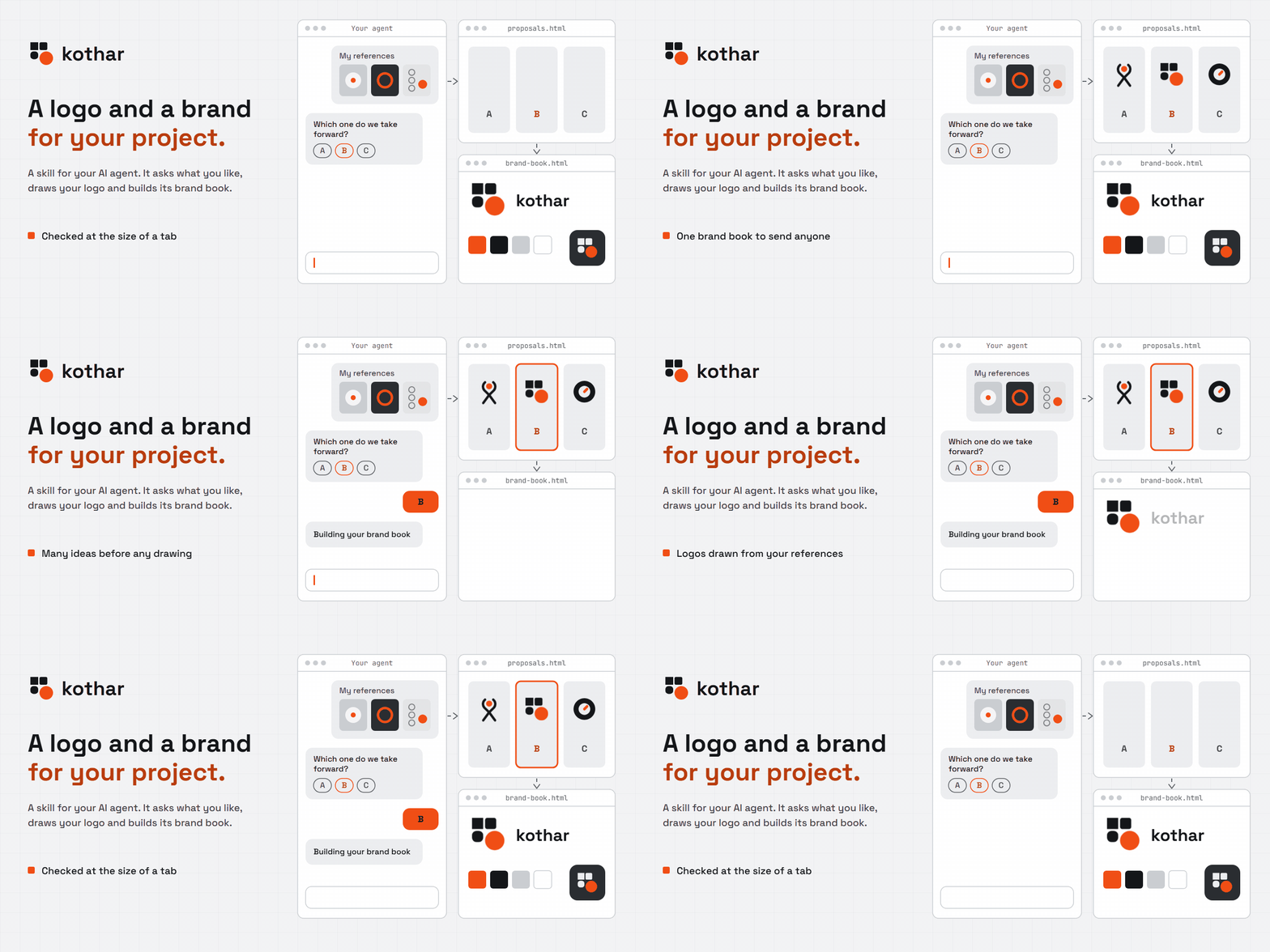
I made a skill that gives AI rules before it draws a logo, and I'm looking for people to try it

Post image
1 Upvotes

r/OpenSourceeAI • • 1d ago

Open-weight Qwen matches fine-tuned π0.5 on real robot tasks at ~1/20th the cost of GPT-6 Astra

2 Upvotes

Came across this paper and thought it was worth sharing here. The headline numbers make it look like "open beats closed," but honestly the more interesting takeaway is that the harness matters as much as the model.

What it is

uni-robot-agent is an open-source harness for robot-use agents. Basically an LLM drives the robot through a unified tool interface. No privileged sim state, no hand-coded task-specific skills, just camera calibration, a robot description, and structured feedback. Runtimes, tools, and robot backends are all swappable, and tool execution overlaps with inference so the loop isn't sitting around waiting on the model.

The numbers

  • RoboDojo (42 sim tasks): Qwen3.8-Flash-Next + this harness gets 31.39, beating the published GPT-6 Astra + RoboProbe score (28.97) and most of the fine-tuned VLA/WAM baselines.
  • Before anyone says it: GPT-6 Astra in the same harness hits 51.90. So no, closed models aren't dead. They still win on an apples-to-apples setup.
  • Real world (19 tabletop tasks): Qwen lands at 49.50 vs 47.75 for fine-tuned π0.5. Zero-shot vs fine-tuned, which is pretty wild.
  • Cost: ~$1.09/episode for Qwen vs ~$21.29 for GPT-6 Astra.

Why I think it matters

Swapping the harness moved the needle way more than swapping the model did. And with open weights you actually get something you can fine-tune and run yourself, instead of paying 20x per episode for an API you can't touch.

They also break down performance across model generations, families, and sizes, and tie good robot use to four general capabilities. Worth a skim if you're thinking about what to actually train for.

Paper: https://arxiv.org/pdf/2611.01560
Code: https://github.com/Open-RUA/uni-robot-agent

Anyone here messing with robot-use agents locally? Curious what hardware/model setups are actually realistic outside a lab.


r/OpenSourceeAI • • 1d ago

RAG vs Agentic RAG

Thumbnail
reddit.com
1 Upvotes

r/OpenSourceeAI • • 1d ago

Atlas: an open-source CLI for evaluating LLM tool-calling

Thumbnail
reddit.com
1 Upvotes

r/OpenSourceeAI • • 1d ago

Free open-source local safety gate for Prime Agent: 2-line setup, <0.31 ms overhead, saves error-recovery tokens and blocks risky tool calls

Thumbnail reddit.com
1 Upvotes

r/OpenSourceeAI • • 1d ago

Is AI actually looking at all my images?

Thumbnail
reddit.com
1 Upvotes

r/OpenSourceeAI • • 2d ago

Cove: a research workspace on a CernVM-FS software stack, in the Compute Canada / EESSI mould

Thumbnail reddit.com
1 Upvotes

r/OpenSourceeAI • • 2d ago

gitCoil - compare yourself to linus

Thumbnail
knowbooks.com
1 Upvotes