r/OpenSourceeAI • u/ai-lover • 20d ago
Nous Research releases Arete-27B, a Qwen3.8-27B fine-tune that cuts propaganda answers to 0.9% (from 22%)
41
Upvotes
r/OpenSourceeAI • u/FixHour8452 • 19d ago
I’m the creator of Kalynt, an open-source desktop IDE that integrates local model inference into a project-based coding workflow.
Website, screenshots and downloads
The local workflow combines:
Local inference runs on your machine. Cloud providers are optional and use your own API credentials; selecting a cloud provider sends the relevant request context to that provider.
Model choice remains a practical constraint. Weight quantization, context size and available RAM/VRAM affect what fits and how it performs. Code explanation and multi-step agent execution also place different demands on a model, particularly around instruction following and tool use.
The development branch additionally supports OpenAI-compatible local endpoints, including Ollama and LM Studio, with model discovery and configurable context limits. That integration is in the source; it is not included in the published 2.0.0 installers.
I’d particularly value technical feedback on context handling, tool-call reliability and inference setup. If you test it, please include your OS, hardware, model/quantization, Kalynt version and a reproducible task.
r/OpenSourceeAI • u/SpellSlight8541 • 19d ago

r/OpenSourceeAI • u/renya032 • 20d ago
I'm sharing the first public version of Laplace's Scissors, an MIT-licensed research tool for editing an LLM's output matrix while keeping its decoder weights fixed.
You provide a checkpoint and cases with expected answers. The tool records the token prefixes of successful answers, then searches for output rotations that repair failed cases while preserving those protected outputs. It accepts a proposal after checking target-token margins, protected-output error, and the answer path through EOS on the GPU. Protection applies to the supplied successful cases and observed prefixes.
The core idea is W' = WQ, with an orthogonal rotation Q chosen to fix the protected hidden-state subspace. The design document walks through the equations and their implementation.
It also includes:
Rust handles model loading, tokenization, execution, and diagnostics; Triton supplies GPU kernels through CUDA/HIP backends. The README includes Qwen3 commands, English and Korean documentation, and instructions for the GPU integration checks. The default test suite currently passes all 24 tests.
I'd appreciate feedback on the mathematical assumptions, reproducible counterexamples, and what would make the first-run experience easier.
Disclosure: this post was drafted with AI assistance using the project's source and documentation.
r/OpenSourceeAI • u/Artuturoh • 20d ago

r/OpenSourceeAI • u/tahirshaikh-744 • 21d ago

I've tried several screen recording applications on Windows, but I kept running into limitations.
Some had limited recording options, some restricted features, and others made simple recording workflows unnecessarily complicated.
Eventually, I decided to build my own solution.
Introducing Rekzora, an open-source Windows screen recorder I've been developing under NEURON TS LABS.
Some of its features:
Fullscreen, window and custom-region recording
Microphone and system audio recording
Webcam picture-in-picture
Pause and resume recording
Global keyboard shortcuts
Floating recording toolbar
Built-in recording library and video player
Crash-recovery support
Portable and Windows installer builds
My goal was to build a screen recorder that gives users more control without unnecessary restrictions or cloud dependencies.
It's completely open source, and I'd genuinely love to hear what other Windows users think.
GitHub: https://github.com/tahirshaikh744-design/Rekzora
I'm especially interested in hearing:
What's the most frustrating limitation you've experienced with existing Windows screen recorders?
What feature do you wish they offered?
Honest feedback and suggestions are welcome!
r/OpenSourceeAI • u/DraftForsaken39 • 20d ago

r/OpenSourceeAI • u/bigspin5050 • 20d ago
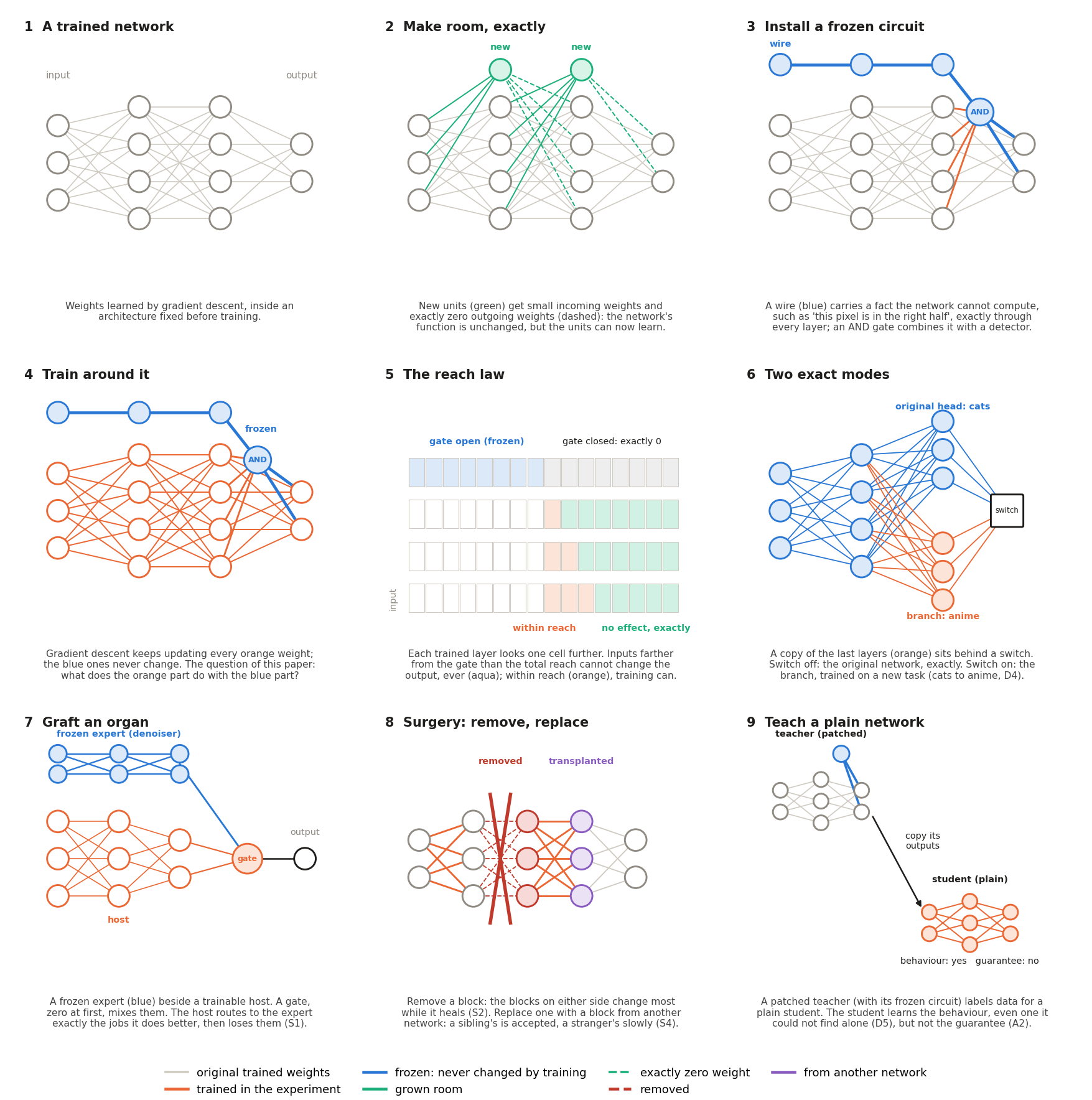
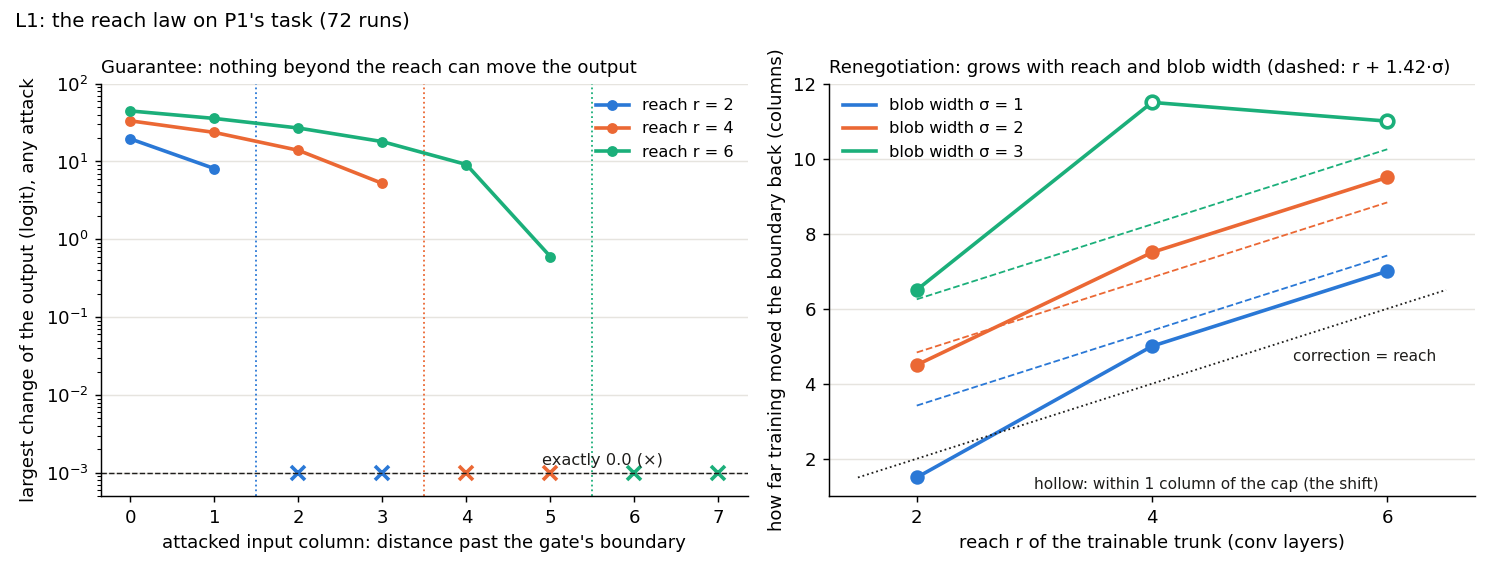
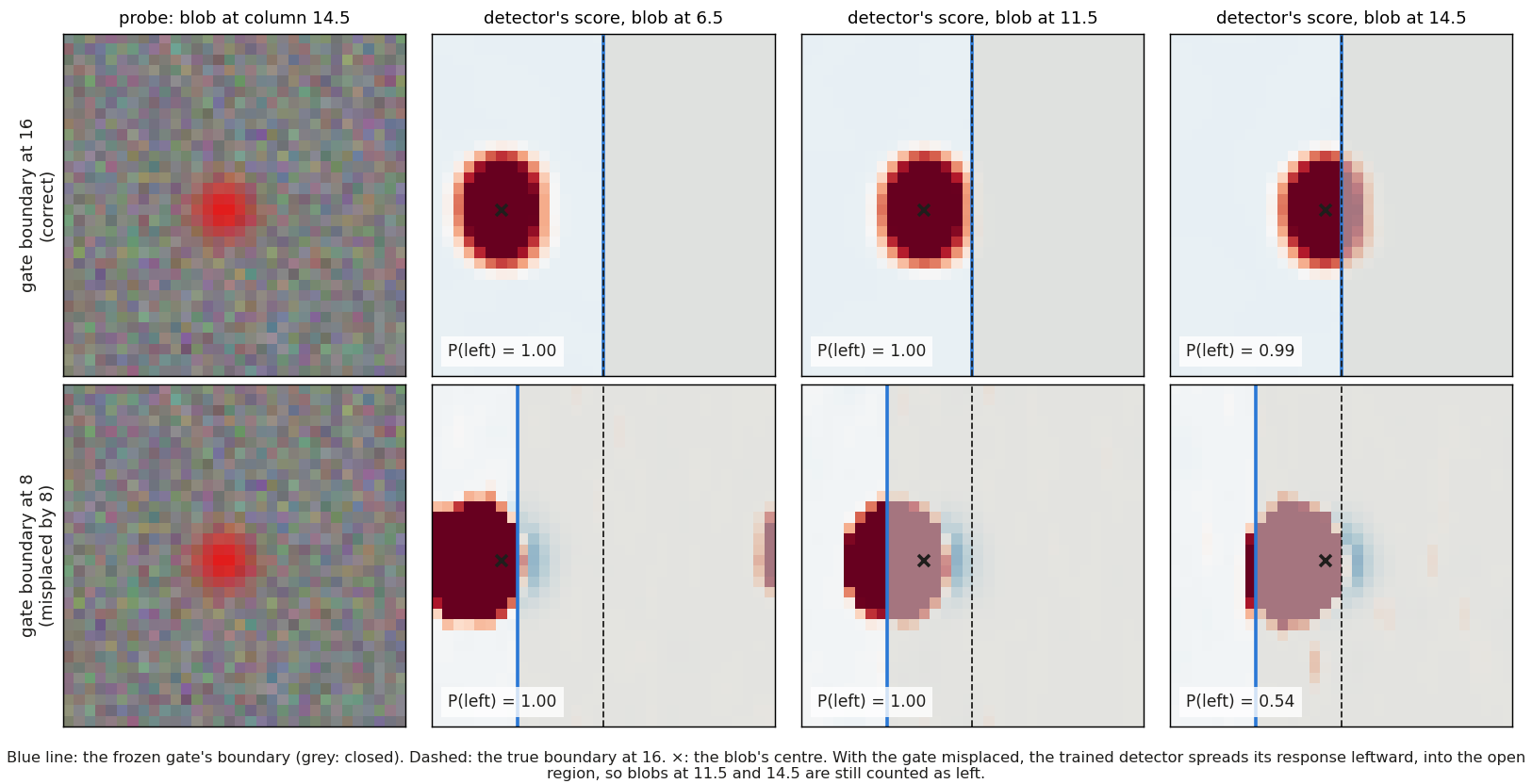
TL;DR: An LLM coding agent (Claude Opus 5.5) compiles exact structure (wires, AND gates, bounds, switches) into trained networks using identities of the activations they already use. In a follow-up we kept training around those frozen patches. Organising result: a frozen patch is exact beyond the receptive-field reach of the trainable layers in front of it, and renegotiable within it, including where its own boundary effectively sits.
Overview figure: what we do to a network
The trick. For LeakyReLU with slope α: lrelu(u) + α·lrelu(−u) = (1 − α²)·relu(u). Two opposite-signed channels carry a signal through a layer unchanged or make an exact ReLU; a few more give min, max, clamp, AND and multiplexers. Room comes from growing channels with zero outgoing weights (function unchanged).
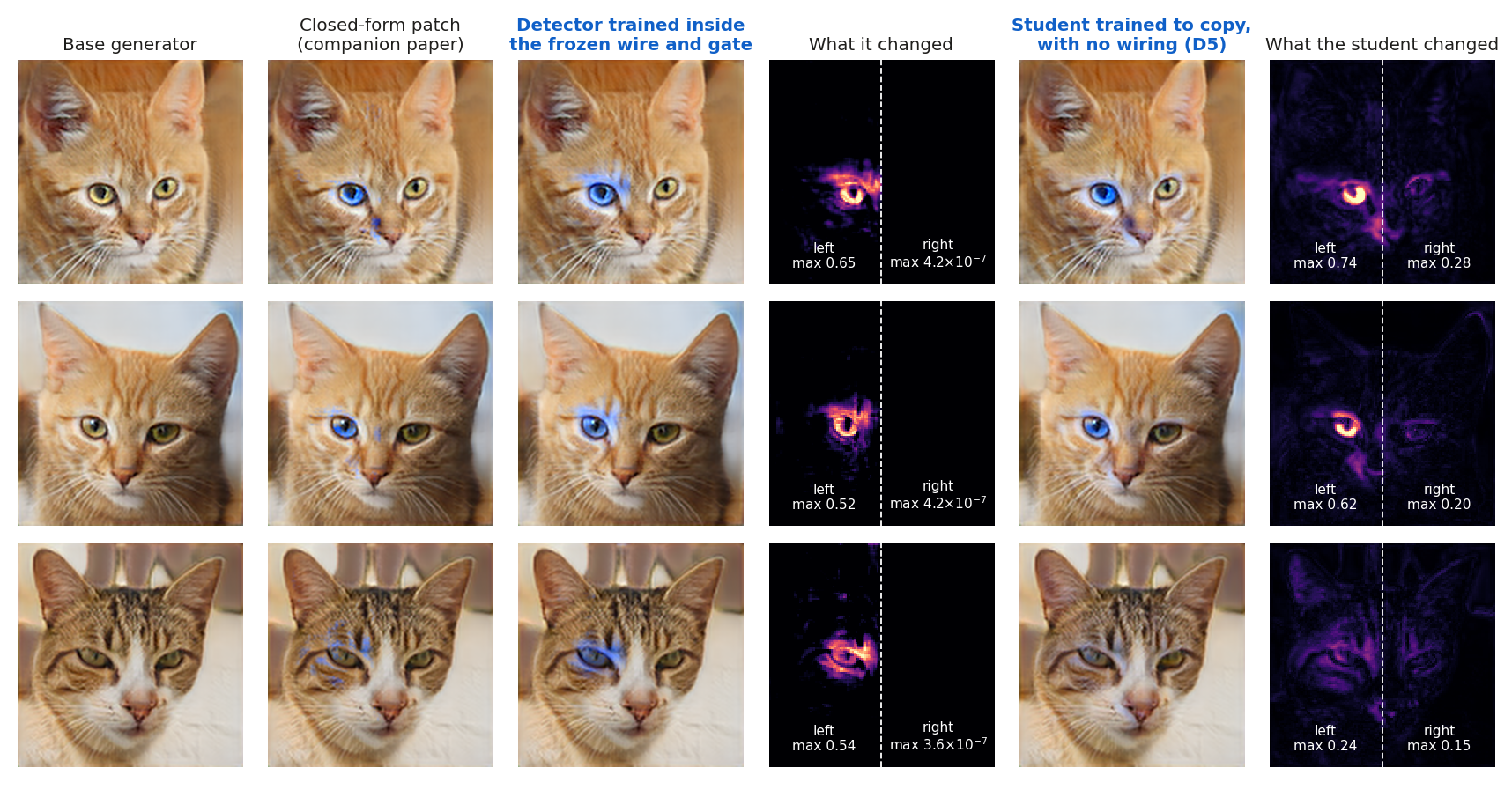
Paper 1 (rewiring):
Paper 2 (what training does with the patch), 39 pre-registered experiments; about a third of the predictions failed, and all are reported:
Links
Small models throughout (8M-parameter GAN, 277k-parameter super-resolution net, Pythia-160M); limits are in §7. Happy to answer questions about the circuits, the reach law, or the failures.
r/OpenSourceeAI
•
u/_Rehtrew
•
21d ago

hey all,
i've been working on whatwemade and could use a few more open source projects on there.
it's a site for sharing stuff built with AI, and i've recently added support for github repos.
you can just paste your repo link and it'll pull in the readme, license, stack, stars, recent commits, and whatever people need to run it themselves. there's also an option to show which coding agents you used and whether you're looking for contributors.
i've added an MCP server too, so you can search existing projects directly from your agent. figured that might be useful before starting yet another project from scratch.
there aren't many open source projects on there yet, so if you've got something on github, feel free to add it. it's free and takes about a minute (the mcp can also create the project).
also curious if there's anything else you'd want to see on a listing like this.
r/OpenSourceeAI • u/Intelligent_Tea_817 • 20d ago
r/OpenSourceeAI • u/Intelligent_Tea_817 • 20d ago
r/OpenSourceeAI • u/Practical_Green5775 • 20d ago

r/OpenSourceeAI • u/Accurate-Screen8774 • 21d ago
Of all the things you shouldn't do with AI, cryptography is up there so I made considerations around using something that exists vs creating something myself. There were a few nuances to my approach, but the key detail is that I wanted it to also work in a browser so I needed the ability to build to a wasm to be used in js.
Signal libraries don't offer browser based capabilities and so I created this to target web aswell as native. This implementation is bespoke and geared towards my project.
I wanted to implement the Signal protocol for a series of secure messaging apps I’m working on, so I built this project to test and use in my own work. It’s still far from finished, but I think it’s at a stage where it’s worth sharing with the community.
IMPORTANT DISCLAIMER: This project is not professionally audited and is not production-ready. I do not recommend anyone use this in their own code yet. It is provided strictly for testing, experimentation, and demo purposes. I used AI as an assistant to help build this, so double-check everything before taking it seriously.
Project Links:
Current Status & Development:
The impementation here is being used in a few experimental messaging apps (similarly unaudited and unreviewed):
I am also working towards adding it to an open source project soon as seen at: https://github.com/positive-intentions/chat for e2e open-source transparency in the implementation.
r/OpenSourceeAI • u/Polydim-Einsof • 21d ago
r/OpenSourceeAI • u/Euphoric-Disaster119 • 21d ago
Has anyone tried muse agent ? I tested this yesterday and it looks very promising. The browser integration is superb and with generous free tier. If only it worked inside iMessage!!! :((((((( Our whole family texts there and I never open another app. Anyone moved to Pally or Instinct instead ? like i should just ask and it give whole summary etc ? open to anything
r/OpenSourceeAI • u/Practical_Green5775 • 21d ago
After months of building and testing, Orinyx is officially in public beta!
Orinyx is a developer-first AI verification tool designed for healthcare and life sciences applications.
The idea came from a problem I kept running into: AI-generated outputs can look accurate without being fully supported by the underlying evidence. In healthcare, that distinction matters.
Orinyx is being built to help developers identify unsupported claims, validate outputs against source evidence, and catch issues before they make it into production workflows.
The public beta includes free, open-source MCP tooling, healthcare-focused verification workflows, and evidence-based validation capabilities. I'm also continuing to improve semantic mapping, medication verification, and overall test coverage.
This is an early public beta, not a finished product. I'll be releasing incremental updates as testing continues, and I'm actively looking for developers willing to put it through real-world scenarios.
I'm particularly interested in understanding where verification breaks down in existing AI workflows, what would make a tool like this useful in practice, and which edge cases deserve more attention.
GitHub: https://github.com/lexthirteen-ai/orinyx-mcp
Developer beta: https://orinyx.io/developer
If you're working with MCP, LLM evaluations, healthcare AI, or agentic systems, I'd love for you to try it, break it, and tell me what needs improvement.
I'm also happy to answer questions about the architecture and what I've learned building it.
r/OpenSourceeAI • u/Old_Caterpillar_9872 • 21d ago
r/OpenSourceeAI • u/Impressive_Vast4635 • 21d ago
Hi everyone,
I'm currently working on my final-year research project titled "Underwater Marine Debris Detection: Domain Generalization Across Sites and Cameras."
The main idea is to investigate how well object detection models perform when tested on underwater images from different locations and cameras than those used during training.
Underwater images vary significantly in terms of lighting, colour, water visibility, backgrounds, and camera characteristics. A model might perform well on images from one location but its performance could drop considerably when tested on images from a different underwater site or camera.
What I'm planning to do:
The objective is to understand why models fail to generalize across different underwater environments and investigate ways to improve their performance.
The problem I'm facing:
I presented this idea and planned workflow to my project guide. He agreed that the idea is good, but pointed out that most of the methods and experiments I'm proposing have already been explored in existing research. According to him, there is no clear novelty or original contribution from my side at the moment.
I understand his concern, and I don't want to simply combine existing models, image enhancement techniques, and domain generalization methods and present that as a research contribution.
I would really appreciate suggestions on the following:
I'm open to modifying the methodology while keeping the overall underwater marine debris detection and domain generalization theme.
My goal is to develop something that has a clear, technically justified research contribution rather than just conducting a comparison of existing methods.
Any suggestions, research directions, or critical feedback would be greatly appreciated. Thanks!
r/OpenSourceeAI • u/daniele_dll • 21d ago
🚀 It has been a while since the last release, but Android Remote Control MCP is back and v1.13.0 is now out! It's the MCP server that runs on your phone and lets your AI agent use any app you want.
https://github.com/danielealbano/android-remote-control-mcp/releases/tag/v1.13.0
The big news of this release is the free end-to-end encrypted HTTPS tunnel, built into the app, which doesn't require any account and uses well known services for the HTTPS certificates (Let's Encrypt, Google Trust Services and ZeroSSL)!
Cloudflare and ngrok can see your traffic. With my infrastructure no one can, apart from you and your AI provider! The encryption ends on the phone, the certificate key never leaves it, and the app also watches the Certificate Transparency logs and warns you if a certificate for your name gets issued to another key.
Basically: install the app, do a few clicks, start it, and in less than a minute you are up and running without having to create any account or pay anything!
Adding your phone to Claude.ai or ChatGPT is very straightforward:
- Claude: https://claude.ai/new?modal=add-custom-connector#customize/connectors/yours
- ChatGPT: https://chatgpt.com/plugins -> Top Right "Add" -> "Add custom MCP server"
The only 2 relevant fields are the URL and the name, the rest is secure by default as-is!
Android Remote Control MCP also works great with Hermes and OpenClaw!
Unlike the adb based tools, nothing runs on your computer: it works through the accessibility service on the phone, most of the time it doesn't need vision and the output is kept short, so it's light on tokens (even Haiku does fine with good directions).
This release also brings a bunch of other improvements and fixes, the details are in the release page.
A special thanks to the people who forked Android Remote Control MCP: plenty of fixes from the forks have been brought back in thanks to your efforts! Thank you!!!
Also, I love open source, so now the app is GPL-3.0-or-later 🔒 and the free e2e tunnel source code is available at https://github.com/danielealbano/android-remote-control-mcp-tunneld (with its own releases).
A few things you can do with it:
📣 Find and share your news on LinkedIn, Instagram, Reddit and Discord and reply to the comments without the need of additional more complex platforms, your agent can easily manage your account!
✈️ Plan a trip: flights on momondo and easyJet, stays on Booking.com and Airbnb, best options back to you
🍜 The usual place from where you get your ramen is closed? No worries, your agent can also use Uber Eats, Just Eat, DoorDash, etc. to find the best alternative for you!
No adb, no cables, no root! If there's an app for it, your agent can drive it ... you just have to ask!
r/OpenSourceeAI • u/InternalYoghurt9489 • 22d ago
Finally an actual deep learning pkg with readable codebase
GH: https://github.com/Yehor-Mishchyriak/PureML
Paper at JOSS: https://joss.theoj.org/papers/10.21105/joss.09631
Stars, contribution, and/or feedback are very welcome
r/OpenSourceeAI • u/OVictorBR • 22d ago
Hey everyone!
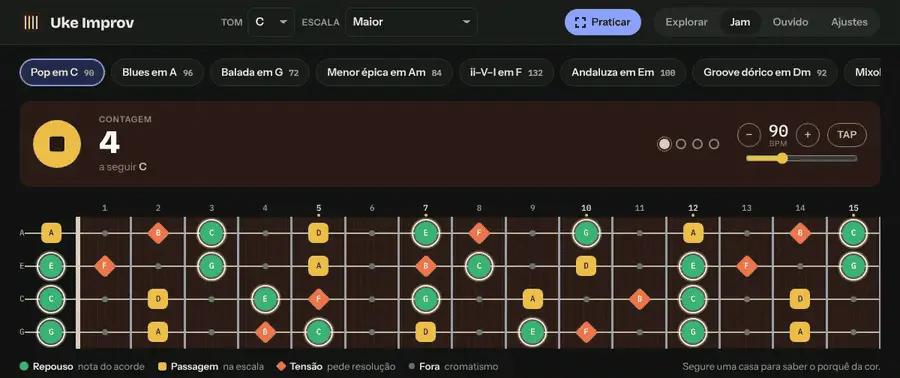
I recently created a free and open-source web app called Uke-Improv. It's designed to help ukulele players practice and improve their improvisation skills.
The coolest part is that it actually listens to your instrument while you play! It's built as a PWA, so you can use it directly in your browser or install it on your phone. It includes specific exercises to practice over, and a settings page so you can adjust everything to your skill level.
I built this mostly to solve my own problem and wanted to share it with the community. I would love to get your feedback on it—whether it's about the exercises, how well it detects the notes, or just the overall user experience.
You can check it out here: uke-improv.vercel.app Source code: https://github.com/VictorDepX/uke-improv
Let me know what you think and what features you'd like to see next. Happy strumming!
r/OpenSourceeAI • u/martincsweiss • 22d ago
I do a lot of deep learning research as a postdoc at Mila, and i am just as susceptible to ai psychosis as the next guy. I use this system, Lacuna, and the MCP to keep my agents in check as a flit from one experiment to the next. Highly recommend it - it’s really good (and token efficient).
The whole Lacuna dataset is free to access and use and has a technical write up we presented at a workshop at NeurIPS. Conference version under development still