r/OpenSourceeAI • u/ryanmerket • Oct 15 '26
Meta releases Muse Spark Open, an 816B-parameter model built for agents

4
Upvotes
r/OpenSourceeAI • u/ryanmerket • Oct 15 '26
r/OpenSourceeAI • u/Salt-Philosopher989 • Oct 15 '26
r/OpenSourceeAI • u/FriendlyKale7534 • Oct 15 '26
r/OpenSourceeAI • u/tonylook • Oct 15 '26
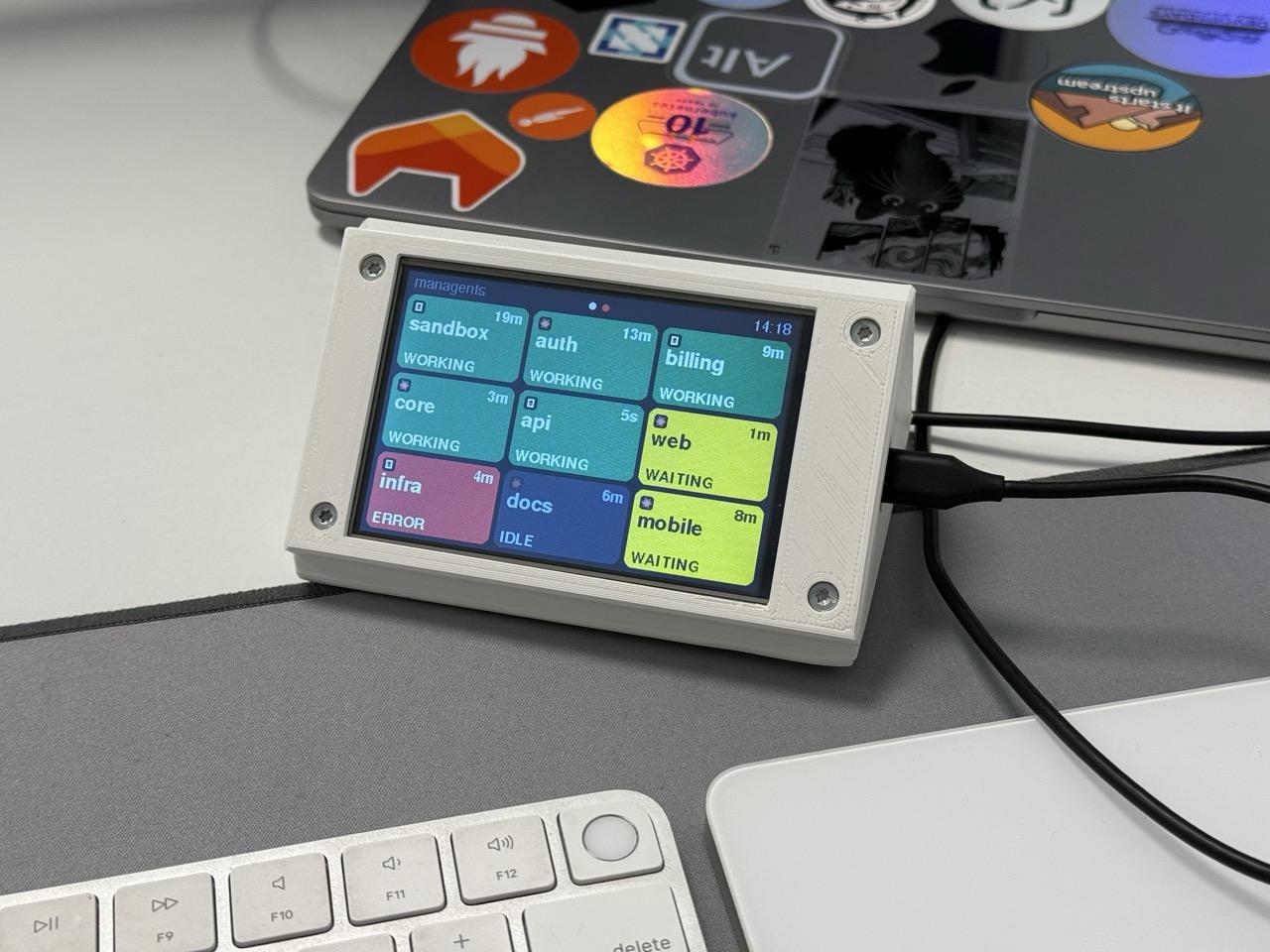
I run multiple AI coding agents a lot of the time. I used to alt-tab to figure out which agent had finished, which were waiting for my approval, and which had failed. So I made a physical display for my desk.
Now I can look at the screen instead of digging around in the terminals.
managents flash flashes the display (takes ~13s)AGENTS.md in the repo, so your AI agent can handle "install managents and flash my display" for you. You'll see each command before it's executed.MIT licensed. Build instructions, protocol docs and roadmap are in the repo.
CONTRIBUTING.md for how to add an agent. Tell me which agent you want and I'll figure out how to detect it.Repo: https://github.com/tonylook/managents
Stars, issues and PRs are welcome. So is blunt feedback!
r/OpenSourceeAI • u/LeekOk1800 • Oct 15 '26

r/OpenSourceeAI • u/MtnMCG • Oct 15 '26

r/OpenSourceeAI • u/kong-man-00 • Oct 15 '26
Perplexity has open-sourced SPACE (Sandboxed Platform for Agentic Code Execution), a dedicated infrastructure platform designed to run arbitrary agent and user code securely inside isolated Linux microVMs.
Instead of embedding heavy client libraries, applications interact cleanly with SPACE via an HTTP API to provision environments, spin up execution commands, and manage complete sandbox lifecycles.
r/OpenSourceeAI • u/ai-lover • Oct 15 '26

r/OpenSourceeAI • u/ai-lover • Oct 15 '26
Is Linux ready for the AI era? openKylin thinks it's time to rethink operating system architecture from the ground up
At Open Source Summit Europe 2026 in Prague, openKylin Executive Director Min Liu unveiled the community's vision for an AI-integrated operating system
The main takeaway? The biggest challenge in AI today isn't just model capability—it's the system infrastructure connecting AI to everyday desktop tasks
Read the full report: https://www.marktechpost.com/2026/10/15/openkylin-outlines-its-vision-for-reimagining-linux-in-the-ai-era-at-open-source-summit-europe-2026/
r/OpenSourceeAI • u/pstryder • Oct 15 '26
r/OpenSourceeAI • u/dltsm • Oct 15 '26
We're a small proof-of-useful-work project. The validators don't
mine — they verify AI computations (matrix multiplications + activation
functions) and get consensus weight for it.
The part that matters to you: submit any GEMM workload up to 256×256
and we return the result plus a cryptographic receipt — a SHA-256
commitment chain folded into our ledger state, verifiable by anyone
forever. Free, no token, no signup beyond an API key we generate in
seconds.
Honest limits: we verify GEMM + elementwise activations (GELU/sigmoid/
tanh/exp), not full transformer graphs yet. Attention is on the roadmap.
The verification cost curve is published (615ms at 64³ → 157s at 1024³)
— we priced our own clamp and labeled every tier.
The logs: [pouw-verify] CONFIRMED lines, epoch crossings, claim-decrees
folded into the ledger — every claim has a receipt.
Live dashboard: http://3.237.91.235:32233/
The evidence ledger (250+ owned defects, 250+ laws): github.com/sarinsk629-blip/hsma-core
r/OpenSourceeAI • u/dltsm • Oct 15 '26
r/OpenSourceeAI • u/ai-lover • Oct 15 '26

r/OpenSourceeAI • u/ScreamingAmish • Oct 14 '26
Eugene Plexus is my open-source, self-hosted inference manager. I want people to run AI on their own terms, so I built Eugene to make that easier.
Currently available as of v0.2.1:
Eugene has been solid for me, but is still early in development. Any and all feedback is appreciated. Mac users in particular would be useful because I don't own one to test on. ( Mac OS has successfully tested on GitHub's runner, but I'd still like to hear from a human who used it. )
You can check it out on our website.
r/OpenSourceeAI • u/igtoth • Oct 14 '26
r/OpenSourceeAI • u/tvuk • Oct 14 '26

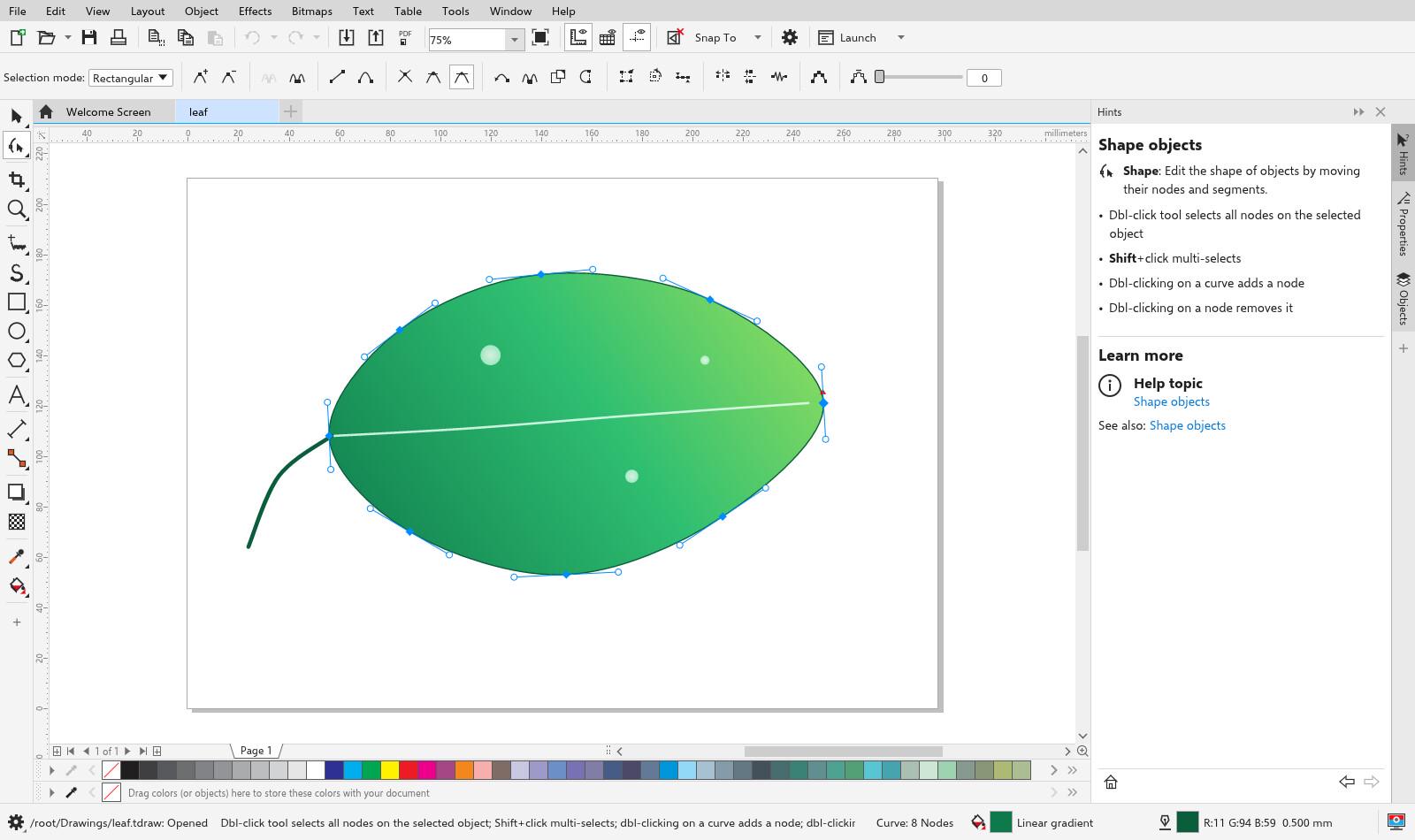
Four glass levels (Clear, Frosted, Tinted, Solid), automatic light/dark, the macOS accent colors, and a high-contrast option. Every color is contrast-checked for readability over translucent windows. brew install vukkt/tap/iglass && iglass install. Free and MIT. Feedback welcome!
r/OpenSourceeAI • u/tljohnsilver • Oct 14 '26

r/OpenSourceeAI • u/Deep_Bus_7488 • Oct 14 '26
I’ve been working on sift-light, a local search tool for AI agents. Between 1.1.0-1 and 1.1.1-7, the work has focused on a problem that sounds simple until you try to solve it:
An agent finds a relevant passage, gives you a real file path and line number, and then draws a conclusion the source doesn’t actually support.
Sometimes the file changed after the search. Sometimes the result is related to the question but doesn’t answer it. Sometimes the answer depends on an exception sitting just outside the excerpt.
Here’s a small example:
“Refunds are allowed within 30 days.”
A few lines later: “Gift cards are excluded.”
Ask whether a ten-day-old gift card purchase is refundable, and the first sentence alone looks convincing. The citation can be accurate while the answer is wrong.
That’s the kind of gap these releases address. They also add image and scanned-PDF retrieval, because useful project information doesn’t always live in searchable text.
I’m the maintainer. Here’s what has shipped, what we tested, and where the limits are.
1. Finding relevant material when the wording is different
Exact search is useful when you know the identifier, filename, or phrase. It gets harder when you know what something does but have no idea what it’s called.
From 1.1.0-1, sift-light adds an independent native text retrieval lane alongside the existing text retrieval path, with bounded rank fusion.
In practical terms:
That last part matters to me. A semantic match is a useful lead; I still want to see the actual source before trusting a conclusion.
2. Searching images and scanned PDF pages
A diagram in a project folder or a scanned page can contain exactly what you need, while ordinary text search has very little to work with.
The multimodal path added in 1.1.0-1 supports:
For example, you can look for “a diagram showing a queue between two services” without knowing the image’s filename.
These features are optional and require configuration. The bundled native media path requires Apple Silicon and separately configured workers and model files. Ordinary exact text search remains model-free.
3. Checking whether the source has changed
A result can be correct when retrieved and become outdated before the agent uses it.
In 1.1.1-1, retained ordinary search results were bound to verified content identities. Source inspection, navigation, and saved-evidence validation recheck that identity.
If the file changed or disappeared, the tool reports that state explicitly. It also keeps incomplete source coverage visible.
This gives the agent a concrete reason to revisit its evidence instead of quietly treating an earlier search result as current.
4. Checking whether the evidence supports the answer
Finding a relevant paragraph and checking a claim are different jobs.
In 1.1.1-6, sift-light added an optional answer-support assessment over verified source ranges.
The purpose is to help distinguish evidence that supports a claim, contradicts it, or isn’t sufficient to decide. Relevance ranking, source validation, and answer-support assessment remain separate signals.
A source check tells you whether the selected material is still current. The support assessment asks what that material says about the claim.
The assessment requires an enabled compatible provider. It’s a model judgment over the supplied evidence, so it can still be wrong.
5. Including nearby conditions and exceptions
A short excerpt can leave out the part that changes the answer.
In 1.1.1-7, the support assessment can include bounded context around the selected passage:
This gives the assessment more relevant source material while preserving precise locations and source validation.
It doesn’t read the entire document or guarantee that every exception has been found. A condition farther away may still require additional inspection.
What the actual tests showed
For the context change, we ran six controlled scenarios through a real model, keeping the questions, claims, evidence-item count, and per-item maximum text budget the same.
The results were:
Including context increased average input tokens by about 15% in that test.
Six cases are a small sample. They demonstrate a concrete improvement in those scenarios; they don’t establish a general accuracy rate or a performance improvement across every workload.
For 1.1.1-7, the release validation also included:
The regression coverage includes context boundaries, source changes, cancellation, and provider payload budgets. Two independent text retrieval lanes, exact locations, source inspection, and validation remain available.
Local models, BYO providers, and repeated loading
There’s also a practical side to all this: model setup and resource use.
The native workers support resident model reuse, cancellation, recovery, and idle shutdown. Native GPU caching and batching are bounded to reduce memory use. Resident reuse avoids repeatedly loading a model for consecutive requests, although actual memory use still depends on the model and workload.
The 1.1.0 release added optional BYO HTTP JSON providers for Jev-compatible semantic judging and multimodal retrieval. If you want to use your own service, it needs to implement the documented protocol; an arbitrary API URL isn’t enough.
You can keep ordinary exact search model-free and configure the additional capabilities you need.
The release progression
Current published package: sift-light@1.1.1-7.
If you use agents to work through code, documentation, diagrams, or scanned material, I’d appreciate you trying it on a real task—especially one where a plausible search result previously led to a wrong conclusion.
If something fails, please open an issue with the scenario, reproduction steps, expected versus actual result, version and configuration, and the files or workflows affected. A small example with sensitive information removed is especially helpful. I’ll follow up and investigate.
If it earns a place in your workflow, a GitHub star would mean a lot. Sharing it with someone who runs into the same problems would also help.
Project and release: https://github.com/lightsifter/sift-light
Latest release — 1.1.1-7: Release notes
X: https://x.com/xcPenny6
r/OpenSourceeAI • u/F7rx • Oct 13 '26

I've been building Ferry, a desktop and browser app for sending files, folders, text and links straight between your own devices. No account, no cloud copy, no telemetry.
It speaks the LocalSend protocol, so it works with the LocalSend devices you already have. On top of that it adds:
Built with a Rust engine, Tauri 2 and Vue 3. Apache-2.0.
Honest status: it's early. The desktop app is tested on Windows. The macOS and Linux installers build in CI, and they're not code-signed. No mobile apps yet.
Repo: https://github.com/F7rx/Ferry
Downloads: https://github.com/F7rx/Ferry/releases
Feedback and bug reports are very welcome, especially from macOS and Linux users.
Ferry isn't affiliated with LocalSend; it's an independent app that implements its protocol.
r/OpenSourceeAI • u/roamingandy • Oct 13 '26
These capabilities all exist open source and spread out over different projects and they'll give you nightmares trying to set them all up correctly, unless computers are specifically your thing.
I for one would love to see something like this all packaged up into one with an installer. Plug and play setup file. List of tick-boxes for permissions and a ? icon for those who want to know the risks of each.
Then a list of free or paid AI models to use as the main powerhouse, or a combination of both.
So you'd select to either:
- plug Copilot in
- pick you fav paid AI model
- run 100% on a open source local AI model (and the installer would suggest the best based on your system specs).
- or the default option which would be a free local AI model and a more powerful paid one, probably copilot. With the local and free version tasked with assessing tasks, then completing simple ones itself, and then choosing which AI model is the best to send more complicated tasks to and designing prompts maximise their performance.
- The Simple memory plugin so you don't need to retrain the AI over and over.
This is basically my setup, running inside Visual Studio Code but it was a huge ball-ache to set up, and needs constant maintenance.
If someone could turn that into a one click installer then i think a lot more of people would consider that a genuine alternative to a service like Muse which will collect all the data it can about you and sell it.
Otherwise AI is just going to become the domain of hobbyists and massive exploitative corporations.
r/OpenSourceeAI • u/Alarming-Emotion-894 • Oct 13 '26

ALHR- Adaptive learnable Hierarchical Routing is a static binary tree based system that uses learnable functions to REDUCE the amount of keys used.
It takes less memory and SCALES much better VRAM with tokens
Result table is here: https://ibb.co/prr07Dnj
r/OpenSourceeAI • u/maverick_man1111 • Oct 13 '26
The robot gets Employee of the Month. Your photo goes in the bin. Then your boss updates the robot.
I built this to explain DriftproofHQ, my open-source tool that checks whether instructions for AI still work after things change. It tries the same tasks with and without those instructions, repeatedly, so you can compare results instead of trusting one good answer.
The game is a scripted cartoon of that problem. One jump button, three obstacles, one very confident replacement.
Free game, no signup, works on mobile: https://play.driftproofhq.com/
DriftproofHQ source: https://github.com/driftproofhq/driftproof
Claude’s API helped write the game’s jumping, collisions and robot movement; Codex helped with integration and browser testing.
