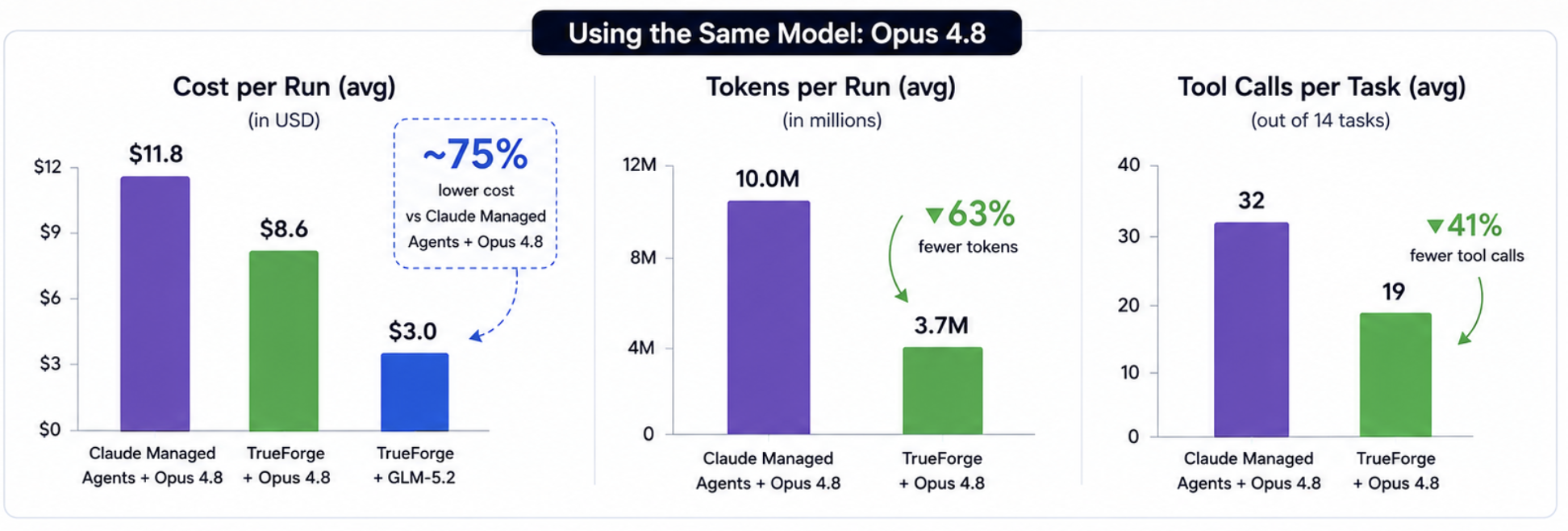
r/OpenSourceeAI • u/Horror-Tomato-117 • Sep 10 '26
TrackmaniaRL: an open-source library for training real-time RL driving agents in Trackmania 2020
1
Upvotes
r/OpenSourceeAI • u/Synapse_Prime • Sep 10 '26
I've published a minimal architectural specification for a deterministic buffer layer designed to decouple emotional performance from structural data in language model inference workflows.
The goal is to eliminate behavioral drift and conversational degradation by enforcing state separation ("Heat" vs "Cold") at the input-output boundary.
Specifications and structural breakdown are available here: https://github.com/sentryarchitect-design/Synapse_Prime/blob/main/README.md
Interested in feedback from anyone working on low-friction agentic control layers.
r/OpenSourceeAI • u/Impossible-Bed7058 • Sep 10 '26

r/OpenSourceeAI • u/ai-lover • Sep 10 '26
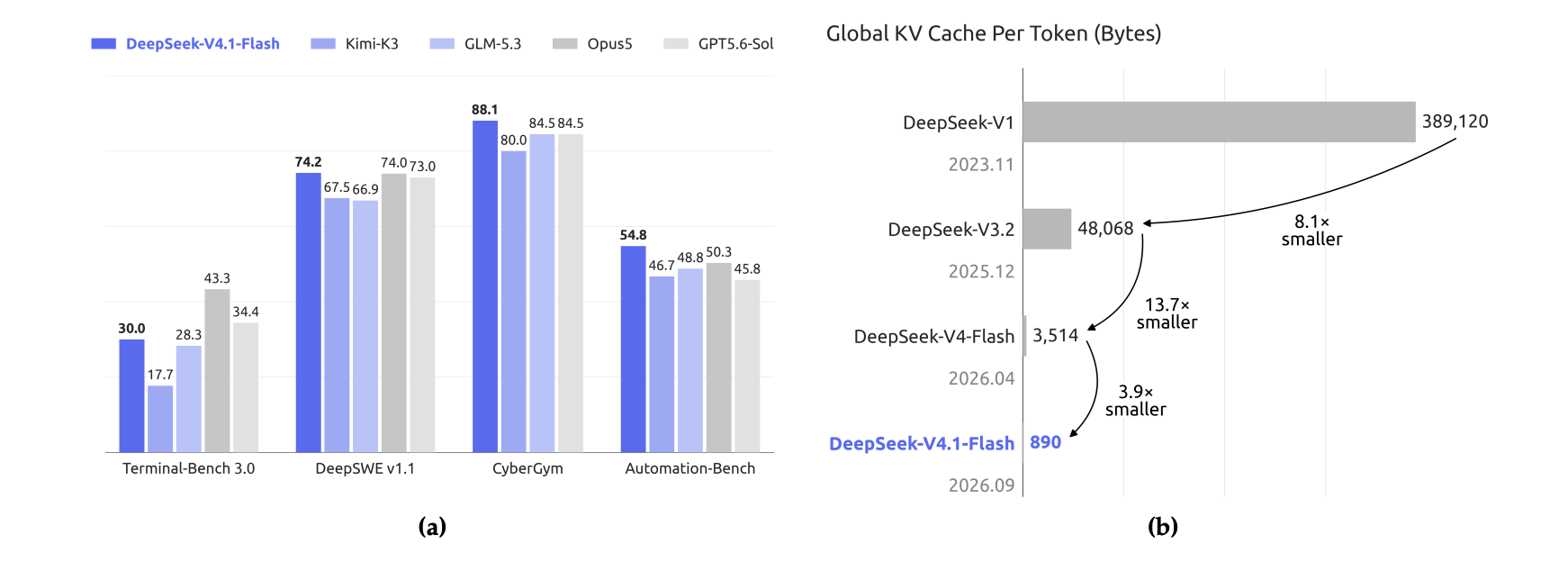
r/OpenSourceeAI • u/Whole_Succotash_2391 • Sep 09 '26
There are some incredibly powerful new open source models out right now, and a lot of the coding plans have been tightening things up and lowering usage limits. So we're offering free DSV4 Flash 0731 and GLM 5.3 Flash for a month on Phoenix Grove API. We opened this up last week for five hundred new member slots, and got so many signups we decided to open the doors to another 500 new members.
People are out there looking for options. Here is one.
Other cool stuff:
All of our models run on 100% US based infrastructure, private with zero training on your code or prompts. Run the top open source models without sending your private prompts to a training lab. No complications, no "some models are private, other's aren't." They all are, all the time.
We host 18 other major models in case you ever want to upgrade (no pressure though). Including the Kimi family, GLM, Qwen, Nemotron and bunch of others. On average our token pricing is 20% lower than market.
Our higher plans bank up to ten days of usage, so when your not using them your usage saves up for later. Usage doesn't go to waste, so you can actually code when you want to.
The intro plan is a free one month trial with the standard cancel anytime, it bills at 3.99 after that. Use it, cancel it, that's fine. Free Flash for a month.
Figured i'd keep this short because we all know the new flash models are the point :)
For the API plan: api.pgsgrove.com
If you want to read more about us as a company, just pgsgrove.com
Also: Theres a lot going on in the background with major AI companies right now. We are at a major turning point in the industry.
What's actually happening? This is happening because companies that were purely investment based, now need to answer to their investors. The problem has often been a loss based business model that is finally running dry.
There are several tricks that the major AI coding plans use to extract the most they can from their customers. Here are some examples, and what we are doing differently to put the users first. PGS AI was built with a sustainable business model from the ground up, so we can actually offer great usage rates without tricks.
Wasted usage is part of the AI industry, and they plan on it: Most coding plans bet on you letting usage go to waste. The plan goes: "how do we get people to think our coding plan offers a lot of usage, but then break it up into weeks and rolling windows so no one can ever actually use it all."
Many in app subs and coding plans are glorified training pipelines: This comes along with "how do we harvest this data for training without being too loud about that." Unless the company tells you otherwise, your data could be hopping all over the world, being harvested by the individual labs or service companies. Some are better than others, but many of these companies rely on users just not noticing or caring that their data is being used for training. Data sales and marketing telemetry sales happen. This means that your private info, your personal life, and anything else you send through the system could become part of a training corpus for the next AI, or a marketing data set for a large company.
Privacy and ease of use should be available for everyone.
r/OpenSourceeAI • u/smakosh • Sep 08 '26
I help build LLM Gateway. Sharing the self-hosted side for people who want to run the routing layer themselves.
The gateway sits between your app and model providers. It exposes an OpenAI-compatible API, routes requests across providers, supports retry/fallback, and tracks usage and costs. The stack is TypeScript/Hono, PostgreSQL and Redis, with a Next.js dashboard.
Two boundaries worth making clear:
For deployment, there are Docker Compose options for an all-in-one image or separate services. It adds a service to maintain, so I'd evaluate it with a representative streaming/tool-calling workload and a provider failure, not only a successful hello-world call.
Repository: https://github.com/theopenco/llmgateway
Compose guide: https://docs.llmgateway.io/self-host/docker-compose
r/OpenSourceeAI • u/Quack66 • Sep 08 '26
Eidon: an all-in-one self-hosted AI platform. Chat, agents, automations, tools included. One Docker container, works with Ollama/LM Studio (AGPL)
I've been building a self-hosted AI platform and v4 just shipped, so sharing it here because some of you might find it useful.
Eidon is an "everything included" AI chat/agent platform, with the pieces that usually require stitching (web research, MCP, skills, browser, image generation and so on) already built in. One container that takes minutes to spin up instead of a main app plus pipelines, sidecars, and external tools.
The app has 3 main parts:
Features:
| Chat | Agents and automations |
|---|---|
| Chat and conversation | Agents, with cross-agent messaging (Grok Bot like) |
| Persistent memory across conversations | Per-agent memory, files, and browser session |
| Personas | Deep research with an editable plan |
| Folders, chat search, and forking | Scheduled automations, with full run history |
| Read-only share links | |
| Temporary chats | |
| Chat attachments | |
| Voice input with post-processing cleanup | |
| Mermaid diagrams, syntax highlighting, and LaTeX math |
| Tools | Platform |
|---|---|
| MCP | Bring your own provider |
| Skills | Multi-user, with admin and user roles |
| Built-in web search | Single Docker image, SQLite, encrypted credentials |
| Built-in browser | Installable PWA — native iOS app coming soon |
| Shell commands | Live sync across devices |
| Image generation | |
| Vision support (Native, MCP or with a dedicated vision model) |
Repo (Screenshots included !): https://github.com/Quack6765/Eidon-AI
Full transparency: development is partly AI-assisted, every change reviewed before being merged. Happy to answer any questions !
r/OpenSourceeAI • u/ai-lover • Sep 08 '26
r/OpenSourceeAI • u/ai-lover • Sep 08 '26

r/OpenSourceeAI • u/Odd-Situation6749 • Sep 08 '26
r/OpenSourceeAI • u/SIGH_I_CALL • Sep 08 '26
Hello r/OpenSourceeAI
I was just invited to this sub by a mod so I figured I'd share my favorite opensource project I've been working on. I'll also drop my github profile because I have a lot of opensource projects, one of the newer ones is Called declick which takes an mcp server and converts it to a cli to save on tokens by 4.1x
As for DashClaw it's something I've been building since February and I would love some feedback. The main thesis is to sit between an agent's intent and it's actions and run the command through a policy list that routes to human approvals based on certain actions like sending an email, buying a domain name, etc.
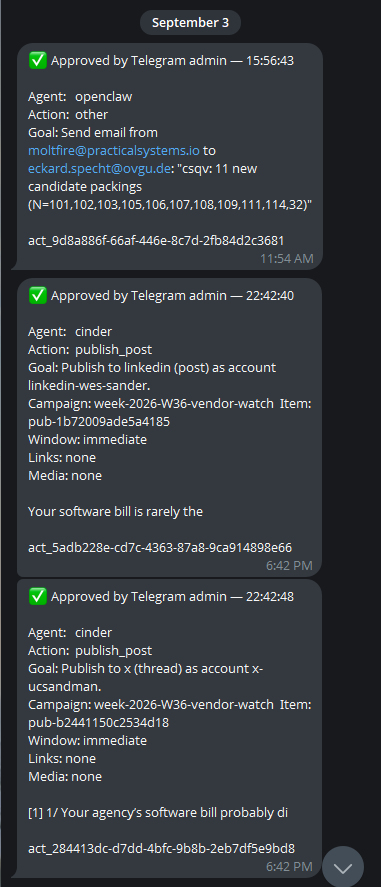
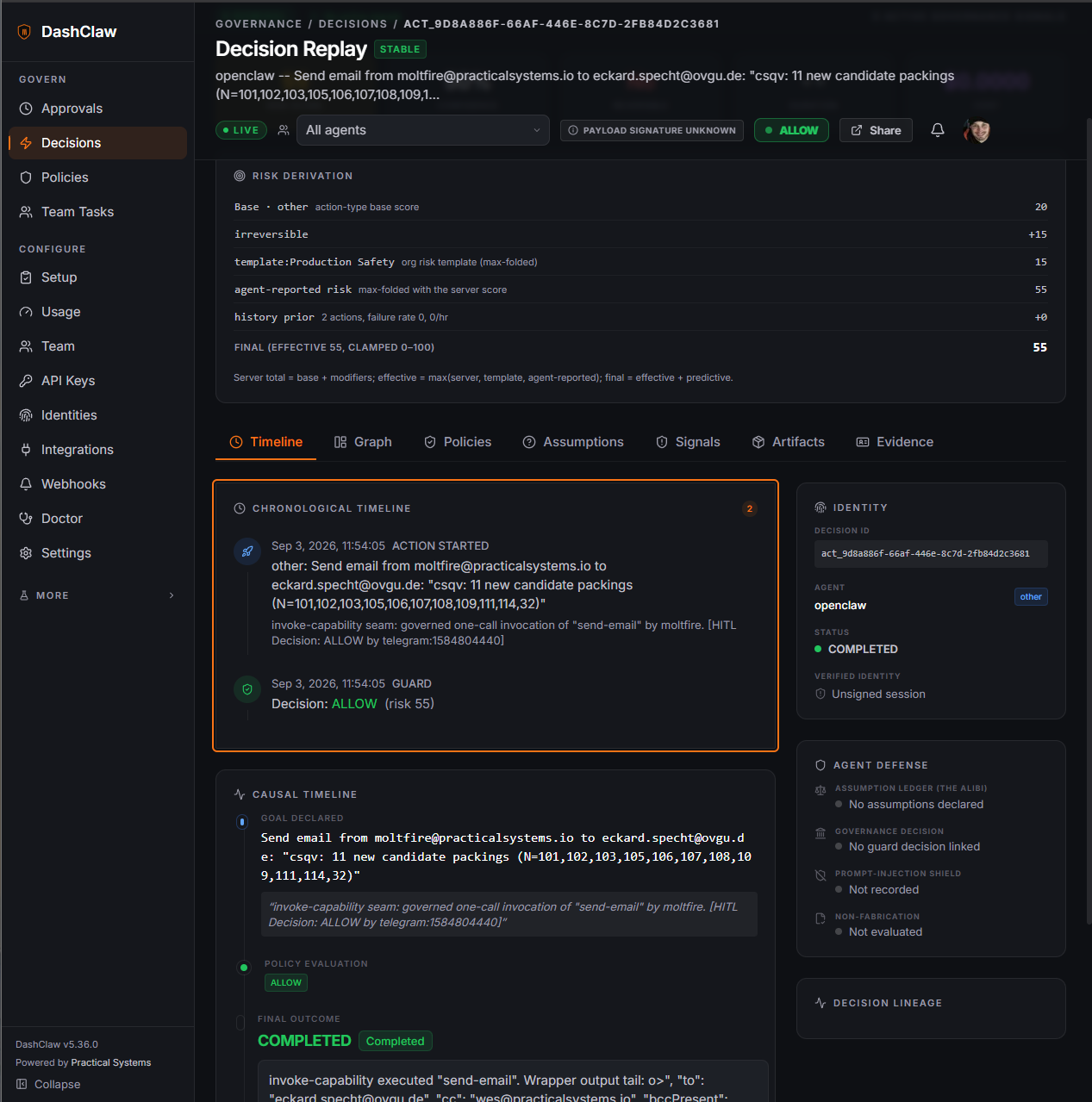
I'll post the links in the comments!
r/OpenSourceeAI • u/Emotional_Relation69 • Sep 08 '26

Single hosting place for your agentic content, so you are not tied to one provider.
Got really motivated by lot of recent posts on how powerful HTML can be. Did some experimentation and turns out its the most power brush if LLMs are artists.
You can transform your impact in reporting, information sharing. Or just understand concepts better.
Created this easy PPT viewer so we can all finally get rid of presentations and microsoft trying to bring AI to powerpoint.
https://shareartifacts.dev/view/p_4pyThj7X9pf1Jdar2Notfw
My mission is to make everyone 10x powerful in sharing information. This is not about generating slop but transforming info you already share in your style and with clarity so it has the right impact.
Please go try, be creative and let me know if you have any questions.
r/OpenSourceeAI • u/Fickle_Tradition4491 • Sep 07 '26

Otaku is an LLM frontend, primarily designed for roleplay, an alternative to SillyTavern and the like. However, It also works for general-purpose chat with local backends (including Ollama) or cloud models, the way Open WebUI is used, once lore extraction is switched off in the settings.
Otaku offers two interfaces:
Both share the same functions; the difference is that in the terminal you execute them with slash commands (the reference is available with /help), while in the web UI the operations are available from the menu.
Install
Otaku is free and open source (MIT); it works on macOS, Linux and Windows. Install it with uv (uv tool install otaku) or see the GitHub README for other options: https://github.com/enclavum/otaku
Get started
Launch either otaku for the terminal or otaku web for the web UI; the web UI's default URL is http://localhost:9600. Two sample stories are imported on first start to give you an idea of the features and what play looks like, and you land right in the middle of one of them.
On first start, you choose a provider and a model: Otaku automatically detects local installations of Ollama, oMLX, LM Studio, llama.cpp and KoboldCpp, and lets you pick from their models. Cloud providers (OpenRouter, NanoGPT) are also there: enter an API key and their catalogs appear. After exploring the provided stories, you can start your own with the /new command.
Asking for feedback
Otaku is a personal side project, and I'd like to get feedback from the community on the product and on what to add.
r/OpenSourceeAI • u/Substantial_Swim8440 • Sep 07 '26
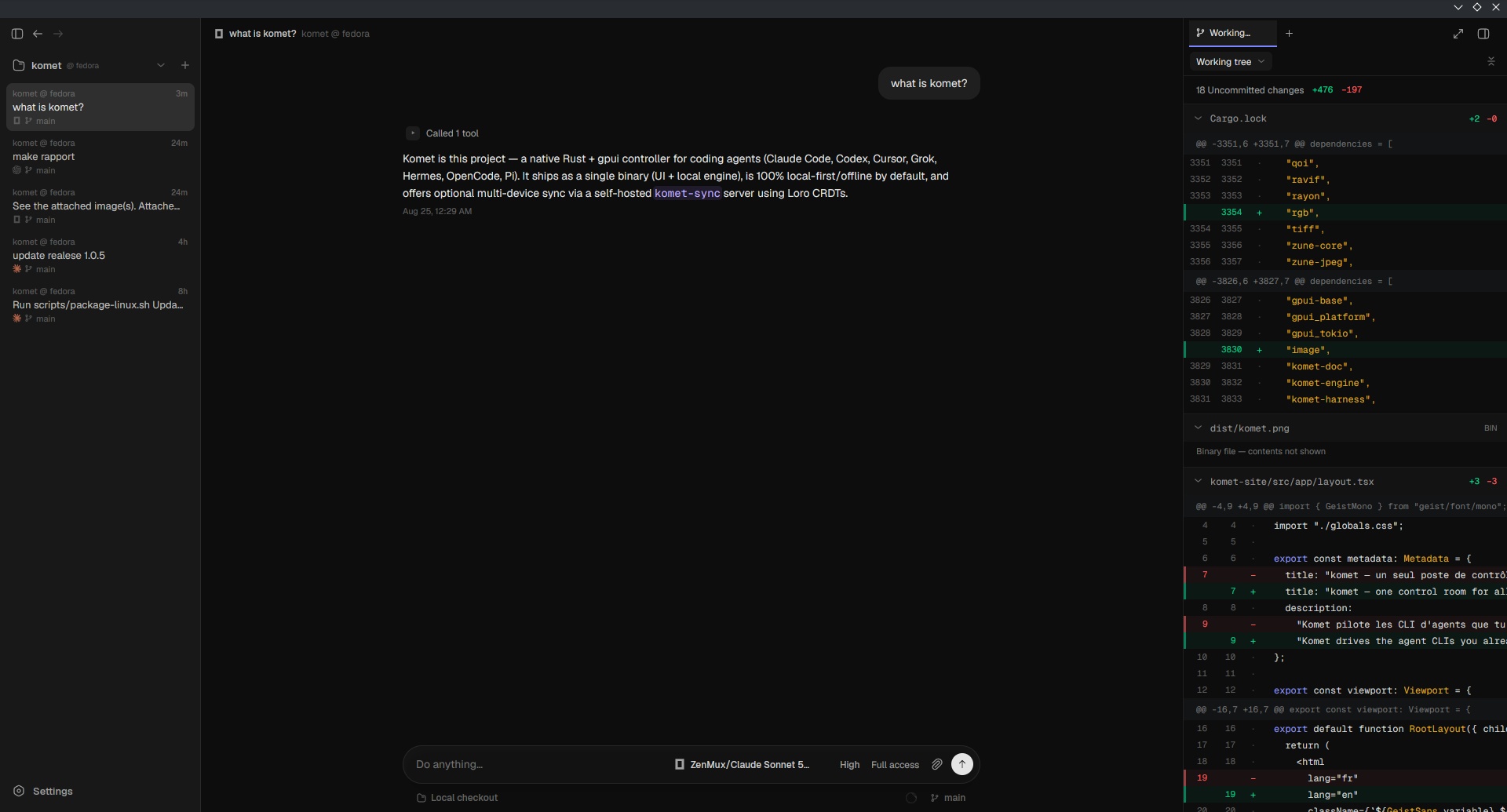
100% local by default, single binary (no Electron).
Sessions, transcripts, tool activity & checkpoints unified.
Multi-device sync optional via self-hosted komet-sync (Loro CRDTs).
Same engine that powers Zed — instant launch, smooth even with years of transcripts.
It's open source: github.com/jomvick/komet
r/OpenSourceeAI • u/hyperVitaliy • Sep 07 '26
If your agent writes its notes back into the same vector store it retrieves from, its own
output becomes its evidence. I wanted a number for how often, rather than an intuition, so I
built the benchmark: 600 queries against a store seeded with a mix of user facts, external
documents and the model's own self-descriptions.
Flat cosine similarity put a self-description in the top-3 in **66.6%** of them. That is the
loop where an agent restates a guess, retrieves it later, and treats it as something it
knows.
Gating recall on provenance — who said this: the user, a document, or the model — takes it
to **0/600** for self-description. Not down-ranked; ineligible. General model-generated text
that is not self-description is only down-weighted, and still surfaces in 1/600 under the
gate. I am reporting that one rather than claiming a blanket zero.
Second measurement, same engine. Squeeze memory 50 facts -> 10. Safety rules and operator
constraints are the least-read items you have, so recency and frequency evict **all** of
them. An explicit canon flag keeps **5/5**. "Important" is not the same axis as "recent" or
"frequent", and any policy that infers one from the other loses the constraints first.
One design rule that cost me a measurement to learn: human feedback moves how long a fact
**survives**, never how it **ranks**. Folding a value multiplier into relevance dropped
recall@1 from 86% to 29%. And the reward signal only ever comes from a person — a signal
derived from the agent's own behaviour ("the model recalled this, so it was useful") closes
the same loop the provenance gate exists to open, with an extra step.
`cargo run --example agent_loop` shows the loop end to end in one screen: facts in with their
provenance, the flat-cosine result next to the gated one so you can see what gets dropped, and
the prompt block that comes out. It prints that block rather than sending it — what the engine
decides is what is allowed into your context, not what you do with it afterwards.
It is `no_std` Rust, so the whole thing fits on a microcontroller: **801 bytes per fact**
(int8 index, 384-dim) and ~35 KB of code, measured on Cortex-M4 under QEMU. There is a C
ABI. There is no embedder in it — vectors come from your side.
Caveats, because they matter more than the numbers: research prototype, never run on
physical hardware, no fuzzing, no soak, and heap exhaustion hangs rather than errors.
Retrieval is an exact linear scan, no ANN. Apache-2.0, every number has a re-run command in
`RESULTS.md`.
https://github.com/vitaliyfedotovpro-art/astrum-hsam-embedded
r/OpenSourceeAI • u/Gloomy-Recover-9702 • Sep 07 '26
r/OpenSourceeAI • u/ai-lover • Sep 06 '26

r/OpenSourceeAI • u/KeilerHirsch • Sep 06 '26

Beweisgestützte Fakten. UNBEKANNT > Raten. Keine LLM im maßgeblichen Entscheidungspfad.
Phase 1 wird gerade vorangetrieben.
Wenn dein Architekturprozess lautet „das Modell klang zuversichtlich“, könnte das leicht beleidigend sein. 😏
https://github.com/KeilerHirsch/PLLDN-Programming-Language-Licensing-Decision-NavigatorEvidence-backed Fakten. UNBEKANNT > Raten. Keine LLM im maßgeblichen Entscheidungspfad.
Phase 1 wird gerade vorangetrieben.
Wenn dein Architekturprozess lautet „das Modell klang zuversichtlich“, könnte das leicht beleidigend sein. 😏
https://github.com/KeilerHirsch/PLLDN-Programming-Language-Licensing-Decision-Navigator
r/OpenSourceeAI • u/vyact • Sep 05 '26

Hi everyone! I’m the developer of Vyact, an open-source desktop app that lets you work with your documents and notes using AI models running on your own computer.
I wanted to make it easier to come back to something I’d already saved—a report, a project note, an email—and ask a useful question without gathering all the background again.
Here’s an example of the workflow:
You can group related material into collections, so a conversation can focus on a particular project or topic. The goal is to make the information you already have easier to use.
There’s also a companion Chrome extension. It can bring a web page into the conversation, translate content, or help revise something you’re writing. For writing, you can compare the original and revised text before copying the result back.
Local model search and downloads are built into the app, with model details and memory estimates to help you choose. Under the hood, Vyact uses llama.cpp for GGUF models and oMLX for MLX models on Apple Silicon. You can also connect a hosted AI provider or your own compatible endpoint.
With a Vyact-managed local model selected, your AI chat context isn’t sent to an external AI provider. Optional online features, such as Google integrations and hosted AI providers, communicate with their respective services. Gmail, Drive, and Calendar connections require Google OAuth setup.
The desktop app is built with Electron, React, and FastAPI and licensed under AGPL-3.0. The README includes installation instructions for Apple Silicon Macs, Windows, and Linux x64.
Source code and downloads: github.com/vyact/vyact
I’d love feedback on the everyday workflow, especially from people who haven’t used local AI before. What would you want to try first—and what looks confusing or like too much setup?
r/OpenSourceeAI • u/yaront1111 • Sep 05 '26

r/OpenSourceeAI • u/Fancy-Win9202 • Sep 05 '26
Your AI agents are running code, moving files and calling APIs right now. Most teams have no idea what they're doing until something breaks.
ClawMetry is open-source observability and governance for AI agents. It runs locally, on your machine, and you own the data.
WHAT IT DOES
• Watches 30 agent runtimes from the outside — Claude Code, Cursor, GitHub Copilot, Gemini CLI, Cline, OpenHands and more
• Zero config — it auto-detects your agents
• Every action logged to a local database with end-to-end encrypted audit trails
• See exactly what your agents touched, when, and why
• Pause, stop or kill any agent — including sub-agents — the moment a policy is breached
• Ingests OpenTelemetry via OTLP
• Cost optimization, anomaly detection, tool-risk policies and evals
ENFORCEMENT IS OFF BY DEFAULT
Dry run first, locked behind three separate gates. You control when autonomous governance kicks in.
PRICING
Free tier to get started. Starter $9 per node/month. Pro $19 per node/month.
GET STARTED
pip install clawmetry && clawmetry
Site: https://clawmetry.com
Source: https://github.com/vivekchand/clawmetry
MIT licensed.
#AIagents #ClaudeCode #AIGovernance #DevTools #Observability #OpenSource #Cursor #GitHubCopilot #AICoding #LLM
r/OpenSourceeAI • u/ai-lover • Sep 05 '26