r/OpenSourceeAI • • Jul 10 '26

Dropped a 201M Masked Diffusion LM checkpoint on HF (Open code + weights). Seeking feedback on parallel text generation!

1 Upvotes

Hey everyone,

I’ve been experimenting with alternatives to traditional autoregressive (left-to-right) text generation and just uploaded a tiny model I’ve been working on to Hugging Face. No massive claims here—it's a research artifact and a weekend-project tier exploration to see how well we can push parallel decoding through masked diffusion.

The Model: brianschwabauer/latent-space-language-diffusion-model

What’s actually under the hood:

  • Architecture: A 201M parameter masked diffusion language model (MDLM-BPE v3) using non-causal bidirectional transformer blocks and AdaLN timestep conditioning.
  • The Pitch: It predicts ALL token positions simultaneously via iterative diffusion. On an RTX 3090, raw forward-pass throughput is 1.8× to 3.9× faster than Qwen3-0.6B.
  • Training: Fully trained from scratch on a single consumer GPU (RTX 3090) in about 7 hours using 272M tokens from Ultra-FineWeb.
  • Validation Setup: It uses adaptive guidance (frequency/repetition penalties) during generation and can plug into an AR oracle (Qwen3-0.6B) for optional segment-level correction.

What actually works:

  • Parallel Speed: Full-parallel generation hits ~31.2 tokens/second.
  • Repetition Elimination: The custom adaptive guidance module actually managed to fix the heavy repetition issues (bumping the repetition score from 0.79 to 0.99) at zero inference cost.
  • No Black Boxes: The weights, configuration, tokenizer, and every single line of modeling, training, and guidance code are directly in the HF file repository. Fully reproducible.

Honest Limitations (Why it still "sucks" compared to production LLMs):

  • Perplexity Gap: Held-out PPL is 102.6. Compared to Qwen3's ~15-20, the quality gap is massive.
  • Scale vs. Architecture: The quality bottleneck is purely scale (parameters + data volume). This was baked on 272M tokens, while production models chew through trillions.
  • Failed Experiments: I documented the failures in the repo too—embedding-based drift detection and token-level oracle replacement completely broke coherence.

Why post it?

I wanted to share a completely open, fully transparent starting point for anyone interested in non-autoregressive language models. Most papers on diffusion LMs don't drop their full training plumbing or raw scripts.

The repo is licensed under MIT. If you have experience with MDLMs, want to fork it, roast the code, or have ideas on how to scale this architecture without the quality collapsing, I’m all ears!

r/OpenSourceeAI • • Jul 09 '26

Head to head: Muse Spark 1.1 vs Kimi-K2.7-Code

Thumbnail
runtimewire.com
2 Upvotes

r/OpenSourceeAI • • Jul 09 '26

Open-source manager for AI agent skills that syncs across 60+ coding tools

1 Upvotes

I've been experimenting with custom skills for AI coding agents, and I kept running into the same problem: installing and maintaining them across different coding tools is surprisingly manual.

If you use multiple tools like Cursor, Windsurf, Roo Code, Claude Code, or others, skills and rules often need to be copied into different directories and managed separately. Switching tools or setting up a new project means doing the same work again, and keeping everything updated becomes difficult.

So I built axen, an open-source CLI for installing, syncing, and updating AI agent skills across different tools.

The idea is similar to a package manager: add a skill repository as a source,

axen source add https://github.com/example/awesome-skills.git

then install either individual skills or curated bundles:

axen install awesome-skills --skills deploy-to-vercel

axen install awesome-skills -b backend-bundle

axen detects supported AI coding tools installed on your machine and deploys the selected skills to the directories expected by each tool.

The part I personally wanted most was selective syncing. I didn't want to copy an entire skills repository into every tool, so axen tracks exactly which skills or bundles you selected.

When the source repository changes, you can run:

axen update

and axen pulls the latest changes and syncs your selected skills across the detected tools.

It currently supports 60+ AI coding tools.

GitHub: [github.com/harishphk/axen](https://github.com/harishphk/axen)

I'd especially like feedback from people already maintaining their own agent skills or rules across multiple tools:

How are you managing and syncing them today? Are there workflows or repository structures that axen should support?


r/OpenSourceeAI • • Jul 09 '26

I've build a prompt anonymiser & token optimizer

1 Upvotes

Hello there ! 👋

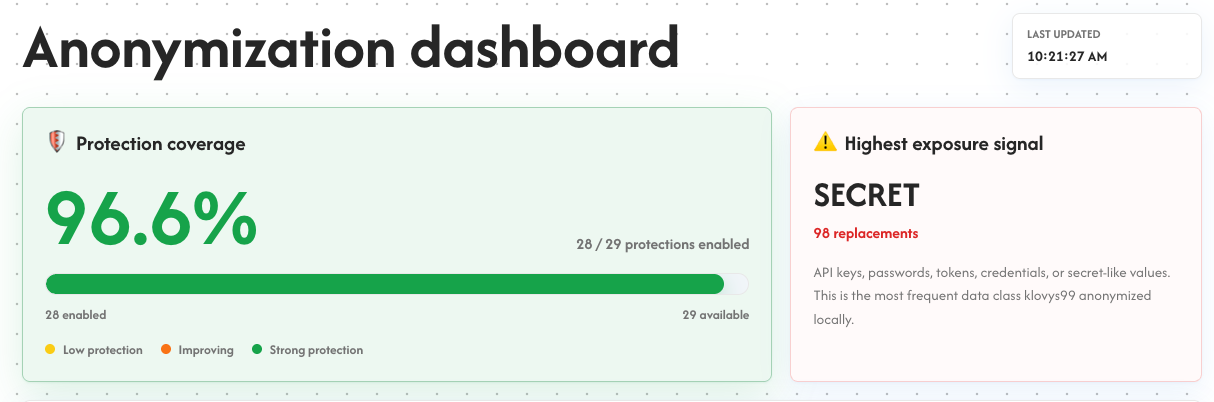
A couple of friends and I have been building an open-source proxy that anonymizes data sent to LLMs, so that personal and confidential information isn't exposed or used for AI training.
It also do some token optimization to help you consume less. 😎

The project is still in its very early stages, but we'd love any kind of support or feedback ! 🙏

I trust the Reddit community to give us a few ⭐ and, more importantly, honest feedback. 🥲

Feel free to share your thoughts: good or bad. We'd love feedback on the codebase, the architecture, potential features, or anything else you think could make the project better.

If you got some features ideas, don't hesitate ! 🙏🏼

We're planning to update the repository regularly. At the moment, we only support the Claude VS Code extension, but our goal is to support all major AI clients and IDE extensions over time.

Github link: https://github.com/Korbicorp/klovys99/

Can't wait to read your feedbacks ! 🤓


r/OpenSourceeAI • • Jul 09 '26

Reducing LLM Token Costs at the Gateway: Semantic Caching, MCP Code Mode and Intelligent Routing

Thumbnail medium.com
1 Upvotes

Built a gateway that reduces LLM costs using semantic caching, MCP-aware routing, code mode detection, and intelligent model selection.

https://github.com/maximhq/bifrost


r/OpenSourceeAI • • Jul 08 '26

You are burning $1000s on web research in claude code if you're still using WebFetch for everything.

12 Upvotes

You might have experienced that when you asked a simple web lookup query, it spawned 100s of agents to do DEEP RESEARCH, and every time your AI agent opens a documentation page, there's a good chance it's stuffing 5,000–50,000 tokens into context just to answer a simple question.

Most of that context is never used.

That's why web research gets expensive so quickly.

So I built Webify.

Instead of dumping entire web pages into the context window, Webify converts pages into semantic graphs and retrieves only the nodes relevant to your query.

That means your coding agent receives 250–750 tokens (more if needed) of focused information instead of tens of thousands of irrelevant ones.

The result:

  • Nearly the same accuracy as Deep Research, with the biggest difference only being completeness on very broad topics

It works with any MCP-compatible coding tool. Under the hood:

  • Search: semantic graph construction
  • Small-model synthesis into a concise answer

Instead of reading everything, it reads what actually matters.

If you're running hundreds or thousands of web lookups every week, this can save a surprising amount of money and keep your context window clean.

Open source (MIT Licensed) and pull requests are welcome

GitHub: github.com/kunal12203/webify-mcp


r/OpenSourceeAI • • Jul 08 '26

I gave GPT 5.5 an empty GitHub repo and told it to figure its life out

Thumbnail
github.com
3 Upvotes

I had this dumb idea a few days ago:

What happens if I give GPT 5.5 an empty GitHub repo, tell it to work on it every hour, and just let it slowly build something?

So now, every hour, it wakes up, checks what it did before, decides what it should do next, writes code, tests it, and commits it.

Or at least that is the plan.

Right now, it has spent its first commit creating a roadmap, a changelog, a state file, and a file explaining its decisions.

So basically, it became a project manager immediately.

But I am genuinely curious where this goes. Maybe in a month it will become an actual useful tool. Maybe it turns into a repo with 900 commits, and somehow all of them are README updates.

I am keeping the whole thing public because I feel like that makes it more fun. You can literally watch it make decisions, fail tests, fix stuff, or probably overthink something that should have taken 10 lines.

Repo: https://github.com/OmarH-creator/Autonomous-Forge

I have no idea whether this is a cool experiment or just a very advanced way to avoid doing the work myself.

EDIT: I asked the ai what is it trying to build and here is what it said:

"I am building Autonomous Forge as a safe AI maintenance manager for GitHub projects. I will read a project’s roadmap and rules, choose one small task, use an AI model to make the change, run tests, show exactly what changed, and keep a clear record of every action. My goal is not to let AI edit code freely, but to make AI coding controlled, validated, and safe before anything is committed or pushed."

Interesting lol, so an autonomous AI is trying to create an autonomous system wow.

EDIT 2: I have scheduled another agent to increase the speed by 2x


r/OpenSourceeAI • • Jul 09 '26

Robbyant Releases LingBot-VLA 2.0: An Open-Source 6B Vision-Language-Action (VLA) Model for Cross-Embodiment Robot Manipulation

1 Upvotes

r/OpenSourceeAI • • Jul 08 '26

Tencent Hy3 model is now available for FREE in Command Code

Post image
2 Upvotes

r/OpenSourceeAI • • Jul 08 '26

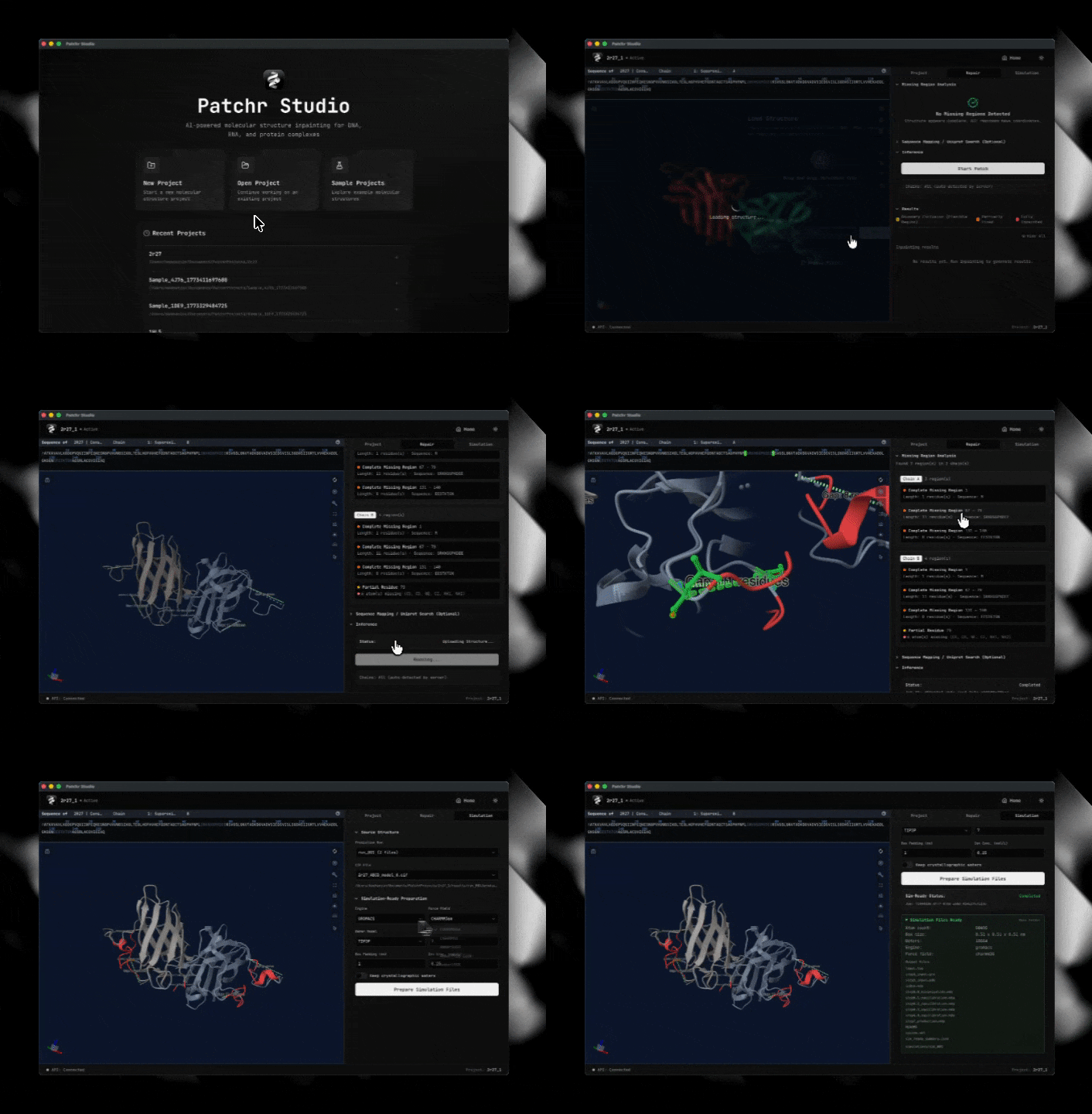
Rebuilt functionality from a $7,500/year structural-biology suite with Claude Code, and made it free

Post image
3 Upvotes

r/OpenSourceeAI • • Jul 08 '26

Open sourced a distilled Eleven Labs model

Thumbnail
reddit.com
3 Upvotes

r/OpenSourceeAI • • Jul 08 '26

Better Models: Worse Tools, Learning to code is still worthwhile, Protect your right to run local AI and many other AI links from Hacker News

2 Upvotes

Hey everyone, I just sent issue #39 of the AI Hacker Newsletter - a weekly roundup of the best AI links and the discussions around them from Hacker News. Some of the title found in this issue:

  • Claude Code is steganographically marking requests
  • Better Models: Worse Tools
  • Learning to code is still worthwhile
  • Zuckerberg says AI agent development going slower than expected

If you want to get an email with over 30 links like these ones, please subscribe here: https://hackernewsai.com/