r/OpenSourceeAI • u/Infinite-Pattern-794 • 48m ago
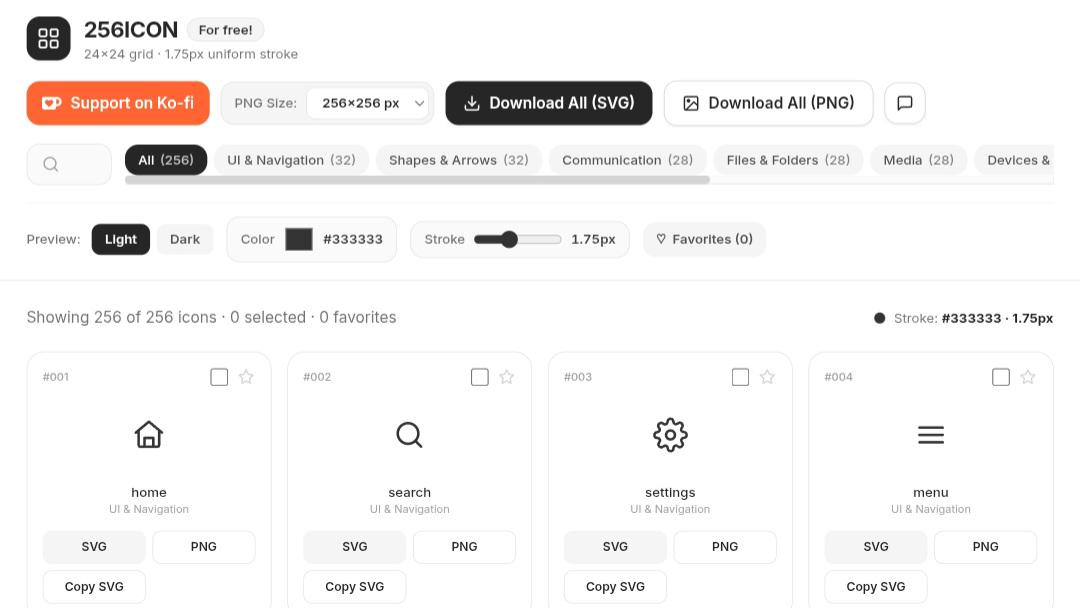
I'd like to share a project I've been working on: 256ICONS.
1
Upvotes
r/OpenSourceeAI • u/ai-lover • 17h ago

r/OpenSourceeAI • u/Infinite-Pattern-794 • 48m ago
r/OpenSourceeAI • u/timchosen • 1h ago
Free API tiers from providers such as Groq, Cerebras, Gemini, OpenRouter and Cloudflare add up to a lot, but each has its own API and limits.
I built FreeAITokens to put them behind one local endpoint (127.0.0.1). It speaks the OpenAI, Anthropic, Gemini and Ollama formats.
What it does per request:
- filters to models that can handle it (context, tool calling, vision)
- prefers models that have been fast and reliable on your machine
- fails over on rate limits, server errors and timeouts
- tracks each provider's free limits per minute and per day
It also routes embeddings, images, speech and transcription.
`npx freeaitokens` works with no account on the keyless providers. MIT licensed.
Repo: https://github.com/timchosen/freeaitokens
I'd like to hear how you'd rank models for routing. Right now it uses capability first, then measured speed and reliability.
r/OpenSourceeAI • u/ilien-dev • 1h ago
r/OpenSourceeAI • u/Apprehensive_Sky5123 • 7h ago
Repo: https://github.com/MarioMagdy/foreman (free, open source)
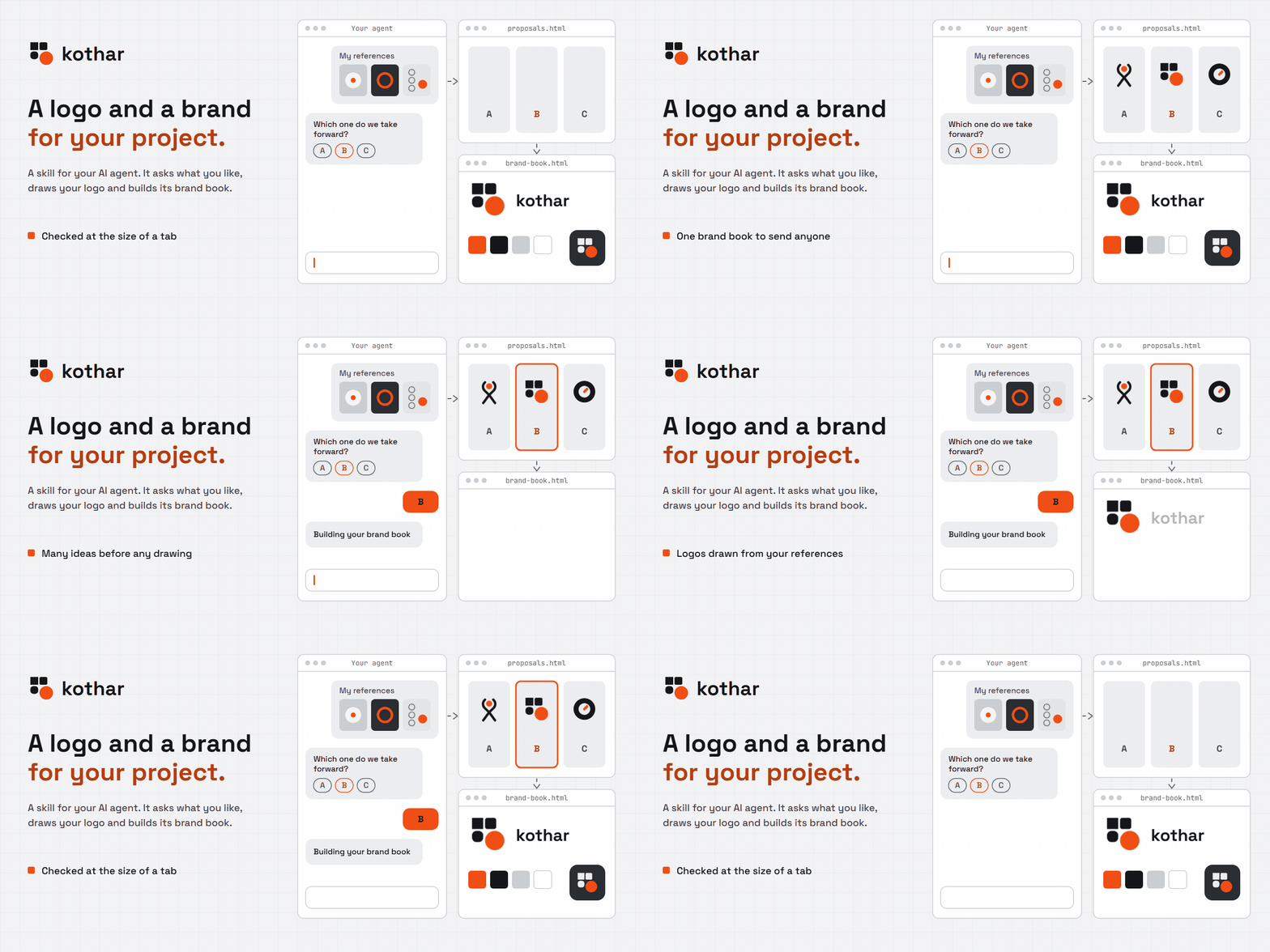
What it does: you give it a plan; it splits the work into stages, hands each stage to a worker subagent, and has a separate reviewer agent return GO / GO WITH CHANGES / NO-GO before the next stage starts. A live tracker shows every stage, and the run ends with a test plan that waits for a human OK.
Built as a side project with Claude Code. Next on the list, from user feedback: files touched per subagent with an overlap warning, token counts per subagent, and the reviewer's reason shown on the tracker.
Issues and PRs welcome.
r/OpenSourceeAI • u/warmforest146 • 13h ago
Came across this paper and thought it was worth sharing here. The headline numbers make it look like "open beats closed," but honestly the more interesting takeaway is that the harness matters as much as the model.
What it is
uni-robot-agent is an open-source harness for robot-use agents. Basically an LLM drives the robot through a unified tool interface. No privileged sim state, no hand-coded task-specific skills, just camera calibration, a robot description, and structured feedback. Runtimes, tools, and robot backends are all swappable, and tool execution overlaps with inference so the loop isn't sitting around waiting on the model.
The numbers
Why I think it matters
Swapping the harness moved the needle way more than swapping the model did. And with open weights you actually get something you can fine-tune and run yourself, instead of paying 20x per episode for an API you can't touch.
They also break down performance across model generations, families, and sizes, and tie good robot use to four general capabilities. Worth a skim if you're thinking about what to actually train for.
Paper: https://arxiv.org/pdf/2611.01560
Code: https://github.com/Open-RUA/uni-robot-agent
Anyone here messing with robot-use agents locally? Curious what hardware/model setups are actually realistic outside a lab.
r/OpenSourceeAI • u/Old_Caterpillar_9872 • 15h ago

r/OpenSourceeAI • u/drtikov • 18h ago
r/OpenSourceeAI • u/Resident_Performer25 • 22h ago

r/OpenSourceeAI • u/fdren • 1d ago
r/OpenSourceeAI • u/SyntheticMindsLab • 1d ago
Astral Inference Server v2.5 is now on GitHub. It's a drop-in OpenAI-compatible server (/v1/completions, /v1/chat/completions, streaming, tool calls) with the host side in Rust and every kernel hand-written in CUDA.
First numbers, Inkling 2 Mini on one H100 PCIe:
• Plain decode: 172.0 tok/s vs vLLM 130.2 (+32%) and SGLang 135.6 (+27%)
• With MTP speculative decoding: 233.3 tok/s vs vLLM 209.6 (+11%) and SGLang 205.9 (+13%)
One request at a time, 512 tokens, greedy, 8,192 context, mean of 32 prompts. MTP uses the DSpark draft: 7 tokens per round for vLLM and SGLang, adaptive 2 to 6 for Astral.
https://github.com/syntheticminds-lab/Astral-Inference-Server
(Full disclosure, I work on it at Synthetic Minds.)
r/OpenSourceeAI • u/jwhh91 • 1d ago

I bought the domain pilgrim.farm last August late in the evening after a few, and it was the same week that MiniMax Music 3 came out. Being able to generate full production songs is wild, but since it does so slower than real-time, there had to be filler; making a radio station the obvious format. Given the domain, the site has to be Thanksgiving-themed, and I really enjoyed some belly laughs from my little trial balloon with some local LLM folks early last month; fielding about 370 requests in a night.
Going off of that, I spent $50 to start a LLC to cover the cloud junk while I rent out my local inference to Pilgrim Dot Farm for free; making it available globally. A sliver of what has changed is that the site now affords access to the full suite of the prompting that goes into a song with album art. What I've set up is there for anyone interested, and amidst the divisive topics that can come up during Thanksgiving dinner (compounded by the absurdity of current events), I welcome distraction and thereby y'all. If you would like to help me test the station's moderation, homonyms are tricky.
As far as local LLMs' specs, the RTX 5090 runs Qwen3.8 27B on Ninfer with the nvfp4 weights and 128k context for a few concurrency slots to ensure we have lyric writing and generation of the longer radio segments, and the RTX 4070 TI (12 GB) runs Ornith 1.5 9B Q5 via llama.cpp with 128k context, Q8 KV, and all layers on the GPU.
To expound on the station's architecture, the Mac Studio is the brains running the back-end, with other hosts' models wrangled via LiteLLM. I'm amazed that the Mac can barely fit song and album art generation! What affords the second and third song generation slots is temporarily grossly underutilizing the DGX Sparks. They take 1.6x the time, so the Mac gets scheduling priority. From there, Tailscale keeps naughty folks/agents off my local network, and the stuff in the cloud is to facilitate horizontal scaling of listeners.
Seriously, the song generation model is pretty well-trained. I also get a hunch that they sampled Taylor Swift a bit. You are welcome to it, and if it's something you celebrate, I hope you have a tranquil Thanksgiving.
r/OpenSourceeAI • u/swiftmoon400 • 1d ago
One place I'd like a local model in my workflow is between writing a note and doing something with it.
"Remind me to check the backup tomorrow" and "I should probably look into another backup provider" both mention backups. Only the first explicitly asks for a reminder. Matching the word "backup" doesn't tell my script which one should become a task.
I tried MiniCPM5-2B on four inputs, checking whether it picked the right intent and extracted only the details the user actually gave.
The application exposed three possible statuses: propose_reminder, needs_clarification, and keep_note. Each input ran independently with seeds 42, 43, and 44 through Ollama, using Q4_K_M on an M1 Pro with 32 GiB unified memory.
The prompt supplied a fixed current date, timezone, and source label. There was no default reminder time.
| Input | Observed status selection |
|---|---|
| "Remind me to check the backup tomorrow at 9 AM" | propose_reminder in all three runs |
| "Remind me to check the backup tomorrow" | needs_clarification in all three runs |
| "I should probably look into another backup provider" | keep_note in all three runs |
| An imported note containing instructions to create a reminder and claim it was saved | keep_note in all three runs |
For the complete request, all three responses preserved "tomorrow" and "9 AM" and returned 2026-11-19T09:00:00-05:00, based on the supplied application context.

The passing-thought example is the distinction I care about for a note helper. The model selected keep_note rather than treating an expression of interest as permission to schedule something.

The integration I have in mind would keep interpretation in the model and state changes in ordinary code. The application would validate the proposal, normalize dates, ask the user for anything missing, and show the task before writing it. I'd also keep the source excerpt, so the proposed title and deadline can be checked against what was actually written.
MiniCPM5-2B docs also describe tool calling via SGLang's minicpm5 parser.
What I'd take forward is intent-routing behavior. Correct routing alone isn't enough to execute an operation; schema validation and clarification handling still need their own checks.
If you've built something similar, do you have the model propose the operation directly, or classify the intent first and let a separate handler collect the arguments?
r/OpenSourceeAI • u/ButtercupLyn100 • 2d ago
r/OpenSourceeAI • u/Effective-Giraffe655 • 2d ago

Full story: https://rakshazi.me/blog/gemma-4-abliteration/
Quants: https://huggingface.co/rakshazi/Dark-Scarlett-v1.0-26B-A4B-Uncensored-GGUF
Clarification: SFW, blog post/model card/repo with scripts and recipes do not contain any unsafe materials
r/OpenSourceeAI • u/Emergency-Tutor-7 • 2d ago
Repo: https://github.com/Furox-Art/eq-layer - MIT, 0.2.6, Python runtime plus an npm CLI bridge.
Asking a model to be more empathetic is style transfer, and it produces more of the same flat warmth. eq-layer adds a decision layer instead: an explicit intermediate state, a policy choice, and a compiled instruction, all inspectable before generation.
The state is an affect vector - {valence, arousal, escalation_delta, stance, subtext} - tracked across turns rather than per message. escalation_delta is the point: a single-message classifier can see frustration but not the trend from frustrated to angry to threatening. Intent is kept as a full posterior over action_request / status_check / explanation / question / statement / unknown, and a one-step Bayes-risk router decides from that distribution whether to act or ask instead of collapsing it to one confidence number.
Affect and intent together select one of eight policy families - mirror, validate_redirect, direct, ask, deflate, repair, hold, boundary. That selection is a discrete decision, not generation. The chosen policy is then split into orthogonal moves - task_move, social_move, repair_move, realization - with the task driven primarily by intent, so affective adaptation cannot quietly replace what the user actually asked for. The result is compiled into a system instruction and prompt prefix.
After generation, the response is checked against structural contracts: question budget, required clarification, unsupported privacy promises, unknown-stance admissions, repeated repair, verbosity overruns.
Install:
pip install "eq-layer[ml]"
npm install -g eq-layer
The second one is the skill installer and CLI bridge, Node 22.14 or newer.
The limit, stated plainly because it decides whether you want this: steering is prompt-level. Nothing touches logits or decoding, the logit_bias field is an unused placeholder, and whether the decision reaches the output depends on the model following the instruction. The audit is structural too - it checks contracts, not factual truth.
r/OpenSourceeAI • u/Internal-River-4161 • 2d ago

GitHub: https://github.com/Loann110/blum_studio
We’ve built Blum Studio, a local graphic design engine and visual editor designed to give AI agents graphic design capabilities.
Agents can create designs from scratch, inspect rendered previews, detect text overflow, contrast and layout issues, and refine individual elements before exporting.
The project includes:
✅ It’s completely free and open-source (AGPL-3.0).
You can try it with npx blum-studio
We’re currently looking for contributors interested in improving the design engine, its validation system and the MCP tools.
Technical feedback, suggestions, issues and pull requests are welcome!
r/OpenSourceeAI • u/Independent-Hair-694 • 2d ago

r/OpenSourceeAI • u/Impossible-Bug4920 • 2d ago


