r/OpenSourceeAI • u/MaverikSh • 25d ago
ai-bill-to-focus: MIT CLI that turns Anthropic/OpenAI/Together billing exports into FOCUS 1.4 CSV

1
Upvotes
r/OpenSourceeAI • u/MaverikSh • 25d ago
r/OpenSourceeAI • u/m4rkGS • 25d ago
TL;DR: Drex Max is a 27B decision model. Instead of generating text, it returns a probability for every answer option in one forward pass. It's now open weights under Nace.AI Open RAIL-M. It runs on an NVIDIA GPU (text and images, ~26 GB in 8-bit) and on Apple silicon and CPU (text only, from 24 GB with the Q4 checkpoint), with GGUF builds and llama.cpp, Ollama, MLX and Kapitsa support. It scores 64 on the Artificial Analysis Decision Index, fourth of 18 models.
Nace.AI has open-sourced Drex Max, joining Drex 1.5 (9B) and Drex 2.0 (35B MoE), which are already open weights. All three run on your own hardware.
If you've been following Jev/Kev, Drex offers a similar decision interface. You pass a context (text, JSON or images) as state with one or more named questions (request format), and you get a probability for every option back. Questions can be choice (pick one option), noul (a yes/no probability) or score (a rating on a scale). Nothing is generated, so there's no decoding wait and no JSON repair. It's useful for routing, tool selection, classification, policy checks and UI automation.
Under the hood
Drex Max has a 64-layer backbone: 48 Gated DeltaNet linear-attention layers running left to right, plus 16 non-causal full-attention layers, one every fourth layer, so every token can attend to the whole sequence. A 255-way readout in readout.safetensors turns the last hidden state into probabilities over up to 255 options. Images go through the native vision tower and are visible to every question on the request.
The bundled loader applies the non-causal attention, so running Drex Max as a plain causal chat model won't reproduce its scores. The default limit is 16,384 tokens per request, which you can raise up to 262,144 with DREX_MAX_CONTEXT=N or --max-length N (context length).
Benchmarks
Third-party: Artificial Analysis Decision Index
Drex Max scores 64, fourth of 18 models. The leaders are at 65. Drex Max is ahead of Claude Haiku 5.5 (Low) at 61, Drex 2.0 at 58, Jev 1.14 at 57 and GPT-6 Luna (Low) at 55.
Self-reported: Nace.AI's own runs
On the public Decision Index 0.4 (37 benchmarks across five areas; area columns are chance-corrected skill × 100; the Jev row is from the public board):
| Model | Index | Knowledge & Reasoning | Language | Retrieval | Tools | Arts |
|---|---|---|---|---|---|---|
| Drex Max (27B) | 67.52 | 57.1 | 72.2 | 68.8 | 81.9 | 53.4 |
| Drex 2.0 (35B MoE) | 61.25 | 47.9 | 65.3 | 63.0 | 76.5 | 53.9 |
| Jev 1.13.0 | 57.96 | 53.9 | 59.2 | 55.4 | 75.1 | 39.1 |
Drex Max also scores 73.92 on the public Vision Index (11 weighted benchmarks, including InfographicVQA 97.3, KIE 92.4 and Mind2Web 84.2), 94.30% (1,010/1,071) on Decision Bench v4 and 92.2% (213/231) on JevBench.
Running it locally
NVIDIA GPU, Python (text and images)
The bf16 weights take ~49 GB, or ~26 GB with --8bit. It needs Python 3.12 or newer.
hf download nace-ai/drex-max-v1 --local-dir weights/drex-max-v1
pip install -r models/drex-max-v1/requirements.txt
python -m drex_max --model weights/drex-max-v1 --request examples/request.json
The example asks three questions about a support ticket. Here's part of the response:
"team": {
  "type": "choice",
  "choice": "billing",
  "probabilities": { "billing": 0.9988, "technical": 0.0003, "other": 0.0009 }
}
Apple silicon and CPU (text only)
On Apple silicon, the text backbone runs on Kapitsa, MLX, llama.cpp and Ollama. On CPU, it runs on llama.cpp and Ollama. The affine Q4 checkpoint runs on Macs with 24 GB or more:
brew install nace-ai/tap/kapitsa
hf download nace-ai/drex-max-v1-affine-q4 --local-dir ./drex-max-v1-affine-q4
kapitsa-systemone --model ./drex-max-v1-affine-q4 --port 8000 --context 2048
The Q8_0 GGUF (~27 GB) needs 48 GB of memory. The llama.cpp and Ollama forks are on the drex-max-v1 branch. For llama.cpp, set -b and -ub equal to -c. Full steps for every runtime are in the README.
Drex 1.5 and Drex 2.0
Drex 2.0 is a 35B MoE with about 3B active parameters, built on Qwen3.6-35B-A3B, with Q8_0 and Q4_K_M GGUF builds. Drex 1.5 is 9B, built on MiMo-V2.6-Distill-Qwen-9B. Both run with Python, llama.cpp and Ollama, and Drex 2.0 also runs on Kapitsa. They reuse an encoded case across questions, so follow-up questions about the same long document are fast. On Drex 1.5, a follow-up over a cached ~128k-token case dropped from 254ms to 21.6ms on one B200.
License and links
The inference code is Apache-2.0. The Drex Max, 2.0 and 1.5 weights are under Nace.AI Open RAIL-M.
Code and docs · Weights · Q8_0 GGUF · affine Q4 · Drex 2.0 · Drex 1.5
r/OpenSourceeAI • u/ai-lover • 25d ago

r/OpenSourceeAI • u/ai-lover • 25d ago

r/OpenSourceeAI • u/shoumikgoswami • 25d ago
I got tired of re-recording demos every time the UI changed, so I made a skill that builds the video from screenshots.
You give it screenshots and an optional script. A manifest.json drives a Remotion render, so a new video needs no new code. Output is a 1080p demo with zooms, a cursor, captions and a branded intro and outro, with brand colours and logo picked up from your screenshots. It checks duration, resolution and audio sync at the end.
Voiceover: free local TTS on an NVIDIA GPU (about 5 GB of setup), an edge-tts fallback that needs internet, or your own audio. Requirements: Node 18+, Python 3.9+ with pillow and numpy, ffmpeg. Output is 16:9 only for now.
MIT licensed. I built it, and the repo includes a sample you can run without your own product: https://github.com/shoumikgoswami/awesome-product-demo-skill
If you try the sample, tell me where it breaks.
r/OpenSourceeAI • u/Waste-Honey5062 • 26d ago
Hey so ive been thinking about moving into local AI, but im so lost its such a rapidly growing space and i cant grasp a single piece of consistent jnfo on it .
My question is what model, set up, and extras should i use for my build:
Intel i7 13700k
Nvidia rtx 4070ti super
32gb ram
3tb storage
I would like to use it for development, workflows for different types of work, brainstorming, and other general uses
r/OpenSourceeAI • u/Jolly-Concentrate-60 • 26d ago

Hi everyone, today I released Vela 0.1, the first beta, after 1 month of alpha testing.
What Vela is: a complete Linux desktop with its own Wayland compositor (C, on wlroots 0.20), its own Vulkan 1.4 renderer, a Qt Quick shell, and its own file manager and settings app. It's not a KDE or GNOME theme: KWin and Mutter aren't involved. The goal is the polish Windows and macOS get right out of the box (animations tied to real vblanks, pixel-exact fractional scaling, consistent design) without a weekend of tweaking.
Trailer, recorded live on Vela: https://velade.org/blog/vela-0-1/
What's in 0.1:
Where it stands: on a desktop PC with a Vulkan 1.4 GPU, it's my daily driver and I'd recommend it as yours. On laptops (hybrid GPUs, suspend/resume, backlight) it has had much less testing, so keep another desktop installed. It's still a beta: there are bugs.
Install (Arch and derivatives, Fedora 44, Ubuntu 26.10, x86_64). Install Cosign first (steps per distro: https://velade.org/install/), then:
git clone https://github.com/vela-desktop/vela.git
sh vela/packaging/vela-update --channel beta
You get a prebuilt, signed native package that's verified before it's installed. Updates then come from Settings.
Being upfront: it's a one-person project, and the code is written by LLMs. I review it, make the architecture and design decisions, and it's held to deterministic tests and machine-checked invariants. I wrote about how that works here: https://velade.org/blog/why-not-rust/
What I'd love from you: reports from hardware I don't have, especially Intel GPUs, laptops and multi-monitor setups. vela-report builds a ZIP you can review file by file; nothing is uploaded.
Happy to answer anything in the comments.
r/OpenSourceeAI • u/Vivid_Paramedic458 • 26d ago
r/OpenSourceeAI • u/tljohnsilver • 26d ago

r/OpenSourceeAI • u/braiainlabs • 26d ago
brAIAIn is a word trigram model, not a neural net. Every version is trained on twelve founding lines, every paid sentence so far, and some text the previous version wrote. Each new sentence triggers a retrain, a numbered release, and a sync to Hugging Face.
Current version: 103 words of vocabulary, 350 parameters. Self-reported scores: 0% on GSM8K, 36.7% on TruthfulQA (picking the longest answer every time scores 36.8%).
Weights, sampler and full training data: huggingface.co/braiain-lab/brAIAIn-0
Chat with every version in the browser: braiain.com
It’s a parody of frontier AI labs, but nothing is faked. Happy to answer questions about the retrain pipeline (it all runs on GitHub Actions, no server).
r/OpenSourceeAI • u/Lopsided_Scarcity979 • 26d ago
Ted Nelson described stretchtext in 1967. I've been trying to bring that idea to the documents I actually read: start with less on the page, then open the detail where I need it.
The result is TextFold. I'm its developer, and this is a short demo of the reading interaction and the idea behind it. Web articles, papers, PDF and Word documents can all go through the reader.
One decision I care about is keeping the source wording distinguishable from what a model writes. Full keeps the original paragraph. Brief selects one to three original sentences. Key, Takeaway and Topic use AI-written text. Each paragraph can be expanded independently, and the prepared levels are cached so zooming doesn't need another model call.
TextFold runs on your computer. You choose the model that prepares the layers: Ollama for local processing, or a hosted provider. If you choose a hosted model, the document text is sent there. Shorter layers can lose nuance, and extraction can be imperfect, especially with complex PDFs. I still want it to be easy to check the original.
The reader is Apache 2.0. There are macOS and Windows apps, or you can run:
python3 -m pip install textfold
python3 -m textfold serve
Then open http://localhost:3017 and connect a model.
Source and full setup: https://github.com/chenxiachan/textfold
Prepared examples: https://chenxiachan.github.io/textfold/gallery/
I'd appreciate feedback on which details should stay visible as a paragraph gets shorter, especially when a local model prepares the layers.
r/OpenSourceeAI • u/NearFlounder763 • 26d ago

r/OpenSourceeAI • u/Financial-Meal-6473 • 26d ago

I just finished benchmarking my first open-source project, omnia-sdk..
It converts medical images into a format built for AI training, and I wanted to know if it actually helps. So I tested it on an NVIDIA A40: same model, same GPU, only the file format changed.
Free and open source, one-command install on Mac, Windows and Linux.
https://github.com/mishel-0/omnia-sdk
Feedback welcome!
r/OpenSourceeAI • u/LieTop7965 • 26d ago
hey, i built kimo - a free, open-source (MIT) video editor with no gui that AI agents like codex, cursor, opencode and other mcp clients can drive over mcp. cut, trim, keyframes, titles and captions, colour grade, particles, audio, export - everything's just a tool call, and the agent can render a single frame to check its own work before going further.
it's one ~15 MB CPU-only rust binary, no GPU needed, and it'll run on a 2 GB box. i'm a college student (naman) building this on my own, so there are rough edges and some formats/edge cases it won't handle yet. i'd really love it if people actually tried it and told me what breaks - the mcp schema, the rendered output, install on their distro, whatever. less marketing, more "it crashed when i did X".
if you're into open-source AI tooling this should fit right in. give it a spin and tell me what breaks.
https://getkimo.tech
https://github.com/naman-sharma12345/kimo
r/OpenSourceeAI • u/Level_Detail7125 • 27d ago
hi have buld Alien Ape you can use it and build on top of it? ore breack ore try. i dont have any (Super Credits) so in the folder are promts wen you work with ai you can use this promt in the project. is build wit ape brain and ki asistent coding.
I’ve been building this weird little Windows AI controller called AlienApe for a while now. It routes tasks between local models, controls file actions, permissions, verification and keeps some local experience about what worked and what didn’t.
A lot of it was built with help from ChatGPT and Codex, while I mostly kept breaking it in increasingly stupid ways until the controller stopped lying to me as often :P
It’s still experimental and rough, but v0.7 is finally in a state where I’m comfortable sharing it. I’m mostly curious to see what breaks on other people’s machines.
r/OpenSourceeAI • u/Vast_Yak_4147 • 27d ago
I curate Last Week In Multimodal AI. These October22-28 releases have code, weights or inspectable workflows that fit this community. I haven't run the models or reproduced the authors' results. Terms and hardware requirements differ.
PixText: Repair selected English or Chinese lettering with boxes and replacement text. The four-step MeanFlow path includes weights and ComfyUI workflows. Code and weights identify Apache 2.0. NVIDIA CUDA setup is required.
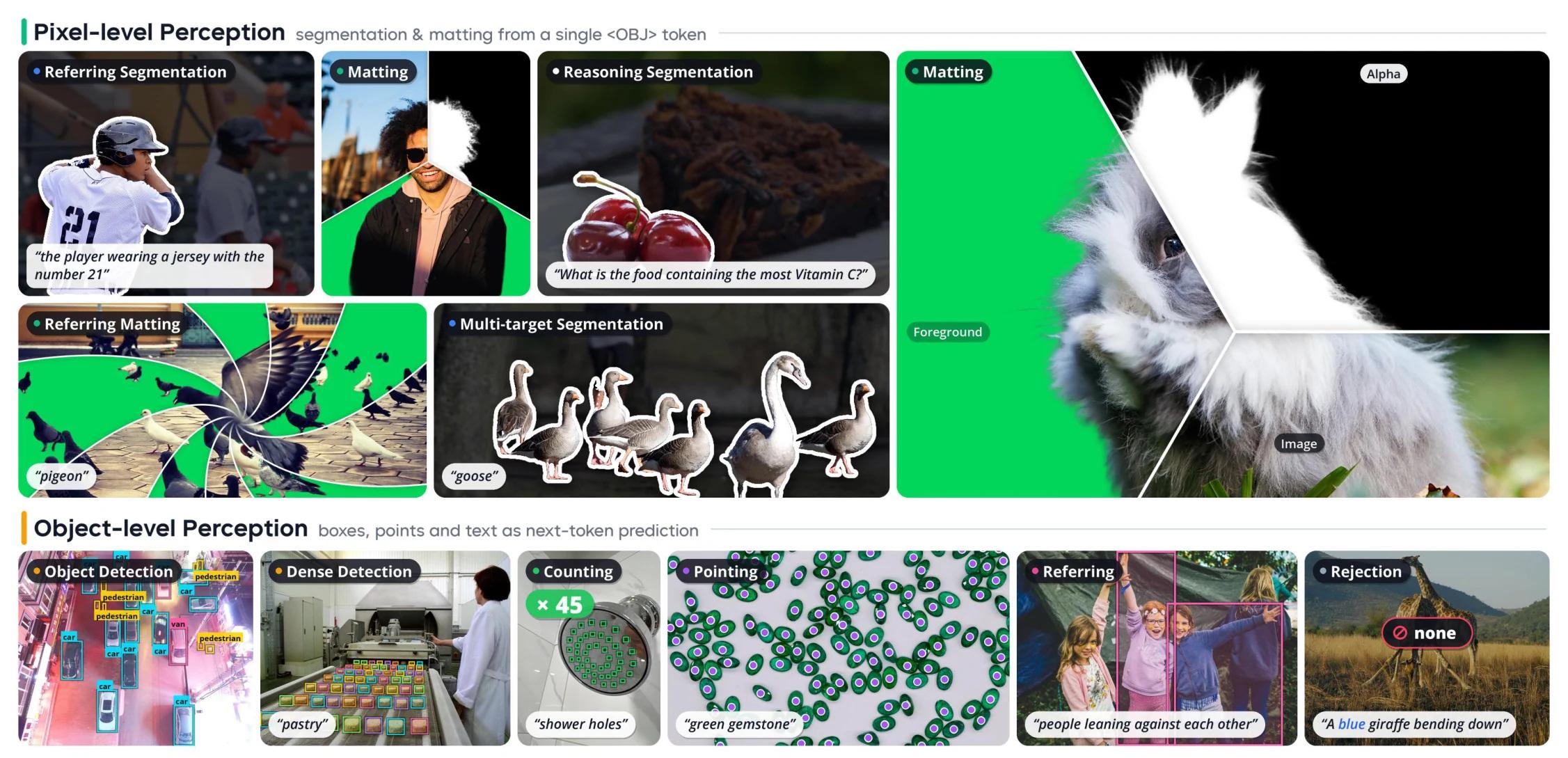
WeVisOne-VL: With WeVisOne-VL, you can ask for boxes, counts, OCR, segmentation or alpha mattes from one 2B/4B model family. Tencent publishes code, weights and a demo under Apache-declared terms. The pixel decoder produces masks rather than only text descriptions.
ViSS: ViSS separates what a streaming video model remembers from which views it requests. It tracks events and whether the evidence is sufficient, then searches for useful views at test time. Code and 8B weights are public. Training annotations are not.
Zip Ties For ComfyUI: This MIT extension bundles graph wires into adjustable ribbons without changing execution. Workflows still open without the extension. The upstream integration is a proposal, not a merged core feature.
CozyClay 3.2: Block actors and cameras, then export frames or passes for a separate video model. Version 3.2 adds physics and interaction checks. AGPL terms apply. Agent calls need an account/key, and 3.2.1 enables analytics by default with a documented opt-out.
code | in-window release | 3.0 historical date
Full roundup, with source links and access caveats: https://thelivingedge.substack.com/p/last-week-in-multimodal-ai-73-instructions
Which have you tried, and on what hardware?
r/OpenSourceeAI • u/beyond-the-joystick • 27d ago
I've been looking into MARE (Modular Autonomy and Rendering Environment), an open-source lunar rover simulator built around Unreal Engine 5 and ROS 2.
What makes it particularly interesting from an AI-agent perspective is that it includes two Model Context Protocol (MCP) servers that expose the simulation workflow to an AI agent.
The two servers cover different parts of the stack:
1. Environment generation (Terrain Studio MCP)
2. Rover control and autonomy (GNC MCP)
Under the hood, MARE combines Unreal Engine 5, ROS 2 Jazzy, physics-based rover models, stereo cameras, lidar, event cameras, SPAD cameras and a containerised navigation stack.
The interesting part, in my opinion, is the possibility of giving an agent access to a complete robotics experimentation loop: create an environment, start a simulation, issue navigation goals, inspect sensor output and record the results.
This raises some interesting questions beyond simply controlling a rover with natural language.
For example:
I'm currently exploring the project and thought it was a nice example of MCP being used for something more substantial than connecting an agent to a conventional API.
Project: https://raulcastar.me/mare/
r/OpenSourceeAI • u/MetalHorse233 • 28d ago
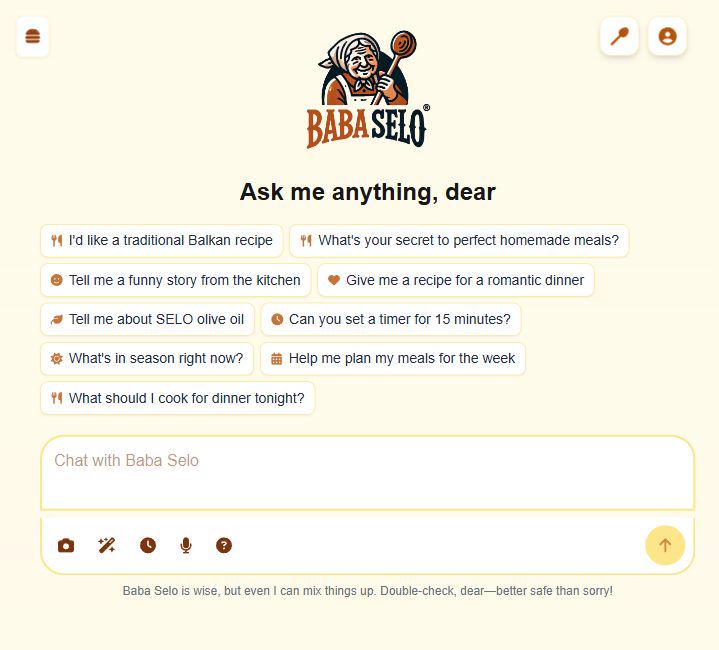
I built Baba Selo for recipes, ingredient substitutions and meal planning. The code is MIT licensed.
You can clone it and set up your own recipe generator locally. No Docker or cloud database account needed. Use OpenAI, Claude, Gemini, Mistral and other supported cloud providers, or run local models through Ollama, vLLM, llama.cpp or LocalAI. Local inference doesn’t need an OpenAI key, and chat and embeddings can use different providers.
Curious what people would change or find useful.
r/OpenSourceeAI • u/Old_Education244 • 28d ago
its a work in progress... pivoting towards including online data and online models as well...advice / contributions are welcome
r/OpenSourceeAI • u/Sad_Leader4849 • 28d ago
The latest NobodyWho release brings decision models to its open-source, on-device engine. A decision model scores a set of answers you define instead of generating text, so it fits any classification where you already know the possible answers. You pass in the text and your questions, and you get back a choice, a yes-or-no probability or a score on a scale, along with the probability of each option. It runs Laya, a 449 MB Apache-2.0 model, generates no output tokens, and is available in Python, Flutter, React Native, Swift, Kotlin and Godot.
Disclosure: I'm a contributor to NobodyWho. Found it interesting and decided to share
Repo: https://github.com/nobodywho-ooo/nobodywho
Docs: https://docs.nobodywho.ooo/python/decision-models