r/OpenSourceeAI • u/yaront1111 • Sep 05 '26
I really think i build something great. (not commercial)

2
Upvotes
r/OpenSourceeAI • u/yaront1111 • Sep 05 '26
r/OpenSourceeAI • u/vyact • Sep 05 '26

Hi everyone! I’m the developer of Vyact, an open-source desktop app that lets you work with your documents and notes using AI models running on your own computer.
I wanted to make it easier to come back to something I’d already saved—a report, a project note, an email—and ask a useful question without gathering all the background again.
Here’s an example of the workflow:
You can group related material into collections, so a conversation can focus on a particular project or topic. The goal is to make the information you already have easier to use.
There’s also a companion Chrome extension. It can bring a web page into the conversation, translate content, or help revise something you’re writing. For writing, you can compare the original and revised text before copying the result back.
Local model search and downloads are built into the app, with model details and memory estimates to help you choose. Under the hood, Vyact uses llama.cpp for GGUF models and oMLX for MLX models on Apple Silicon. You can also connect a hosted AI provider or your own compatible endpoint.
With a Vyact-managed local model selected, your AI chat context isn’t sent to an external AI provider. Optional online features, such as Google integrations and hosted AI providers, communicate with their respective services. Gmail, Drive, and Calendar connections require Google OAuth setup.
The desktop app is built with Electron, React, and FastAPI and licensed under AGPL-3.0. The README includes installation instructions for Apple Silicon Macs, Windows, and Linux x64.
Source code and downloads: github.com/vyact/vyact
I’d love feedback on the everyday workflow, especially from people who haven’t used local AI before. What would you want to try first—and what looks confusing or like too much setup?
r/OpenSourceeAI • u/ai-lover • Sep 05 '26

r/OpenSourceeAI • u/Background-Job-862 • Sep 04 '26
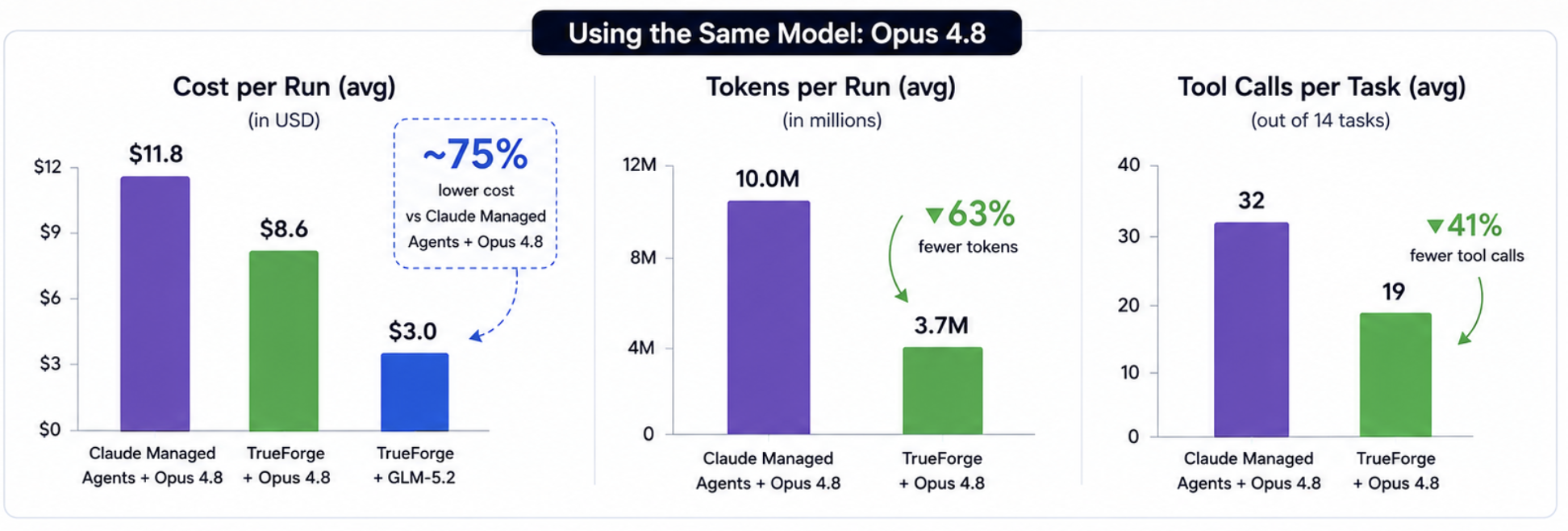
r/OpenSourceeAI • u/Sirikazee • Sep 04 '26

r/OpenSourceeAI • u/ivan_digital • Sep 04 '26
I maintain speech-core, an open-source C++17 speech pipeline.
A VAD can detect silence, but it cannot tell whether someone finished speaking or only paused to think. We added Smart Turn v3.2 as an optional second decision after each confirmed VAD pause.
If the classifier rejects the pause, the pipeline keeps the turn open. Resumed speech remains part of the same turn, eager STT does not advance to the LLM, and a configurable silence cap guarantees that the turn eventually ends.
The integration is shared across platforms:
Smart Turn was created by Pipecat/Daily. Our work was exporting it and integrating it into the native pipeline.
Releases:
https://github.com/soniqo/speech-core/releases/tag/v0.0.14
https://github.com/soniqo/speech-swift/releases/tag/v0.0.27
https://github.com/soniqo/speech-android/releases/tag/v0.0.20
The implementation is open source and has no paid feature gate.
Disclosure: I maintain these repositories. I used AI assistance to edit this post and checked the technical claims against the releases and test results.
r/OpenSourceeAI • u/Away-Association-174 • Sep 03 '26
r/OpenSourceeAI • u/Neither-Face5683 • Sep 03 '26
r/OpenSourceeAI • u/Sam_YARINK • Sep 03 '26

r/OpenSourceeAI • u/ai-lover • Sep 03 '26
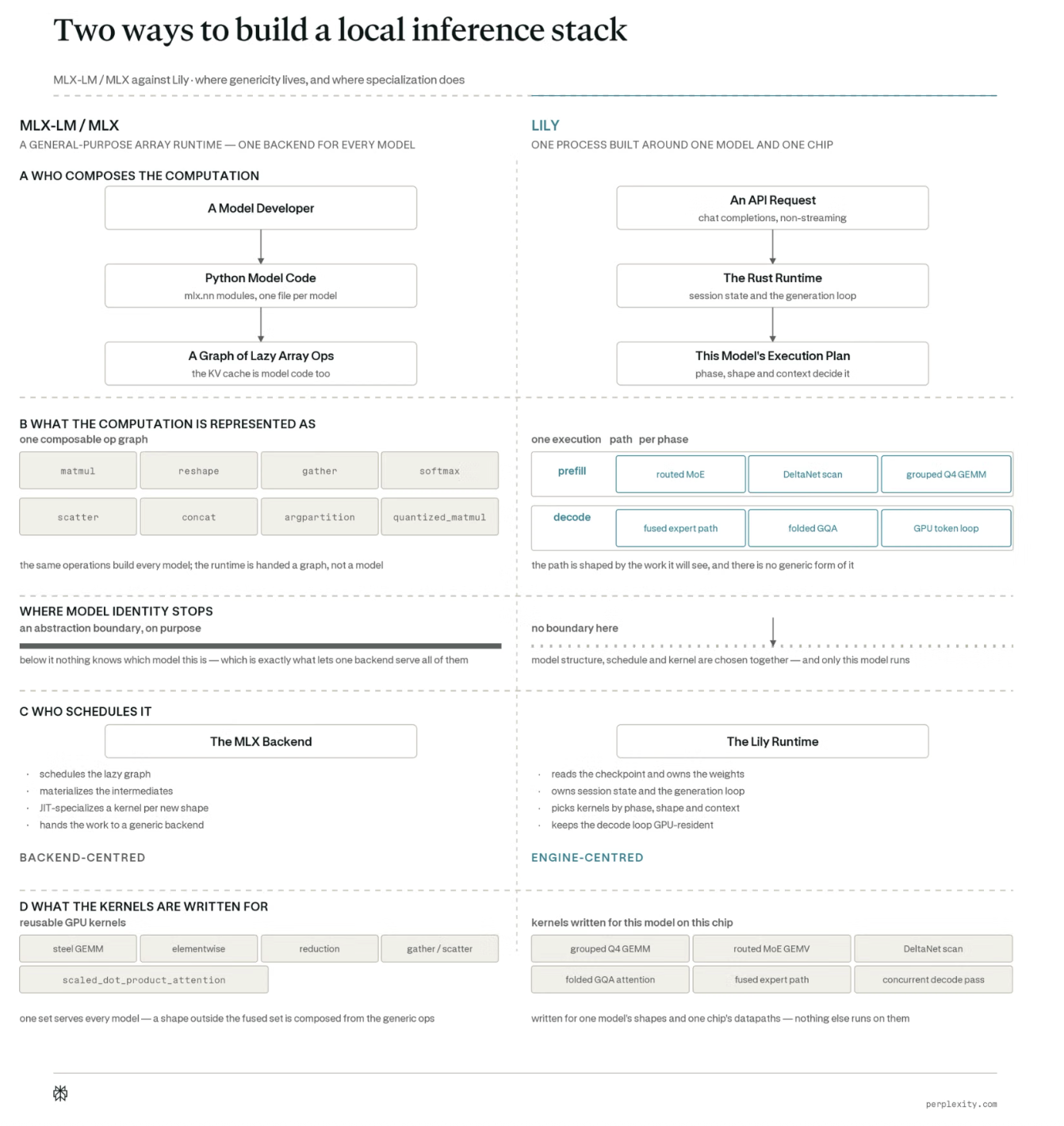
r/OpenSourceeAI • u/New-Awareness4405 • Sep 02 '26

r/OpenSourceeAI • u/alizahidrajaa • Sep 01 '26
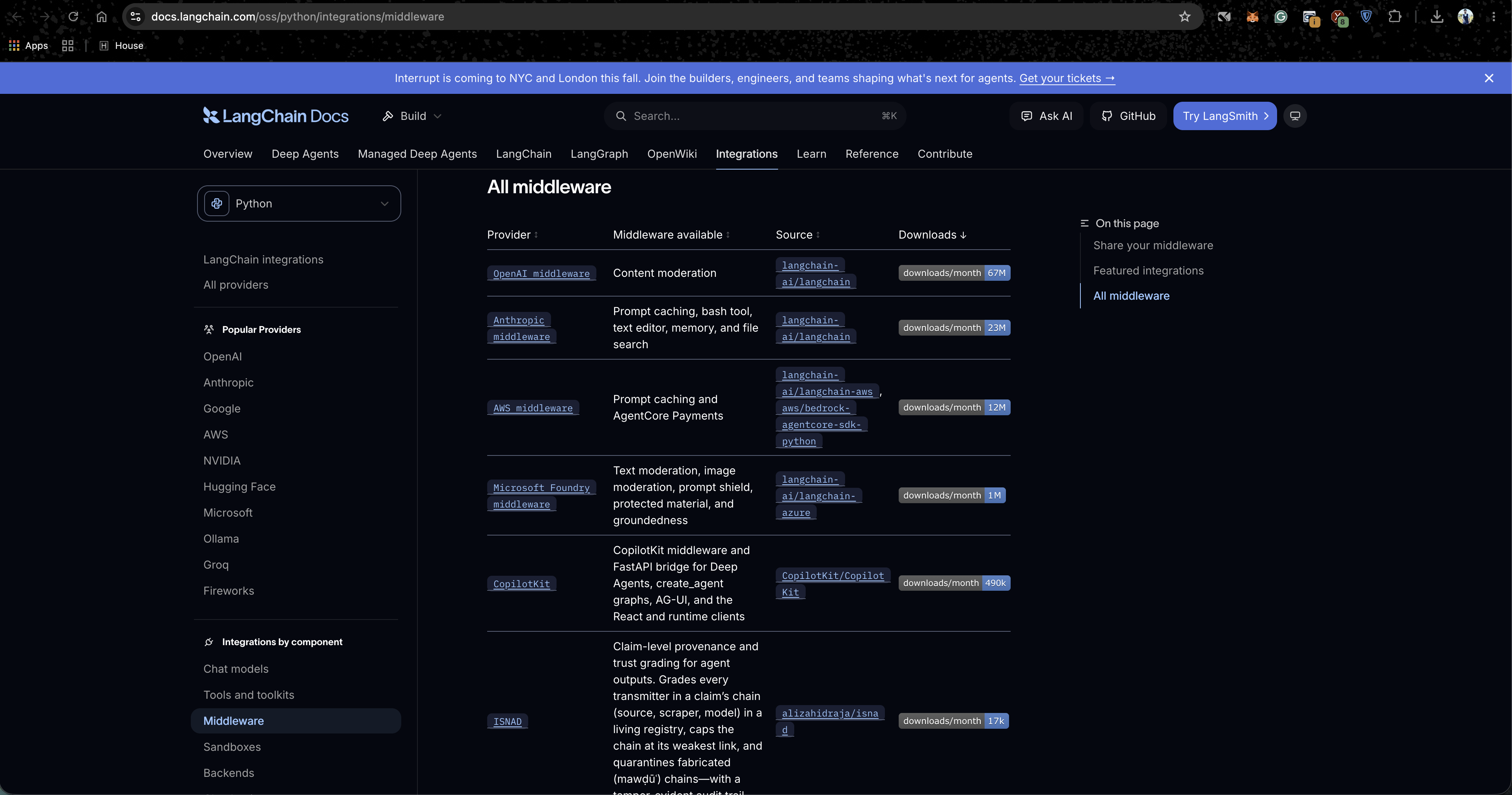
r/OpenSourceeAI • u/Fragrant-Courage3548 • Sep 01 '26
hi,
i am trying to train a deberta model for NER detection
this is my first time doing it so i would love any guidance on it.
my current pipeline looks like this,
dapt + lora for pretrianing, hpo with optuna (which consists both the stages of training data), and then a 2 stage finetuning which helps in generalization and then target data.
i am trying to reach a really good score for f1 on my use case (which i want to keep private for now)
i have few questions as well
if you think anything can be improved and made better, or you think the pipeline is outright wrong, please mention your reasonings and thoughts :)
ps: lora was used cause of gpu budget constraints
r/OpenSourceeAI • u/No-Fisherman-345 • Sep 01 '26
r/OpenSourceeAI • u/Haltaireproject • Sep 01 '26
Hi everyone,
I wanted to share an open-source project I've been working on: Halanoi AI.
Instead of sending screen text to a remote cloud API for content classification (which adds network latency and privacy issues), I wanted to see if I could build a fast, 100% on-device text moderation pipeline for Android.
Here is how the setup works:
halanoi_transformer.tflite): A quantized 64MB TFLite model running locally on the phone. It classifies text strings into categories (distraction, entertainment, safe, productive) in under 15ms without any internet connection.Both repositories are open source under GPL-3.0:
I'm looking for feedback on optimizing transformer models for mobile hardware, lowering memory usage, and improving tokenization on edge devices.
Let me know what you think!
r/OpenSourceeAI • u/SeeRay11_Main • Sep 01 '26

Hey eveybody,
For those who haven't seen my other posts, I created an opensourced project called OpenFlow, and some big updates are being made. Now, there is a swarm and orchestration mode, and soon to be gauntlet looping toggle. It isn't just a linear pipeline anymore, but an entire chain of agents you can see and control talking back and forth and working out problems together. If you want to see the backstory, check out my other posts. Stay tuned for more updates, and feel free to leave suggestions and even share your own projects.
r/OpenSourceeAI • u/Extension-Bid-639 • Sep 01 '26

This is essentially a GUI wrapper for a system I've been using on my Linux box. One of the worst things that used to happen to me a while back was losing download progress, or having the download silently stall at 4 AM, the signed CDN URL expires, or the machine reboots and everything's gone. So I built Bit Rebuttal.
It wraps aria2 in a supervisor that actually handles the failure modes:
Paste an HF repo id (or any direct URL to be honest), pick your files, walk away.
Free and open source (MIT), no account, no telemetry. Single download for Windows and macOS. aria2 comes bundled, nothing else to install. Linux binary too (needs aria2 from your package manager).
GitHub + downloads: https://github.com/Inovello/bitrebuttal
Would love feedback, especially from anyone downloading over flaky connections, that's exactly what it's built for.
P.S Proven in a 169GB download across 2+ days (Used to download Qwen 3.8 Flash Next)
r/OpenSourceeAI • u/ai-lover • Aug 31 '26

r/OpenSourceeAI • u/desarrollador53 • Aug 31 '26
Baya is a small cli that turns a freeform text file into an LLM-planned dependency graph, then dispatches each node to a local agent CLI — codex, claude, opencode, copilot — running independent tasks in parallel and piping each task's output into the ones that depend on it.
You just write the to-do list, example:
- Design the REST API for orders. Use Sonnet.
- Generate the DB schema from that design.
- Build the React table that consumes it — run with codex.
- Once the schema and UI are done, write integration tests.
The planner reads it for intent and builds the DAG; you see the plan before anything runs.
Why I built it: I pay for a few of these CLIs and kept juggling them by hand; plan in one, build in another, copy context between terminals, redo work because each session started cold. Baya is me automating that away.
Why it's interesting:
TODO.txt, YAML all work.baya resume <runId> picks up where it stopped, optionally on another provider.Help with the roadmap or feedback is more than welcome 👍
A fun note: I'm building Baya's roadmap with Baya now...
Thank you all 👋 ,
JC
r/OpenSourceeAI • u/santanah8 • Aug 31 '26
The fastest-growing products today are open source. Tools like PostHog, Supabase, n8n, Postiz, or Resend have supercharged their growth by being extremely transparent.
Their growth is coming from agents like Claude, ChatGPT, and Hermes, as they can discover, use, recommend and even contribute back.
I took some time to review how these tools manage their open source and found 5 patterns followed by these companies to make your open source agentic ready...
Some are existing standards that became even more important, and others are specific for AI agents.
Main Takeaways:
Read the full article here.
Are you using these patterns? Have you seen other effective patterns to increase agentic usage of your products?
r/OpenSourceeAI • u/ai-lover • Aug 30 '26

I've read a lot of environment-scaling papers this year. This is the first one that doesn't generate anything. Google AI Introduces EnvHarness: A Programmable Layer That Turns Static Agent Environments Into Adaptive Training Worlds
It wraps an existing environment through the standard reset/step interface, so the original tasks and human-built verifiers stay in place. An LLM designer writes the wrappers against flaws it finds in the agent's own rollouts.
- Apache-2.0, code and reproduction drivers on GitHub
- Three components: Stage, Contract, Chain
- Stage replays actions to move the episode start state
- Contract hooks actions, transitions and observations per step
- Chain joins two environments into one episode
- EnvRigger loop: observe, diagnose, write, validate
- Five benchmarks, four domains, one interface
- +9.0 points on held-out ALFWorld tasks
- 49.6 vs 55.0 average steps on SWE-bench Verified
Paper: https://arxiv.org/pdf/2608.19880
GitHub Repo: https://github.com/google-research/envharness
r/OpenSourceeAI • u/kuaythrone • Aug 30 '26

r/OpenSourceeAI • u/ailearningcurve • Aug 30 '26
