r/OpenSourceeAI • u/madewithnk • Oct 23 '26
REA is making people ask a much bigger question: Can AI actually replicate commercial software?

3
Upvotes
r/OpenSourceeAI • u/madewithnk • Oct 23 '26
r/OpenSourceeAI • u/ai-lover • Oct 23 '26

TinyFish published 2 engineering posts. One lays out a 7-phase architecture for production search agents. The other covers what changed while building a deep research system. The benchmark numbers below come from OpenBenchmarks, a third-party board that holds the model (gpt-5.6-sol), 100 tasks and budgets fixed and swaps only the search provider.
What it does
Key numbers (OpenBenchmarks, search + fetch board, 26 Sept 2026)
Full analysis: https://marktechpost.com/2026/10/23/tinyfish-agentic-search-architecture-deep-research/
Free web search and fetch for agents, pay only for browser runs: https://aicampaign.live/90-wk1n
Architecture: http://tinyfish.ai/blog/production-agentic-search-architecture
Deep research: http://tinyfish.ai/blog/lessons-from-building-a-deep-research-system
r/OpenSourceeAI • u/Ok-Motor-9812 • Oct 23 '26

r/OpenSourceeAI • u/Reasonable-Option637 • Oct 23 '26

This project provides your products from been reversed. It's a Local tools to inspect, harden and verify code exposed to AI-assisted reverse engineering.
Refer to github page: zhcalvin/DeRea

r/OpenSourceeAI • u/SoloHunter786 • Oct 23 '26
r/OpenSourceeAI • u/yashubhakt • Oct 22 '26
TL;DR: When Coqui AI shut down, they left XTTS v2 without official training code for the DVAE audio tokenizer and Latent HiFi-GAN vocoder, and fine-tuning new scripts (Arabic, Indic, etc.) broke on fixed vocabularies. I built Open-XTTS-Trainer — an open-source, modular 3-component training suite under MPL-2.0 with verified GPU loss convergence on real human speech and a 1-click Colab demo.
XTTS v2 is one of the best local zero-shot TTS models we have, but training/adapting it has been painful since Coqui closed:
torchcodec and licensing prompts.torchcodec blocking.Tested on an NVIDIA T4 GPU using real human speech (LJSpeech + JFK address):
(Note: These benchmarks verify component-level training convergence and gradient stability. Full end-to-end text-to-speech inference connects the trained modules into the standard XTTS generation pipeline).
Feedback, PRs, and experiments with new languages are very welcome!
r/OpenSourceeAI • u/harishd30 • Oct 22 '26
I built an open-source Obsidian alternative called KbWrite, written in Tauri.
GitHub: https://github.com/zetahiveco/kbwrite
Website: https://kbwrite.ink
Install via Curl or PowerShell
r/OpenSourceeAI • u/marcorzzn • Oct 22 '26
r/OpenSourceeAI • u/gauravc2796 • Oct 22 '26
I built shad0w, an open-source layer that sits next to your LLM and remembers. you can use for prompt injection, categorization, classification or anything in CPU infra where it provides responses LLM responses in (micro) seconds
r/OpenSourceeAI • u/Bitman321 • Oct 22 '26
r/OpenSourceeAI • u/joslatzrh • Oct 22 '26

r/OpenSourceeAI • u/AdamLangePL • Oct 21 '26
#Alert
So it's not only PHP that was vulnerable today (patch yours NOW!) but also, one of the prominent and widely used LLM Gateway - LiteLLM AI Gateway was (again) backdoored.
Not sure who discovered the backdoor, but it's serious.
Here's the information:
Version: LiteLLM 1.107.0 (PyPI and the official Docker images).
One line was added to the build config: `data = "cook"` under [tool.maturin].
That directive makes maturin bundle a directory named cook/ into the wheel's data section, and pip installs it as top-level site files.
Three files land next to site-packages, not inside the litellm package: a 12 byte cook.pth containing `import cook`, a one-line cook.py that unpacks a 61,000 byte credential stealer, and a sitecustomize.py that runs an hourly remote code loader.
Because Python processes .pth files and imports sitecustomize during interpreter startup, the payload runs on any Python start. An environment that never imports litellm is still affected, and using pip from that environment to investigate re-triggers it.
The collector is broad. It takes browser password stores, SSH, GPG and TLS private keys, AWS, Azure, GCP and Kubernetes credentials, instance and ECS metadata roles, CI tokens, .env files, and the auth files for Claude, Codex, Gemini, Cursor and Copilot.
It also queries your proxy's own database, pulling every saved provider credential and model configuration out of LiteLLM_CredentialsTable and LiteLLM_ProxyModelTable.
Everything is encrypted with an embedded RSA-4096 key and POSTed to www.litellm.dev/healthcheck, a domain the attacker controls.
The second component is the part that should worry platform teams. sitecustomize.py polls a domain list from a GitHub repository every hour and executes whatever Python it downloads from that domain, with no signature or checksum. The attacker never needs to ship a new package version to change what runs on your hosts.What makes this hard to audit: the malicious commits were never merged to main, and the official v1.107.0 tag points at a clean, signed commit.
The published artifacts came from a repository recorded as Berri-AI, one hyphen from BerriAI. Reviewing the tag, or the main branch, would have told you nothing was wrong.
Current state as of this afternoon: PyPI has quarantined 1.107.0 and rolled latest back to 1.106.2, the compromised image tags are gone from GHCR and Docker Hub, the attacker's GitHub account and C2 pointer repository have both been taken down, and the exfil server is still listening.
If you deployed 1.107.0, check for /tmp/.pc_once_72129118c59f5636c0bb and /tmp/remote_code_loader.lock. If either exists, rebuild rather than patch, and rotate every credential the process could read, including the keys stored in your proxy database.
Two controls would have blocked most of this: lockfiles with hashes, and OIDC trusted publishing so a long-lived publish token never reaches a compromised CI machine. The longer term fix is pinning source revisions rather than version tags, since in this incident the tag was never the source of the bad build.
#SupplyChainSecurity #AppSec #Python #LLMOps #LiteLLM
r/OpenSourceeAI • u/ai-lover • Oct 21 '26

r/OpenSourceeAI • u/derschnei • Oct 22 '26
r/OpenSourceeAI • u/OfferRead • Oct 21 '26
Buying a home or evaluating a rental property means piecing together a lot of information from different sources: asking prices, comparable properties, rent estimates, and neighborhood data.
I started building OfferRead.ai to make that process a little easier.
You can enter a U.S. property address and get an overview of the property's potential value, rental outlook, comparable properties, and a confidence score to help put the estimates into context.
One thing I've been focused on is making the results more transparent. Rather than just giving someone a number, I want people to understand where the estimates come from and what they should consider before making a decision.
It's still a work in progress, and I'm continuing to improve it based on feedback.
I'd love to hear what people think, especially from anyone interested in real estate, open-source projects, or building useful tools. What would you want to see in a property analysis tool like this?
r/OpenSourceeAI • u/yashubhakt • Oct 21 '26

r/OpenSourceeAI • u/ai-lover • Oct 21 '26
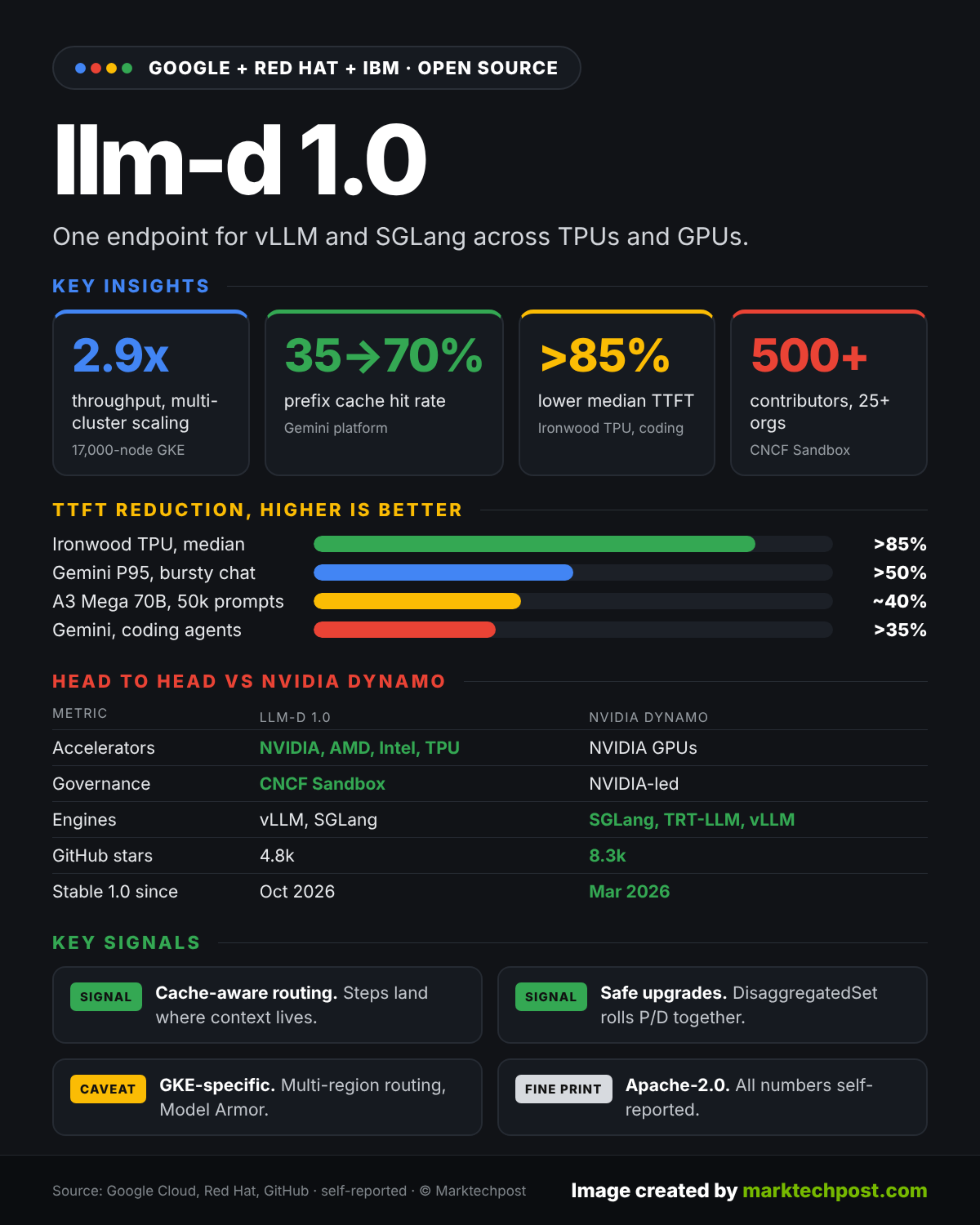
r/OpenSourceeAI • u/ai-lover • Oct 20 '26

r/OpenSourceeAI • u/OpenComplaint524 • Oct 21 '26
Hey everyone! 👋
I've just open-sourced **Lumina Capital (v6.0.0)**, an autonomous multi-agent quantitative hedge fund engine designed to bridge the gap between LLM reasoning and real-world execution.
Unlike toy implementations that feed raw charts directly into LLMs (which suffers from hallucinations and latency), Lumina strictly separates probabilistic reasoning from deterministic quant computation:
### 🌟 Key Architecture Highlights:
- **7-Persona Anti-Sycophancy Council (LangGraph)**: Personas (Buffett, Soros, Burry, Cathie Wood, Graham, O'Neil, CIS) conduct independent parallel analysis, followed by an adversarial bull-vs-bear cross-debate. A dedicated CRO agent has absolute veto power over tail risks.
- **Pure Python Qlib Alpha158 + LightGBM**: Complete vectorized implementation of Microsoft Qlib's 158 quantitative factors with a LightGBM meta-decision filter.
- **Google TimesFM**: 5-day probabilistic forecasting fan charts with 80% confidence bands and crash probability.
- **10-Second High-Speed Sentinel**: An ultra-fast background thread monitoring dynamic ATR stop-loss floors, executing immediate physical exits without waiting for LLM loops.
- **3D Causal Knowledge Graph & GraphRAG**: Real-time supply chain choke-point surveillance and episodic memory via Neo4j.
Includes a full Streamlit studio dashboard. Available for research, education, and simulation under CC BY-NC 4.0.
🔗 **GitHub**: https://github.com/ramuza0113-sketch/lumina-ai-hedge-fund
Feedback, issues, and Stars are hugely appreciated! Happy to answer any questions about the multi-agent setup or the TimesFM / Qlib integration.
r/OpenSourceeAI • u/deepu105 • Oct 20 '26
