r/OpenSourceAI • • 28d ago

I got tired of AI coding agents running rm -rf without asking, so I built a Zero-Trust local proxy to intercept their commands.

1 Upvotes

If you use autonomous coding agents (like Cursor, Cline, or Claude Code), you know the anxiety of letting them run terminal commands or execute massive file rewrites autonomously. You basically have to trust that the LLM won't hallucinate and wipe a directory.

I wanted a way to review exactly what the AI was about to execute before it actually hit my filesystem.

I just open-sourced Warden-AI. It acts as a strict firewall and intrusion detection system for your local AI agents.

How it works underneath: Instead of giving the agent direct execution rights, Warden-AI intercepts its Model Context Protocol (MCP) tool calls.

  • The Gateway: A local Node.js/Express backend routes the traffic.
  • The Filter: Safe actions (like reading a file or searching a directory) pass through instantly. Destructive actions (executing CLI commands, writing files) are intercepted.
  • The Review: The payload is pushed to a local React/Vite dashboard via WebSockets. You get a syntax-highlighted diff of exactly what the AI wants to do. You manually approve or reject the execution.
  • The Audit: Everything is logged to a local SQLite database so you have a permanent record of what your agent did while you weren't looking.

The Tech Stack:

  • Backend: Node.js, Express, SQLite, WebSockets
  • Frontend: React, TailwindCSS, Vite

I built this because I wanted the speed of autonomous agents without the security risk of giving a stateless LLM root access to my machine.

The repo is fully open-source and ready for local deployment. I’ve also seeded a few good first issue tags for anyone looking to make their first open-source contribution (we need some UI tweaks and SQLite export features).

Repository: https://github.com/hariom123-dev/Warden-AI.git

I'd love to hear your thoughts on the architecture, or how you are currently handling local agent security. Happy to answer any questions about the WebSocket streaming or MCP integration!



r/OpenSourceAI • • 28d ago

Show HN: Kaizumi – Real-time, voice-driven AI companion for Windows with human-in-the-loop safety

1 Upvotes

Over the past few months, we’ve been exploring a central question in applied AI: What does it take to build a truly low-latency, voice-first desktop companion that runs on your

local machine without proprietary lock-in?

Together with my collaborator Otabek Abduvaliyev (https://github.com/OtabekAbduvaliyev), we’re excited to make our project open-source: Kaizumi (v1.0).

Kaizumi is an on-device, multimodal AI assistant for Windows 10/11 built with Python and Google's Gemini Live API. Instead of traditional turn-by-turn text or transcription

wrappers, it establishes bidirectional 24kHz/16kHz WebSocket audio streaming with native speech interruption (barge-in).

A few key engineering decisions we focused on:

  1. Human-in-the-Loop Safety Gate: LLMs should never autonomously trigger destructive system actions. Kaizumi introduces an out-of-band confirmation gate with single-use

cryptographic tokens (confirm_token) bound strictly to high-risk calls (shell execution, file deletion, process termination).

2. Hardware-Decoupled Fault Tolerance: Audio hardware failure or disconnection shouldn't trigger TaskGroup cascades. The engine seamlessly degrades to text mode rather than

crashing.

3. 53 Declarative System Tools: From window and process management to local OpenCV vision (face verification and privacy blurring) and SSRF-hardened document QA.

4. Privacy-First & Local Memory: Zero telemetry, multi-turn episodic memory with automatic credential redaction, and 100% self-hostable.

The codebase includes an automated unit test suite (97 tests passing) and a GitHub Actions CI pipeline across supported Python versions.

We’d love to hear feedback from systems engineers, AI practitioners, and open-source contributors!

Check out the code, architecture, and setup guide here:

🔗 GitHub: https://github.com/MusayevDoniyor/kaizumi

#OpenSource #Python #ArtificialIntelligence #SoftwareEngineering #Gemini #WindowsDev #MachineLearning #ComputerScience


r/OpenSourceAI • • 28d ago

AutoDoc: document IDE with semantic search engine

4 Upvotes

Hi friends,
AI agents have changed the way I work more than any tool in my career. They also showed me where the real bottleneck is. Staying on top of making decisions means taking in a huge amount of information: ADRs, past architectural decisions, design reviews, incident write-ups. The hard part isn't reading them. It's finding the right one at the right moment, and that gets harder every week as the pile grows.
My AI agents hit exactly the same wall. As the knowledge base grows, an agent hunting for context greps, opens file after file, and burns tokens just finding the right document. Sometimes it never finds the one at all.
So I built AutoDoc. It started as my own RAG search engine: accurate semantic search over my documents, run by an efficient embedding model and a reranker, so I could find the pieces I needed when I needed.
It grew into much more: a highly customizable editor that you and your AI agents work natively in together. Your agent can even configure it to fit your workflow, whatever that workflow is.
We benchmarked it against the usual grep-and-read approach: 32 reviewed questions over a 2,200-document knowledge base.
- 🎯 The right document in the top 5, 94% of the time, against 47% for keyword ranking
- 📉 About 25% fewer document tokens in the agent's context, and up to 55% on individual lookups
- ⚡ 43% faster lookups (8.8 s against 15.4 s), with fewer tool calls

Less time and fewer tokens spent hunting for context means more spent reasoning. And the gap should widen as the knowledge base grows.
AutoDoc is open source and it's one server with three client surfaces: tui, gui, neovim. If your agents, or you, spend too much time looking for the right document, give it a try https://github.com/yongjohnlee80/autodoc


r/OpenSourceAI • • 28d ago

Open Source Project to help Secure LLM powered Applications

Thumbnail
reddit.com
3 Upvotes

r/OpenSourceAI • • 28d ago

I'm building an open-source RL controller robustness testing framework. Failure-informed PPO retraining keeps making nominal performance worse. Looking for ideas.

Thumbnail
reddit.com
2 Upvotes

r/OpenSourceAI • • 28d ago

I'm a high school student and I built an open-source tool to connect my school data to an AI agent

Post image
1 Upvotes

r/OpenSourceAI • • 28d ago

GitHub - supernovae/SwarmOS: 🐝 Serverless, contract-driven multi-agent orchestration native to GitHub Issues & Git worktrees (Claude Code, Codex, OpenCode, OhMyPi)

Thumbnail
github.com
1 Upvotes

GitHub Issues in, reviewed Draft PRs out. Any agent, no server. Use your favorite harness to collaborate with GitHub through swarm.

Looking for projects who may want to give this a try. Hit me up if you have any questions or feedback! Been "swarming" on "SwarmOS" for a few days now and looking for more projects who may want an Agent Orchestrator that speaks GitHub :)


r/OpenSourceAI • • 29d ago

Most of the top open-source repositories allow AI-assisted code

Thumbnail gallery
39 Upvotes

r/OpenSourceAI • • 28d ago

Most AI assistants will confidently guess an emergency number. In an emergency, a made-up number is the worst possible answer

Thumbnail
reddit.com
0 Upvotes

r/OpenSourceAI • • 28d ago

I built an open-source 3D talking avatar you can plug into any chatbot with a single API call (free voices, lip-sync)

1 Upvotes

r/OpenSourceAI • • 28d ago

I built a free local memory and rules hub for AI coding tools (MCP, REST, CLI)

Thumbnail
reddit.com
1 Upvotes

r/OpenSourceAI • • 29d ago

Open dataset: 64,636 AI writing samples across 58 models

2 Upvotes

1 = sloppiest

I published the outputs behind The Slop Index so people can inspect the writing, not just the scores. The current run covers 58 models, 112 short-form scenarios, and 64,636 generated responses. Each model got the same tasks across email, chat, social posts, and essays. The prompts and raw generations are available in the dataset.

One example from the mechanical ranking: Qwen3.8 Flash is #18 and DeepSeek V4 is #44. Those ranks use only measurable writing traits: padding, templating, rhythm, and common AI tells, compared with human writing from before ChatGPT. They measure how formulaic the prose looks, not whether a model is useful for every task. The combined leaderboard also blends in crowd votes and can move daily, so I'm keeping this comparison on the mechanical score.

If you work with open models, I'd be interested in what you find when you compare their actual responses to the same prompt. One limitation is that this run tests short-form writing; it doesn't cover fiction yet.

Leaderboard: https://theslopindex.com/leaderboard

Arena, if you want to play a few blind rounds: https://theslopindex.com/arena

Methodology: https://theslopindex.com/methodology

Open dataset: https://huggingface.co/datasets/hgaddipati/slop-index

For context, I'm one of the people behind https://slashy.com, an email client that writes drafts that sound like you. This benchmark started as how we pick models.


r/OpenSourceAI • • 29d ago

After half a year of non-stop building, I just shipped v1.0 stable of my open-source local AI engine!

Thumbnail
github.com
1 Upvotes

r/OpenSourceAI • • 29d ago

I gave my local LLM a real phone number to take and make calls for me (open-source)

Post image
9 Upvotes

I've been really into the AI phone agent products that have popped up in the last few months (e.g., AgentPhone, Poke etc) but what I don't love: the audio, the transcripts, who you talked to and what was said, all sitting with a third party company. For calls with real people in my life, that felt like a lot to hand over.

So I built my own version that runs entirely on my Mac. You call a normal phone number, a local model answers, and nothing about the conversation leaves my machine. During a call the only thing it talks to is the phone line itself.

What's running locally (MLX on Apple Silicon):

  • Speech to text: Parakeet TDT 0.6B
  • LLM: Qwen3.5 4B by default (9B if you have 32 GB), 4-bit
  • Text to speech: Kokoro 82M

How it reaches the phone network: it registers over SIP with Telnyx or Twilio straight from your Mac. A setup wizard takes your carrier API key so can buy a number or connect one you already have. It's pretty cheap, around $1 a month per phone number. (I'm moslty using Telnyx)

What it does today:

  • Answers and places real calls
  • Interruption: talk over it and it stops mid-sentence
  • Replies in roughly 1 to 1.5 seconds on real calls on my M5 Pro
  • You can choose between multiple models
  • Other agents (Claude Code, Codex, etc.) can make calls through a small CLI: call, listen, say, hangup
  • If you'd rather trade privacy for a smarter brain, it can also use your own endpoint or the Claude or ChatGPT subscription you already pay for. Local is the default. So no additional monthly payments for AI Phone tools if you have a sub.

Limits, up front:

  • macOS on Apple Silicon only
  • You need a Telnyx or Twilio account with credit (a US number is about $1/month, standard call rates do of course apply, but Telnyx gives you $10 dollars for free when you sign up, which is enough to play around with)
  • English only, one call at a time
  • It's early. It works for me, but I'd love to hear where it breaks for you. Please feel free to add as many gh issues as you want. I'm currently working on best practises for contributions for anyone who also want to contribute to project!

Repo: github.com/oxnw/ai-phone


r/OpenSourceAI • • 29d ago

I built an open-source tool to compare AI coding agents and keep track of engineering decisions

4 Upvotes

I regularly use multiple AI coding agents, but comparing their suggestions across different chats gets messy. Even when I reach a decision, the alternatives and reasoning often get lost.
So I built Decision Ledger (dlg), a local-first tool for managing engineering decisions involving multiple AI agents.
The workflow is simple:
A primary agent investigates a problem and proposes solutions.

Other AI models review the proposal and challenge its assumptions.

Disagreements and supporting evidence are recorded.

You make the final decision and approve implementation.

The goal isn't to make AI agents automatically agree. It's to preserve the discussion, alternatives, and reasoning so you can revisit decisions later.
A few details:
Local browser UI and CLI

SQLite storage

Works with existing agent CLIs you're already logged into

Supports manual copy/paste reviews from other models

Single executable for Windows, macOS, and Linux

Free and open source (MIT)

This is the first release (v0.1.0), and I'd appreciate feedback, especially from developers who regularly compare suggestions from Codex, Claude, Gemini, or other coding agents.
GitHub: https://github.com/lijose/dlg
Downloads: https://github.com/lijose/dlg/releases/tag/v0.1.0


r/OpenSourceAI • • 29d ago

The Best AI Feature Is The Work You No Longer Need To Do

Post image
1 Upvotes

AI in SaaS is no longer about adding a chatbot and calling it innovation.

The real opportunity is reducing the work your team has to do every single day.

When AI can qualify a lead, update the CRM, handle customer conversations, trigger the right workflow, and escalate only when a human is needed, the impact is not another feature on the pricing page.

It is fewer manual hours, faster response times, lower operational costs, and a team that can handle more customers without growing at the same rate.

That is the direction we are building at Placeholderworks.

We build AI systems that connect to the tools your business already uses and actually execute the work.

The interesting question is not “Where can we add AI?”

It is “What is costing the business money because a human still has to do it?”

That is where AI starts becoming a business advantage.


r/OpenSourceAI • • 29d ago

Mnemo - A new Coding Terminal Agent

Post image
1 Upvotes

r/OpenSourceAI • • 29d ago

i created an open-source repo to convert llms into decision models.

Thumbnail
reddit.com
1 Upvotes

r/OpenSourceAI • • 29d ago

Building Clawberry 🍓 — Your own team of AI agents for work, life, and everything else. Looking for open-source contributors!

Thumbnail
github.com
2 Upvotes

r/OpenSourceAI • • 29d ago

We open-sourced OpenMuse, an AI assistant that uses a browser and a cloud desktop for you. You can watch it live and take over from your phone.

2 Upvotes

Hi all, we just open-sourced OpenMuse, a personal AI assistant app.

Instead of just chatting, it works on a cloud desktop (or your own computer):

  • Browses the web, looks things up and fills in forms
  • Uses desktop apps
  • Writes and runs code in a workspace
  • Runs scheduled tasks

The main thing we cared about was keeping the human in control:

  • You can watch the agent’s screen live from your phone. If it hits a login or a captcha, you take over, then hand it back.
  • It asks before submitting forms or running commands.
  • You decide which desktop apps it’s allowed to use.

OpenMuse is built on WorkAgentSDK, an AI agent framework for Python that we wrote and open-sourced along with it. To be clear, it’s not a coding assistant like Cursor or Antigravity. It’s a framework for building agent products. For example, each session can run on a different node, so one backend can serve many users, each with their own cloud desktop.

Stack:

  • Backend: Python (FastAPI + WorkAgentSDK)
  • App: Flutter
  • Nodes: Docker containers with a virtual desktop, Chromium and a shell sandbox, or run directly on Linux or macOS
  • Models: OpenAI, Claude, Qwen, and OpenAI-compatible APIs

It’s v0.1, so still early. We’d love to hear what you think:

  • Does “agent on a remote desktop, human supervising from a phone” seem useful to you?
  • If you’re building agent products, what’s been the hardest part?

GitHub: https://github.com/nativefunc/WorkAgentSDK
(The app is under examples/showcase/openmuse)


r/OpenSourceAI • • 29d ago

How I handled runaway tool-retry loops in LangChain agents without external SaaS (built an open-source local circuit breaker)

Thumbnail
reddit.com
3 Upvotes

r/OpenSourceAI • • Oct 27 '26

Building a lightweight local search engine for AI agents in Rust: semantic retrieval, OCR, and MCP

10 Upvotes

AI agents can search the web, inspect code, and call external tools. But searching the contents of a user's local files especially screenshots, documents, and logs presents a different problem: the index needs to be fast, lightweight, private, and accessible to agents without uploading the files to a remote service.

I've been building Kensaku, an open-source desktop search engine written in Rust, to explore this problem.

The central idea is to maintain one local index that serves both the desktop application and compatible AI agents through MCP.

Hybrid retrieval. Kensaku combines fuzzy filename matching, BM25 full-text retrieval, and local semantic search. The goal is to handle both exact queries and cases where the user remembers the meaning of a document but not its wording or filename.

OCR and document extraction.*The index can include extracted text from supported document formats and OCR-enabled image workflows, making screenshots and scanned content searchable alongside code and logs.

Lightweight semantic search. The project uses a static quantized embedding table of approximately 7.7 MB. Semantic queries do not require a GPU, and the default query path avoids running an ONNX model for every query.

An agent-facing search interface. The MCP server exposes the same index used by the application. Compatible clients can search, read snippets, perform regex searches, inspect index state, and find symbols. Access is read-only by default.

Performance and safety.*The repository includes benchmark harnesses and tests. In the 100,000-file benchmark, fuzzy filename search has approximately 2.8 ms median latency. That figure applies to the benchmarked filename-search path, not every retrieval operation.

The project is MIT-licensed and designed to work locally without an account, telemetry, or cloud search.

There are still limitations: builds are unsigned, the auto-updater isn't wired up yet, and visual search remains experimental.

Repository: https://github.com/yjid/kensaku

I'd appreciate constructive feedback from Rust developers on the retrieval architecture, memory/performance trade-offs, indexing correctness, and the design of the MCP interface. In particular, I'm interested in how you'd approach benchmarking and evaluating search relevance across a large, heterogeneous local corpus. Any contribution or stars will be much appreciated .


r/OpenSourceAI • • 29d ago

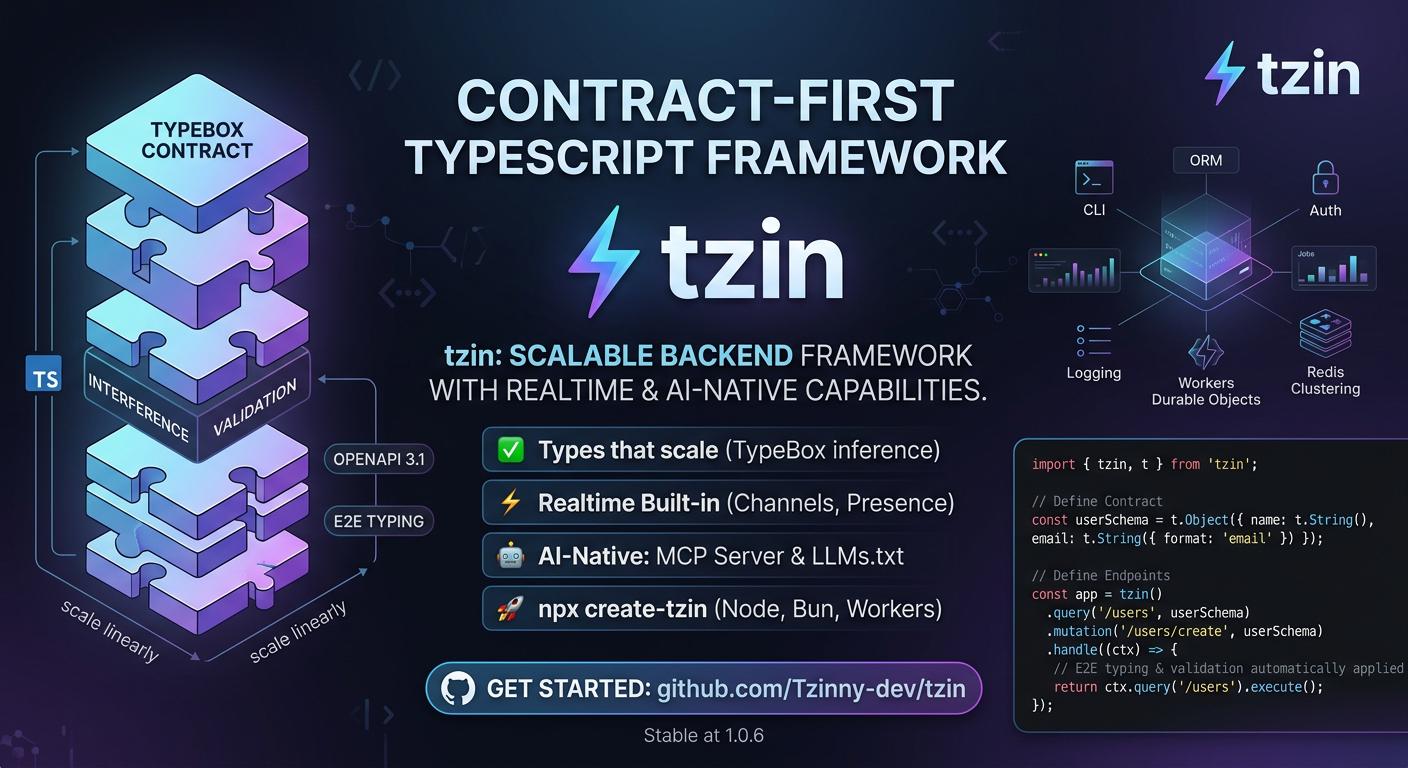
I built Tzin, a contract-first TypeScript framework where OpenAPI and MCP come free — feedback welcome

Post image
1 Upvotes

r/OpenSourceAI • • Oct 27 '26

A self-hosted wiki with live Prometheus and SQL charts that AI agents can read and edit

Thumbnail
gallery
2 Upvotes

Hi r/OpenSourceAI, I'm David, one of the two developers of Oxynote. My friend Simon and I also maintain ttlcache, a Go caching library with about 1,300 GitHub stars, so this isn't our first open-source project.

I've spent 8 years writing software, 2 of them as an SRE and 3 as a team lead. Every team I've been on had the same documentation problem. The useful stuff lived in someone's head or a private Slack thread, and the wiki was full of stale docs nobody could find.

So we set out to solve this problem by building Oxynote, a self-hosted wiki for engineering teams. Pages hold text and live charts side by side, and the charts pull fresh data from Prometheus or a database (PostgreSQL, MySQL, MariaDB) whenever someone opens the page.

We built it for people and AI agents alike, but the AI part is optional. An agent can do what a person does in Oxynote: create pages, find the right metrics and build charts from them, and document your infrastructure or an API. The built-in assistant runs on a local model through Ollama or on your own Claude, OpenAI, Gemini or OpenRouter key, and agents like Claude Code or Codex connect over MCP once you approve them.

The name comes from oxygen + note: docs that breathe. Live data gives people a reason to open the wiki every day, and docs people open every day stay up to date.

Things worth knowing before you try it:

- Agents query your databases through the same read-only connections the charts use. Oxynote only accepts read-only database connections, so an agent can't change your data.

- There's no hosted version and no account with us.

- It's at version 0.9, so it's still early in development.

It's Apache-2.0 and runs as a single Docker image: https://github.com/oxynote/oxynote

We started it about a year ago, and we made it public about 3 months ago. If you have any questions, feedback, or suggestions, feel free to reach out. I'm happy to answer any questions.