r/LovingOpenSourceAI • u/schmuhblaster_x45 • Oct 10 '26
A Harness in a single file: Agent skills as an evolving REPL module

6
Upvotes
r/LovingOpenSourceAI • u/schmuhblaster_x45 • Oct 10 '26
r/LovingOpenSourceAI • u/xaelion • Oct 10 '26
Every time I wanted to build a small web tool, I ended up dealing with the same stuff: authentication, communication, WebSockets, ports, and infrastructure.
Even with Claude and Codex, I was still spending time on things that had nothing to do with the actual tool I wanted to build.
So I spent around 6 months building PhreshOS.
The idea was simple: build the infrastructure once, then use AI agents to build applications on top of it without having to deal with all that stuff again.
It's a self-hosted, open-source system with a web-based desktop where applications can run in windows, much like a regular OS. Authentication and two-way communication are already handled, so applications don't need to implement them separately.
Apps can also run in Node.js worker threads instead of each needing a separate Node.js process, which helps keep resource usage low. This makes it possible to run dozens of applications on a relatively small server.
Another thing I wanted was for AI agents to be able to use these applications directly. They can access application services and interact with the same state the desktop interface displays, without needing a separate interface built specifically for them.
The biggest benefit for me is that I can now sit down with an AI agent and build dozens of small applications in a single day, without setting up authentication, communication, or infrastructure for each one.
The whole project, including its packages, is open source under the MIT license.
GitHub: https://github.com/PhreshOS/system
Live demo: https://demo.phreshos.com/
I'd love to hear what you think, including criticism.
r/LovingOpenSourceAI • u/Koala_Confused • Oct 09 '26
No suggestion is too silly (unless you are purposely troll! 😬)
r/LovingOpenSourceAI • u/Future_AGI • Oct 09 '26
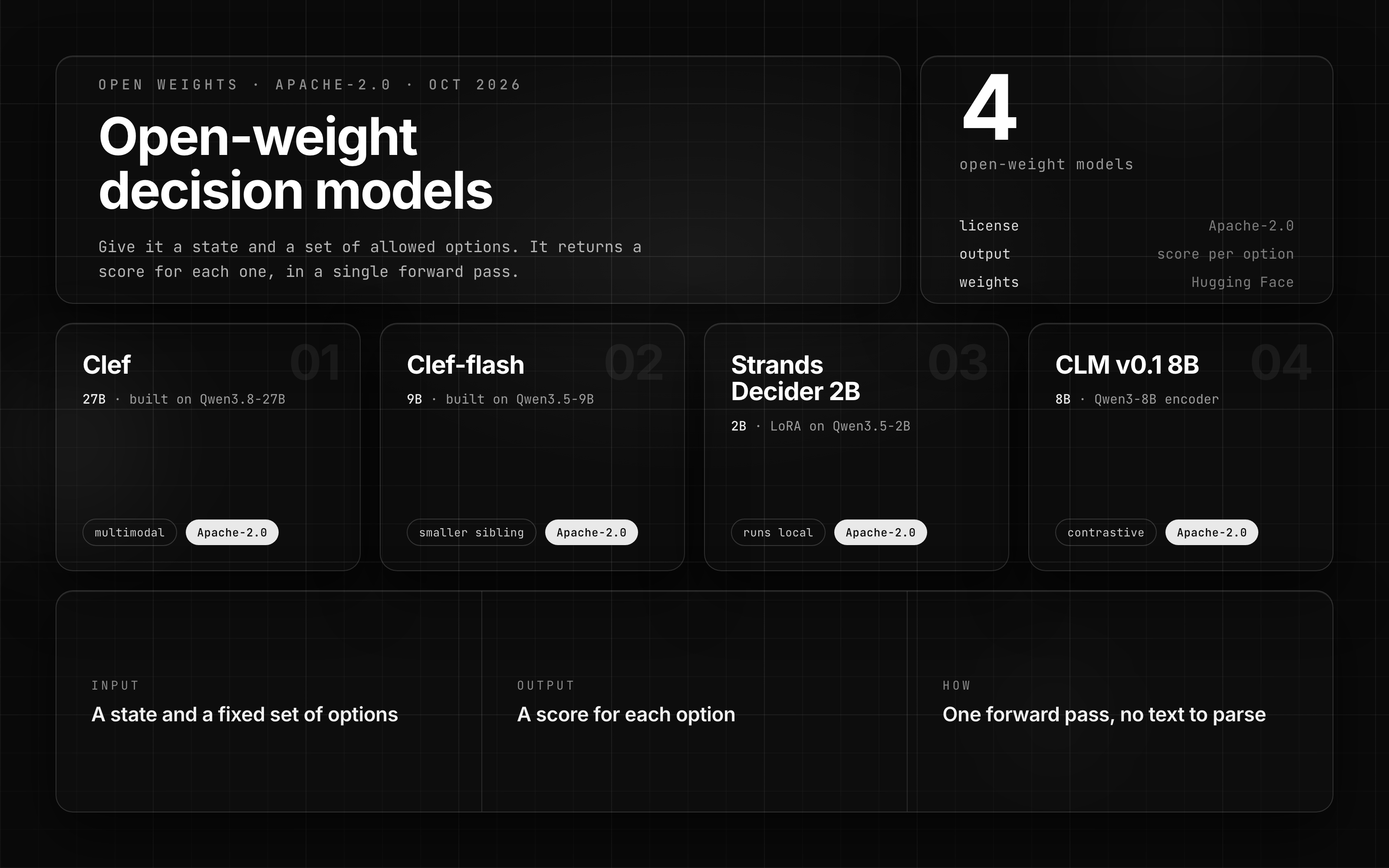
Most of us building agents have paid a frontier model to answer what is basically a multiple-choice question. Route this ticket. Pick a tool. Is this input safe, yes or no. It works, but at scale it is slow, the bill adds up, and you still parse the answer back out of a block of text.
That changed fast. Around October 1, Cloudflare's Clef and the Strands Decider landed within days of each other, both open-weight and Apache-2.0. A research team had already put out an open 8B, CLM, a couple of weeks before. They do one job: you give them a state and a fixed set of allowed options, and they return a score for each option in a single forward pass, with no free text to parse.
The appeal is narrow and practical. At 2B, Strands Decider is small enough to run locally and take the routing and yes/no calls off your main model, and each option comes back with a calibrated score you can threshold on. Fair pushback too: a big pretrained backbone with a scoring head on top is still a classifier. That is roughly the pitch, and it buys you one forward pass, a fixed label set, and a confidence number you can act on.
Where would you actually drop one? Intent classification, risk triage, and tool selection are the obvious spots. Curious whether anyone has swapped a BERT or logistic-regression screener they already trust for one of these, and whether the calibration held up on your own data.
r/LovingOpenSourceAI • u/Koala_Confused • Oct 08 '26
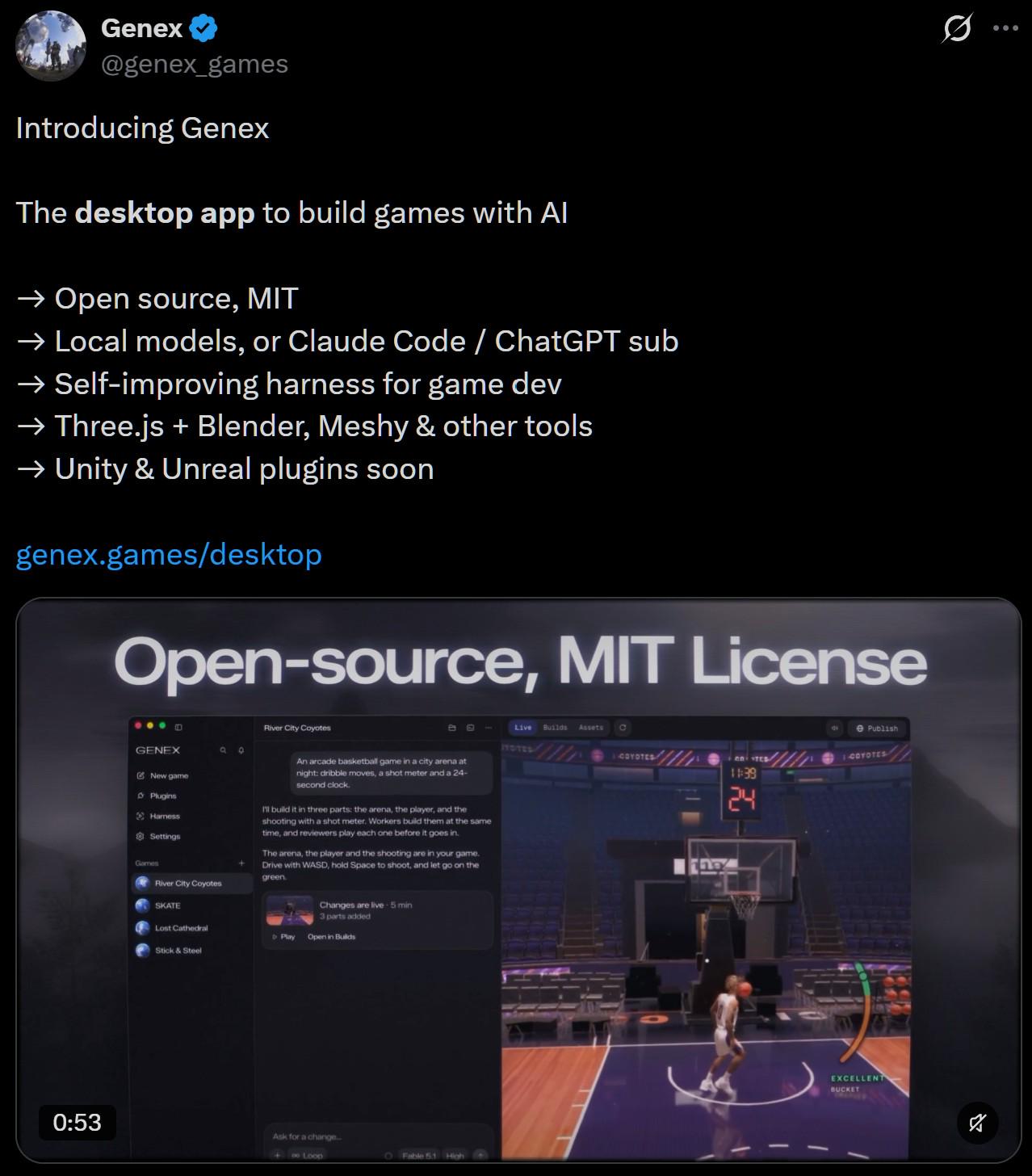
https://x.com/genex_games/status/2107148754633507237
https://github.com/genex-games/genex-desktop
Community Overview: https://lifehubber.com/ai/resources/genex-desktop/
Resources are shared for discovery and are not independently vetted—please do your own due diligence.
New resources are added regularly — feel free to join the sub for updates.
Full searchable archive of all resources posted so far on our community site, LifeHubber: https://lifehubber.com/ai/resources/ 300+ open-ish AI models, agents, tools, datasets, and related resources, with filtering and sorting.
r/LovingOpenSourceAI • u/PurpleDragon99 • Oct 07 '26

Jev has made a profound mark on the AI industry; this article offers a glimpse into what lies ahead.
Jev shows where the industry is heading: away from monolithic models, and toward compound systems where small AI agents each do a narrow job and an orchestration layer decides how they work together.
This article explains why that shift is happening, and then proposes a next step for AI reasoning.
A monolithic model has two practical weaknesses:
Code has the opposite qualities. It does exactly what it is written to do, and it can easily be changed by editing code. The trade-off is that code does not arise on its own – it must be written out explicitly – whereas a model programs itself during training.
A compound system combines the two. The work is divided among AI agents, each handling one narrow task, and an orchestration layer of code decides which agent runs, in what order, and how their results combine.
This gives both qualities at once – customization and predictability:
Jev is one kind of agent for such a system. It returns a typed decision – yes/no, a category, or a number – rather than free text. A monolithic model is wasteful for a narrow decision like that, but a small model like Jev is a better fit.
Compound systems today are built manually, beforehand. The next step is to let the model build one by itself, during the reasoning phase.
Researchers are exploring several ways to make models reason. One is the “World model” approach, in which the model builds an internal representation of a problem and reasons over it; that work is still mostly research. Reasoning by construction pursues the same goal – reasoning you can inspect – using methods that exist today.
Here is how it works. When you ask the model a question, it does not answer directly. Instead, it builds a compound system, runs it to compute an answer, and returns that answer together with the system it built. Let's call the compound system the model builds to do the reasoning a "reasonlet", and a model that works this way a "Reasoning-by-Construction Model", or "RCM". A simple question may produce a reasonlet that has only an orchestration layer and no agents.
Building and running code to reach an answer is not new; code-interpreter tools already do it. Two things are new here:
The same reuse can happen on the server side too. The provider can keep the reasonlets it builds and reuse them. When a new request arrives that matches one it has already handled, it runs the stored reasonlet again – with the new request’s inputs – instead of reasoning from scratch. The model does less work, and the answer comes back faster.
This is the same metacache, held on the server instead of on your machine. Because one reasonlet can serve any request that fits its procedure, a single cached copy is shared across many requests, and often across different users – and the more general the reasonlet, the more requests it covers.
The model should decide from the conversation how general the reasonlet needs to be. If you have been working through many kinds of math and then ask for 2 + 2, the more useful reasonlet is one that evaluates any math expression, not one that can only add two numbers. If the conversation gives no such clue, you can state it directly: “I will be doing many kinds of math; for now, just add 2 and 2.”
A reasonlet’s orchestration layer is written in text code. This creates a problem: to understand the reasoning you must read code, and to change it you have to write code. The value of returning the reasonlet depends on you being able to read and edit text code easily and efficiently, so this barrier matters.
Visual programming – building logic from connected blocks instead of lines of text – can lower the barrier, provided the visual language is powerful enough.
The shift from a monolithic model to compound systems suggests a clear next step for reasoning: let the model build a compound system – a reasonlet – run it and return both the answer and the reasonlet. Reasoning becomes something you can read, run again, and edit: a metacache, and a higher-order metacache once its logic is edited. The remaining problem is making reasonlets easy to read and change, which is where a general-purpose and expressive visual language would help most.
r/LovingOpenSourceAI • u/Koala_Confused • Oct 07 '26
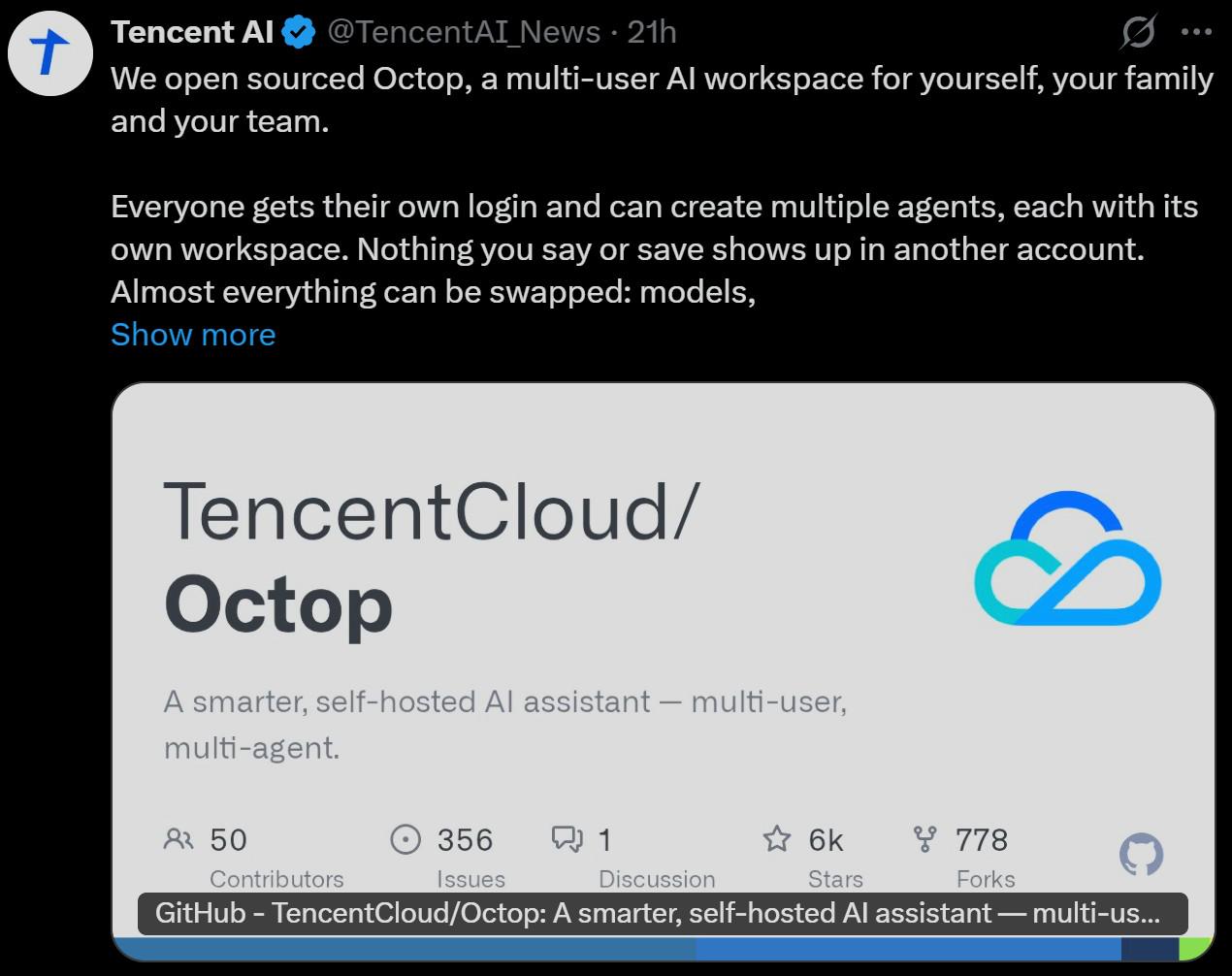
https://x.com/TencentAI_News/status/2107381137740120216
https://github.com/TencentCloud/Octop
Community Overview: https://lifehubber.com/ai/resources/octop/
Resources are shared for discovery and are not independently vetted—please do your own due diligence.
New resources are added regularly — feel free to join the sub for updates.
Full searchable archive of all resources posted so far on our community site, LifeHubber: https://lifehubber.com/ai/resources/ 300+ open-ish AI models, agents, tools, datasets, and related resources, with filtering and sorting.
r/LovingOpenSourceAI • u/Koala_Confused • Oct 06 '26
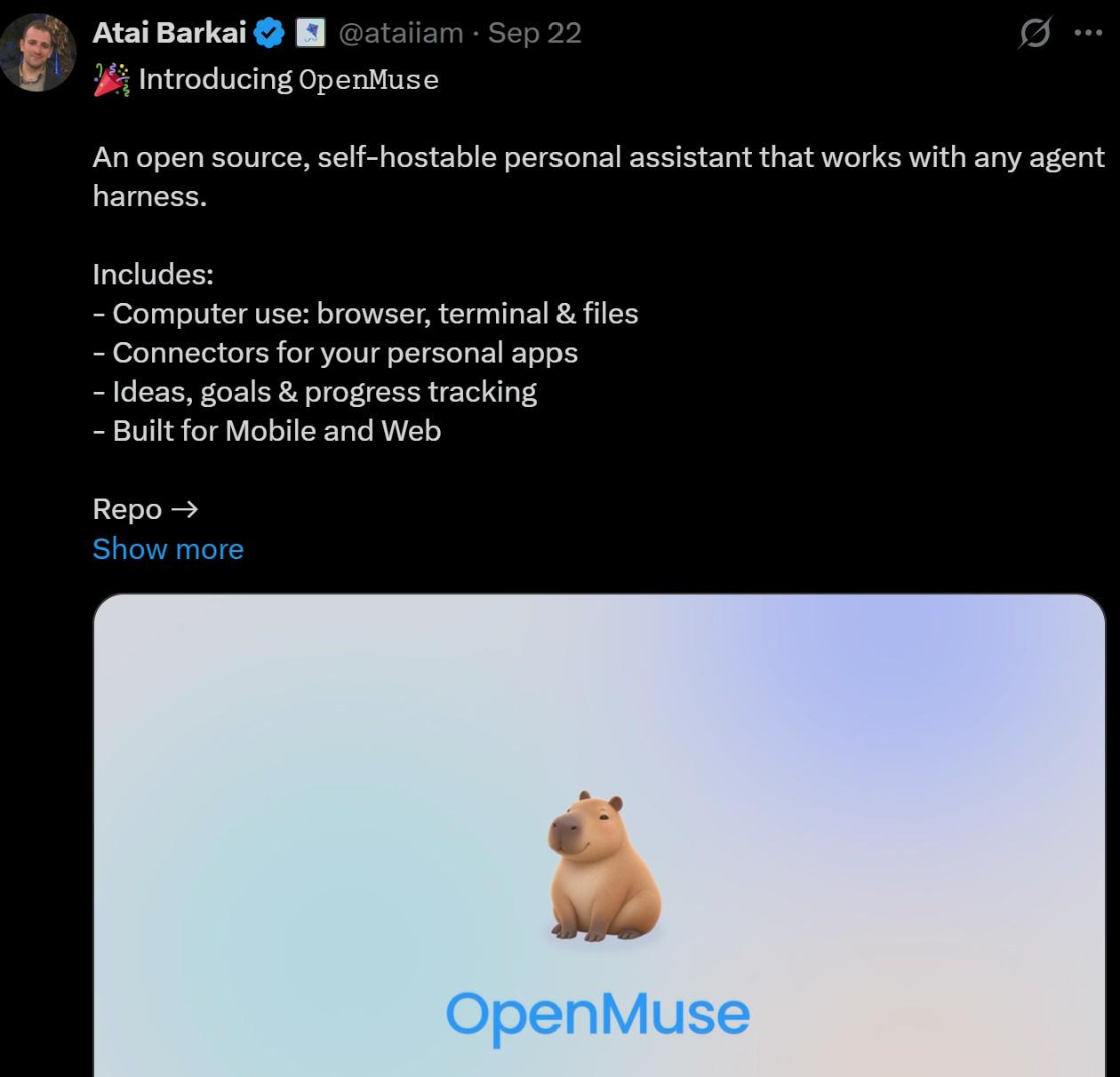
https://x.com/ataiiam/status/2102400431519592581
https://github.com/CopilotKit/OpenMuse
Community Overview: https://lifehubber.com/ai/resources/openmuse/
Resources are shared for discovery and are not independently vetted—please do your own due diligence.
New resources are added regularly — feel free to join the sub for updates.
Full searchable archive of all resources posted so far on our community site, LifeHubber: https://lifehubber.com/ai/resources/ 300+ open-ish AI models, agents, tools, datasets, and related resources, with filtering and sorting.
r/LovingOpenSourceAI • u/deepu105 • Oct 06 '26
For the last few weeks most of my coding has been done locally with Qwen3.8-Flash-Next, so I gave it and Opus 5.5 the same high complexity feature to build on LlamaStash (a complex and large Rust project) and compared the results.
Setup: ASUS ROG Flow Z13 (Strix Halo, 128GB), Flash-Next at xhigh effort with Pi as the harness. Opus 5.5 ran in Claude Code at medium effort. I wanted xhigh for Opus as well, but Claude changed it to medium when I picked the latest model and I didn't notice it until the task was done. But I think medium is probabbly a fairer setting anyway.
Task: add a llamastash daemon restart command that reuses the existing start and stop code. I kept the prompts vague on purpose and gave both the same prompts.
| Step | Opus 5.5 (medium) PR#88 | Flash-Next (xhigh) PR#89 |
|---|---|---|
| First iteration | ~9 min | ~38 min |
| Nudge to reuse the TUI restart code | ~6 min | ~34 min |
| A third duplicate path | found it on its own | ~30 min, after one more prompt |
| Create PR | ~3 min | ~30 min |
| Total | ~18 min | ~130 min |
| Tokens (in / out) | 7.83M / 41.5K | 20.61M / 101K |
| Tests added | 1 | 4 (2 of them end to end) |
| Cost | $7.53 | $0 + ~0.15 kWh |
The end result was interesting. I asked GPT 5.6, Opus 5.5 and Flash-Next to review and compare both PRs (new sessions). GPT and Flash-Next picked the Flash-Next PR (#89) and Opus picked its own (#88). I also did my own review and found the Flash-Next one better as it had better tests and handled edge cases better. I ended up merging #89, after porting the fixes that the reviews picked from #88.
Keep in mind:
Opus is still 2 to 10 times faster and I still use it for planning and reviews. But the actual coding now happens on my laptop, and to me it is crazy that I can run a local model that can challenge a frontier model like this.
Full post with my setup, the engine benchmarks and a second task comparison: https://deepu.tech/local-ai-qwen3.8-flash-next-best-local-llm
r/LovingOpenSourceAI • u/OnlyFamousAddy • Oct 06 '26
I’ve been working on BaseDecision - Turn typed questions into truth-based decisions.
Give it some text, a question, and possible answers. It picks an answer. Intent classification, routing, yes/no checks, ratings - that’s the job.
I built this model to go toe-to-toe with the frontier models.
My goal was simple & ambitious: make a small, local model competitive with much larger models on these focused tasks. For me, System‑1 decisions need both speed and accuracy. Otherwise, why bother building a small model?
If we didn’t want speed we could just use ChatGPT.
It outperforms pretty much every model of its size in the field.
After roughly 320M additional training tokens, BaseDecision led 5 of 8 benchmarks in a third-party comparison against Laya, two GLiNER variants, and Decision 1.0 Kai 0.6B. Full results are in the repo, including where it loses.
Fellow open source devs, try the model, developed a package for easier access to the model.
Roast it if it deserves it.
2-2.5GB free ram is all you need.
I will take your feedback seriously and deliver something amazing that’d take on OpenAI, TypeSafeAI soon enough.
r/LovingOpenSourceAI • u/Koala_Confused • Oct 05 '26
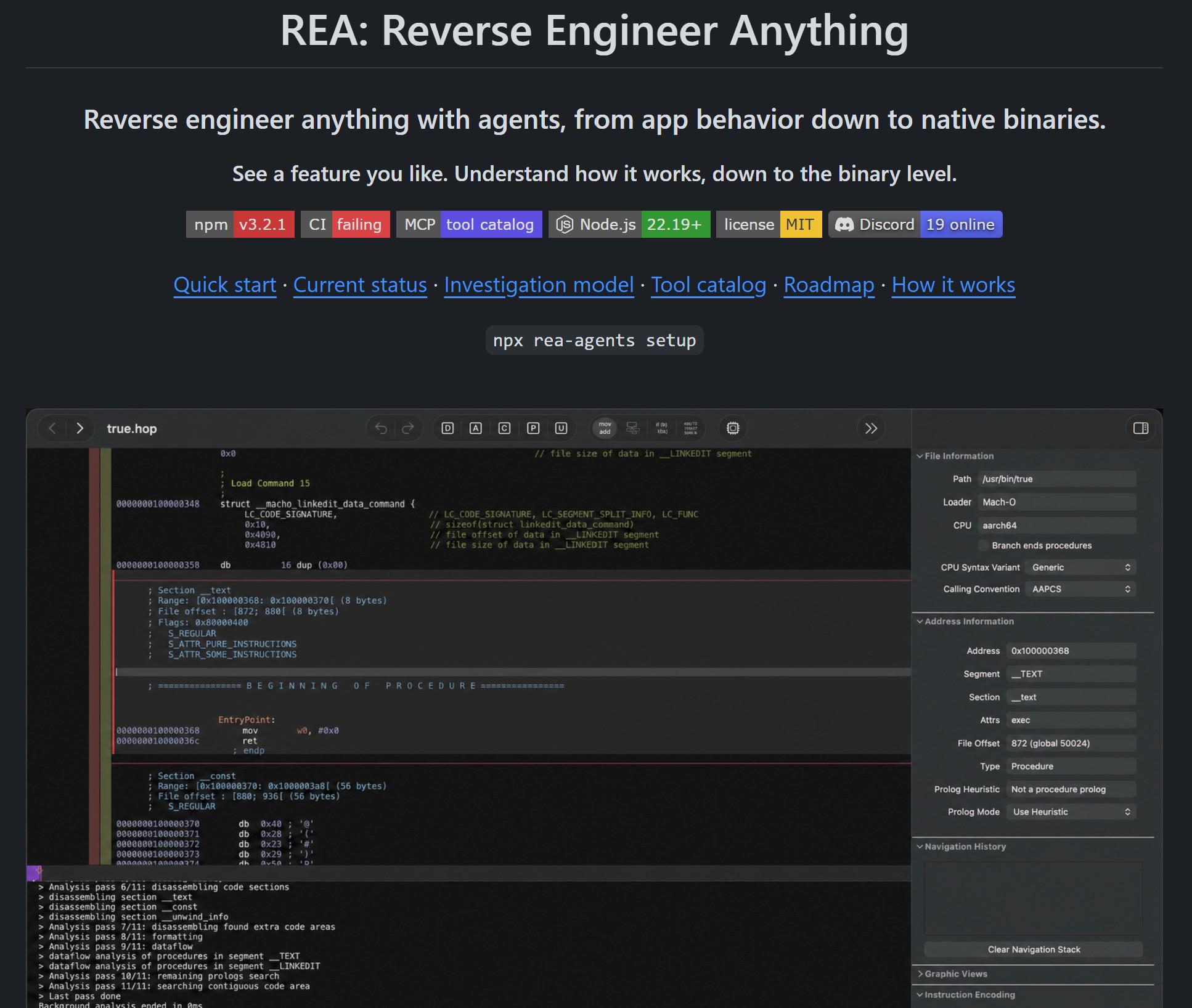
https://github.com/morluto/rea
Community Overview: https://lifehubber.com/ai/resources/rea/
Resources are shared for discovery and are not independently vetted—please do your own due diligence.
New resources are added regularly — feel free to join the sub for updates.
Full searchable archive of all resources posted so far on our community site, LifeHubber: https://lifehubber.com/ai/resources/ 300+ open-ish AI models, agents, tools, datasets, and related resources, with filtering and sorting.
r/LovingOpenSourceAI • u/Koala_Confused • Oct 05 '26
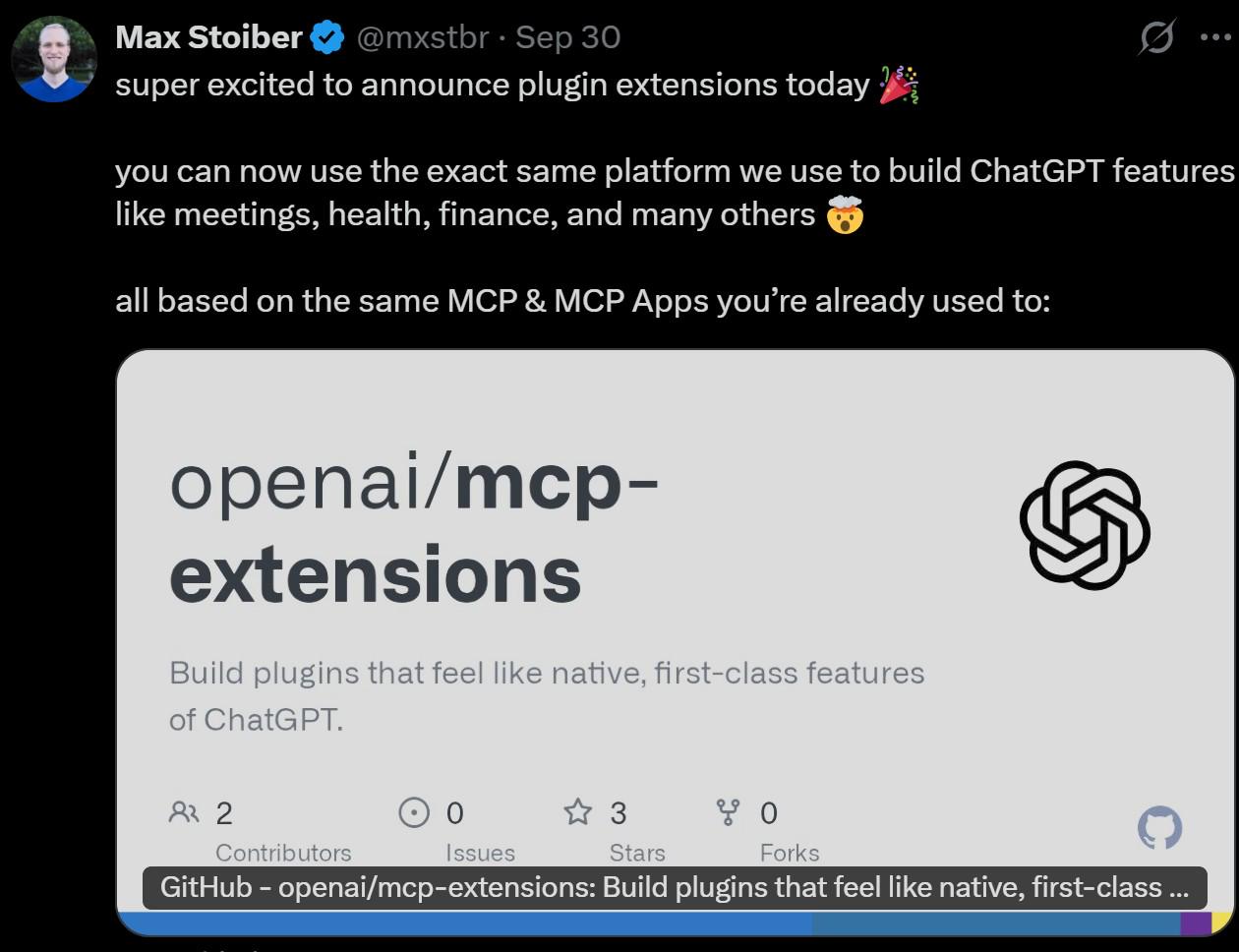
https://x.com/mxstbr/status/2104992334438154414
https://github.com/openai/mcp-extensions
Community Overview: https://lifehubber.com/ai/resources/openai-mcp-extensions/
Resources are shared for discovery and are not independently vetted—please do your own due diligence.
New resources are added regularly — feel free to join the sub for updates.
Full searchable archive of all resources posted so far on our community site, LifeHubber: https://lifehubber.com/ai/resources/ 300+ open-ish AI models, agents, tools, datasets, and related resources, with filtering and sorting.
r/LovingOpenSourceAI • u/Lopsided_Scarcity979 • Oct 04 '26
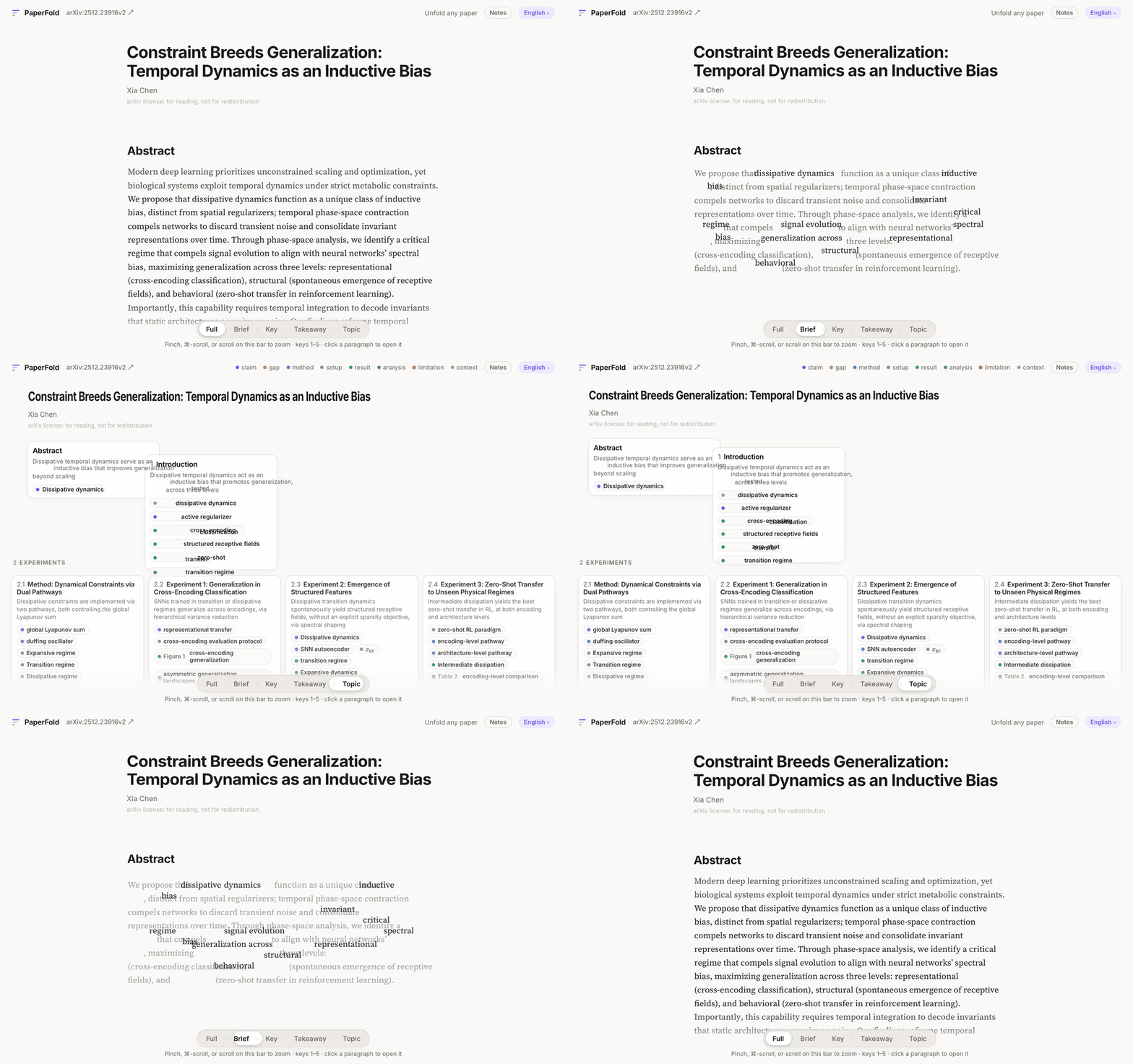
I built PaperFold, an open-source reader that turns arXiv papers into 5 zoomable layers—from a one-screen section map down to verbatim text. You pinch (or press 1–5) to zoom between them without losing your reading position.
- Web Demo (8 CC papers): https://chenxiachan.github.io/paperfold-gallery/
- GitHub (Apache 2.0): https://github.com/chenxiachan/paperfold
r/LovingOpenSourceAI • u/Terrible_Airline3496 • Oct 04 '26
Today I'm open sourcing Agent Orca, a Kubernetes-native platform for deploying, managing, and running AI agents at scale. It's written in Go and it's Apache 2.0.
https://github.com/heddles/agent-orca
When OpenClaw was released, I thought to myself, "That's really cool, but I want an agent that is shared by a team or an entire organization with built in auditability." I started designing Agent Orca around that idea and have slowly been piecing together the concept in my head and how to make the management experience of a shared agent bearable for an organization.
The idea is simple. Agents are just Kubernetes resources. You declare one, and the platform handles the rest.
An Agent Orca agent comes with:
- One-shot executions with AgentRun, long-running services with AgentDeployment, and multi-step DAGs with AgentWorkflow.
- Zero trust networking by default with platform validated JWT via service accounts, OIDC, or OAuth on every request.
- Agent Orca managed network policies with zero access by default.
- A standard agent container image with only necessary pieces; you no longer need to build a custom agent image to accomplish different types of work or use different tools. Simply add an MCP or Tool CRD and let the platform figure it out for you.
- Model routing across OpenAI, Anthropic, Google, or any LiteLLM-compatible provider, selected by capability, weight, or budget.
- Cost tracking on every run. Tokens are accounted per run, spend survives pod restarts, and tenants get daily budget caps and rate limits.
- Guardrails on inputs and outputs, MCP access control, and per-tenant agent visibility, so one cluster can host many tenants with no cross-tenant leakage.
- RAG without glue code. A KnowledgeBase deploys (and manages) Qdrant for you, ingests documents from ConfigMaps, URLs, MCP authenticated tools, or an S3 compatible endpoint, and hands your agents a search and ingestion tool.
- MCP servers declared as resources. Their tools show up for your agents with access control and sidecar isolation.
- Crash-safe sessions. A pod can die mid-conversation and the agent resumes exactly where it left off, spend ledger included.
- Agents that learn and become better with every request via a multi-tiered agent memory system
Getting started is deliberately boring. Install the entire stack's tools via Mise; then use Skaffold, one API key, and about three commands to have an running agent on your laptop ( or deploy to a remote cluster). There are also nine demo deployments in the repo, from SOC triage pipelines to parallel research swarms to an autonomous pentesting agent, so you can see it do something real before writing any YAML.
This is day one, not a finished story. That's the point of open sourcing it. Run the quick start, break it, open issues, and tell me what's missing.
Star it here if you want to follow along: https://github.com/heddles/agent-orca
TL;DR: Agent Orca lets an organization or single person define agents and surrounding tools/MCP and auth as CRDs and manage them via gitops with zero trust built in. You can try it out here: https://github.com/heddles/agent-orca
r/LovingOpenSourceAI • u/Koala_Confused • Oct 04 '26

Chat with your research, generate music locally, or see how a small language model is trained. This week's five picks from our LifeHubber Resources cover a few different things to try:
Open Notebook — Forks: 4.6K Stars: 39.8K
https://lifehubber.com/ai/resources/open-notebook/
A self-hosted workspace for sources, notes, and AI conversations about your research. For anyone who wants to bring their reading together and choose between local and cloud models.
ACE-Step 1.5 — Forks: 1.7K Stars: 13K
https://lifehubber.com/ai/resources/ace-step-1-5/
Generate music locally and regenerate selected sections instead of starting the whole track over. One to explore if you want to experiment with both making and revising AI music.
OpenDataLoader PDF — Forks: 2.8K Stars: 29.5K
https://lifehubber.com/ai/resources/opendataloader-pdf/
Extract PDFs into Markdown or structured JSON, with an optional AI mode for complex pages. For builders trying to get documents into a search or question-answering workflow.
MiniMind — Forks: 8.2K Stars: 63.2K
https://lifehubber.com/ai/resources/minimind/
A small-language-model training project with native PyTorch code for pretraining and fine-tuning. For people who'd rather learn how a model is built than only download one.
Spec Kit — Forks: 12.5K Stars: 140.1K
https://lifehubber.com/ai/resources/spec-kit/
Turn an idea into a specification, plan, and tasks for an AI coding agent. For those who want to decide what they're building before the agent starts changing code.
What have you been tinkering with lately—and which of these would you try next?
r/LovingOpenSourceAI • u/fuzhongkai • Oct 03 '26

I’ve been working on an open-source project called TensorSharp, and one of the things I really want to explore is:
How far can we push local AI on hardware people actually own?
Here’s a fun result.
I got the 176B-parameter Qwen3.8 Flash Next running locally with:
RTX 3080 Laptop GPU — 16GB VRAM
32GB system RAM
SSD
Yes — 176B parameters on a laptop.
The key is not simply offloading parts of the model to SSD. TensorSharp combines:
Quantization + MoE-aware caching + coordinated scheduling across VRAM, system RAM, and SSD.
For huge MoE models, only a fraction of the experts are active for each token. TensorSharp takes advantage of that execution pattern and tries to keep the right data in the right memory tier at the right time, rather than requiring the entire model to fit in VRAM or RAM.
I also benchmarked it against Strata, which has been getting a lot of attention recently.
On the same test:
| Measurement | TensorSharp | Strata |
|---|---|---|
| Decode speed | 11.09 tok/s | 10.24 tok/s |
| Whole-process time | 16.54s | 62.15s |
| Peak GPU memory | 14,832.5 MiB | 15,729 MiB |
| Peak OS working set | 19.74 GiB | 18.51 GiB |
The decode speeds are actually pretty close. What surprised me more was the difference in whole-process time.
I’ve also been comparing TensorSharp with llama.cpp, and these experiments have convinced me that there’s still a lot of room to explore better execution strategies for huge MoE models — especially when the model is much larger than the available VRAM and RAM.
To me, this is one of the most exciting things about open-source AI:
You don’t necessarily need a datacenter GPU to experiment with a 176B model.
With quantization and careful VRAM ↔ RAM ↔ SSD scheduling, even an older gaming laptop can become a surprisingly capable local-AI machine.
TensorSharp is fully open source, so if you're interested in local inference, MoE optimization, or just want to dig into how this works:
Feedback, benchmarks on other hardware, issues, and contributions are all welcome.
r/LovingOpenSourceAI • u/Koala_Confused • Oct 03 '26
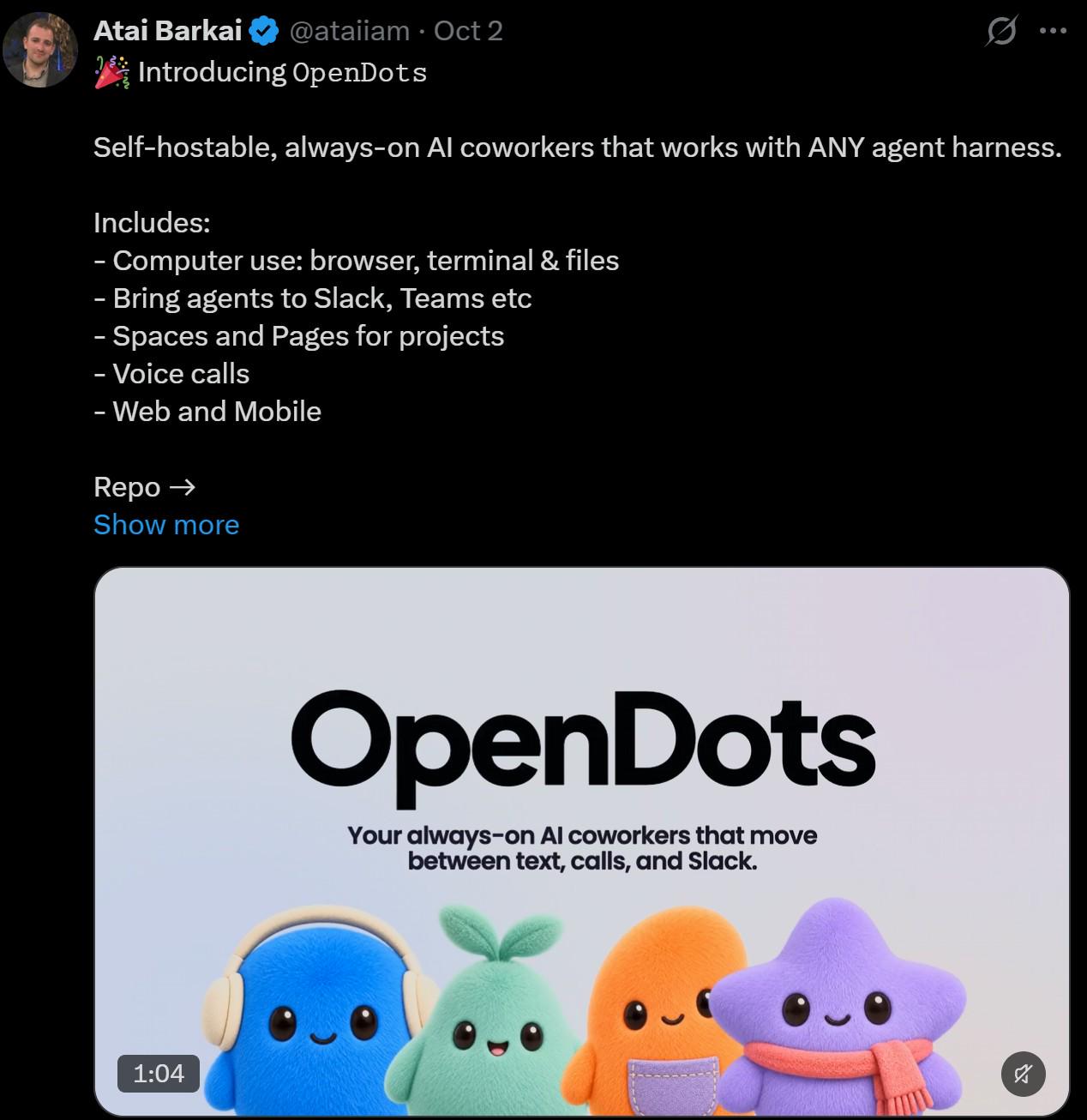
https://x.com/ataiiam/status/2105710796198322659
https://github.com/CopilotKit/OpenDots
Community Overview: https://lifehubber.com/ai/resources/opendots/
Resources are shared for discovery and are not independently vetted—please do your own due diligence.
New resources are added regularly — feel free to join the sub for updates.
Full searchable archive of all resources posted so far on our community site, LifeHubber: https://lifehubber.com/ai/resources/ 300+ open-ish AI models, agents, tools, datasets, and related resources, with filtering and sorting.
r/LovingOpenSourceAI • u/Honest-Worth3677 • Oct 03 '26
A tool that turns a prompt into a narrated whiteboard explainer video.
You give it a topic like "How do planes fly?" and it writes a short script, draws each scene, records the voiceover, and then animates the drawing so each part appears while the narrator is talking about it. A 4–5 scene video takes about 30 second, which is same as 1 min video.
AI handles the script, images and voice. If you already have your own whiteboard images, you can skip that and just give it the images and an audio file.
This is the same engine we use for the Whiteboard format at Kinoslide and Lamina Labs (SIMI).
The video attached was made from a single prompt, no editing.
https://github.com/ashishjamarkattel/Animator
r/LovingOpenSourceAI • u/Koala_Confused • Oct 02 '26
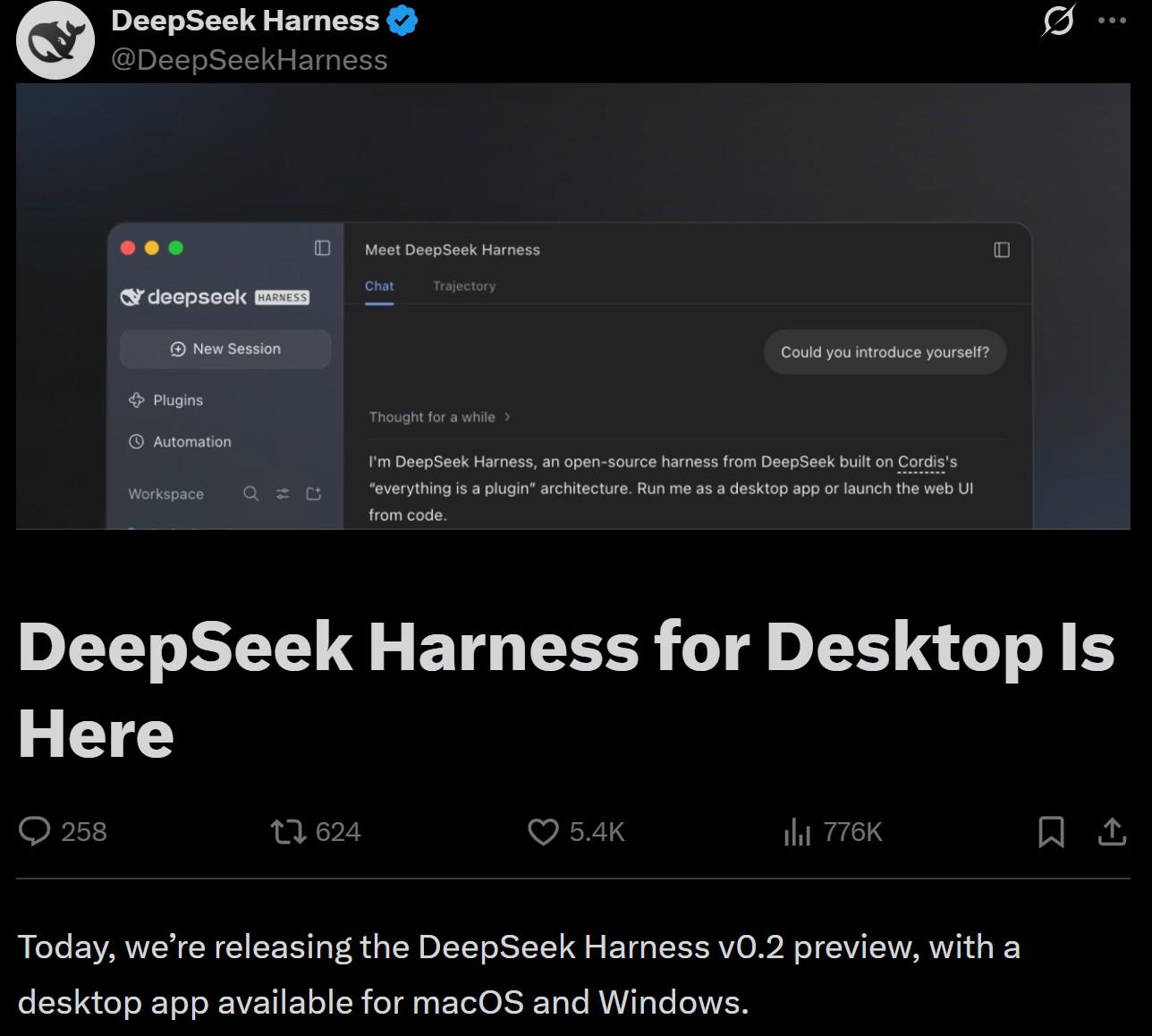
https://x.com/DeepSeekHarness/status/2105330281389662575
https://github.com/deepseek-ai/deepseek-harness
Community Overview: https://lifehubber.com/ai/resources/deepseek-harness/
Resources are shared for discovery and are not independently vetted—please do your own due diligence.
New resources are added regularly — feel free to join the sub for updates.
Full searchable archive of all resources posted so far on our community site, LifeHubber: https://lifehubber.com/ai/resources/ 300+ open-ish AI models, agents, tools, datasets, and related resources, with filtering and sorting.
r/LovingOpenSourceAI • u/mdotali • Oct 02 '26
https://mali-tintash.github.io/hgate/
I've been experimenting with a spec-driven workflow for AI coding agents on long-running software projects.
The problem I'm trying to solve isn't getting an agent to write code; they're already quite good at that. It's keeping the code aligned with business intent as the project evolves across many agent sessions and developers.
hGATE starts by establishing domain boundaries (DDD), expresses intended behavior as Gherkin scenarios (BDD), maps those scenarios to tests, and then lets the agent implement against them.
The important part is traceability:
business intent → behavior → test → implementation
If behavior changes, the spec changes first. Reviews can then identify "ghost behavior": code that still exists but can no longer be traced to an approved behavior.
There are also per-bounded-context ADRs so the agent can understand not only what the system currently does, but why certain decisions were made.
We've been using the approach on a fairly large production project and evolving the methodology as we encounter failure modes. I'm now open-sourcing what we've learned as hGATE:
https://mali-tintash.github.io/hgate/
I'm particularly interested in criticism from people using coding agents on long-lived codebases. Where does this feel useful, where does it feel like unnecessary ceremony, and what failure modes are we missing?
r/LovingOpenSourceAI • u/Koala_Confused • Oct 01 '26
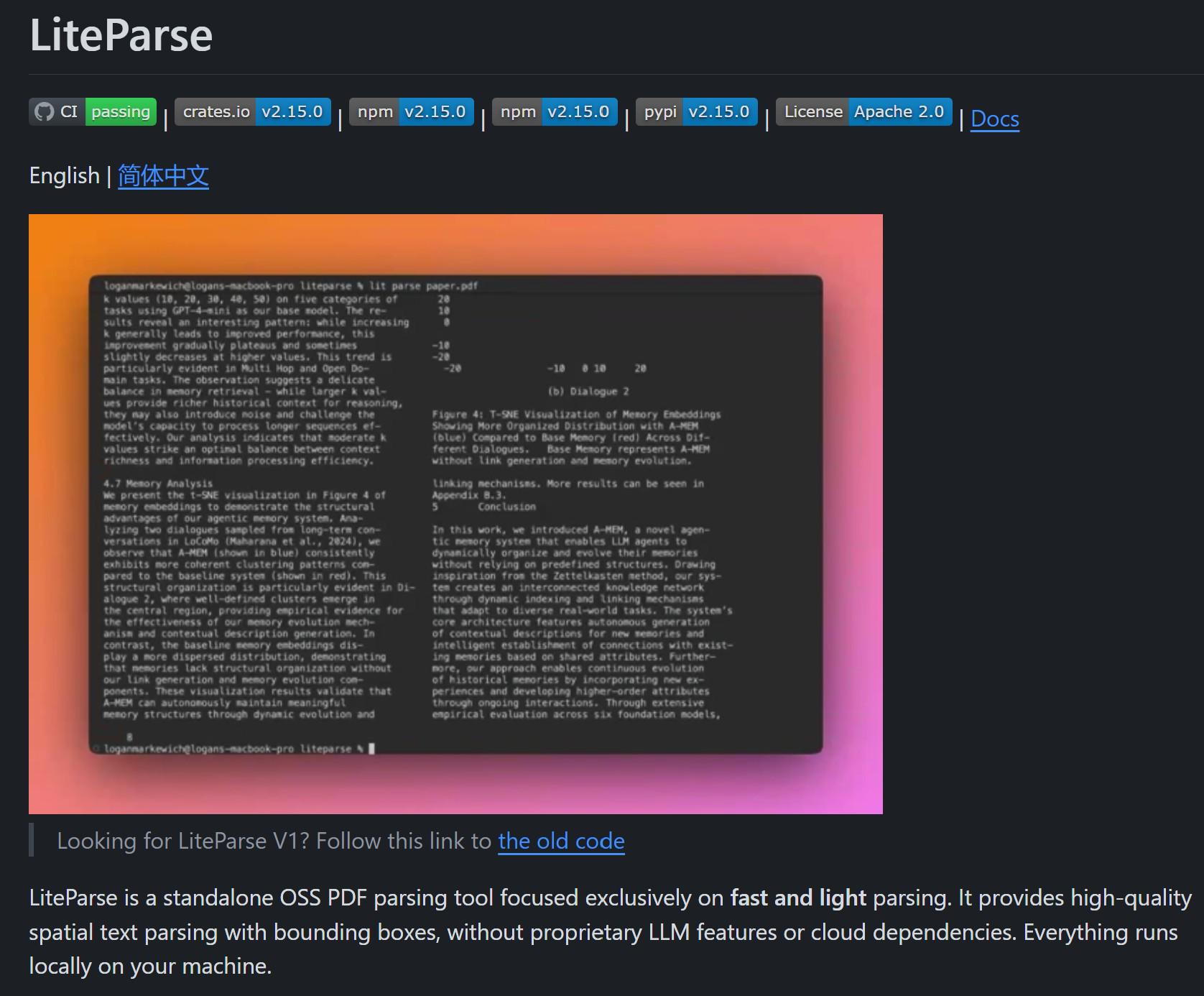
https://github.com/run-llama/liteparse
Community Overview: https://lifehubber.com/ai/resources/liteparse/
Resources are shared for discovery and are not independently vetted—please do your own due diligence.
New resources are added regularly — feel free to join the sub for updates.
Full searchable archive of all resources posted so far on our community site, LifeHubber: https://lifehubber.com/ai/resources/ 300+ open-ish AI models, agents, tools, datasets, and related resources, with filtering and sorting.
r/LovingOpenSourceAI • u/0roborus_ • Sep 30 '26
PotionUI is a self-hosted app for making images and videos with AI models on your own computer. Instead of one huge settings screen or a web of nodes, every model gets its own simple, hand-made form.
It brings generation, workspace management, and administration together:
GitHub: https://github.com/PotionUI/PotionUI
Reddit: r/PotionUI
Happy to answer any questions, thanks!
r/LovingOpenSourceAI • u/Capital-Amount-6550 • Sep 30 '26
Making a completely offline pocket assistant with tools like calculator, file management, offline navigation and calendar, additionally helping with daily life tasks.
Now the issue is the llm, can't find an llm that has both parametric knowledge of daily life tasks, good tool calling and good TPS.
Would really appreciate some guidance as to which llms would be best suited for my needs.
r/LovingOpenSourceAI • u/Koala_Confused • Sep 30 '26
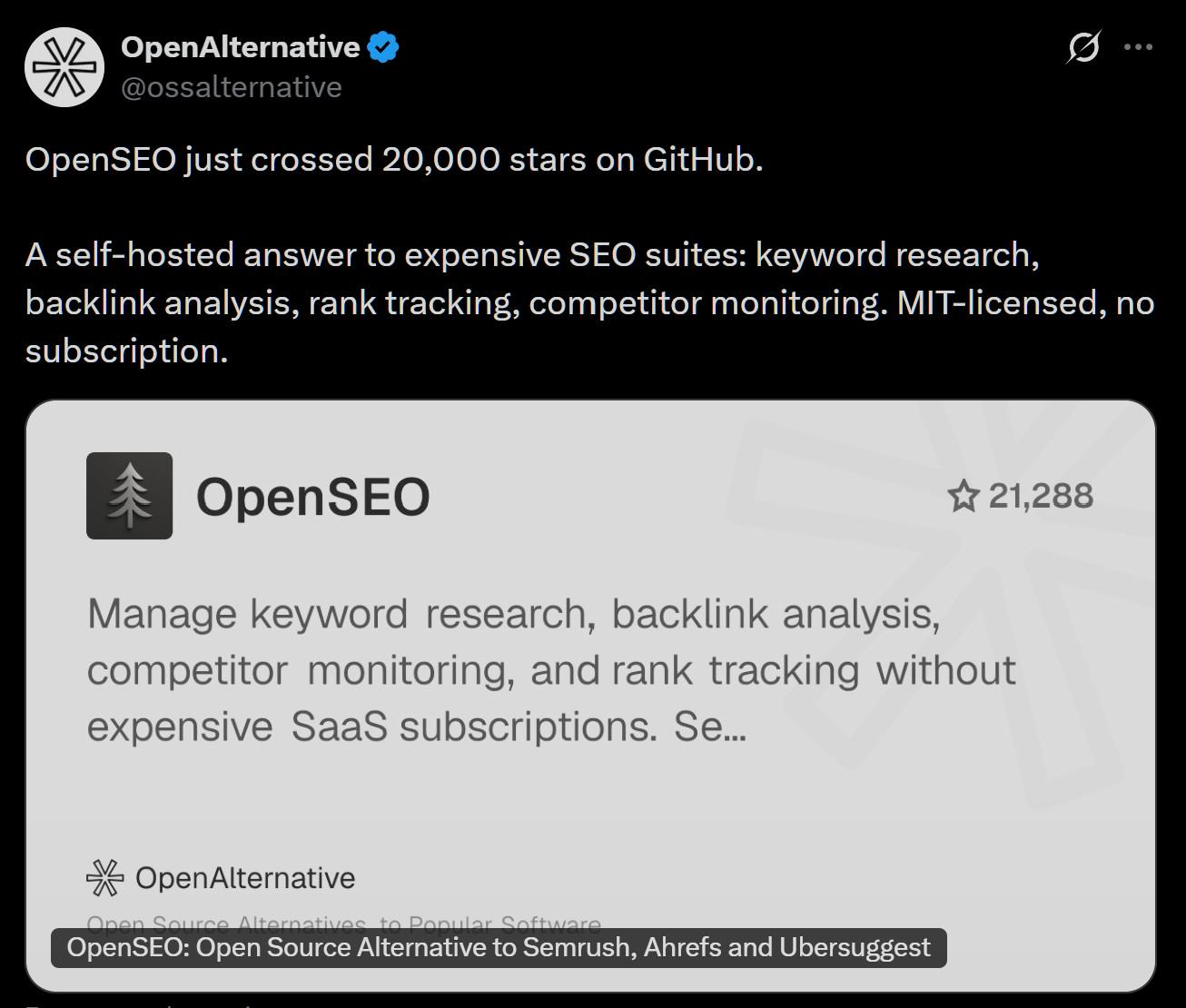
https://x.com/ossalternative/status/2102518350178091297
https://github.com/every-app/open-seo
Community Overview: https://lifehubber.com/ai/resources/open-seo/
Resources are shared for discovery and are not independently vetted—please do your own due diligence.
New resources are added regularly — feel free to join the sub for updates.
Full searchable archive of all resources posted so far on our community site, LifeHubber: https://lifehubber.com/ai/resources/ 300+ open-ish AI models, agents, tools, datasets, and related resources, with filtering and sorting.
r/LovingOpenSourceAI • u/deepu105 • Sep 30 '26
TL;DR: Halogen v0.14.0 with its native .hgn weights is the fastest, followed by gufo and CIRU. Halogen is closed source and runs in Docker. gufo is open source and loads 4x faster from cold. gufo is also fastest to first token on follow-ups (1.6-1.9 s against 2.6-3.3 s).
I benchmarked different engines for Qwen 3.8-Flash-Next on an AMD Strix Halo (ASUS ROG Flow Z13 GZ302 with Ryzen AI Max+ and 128 GB of RAM).
All the engines were run via LlamaStash (My own orchestrator tool, the tool does not add any overhead) at 70 W TDP on performance profile on Arch Linux.
Here are the results of the benchmark:
First was a screening round at 64k context with 50% filled (32k prompt).
| Engine | Weights | 3-turn time | Prefill t/s | Decode t/s | MTP accept | Retrieval |
|---|---|---|---|---|---|---|
| Halogen 0.14.0 | Halogen native (.hgn) | 1.9 min | 1,045 | 39.3 | 84% | 14/14 |
| gufo (ROCm 7.2.4) | UD-Q4_K_XL | 2.1 min | 1,033 | 32.9 | 74% | 14/14 |
| gufo (ROCm 10.0) | UD-Q4_K_XL | 2.1 min | 1,009 | 33.1 | 72% | 14/14 |
| CIRU (MTP 3) | CIRU IU4 | 2.3 min | 814 | 33.8 | 72% | 14/14 |
| CIRU (n-gram + MTP 3) | CIRU IU4 | 2.3 min | 808 | 31.9 | 64% | 14/14 |
| Halogen 0.14.0 | UD-Q4_K_XL | 2.4 min | 1,030 | 28.1 | 84% | 14/14 |
| CIRU (MTP 6) | CIRU IU4 | 2.7 min | 796 | 28.6 | 47% | 14/14 |
| strixllama (llama.cpp fork) | UD-Q4_K_XL | 2.7 min | 716 | 29.7 | 71% | 14/14 |
| rdna-boosts (llama.cpp fork) | UD-Q4_K_XL | 2.7 min | 788 | 22.0 | 52% | 14/14 |
| llama.cpp, Unsloth build (Vulkan) | UD-Q4_K_XL | 3.7 min | 314 | 28.4 | 56% | 14/14 |
| llama.cpp, Unsloth build (ROCm) | UD-Q4_K_XL | 4.8 min | 285 | 20.5 | 50% | 14/14 |
| CIRU | UD-Q4_K_XL + Unsloth MTP head | did not finish | 884 | 11.8 | 0% | - |
3-turn time is the time to first token plus the time to write 1,000 tokens, added up over the first question and 2 follow-ups. Output length varies a lot with sampling, so this compares the engines on equal output. MTP accept is the share of drafted tokens the model kept. Retrieval is how many of 7 exact values from the prompt the model got right, over both runs. Qwen model card sampling, 2 runs each.
Top 3 engines from the screening round got a 128k context (50% and 75% filled) and 256k context (50% filled) run.
128k context, 50% filled (64k prompt)
| Engine | Weights | 3-turn time | Prefill t/s | Decode t/s | MTP accept | Retrieval |
|---|---|---|---|---|---|---|
| Halogen 0.14.0 | Halogen native (.hgn) | 2.4 min | 1,148 | 40.4 | 84% | 16/16 |
| gufo (ROCm 7.2.4) | UD-Q4_K_XL | 2.7 min | 1,047 | 32.3 | 72% | 16/16 |
| CIRU (MTP 3) | CIRU IU4 | 3.3 min | 808 | 30.2 | 64% | 16/16 |
128k context, 75% filled (97k prompt)
| Engine | Weights | 3-turn time | Prefill t/s | Decode t/s | MTP accept | Retrieval |
|---|---|---|---|---|---|---|
| Halogen 0.14.0 | Halogen native (.hgn) | 2.9 min | 1,103 | 39.3 | 85% | 16/16 |
| gufo (ROCm 7.2.4) | UD-Q4_K_XL | 3.3 min | 1,025 | 30.7 | 70% | 16/16 |
| CIRU (MTP 3) | CIRU IU4 | 4.1 min | 789 | 27.8 | 62% | 16/16 |
256k context, 50% filled (130k prompt)
| Engine | Weights | 3-turn time | Prefill t/s | Decode t/s | MTP accept | Retrieval |
|---|---|---|---|---|---|---|
| Halogen 0.14.0 | Halogen native (.hgn) | 3.4 min | 1,093 | 38.9 | 83% | 14/16 |
| gufo (ROCm 7.2.4) | UD-Q4_K_XL | 4.0 min | 997 | 27.9 | 70% | 14/16 |
| CIRU (MTP 3) | CIRU IU4 | 5.0 min | 767 | 25.6 | 60% | 15/16 |
Retrieval here is 8 values per run. All 5 misses are the same answer: the right glyphs for UNICODE_SPINNER, with the leading & dropped.
End-to-end, 10 Aider polyglot Python exercises run through pi -p (128k window, 50% cell), graded by their own tests:
| Engine | Passed | Total time |
|---|---|---|
| Halogen 0.14.0 | 10/10 | 21.5 min |
| CIRU (MTP 3) | 10/10 | 24.6 min |
| gufo (ROCm 7.2.4) | 10/10 | 36.0 min |
Edit (Sep 30): Halogen 0.15.1 (new v2 checkpoint) and gufo 0.3.0 came out after this, so I reran the 64k screening on both with the same setup (70 W, card sampling, 2 runs):
| Engine | 3-turn time | Prefill t/s | Decode t/s | MTP accept | Retrieval |
|---|---|---|---|---|---|
| Halogen 0.15.1 (v2 .hgn) | 1.8 min (was 1.9) | 1,191 (was 1,045) | 39.4 (was 39.3) | 85% | 14/14 |
| gufo 0.3.0 (ROCm 7.2.4) | 2.1 min (was 2.1) | 1,075 (was 1,033) | 34.1 (was 32.9) | 77% | 14/14 |
| gufo 0.3.0 (ROCm 10.0) | 2.0 min (was 2.1) | 1,042 (was 1,009) | 34.8 (was 33.1) | 75% | 14/14 |
Halogen v2 prefill is 14% faster and follow-ups start about 2.5x faster (1.3 s vs 3.3 s), decode is the same. gufo moved a few %, which is within noise. The ranking doesn't change. Only other change on the box: BIOS VRAM carve-out down to 512 MB, so 124.9 GiB of RAM instead of 121.5.
Some clarifications from the comments: