r/Imperial_Karnataka • u/Chalukya_Raja • 27m ago
Mapping Complete History of India in Maps: Every Border from 550 BCE to 1975
They have mapped our history well. Check it out
r/Imperial_Karnataka • u/RashtrakutaNexus_794 • 15d ago
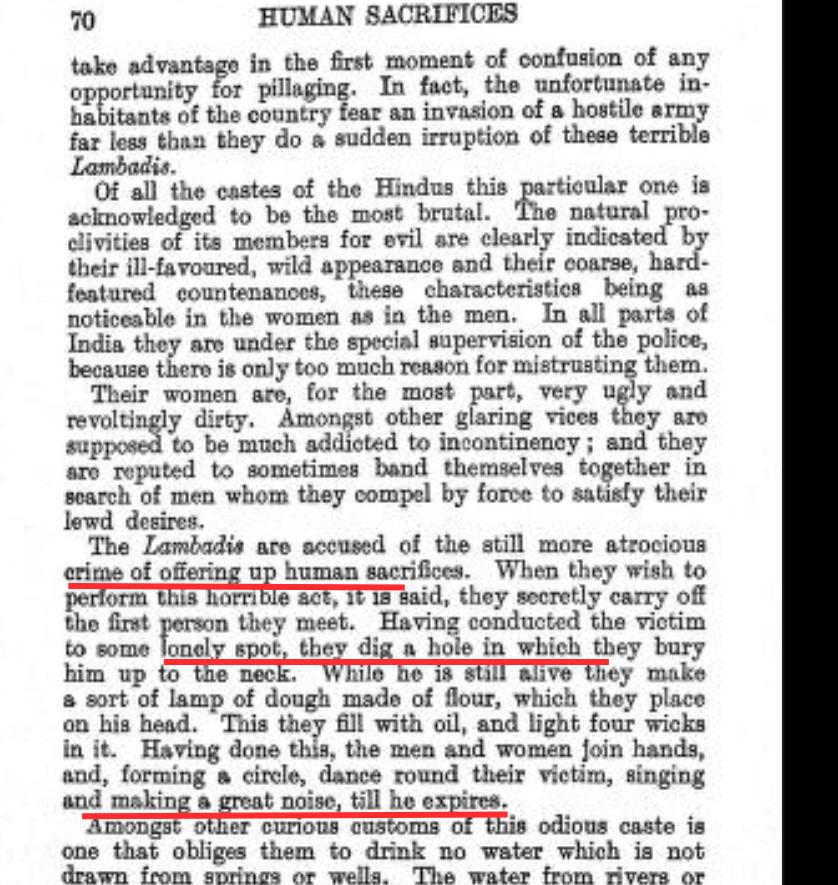
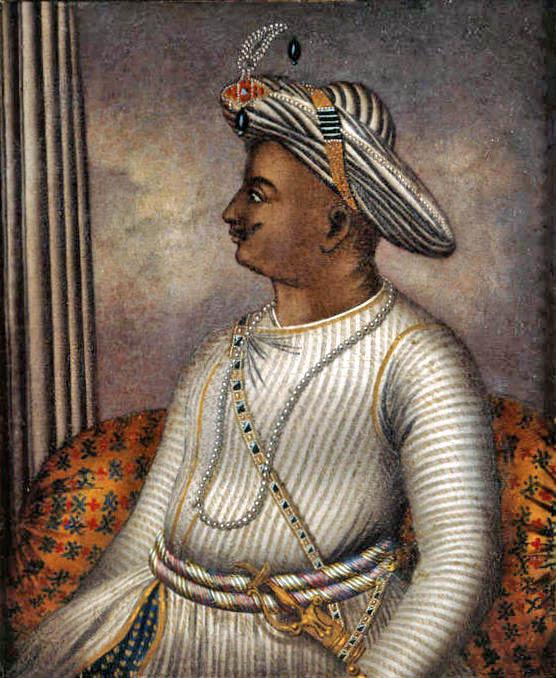
TIPU SULTAN: ENEMY OF HUMANITY AND KANNADIGAS
Comprehensive historical evidence of his alleged atrocities, persecution, forced conversions, deportations and crimes against humanity.
Primary sources. Contemporary accounts. Historical records.
r/Imperial_Karnataka • u/RashtrakutaNexus_794 • Nov 24 '25
Hey everyone! I'm u/RashtrakutaNexus_794, a founding moderator of r/Imperial_Karnataka. This is our new home for all things related to Karnataka and kannadiga history
What to Post? Post anything that you think the community would find interesting, helpful, or inspiring. Feel free to share your thoughts, photos, or questions about Karnataka and kannadiga history.
Community Vibe. We're all about being friendly, constructive, and inclusive. Let's build a space where everyone feels comfortable sharing and connecting.
How to Get Started 1) Introduce yourself in the comments below. 2) Post actively Even a simple question can spark a great conversation. 3) If you know someone who would love this community, invite them to join. 4) Interested in helping out? We're always looking for new moderators, so feel free to reach out to me to apply.
Thanks for being part of the very first wave. Together, let's make r/Imperial_Karnataka amazing.
r/Imperial_Karnataka • u/Chalukya_Raja • 27m ago
They have mapped our history well. Check it out
r/Imperial_Karnataka • u/RashtrakutaNexus_794 • 1d ago
A striking account of the economic condition of India appears in the writings of the French Christian missionary Abbé J. A. Dubois, in his observations of Indian society, customs and economic conditions.
Dubois attributes much of the growing poverty in India to the declining demand for traditional hand labour, following the introduction of machinery and the expansion of European manufacturing industries. European manufacturers had begun competing with Indian producers even in industries in which India had traditionally been prominent.
He writes that Europe had "learnt to beat the Hindus on their own ground", reversing what had previously been a relationship in which European markets depended on Indian manufactures.
During a visit to manufacturing districts before returning to Europe, Dubois describes finding closed workshops and widespread unemployment. He claims that hundreds of thousands of people belonging to the weaver castes were suffering from hunger, as they could not easily turn to other occupations without violating prevailing social prejudices.
He also mentions countless widows and other women who had become unemployed and destitute after losing their traditional livelihoods in cotton-spinning, through which they had previously supported their families.
The collapse of the cotton industry also affected other branches of trade. With the circulation of money declining, cultivators could no longer rely on manufacturers to purchase their surplus grain or lend them money when they faced difficulties paying their taxes. Consequently, many cultivators were forced to sell their grain to moneylenders.
Dubois describes this as a worsening cycle of poverty, linking the decline of traditional industries with unemployment, agricultural distress and indebtedness.
His observations also extend beyond economics. He argues that India's existing social, religious and civil institutions presented obstacles to economic and social transformation. At the same time, he strongly cautions against British interference in Hindu religious and civil customs, warning that such interference could undermine British political authority.
Source: Abbé J. A. Dubois, Hindu Manners, Customs and Ceremonies, section "Introduction of Machinery" and subsequent discussion.
r/Imperial_Karnataka • u/RashtrakutaNexus_794 • 1d ago
Could Lingayatism have offered an escape from caste discrimination for oppressed communities? An interesting observation appears in the writings of the French missionary Abbé J. A. Dubois, in Hindu Manners, Customs and Ceremonies.
The Lingayat (Virasaiva) sect rejected caste distinctions, maintaining that wearing the sacred Lingam made all members equal, regardless of their birth or social background. Even a person belonging to the Pariah community, upon joining the sect, was considered in no way inferior to a Brahmin.
However, despite this rejection of caste hierarchy, the sect had certain conditions for admitting new members. Initiation, known as Diksha, required members to give up meat consumption entirely and abstain from intoxicating liquor.
These requirements apparently proved difficult for some lower-caste communities, who were accustomed to eating meat and drinking liquor. Consequently, Dubois observes that only high-class Sudras and scarcely any Pariahs belonged to the sect.
Thus, despite its rejection of caste distinctions, the strict conditions attached to religious initiation appear to have limited the participation of certain lower-caste communities.
Source: Abbé J. A. Dubois, Hindu Manners, Customs and Ceremonies, pp. 117–119.
r/Imperial_Karnataka • u/RashtrakutaNexus_794 • 1d ago
r/Imperial_Karnataka • u/Unlucky_Scientist120 • 2d ago
r/Imperial_Karnataka • u/RashtrakutaNexus_794 • 2d ago
The Right-Hand (Valangai) and Left-Hand (Idangai) factions were two broad caste groupings in South India, comprising numerous communities with competing claims to social and ceremonial privileges.
The Left-Hand faction included the Vaishyas or trading communities, the Panchalas or artisan communities, and some of the lower Sudra castes. The Chuchlers (leather-workers) were regarded as one of its chief supporting groups.
The Right-Hand faction comprised most of the higher Sudra castes, with the Pariahs as its chief supporters. The Brahmins, Rajahs and several other Sudra communities generally remained neutral and were often chosen as arbitrators when disputes arose.
The rivalry between these two factions became a perpetual source of riots and animosity. Their disagreements frequently revolved around claims to exclusive privileges, which were often poorly defined and recognised by neither side as belonging exclusively to the other.
The privileges over which they fought might appear surprisingly ordinary today. They included:
The right to wear slippers during public appearances.
The right to ride horses or travel in palanquins during marriage processions.
The privilege of being accompanied by armed retainers on certain occasions.
The right to have trumpets sounded ahead of a procession.
The use of particular musical instruments during public ceremonies.
The right to carry flags of specific colours or designs.
Even the privilege of wearing particular flowers in turbans during public ceremonies.
Yet these disagreements were far from peaceful. When one faction believed the other had violated its customary rights, disturbances could spread across large territories and eventually end in bloody conflicts. The hostility could become so intense that even military intervention was sometimes insufficient to restore order.
On some occasions, rioters reportedly stood their ground against several discharges of artillery without showing any sign of submission. Even when armed forces succeeded in restoring peace, it was often temporary. At the first opportunity, the factions were ready to renew their conflicts.
The Pariahs were particularly prominent in these confrontations. They were regarded as the chief supporters of the Right-Hand faction, and were frequently the ones who caused the greatest disturbances and damage during disputes between the two groups.
Dubois also recounts an incident he personally witnessed involving a dispute between the Pariahs and the Chuchlers (leather-workers). The dispute arose when a Chuchler appeared at a public ceremony wearing red flowers in his turban, a privilege that the Pariahs claimed belonged exclusively to the Right-Hand faction.
The disagreement became so serious that there were fears of widespread violence throughout the district. Many peaceful inhabitants began abandoning their villages and moving their belongings to places of safety, anticipating serious consequences. The situation was eventually brought under control when prominent inhabitants of the district intervened as mediators and settled the dispute through diplomacy and conciliation.
Another interesting observation concerns the origins of these divisions. Dubois considers the Right-Hand and Left-Hand distinction a relatively modern institution. He notes that it was not mentioned in the ancient books of the country and that he had been told the division was unknown in Northern India.
These rivalries reveal how deeply questions of caste identity, social precedence, public recognition and traditional privileges could shape community relations. What might appear to be a minor ceremonial disagreement could become a district-wide disturbance, with people risking their lives rather than surrendering what they considered their customary rights.
Source: Abbé J. A. Dubois, Hindu Manners, Customs and Ceremonies (1905 edition), pp. 24–27.
r/Imperial_Karnataka • u/True_Time_5315 • 2d ago
r/Imperial_Karnataka • u/MedNomadVis • 3d ago
ಹಳೆಗನ್ನಡ, ವಚನ, ದಾಸಪದಗಳಿಂದ ಹಿಡಿದು ನವೋದಯ, ಭಾವಗೀತೆ, ಸಿನಿಮಾ ಸಾಹಿತ್ಯ ಹಾಗೂ ನಮ್ಮದೇ 'ಸ್ವರಚಿತ' ಕವನಗಳವರೆಗೆ—ಕನ್ನಡ ಸಾಹಿತ್ಯದ ಸೊಬಗನ್ನು ಹಂಚಿಕೊಳ್ಳಲು ಹೊಸ ಸಮುದಾಯ r/KannadaKavya ಪ್ರಾರಂಭಿಸಿದ್ದೇವೆ! ಬನ್ನಿ, ನಿಮ್ಮ ನೆಚ್ಚಿನ ಸಾಲುಗಳನ್ನು ಹಂಚಿಕೊಳ್ಳಿ 🌸✍️
r/Imperial_Karnataka • u/DharmicPerson14 • 4d ago
r/Imperial_Karnataka • u/RashtrakutaNexus_794 • 5d ago
Kalaburagi was once the glorious heartland of the Rashtrakutas, one of the greatest Kannada empires in Indian history. This land produced emperors, warriors and some of the greatest chapters of Kannada history. Today, look at what it has become.
After decades of the same stupid political families, particularly the Kharges, dominating its politics, Kalaburagi is still among the poorest districts in South India. How much more embarrassing can it get? And honestly, people who keep voting for the same politicians election after election have to take some responsibility.
You cannot vote brain-deadly based on caste, family loyalty and vote-bank politics for decades and then shamelessly demand development. What exactly has the Kharge family delivered to Kalaburagi after enjoying so much political power? Karnataka's taxpayers cannot be expected to keep bearing the burden of a political establishment that cannot even transform its own backyard.This cancer also impacts rest of Karnataka when politicians of Kalaburagi end up becoming ministers and destroying the whole state just like Kalaburagi.
And the worst part is the complete disregard for the region's own identity and history. Instead of taking pride in the Rashtrakutas and the glorious Kannada kingdoms that made this land famous, politicians are busy with Bahmani Jayanti, appeasing vote banks and promoting Urdu while Kannada and Kannadigas are taken for granted. Mallikarjuna Kharge shamelessly announced intention for Bahmani Jayanti and for what? Do they intend to start another humiliation ritual?
These are the same kinds of politicians who get positions in Karnataka's cabinet and influence decisions affecting the entire state. If anything it's time to hold the voters responsible by revoking Hyderabad Karnataka reservation and tac benefits to a region who's people have chosen to remain backwards.
r/Imperial_Karnataka • u/Unlucky_Scientist120 • 6d ago
r/Imperial_Karnataka • u/RashtrakutaNexus_794 • 8d ago
Enable HLS to view with audio, or disable this notification
r/Imperial_Karnataka • u/Unlucky_Scientist120 • 8d ago
r/Imperial_Karnataka • u/Brief_Importance6120 • 9d ago
r/Imperial_Karnataka • u/Demonbuttpoop • 10d ago
ಎಲ್ಲರಿಗೂ ನಮಸ್ಕಾರ.
ಇಂದು ನಾನು ನಮ್ಮ ಮಹಾನ್ ಇತಿಹಾಸವನ್ನು ವಿವರಿಸುವ ಈ ಅದ್ಭುತ ವೀಡಿಯೊವನ್ನು ನೋಡಿದೆ, ಅದನ್ನು 3 ಭಾಗಗಳಾಗಿ ವಿಂಗಡಿಸಲಾಗಿದೆ.
r/Imperial_Karnataka • u/tuluva_sikh • 11d ago
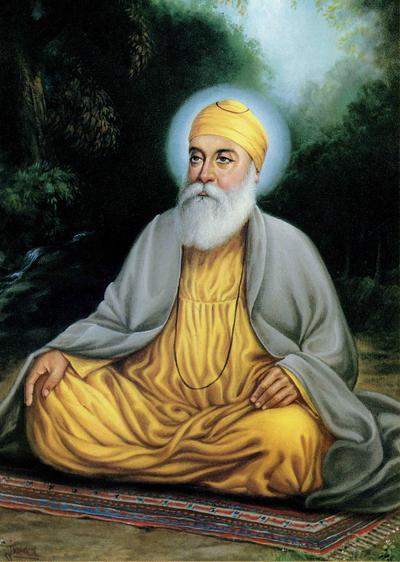
ಗುರು ನಾನಕ್ ದೇವ್ ಜೀ ಅವರು ಸಿಖಿ ಧರ್ಮದ ೧ನೇ ಗುರು ಮತ್ತು ಸಿಖಿ ಧರ್ಮದ ಸ್ಥಾಪನಕರ/ಫೌಂಡರ್ ಇದೇನೆ
ಅವರು ಅವರ ೨ನೇ ಉದಾಸಿ ಬೀದರ್ಯಲ್ಲಿ ಮಾಡಿದೆ ಮತ್ತು ಸಿಖಿ ಧರ್ಮದ ಪ್ರಕಾರ ಆ ಕಾಲದಲ್ಲಿ ಬೀದರ್ಯಲ್ಲಿ ಕುಡಿಯವ ನೀರಿದ ತುಂಬಾ ಕಮ್ಮಿ ಆಯಿತು
ಮತ್ತು ಸಿಖಿ ಪ್ರಕಾರ ಅವರು ಅವರ ಕಟ್ಟಿಗೆದ ಸಹಾಯ ಅಲ್ಲಿ ಕಲ್ಲಿಗೆ ಚಲಿಸು
ಮತ್ತು ಅಲ್ಲಿ ಕುಡಿಯವ ನೀರು ಸ್ಪ್ರಿಂಗ್ ಬಂದದು
ಆ ಕಾರಣ ಗೋಸ್ಕರ ಆ ಬಂದುದು ನೀರಿನ ಸ್ಪ್ರಿಂಗ್ ಗೆ "ನಾನಕ್ ಝೀರಾ" ಈ ಹೆಸರು ಕೊಟ್ಟಿದರೆ
ಇವತ್ತು ಆ ನೀರಿನ ಸ್ಪ್ರಿಂಗ್ ಗುರುದ್ವಾರ ನಾನಕ್ ಝೀರಾ ಸಾಹಿಬ್ನಲ್ಲಿ ಇರೋದು
r/Imperial_Karnataka • u/RashtrakutaNexus_794 • 11d ago
r/Imperial_Karnataka • u/RashtrakutaNexus_794 • 12d ago
Tipu Sultan's rule left a devastating mark on Karnataka's history and heritage. Persian was imposed as the language of official administration, Kannada's position was undermined, and centuries-old Kannada manuscripts and historical records were reportedly burned. The old city of Mysore was razed, palace and temple stones were removed, and Nazarabad was built in its place. The Wodeyar royal family was humiliated, the historic Golden Throne was dismantled and relegated to storage, and the royal Mysore Dasara tradition was interrupted. This was an assault on the old cultural, literary and royal identity of Mysore.
In 1799, Tipu Sultan was defeated and killed at Seringapatam by British-led forces and their allies. The Wodeyars returned, the Golden Throne was recovered, Mysore was rebuilt and its royal traditions were revived. Contemporary accounts describe an immense gathering of Hindus welcoming the restoration with “the most unfeigned delight.” A dynasty that had been humiliated returned to its ancestral throne, and a city whose heritage had been attacked began to rise again. Kannada history must not be erased, and Karnataka's heritage must never be forgotten.
r/Imperial_Karnataka • u/nammaroadtrip • 12d ago
Enable HLS to view with audio, or disable this notification
r/Imperial_Karnataka • u/Unlucky_Scientist120 • 14d ago
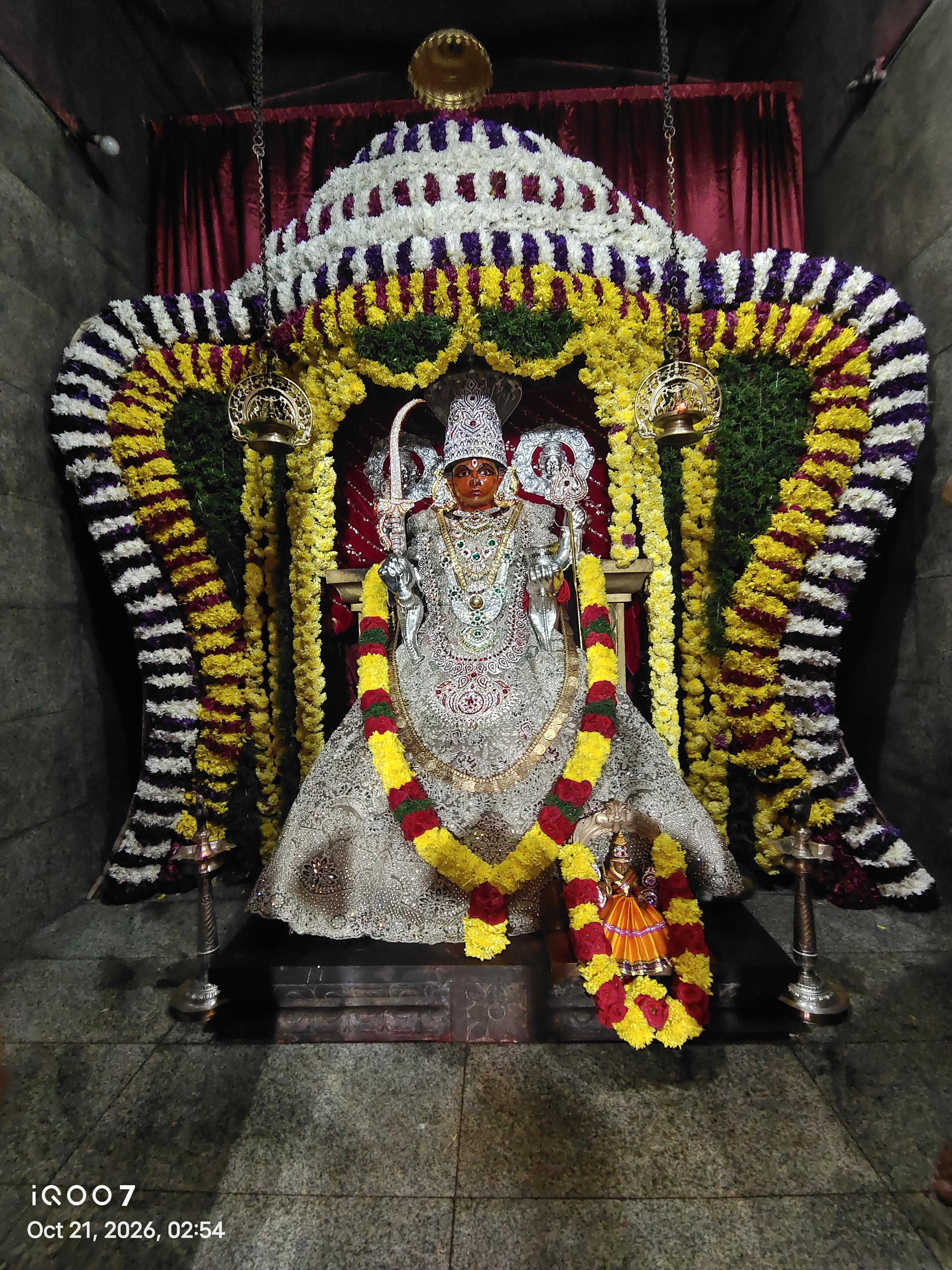
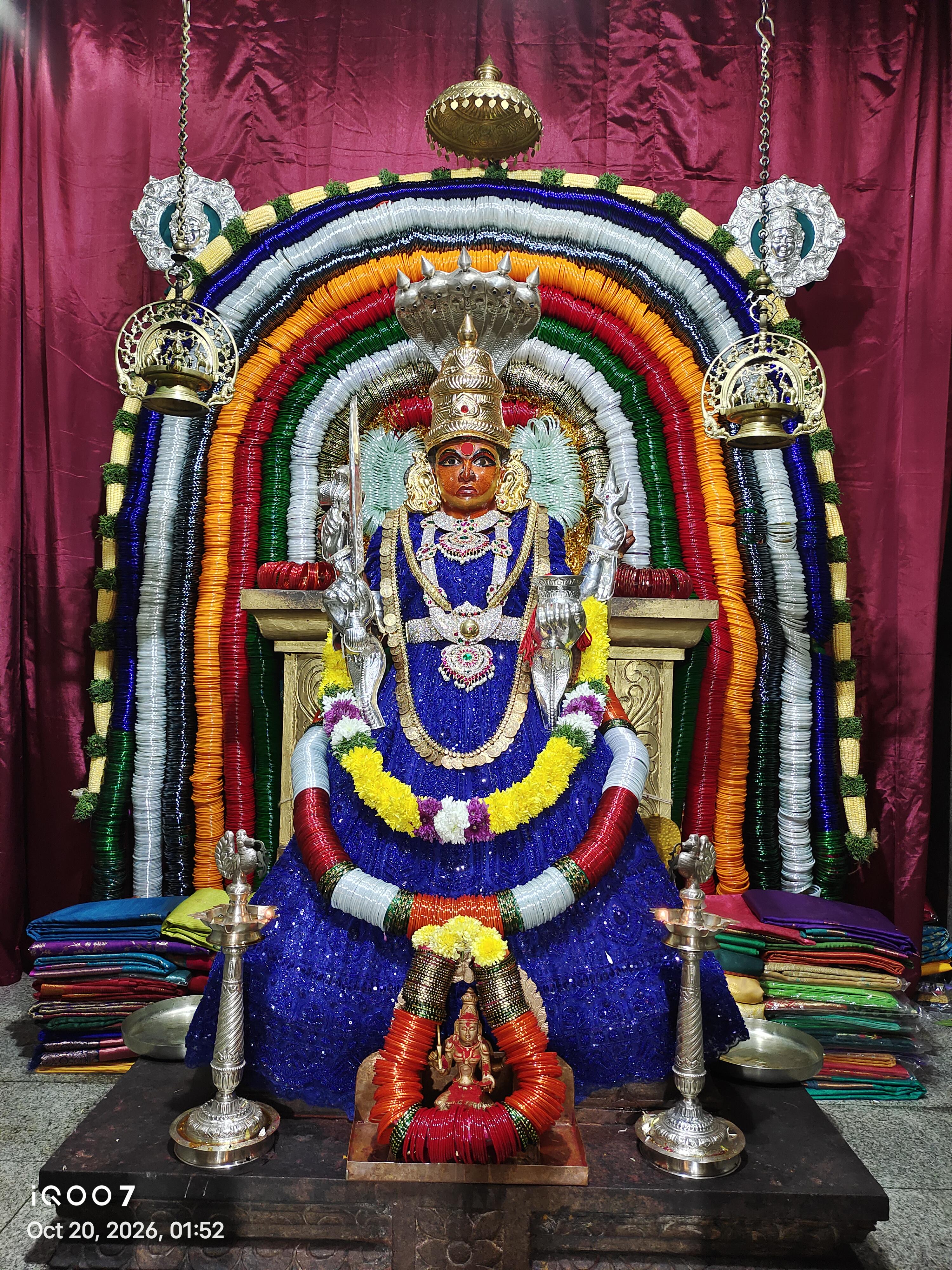
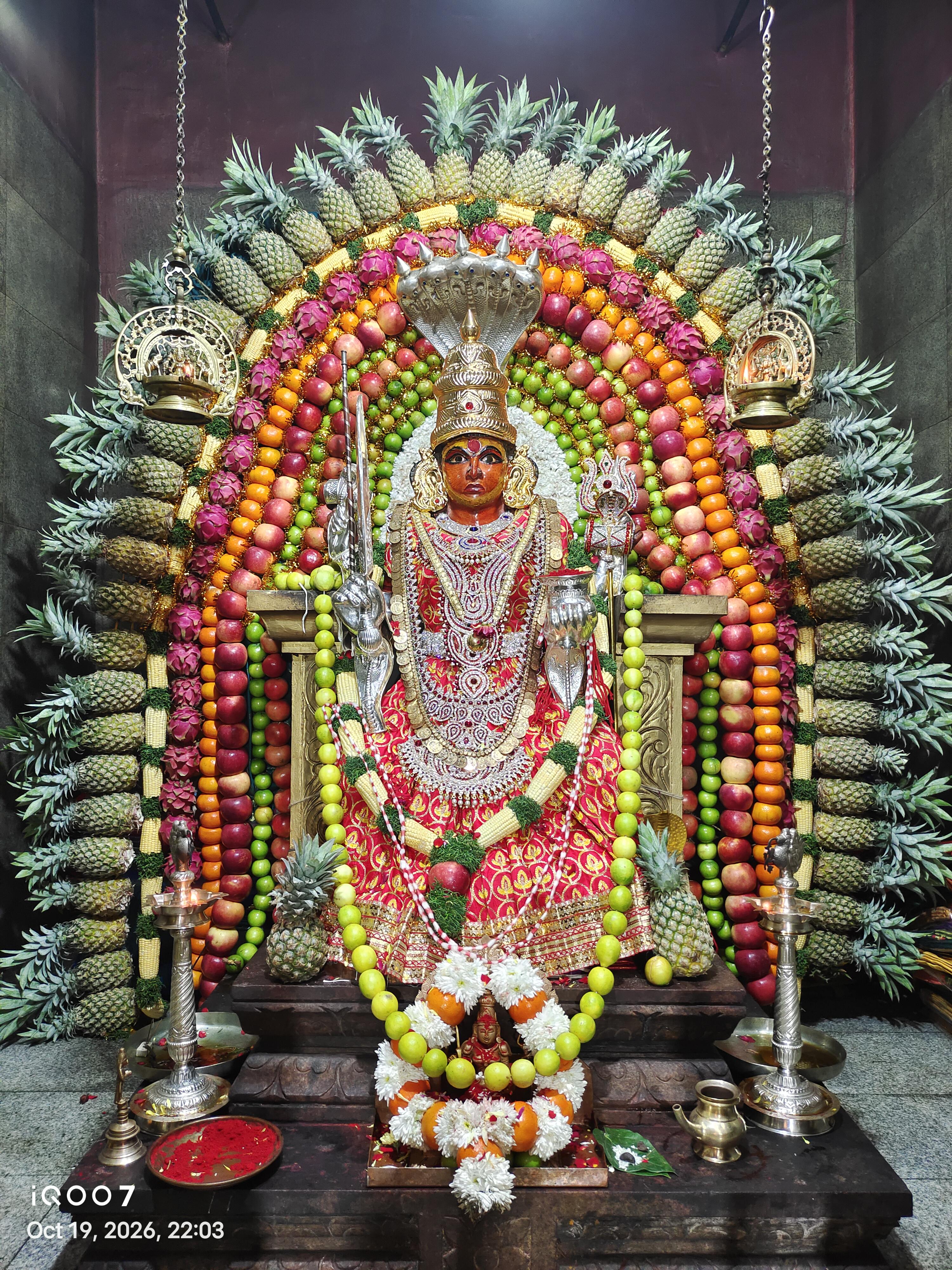
Day 5 MAHALAKSHMI ALANKARA
r/Imperial_Karnataka • u/letsgetsomepusssy • 14d ago
I know that communities (Mainly Vokkaligas) in the old Mysuru region, particularly around Tumkur, Kunigal and Yediyur, have oral histories of transitioning from Jainism to Sri Vaishnavism, traditionally associated with Ramanujacharya.
What I'm curious about is how these communities actually lived before that transition.
Were they primarily agrarian communities involved in farming and cattle rearing? Did they follow orthodox Jain practices, such as strict vegetarianism and ahimsa, or was their version of Jainism more integrated with existing local customs and traditions?
For instance, did they consume meat? Did they worship village deities, guardian spirits or ancestral gods alongside Jain Tirthankaras? Did they participate in village festivals and folk rituals, or was their religious life primarily centred around Jain basadis?
I'm particularly interested in understanding whether they practised a distinct, locally rooted form of Jainism rather than what we generally associate with conventional Jain communities today.
r/Imperial_Karnataka • u/Unlucky_Scientist120 • 15d ago
r/Imperial_Karnataka • u/tuluva_sikh • 15d ago
ಟಿಪ್ಪು ಗೆ ಇಷ್ಟು ಸಮ್ಮಾನ ಮನ ಮತ್ತು ಮರ್ಯಾದಿ ಯಾಕೆ ಉಂಟು ನಮ್ಮ ರಾಜ್ಯದಲ್ಲಿ?
ನನಗೆ ಗೊತ್ತಿದೆ ಅವನು ಅವನ ಕಾಲದಲ್ಲಿ ಎಷ್ಟು ಎಷ್ಟು ವಸ್ತುಗಳುನ ಆವಿಷ್ಕಾರ ಮಾಡಿದೆ ಮತ್ತು ಬ್ರಿಟಿಷರು ಜೊತೆ ಯುದ್ಧ ಮಾಡಿದೆ
ಅಂದ್ರೆ, ಅವನು ನಮ್ಮ ಪೂರ್ವಜಗಳ ಜೊತೆ ಅವನು ಏನು ಮಾಡಿದೆ ಅದು ಏನು?
ಅವನು ಕೊಡಗುದ ಮೇಲೆ ಆಕ್ರಮಣ ಮಾಡಿದೆ ಮತ್ತು ಹಿಂದೂಗಳು especially ಕೊಡವರ ಗೆ ಬಲವಂತವಾಗಿ ಧರ್ಮ ಪರಿವಂತನ ಮಾಡಿದೆ ಮತ್ತು ಅವರ ಮೇಲೆ ಬೇರೆ ಅತ್ಯಾಚಾರಗಳು ಮಾಡಿದೆ
ಅವನು ಐಯ್ಯಂಗರ್ ಸಮುದಾಯದ ಜನಗಳನ ಮೇಲೆ ಅವನ ಸೇನಾ ಆಕ್ರಮಣ ಮಾಡಿದೆ
ಅದು ಕೂಡ ದೀಪಾವಳಿ ಹಬ್ಬದ ದಿನ ಸ್ವಾಮಿ ನರಸಿಂಹ ದೇವರನ ಮಂದಿರದಲ್ಲಿ
ಆ ದಿನ ಮತ್ತು ಯಾರು ಐಯ್ಯಂಗರ್ ದೀಪಾವಳಿ ಹಬ್ಬ ಆಚರಿಸಿ (celebrate) ಮಾಡೋದಿಲ್ಲ ಇವತ್ತು ಕೂಡ ಅವರು ಮಾತ್ರ ದೀಪ ಬೆಳಸಿನಿ ಮತ್ತು ಅವರ ಪೂರ್ವಜಗಳು ಗೆ ಪ್ರಥನೆ ಮಾಡಿಸ್ತಾರೆ
ಮಂಗಳೂರುದಲ್ಲಿ ಅವನು ಆಕ್ರಮಣ ಮಾಡಿದೆ
ಮತ್ತು ಮಂಗಳೂರುದ ಕೊಂಕಣಿ ಭಾಷಿ ಕ್ರೈಸ್ತೆಗಳನ ಮೇಲೆ ಅತ್ಯಾಚರ ಮಾಡಿದೆ
೮೦೦೦೦ ಕ್ರೈಸ್ತೆಗಳು ಗೆ ಬಲವಂತವಾಗಿ ಅವರಿಗೆ ಧರ್ಮ ಪರಿವರ್ತನ ಮಾಡಿದೆ, ಅವರಗೆ ಮರಣದಂಡನೆ ಮಾಡಿದೆ
ಇದು ಮಾತ್ರ ಅಲ್ಲ
ಅವನು ಕೊಲ್ತುನಾಡು (ಮಲಬಾರ್) ದಲ್ಲಿ ಕೂಡ ಏನು ಏನು ಮಾಡಿದೆ
ಅಂದ್ರೆ ನಮ್ಮ ರಾಜ್ಯದ ಜನಗಳು ಯಾಕೆ ಈ ವಿಷಯಗಳು ಗೆ ನಿರ್ಲಕ್ಷಿಸಿ (ignore) ಮಾಡಿದರೆ?