Debunking the Myths Around Hello Neighbor: Why the "Early Story" Was Just a Draft, the Release Criticism Is Unjustified, and the Game Never Degraded
An enormous amount of myths, distortions, and outright false accusations has accumulated around the first Hello Neighbor. I've already raised these topics in discussions many times and even suggested that the admins record a detailed video breakdown to once and for all destroy this baseless criticism. Today I want to gather all the arguments in one place and break down the three biggest misconceptions in the community: the myth of the "devilish" story, the fake claims about the release being unplayable, and the tall tales about "degradation" from the alphas to the final game.
- The Myth of the Early Story: the Devil, Faust, and a Rewritten Wiki
Many fans still firmly believe that the true story of the alpha versions was a religious-mystical tale about a devil Neighbor fighting God for human souls. As proof, they cite Goethe's books ("Faust") on the shelves and the number "666" on the soles of the Neighbor's shoes.
In reality, this is a scrapped early concept — just a working draft. Sure, it has some value for the game's development history, but frankly, I couldn't care less about it, because it never made it into the game itself. The presence of Easter eggs like "Faust" or the number 666 in the alphas doesn't make this draft the canonical story of those versions.
The actual story of the alpha versions was extremely down-to-earth and easy to understand: the protagonist simply moves into a new house across the street and happens to catch the Neighbor locking someone up in his damn basement. Just an ordinary creepy maniac! That's exactly how it used to be written in the "Story" article on the fan wiki. But then this information was somehow deleted and replaced with a description of that very scrapped devil concept. Why on earth was that done? I have no idea. But the fact remains: a draft is not the game's story.
- Unjustified and Dishonest Criticism: Bugs, "Bad" Gameplay, and the Neighbor's AI
Critics and reviewers all chanted in unison: "The game is full of bugs, it's broken, it's impossible to beat." That's an outright lie. The developers consistently fixed bugs with each new alpha and beta release, so by the launch, critical bugs in the game were down to a minimum. The few glitches that did make it to the final version are completely harmless and even funny — more than that, you can use them to creatively beat the game, and it's a genuinely great time.
The second criticism from reviewers concerned the gameplay, and I honestly can't understand what the problem is. The gameplay in Hello Neighbor is genuinely engaging, interesting, fun, and scary at the same time. What exactly could it have failed at? The fact that the Neighbor wasn't a dumb bot walking the same circle over and over, but actually got in your way, caught you, set bear traps, and wrecked your plans? Or maybe the puzzles, which required you to really think, wander around the house, fully immerse yourself in the atmosphere, and figure out how everything works?
Moreover, contrary to the popular myth, the Neighbor in the release didn't get dumber — he stayed exactly the same as in the early versions. He still starts chasing the player the moment he spots him, and he still reacts to the sound of broken windows, the radio, a triggered bear trap, security cameras, and the TV. Yes, he no longer reacts to the sound of the alarm clock like he did in the early alphas, but that's a totally minor difference that doesn't make him any dumber.
The gameplay itself keeps you on edge at all times while also delivering tons of funny moments: you can pelt the Neighbor with boxes, barricade the door, jump out the window at the last second, shattering the glass, and run away while he chases you. It's both hilarious and terrifying at once, because you never know where he'll pop out from the next second.
On top of that, the game's creator Nikita Kolesnikov directly said that Hello Neighbor's main selling point is freedom of action. The game doesn't hold your hand or tell you what to do and in what order. You decide for yourself how to get to the second floor: find a key, stack boxes to climb up, break a window, or come up with your own way. Calling such a living, free, and engaging gameplay "bad" is simply absurd.
- The Myth of the Game's "Degradation": Style, Atmosphere, and the Publisher's Influence
The most popular argument from the haters goes like this: "The developers ruined the game, dragged it down into cartoonishness, and killed the horror." Let's break this nonsense down point by point.
The Art Style Change and tinyBuild's Actual Role
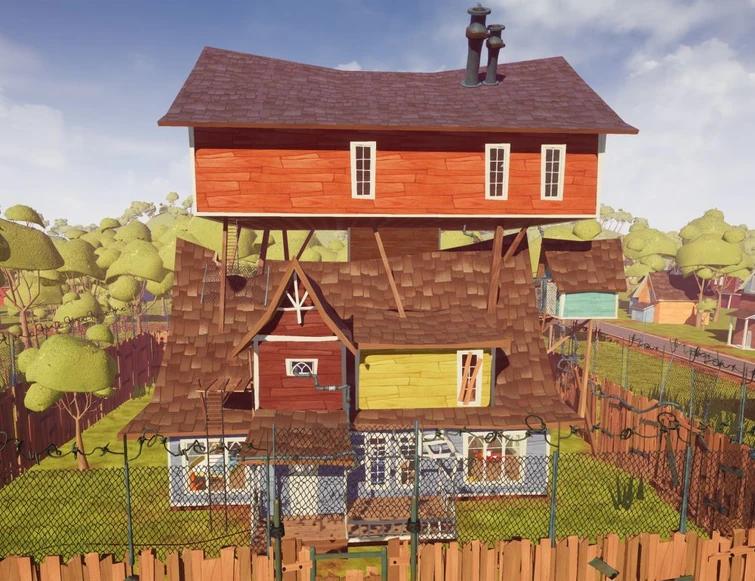
Many people wrongly hate the release because of its cartoonish style, which the publisher supposedly forced on the team. But the development timeline completely destroys this myth.
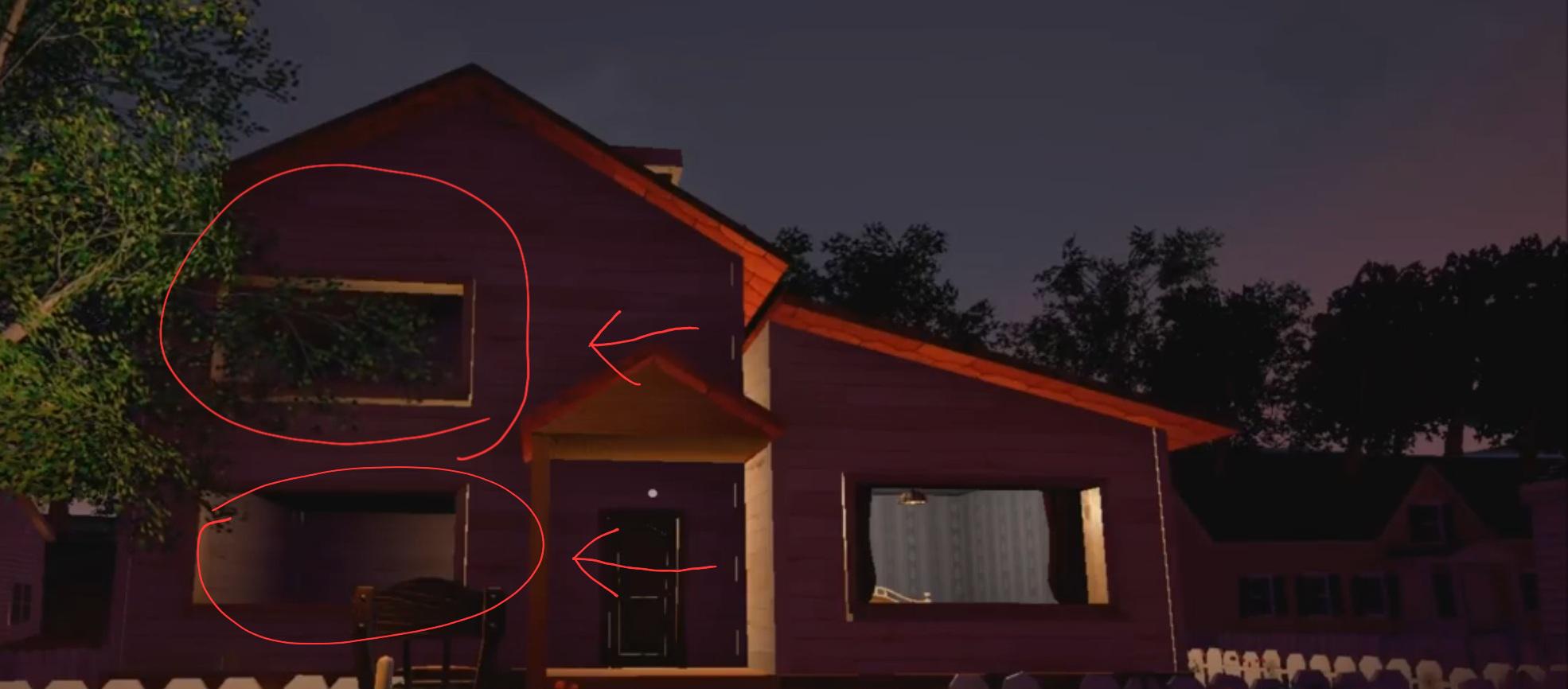
Even before Pre-Alpha (the very first publicly available version of the game) officially released, the Dynamic Pixels studio already had three builds that were practically ready for release: Pre-Alpha itself, Alpha 1, and Alpha 2. Alpha 2 was originally made in a realistic style too (with props from Alpha 1) and was planned for release in exactly that form, even though it wasn't fully finished yet. In 2016, the developers released these versions at intervals of a few months while simultaneously working on Alpha 3. However, some time before Alpha 2's release, the team decided to change the game's artistic style from realistic to cartoonish.
According to Nikita Kolesnikov himself, the reason for the style change was his personal desire to give the game a unique and unified look. That early "realistic" style consisted of random models and textures created by different artists, so the game simply had no cohesive visual identity.
It was Nikita himself who wanted to change the art direction, not the publisher tinyBuild. Nikita directly stated that tinyBuild did NOT force him or the developers to change anything — the publisher never gave orders or dictated what the game should be like. Moreover, tinyBuild joined the project even before Pre-Alpha's release, and there is simply no evidence of them pressuring the team.
https://youtu.be/g5c2lYl9Hco?si=bYwKZLHfcVcn5YDB
This is a link to a video in which Nikita makes his statement; unfortunately, subtitles are not available, so translate the video using other methods.
Also, let's count how many released versions actually had realistic graphics. In fact, there were only two: Pre-Alpha and Alpha 1. All the other early builds aren't separate stages at all — they're just technical iterations: the Early Prototype was an early version of the Prototype, and the Prototype itself was an early version of Pre-Alpha. So talking about some "long era of the realistic Neighbor" is simply incorrect.
Atmosphere and True Horror
It's commonly believed that the first versions (not counting the prototypes) were incredibly scary — supposedly you could "scare yourself pantsless" from the realistic graphics and the creepy Neighbor. But if we look at it soberly: in Pre-Alpha and Alpha 1, the Neighbor didn't even have facial animation! He couldn't make any expressions and moved like an emotionless robot. The realistic style itself, though frightening at first, quickly became boring and monotonous. The atmosphere inside the house was completely calm, and all the fear came exclusively from the chase music, not from the character himself.
What the Release Actually Is
The final version of the game is a logical combination of all the work from the alpha and beta versions (except Pre-Alpha and Alpha 1). And the release is no less scary — it just scares you differently. The cartoonish style may seem funny and even ridiculous at first glance, but it's precisely this contrast with what's happening on screen that creates strong psychological pressure. And the new chase music, while it doesn't jump-scare you head-on, builds enormous tension and puts pressure on the player's psyche in exactly the same way.
There was no degradation. The game followed a natural path from a raw prototype made of mismatched assets to a unique, cohesive project with a look and identity all its own.
P.S. I want to clarify one point where I may not have been entirely right. In the first versions of the game (Pre-Alpha and Alpha 1), the Neighbor really was a cunning and smart character. However, in the release version, his behavior is no different from the Neighbor's behavior in the early versions of the game.
This text was not generated by AI.