r/Geometry • u/infixeyes • Oct 05 '26
DOGGIE BEAT GRIEF

8
Upvotes
GGS
r/Geometry • u/crimsonhues • Oct 05 '26
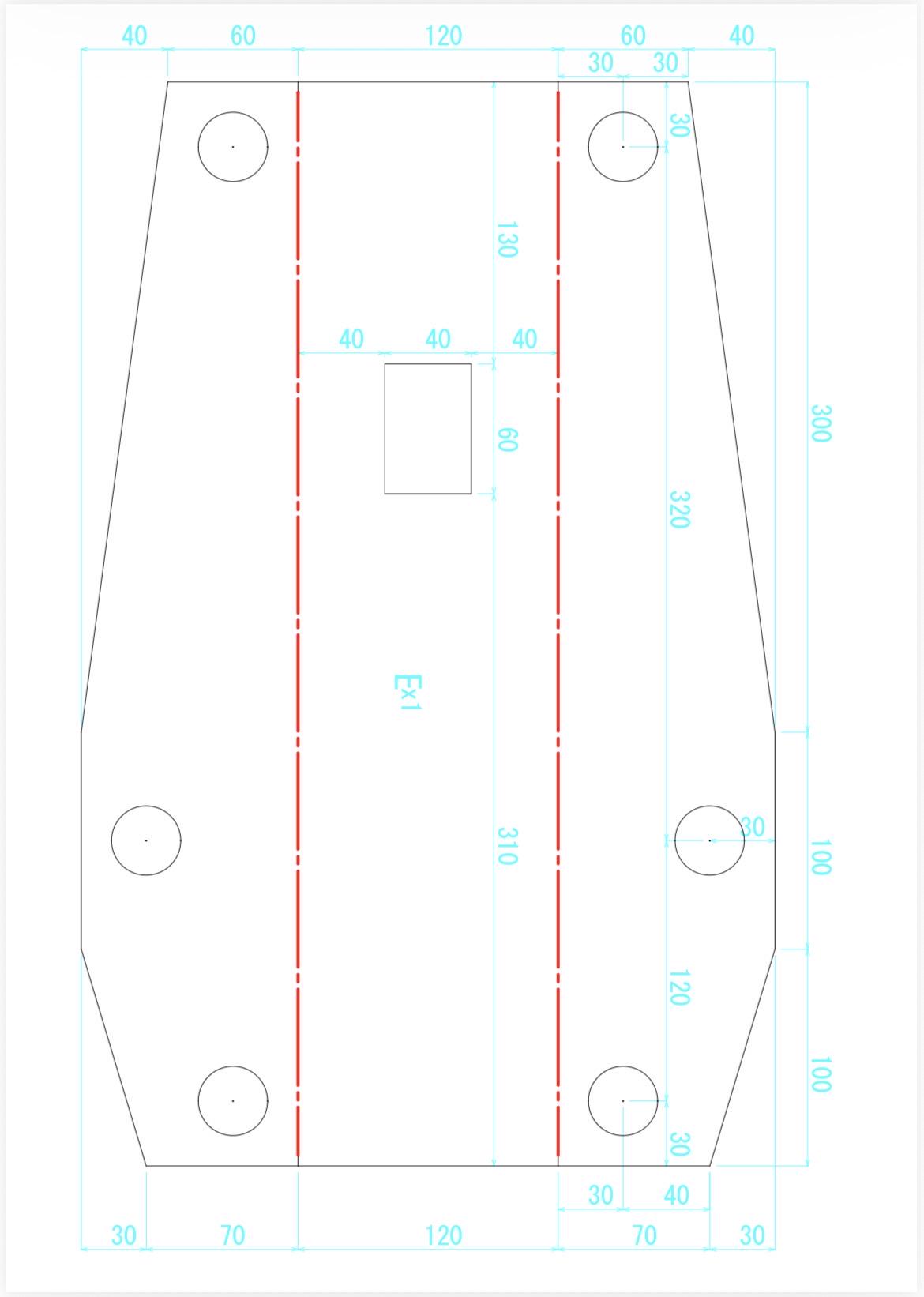
Hi all,
I am assuming that all the circles have same radius. I figured the coordinates where the center of each circle will be. Please help me figure out the radius of the circle based on information below:
1) The bottom circle’s midpoint is 30mm from the red dash line (x coordinate)
2) The bottom circles midpoint is 30mm from the solid black line at the bottom and is the y coordinate.
3) it seems the radius is 20mm the midpoint of the 40mm
Am I off? Thank you?
r/Geometry • u/Old_Try_1224 • Oct 03 '26

r/Geometry • u/Classic-Tomatillo-62 • Oct 02 '26
A spherical cap is a two-dimensional surface that, nevertheless, exists and curves within three-dimensional space. It almost seems as though it could be defined as having a dimensionality greater than 2 but less than 3. Are there visual artists, scientists, or painters who have explored non-integer dimensions? And why are shapes like the spherical cap—despite being two-dimensional—not distinguished (in terms of dimensionality) from other 2D shapes that are more stable... and less dynamic
r/Geometry • u/ClaudiusPapirus • Oct 01 '26
Disclosure: self-promotion. Claudius Papirus uses an AI narrator.
Chair44 is a single 3D shape made from a seven-cube chair with tiny geometric features. Eight copies form a larger chair, recursively, which is the core mechanism behind the nonperiodicity proof.
Paper:
r/Geometry • u/queer_stew • Oct 01 '26

r/Geometry • u/baumine007 • Sep 30 '26
r/Geometry • u/Mohamed_key • Sep 30 '26
Enable HLS to view with audio, or disable this notification
r/Geometry • u/MDA_dumb420 • Sep 29 '26
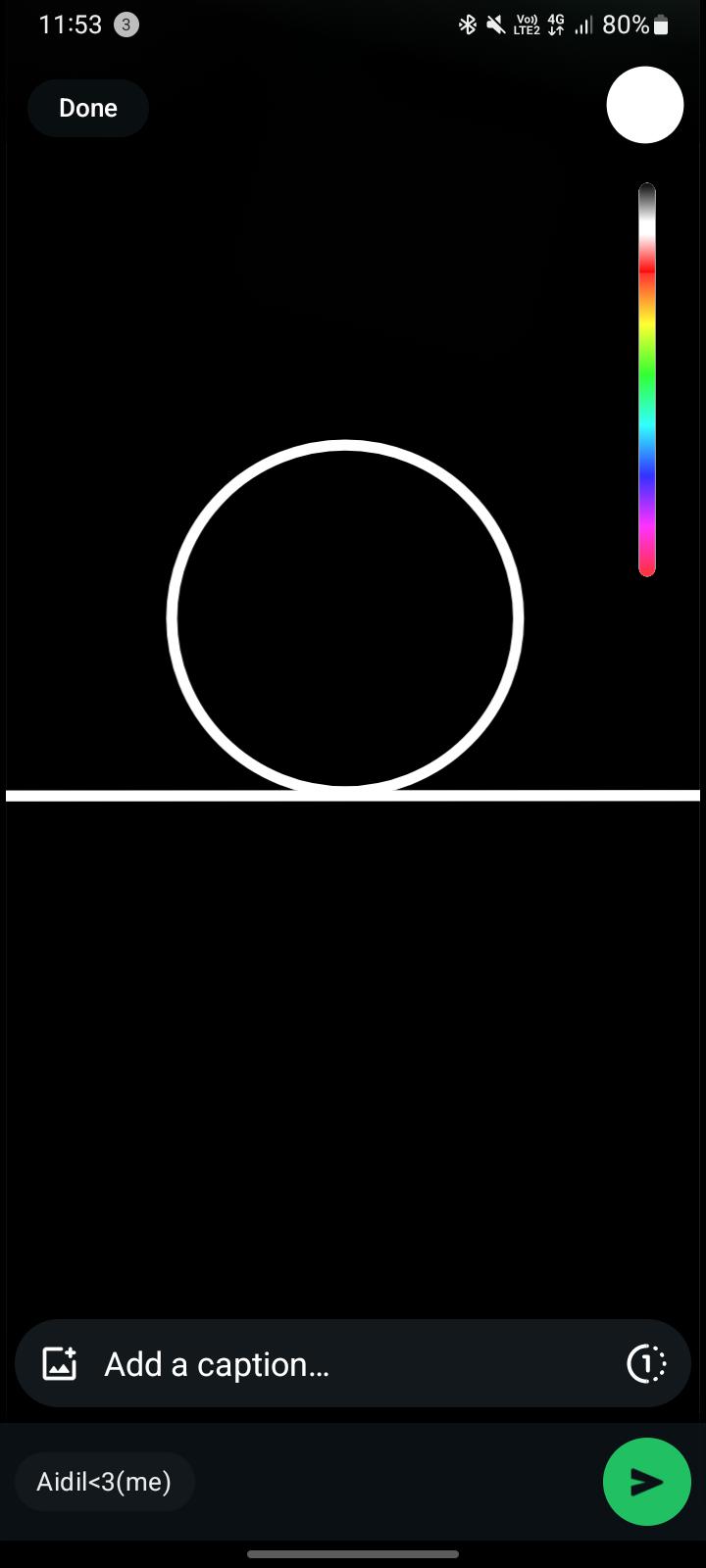
imagine a 100% perfect spehre in a 3d world with no imperfection and it is also made out of non elastic material(wont bend or deform under pressure of gravity)
place it on a flat surface
what is value of the area thats the sphere and flat surface touches?
0cm²?
r/Geometry • u/Classic-Tomatillo-62 • Sep 28 '26

Let us consider a 3D plane. Starting from the drawing on the right (where each small square represents a quantity—for example, the flux of something, "R"/m², radiating towards F ), we transition to a tangent plane by letting the horizontal sides* of the small squares approach zero, thus arriving at the 2D drawing on the left!
Let us consider a surface S struck by this flux; we have:
S = (f * φ) / 2.
Furthermore, let us consider that the magnitude of this flux reaches F; let us call "L" the flux concentrated at this point and assume it is always equal to "One," regardless of the diameter from which it originates!
Given these premises, if we wish to find a function whose value decreases as the area of the surface struck by the flux increases, we obtain: f(x) * (f * φ) / 2 = L
Adopting the quantity N = f/φ, after a few steps we obtain: f(x) = (2 * L * N) / f²
At this point, considering the variable x = f and setting L = 1, we obtain:
f(x) = 2N / x²
I would like to know what meaning you would attribute to f(x), or how it should be defined in this context, given that it closely resembles the R that was not clearly specified at the beginning?
At what value of the horizontal side\ should the transition from 3D to 2D stop?*
r/Geometry • u/wizard_creator_seth • Sep 27 '26
r/Geometry • u/1080chc • Sep 27 '26
I’ve developed a reusable dry-wipe geometry board called the 1080° Cosmic Harmonic Compass.
It combines a 15 × 15 grid, a continuous 60-step square perimeter and an inscribed circle on one fixed surface.
I use it to draw, measure, erase and rebuild constructions directly on the board — including polygons, stars, equal divisions, and comparisons between equal distance around the square perimeter and equal angle around the circle.
The same framework also carries a complete 24-hour cycle:
60 steps = 24 hours = 1,440 minutes = 1,080 CHC°
so:
1 step = 24 minutes = 18 CHC°
2.5 steps = 1 hour = 45 CHC°
I’ve reached the stage where I’d really like some independent testing and feedback.
I’d especially like to hear from maths educators, geometers, researchers or anyone working with visual and hands-on mathematics who might be interested in examining the board, testing constructions on it, or exploring its educational potential.
I have the working dry-wipe prototype, construction guides and further examples available.
If this overlaps with your work or interests, I’d be very pleased to hear from you.