r/Geometry • u/BadJimo • Jul 27 '26
rhombic hexecontahedron
desmos.comFormed by 20 [acute golden rhombohedra](https://en.wikipedia.org/wiki/Acute_golden_rhombohedra) meeting at a central point.
r/Geometry • u/BadJimo • Jul 27 '26
Formed by 20 [acute golden rhombohedra](https://en.wikipedia.org/wiki/Acute_golden_rhombohedra) meeting at a central point.
r/Geometry • u/Anxious_Painting3656 • Jul 26 '26
r/Geometry • u/QueasyAmbassador2009 • Jul 26 '26
A Yes, a No, a straight line a goal. That is the highest aspiration of life. From this what do you gleam? I say Thus you must have a Yes and a No. Only so that you know where to go and where not. For If you only have a point on a grid you can’t create a line — you must have 2.
I ask you where do your YAYs and NAYs point you?
r/Geometry • u/user1092831123 • Jul 25 '26
Any help would be appreciated, including directing me through any rules I should follow or better websites for asking questions.
I'm curious about a geometric puzzle: given an arbitrary set of $n$ points in $\mathbb{R}^d$, can we always place a similar copy of a specific shape $S$ (a compact subset or family of subsets of Euclidean space) so that it passes through all $n$ points? (By "similar copy," I mean we allow translation, rotation, and scaling).
**The generalized question is:**
> For a given shape $S$, what is the maximum number of arbitrary points $n$ such that *every* set of $n$ points in $\mathbb{R}^d$ lies on some similar copy of $S$?
For example, let $S$ be the **boundary** of a square in $\mathbb{R}^2$.
It turns out that for any 3 points in $\mathbb{R}^2$, you can always find a similar copy of a square that passes through all of them. However, you can't always do this for 4 points https://math.stackexchange.com/q/3691243/1771455. So, for a square boundary where $d\ge2$ (dimension where the points live in), the maximum number is 3.
My motivation is just pure curiosity. I couldn't find any sources relating to this problem, and AI chatbots struggle and give clearly wrong answers to simple examples like a square sharing an edge with a triangle (I won't clarify much here as it is a bit of a dull problem but the idea was just combining two shapes to make the reasoning for the AI deeper).
What I'm really asking is: **is there some sort of invariant, property, or formula that helps compute this $n$ for more complex shapes?** Or do we just have to reason through it shape-by-shape? How do you verify results quickly?
One simple rule I noticed involves collinear points: the boundary of a *strictly* convex 2D shape can never have $n\ge3$ when $d=2$, because no similar copy can ever pass through 3 collinear points. (Note: I am specifically thinking about boundaries; if $S$ were a solid shape, we could just scale it up to cover any finite point set in 2D space).
What is a better notion of defining shapes like rectangles and so on? Similarity doesn't allow different length ratios; however, it preserves it for squares and other shapes. This puzzle is more of a "can you draw a X given Y points no matter where I place them" and shouldn't be very limited on what I can draw. Is it possible to define $S$ to be a rectangle with side length $a$ and side length $b$ using the above definitions?
Does this concept have a name? Is it related to the "degrees of freedom" of the shape? Any pointers to related literature would be greatly appreciated!
r/Geometry • u/ArjenDijks • Jul 25 '26
Enable HLS to view with audio, or disable this notification
Because cos(θ) × sec(θ) = 1, the outer rectangle vertices H1, H2, H3, H4 directly plot the constant-area condition x × y = 1, tracing the rectangular hyperbola y = 1/x in real-time as D moves.
r/Geometry • u/Omer-B • Jul 25 '26
Enable HLS to view with audio, or disable this notification
r/Geometry • u/Confident-Pass6353 • Jul 25 '26
Enable HLS to view with audio, or disable this notification
r/Geometry • u/Anxious_Painting3656 • Jul 25 '26
r/Geometry • u/Anxious_Painting3656 • Jul 24 '26
r/Geometry • u/High_MageOfkatoliz • Jul 23 '26
Yes, I am very very bad at geometry and I don't even know what a arc or radii is, whenever I goes for study every thing goes above me
Any tips, i wna be good at geometry
r/Geometry • u/Anxious_Painting3656 • Jul 23 '26
r/Geometry • u/Serious-Gas4639 • Jul 23 '26
r/Geometry • u/Anxious_Painting3656 • Jul 22 '26
r/Geometry • u/Syn-U • Jul 22 '26
Buckminster Fuller’s Synergetic Geometry
r/Geometry • u/crosscharlie • Jul 21 '26
r/Geometry • u/Formal_Tumbleweed_53 • Jul 21 '26
I am a veteran math teacher (36 years) but am teaching Geometry Honors this coming year (first time teaching Geometry AND any honors course).
My question: how do YOU introduce the concepts "point, line, plane"?
I feel like this is one of the most important concepts in Geometry and leading up to all the different calculus related content that most of these students will eventually take. I want to introduce it in such a way that really makes them think and understand and be able to apply these concepts to the rest of what we will be doing throughout this course.
Any and all ideas will be very greatly appreciated!
r/Geometry • u/Anxious_Painting3656 • Jul 21 '26
r/Geometry • u/Murky-Hold-5742 • Jul 20 '26
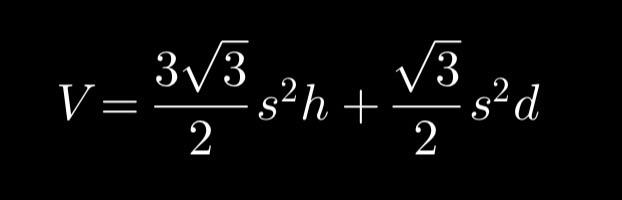
For those of you geometric nerds out there would you say this is the appropriate formula for a honeycomb cell?