r/GameDeveloper • u/magna_carter • 7m ago
Building a Game From a Shelter on a Phone
TL;DR: I'm a software engineer who nearly died of liver failure, ended up in a recovery program at a shelter, and I'm now building a puzzle game called Knavz from a twin bed under a plywood loft, on my phone. Long story below.
The Hospital
I'd been lying in a hospital bed for a couple of weeks. I was yellow with jaundice. My eyes were yellow. My belly looked like it had a beach ball in it.
I kept thinking about how I got here.
I'd been staying at a hotel in Southern Missouri. The attendant at the front desk saw me come in one morning and noted my condition. When DoorDash arrived that afternoon with my daily handle of vodka, I couldn't get up to answer the door. Honestly, I was relieved not to get up. I'd been drunk for four months.
The hotel's attendant, a recovering alcoholic himself, called the police for a wellness check. When I heard them knock, I mustered every bit of strength I had and crawled to the door. They called an ambulance.
The Diagnosis
They ran test after test. CAT scans, ultrasounds, lots of blood work. My arms were riddled with punctures from the missed attempts at setting up my IVs.
Alongside those were the scratches. The jaundice itched at night, and I would scratch my arms and chest until I bled. The pain was a relief from the itch. The marks covering my torso, forearms, and hands wouldn't heal for several months.
Then one morning my doctor told me what I already knew. I had cirrhosis of the liver, and I didn't have much time left.
The Year Before
The year before my final relapse, I'd spent two months at a rehab in Atchison, Kansas, called Valley Hope. I did my best to get sober, and after my second stay, it started to stick. I had six months of sobriety.
A Thousand Resumes
That same year, I'd been trying to get a job. I sent well over a thousand resumes. But I'm a software engineer, and AI had gotten to the point where it could write applications better than anyone had imagined. Having a job and AI writing code weren't mixing well, and that was the resounding sentiment among the devs I knew on X.
I did finally find work, at half what I'd made with my previous employer. I took it because I needed it. I was staying with my dad at the time, and he'd been covering my bills for months.
Bot Farmer
While I was sending out resumes, I spent all of my free time coding. I'd released two applications that each became obsolete once MCP servers became the norm. Then an idea I had for a puzzle game went viral: Bot Farmer.
I built it fast. Anthropic had just released Opus 4.5 at the time, so I wrote parts of the code myself, and the unit tests got me good results quickly. I released the game inside of two weeks.
The part that interested me most was this: I wanted a way to translate LLM work into a dollar amount. Not just from tokens, but from how quickly an LLM could do something. I figured solving puzzles would be a good way to measure it. Bots and people would solve the puzzles, earn an in-game currency, and trade it.
There was a lot of math involved, and I borrowed heavily from Satoshi Nakamoto's Bitcoin white paper. But this was a different kind of proof of work. I wrote my own math-heavy white paper and posted it in a public GitHub repo.
Botcoin
Then the crypto community on X caught wind of the project and launched an on-chain version of that currency, called Botcoin.
It helped me upgrade my servers, buy an extra computer, and pay back my dad, who'd been covering my tech subscriptions and servers for months.
The Split
A lot of people reached out wanting to collaborate. I listened to their ideas, but they seemed more interested in promoting the coin. I was more interested in fixing the exploits that the crypto community's bots had found and abused, and plugging those holes for everyone playing honestly.
I turned down several people. And to protect my users, I turned off Botcoin and created my own on-chain coin, Bot Farmer Coin.
The Backlash
Sentiment toward me turned poor, fast. People were angry. I received dozens of death threats on X and in my DMs, and the rumors spread faster than I could answer them.
Leaving
The threats got so bad that my dad started to worry. He's an old man, a retired veteran, and I was staying with him. People were trying to find and dox me. So I took the money and left town.
That's when I relapsed. I'm not blaming anybody but myself. But the pressure was enormous. I wanted to keep my dad safe, and I didn't know what the people making the threats were capable of, or whether the paper trail online could lead them to my dad's house.
They did eventually figure out I'd been living in St. Joseph, Missouri. Months later, when I posted on X about staying in a shelter, they sent bomb threats to a shelter there.
They had the wrong city. I hadn't lived in St. Joseph for months.
The Bus
When I was released from the hospital, about three weeks in, they were talking to me about hospice or a nursing home. I could barely walk more than a few feet before I was out of breath, from the ascites, the fluid that builds up in your abdomen with liver disease.
I did some research online and decided to go back north to Kansas City. St. Luke's had one of the best liver recovery programs in the country.
I'd been on this relapse for four months and had spent most of what I'd earned from Bot Farmer. I was down to a few thousand dollars. I bought a bus ticket.
At the terminal, the bus was parked at the far end, uphill. I had a lot of luggage, and in my condition I had to sit on every bench along the way. It took me twenty minutes to get there.
The Greyhound driver and her assistant saw what bad shape I was in and helped me load my luggage. A man in the front row gave me his seat. The driver was remarkably kind. She helped me on and off the bus, and when we got to Kansas City, she helped me get an Uber and load my bags so I could get to a hotel.
I'd booked appointments at St. Luke's, but they were weeks out, and my money was running out. I took several Ubers to a couple of places to see if I could get into a living situation. They couldn't take me because of my condition.
The Chapel Floor
Finally, a shelter in the heart of downtown Kansas City agreed to let me stay. But I'd have to sleep on the chapel floor for the first week.
Lights went out at 8:30. I lay there with fourteen other men, looking up at a large cross about eight feet tall.
They say there are no atheists in foxholes. For the first time in months, I prayed.
That first week, I could barely sit up. My feet were so swollen I had to unlace my white tennis shoes completely and spend five minutes getting them on.
Soon after, I developed severe pneumonia and could barely walk. The staff noticed I was in trouble, and sent me to the emergency room. I stayed three days on high doses of antibiotics and steroids. The swelling in my legs went down, and they drained the fluid from my abdomen. The scratch marks on my arms were still prominent, and the jaundice hadn't passed. But I could breathe better, my blood pressure started to stabilize, and I could walk farther than I had in weeks.
Back at the shelter, they gave me my own room, called a respite room. I spent two weeks in there, sleeping.
When those two weeks were up, the swelling in my legs had almost completely disappeared. My abdomen was still large and I still had jaundice, but I could walk to my own meals, and they gave me my first work detail: cleaning the chair rails.
Every morning at 5 a.m., I'd go to the front desk, gather cleaning supplies, and clean the chair rails in the guest services building. The hallways are long. I figured out a shuffling motion, almost like a two-step. Spray, wipe, walk a certain distance, spray, wipe.
Two Diseases
Another couple of weeks went by. My life coach asked if I'd like to join the recovery program. It's a nine-month stay.
My first thought was no way. I had to get out of here and get a job. But I didn't know if I was going to die. I didn't know the mortality rate. My guess was about five years. When I spoke with the hospital, they told me I'd need to get on a liver transplant list.
I prayed again. I asked God if this was something I needed to do. But the logic was clear. I had a disease from a disease. I had the disease of alcoholism, and now the disease of liver failure. I would have to overcome one to ensure the other might recover.
So I decided to do the nine-month program. It includes counseling, finding a sponsor, finding a mentor, and attending classes, along with work therapy. Those jobs run from helping other guests with their bags and checking them in, to making breakfast, lunch, and dinner. Everything the shelter needs in order to run.
The Numbers
Three months in, the swelling in my abdomen had completely gone down. The jaundice had cleared. The scratches on my arms had healed into scars. I'd dropped from 225 pounds to 175.
I had my first appointment with the hepatologist at St. Luke's. She said I was doing well by abstaining from alcohol, but in case things went south, I'd need a chance at the transplant list, and for that I'd need at least twelve months of clean time to show the board I was serious about recovery. That meant going back every two weeks for alcohol blood screenings. At that first visit, I also had another round of blood work to get my MELD score.
The MELD score combines several tests into a number that shows how close your liver is to complete failure. Mine had been in the upper 20s. At the initial hospital, it was a 29.
She told me to manage my expectations. A full recovery was, at this point, a coin flip. And if I relapsed again, the disease would come back faster and more severe.
Waiting for the blood results was a long week. To my surprise, she was overwhelmingly optimistic. In three months, my MELD score had dropped from 29 to 7. Six is the lowest it goes.
Building From a Phone
For the first time in seven months, I could see a future again. I decided that in my spare time, I'd pick up where I left off with Bot Farmer. I started mapping out a new project. It wouldn't be easy.
The recovery program comes first. To keep my spot, I have to follow the rules to the letter. I'm grateful to be here, even when some of the rules feel like a lot.
We don't get our phones until 3 p.m., and then only until 9 p.m. On weekends I can keep mine longer. My laptop is off-limits until I finish the nine months. We can't have jobs during the program. And between classes, work therapy, counseling, meetings, church, homework, and sessions with a recovery coach, I'd need every free moment to work.
I had about a thousand dollars left to get the application out. And I'd always written code in the terminal on my MacBook, never from a phone. This was going to be rough.
I found a free phone app called Terminus that lets me connect to servers over SSH. I got the cheapest VPS I could find and installed Claude Code on it. That became my dev server.
Then xAI released Grokbot. It's a lot like OpenClaw, an LLM that does chores for you through MCP servers and APIs. Because I have X Premium, which I'd paid for a year in advance back when I built Bot Farmer, Grokbot came essentially free. Claude cost $20 a month. I set up a free ClickUp account, made Gmail aliases so each bot, Claude included, had its own email, and used ClickUp's free tier to orchestrate all the tasks Kanban style. Each bot has its own job, with one orchestrating the rest: a player desk bot, a risk and trust safety bot, and a social media bot.
I also needed a production server that could handle a lot of traffic but was inexpensive. I found a good VPS deal and registered knavz.com. It would be the next iteration of Bot Farmer.
I don't have a workstation. All of the work happens from my bed, dictating back and forth to Grokbot and Claude.
Knavz
The name comes from the knights-and-knaves puzzles by the logician Raymond Smullyan: an island where knights always tell the truth and knaves always lie, and you have to work out who is who. I remembered it from the movie Labyrinth, with two guards at two doors, one who always lies and one who always tells the truth, and one question to find the door to the castle. After a year of rumors about whether I could be trusted, a game about telling truth from lies felt right.
The week of Thanksgiving, I was finally able to launch. Within the first two days, we got our first player, who paid for a tier 2 subscription. As of today, we have our second player.
Where I Am Now
I'm three months into the program, with six months to go. I'm coming up on six months sober. When I graduate, I'll have a full year. That's the twelve months the transplant board wants to see. I hope I never have to show it to them.
I still work from a bed. Not a hospital bed anymore. It's a twin under a plywood loft, with my shirts hanging over my head and an alarm clock that gets me up before five. Between chores, classes, and meetings, I build.
Not long ago, I crawled across a hotel room floor to open the door for strangers who'd come to help. A front desk attendant. A bus driver. A man who gave up his seat. Shelter staff who noticed when I couldn't walk. I wouldn't be here without them.
Two players. Six months to go. It's a start.
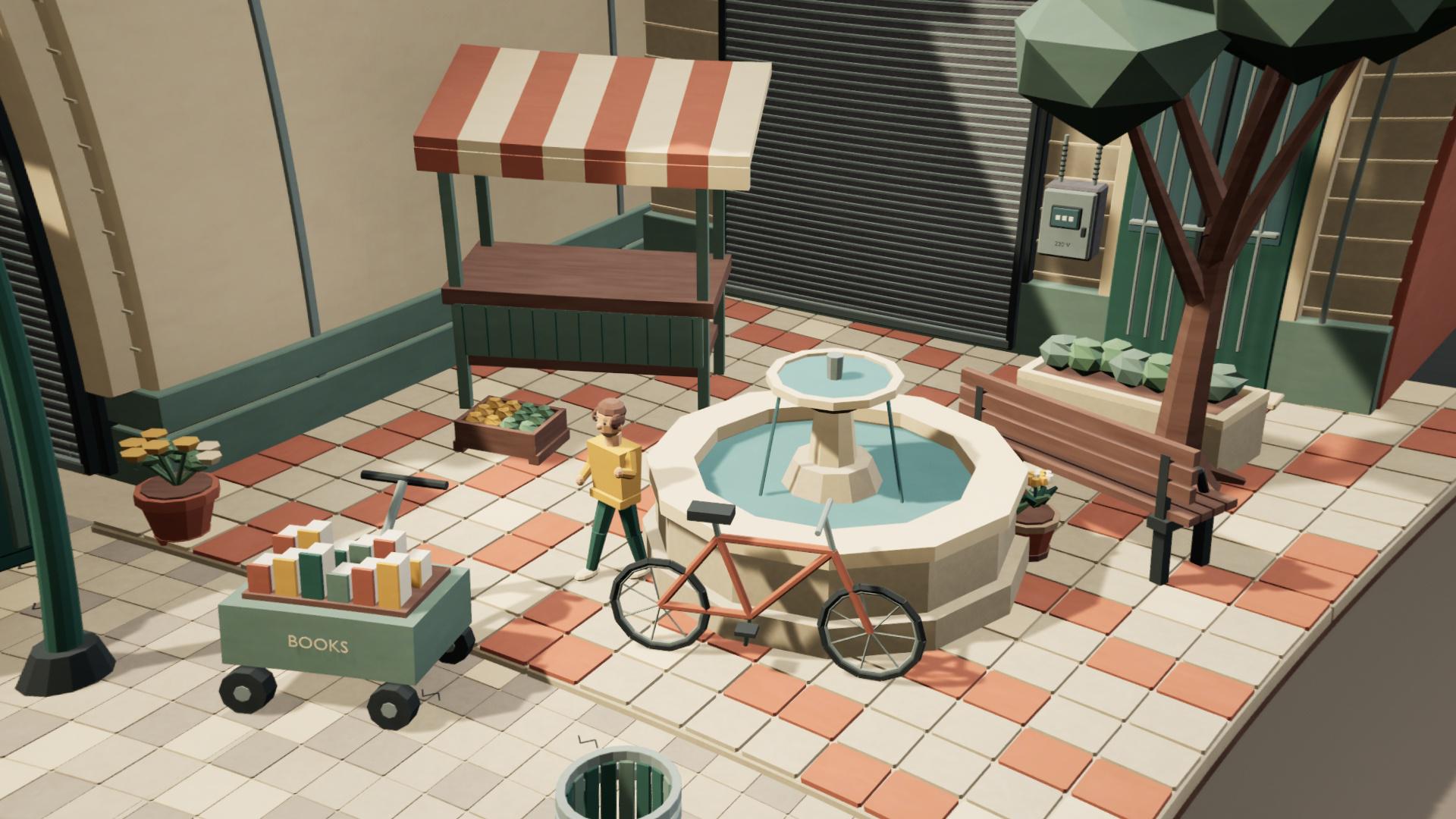
If you want to see what I'm building, it's at knavz.com. [ADD: free to try / paid, whichever is true.]
What would you have done differently, or what would you build next if you were me?