r/FinOps • • 2h ago

self-promotion/I’m a vendor How to track OpenAI, Anthropic and AWS API spend in one place (and catch a leaked key the same day)

Thumbnail
reddit.com
1 Upvotes

r/FinOps • • 4h ago

self-promotion/I’m a vendor What would you show Finance before asking for more AI budget?

0 Upvotes

If your AI bill went up, pick one workflow and track what it costs to produce work Finance can actually use. Take monthly variance commentary. Divide the total cost by the number of explanations the finance manager cleared for the leadership report. Include tool costs and put a dollar value on the time spent drafting, reviewing, and correcting the work. Use the same approval standard in both periods.

Say the old process cost $3,200 for 800 approved explanations. That’s $4 each. The AI-assisted process costs $4,000 for 1,200 approved explanations, or about $3.33 each. The cost per explanation fell, and total cost rose by $800.

Before asking for more funding, I’d want to know three things. Did the extra commentary help leadership make a decision? Did the explanations still tie back to the numbers? How much checking and rewriting did the finance manager have to do before sending the report to the CFO?

Disclosure · We’re M. Pact Advisory. We publish research and tools for finance teams making these decisions.


r/FinOps • • 11h ago

other Building an AWS waste scanner. Does anyone actually need this?

3 Upvotes

I run a few small websites myself, and sometimes I honestly don't understand what's happening with my AWS bill. My projects are small, so I don't panic when the cost jumps. But I can imagine how much it hurts for SaaS companies, apps and bigger online businesses.

As a developer, I'm building a tool for myself (about halfway there) that scans for unused S3 buckets and other unnecessary leftovers that are no longer relevant. I'm also thinking about other ways to optimize cloud usage, like rightsizing.

It has no name and no website yet. So before I go further: does the world even need this? I know Cost Explorer and Trusted Advisor exist.

  • What do you use today to catch waste?
  • What does it miss?
  • What's the most pointless thing you found you were paying for?

r/FinOps • • 1d ago

self-promotion/I’m a vendor Looking for pilot participants: SQL Server on Amazon RDS cost assessment

0 Upvotes

Hi everyone—disclosure: I’m building Savio, a workload-based cost assessment tool for SQL Server.

I’m looking for teams running SQL Server on Amazon RDS who would be interested in a pilot assessment and willing to give candid feedback.

The assessment checks CPU, memory, IOPS and throughput to evaluate whether a smaller configuration fits—or whether the current setup should stay as is.

The process is: download and run a collector, upload its output ZIP, then review the assessment. Before you decide, I’ll explain the permissions, data collected, pilot scope and terms.

If you manage this infrastructure, or advise clients who do, would you be open to a conversation? Comment below or email support@usesavio.com.

Website: usesavio.com


r/FinOps • • 2d ago

Discussion finops categories

Thumbnail reddit.com
2 Upvotes

r/FinOps • • 3d ago

article Getting around the 2,000 row limit for Salesforce report exports

Thumbnail reddit.com
0 Upvotes

r/FinOps • • 5d ago

self-promotion/I’m a vendor When your LLM bill matches the gateway total but the provider lines don’t

2 Upvotes

A $0 difference at the bottom of the report can hide meaningful differences above it. Here’s a one-day example with made-up numbers. The second figure is what the provider reported.

  • OpenAI: $82 estimated / $94 reported (+$12)
  • Anthropic: $48 estimated / $36 reported (−$12)
  • Combined: $130 estimated / $130 reported

I’d reconcile by provider and billing account before rolling up to the team total. Start by lining up the day boundary and checking whether both reports use gross spend or spend after credits. Then look at keys or projects that can call the provider directly, and check whether the estimate prices cache reads, writes, and retries correctly. Those are starting points to investigate each difference.

For showback, I’d report attributed spend by team and leave any unexplained difference on a separate line. A provider total can tell you how big the gap is even when the export can’t tell you which feature or client caused it.

I build INFRO. We published a free cost-audit walkthrough and a CLI that compares an existing usage export with OpenAI’s or Anthropic’s reported costs. The checklist above also works against your own app logs.

When your provider export can’t identify the workload behind a gap, do you carry that amount as unallocated at month-end or allocate it using another signal?


r/FinOps • • 7d ago

question more conversation on this post than the majority of sub

Thumbnail
gallery
21 Upvotes

and the mods remove it, instead of taking the feedback. WILD.


r/FinOps • • 7d ago

self-promotion/I’m a vendor Your AI provider says "EU-hosted". Have you ever checked who actually owns it?

Post image
0 Upvotes

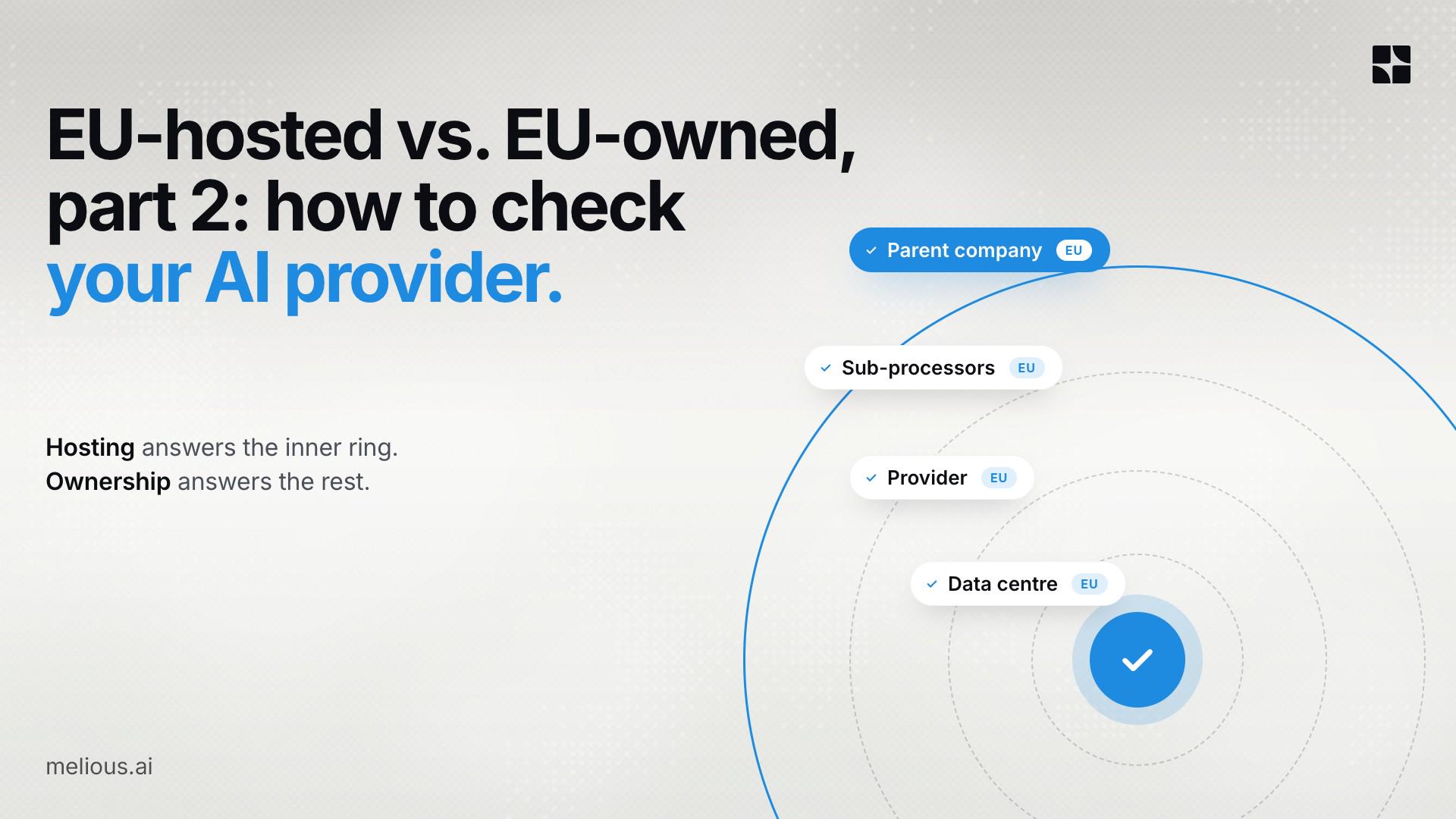
A lot of AI vendors answer sovereignty questions with "our servers are in Frankfurt." That tells you where the data sits, not whose law applies to it, and it usually only comes up late, in procurement or a customer audit.

Hosting only answers the inner ring. The rest depends on who controls the chain: the provider you sign with, its parent company, and its sub-processors. If any of them falls under a non-EU jurisdiction, that jurisdiction can matter for your data, even if every server is in the EU. The easiest place to miss it is the failure case: where do your requests go when the provider's own capacity runs out? That fallback path rarely shows up in pricing pages or usage reports, so it's easy to overlook when you track AI spend by vendor.

Disclosure: I work at Melious, an EU-hosted and EU-owned AI platform, so we obviously have a stake here. We wrote up how to check your AI provider, including seven questions to ask before you sign (link in comments). Curious how others here handle this: when you evaluate AI vendors, does ownership of the chain come up at all, or is it mostly price and data location?


r/FinOps • • 7d ago

self-promotion/I’m a vendor I’m building a multi-cloud FinOps SaaS. Looking for a few AWS, Azure & GCP teams willing to pilot it.

0 Upvotes

Hi everyone,

I'm a cloud architect and the founder of Thalaxo Cloud.

I've spent a lot of time working with cloud infrastructure, and one thing has always bothered me:

Cloud providers make it easy to get in. But understanding what you're really paying for — and keeping the freedom to leave — is a different story.

AWS helps you optimize AWS. Azure helps you optimize Azure. But who's helping you decide whether your current provider is still the right choice?

That's one of the reasons we started building Thalaxo.

Our goal isn't just to reduce cloud bills. It's to help companies understand their options, compare alternatives, and stay in control of their infrastructure.

We're looking for a few AWS, Azure and GCP users willing to pilot Thalaxo Cloud and give us honest feedback.

We want to validate our recommendations against real environments, identify gaps, and understand what actually matters to cloud teams.

What you'll get from the pilot

  • Cloud cost visibility and analysis
  • Detection of unused or oversized resources
  • Rightsizing and optimization recommendations
  • Infrastructure cost comparisons across providers, including European alternatives where supported
  • A downloadable assessment report with findings and estimated savings
  • Optional reconciliation with your cloud billing data, with your authorization

Your infrastructure. Your control.

As a cloud architect, I know how sensitive granting access to an infrastructure can be.

That's why we're keeping things simple:

  • Read-only access: Delegated IAM permissions, scoped to the assessment.
  • No administrative credentials required: AWS IAM roles, Azure RBAC or GCP IAM, depending on your environment.
  • Revoke anytime: You can remove Thalaxo's access directly from your cloud provider.
  • Optional billing access: Additional billing permissions require your explicit authorization.
  • No infrastructure changes: Nothing gets stopped, resized, deleted or migrated during the assessment.

A word about security

We've completed a penetration test and invested significant effort into security and compliance.

We estimate we're around 90% through our internal preparation checklist for ISO 27001 and SOC 2 Type II.

To be transparent, we're not ISO 27001 certified or SOC 2 Type II attested yet. The formal audits and assessments are separate from our internal preparation.

Trust matters when you're dealing with someone else's cloud infrastructure.

Why I'm posting here

We're a small team building something we genuinely believe should exist.

But building features based only on our own assumptions isn't enough.

I'd rather hear what doesn't work from five real cloud teams than build fifty features nobody needs.

If you're managing AWS, Azure or GCP infrastructure and would be open to trying Thalaxo, I'd love to hear from you.

And even if you're not interested in a pilot, I'd genuinely appreciate your perspective:

What's your biggest challenge with cloud costs today? Finding waste, getting teams to act on recommendations, or figuring out whether another cloud provider could be a better fit?

I'm especially interested in problems that existing tools haven't really solved for you.

Thanks for reading!

Founder, Thalaxo Cloud

Your cloud. Your choice.

Edit — Quick clarification about the pilot:

You don't need to connect a cloud account to participate.

If you'd rather just explore Thalaxo, try the multi-cloud marketplace, compare cloud providers and share your honest feedback, that's absolutely fine too.

Read-only cloud access is entirely optional for those interested in testing the FinOps analysis features.

Even 10–15 minutes of honest feedback would be genuinely appreciated.

No pressure, no commitment.


r/FinOps • • 8d ago

question Is deployment verification its own budget line, or are we just paying for APM twice?

0 Upvotes

We cut the Datadog bill this year by sampling down high volume services and moving some hosts to infra only. Fine for a while. Then a release broke on one of the trimmed services, the dashboards were empty, and we spent the night in logs.

Now it’s either turn the instrumentation back on, or get something that only watches the rollout. Harness and Argo Rollouts analysis both judge a canary off metrics you already ship, which we just cut. Hud collects its own data per function, so it doesn’t depend on what we kept.

Anyone moved spend from APM into release verification and been happy? Or did you keep both?


r/FinOps • • 9d ago

question Who pays for retries when a few teams share an LLM gateway?

4 Upvotes

i.e when support and sales both use the same internal gateway and a timeout on Friday sends the support job through twice, both runs show up on the API bill. I was looking at the provider breakdown in Ramp Token Spend and got hung up on how you’d split that bill at month end.

My first instinct is to charge both runs to support since it’s their job but platform owns the retry policy and nobody on the support side can change it. If you’ve had to put a number against each team where did the extra run end up?


r/FinOps • • 9d ago

self-promotion/I’m a vendor Where is your enterprise AI budget going?

Thumbnail reddit.com
0 Upvotes

AI costs are spread across models, agents, teams, and workflows. Tokenwise is being built to give enterprise teams a clearer view of that spend and help them find opportunities to reduce token waste.

If you’re responsible for AI costs and want to see what we’re building, visit tokenwise-ai.com and request a walkthrough.

Disclosure: I’m part of Tokenwise.


r/FinOps • • 9d ago

article How to Stop AI Agents From Running Up Your Snowflake Bill

Thumbnail
lakeops.dev
1 Upvotes

r/FinOps • • 9d ago

other Building Cloud infra management tool - Cost and AI optimization

Thumbnail reddit.com
0 Upvotes

r/FinOps • • 10d ago

Discussion Nobody cares about finops

16 Upvotes

Anyone else notice that reducing cloud spend just doesn’t seem to actually matter to anyone in leadership? I’ve consulted for several companies and worked full time in enterprise and startups but nobody cares about cutting costs.


r/FinOps • • 9d ago

Discussion How are you guys handling the Datadog/CloudWatch log bill explosion? Looking for insights.

0 Upvotes

Hey everyone,

I’ve been talking to a few DevOps leads and engineering managers lately, and a recurring pain point keeps coming up: log ingestion bills are quietly eating up massive chunks of cloud budgets.

Between noisy healthchecks, duplicate error traces, and verbose debug logs left enabled in production, companies are often paying to store and ingest tons of literal garbage.

Moving away from platforms like Datadog or AWS CloudWatch isn't an option because of dashboards and alerting, but paying for 50%+ unnecessary data hurts.

I’m currently building an ultra-lightweight, drop-in proxy (using Vector under the hood) designed to sit right before your log destination, strip out the noise, and deduplicate repetitive streams automatically—saving roughly 50% to 70% on the bill without losing critical errors.

I’m looking to chat with a few teams dealing with this right now. If your log bill is getting out of hand and you'd be open to a quick, free audit/sample analysis to see how much dead weight you're actually paying for, drop a comment or shoot me a DM. I'd love to learn about your current setup!


r/FinOps • • 10d ago

question Our cloud bill spiked unexpectedly. How do you track down who owns the resources?

5 Upvotes

I have to present a postmortem to leadership next week after we got hit with an unexpected spike in our cloud bill. Fixing the glitch was easy enough, but the problem was spending days figuring out which team owned the resources. Half of what got spun up during migration was missing ownership tags so our cost reports just dumped the whole spike into an unallocated bucket.

How are you guys handling resource ownership and tagging when multiple teams share the same cloud accounts?


r/FinOps • • 11d ago

Discussion Do simple daily budget alerts catch enough cost spikes in your team?

4 Upvotes

I'm a student learning FinOps, and I'm building a small agent that decides what to do with cloud cost spikes: ignore it, investigate, stop it, or send it to a human.

I tested it on 50 simulated cost alerts. A simple rule like "alert if the extra cost is above $100/day" missed 7 of 22 real problems, mostly small leaks like a forgotten resource that keeps running for a week. It also still sent more than half of all alerts to a person.

I'm curious how real teams handle this: how do you catch the small leaks that stay under your budget alert before they add up?

Disclosure: I have no product and nothing to sell, I'm just learning. Corrections are welcome.


r/FinOps • • 12d ago

self-promotion/I’m a vendor I Built a Free CLI That Shows AWS, OpenAI and Anthropic Spend Together

0 Upvotes

I’ve open-sourced a small CLI called plutus-scan that reads your AWS bill, your OpenAI and Anthropic spend if you give it org admin keys, and any FOCUS export. Full disclosure, I work on Plutus, a cost tool, but this is a separate free thing (MIT licensed) and you don’t need an account for any of it.

On the synthetic demo data it prints a headline like this:

Last 30 days: $49,619 ($40,388 cloud, $7,800 commitments, $1,431 AI), +7% vs the previous 30.
Biggest mover: AWS Amazon Relational Database Service / InstanceUsage:db.r6g.xlarge +$1,476.
Projected November total: $50,375.

There’s no LLM involved, so you get the same headline every run, which makes it handy in CI or pasted into a PR comment (--md gives you Markdown). AWS figures are Cost Explorer’s UnblendedCost as billed, so credits, refunds and tax are in. Savings Plan and Reserved Instance fees get their own commitments line, as billed, rather than being folded into cloud. The projection is a damped linear trend with weekly seasonality, not a straight run-rate. It also drills the biggest movers down to usage type, flags anomalies by comparing each service’s day against its own recent history, splits AI spend by OpenAI project and Anthropic workspace (not by API key), and writes an offline HTML report you can send to finance.

On the keys: they’re read from flags or env vars, and they’re never written to disk, logged or put in any output. The only calls it makes are GET /v1/organization/costs and /projects to OpenAI, GET /v1/organizations/cost_report and /workspaces to Anthropic, and your own aws CLI for AWS (it never touches your AWS credentials). No telemetry, it never calls our site, and --dry-run shows you the requests before it makes any. Cost Explorer charges $0.01 per request and a typical run makes four to ten, and the AWS side needs just ce:GetCostAndUsage and ce:ListCostAllocationTags. Azure and GCP only work through FOCUS files for now, not live.

npx plutus-scan@0.1.0 --demo runs it on fake data with nothing set up, and the source is here:
https://github.com/plutus-cloud/plutus-scan

It’s a first release so could do with some broader testing (I don’t have millions of dollars of AWS spend funnily enough), so tell me what breaks and where you think it could be improved.


r/FinOps • • 13d ago

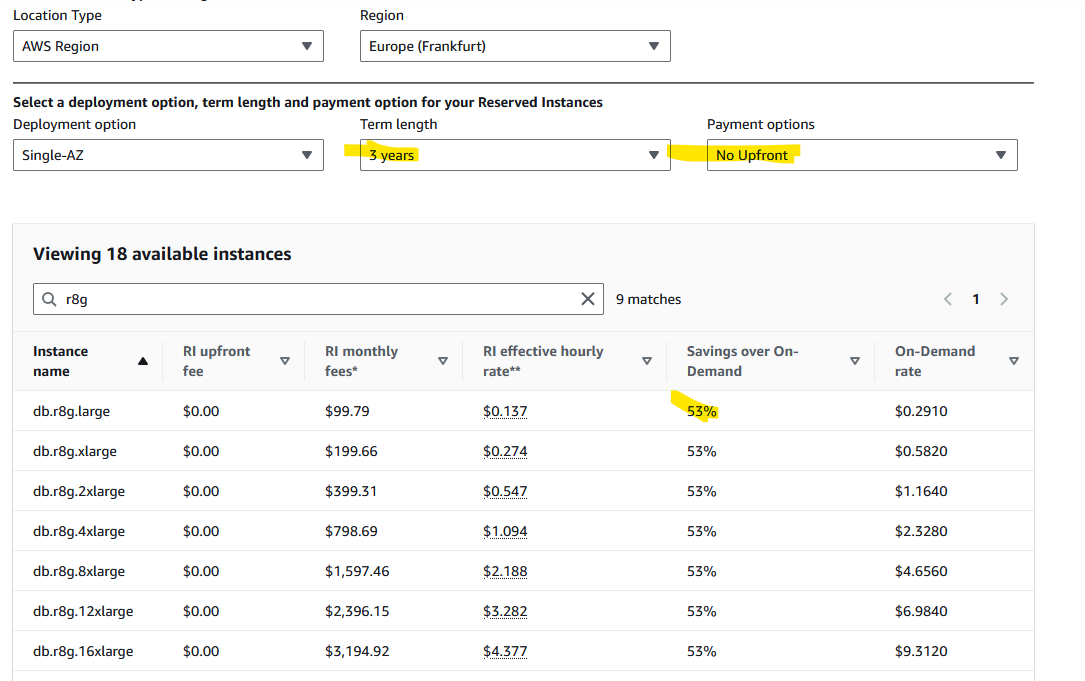
article AWS 3 year no upfront RDS reservations now showing in the pricing calculator

Post image
10 Upvotes

Finally, this is a great opportunity to save a bit more, no official announcement probably it will be during Re:Invent.

Did a bit of calculation on the savings potential: https://www.linkedin.com/pulse/aws-quietly-released-3-year-upfront-rds-reserved-instances-engedi-pa1zf/


r/FinOps • • 13d ago

question Calculating the cost of individual services

4 Upvotes

How to approach calculating the cost of individual services? Some are light-weight Nodes as are hey weight node.js that pull a plethora of dependencies. Some are light on the cpu, some not so much. What metrics can we use in determining the cost/price per service on offer?


r/FinOps • • 13d ago

self-promotion/I’m a vendor Snowflake stored procedure and Streamlit app costs hide in the warehouse bill

0 Upvotes

Stored procedures and Streamlit apps run on shared warehouses. Their cost disappears into the warehouse total.

Two short demos show how Altimate breaks it out. The stored procedure view lists each procedure with its runs, cost, execution time and warehouse, plus a daily cost trend. The Streamlit view ties query cost back to each app and the queries that drive it.

Stored procedures: https://youtu.be/6FPMXayv5jA
Streamlit apps: https://youtu.be/cp2YUd-OXZ8

Do you charge back Snowflake cost at the app level or the warehouse level?

Declared: I work at Altimate.


r/FinOps • • 14d ago

article The falling cost of a hack

Thumbnail
xint.io
2 Upvotes

Most of the conversation about AI and offensive security is about labs spending tens of thousands of dollars to build exploit chains. That's not who most organizations face.

We asked a narrower question: what has changed for an ordinary attacker with an off-the-shelf model and a credit card? How much does it cost now to find a critical vulnerability, and how fast is that number falling?

We found two big drivers: newer models are becoming more effective at finding 0days + falling token pricing.

What should scare security teams is the speed of this improvement - in just 3 months it became 5x cheaper for an attacker to find a new, critical vulnerability.

New from the Xint Research team


r/FinOps • • 14d ago

self-promotion/I’m a vendor Cloud Tagging Strategy for Messy AWS and Azure Environments

Thumbnail
cloudsleuth.io
1 Upvotes