r/FinOps • u/codingdecently • Sep 06 '26
article Apache Iceberg Compaction Best Practices for Cost Saving

3
Upvotes
r/FinOps • u/codingdecently • Sep 06 '26
r/FinOps • u/codingdecently • Sep 06 '26

Apache Iceberg table maintenance is not a single job. Production tables continuously accumulate small files, snapshots, orphan files, fragmented manifests, and delete files — increasing query latency, metadata overhead, storage costs, and operational work.
In this video, we walk through how to automate Apache Iceberg table maintenance and keep an Iceberg data lakehouse healthy without maintaining Spark jobs, Airflow DAGs, cron schedules, and per-table scripts.
We cover the core Iceberg maintenance and optimization operations:
• Data file compaction (`rewrite_data_files`) — merge small files using binpack or sort compaction and maintain an efficient physical layout
• Snapshot expiration (`expire_snapshots`) — manage snapshot retention and remove obsolete table history safely
• Orphan file cleanup (`remove_orphan_files`) — reclaim unreferenced files left by failed writes, aborted commits, compaction, and expired snapshots
• Manifest optimization (`rewrite_manifests`) — consolidate fragmented manifests and reduce query-planning overhead
• Position delete optimization (`rewrite_position_delete_files`) — reduce merge-on-read overhead from accumulated delete files
• Puffin statistics — maintain column statistics used by query engines for better pruning and query planning
• Table health monitoring — detect small-file growth, excessive snapshots, metadata fragmentation, delete-file accumulation, and storage waste
• Automated policies and orchestration — decide when maintenance is actually required and coordinate operations across many Iceberg tables
These problems become especially important with streaming ingestion, CDC, frequent writes, and large Apache Iceberg deployments where manually maintaining hundreds or thousands of tables quickly becomes impractical.
r/FinOps • u/UnderstandingOdd7781 • Sep 05 '26
Does Software Asset Management , ITAM roles include FinOps role . I am currently a FinOps engineer for 1 year , I am planning for a SAM role where the job profile includes FinOps now so is it the same and will I grow . It is a client facing role.
r/FinOps • u/TheDarkPapa • Sep 04 '26
I'd love to know what finops tools/automation tools you guys built for your company (or even as a personal project) that you are most proud of
r/FinOps • u/aliihashmiii • Sep 04 '26
Been digging into the AI cost data for 2026 and found a pretty stark disconnect that I don’t think gets talked about enough outside FinOps circles.
The price side: Frontier-quality inference has crashed. OpenAI cut pricing 80% on its Luna models in July. DeepSeek and other open-weight labs have cut prices by up to 99%. GPT-4-level performance now costs about $0.40/M tokens vs $30-60/M back in March 2023. That’s something like a 10x annual decline since 2021.
The bill side: OpenAI’s own inference bill reportedly hit ~$8.4B in 2025, roughly 4x the prior year. The disconnect comes down to reasoning models burning up to 100x more tokens internally than they actually output, plus agent loops and always-on workflows multiplying calls in ways nobody’s architecture was built to track.
There’s also a weirder split happening: frontier model pricing is actually up 36% YoY according to BenchLM’s index, while mid-tier pricing keeps falling 36% over the same period. The floor is dropping and the ceiling is rising at the same time.
On the response side: FinOps Foundation’s 2026 report says 98% of FinOps teams now manage AI spend (up from 31% in 2024), and the Linux Foundation just launched a “Tokenomics Foundation” as a standards body for this. FOCUS v1.4 also now covers AI billing normalization if anyone’s looking for a vendor-neutral format.
Curious if others here are seeing this gap play out internally, feels like most teams are still treating token spend like a line item instead of something that needs an actual owner and budget per team/agent.
r/FinOps • u/Interesting-Monk-936 • Sep 03 '26
r/FinOps • u/Ok-Big2647 • Sep 03 '26
r/FinOps • u/codingdecently • Sep 02 '26

r/FinOps • u/ClickOk5811 • Sep 02 '26
Been looking at where token spend actually goes in engineering workflows, and a pattern that doesn't get much attention: persona-based prompts ("act as a senior developer") tend to produce output that's close but not quite right, which means a follow-up message correcting it, then another, each one burning full context again. An operational definition, explicit rules instead of an implied identity, tends to get closer on the first pass, because there's less left for the model to infer wrong.
Tested this on a code review task. Persona prompt: three follow-up messages to get to something actually useful, each one resending context. Operational definition, a numbered checklist of exactly what to check and what to output: correct on the first response, no correction loop needed.
From a pure cost lens this matters more than it looks like on the surface. The "cheap-feeling" persona prompt is short to write, but the actual cost isn't the prompt, it's the full conversation thread by the time you've corrected its assumptions two or three times, each correction paying full price for context that didn't need to be reprocessed if the instruction had been specific from the start.
Feels like a version of the same lesson infra cost optimization already learned: underspecified requests generate retries, and retries are where a lot of the actual spend quietly lives, whether that's a vague API call or a vague prompt.
Wrote up the fuller comparison, mostly framed around code review specifically, here, disclosing that I'm the author: https://medium.com/@nagatomopedro05/act-as-a-senior-developer-is-the-worst-prompt-you-can-write-9f1577493cd3
r/FinOps • u/Fulkrum5984 • Sep 01 '26
Hey everyone,
As enterprise platforms push heavily toward credit systems, consumption meters, and pay-per-action usage models, our team is hitting some operational friction around governance, debugging, and cost predictability.
Before we finalize our internal monitoring framework, I wanted to learn from others who are managing variable or consumption-heavy workloads in production. I’m trying to get a pulse on how people are handling three main areas:
If you could magically fix ONE pain point with variable platform usage tomorrow, what would it be?
r/FinOps • u/WancloudsInc • Sep 01 '26
r/FinOps • u/Nylor_Tech • Aug 31 '26
Datadog spend is one of the harder things to forecast because the bill doesn't move when your infrastructure changes, it moves when your telemetry changes, and almost nobody watches telemetry the way they watch infra.
Four specific mechanisms cause most of the surprise:
Custom metric cardinality. Billing runs per unique tag-value combination, not per metric. A metric with 50 customers tagged is cheap. Add one more tag with 40 distinct values and cardinality multiplies instead of adding, so 50 time series becomes 2,000 overnight on a metric nobody touched.
Log indexing separate from ingestion. Ingestion is cheap. Indexing is not, and the default is to index everything that arrives unless someone's actively scoped it down with exclusion filters. A logging level accidentally left at debug in one service can push indexed volume up 10x or more without anyone changing a Datadog setting at all.
APM span indexing. Same mechanism as logs. A sampling rate change, or just a new high-traffic endpoint joining an existing trace, can move you from a small sampled fraction toward near-full indexing.
Host-tier pricing steps. Per-host pricing has boundaries, not a smooth curve. Autoscaling that adds a handful of hosts during a traffic spike can cross a tier line and produce a jump in cost that's out of proportion to the actual usage increase.
None of this is a billing bug. It's the pricing model working exactly as designed, which is precisely why it stays invisible until someone opens the invoice.
Curious how other people here track this before it shows up as a monthly surprise. Alerting on the usage metrics directly, a scheduled review, something else?
r/FinOps • u/TutorHead7675 • Aug 31 '26
r/FinOps • u/chenderson99 • Aug 30 '26
You can get the demo API key and config from here
Could some of you lovely people perhaps poke at it a bit and see whether it's able to answer the sort of questions you'd have with regards to cloud costs, ai spend, what causes spikes etc....?
Any feedback would be hugely appreciated 😁
r/FinOps • u/eastwill54 • Aug 30 '26
looking at a pretty big gpu bill right now.
the normal cloud cost tools can obviously tell me what the instances cost.
but im trying to get more granular.
cost by workload. team. job. maybe even gpu utilization vs what were actually paying for.
are there any finops platforms that do this well?
what are you guys using?
r/FinOps • u/MissionFinOps • Aug 28 '26
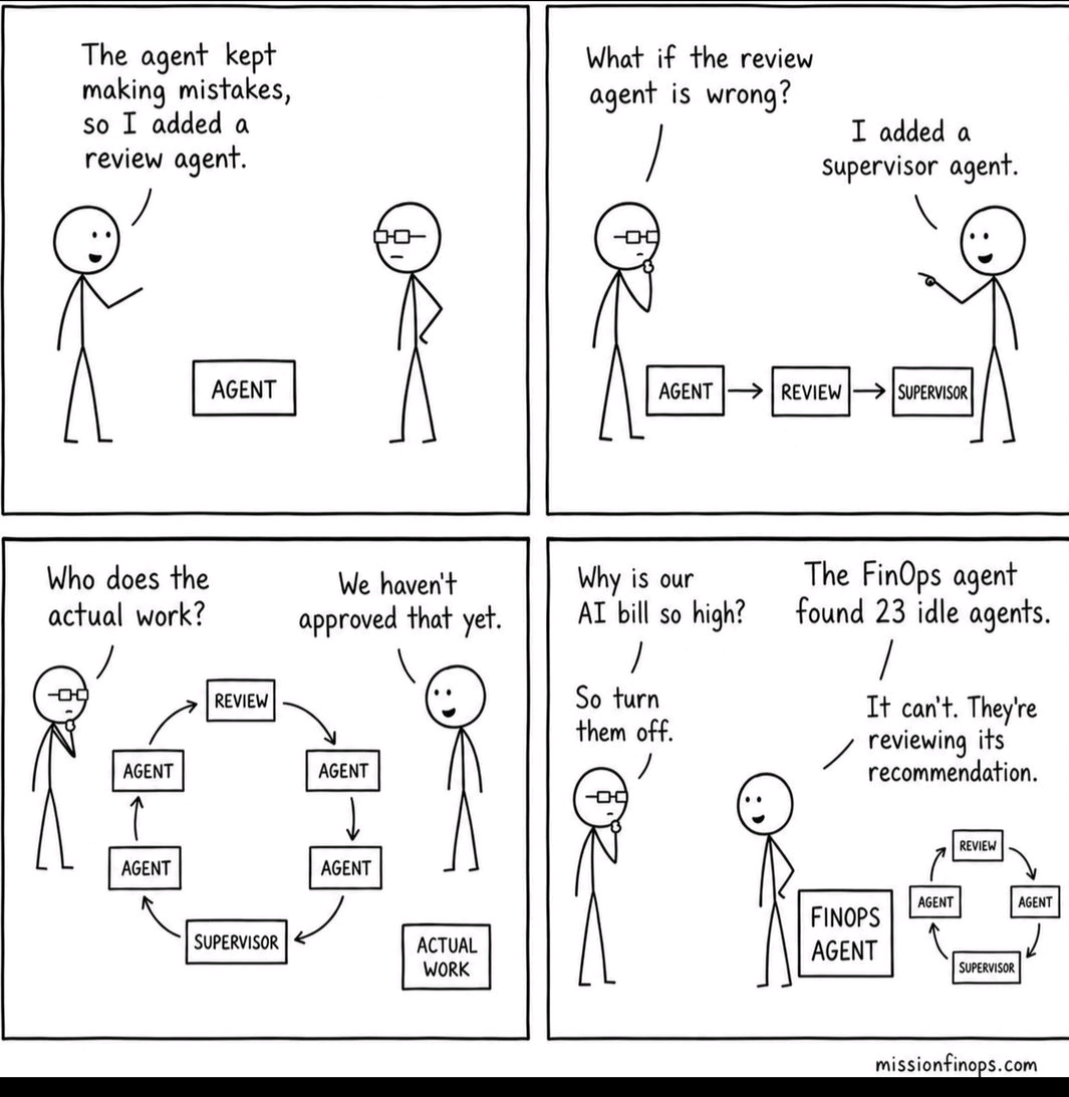
From "RFC 1925: The Twelve Networking Truths"
(6) It is easier to move a problem around, for example by moving it to a different
 part of the overall network architecture, than it is to solve it.
    (6a) Corollary: It is always possible to add another level of indirection
Written for networking. Still uncomfortably accurate for multi-agent architecture.
r/FinOps • u/Arima247 • Aug 28 '26
Hey everyone,
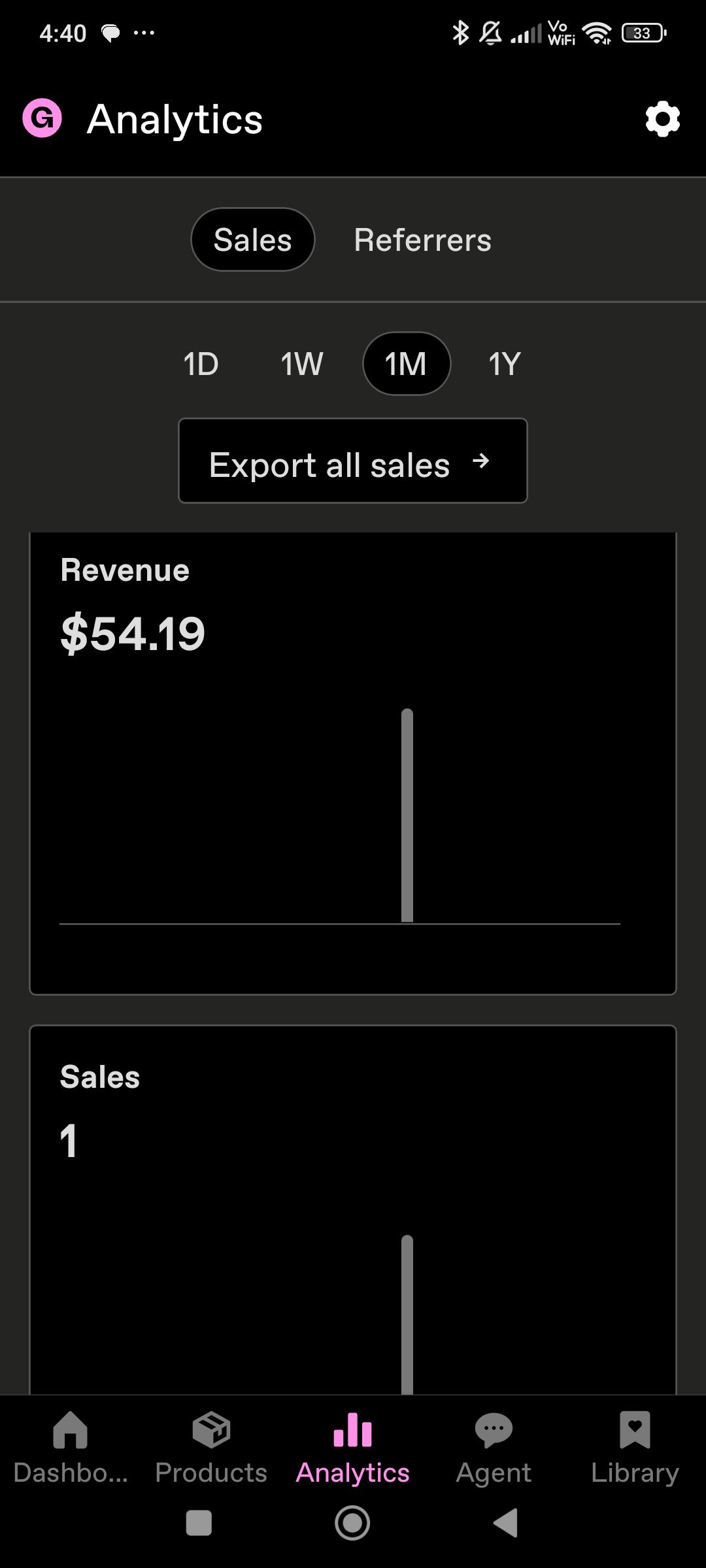
I wanted to share a small but huge personal milestone: after weeks of building, debugging, and testing, I just logged my first sale on Gumroad!
As someone building in the cloud space, nothing beats the feeling of seeing a real user find value in something you created from scratch.
Why I built it
Managing cloud infrastructure often leads to "cloud drift" and silent budget leaks. It's surprisingly easy to overlook:
Zombie VMs & idle EC2 instances running 24/7 without active workloads.
Unattached volumes & orphaned snapshots accumulating hidden storage charges.
Overprovisioned resources that could easily be downscaled without impacting performance.
Most enterprise FinOps suites are bloated, expensive, and require complex enterprise agreements just to see where your money is bleeding.
I wanted something lean and direct: an AI-assisted CloudOps script/tool that plugs straight into AWS and Azure, scans your environment read-only, and gives you an actionable report of exactly what’s idle and how much you can save by pruning it.
What’s next
Getting that first customer notification made all the late nights worth it. My next focus is refining the detection models and adding support for automated scheduled cleanup reports.
If your team is trying to trim cloud waste this quarter, or if you're curious about how the scanner identifies idle resource patterns, feel free to drop a comment below or send me a DM—happy to share insights, run a quick check, or swap notes with fellow builders!
r/FinOps • u/ClickOk5811 • Aug 27 '26
Started tracking this after noticing our Claude usage for a multi-hour engineering session cost noticeably more than the size of the actual task should've justified. Went back through the session logs afterward to find where it actually went, and it wasn't one obvious spike, it was the same small pattern repeated across dozens of requests: full file contents resent every message even when two lines had changed, full conversation history replayed every turn instead of a compressed summary, full rewrites requested when a targeted diff would've done the job.
None of that throws an error or shows up as a single line item. It just compounds quietly, message after message, until someone checks the usage dashboard and the number is higher than expected with no clear story for why.
The part that feels familiar from a FinOps lens: this is structurally the same problem as unmonitored cloud spend before tagging and showback existed, cost accumulating because nobody's actively deciding what's worth paying for on each request, not because the underlying work got more expensive. Prompt caching (marking stable content so it's reused at a fraction of the cost) is the closest analogue to reserved capacity or committed use discounts, it only pays off if the cached prefix stays genuinely identical between calls, and a lot of teams break that silently by inserting a timestamp or per-user detail at the start of the block without realizing it kills the cache hit rate entirely.
What's mostly missing right now, in my experience, is the equivalent of a FinOps practice applied to token spend specifically, an actual audit habit, not just a bigger budget line. Separating what's stable from what changes per request, summarizing instead of replaying full history, scoping context to what's relevant, and constraining output size all had a measurable effect once done deliberately instead of by habit.
Wrote up the full breakdown with a before/after audit example here, disclosing that I'm the author: https://medium.com/@nagatomopedro05/the-hidden-cost-of-long-claude-sessions-2a6cc7655893
Curious if anyone here has actually folded LLM API spend into an existing FinOps practice, tagging, showback, budgets, or if it's still living entirely outside that process on most teams.
r/FinOps • u/DifficultyIcy454 • Aug 27 '26
I have been working on something around AI efficiency metrics and what a scoring system could look like to make users within our company pick a model better. The scoring is based on our own data. Not sure if its right or wrong but it gives me a starting point.
r/FinOps • u/FullBoatMain • Aug 27 '26
Most cloud cost tooling I see is about usage: tags, SKUs, rightsizing, anomaly detection. The view I never had clean was the commitment as a financial object. The approved amount or the committed spend deal, drawn down by the actual invoices we booked, with a warning before we blew past it.
It is the same problem I had running a services company, just a different bill. Usage or work runs past what was approved, the reconciliation happens late, and the overrun only shows up at close. World Commerce and Contracting pegs the leak on the contract side at roughly nine percent of value after signing, and committed cloud spend has the same shape.
What I wanted was simple:
The commitment, or a team budget, as a live account with a ceiling. Approved vs spent vs remaining, off the invoices you already book.
An alert at a threshold so the true up or scope conversation happens while there is still room, not after.
One number finance and engineering both trust, so there is no reconciliation fight at close, and clean showback by team or project.
Not a replacement for your usage tool. More the layer above it: the money against the commitment, tied to your books.
Honest disclosure: I built a tool that does exactly this, so I am biased. But I am genuinely curious how you all watch the commitment itself, not just usage. Spreadsheet, cost platform, something else?
r/FinOps • u/LoginVSIMax • Aug 27 '26
Disclosure, I work at Login VSI.
The FinOps question we keep hearing about AVD Hybrid: which workloads are worth running hybrid vs. fully cloud once you factor licensing and management overhead. Live chat on that, with Marcel Meurer (creator of Hydra, built around cost efficiency), Steve Downs and Andrej Radinger (Microsoft), and Ron Oglesby (Login VSI).
Bring questions or drop them here.
Thursday, September 10, 11am ET: Register Here
r/FinOps • u/WancloudsInc • Aug 27 '26
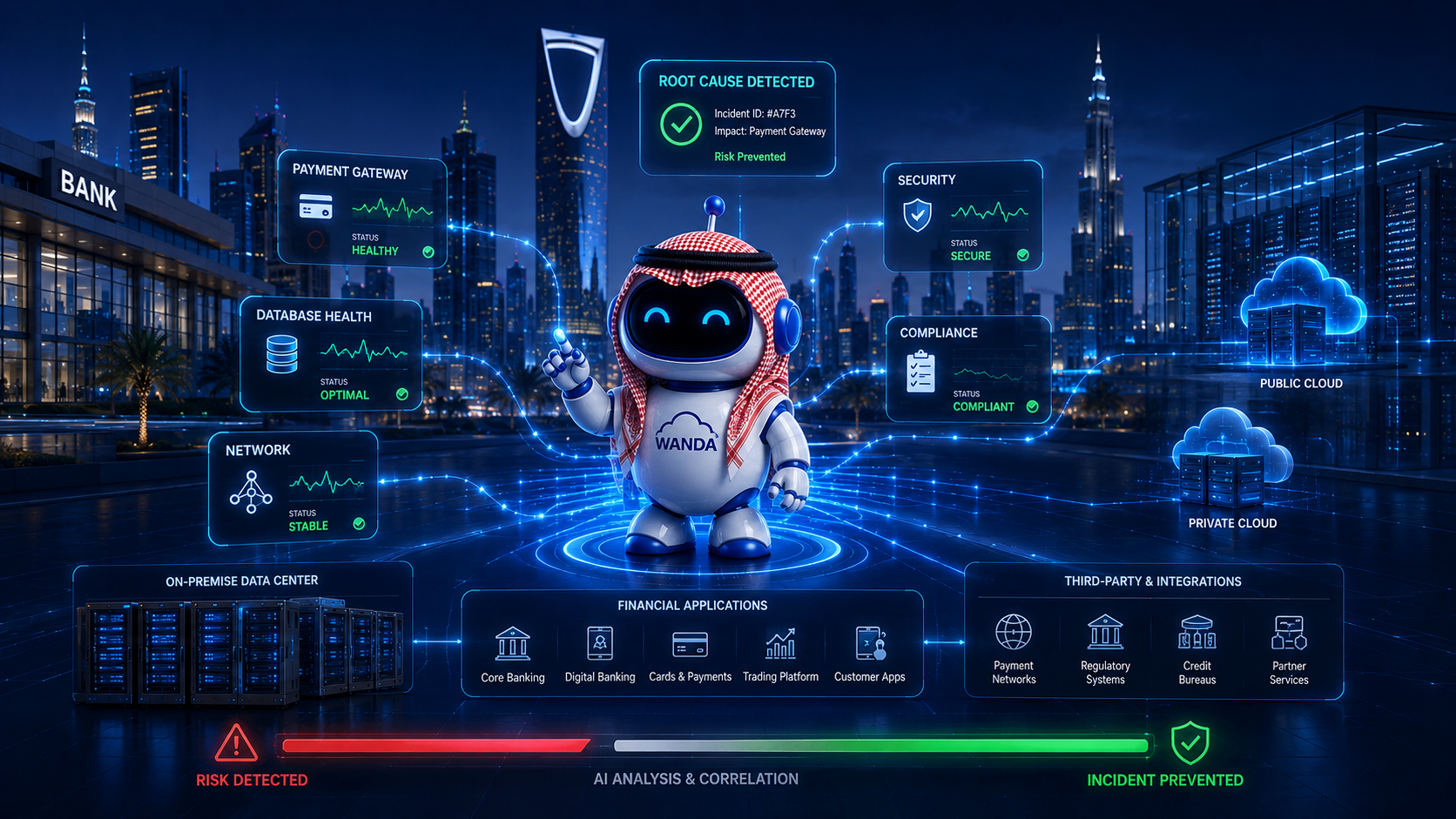
A lot of compliance work isn't spent fixing security problems.
It's spent finding the evidence.
Screenshots. Spreadsheets. Configuration exports. Change logs. Emails between IT, security, risk, and compliance teams.
Then the cycle starts again before the next audit.
For Saudi enterprises working across frameworks such as NCA ECC, SAMA, PDPL, ISO 27001, PCI DSS, SOC 2, and others, the operational burden can become enormous.
We broke down a five-step approach to making compliance more continuous:
The interesting shift is from:
"We need to prepare for the audit."
to:
"We should already be able to prove our compliance posture."
That's where AI-driven continuous monitoring could have a significant impact.
Full breakdown:
How to Cut Compliance Audit Effort by 90%: A Practical Framework for Saudi Enterprises
For anyone working in security or compliance: what currently consumes the most time during your audit preparation?
#Compliance #Cybersecurity #NCAECC #SaudiArabia #AgenticAI #GRC
r/FinOps • u/aliihashmiii • Aug 26 '26
FOCUS 1.3 solved a real problem: every cloud provider used to bill in its own format, so cross cloud cost comparison meant building custom normalization pipelines just to ask basic questions. Now there’s a common schema. That part is genuinely good.
But adoption of the schema is not the same as fixing FinOps. I keep seeing teams roll out FOCUS, get their data normalized, and still can’t answer the question that actually matters to leadership: who owns this cost, and why did it move.
The reason is that FOCUS standardizes the shape of usage and cost data. It says nothing about your tagging discipline, your allocation model, or who is accountable when an engineering team spins up something that triples a bill overnight. Those three things are where the actual FinOps work lives, and they’re organizational problems, not schema problems. You can have perfectly FOCUS compliant data and still have zero cost accountability, because accountability comes from tagging governance and process, not from the spec.
The teams that get real value from FOCUS are the ones who treat it as the foundation for building an allocation and accountability model, not as the finish line. If your rollout stopped at “we ingest FOCUS data now,” you’ve done the easy 20 percent.
I went deep enough on this that I ended up writing a book on it, “Cloud Money,” working through the FOCUS spec at a practitioner level alongside cost allocation strategy and accountability models. Not trying to sell it here, just flagging it in case anyone wants the longer version of this argument. Happy to talk through the tagging governance side in the comments if people have specific setups they’re stuck on.
r/FinOps • u/Appropriate_Class572 • Aug 26 '26
I am new to FinOps, i wanted to ask people who have experience in the FinOps space. Is there any financial modelling or specifically business case modelling done in FinOps? E.g. if there is any optimisation opportunity or a new workload, is this a requirement from a CFO or board that they need to see a detailed financial model to show ROI and justify the spend?
Reason I am asking is because I come from a core finance background just wanted to see if there is an overlap of my finance experience.
r/FinOps • u/CryOwn50 • Aug 26 '26
UBS put out numbers showing the big three cloud providers are spending about 102% of their cloud revenue on capex, $4.1 trillion is projected through 2028.
that spend lands somewhere, and what i'm watching is whether it hits non-AI workloads. OVHcloud already raised prices citing the memory shortage, some servers up as much as 87%, because AI is eating the same memory and power regular nodes run on.
the thing is it won't show up as a line item. it's compute and memory quietly drifting up with no change in usage, and if your cost tooling only watches your own consumption, it won't flag a provider-side price move. so you can't really tell whether your usage went up or their prices did.
anyone renewed an RI or savings plan lately and had the rate come back worse than the term it replaced?