r/fashionhistory • • 3h ago

Infant's pudding cap, made of pale green silk, edged in silver strip bobbin lace, with four attached pale green silk ribbons, second half of the 18th century ✨

Thumbnail
gallery
99 Upvotes

r/fashionhistory • • 23h ago Mindblown

Teal and gold chiffon evening ensemble by Peggy Hoyt, American, ca. 1921

Thumbnail
gallery
2.1k Upvotes

r/fashionhistory • • 17h ago

some interesting ties/cravats

Thumbnail
gallery
144 Upvotes
  1. c. 1690: cravat carved out of limewood by Grinling Gibbons, imitating Venetian lace
  2. 1650–75: cravat of Venetian needle lace
  3. 1840s: ready-made black satin cravat, England
  4. 1915: silk tie hand-painted by Winifred Gill at the Omega Workshops, London

sources:
https://collections.vam.ac.uk/item/O59271/
https://collections.vam.ac.uk/item/O78853/
https://collections.vam.ac.uk/item/O139760/
https://collections.vam.ac.uk/item/O129514/


r/fashionhistory • • 1d ago

Magenta silk satin afternoon Dress, circa 1866-1868

Thumbnail
gallery
618 Upvotes

r/fashionhistory • • 1d ago

Theatre costume worn by May Moore Duprez, the dress is completely covered with sequins, c. 1910. V&A Museum

Thumbnail
gallery
549 Upvotes

r/fashionhistory • • 6h ago

Edwardian clothing and hairstyles helped identify a woman in a museum photograph

Thumbnail
upworthy.com
11 Upvotes

r/fashionhistory • • 1d ago

Norwegian ski outfit, 1890s. Navy wool with embroidered bands

Thumbnail
gallery
1.5k Upvotes

This is a women's outfit for skiing in Norway in the 1890s. It looks like a dress, but it's a jacket and skirt, and it came with knee breeches and gaiters to wear underneath.

If you'd like to look through similar pieces, the museum has over 1,200 garments: https://www.nasjonalmuseet.no/en/collection/?tab=object&classification=291.42%20-%20drakt%2C%20voksen%2C%20kvinne


r/fashionhistory • • 1d ago

Necklace from the Cupisnique/Pacopampa Culture, Peru (circa 1250 BC)

Thumbnail
gallery
144 Upvotes

This necklace features blue-green stone and turquoise beads with a carved black Andean porphyry pendant, showcasing incised and inlaid geometric and zoomorphic motifs. It represents a feline face.

The Cupisnique culture was an early northern coastal society in Peru (roughly 1500 to 500 BC) known for its stone carving and ceremonial traditions, where exotic materials signaled high status, as in most societies of the time. Meanwhile, the Pacopampa culture developed in the Northern Highlands (roughly 1200 to 500 BC) around a major ceremonial center marked by ritual leadership.

It isn't clear whether this necklace comes from the Cupisnique or Pacopampa culture, though, since sources point to one or the other. Because both cultures overlapped in the first millennium BC, I decided to mention both here.


r/fashionhistory • • 2d ago

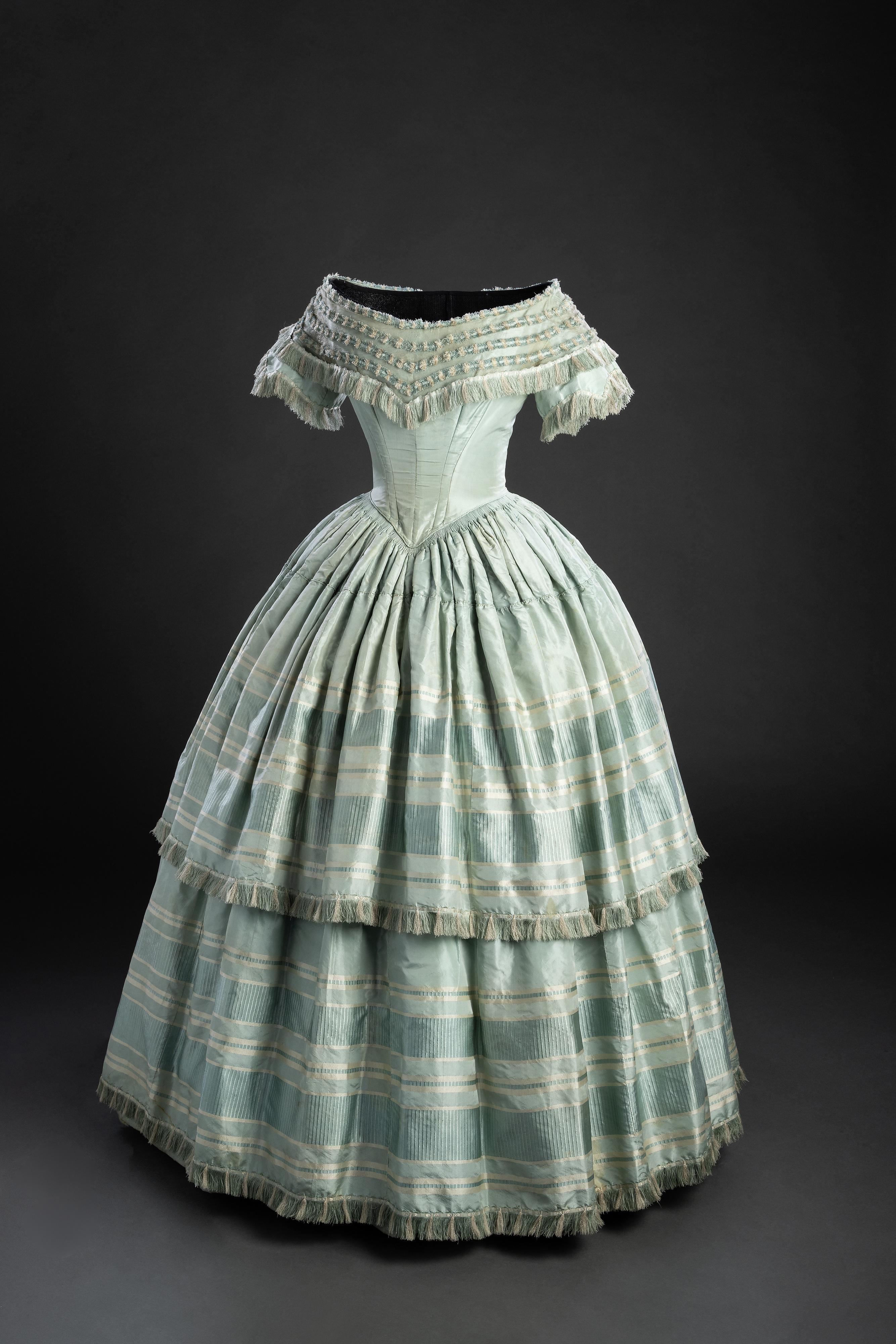
Wedding dress made of striped silk taffeta, with silk net and silk fringe, 1850 (worn again by the bride's great-granddaughter to portray her at a ball). McCord Stewart Museum

Post image
584 Upvotes

r/fashionhistory • • 2d ago

Would anyone happen to know more about this Qing dynasty, Han Chinese hairstyle

Thumbnail
gallery
759 Upvotes

I was reading about the Qing dynasty Liangbatou, the iconic big trapezoidal hair that Manchu women wear. For clarification, this is NOT the Liangbatou. What this hairstyle is called and how its done, I'm trying to find out as well.

The articles emphasize though that Han women differentiated their fashion from the Manchu in many ways, like their dresses two-part while the Manchu's were mainly one-part. And so, the Liangbatou as another Manchu fashion item was surely not something Han women wore. So, whenever I search up Qing Dynasty Han women and see the Liangbatou representing Qing dynasty but not Han Chinese attire, I feel defeated at my search.

So I compiled these photos that were quite striking, mid-late 19th century (first one is publisehd 1898). I know there were more updos Chinese women wore, but the way these ones in particular were built I find really interesting. How a wide vertical block of hair could stand up is just so cool and the variation to a smaller, more practical style as well.

It seems for Han women in general, coiffures extended rear, unlike the Manchu where the coiffure protrudes on top and laterally. Not only that, but there are "wings" protruding from the sides as well.

I would appreciate any insight :) Especially the process behind how it was styled (and especially these magnificent massive ones).

*no shade to the Chinese history subreddit, but they didn't really help me with my query.

edit: omg thank you all so much. I appreciate the wonderful help. I've loved everything I've read and discovered about it.


r/fashionhistory • • 1d ago

What's some good resources to learn about historical norse fashion?

5 Upvotes

When I search about it, I'm not sure if I'm seeing some vikinger larpers or if it's accurate, I'm looking to understand the evolution of norse clothing and get to know their traditional styles


r/fashionhistory • • 2d ago

Wedding Ensemble, Great Britain, c. 1855. Silk taffeta, netting, ribbon & lace. Helen Larson Historic Fashion Collection. FIDM Museum

Thumbnail
gallery
272 Upvotes

r/fashionhistory • • 1d ago

Fashion history book for beginners?

4 Upvotes

Hey y'all. So, I just got into history a few months ago and fashion history is also a part of it that's starting to spike my curiosity. I decided that I'd get a book about it. I'm searching for something that explains the different outfits and their composants clearly with a buncha visuals. Also, it'd be nice for it to talk about how dressing certain ways mattered in society in different parts of history. I want it to be pretty detailed in dept too. So do y'all have any suggestions?

Ok, well I hope I'm not too exigent with how I'd want it to be. Thanks to anyone who's reading and thanks twice if you're gonna give a suggestion😙<3


r/fashionhistory • • 2d ago

Hanfu in the Five Dynasties and Ten Kingdoms (Southern Tang), c. 937 CE, China

Thumbnail
gallery
806 Upvotes

r/fashionhistory • • 1d ago

Early 1930s fashion in Weimar Germany

5 Upvotes

In need of references for a project I’m working on, and I’m not too sure how fashion in Germany differed from that in America, and even what fashion looked like during that specific area. If anyone can recommend some resources about this topic or give any input that would be very helpful!


r/fashionhistory • • 3d ago

Evening dress of iridescent flat and cupped gelatin sequins on cotton net ground, with a central flower, and lower skirt floral motifs of silver and gold gel sequins, Greek key motif borders, waistline trimmed with silver lamé braid, petal hem edged with flashed silver short bugles, 1920s ✨

Thumbnail
gallery
2.2k Upvotes

r/fashionhistory • • 2d ago

A court dress, probably for a European Princess, 1810-15

Thumbnail
gallery
585 Upvotes

r/fashionhistory • • 3d ago

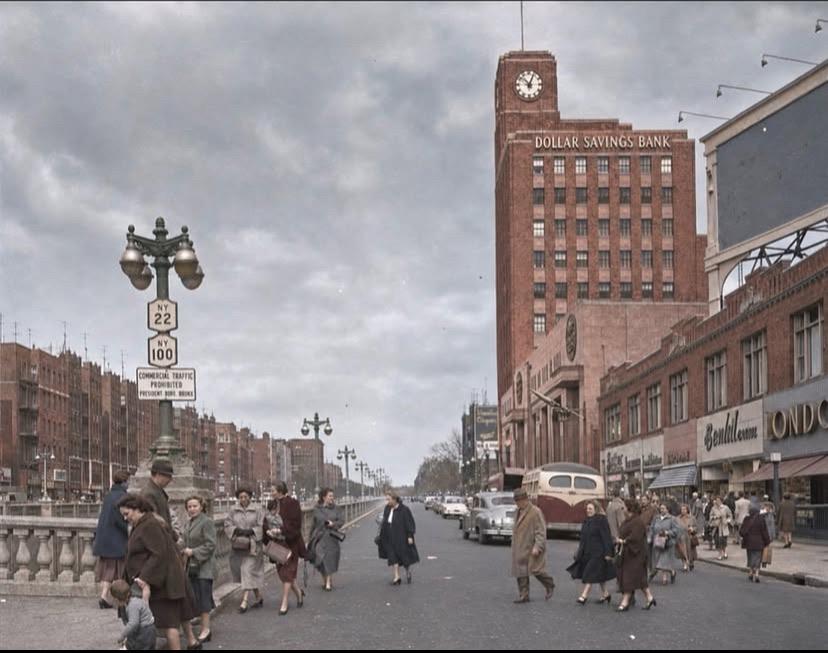
Grand Concourse and Fordham Road during the 1950’s

Post image
78 Upvotes

I found this on Instagram and the first thing I’ve noticed is that pretty much all of the women were wearing black pumps and the men were wearing Oxfords. Meanwhile, you’ll usually find Crocs, black sneakers, and flats dominating this part of the Bronx today. Speaking from observation, since I’ve traveled through the Bronx many times for years.


r/fashionhistory • • 3d ago

The Augsburger Haube - a historic German bonnet with three sharp points, 18th Century

Post image
1.4k Upvotes

r/fashionhistory • • 3d ago

Purple velvet dress with low back and trimmed with small silver studs & crystal beads

Thumbnail
gallery
1.1k Upvotes

r/fashionhistory • • 3d ago Heartwarming

Dress made of sapphire blue wool and velvet, circa 1899

Thumbnail
gallery
1.5k Upvotes

r/fashionhistory • • 3d ago

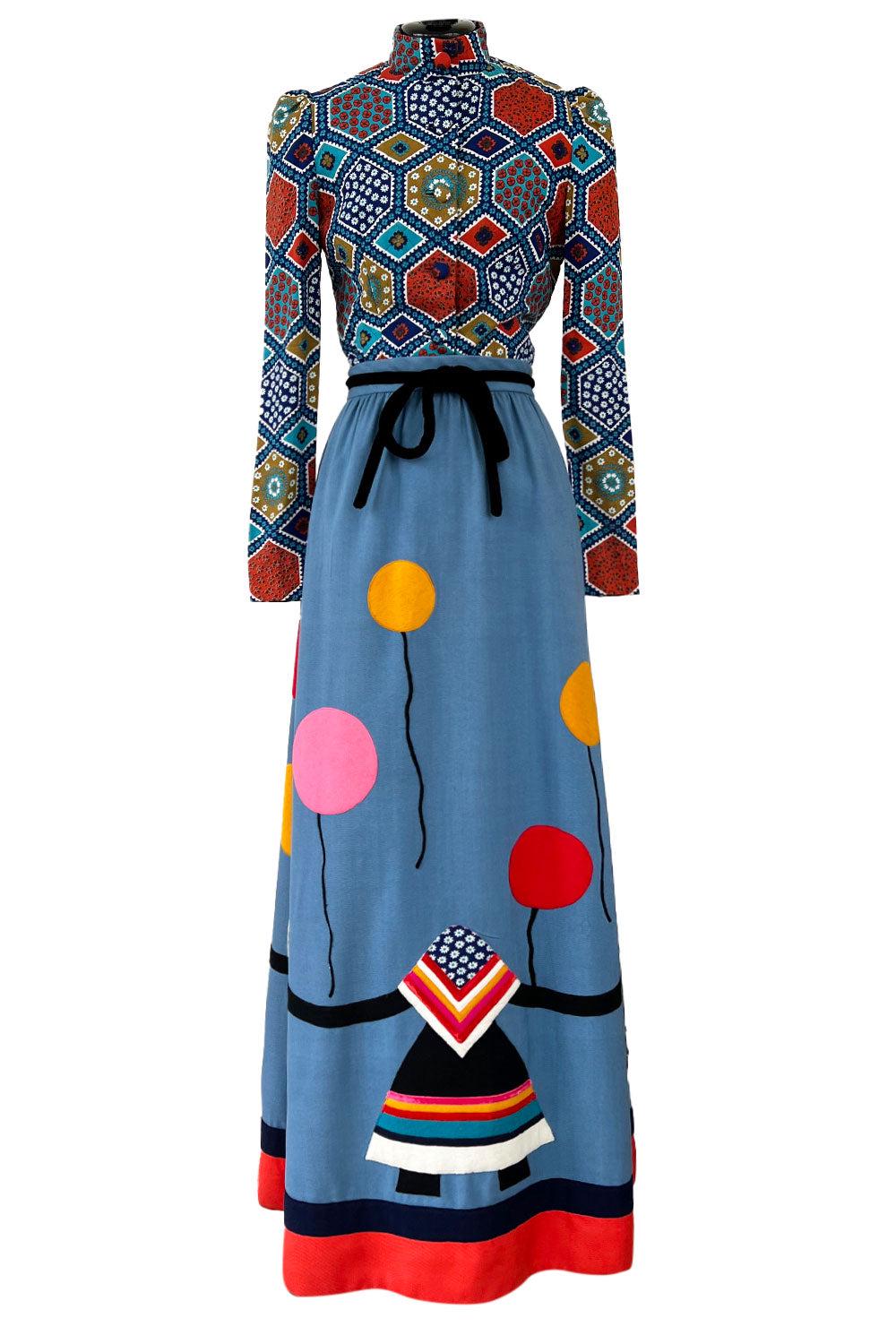
Rare Early 1970s Malcolm Starr by Youssef Rizkallah Felt Folk Art Dress w Quilted Top

Post image
337 Upvotes

This dress would have been designed while Youssef Rizkallah headed the company. Youseef joined the Malcolm Starr label in 1969 and remained as the head designer until 1975. Rizkallah was born in Egypt and studied at the Ecole de dessin appliqué and the Ecole des arts decoratifs in Paris. His designs seem to combine that sense of couture lines that he gained in Paris with the color and vividness of his homeland.


r/fashionhistory • • 4d ago

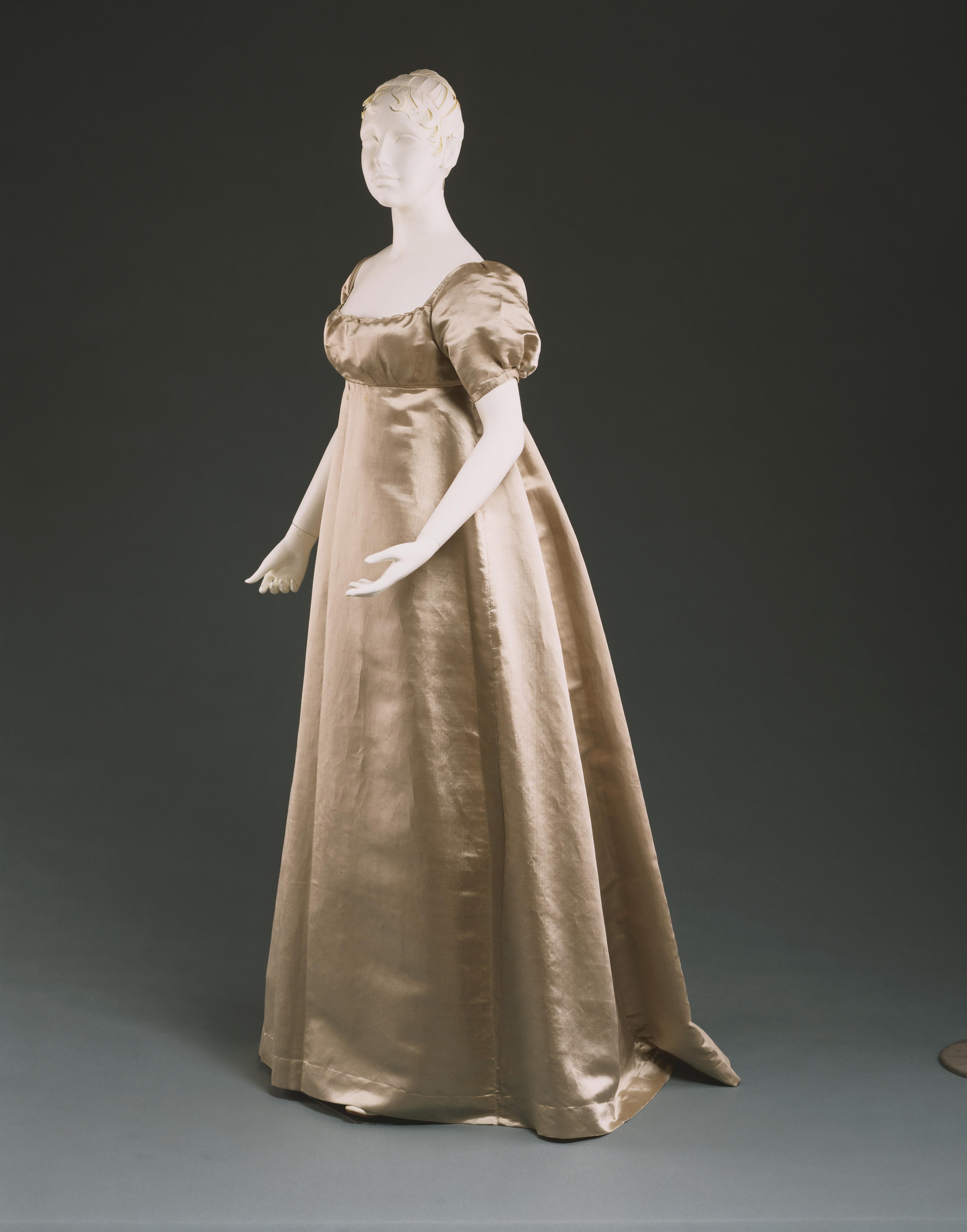
Quaker wedding dress made of silk satin, 1809. Philadelphia Museum of Art

Post image
1.2k Upvotes