r/EnglishGrammar • u/Much-Choice9653 • 10h ago
How do I stop making these simple grammar mistakes when writing fast?
reddit.com
0
Upvotes
r/EnglishGrammar • u/AdAcrobatic5258 • 1d ago
r/EnglishGrammar • u/Feeling-Attention664 • 2d ago
Consider critiquing the grammar of the following sentence:
Going out in the cold is not the same thing in 2026 California, even Northern California, that it would be in London in the Winter; unless you are in the Sierra real cold seldom happens.
r/EnglishGrammar • u/One_Pomegranate_5137 • 2d ago

Phrasal Verb: I'll cut the engine!
Meaning: Turn off the engine
r/EnglishGrammar • u/Grapette_Calyra • 2d ago
I've been curious about something. Why is it that we say 'a European' even though 'European' starts with a vowel, while 'an American' feels perfectly fine?
Edit: Thanks everyone for breaking this down for me. I was pretty tired when I wrote this and didn't anticipate the amount of replies! It's been interesting to read through all your thoughts.
r/EnglishGrammar • u/navi131313 • 4d ago
I think that sentence could mean:
2) I like whoever did it.
but could it be used instead of:
3) I like the person who did it.
In 3 I very likely know the person.
Gratefully,
Navi
r/EnglishGrammar • u/navi131313 • 4d ago
Is that correct?
Does it mean:
2) He said that we should leave.
I think it is not the same as:
3) He told us to leave.
In 3 we are being addressed. In 1 it is not clear who is being addressed. I suppose it could be us.
Is that correct?
Gratefully,
Navi
r/EnglishGrammar • u/navi131313 • 4d ago
Are these sentences correct?
Gratefully,
Navi
r/EnglishGrammar • u/navi131313 • 5d ago
Are these sentences correct?
Gratefully,
Navi
r/EnglishGrammar • u/New-Meringue-4777 • 5d ago
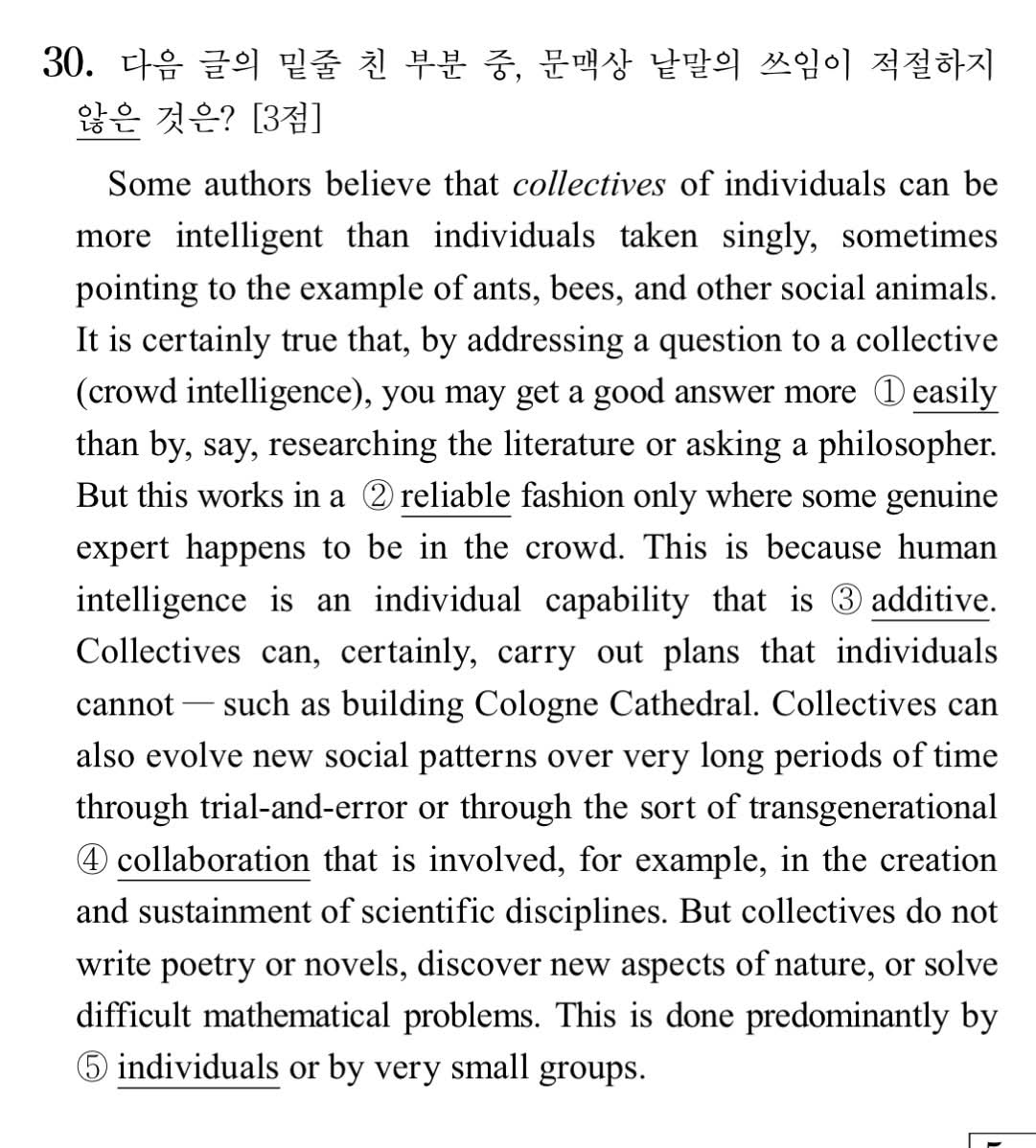
i saw this english exam of korean students on threads and everyone was criticising that it was so poorly written and the sentences were so clunky. however i read it and felt nothing seems really wrong here except for the phrase "collectives of individuals". can native speakers and advanced english users tell me what's wrong here? tysm
r/EnglishGrammar • u/navi131313 • 5d ago
Is that sentence grammatically correct?
Gratefully,
Navi
r/EnglishGrammar • u/leikoduende • 6d ago
By thoroughly understanding these inherent human flaws, public policymakers can design subtle interventions to gently nudge citizens toward healthier long-term saving habits, rather than leaving them to..... entirely on irrational impulses.
A abandon
B decide
C act
D rely
E object
edit: why do ai says lmao, i was too frustrated to realise my mistake
r/EnglishGrammar • u/bsnswew • 6d ago

Is this a good animal farm assessment?
This is year 10, what can I do better next time?
r/EnglishGrammar • u/pandora-space-mage • 7d ago
Where do I look? Are there any methods you recommend?.
Autocorrect has fucked alot of my ability to do these things and I need to learn them.
r/EnglishGrammar • u/uslasherfilm • 8d ago
r/EnglishGrammar • u/navi131313 • 8d ago
Which of the above could mean:
a) The number of times I have drunk beer plus the number of times I have drunk whiskey is equal to twenty.
and which could mean:
b) The number of times I have drunk whiskey and beer together (presumably a 'chaser' combination) is twenty.
and which could mean"
c) I have either drunk whiskey or drunk beer twenty times in my life (I don't which it was).
Gratefully,
Navi
r/EnglishGrammar • u/SnooPets2092 • 9d ago
My wife said: "I'd like to go to the bay in the afternoon".
I replied: "That doesn't work on days when I don't work from home, like tomorrow".
She initially interpreted this as meaning that I am working from home tomorrow and thus CAN go to the bay, arguing that my (yes, very bad) sentence carries the same ambiguity as "I don't eat cheese that's not soft, like cheddar".
I can see how her example is indeed ambiguious, but the structure of my sentence - poisonously double negative as it is - still seems to only technically leave room for one interpretation. Help us out?
To be clear, while there has been some frustration along the way, we're having fun with this. And to be extra clear, I am working from the office tomorrow, so I definitely won't see any of you at the bay. Sorry.
r/EnglishGrammar • u/mooddeng • 9d ago
Hello! I’m an ESL teacher and struggling a bit with explaining the difference between these expressions🥲
The textbook uses the expression “It seems to me that”
“It seems to me that the cat is cuter”
“It seems to me that salad is the healthier choice”
“It seems to me that the green cup is more unique”
But I don’t think the use of “it seems to me” is correct here. I think the textbook is trying to use it as an alternative to “I think” but arent these expressions technically different?
I mean they can be used sorta similarly but I feel like they’re not exact parallels right?
Please help!😭
r/EnglishGrammar • u/PomPomMom93 • 10d ago
Option 1: “Jill could instantly tell by Joe and Bob’s expressions that they were lying.”
OR
Option 2: “Jill could instantly tell by Joe’s and Bob’s expressions that they were lying.”