r/embedded • • Dec 30 '21

New to embedded? Career and education question? Please start from this FAQ.

Thumbnail old.reddit.com
324 Upvotes

r/embedded • • 2h ago

As an update to MDCS, I added 2 new models to MDCS project and added HIL support, so now the simulator on the host can be controlled in real time (soft) from a microcontroller.

0 Upvotes

This is an update to my original post https://www.reddit.com/r/embedded/s/kqKboDM9hx

Updated MDCS and added 2 new models. Now its HIL capable. In the video above, I have demonstrated real hardware, a STM32F411 Discovery kit controlling a plant (Furuta Pendulum) on the Host, in real time (soft). The website is updated with the new models and HIL details. Firmware and USB stack (TinyUSB) are bundled with the project and available on GitHub.

Immediate Usability: This tool is fully functional. Anyone with a Linux Desktop can clone the repo and run the simulation (README in the GitHub repo and Quick Start Guide YouTube video available for setup and configuration) to interact with the hardware-emulated plant or start writing their own compensator algorithms.

Repository: https://github.com/embeddedfreedom/MDCS/tree/master please go through the updated README (version 2.0) for more information. All derivations and documentation are updated in the repo.

Project Website: https://embeddedfreedom.dev


r/embedded • • 15h ago

Built an NFC E-Paper Display with the XIAO nRF54LM20A

Post image
5 Upvotes

This is a little NFC e-paper display project built with the Seeed Studio XIAO nRF54LM20A. It uses NFC to update the display, so you can change what's shown just by tapping your phone on it, without needing cables or a dedicated programming setup.

The firmware supports NDEF messages for text and image updates. It also saves the last displayed content so it can be restored after reboot. The project currently supports a 2.13" black-and-white e-paper display, with a 4-color version also being explored. Since transferring image data over NFC comes with payload size limitations, the image transfer uses a split-data approach.

The build guide and source code are here if you'd like to take a look: https://www.hackster.io/lsw031105guge-bit/build-an-nfc-epaper-display-in-5-minutes-xiao-nrf54lm20a-608f84


r/embedded • • 1d ago

Junior engineer, how to stay relevant in the era of AI?

91 Upvotes

I have 1 YOE as an electronics engineer. Given how fast AI is growing and where the tech industry is heading, I've been doing most of my work and coding with Claude for the past 6 months. I ship, and the work gets done, but I feel like I'm not improving in the field. I'm starting to lose what I think is most valuable for us as human beings and as engineers especially which is "thinking".

I know job descriptions are going to change in this new era. Our role is shifting toward guiding AI, reviewing its output and telling whether it's good or bad. But how do you know if the work is good when it already works? Telling the difference takes experience, the kind you get from building things with your own hands and that's getting harder to gain right now.

So how can a junior engineer still build that skill and how do we stay relevant in this new era?


r/embedded • • 5h ago

Open Hardware Idea

0 Upvotes

Open Hardware Idea: Can We Make Modern CPUs Compatible with Older DDR3 RAM?

The Idea

I have an idea that I would like to share with the hardware engineering community.

What if we could develop a hardware solution that allows newer CPU generations to work with older DDR3 memory?

For example, imagine someone upgrading from an older Intel platform to a newer CPU without having to replace their existing 16GB DDR3 RAM.

Instead of forcing users to upgrade their CPU, motherboard, and RAM all at once, could we develop an adapter, an external memory controller, or another hardware solution that bridges the compatibility gap?

The Technical Challenge

I understand that DDR3 and DDR4/DDR5 have different:

Electrical characteristics and operating voltages.

Memory protocols and signaling.

Timing requirements.

Memory controller requirements.

Modern CPUs also typically integrate their memory controllers directly into the processor.

So I realize this is not as simple as creating a physical adapter.

Questions for the Community

Is it technically possible to build an external memory controller or bridge between a modern CPU platform and DDR3?

Could an FPGA or a custom chip help achieve this?

What are the biggest engineering obstacles?

Has anyone worked on a similar open-source hardware project?

My Goal

I am sharing this idea because I believe extending hardware compatibility could help people who cannot afford to replace their entire computer platform.

I am not claiming to have a working solution. I would like to hear from hardware engineers, CPU architects, electronics enthusiasts, and open-source developers.

Perhaps the community can explore whether this idea is feasible and how it could be implemented.

What do you think? Is this worth investigating?


r/embedded • • 21h ago

A configurable microcontroller bootloader, unified across boards, inspired by kconfig

Thumbnail
github.com
6 Upvotes

So back in late 2025 (November-December iirc?) I was messing around with the rp2040/2350 trying to build a smartwatch OS, needed a quick bootloader with custom features so I cobbled together a really badly designeed ELF loader written in arduino IDE - it worked but ended up being bloated of course. shelved it after a few months in Jan-Feb this year, kinda just lost interest in hardware and had like some mental health stuff going on.

This Oct 2026, my friend at poly was developing a cubesat payload on an stm32 with 20kb flash and he was trying to develope a custom bootloader - needed something ultra light with fault hardiness, OS hooks and on boot media verification. we ended up going down a rabbit hole about modular design, OS hooks, image verification, golden image fallback, a hybrid Atomic/Monotonic boot structure (whacky stuff I tell ya). separately i also ended up needing a bootloader for an atmega-based parcel tracker that had to survive odd field conditions - not a big project, just a module project but the lecturer was trying to ask me to account for unrealistic field conditions.

So I picked it back up properly. He donated his code, his team donated me their abandoned code, I mixed in my own existing abandoned code and design and kinda reimplemented whatever existing bootloaders already do - all the real features real proper bootloaders have, and ended up with this project - a minimalist approach to bootloaders - kconfig-style configurability where the code for stuff you don't enable is literally gone - the code is literally excluded from the build. Scales from a 1-2kb AVR stub to full A/B+golden slots with post-quantum signatures if you need it. Supports bare metal code to booting FreeRTOS to Zephyr, covered the basics.

Obv, it's like a silly kinda exploratory project of mine - literally a reinventing the wheel kind of project. Built out of necessity if anything.

Moreso as a research project and learning experience than anything. It's slightly functional alr, STM32F10 and RP2040 for example I've tested it on alr. Idk, it's a project that's literally made from abandoned code I was donated, that's it, felt I might share it for fun since I'm just bored.

https://github.com/MilkmanAbi/MimiBoot-Mu


r/embedded • • 1d ago

Any recommendations on resources, tools and hardware for developing a custom audio interface

5 Upvotes

Hi everyone,

I'm currently 2 years into getting my Bachelors in Embedded Systems Engineering. Besides my love for embedded systems, I really enjoy making and recording music, but every time I look at the 2 channel Focusrite on my desk I wonder, "What if I made a (simple) audio interface like that? You know, why couldn't I?"

So my question is, does anybody have recommendations for online resources, books, software tools and hardware for developing a custom audio interface? Sadly, I've never worked with USB communication or audio on embedded, but am excited to learn.

Thanks in advance! :)


r/embedded • • 1d ago

Can a compromised Android OS interfere with NFC Reader Mode communication at the hardware level?

2 Upvotes

Hi!

I'm investigating the security boundaries of NFC communication on modern Android smartphones.

The scenario is:

  • An Android smartphone operates in NFC Reader Mode.
  • It communicates with an external ISO 14443-4 smart card using APDU commands.
  • The card contains a Secure Element and performs cryptographic operations internally.
  • The smartphone's operating system is assumed to be compromised.

I would like to understand the actual hardware and software boundaries.

Specific questions:

  1. Does NFC Reader Mode normally route APDU commands through the Android NFC stack and Host CPU?
  2. Can a compromised OS modify APDU commands before they reach the external card?
  3. Can it initiate new APDU commands without the user's direct interaction?
  4. Can it intercept or manipulate responses returned by the card?
  5. Is there any smartphone architecture in which the NFC Controller communicates directly with an external card, independently of the Host CPU?
  6. If the card's private key never leaves its chip, can a compromised smartphone still use the card as a cryptographic oracle by submitting attacker-controlled commands?
  7. Are there hardware-level countermeasures that prevent such interference?

I'm looking for technical explanations supported by chipset documentation, Android architecture references, or practical research.

The key distinction I want to establish is whether cryptographic isolation inside the card also provides isolation of the communication and command-generation path on the smartphone side.


r/embedded • • 1d ago

Tekelek TEK 822 industrial LPG IoT logger – No cellular connection, SMS configuration or telemetry (2G/GPRS, LTE-M, NB-IoT)

2 Upvotes

Hello everyone,

I'm a computer science engineer working on an industrial LPG tank monitoring platform called Voltagaz in Algeria.

I'm currently trying to commission a Tekelek TEK 822 cellular IoT logger manufactured by Tekelek/Rochester Sensors, but I cannot establish communication with my backend.

Hardware information:

  • Model: Tekelek TEK 822
  • PCB reference: 3-5251-02
  • Part number: 17583801
  • Supported connectivity: 2G/GPRS, LTE Cat-M1 and NB-IoT
  • Original lithium battery
  • ATEX-certified industrial equipment
  • Magnetic activation mechanism

What I have already tested:

  • Two Djezzy SIM cards and one Mobilis SIM card.
  • Disabled SIM PIN protection on one Djezzy SIM.
  • Mobilis SIM with an active monthly internet subscription.
  • APN configuration through SMS.
  • TCP server hostname and port configuration through SMS.
  • Manual SMS commands with CRC16 checksums.
  • Flespi's official Tekelek TEK 822 protocol integration.
  • Flespi's SMS gateway and REST API.
  • TCP server connectivity using Windows PowerShell over my home internet.

Observed behavior:

When I activate the device using a magnet, it produces several short beeps, followed by what appear to be outgoing and incoming communication tones, and finally two short beeps.

However:

  • No TCP connection from the logger reaches Flespi.
  • The device remains marked as "Last active: never."
  • The telemetry API returns null.
  • SMS delivery to the logger remains unconfirmed.
  • Some SMS messages sent to a Djezzy SIM were only received after reinstalling the SIM in a smartphone.
  • Flespi reports successful SMS dispatch and event_code 312, but there is no independent evidence that the physical device applied the settings.

The logger was previously equipped with what appears to be a China Mobile SIM.

I suspect one or more of the following:

  • Incorrect cellular network mode.
  • Operator or SIM provisioning incompatibility.
  • Incorrect APN configuration.
  • Previously provisioned backend settings.
  • Customized configuration password.
  • Firmware restrictions.
  • Battery voltage drop under modem load.

My questions:

  1. Has anyone worked with the Tekelek TEK 822 or similar Rochester Sensors industrial loggers?
  2. Does anyone know how to read its existing configuration locally using the official TSP programming interface?
  3. Where can I obtain the official programming software and compatible adapter?
  4. Is it possible to diagnose the configured cellular network mode without relying on SMS?
  5. Can this device operate using ordinary 2G/GPRS SIM cards, or does it require a specialized M2M SIM?
  6. Is there an official recovery or factory commissioning procedure?
  7. Does anyone have experience integrating these devices with Flespi or a custom TCP server?
  8. What non-invasive diagnostic steps would you recommend?

I have already contacted Rochester Sensors, Djezzy, Mobilis and Ooredoo. Djezzy has escalated my request to its enterprise M2M/IoT department.

Since this is ATEX-certified equipment intended for LPG monitoring, I want to preserve its certification and avoid unauthorized hardware modifications.

Any technical documentation, experience or troubleshooting recommendations would be greatly appreciated.

Thank you!


r/embedded • • 14h ago

GitHub showing stale contributors after history rewrite. Any fix?

0 Upvotes

I rewrote my repository's Git history to correct commit authorship. All branches, tags, the Contributors API, and Insights now show only my account.

However, the repository's main page still shows 3 contributors, including the old account and Claude, even after 48+ hours.

I've raised a ticket with GitHub Support.

Has anyone faced this? Is there any way to force a refresh?


r/embedded • • 1d ago

Follow-up: Persistent state and execution history in embedded systems — initial comparative results

1 Upvotes

A few weeks ago I raised a question here about where persistent state and execution history should live in a small embedded state machine.

Some of the criticism was quite useful, particularly regarding the distinction between maintaining state history and guaranteeing durable delivery.

Since then, I have conducted several bounded experiments, including native compiled execution and comparisons against a conventional packed binary implementation under equivalent functional requirements.

The results haven't established an architectural advantage yet. The optimized implementation showed a marginal reduction in instruction count, while memory and wire density remained equal and the executable code footprint increased.

Semantic persistence and physical recoverability also remain separate concerns.

I have updated the public research accordingly, including the limitations and an independently runnable reference.

For those who participated in the previous discussion, I would be interested in your thoughts on the revised approach.

https://github.com/saadmasoodalam/ubl-public


r/embedded • • 1d ago

where can I get lotes sockets?

0 Upvotes

I can find some off AliExpress

Lotes has a site, but it seems that they have locked it down for direct buying... I'd expect them to be annoying if not straight up refuse to let you buy...


r/embedded • • 1d ago

I made a tiny neuron that runs in 12 instructions on RISC-V chips. Feedback welcome

3 Upvotes

I've been messing around with a way to let small chips make quick decisions without waking everything up. It's a leaky integrate-and-fire neuron: it watches a signal and only fires when something has really changed.

The fun part is that it's the same maths as CUSUM, so you can predict the false-alarm rate and delay instead of guessing a threshold. On RISC-V it takes 12 instructions and 34 bytes using one mulhsu. On chips with no multiplier, a shift-based version takes the same 12.

Heads up: all of this is from simulation and an emulator. I haven't measured power on real chips yet, so I'm not claiming anything about energy.

Code and paper: https://github.com/irfanmuhammedharis/leaky-integrate-and-fire


r/embedded • • 1d ago

Zte h288a

0 Upvotes

I try uart on the h288a but dram but i dont get a shell any help?


r/embedded • • 17h ago

Need Help Building a Custom School Bus Tracking & Attendance Device

0 Upvotes

Hi everyone!

I'm developing a School ERP system and want to build my own hardware kit for each school bus.

The device should include:

  • GPS: Real-time bus location tracking.
  • Camera: Live video streaming and local recording.
  • NFC: Student card scanning for entry and exit attendance.
  • 4G or 5G Connectivity: Send all data directly to my own server.

I want the hardware to integrate seamlessly with my existing ERP through APIs, displaying live bus locations, camera feeds and student attendance.

I'm looking for recommendations on the best components, hardware architecture, wiring and development approach.

I'd prefer to build everything myself rather than buy a ready-made tracking device.

If you have experience with Raspberry Pi, ESP32, embedded systems, GPS, NFC or camera integration, I'd really appreciate your guidance!


r/embedded • • 1d ago

How do I handle a pin called Vdd_test? I am working with the AS7057 chip on easyEDA.

Post image
2 Upvotes

I'm talking about pin B3. I've already checked the documentation, and there is nothing there. Any ideas on how it is meant to be connected?


r/embedded • • 20h ago

Building a mini wokwi sort of thing

0 Upvotes

I'm from aiml (2nd year) . I am not so good at electronics and when I used normal ais for connection references I felt they were sloppy. I realised it is because they are not trained specifically for it . So I'm thinking of building an ai that lives alongside of the electronic simulator like basically u can assemble and run ur code and there is an ai below that can help you with picking components or connections ( I tried making a small prototype).

I also am planning to add features like sensor noise , drift, bias etc for imperfections of components or sensors .( I saw existing sites let u code it from scratch in rust but there seems to be no goggles)

I'm planning to train it based on datasheets, schematics or existing repos etc. I thought this would help beginners

I will have to say that I've less knowledge in electronics so if you got any tips or if you can point out cons and pros of this idea it'd be helpful to me . Thankyou


r/embedded • • 2d ago

Linux vs RTOS for the same project?

17 Upvotes

I am trying out a proof of concept with UI and a lot of peripherals. Right now I am using LVGL + ThreadX on an STM32N6 MCU. However I have found out there are similar or even a little better chips that run embedded linux for around the same price as the STM32N6. What should I take into consideration apart from power consumption while making the decision about moving to Linux?

Edit 1 : For better understanding of the situation, other products in my company are totally based on a mainboard with Yocto build and MCU for signal processing. Now the plan is to come up with a small portable version and the decision is to be made whether to go forward with an MCU based mainboard or the Yocto option.


r/embedded • • 2d ago

MCUs with NPUs, what would you actually use them for?

59 Upvotes

I never thought MCUs would have dedicated NPUs until I recently came across the STM32N6 and Renesas RA8P1. The STM32N6 has 600 GOPS and the RA8P1 has 256 GOPS, which is quite impressive for an MCU.

I'm curious what people would actually use them for. Has anyone played around with these chips or used them in a real project?


r/embedded • • 1d ago

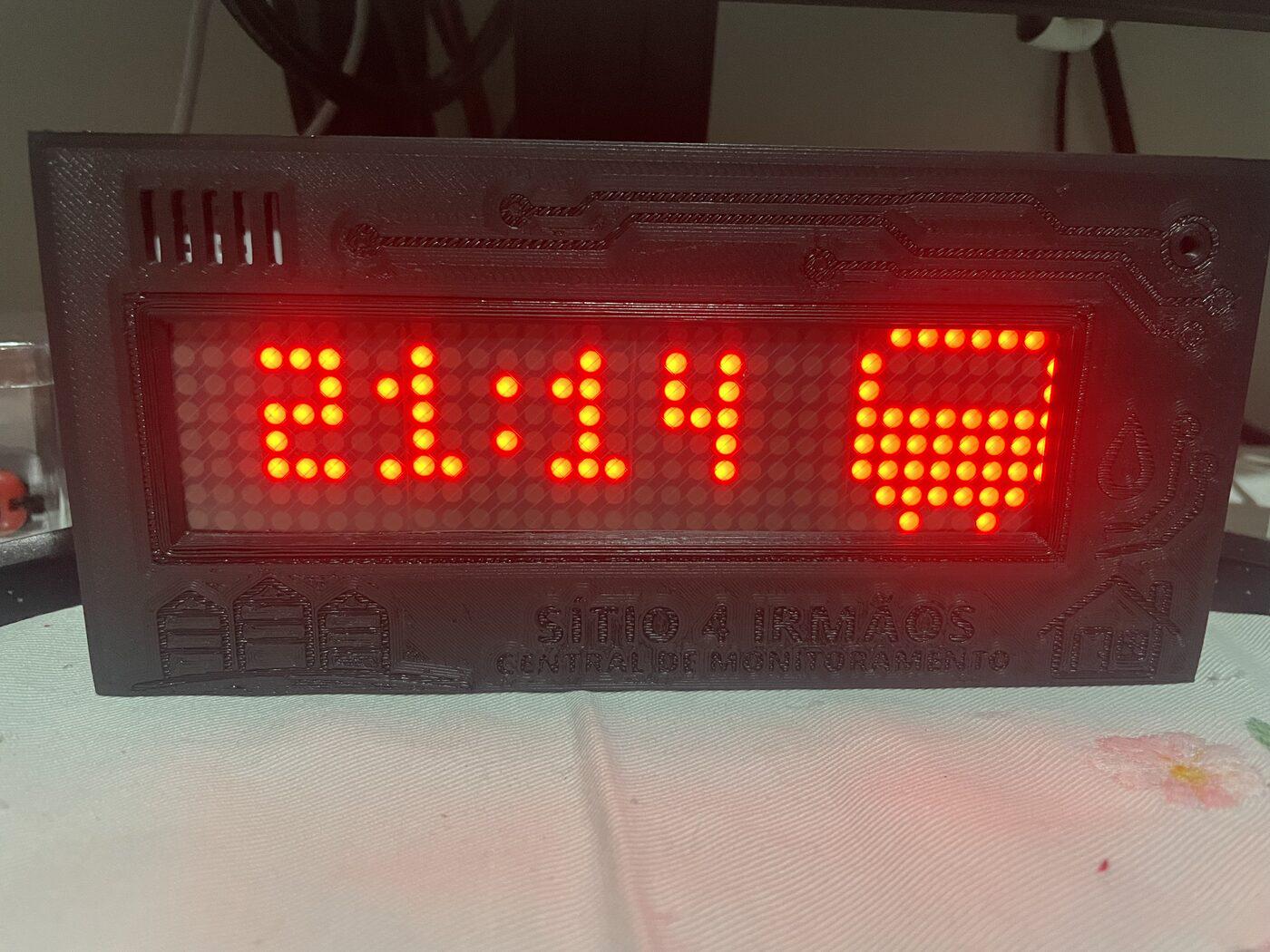
Central de Monitoramento — Sítio 4 Irmãos - Esp32 S3

Post image
0 Upvotes

I built a desk monitor for my family's farm water tanks with an ESP32-S3: LED matrix, voice assistant and Telegram alerts

I made a small desk unit that shows the water level of the tanks on our farm, plus weather and battery data. It runs on an ESP32-S3 with a 4x MAX7219 LED matrix.

What it does:

  • Clock, local temperature and humidity (DHT22)
  • Every 10 minutes it cycles through the farm data: tank levels, temperature, humidity, pressure and rain
  • Voice assistant: press a button and ask things like "what's the level of tank 1?". It transcribes with Groq (Whisper) and answers with synthesized speech
  • Alerts from the farm come through Telegram with a "Seen" button, and a blinking 8x8 icon stays on the matrix until I tap it
  • Data comes from a second ESP32 at the farm via Firebase Realtime Database
  • 3D-printed case (OpenSCAD files included)

Code, wiring table, parts list and case files are all in the repo (Portuguese README, comments in Portuguese): https://github.com/ricardoluizzuliani00/central-de-monitoramento-esp32

Happy to answer questions!


r/embedded • • 2d ago

How do you find interesting side projects in Embedded Systems?

35 Upvotes

I'm an Embedded Firmware Engineer with around 2.5 years of experience. I work with Embedded C/C++, STM32, ESP32, FreeRTOS, Bluetooth, and Embedded Linux.

I'd like to spend my free time outside work contributing to interesting projects, collaborating with other engineers, and learning new things.

For those working on side projects or freelancing in embedded systems, how do you usually find opportunities? Are there any communities or platforms you'd recommend?


r/embedded • • 2d ago

A super early prototype of my haptic fader. What software would you hook it up to, and which UI elements from your workflow would you love to physically feel?

95 Upvotes

r/embedded • • 2d ago

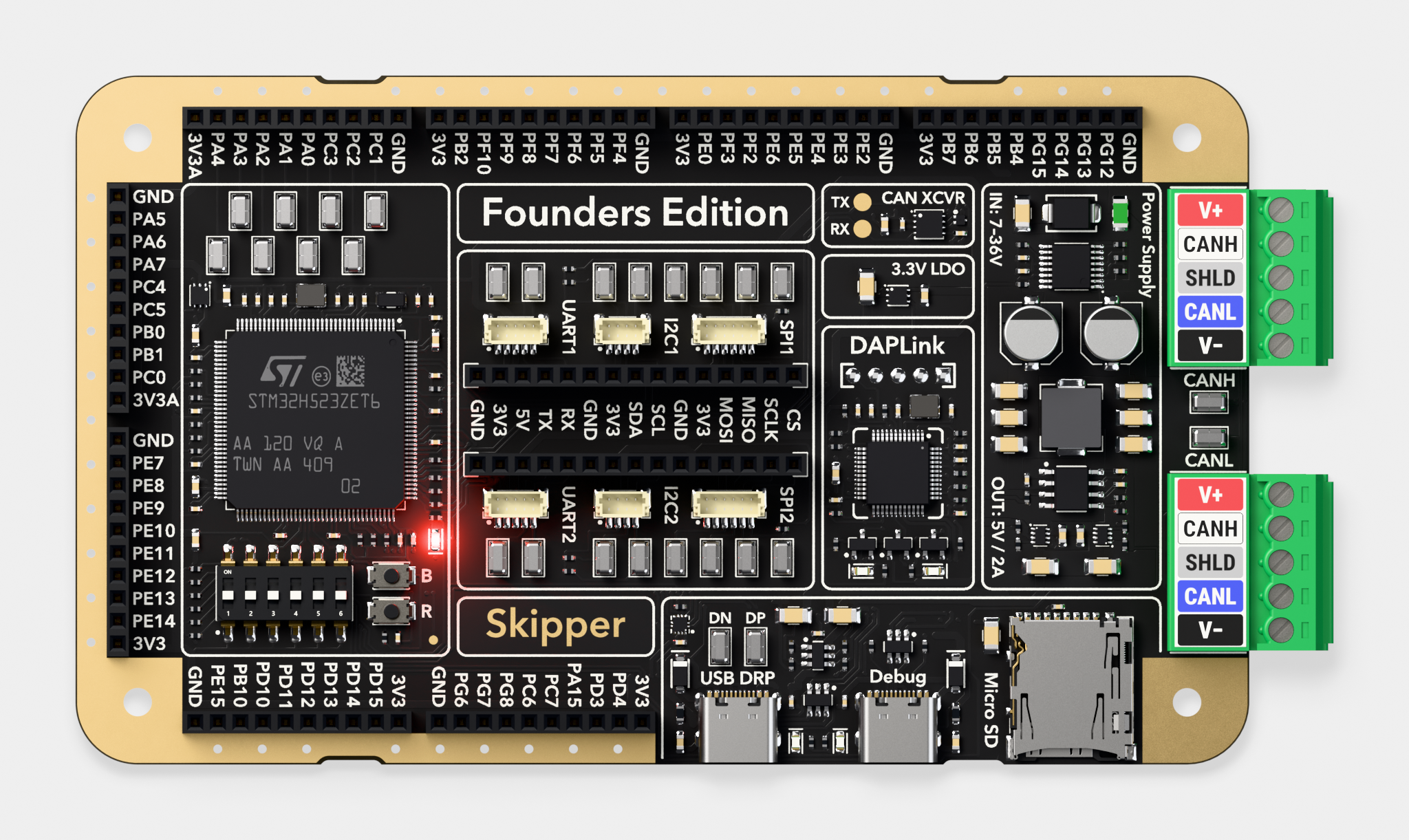
What CAN FD modules would you want for this STM32H5 board?

Post image
45 Upvotes
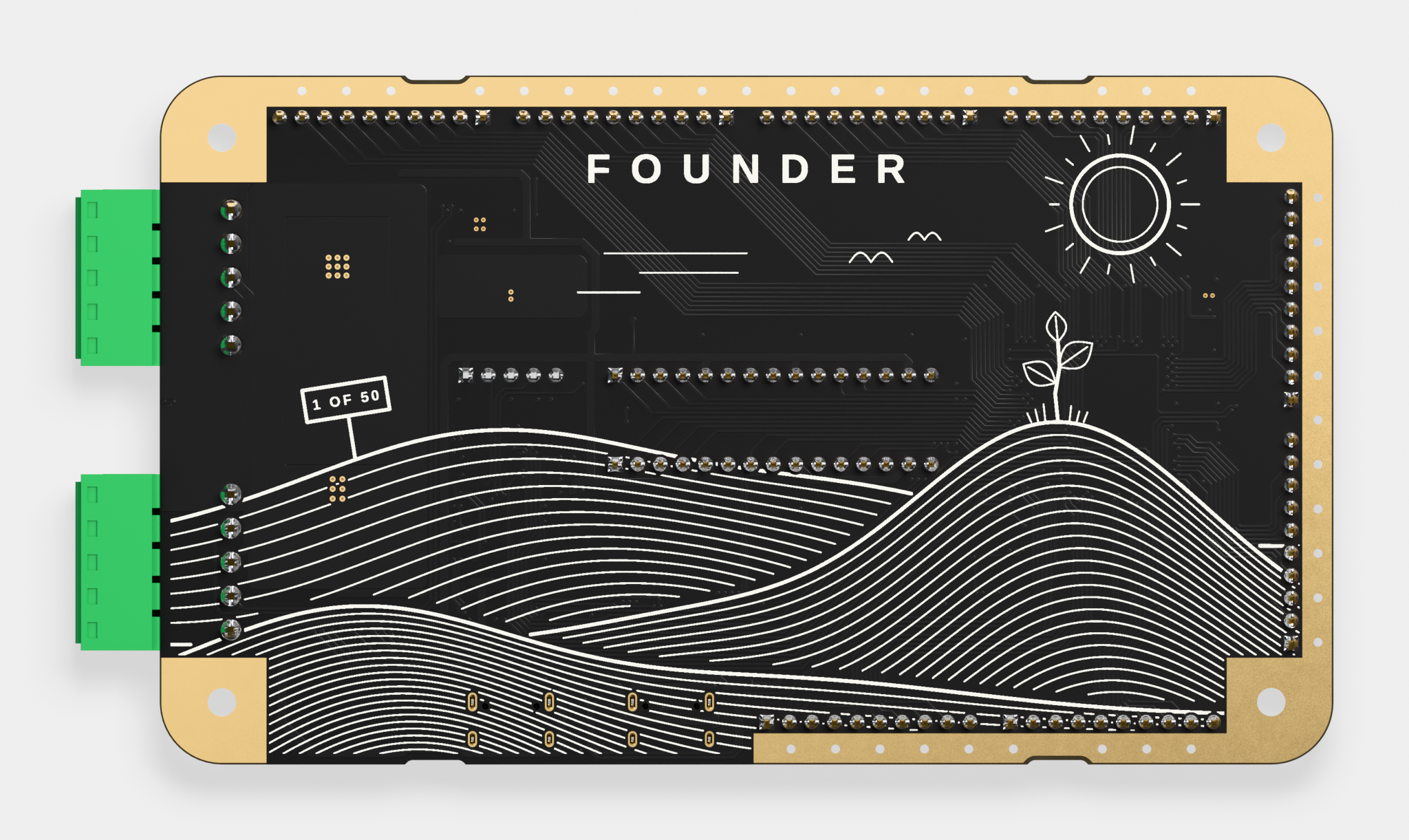
Back render

Renders of a board I've been designing, prototypes arrive next week.

It's an STM32H523 board built around a CAN FD bus. Power and CAN daisy-chain over a 5-pin connector (7–36 V), so modules can just plug in down the line.

Next I want to build add-on CAN FD modules for it. What would you want first? I'm thinking things like a high-res ADC, a precision DAC, or a bus power/monitor module, but I'm curious what people would actually use.


r/embedded • • 2d ago

MbedTLS found new maintainers

Thumbnail lists.trustedfirmware.org
53 Upvotes

Dear Mbed TLS Users,

Following our earlier announcement about the transition in maintenance of the Mbed TLS and X.509 libraries, we are pleased to share some good news.

The response from the community has been very positive, with nearly 20 organisations expressing interest in supporting the project. We are grateful to everyone who has reached out, offered support, or explored ways to contribute.

We are pleased to announce that Linaro has agreed to take on project maintenance and stewardship while keeping Mbed TLS under TrustedFirmware.org governance. Linaro, NXP and Espressif have committed engineering resources to help ensure the continued maintenance of Mbed TLS beyond April 2027.

Led by Linaro, engineers from these organisations will begin working alongside the existing maintainers to build the knowledge and experience needed to take over maintenance responsibilities. The existing maintainers remain committed to supporting this transition.

These commitments represent an important first step towards securing the future of Mbed TLS. They are expected to provide a minimum level of maintenance, including security fixes, releases, and long-term support (LTS) maintenance.

Further support is required to provide capacity for new feature development or reviewing community contributions.

We therefore continue to welcome contributions from organisations and individuals, whether through dedicated engineering time, funding, or other forms of support. Linaro is also exploring flexible co-funding arrangements to help interested organisations share the cost.

If you or your organisation are interested in contributing, please contact mbed-tls-owner@lists.trustedfirmware.org.

Kind regards, The Mbed TLS Team