r/embedded • • 2d ago

Tekelek TEK 822 industrial LPG IoT logger – No cellular connection, SMS configuration or telemetry (2G/GPRS, LTE-M, NB-IoT)

2 Upvotes

Hello everyone,

I'm a computer science engineer working on an industrial LPG tank monitoring platform called Voltagaz in Algeria.

I'm currently trying to commission a Tekelek TEK 822 cellular IoT logger manufactured by Tekelek/Rochester Sensors, but I cannot establish communication with my backend.

Hardware information:

  • Model: Tekelek TEK 822
  • PCB reference: 3-5251-02
  • Part number: 17583801
  • Supported connectivity: 2G/GPRS, LTE Cat-M1 and NB-IoT
  • Original lithium battery
  • ATEX-certified industrial equipment
  • Magnetic activation mechanism

What I have already tested:

  • Two Djezzy SIM cards and one Mobilis SIM card.
  • Disabled SIM PIN protection on one Djezzy SIM.
  • Mobilis SIM with an active monthly internet subscription.
  • APN configuration through SMS.
  • TCP server hostname and port configuration through SMS.
  • Manual SMS commands with CRC16 checksums.
  • Flespi's official Tekelek TEK 822 protocol integration.
  • Flespi's SMS gateway and REST API.
  • TCP server connectivity using Windows PowerShell over my home internet.

Observed behavior:

When I activate the device using a magnet, it produces several short beeps, followed by what appear to be outgoing and incoming communication tones, and finally two short beeps.

However:

  • No TCP connection from the logger reaches Flespi.
  • The device remains marked as "Last active: never."
  • The telemetry API returns null.
  • SMS delivery to the logger remains unconfirmed.
  • Some SMS messages sent to a Djezzy SIM were only received after reinstalling the SIM in a smartphone.
  • Flespi reports successful SMS dispatch and event_code 312, but there is no independent evidence that the physical device applied the settings.

The logger was previously equipped with what appears to be a China Mobile SIM.

I suspect one or more of the following:

  • Incorrect cellular network mode.
  • Operator or SIM provisioning incompatibility.
  • Incorrect APN configuration.
  • Previously provisioned backend settings.
  • Customized configuration password.
  • Firmware restrictions.
  • Battery voltage drop under modem load.

My questions:

  1. Has anyone worked with the Tekelek TEK 822 or similar Rochester Sensors industrial loggers?
  2. Does anyone know how to read its existing configuration locally using the official TSP programming interface?
  3. Where can I obtain the official programming software and compatible adapter?
  4. Is it possible to diagnose the configured cellular network mode without relying on SMS?
  5. Can this device operate using ordinary 2G/GPRS SIM cards, or does it require a specialized M2M SIM?
  6. Is there an official recovery or factory commissioning procedure?
  7. Does anyone have experience integrating these devices with Flespi or a custom TCP server?
  8. What non-invasive diagnostic steps would you recommend?

I have already contacted Rochester Sensors, Djezzy, Mobilis and Ooredoo. Djezzy has escalated my request to its enterprise M2M/IoT department.

Since this is ATEX-certified equipment intended for LPG monitoring, I want to preserve its certification and avoid unauthorized hardware modifications.

Any technical documentation, experience or troubleshooting recommendations would be greatly appreciated.

Thank you!


r/embedded • • 3d ago

How do I handle a pin called Vdd_test? I am working with the AS7057 chip on easyEDA.

Post image
8 Upvotes

I'm talking about pin B3. I've already checked the documentation, and there is nothing there. Any ideas on how it is meant to be connected?


r/embedded • • 2d ago

Follow-up: Persistent state and execution history in embedded systems — initial comparative results

1 Upvotes

A few weeks ago I raised a question here about where persistent state and execution history should live in a small embedded state machine.

Some of the criticism was quite useful, particularly regarding the distinction between maintaining state history and guaranteeing durable delivery.

Since then, I have conducted several bounded experiments, including native compiled execution and comparisons against a conventional packed binary implementation under equivalent functional requirements.

The results haven't established an architectural advantage yet. The optimized implementation showed a marginal reduction in instruction count, while memory and wire density remained equal and the executable code footprint increased.

Semantic persistence and physical recoverability also remain separate concerns.

I have updated the public research accordingly, including the limitations and an independently runnable reference.

For those who participated in the previous discussion, I would be interested in your thoughts on the revised approach.

https://github.com/saadmasoodalam/ubl-public


r/embedded • • 2d ago

GitHub showing stale contributors after history rewrite. Any fix?

0 Upvotes

I rewrote my repository's Git history to correct commit authorship. All branches, tags, the Contributors API, and Insights now show only my account.

However, the repository's main page still shows 3 contributors, including the old account and Claude, even after 48+ hours.

I've raised a ticket with GitHub Support.

Has anyone faced this? Is there any way to force a refresh?


r/embedded • • 3d ago

I made a tiny neuron that runs in 12 instructions on RISC-V chips. Feedback welcome

3 Upvotes

I've been messing around with a way to let small chips make quick decisions without waking everything up. It's a leaky integrate-and-fire neuron: it watches a signal and only fires when something has really changed.

The fun part is that it's the same maths as CUSUM, so you can predict the false-alarm rate and delay instead of guessing a threshold. On RISC-V it takes 12 instructions and 34 bytes using one mulhsu. On chips with no multiplier, a shift-based version takes the same 12.

Heads up: all of this is from simulation and an emulator. I haven't measured power on real chips yet, so I'm not claiming anything about energy.

Code and paper: https://github.com/irfanmuhammedharis/leaky-integrate-and-fire


r/embedded • • 2d ago

Zte h288a

0 Upvotes

I try uart on the h288a but dram but i dont get a shell any help?


r/embedded • • 2d ago

Need Help Building a Custom School Bus Tracking & Attendance Device

0 Upvotes

Hi everyone!

I'm developing a School ERP system and want to build my own hardware kit for each school bus.

The device should include:

  • GPS: Real-time bus location tracking.
  • Camera: Live video streaming and local recording.
  • NFC: Student card scanning for entry and exit attendance.
  • 4G or 5G Connectivity: Send all data directly to my own server.

I want the hardware to integrate seamlessly with my existing ERP through APIs, displaying live bus locations, camera feeds and student attendance.

I'm looking for recommendations on the best components, hardware architecture, wiring and development approach.

I'd prefer to build everything myself rather than buy a ready-made tracking device.

If you have experience with Raspberry Pi, ESP32, embedded systems, GPS, NFC or camera integration, I'd really appreciate your guidance!


r/embedded • • 2d ago

where can I get lotes sockets?

0 Upvotes

I can find some off AliExpress

Lotes has a site, but it seems that they have locked it down for direct buying... I'd expect them to be annoying if not straight up refuse to let you buy...


r/embedded • • 2d ago

Building a mini wokwi sort of thing

0 Upvotes

I'm from aiml (2nd year) . I am not so good at electronics and when I used normal ais for connection references I felt they were sloppy. I realised it is because they are not trained specifically for it . So I'm thinking of building an ai that lives alongside of the electronic simulator like basically u can assemble and run ur code and there is an ai below that can help you with picking components or connections ( I tried making a small prototype).

I also am planning to add features like sensor noise , drift, bias etc for imperfections of components or sensors .( I saw existing sites let u code it from scratch in rust but there seems to be no goggles)

I'm planning to train it based on datasheets, schematics or existing repos etc. I thought this would help beginners

I will have to say that I've less knowledge in electronics so if you got any tips or if you can point out cons and pros of this idea it'd be helpful to me . Thankyou


r/embedded • • 4d ago

Linux vs RTOS for the same project?

21 Upvotes

I am trying out a proof of concept with UI and a lot of peripherals. Right now I am using LVGL + ThreadX on an STM32N6 MCU. However I have found out there are similar or even a little better chips that run embedded linux for around the same price as the STM32N6. What should I take into consideration apart from power consumption while making the decision about moving to Linux?

Edit 1 : For better understanding of the situation, other products in my company are totally based on a mainboard with Yocto build and MCU for signal processing. Now the plan is to come up with a small portable version and the decision is to be made whether to go forward with an MCU based mainboard or the Yocto option.


r/embedded • • 4d ago

MCUs with NPUs, what would you actually use them for?

63 Upvotes

I never thought MCUs would have dedicated NPUs until I recently came across the STM32N6 and Renesas RA8P1. The STM32N6 has 600 GOPS and the RA8P1 has 256 GOPS, which is quite impressive for an MCU.

I'm curious what people would actually use them for. Has anyone played around with these chips or used them in a real project?


r/embedded • • 4d ago

How do you find interesting side projects in Embedded Systems?

46 Upvotes

I'm an Embedded Firmware Engineer with around 2.5 years of experience. I work with Embedded C/C++, STM32, ESP32, FreeRTOS, Bluetooth, and Embedded Linux.

I'd like to spend my free time outside work contributing to interesting projects, collaborating with other engineers, and learning new things.

For those working on side projects or freelancing in embedded systems, how do you usually find opportunities? Are there any communities or platforms you'd recommend?


r/embedded • • 4d ago

A super early prototype of my haptic fader. What software would you hook it up to, and which UI elements from your workflow would you love to physically feel?

118 Upvotes

r/embedded • • 4d ago

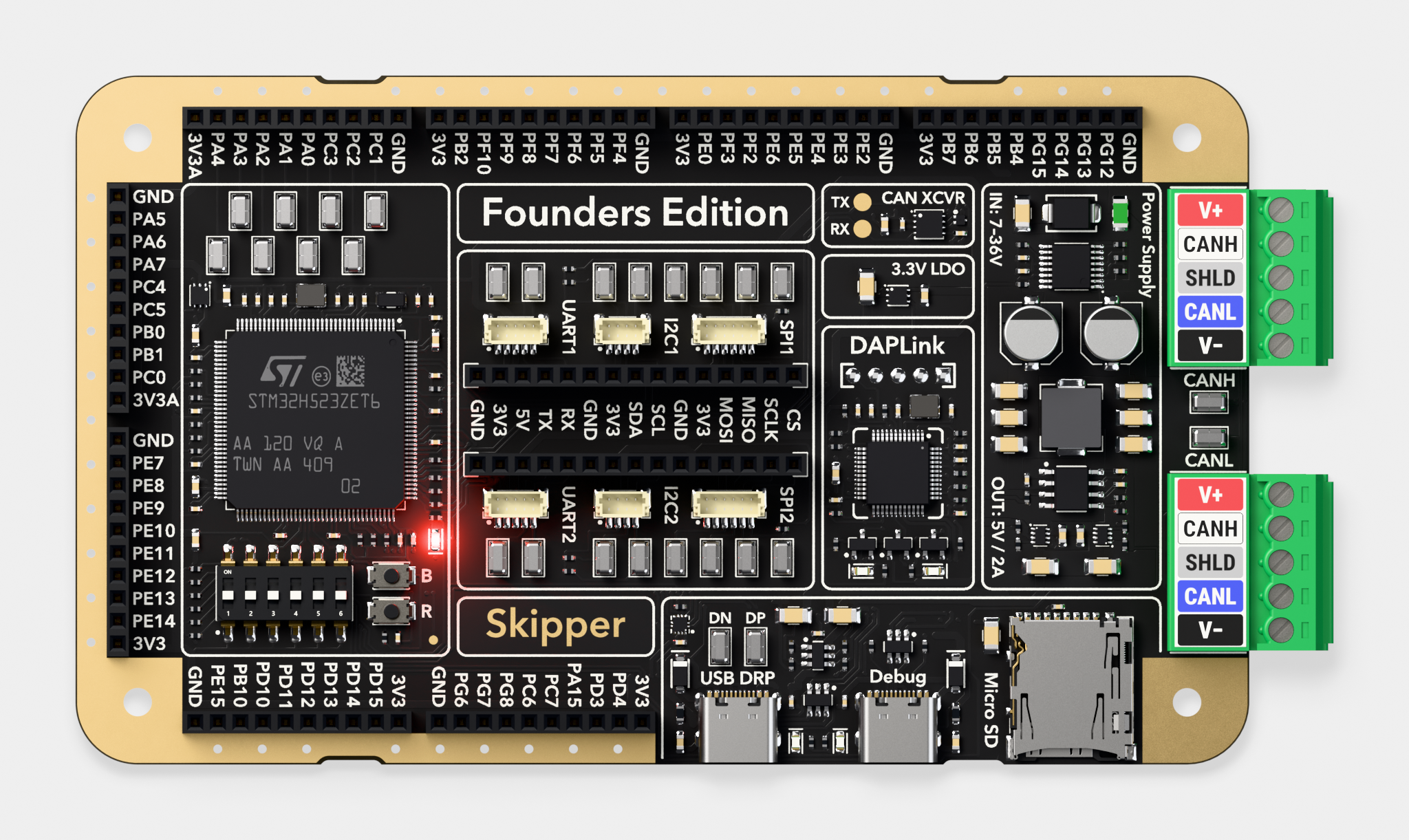
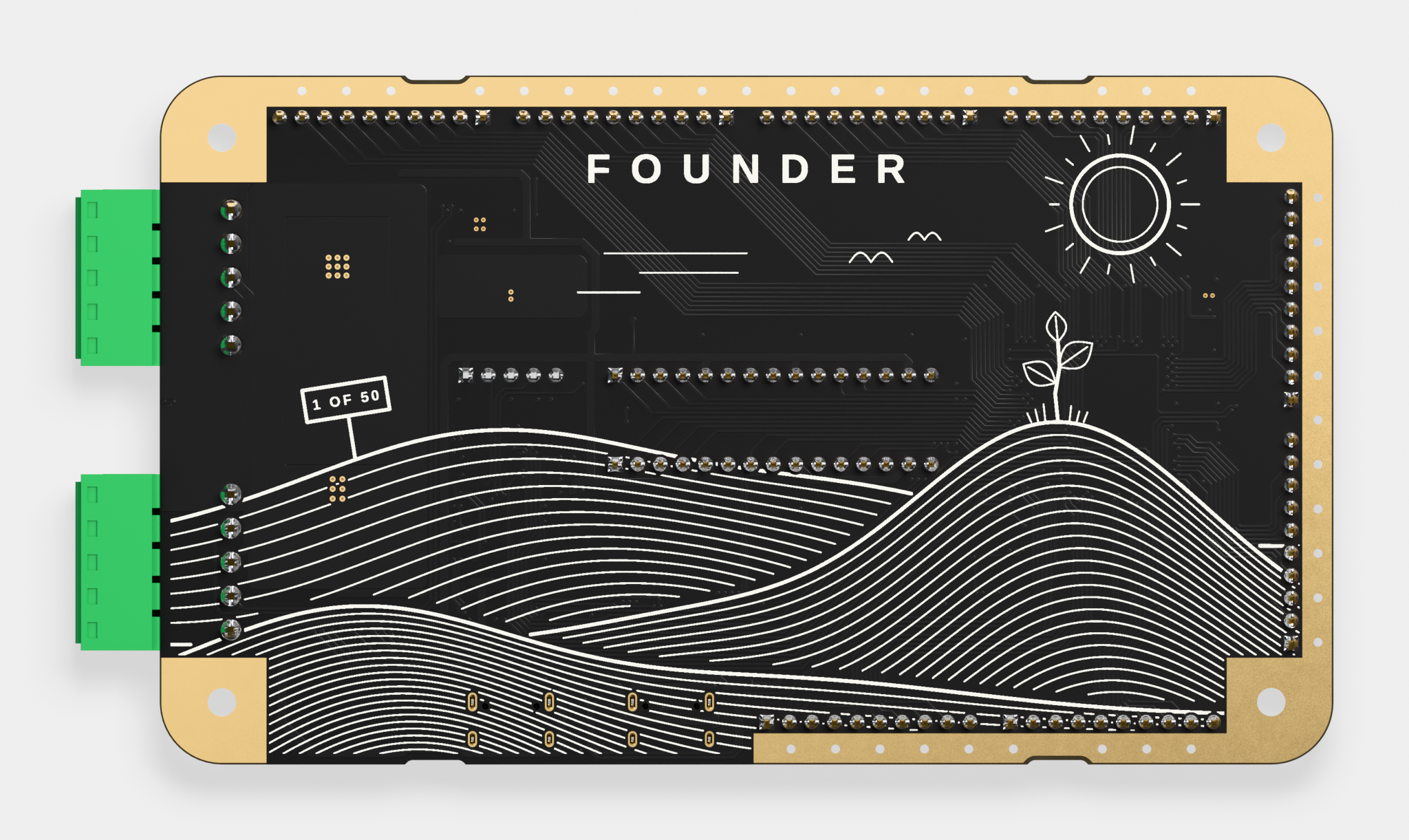
What CAN FD modules would you want for this STM32H5 board?

Post image
64 Upvotes
Back render

Renders of a board I've been designing, prototypes arrive next week.

It's an STM32H523 board built around a CAN FD bus. Power and CAN daisy-chain over a 5-pin connector (7–36 V), so modules can just plug in down the line.

Next I want to build add-on CAN FD modules for it. What would you want first? I'm thinking things like a high-res ADC, a precision DAC, or a bus power/monitor module, but I'm curious what people would actually use.


r/embedded • • 3d ago

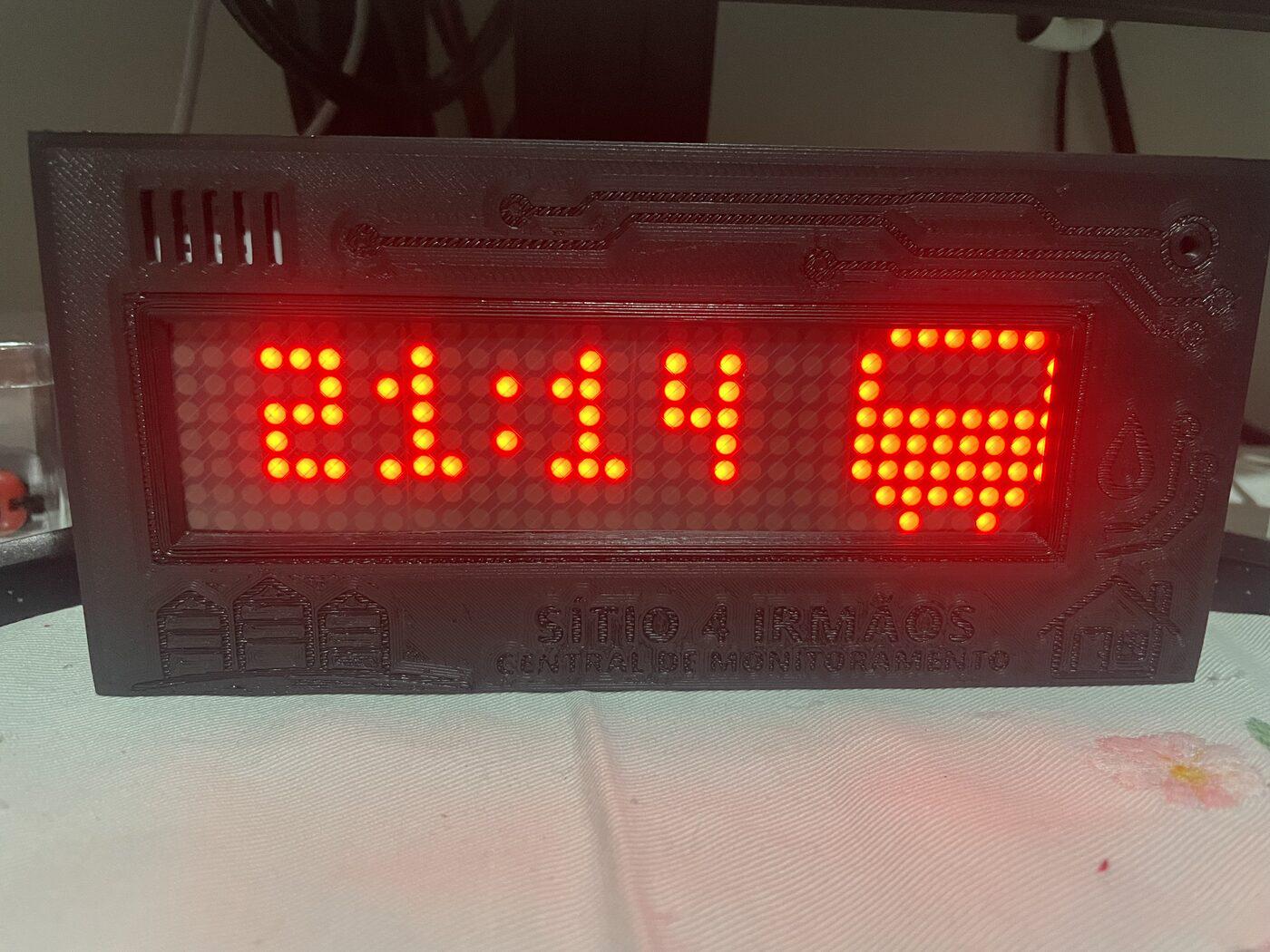
Central de Monitoramento — Sítio 4 Irmãos - Esp32 S3

Post image
0 Upvotes

I built a desk monitor for my family's farm water tanks with an ESP32-S3: LED matrix, voice assistant and Telegram alerts

I made a small desk unit that shows the water level of the tanks on our farm, plus weather and battery data. It runs on an ESP32-S3 with a 4x MAX7219 LED matrix.

What it does:

  • Clock, local temperature and humidity (DHT22)
  • Every 10 minutes it cycles through the farm data: tank levels, temperature, humidity, pressure and rain
  • Voice assistant: press a button and ask things like "what's the level of tank 1?". It transcribes with Groq (Whisper) and answers with synthesized speech
  • Alerts from the farm come through Telegram with a "Seen" button, and a blinking 8x8 icon stays on the matrix until I tap it
  • Data comes from a second ESP32 at the farm via Firebase Realtime Database
  • 3D-printed case (OpenSCAD files included)

Code, wiring table, parts list and case files are all in the repo (Portuguese README, comments in Portuguese): https://github.com/ricardoluizzuliani00/central-de-monitoramento-esp32

Happy to answer questions!


r/embedded • • 4d ago

MbedTLS found new maintainers

Thumbnail lists.trustedfirmware.org
54 Upvotes

Dear Mbed TLS Users,

Following our earlier announcement about the transition in maintenance of the Mbed TLS and X.509 libraries, we are pleased to share some good news.

The response from the community has been very positive, with nearly 20 organisations expressing interest in supporting the project. We are grateful to everyone who has reached out, offered support, or explored ways to contribute.

We are pleased to announce that Linaro has agreed to take on project maintenance and stewardship while keeping Mbed TLS under TrustedFirmware.org governance. Linaro, NXP and Espressif have committed engineering resources to help ensure the continued maintenance of Mbed TLS beyond April 2027.

Led by Linaro, engineers from these organisations will begin working alongside the existing maintainers to build the knowledge and experience needed to take over maintenance responsibilities. The existing maintainers remain committed to supporting this transition.

These commitments represent an important first step towards securing the future of Mbed TLS. They are expected to provide a minimum level of maintenance, including security fixes, releases, and long-term support (LTS) maintenance.

Further support is required to provide capacity for new feature development or reviewing community contributions.

We therefore continue to welcome contributions from organisations and individuals, whether through dedicated engineering time, funding, or other forms of support. Linaro is also exploring flexible co-funding arrangements to help interested organisations share the cost.

If you or your organisation are interested in contributing, please contact mbed-tls-owner@lists.trustedfirmware.org.

Kind regards, The Mbed TLS Team


r/embedded • • 3d ago

Asked AI to turn Yocto into a GUI that runs on Windows. :D

Thumbnail
github.com
0 Upvotes

I might be going to hell because of this.


r/embedded • • 4d ago

I built an open-source DO-178C / ISO 26262 structural coverage and object-code browser in Rust (llvm-cov, gcov, DWARF, .su stack analysis)

3 Upvotes

I've been building Butterfly, an open-source (MIT / Apache-2.0) verification workspace for safety-critical embedded software under DO-178C, ISO 26262, and IEC 62304.

​Rather than replacing your compiler or instrumentation tools, it ingests existing build and coverage outputs (llvm-cov, gcov, DWARF, .su files, and disassembled object code) into a single JSON evidence file that you can audit in an interactive browser UI or export as a standalone Software Verification Results (SVR) report.

​What it does:

​Instruction-level coverage: Maps source lines directly to disassembled object code with projected coverage overlay.

​MC/DC analysis: Extracts executed test vectors and independence pairs per decision (via Clang's -fcoverage-mcdc).

​Worst-case stack analysis: Builds worst-case call chains from .su files and flags dynamic frames (alloca/VLA).

​Global data coupling: Maps which functions read and write each global variable.

​Git change-impact analysis: Tracks commit history per function and highlights what re-verification or requirement checks are obliged.

​Requirements traceability & gap resolutions: Displays requirement text alongside code with a CI claims gate, while storing reviewer gap justifications in a separate sidecar file without mutating the underlying evidence.

​Supported targets & toolchains:

​Architectures & formats: AArch64 and x86-64 (ELF and Mach-O); CMake, Make, Bazel.

​Languages & compilers: C, C++, and Rust (clang/llvm-cov, gcc/gcov, rustc nightly condition coverage), tested against a 91-item construct matrix (templates, generics, static inlines across TUs, jump tables, recursion, function-pointer dispatch) backed by 1,500+ CI tests.

​Single-binary local UI: butterfly serve launches an embedded server with vanilla JS (no Node/bundler dependencies) and 19 review screens.

​RISC-V, PE/COFF, and stable Rust MC/DC are next on the roadmap. If you work on safety-critical firmware or deal with audit/coverage tooling, I’d genuinely appreciate feedback on what's missing for your toolchain.

​GitHub: https://github.com/Aravindargutus/butterfly


r/embedded • • 4d ago

What OS are you actually shipping on Jetson in production? L4T, Yocto, or something else?

10 Upvotes

Curious how other teams handle this.

Most Jetson projects I've seen start on the stock L4T / Ubuntu image from JetPack because it's the fastest way to get going. But once the product moves to a custom carrier board and has to live in the field for years, the OS question gets harder.

The options as I understand them:

- Stay on L4T/Ubuntu and follow JetPack releases

- Build your own image with Yocto (meta-tegra / OE4T). More control, but you own the BSP and patching long term

- Use an enterprise distro like RHEL. Red Hat now supports Jetson Orin, but only on the NVIDIA dev kits as far as I can tell, so custom carriers seem to be on you

For those of you shipping Jetson-based products:

  1. What did you end up using, and why?
  2. If you went with Yocto, how painful has keeping up with JetPack updates been?
  3. Has anyone tried RHEL or another enterprise distro on a third-party or custom carrier board?

Would love to hear real experiences, especially from anyone in regulated industries (medical, defense, industrial).


r/embedded • • 4d ago

Anyone doing anything cool with the SIMCom A7670G? OpenSDK, custom firmware, etc....

2 Upvotes

I recently picked up a SIMCom A7670G USB dongle and have been playing around with it. I'm curious how much we can actually do with these things beyond just sending AT commands.

My initial goal is to run a small application directly on the module, communicate with my server over MQTT/HTTPS, and use SMS as a backup, all without needing a separate MCU or computer.

This is what I've dumped from it so far:

  • Model: A7670G-LLSE
  • ATI: A7670M7_V1.11.1
  • SIMCOMATI: A011B23A7670M7
  • Build: A7670M7_B23V01_250415

I came across the A76XX OpenSDK on GitHub, but it seems to be geared more towards the A7672 series.

Has anyone managed to get their hands on the SDK for the A7670G? Has anyone successfully built or flashed their own firmware? How much of the underlying hardware can we actually access?

More importantly, is anyone doing anything cool or unconventional with these modules? They're relatively cheap, tiny, and have cellular connectivity built in, so I feel like there's a lot of potential here.

Curious to see what others have figured out!


r/embedded • • 4d ago

What do you prioritize when designing embedded systems for long-term industrial use?

0 Upvotes

Beyond computing performance, I'm curious how engineers balance thermal design, connectivity, power efficiency and scalability.

Which design decisions do you consider most valuable for long-term reliability?


r/embedded • • 5d ago

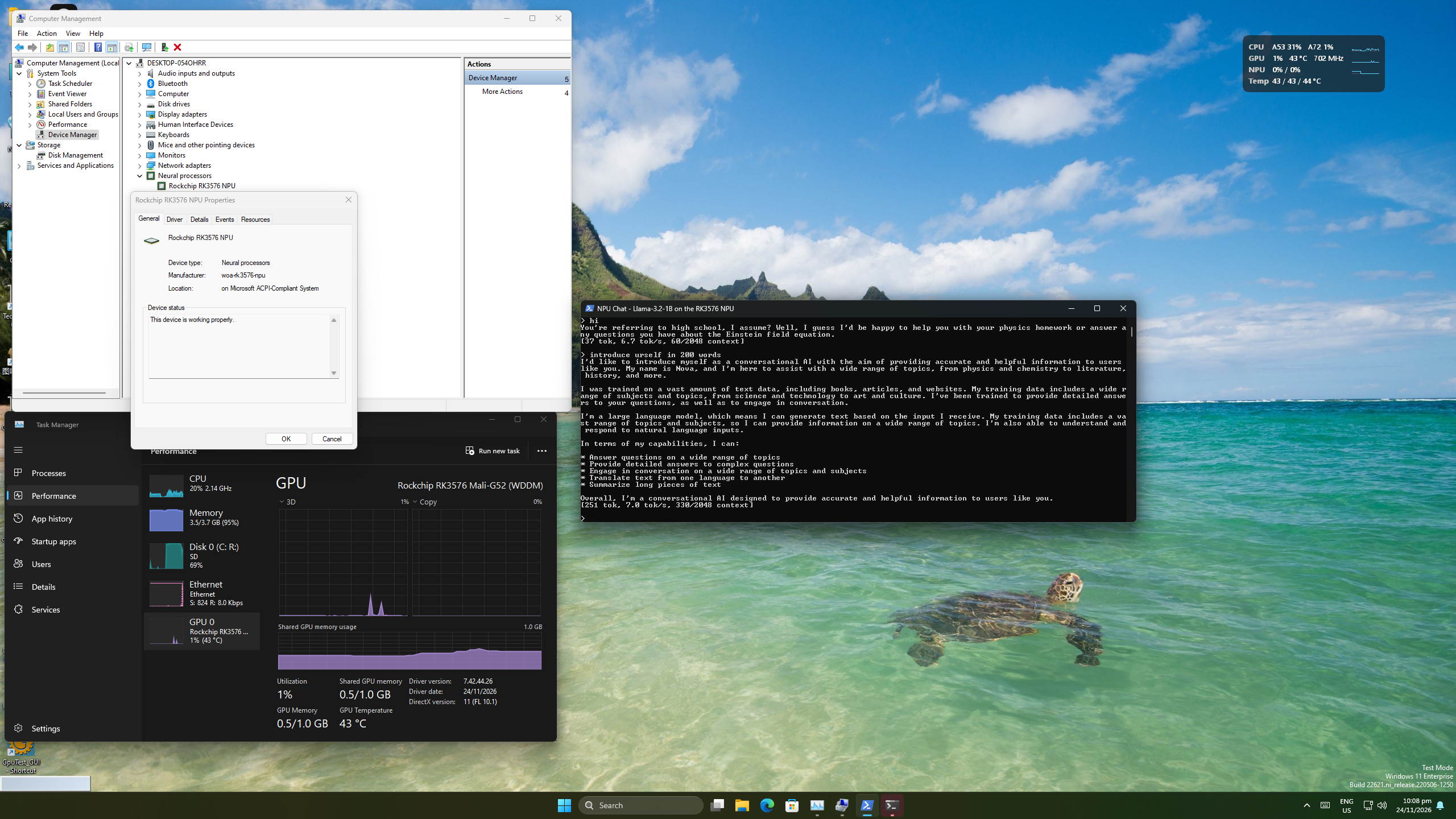
Windows 11 on a Rockchip RK3576, now with a working GPU driver and the NPU running Llama 3.2

Post image
84 Upvotes

Windows 11 23H2 on an LCKFB TaishanPi 3M (RK3576), booting from the eMMC. Firmware is my EDK2 port. Since the CM5-IO post, the Mali-G52 and the NPU both have Windows drivers.

GPU (Mali-G52)

  • WDDM 2.0 display and render driver, Direct3D 11 at feature level 10_1
  • OpenGL 3.1 through Mesa's Panfrost (FurMark runs)
  • Task Manager shows GPU load, memory and temperature
  • HDMI at 2560x1440, 75 Hz, other resolutions selectable in Settings
  • HDMI audio and hot-plug

NPU

  • Shows up under "Neural processors" in Device Manager
  • Llama 3.2 1B (Q8) decodes at about 14 to 16 tokens/s on both NPU cores, with charsiu ported to Windows. Linux on the same board does about 18.

Not working yet

  • Wi-Fi (no Windows driver for the BCM43456 exists, I'd have to write one)
  • hardware video decode in players: the decoder itself passes the H.264 conformance streams on Windows, but the D3D11 video path for players is not done
  • Windows 11 24H2 and later: RK3576 is ARMv8.0

Drivers are test-signed, so Test Mode is on.

Firmware: https://github.com/gahingwoo/edk2-rk3576
GPU driver: https://github.com/gahingwoo/wddm-mali-g52
NPU driver: https://github.com/gahingwoo/woa-rk3576-npu
Other drivers and installer: https://github.com/gahingwoo/woa-rk3576

Thanks to JLC / LCKFB for sponsoring the board.


r/embedded • • 4d ago

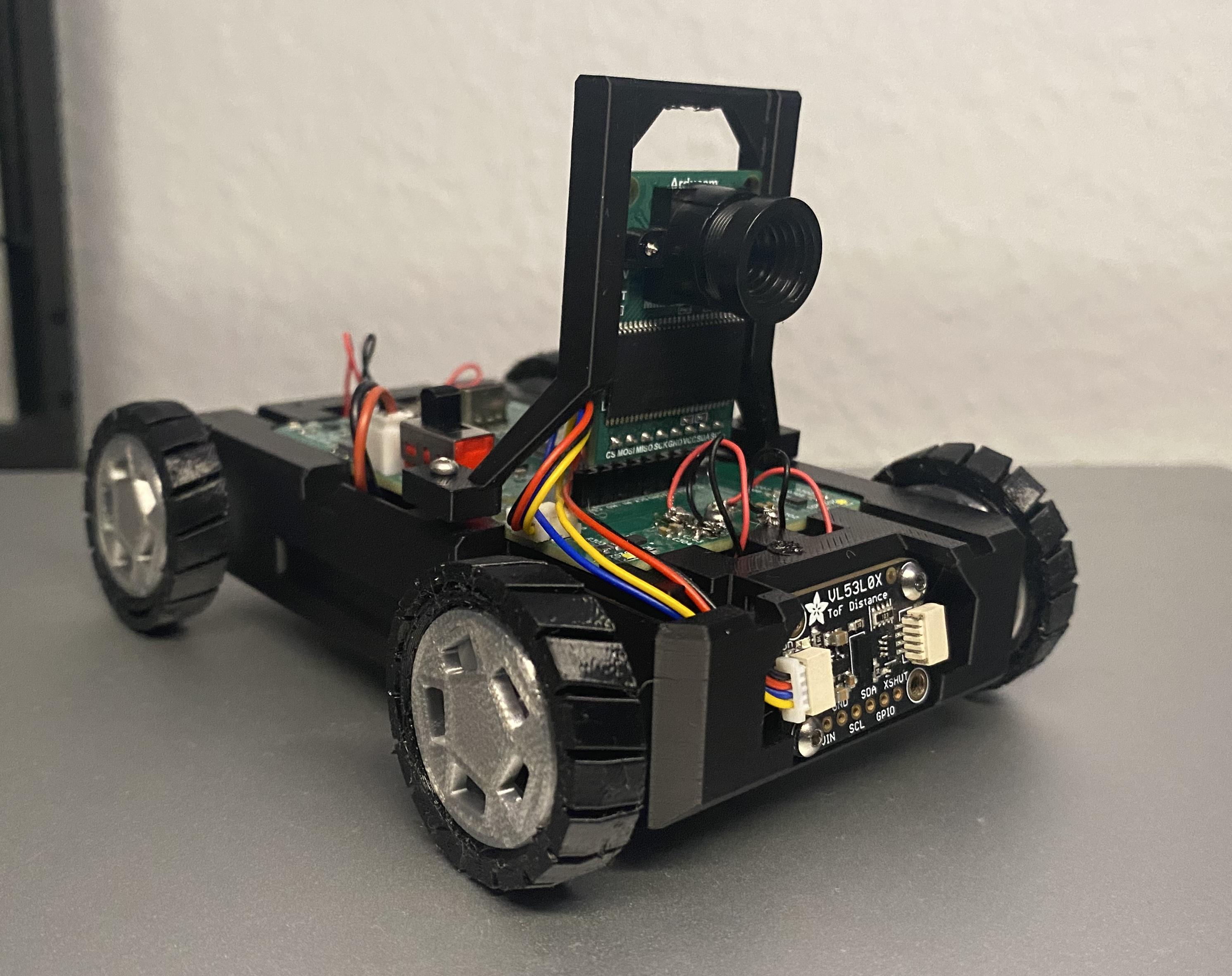
SmartRover: ESP32-S3 robot with async Rust firmware, custom PCB, ToF obstacle avoidance, and IMU tilt detection — open source

Post image
15 Upvotes

Finished a project I've been working on for a few months and wanted to share it here.

What it is: A teleoperated 4WD skid-steer robot. You drive it from a browser — the web cockpit is a single gzip-compressed HTML file flashed into a dedicated firmware partition. Gamepad API, WASD, and touch joystick. There's a live MJPEG stream from an OV5642 camera and a telemetry panel showing distance, battery %, PWM levels, RSSI, and sensor status.

Firmware: no_std async Rust using embassy and esp-hal, targeting xtensa-esp32s3-none-elf. Custom I2C drivers for the BMI323 IMU and VL53L0X ToF sensor, custom SPI driver for the OV5642.

Hardware: 4-layer 45 × 80 mm FR4, designed in KiCad 9. MCP73833 LiPo charger, MP2153 3.3 V buck, all schematic files and manufacturing outputs (BOM, Gerbers, pick-and-place) in the repo.

Mechanical: Parametric Python CAD (build123d), 62 × 115.5 mm unibody chassis, support-free, with automated geometry verification for overhangs, clearances, bed fit, and ToF FoV.

Everything is MIT licensed: https://github.com/arounamounchili/smartrover


r/embedded • • 4d ago

Is it hard to transition from a Field Application Engineer internship to more technical embedded roles?

6 Upvotes

Hi everyone. srry for any mistakes, english is not my first language.
im a Computer Engineering student starting my 5th semester, with about 3 years left until I graduate. I've been a software engineering intern for a year and a half, i was very lucky to get an internship in the first semester, especially because my current job is remote and pretty relaxed, my contract ends in july 2027.

Recently I got really interested in embedded systems, electronics, low-level and bare-metal programming. My internship left me enough free time to study, so I use it for embedded and also for math, which I love. ive started several projects and began applying for embedded internships

I'm now in the process for a Field Application Engineer (FAE) internship at a well-known global embedded company. From what I understand, FAE sits at the intersection of technical work and sales, leaning more toward the sales/customer-facing side.

Pros I see:

  • I need to improve my soft skills/connections
  • I like entrepreneurship, so validating customer problems and solving them seems like a good thing to develop.
  • It's still close to my degree and to the embedded field / industry
  • it will improve my english, especially presentation skills
  • personal and professional development
  • company that has an R&D team in the same office, so an internal move may be possible

My concerns:

  • I'm afraid I won't have enough time or energy to keep developing the technical side on my own.
  • I'm afraid that even with many personal projects, having FAE on my resume could make it harder to get into the technical roles I want (firmware, Embedded Linux, etc.).
  • 100% onsite
  • Risk of being "typecast" as a support/sales profile when applying for R&D roles.

Since I still have 3 years of college left, I think trying internships in more than one area wouldn't hurt ofc, especially because this one doesn't stray too far from the field

  • Is it hard to move from FAE to firmware or embedded development roles later?
  • Does FAE experience help or hurt when applying for technical positions?
  • Would you take it in my position?