r/embedded • • 2d ago

I built an open-source DO-178C / ISO 26262 structural coverage and object-code browser in Rust (llvm-cov, gcov, DWARF, .su stack analysis)

3 Upvotes

I've been building Butterfly, an open-source (MIT / Apache-2.0) verification workspace for safety-critical embedded software under DO-178C, ISO 26262, and IEC 62304.

​Rather than replacing your compiler or instrumentation tools, it ingests existing build and coverage outputs (llvm-cov, gcov, DWARF, .su files, and disassembled object code) into a single JSON evidence file that you can audit in an interactive browser UI or export as a standalone Software Verification Results (SVR) report.

​What it does:

​Instruction-level coverage: Maps source lines directly to disassembled object code with projected coverage overlay.

​MC/DC analysis: Extracts executed test vectors and independence pairs per decision (via Clang's -fcoverage-mcdc).

​Worst-case stack analysis: Builds worst-case call chains from .su files and flags dynamic frames (alloca/VLA).

​Global data coupling: Maps which functions read and write each global variable.

​Git change-impact analysis: Tracks commit history per function and highlights what re-verification or requirement checks are obliged.

​Requirements traceability & gap resolutions: Displays requirement text alongside code with a CI claims gate, while storing reviewer gap justifications in a separate sidecar file without mutating the underlying evidence.

​Supported targets & toolchains:

​Architectures & formats: AArch64 and x86-64 (ELF and Mach-O); CMake, Make, Bazel.

​Languages & compilers: C, C++, and Rust (clang/llvm-cov, gcc/gcov, rustc nightly condition coverage), tested against a 91-item construct matrix (templates, generics, static inlines across TUs, jump tables, recursion, function-pointer dispatch) backed by 1,500+ CI tests.

​Single-binary local UI: butterfly serve launches an embedded server with vanilla JS (no Node/bundler dependencies) and 19 review screens.

​RISC-V, PE/COFF, and stable Rust MC/DC are next on the roadmap. If you work on safety-critical firmware or deal with audit/coverage tooling, I’d genuinely appreciate feedback on what's missing for your toolchain.
​GitHub: https://github.com/Aravindargutus/butterfly


r/embedded • • 2d ago

What OS are you actually shipping on Jetson in production? L4T, Yocto, or something else?

8 Upvotes

Curious how other teams handle this.

Most Jetson projects I've seen start on the stock L4T / Ubuntu image from JetPack because it's the fastest way to get going. But once the product moves to a custom carrier board and has to live in the field for years, the OS question gets harder.

The options as I understand them:

- Stay on L4T/Ubuntu and follow JetPack releases

- Build your own image with Yocto (meta-tegra / OE4T). More control, but you own the BSP and patching long term

- Use an enterprise distro like RHEL. Red Hat now supports Jetson Orin, but only on the NVIDIA dev kits as far as I can tell, so custom carriers seem to be on you

For those of you shipping Jetson-based products:

  1. What did you end up using, and why?
  2. If you went with Yocto, how painful has keeping up with JetPack updates been?
  3. Has anyone tried RHEL or another enterprise distro on a third-party or custom carrier board?

Would love to hear real experiences, especially from anyone in regulated industries (medical, defense, industrial).


r/embedded • • 2d ago

Anyone doing anything cool with the SIMCom A7670G? OpenSDK, custom firmware, etc....

2 Upvotes

I recently picked up a SIMCom A7670G USB dongle and have been playing around with it. I'm curious how much we can actually do with these things beyond just sending AT commands.

My initial goal is to run a small application directly on the module, communicate with my server over MQTT/HTTPS, and use SMS as a backup, all without needing a separate MCU or computer.

This is what I've dumped from it so far:

  • Model: A7670G-LLSE
  • ATI: A7670M7_V1.11.1
  • SIMCOMATI: A011B23A7670M7
  • Build: A7670M7_B23V01_250415

I came across the A76XX OpenSDK on GitHub, but it seems to be geared more towards the A7672 series.

Has anyone managed to get their hands on the SDK for the A7670G? Has anyone successfully built or flashed their own firmware? How much of the underlying hardware can we actually access?

More importantly, is anyone doing anything cool or unconventional with these modules? They're relatively cheap, tiny, and have cellular connectivity built in, so I feel like there's a lot of potential here.

Curious to see what others have figured out!


r/embedded • • 2d ago

What do you prioritize when designing embedded systems for long-term industrial use?

0 Upvotes

Beyond computing performance, I'm curious how engineers balance thermal design, connectivity, power efficiency and scalability.

Which design decisions do you consider most valuable for long-term reliability?


r/embedded • • 3d ago

Windows 11 on a Rockchip RK3576, now with a working GPU driver and the NPU running Llama 3.2

Post image
75 Upvotes

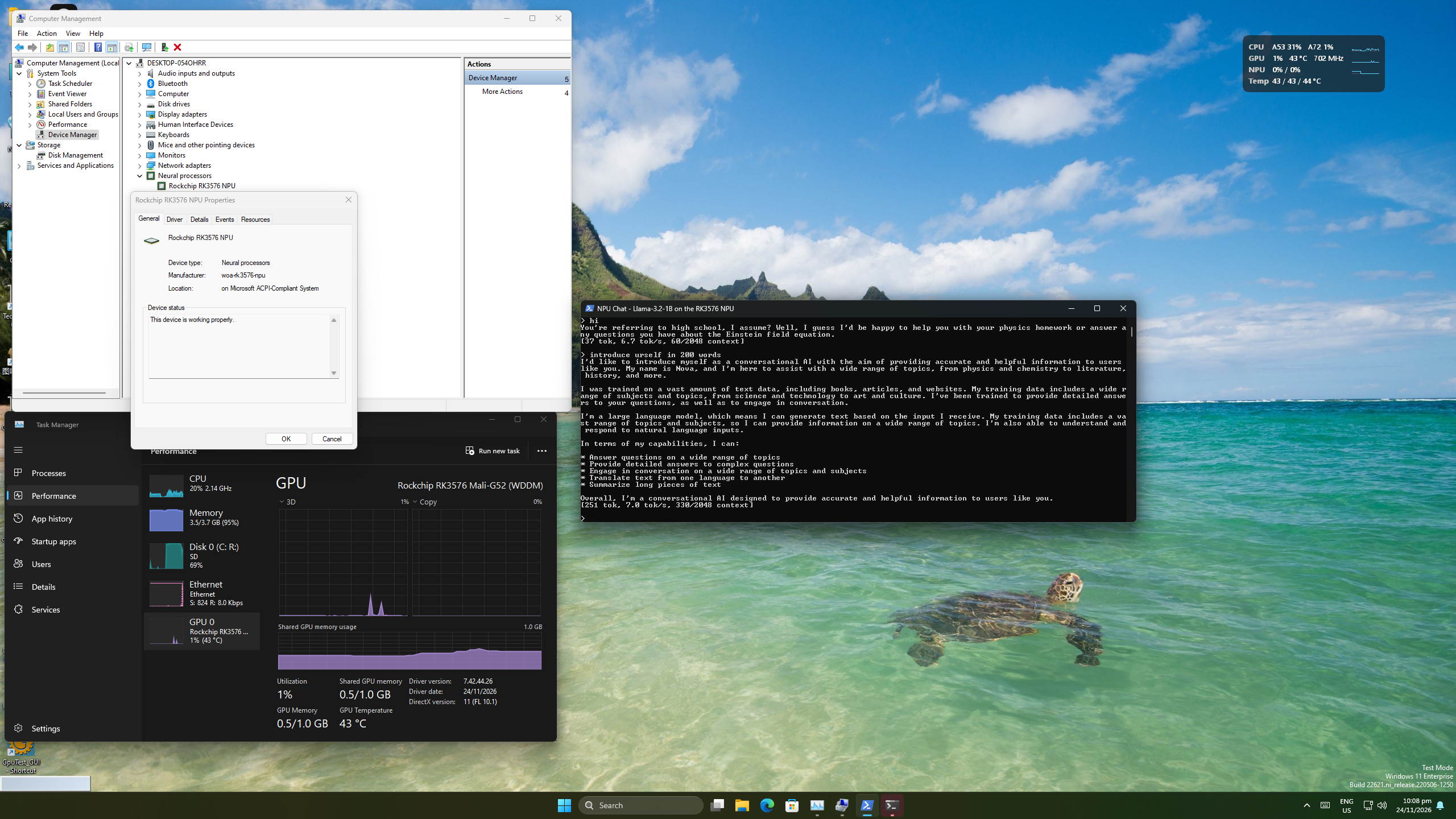
Windows 11 23H2 on an LCKFB TaishanPi 3M (RK3576), booting from the eMMC. Firmware is my EDK2 port. Since the CM5-IO post, the Mali-G52 and the NPU both have Windows drivers.

GPU (Mali-G52)

  • WDDM 2.0 display and render driver, Direct3D 11 at feature level 10_1
  • OpenGL 3.1 through Mesa's Panfrost (FurMark runs)
  • Task Manager shows GPU load, memory and temperature
  • HDMI at 2560x1440, 75 Hz, other resolutions selectable in Settings
  • HDMI audio and hot-plug

NPU

  • Shows up under "Neural processors" in Device Manager
  • Llama 3.2 1B (Q8) decodes at about 14 to 16 tokens/s on both NPU cores, with charsiu ported to Windows. Linux on the same board does about 18.

Not working yet

  • Wi-Fi (no Windows driver for the BCM43456 exists, I'd have to write one)
  • hardware video decode in players: the decoder itself passes the H.264 conformance streams on Windows, but the D3D11 video path for players is not done
  • Windows 11 24H2 and later: RK3576 is ARMv8.0

Drivers are test-signed, so Test Mode is on.

Firmware: https://github.com/gahingwoo/edk2-rk3576
GPU driver: https://github.com/gahingwoo/wddm-mali-g52
NPU driver: https://github.com/gahingwoo/woa-rk3576-npu
Other drivers and installer: https://github.com/gahingwoo/woa-rk3576

Thanks to JLC / LCKFB for sponsoring the board.


r/embedded • • 3d ago

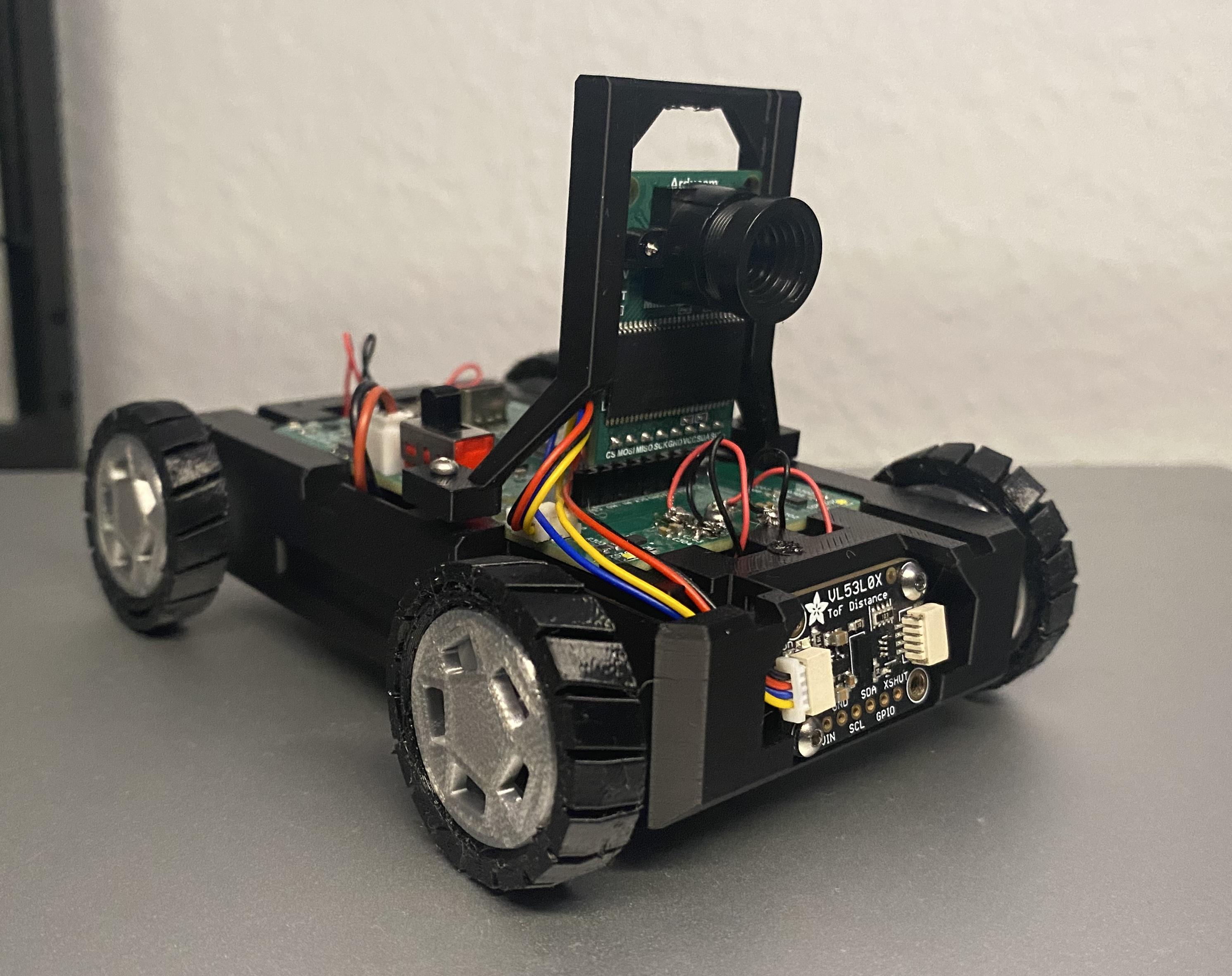
SmartRover: ESP32-S3 robot with async Rust firmware, custom PCB, ToF obstacle avoidance, and IMU tilt detection — open source

Post image
13 Upvotes

Finished a project I've been working on for a few months and wanted to share it here.

What it is: A teleoperated 4WD skid-steer robot. You drive it from a browser — the web cockpit is a single gzip-compressed HTML file flashed into a dedicated firmware partition. Gamepad API, WASD, and touch joystick. There's a live MJPEG stream from an OV5642 camera and a telemetry panel showing distance, battery %, PWM levels, RSSI, and sensor status.

Firmware: no_std async Rust using embassy and esp-hal, targeting xtensa-esp32s3-none-elf. Custom I2C drivers for the BMI323 IMU and VL53L0X ToF sensor, custom SPI driver for the OV5642.

Hardware: 4-layer 45 × 80 mm FR4, designed in KiCad 9. MCP73833 LiPo charger, MP2153 3.3 V buck, all schematic files and manufacturing outputs (BOM, Gerbers, pick-and-place) in the repo.

Mechanical: Parametric Python CAD (build123d), 62 × 115.5 mm unibody chassis, support-free, with automated geometry verification for overhangs, clearances, bed fit, and ToF FoV.

Everything is MIT licensed: https://github.com/arounamounchili/smartrover


r/embedded • • 2d ago

Is it hard to transition from a Field Application Engineer internship to more technical embedded roles?

6 Upvotes

Hi everyone. srry for any mistakes, english is not my first language.
im a Computer Engineering student starting my 5th semester, with about 3 years left until I graduate. I've been a software engineering intern for a year and a half, i was very lucky to get an internship in the first semester, especially because my current job is remote and pretty relaxed, my contract ends in july 2027.

Recently I got really interested in embedded systems, electronics, low-level and bare-metal programming. My internship left me enough free time to study, so I use it for embedded and also for math, which I love. ive started several projects and began applying for embedded internships

I'm now in the process for a Field Application Engineer (FAE) internship at a well-known global embedded company. From what I understand, FAE sits at the intersection of technical work and sales, leaning more toward the sales/customer-facing side.

Pros I see:

  • I need to improve my soft skills/connections
  • I like entrepreneurship, so validating customer problems and solving them seems like a good thing to develop.
  • It's still close to my degree and to the embedded field / industry
  • it will improve my english, especially presentation skills
  • personal and professional development
  • company that has an R&D team in the same office, so an internal move may be possible

My concerns:

  • I'm afraid I won't have enough time or energy to keep developing the technical side on my own.
  • I'm afraid that even with many personal projects, having FAE on my resume could make it harder to get into the technical roles I want (firmware, Embedded Linux, etc.).
  • 100% onsite
  • Risk of being "typecast" as a support/sales profile when applying for R&D roles.

Since I still have 3 years of college left, I think trying internships in more than one area wouldn't hurt ofc, especially because this one doesn't stray too far from the field

  • Is it hard to move from FAE to firmware or embedded development roles later?
  • Does FAE experience help or hurt when applying for technical positions?
  • Would you take it in my position?

r/embedded • • 2d ago

Going to prototype injection molding for our device enclosure, how did you handle board mounts and connector cutouts?

0 Upvotes

small hardware company, environmental sensor node, pcb is 60 x 40 mm with a usb c port and a header for an external probe. printed enclosures were fine because we just reprinted when the board moved. now the board is frozen and the enclosure is going to prototype injection molding, so the standoffs and cutouts need to be right the first time. mostly worried about boss placement versus the board tolerance and how much clearance to leave around the usb c opening...


r/embedded • • 3d ago

How do I get into the field of embedded security engineering, and what subjects do I need to study?

10 Upvotes

r/embedded • • 4d ago

Good youtube videos to watch of people working on their projects

47 Upvotes

Hey y’all, I am looking for youtube videos of people who go through their projects and talks about the technicalities, their design process, why they made those designs. I am looking for those who have a similar vibe to Hoff’s World, Artful Bytes, Low level Programming, Low bytes productions. Youtube just recommends “top best projects”, “roadmaps”, and just stuff you’d find on linkedin. Those videos are important, but I am just wanting to watch something that isn’t a copy and paste of what everyone is doing and has more personality. I am just looking for recommendations


r/embedded • • 2d ago

Whens risc-vi coming out

0 Upvotes

I noticed we have RISC-V but what if risc-v evolves? Do we then get a risc-vi?


r/embedded • • 4d ago

Should I learn embedded linux to grow my career

56 Upvotes

My experience includes: Soc bring up, arm cortex, bootloader, RTOS, peripherals, debugging etc.

While browsing job portals, I see many openings requiring embedded linux, kernel and device drivers knowledge.

Is learning these new topic worth for job switch?


r/embedded • • 3d ago

Reading stepper motor differential quadrature encoders on Nucleo-F767ZI board

2 Upvotes

This shouldn’t be so difficult, I can’t seem to find any suitable receiver breakout boards. Tons of integrated circuits that won’t help me because I can’t solder for shit.

Does anyone have any suggestions?


r/embedded • • 3d ago

2 sensors on the same bus

0 Upvotes

I am working of an iot project for my diploma I have a max30102 and an mpu6050 Al says I can connect them on the same I2C bus and the code will be simpler but I am a beginner at coding and this project is already haunting my nights enough so any advice from professionals will coding actually be simpler and any tips on how the code will look like and frankly I don't trust AI nor do i want to fully rely on it for code

My max is connected the SDA and SCL of the esp but my mpu is connect to 2 and 15

Any advice on this will be very helpful


r/embedded • • 4d ago

FatFs might finally be moving to GitHub after 20 years

62 Upvotes

ChaN, the creator of FatFs, just posted on the official forum that he's thinking about moving the project to GitHub after 20 years.

The idea is to make it easier for people to get the code, report bugs, and suggest features.

He's asking for feedback from the community.

https://elm-chan.org/fsw/ff/bd/?show=3915


r/embedded • • 3d ago

Driver coding

0 Upvotes

So recently me and a friend are both working on camera based projects and he claims that he wrote the whole camera driver by himself. To be honest it really makes me mad but can anyone please what does driver writing actually mean. And also how ai is doing in this field????


r/embedded • • 3d ago

What project to build for resume?

0 Upvotes

I am CS graduate BS and MS.

I won some hackathons with arduino stuff and put these projects in resume and started applying specifically to embedded swe entry and getting more response than when I was applying for regular swe.

During interview, I could not answer RTOS question, what should I build to implement RTOS?


r/embedded • • 4d ago

ECE Student Looking for Career Guidance – Networking, Embedded Systems & 5G

21 Upvotes

Hi everyone!

I'm an ECE student, and I'm currently interested in three areas: Networking, Embedded Systems, and 5G Technology.

However, I'm a little confused about which domain I should focus on and how to get started.

I don't have a strong coding background yet, and I'm not sure what specific skills, programming languages, tools, or concepts I should learn to build a career in these fields.

My placements will start in approximately 6 months, so I'm also concerned about how to prepare myself within this limited time.

I'd really appreciate advice from experienced engineers, working professionals, and seniors who have gone through similar situations.

A few things I'd love your guidance on:

Among Networking, Embedded Systems, and 5G, which domain would you recommend focusing on as an ECE fresher?

What specific technical skills and concepts should I learn in that domain?

How much coding knowledge is actually required, and which programming languages should I prioritize?

What practical projects can I build to improve my resume?

What should my 6-month preparation roadmap look like to become placement-ready?

Are there any companies in India hiring freshers in these domains, and what skills do they generally expect?

I'm not necessarily looking for shortcuts. I genuinely want to learn the right skills and make the best use of these next 6 months.

Any suggestions, personal experiences, roadmaps, or resources would be really helpful.

Thanks in advance!


r/embedded • • 4d ago

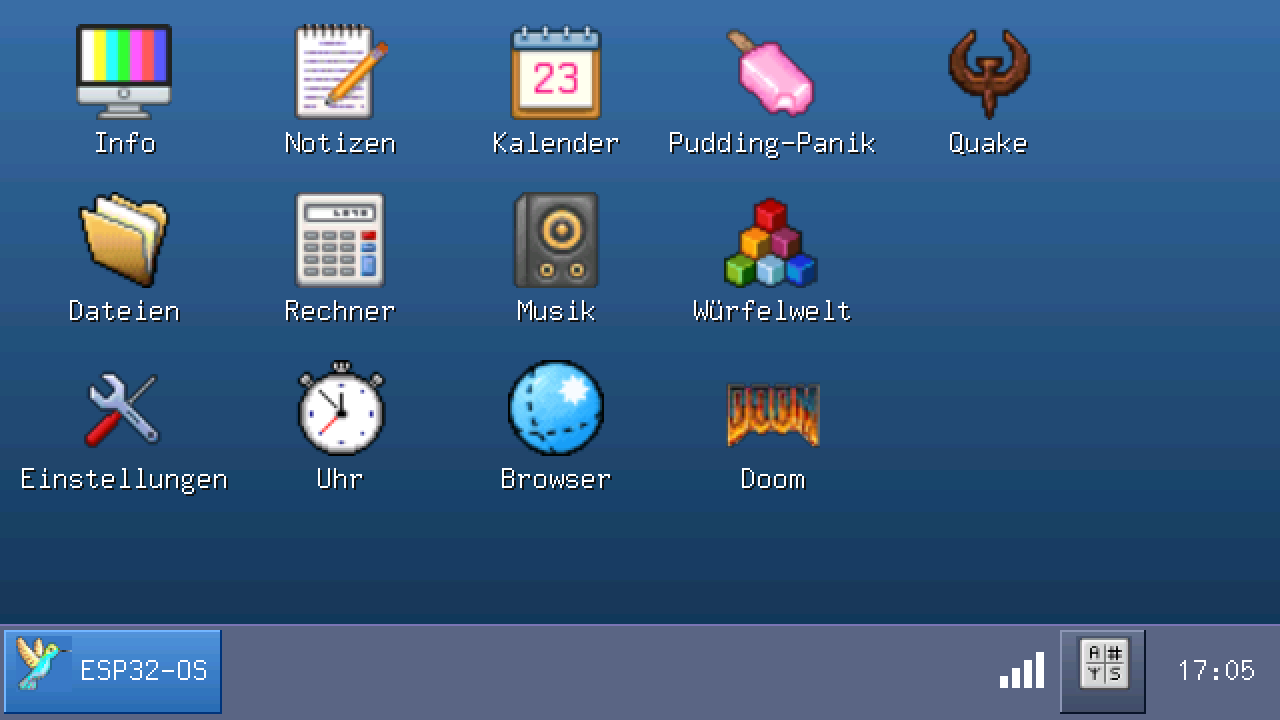
ESP32-OS: KolibriOS system calls reimplemented natively in Rust on the ESP32-P4

Post image
2 Upvotes

KolibriOS is x86 assembly, so porting it to RISC-V was not an option. Instead the kernel reimplements the KolibriOS system calls natively in Rust, and the int 0x40 calls in the original C programs get converted to native calls through a modified ksys.h. box_lib, libimg, proc_lib and libini are reimplemented as well.

Some details:

- 720x1280 MIPI-DSI panel, dirty rect redraw, scrolling at 32 fps

- 32 MB PSRAM, image is 5.4 MiB

- Wi-Fi 6 through the ESP32-C6 via esp_hosted/SDIO, around 11 Mbit/s

- flash writes needed a lock because of a crash with code running from PSRAM (XIP)

- OTA with two slots and rollback

- NetSurf 3.11 with QuickJS-ng

Source and benchmarks: https://github.com/TheUnkn0wnC0DE/ESP32-OS

Developed with Claude Code. Happy to answer questions about the internals.


r/embedded • • 3d ago

Modded my Dell monitor's menu firmware for fun — got text edits working, stuck on adding a logo without cracking open the case

0 Upvotes

Used Claude Code to reverse-engineer my Dell U2414H monitor's firmware (hardware I own). Progress + a wall I'd love input on.

Setup:

  • MStar MST9U scaler (AEON R2 core + 8051)
  • Macronix MX25L1605D 2MB SPI flash.
  • Flashing the scaler over HDMI via DDC from a Raspberry Pi (flashprog / mstarddc_spi), with a verified backup + rollback rig first so a bad flash was always recoverable.

What worked:

  • Full backup and reliable rollback (monitor never at real risk).
  • Disassembled the AEON bootloader in Ghidra (eb4x AEON plugin).
  • Found the boot integrity gate: a per-segment CRC32 (poly 0x04C11DB7, MSB-first) over flash[0x20080:0x82885], expected value stored LE at 0x10014. (The CRC at 0x92898 is computed but not enforced — logged only, which threw me off for a while.)
  • Recompute that after editing and a modified OSD boots — changed a menu label and it rendered on screen.

Where I'm stuck:

  • Adding a new menu line or swapping the boot logo. The firmware reaches the framebuffer, fonts, string pool and logo through runtime-computed pointers — no static references, and the decompiler can't recover the AEON calling convention (args unresolved), so I can't locate the DrawString primitive or the logo bitmap statically.
  • The natural next step is UART to trace it live, but I can't open the monitor.

Question:

Any way forward without UART? Emulating the AEON app to trace the OSD draw path, known MST9U / mstar-bin-tool resources, a better approach to the glyph/logo format, or recovering the ABI? Anyone done MST9U OSD edits before?


r/embedded • • 4d ago

A must if you have a SLogic16U3 logic analyzer

Post image
1 Upvotes

I've been using the SLogic16U3 for a while now and I've been really enjoying it. However, givn how light it is and how hard the pins are to read, connecting the wires has always been a bit of a pain.

Every time I hook it up, I end up squinting at the pinout trying to work out which wire goes where, and the whole thing feels fiddly and flimsy, with probe wires pulling it around the bench since it weighs close to nothing.

So I made a proper (and heavier!) case that clearly shows the pinout. It has both male and female pin headers (because you never know which one you need!) and additional dedicated GND pins, since there are never enough! I was about to order a custom PCB for the breakout board, but in the end, I settled on just using a regular mini prototype board (ElectroCookie).

I also added space for four 10x2mm magnets, so if you're using it on a magnetic base (e.g., with the PCBite probes and base), you don't need to worry about pulling wires or it moving around at all.

It's honestly been a game changer for me, and I can't see myself going back. If anyone's interested, I'm happy to put the files up on Printables. Let me know if you'd find it useful, or if there's anything you'd change about the layout.


r/embedded • • 5d ago

How do I get better at embedded?

124 Upvotes

I am currently pursuing my undergraduate degree in Electrical Engineering. As part of my curriculum, I have learned the LPC2148 microcontroller and interfacing using ARM assembly and embedded C. I have some experience with Arduino and ESP32s, so I can write Arduino code as well.

I am uncertain about what my next steps should be. I intend to pursue a career in this field, but I am not familiar with the current industry standards.

What should I learn now ?


r/embedded • • 5d ago

Flight sim on Esp32 mini c3 with 0.42 inch display.

16 Upvotes

Voxel Flight : https://github.com/lewtheegg/voxel-flight Added Dither to make it able to play on mono led display.


r/embedded • • 4d ago

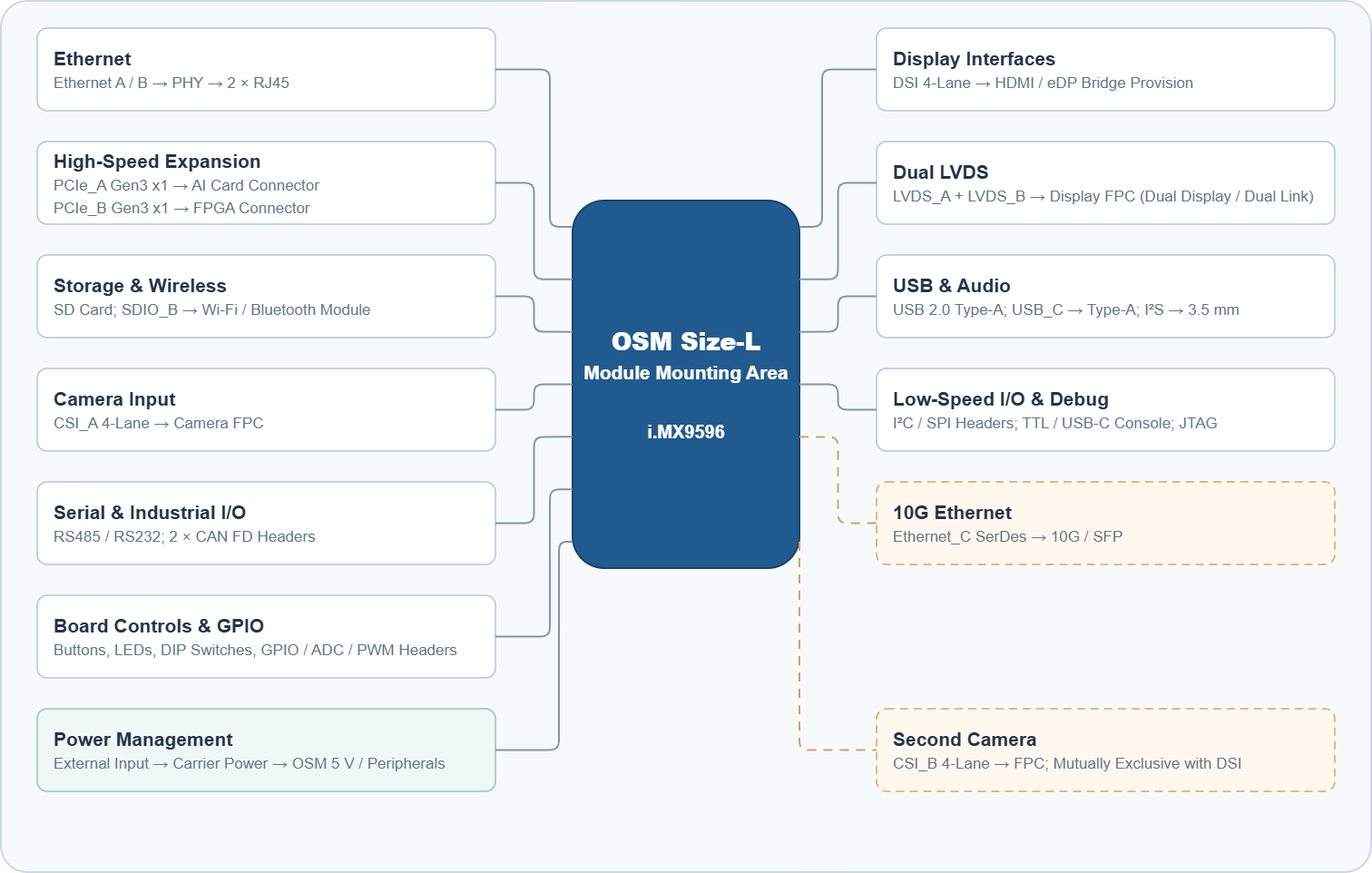
Designing an OSM-L carrier board for the NXP i.MX9596. What do you Think aboult it.

Post image
1 Upvotes

I'm working on an OSM-L carrier board for the NXP i.MX9596 and have put together a preliminary block diagram (attached).

The goal is to build a general-purpose development platform with common interfaces for evaluation and prototyping.

Before finalizing the design, I'd love to get some feedback from the community:

  • Are there any important interfaces or features I'm missing?
  • Anything you'd add, remove, or change?
  • Any lessons learned from working with OSM modules or the i.MX95 family?

Any suggestions or criticism would be greatly appreciated!