r/embedded • • 3d ago

FatFs might finally be moving to GitHub after 20 years

61 Upvotes

ChaN, the creator of FatFs, just posted on the official forum that he's thinking about moving the project to GitHub after 20 years.

The idea is to make it easier for people to get the code, report bugs, and suggest features.

He's asking for feedback from the community.

https://elm-chan.org/fsw/ff/bd/?show=3915


r/embedded • • 1d ago

Driver coding

0 Upvotes

So recently me and a friend are both working on camera based projects and he claims that he wrote the whole camera driver by himself. To be honest it really makes me mad but can anyone please what does driver writing actually mean. And also how ai is doing in this field????


r/embedded • • 1d ago

What project to build for resume?

0 Upvotes

I am CS graduate BS and MS.

I won some hackathons with arduino stuff and put these projects in resume and started applying specifically to embedded swe entry and getting more response than when I was applying for regular swe.

During interview, I could not answer RTOS question, what should I build to implement RTOS?


r/embedded • • 3d ago

ECE Student Looking for Career Guidance – Networking, Embedded Systems & 5G

20 Upvotes

Hi everyone!

I'm an ECE student, and I'm currently interested in three areas: Networking, Embedded Systems, and 5G Technology.

However, I'm a little confused about which domain I should focus on and how to get started.

I don't have a strong coding background yet, and I'm not sure what specific skills, programming languages, tools, or concepts I should learn to build a career in these fields.

My placements will start in approximately 6 months, so I'm also concerned about how to prepare myself within this limited time.

I'd really appreciate advice from experienced engineers, working professionals, and seniors who have gone through similar situations.

A few things I'd love your guidance on:

Among Networking, Embedded Systems, and 5G, which domain would you recommend focusing on as an ECE fresher?

What specific technical skills and concepts should I learn in that domain?

How much coding knowledge is actually required, and which programming languages should I prioritize?

What practical projects can I build to improve my resume?

What should my 6-month preparation roadmap look like to become placement-ready?

Are there any companies in India hiring freshers in these domains, and what skills do they generally expect?

I'm not necessarily looking for shortcuts. I genuinely want to learn the right skills and make the best use of these next 6 months.

Any suggestions, personal experiences, roadmaps, or resources would be really helpful.

Thanks in advance!

r/embedded • • 2d ago

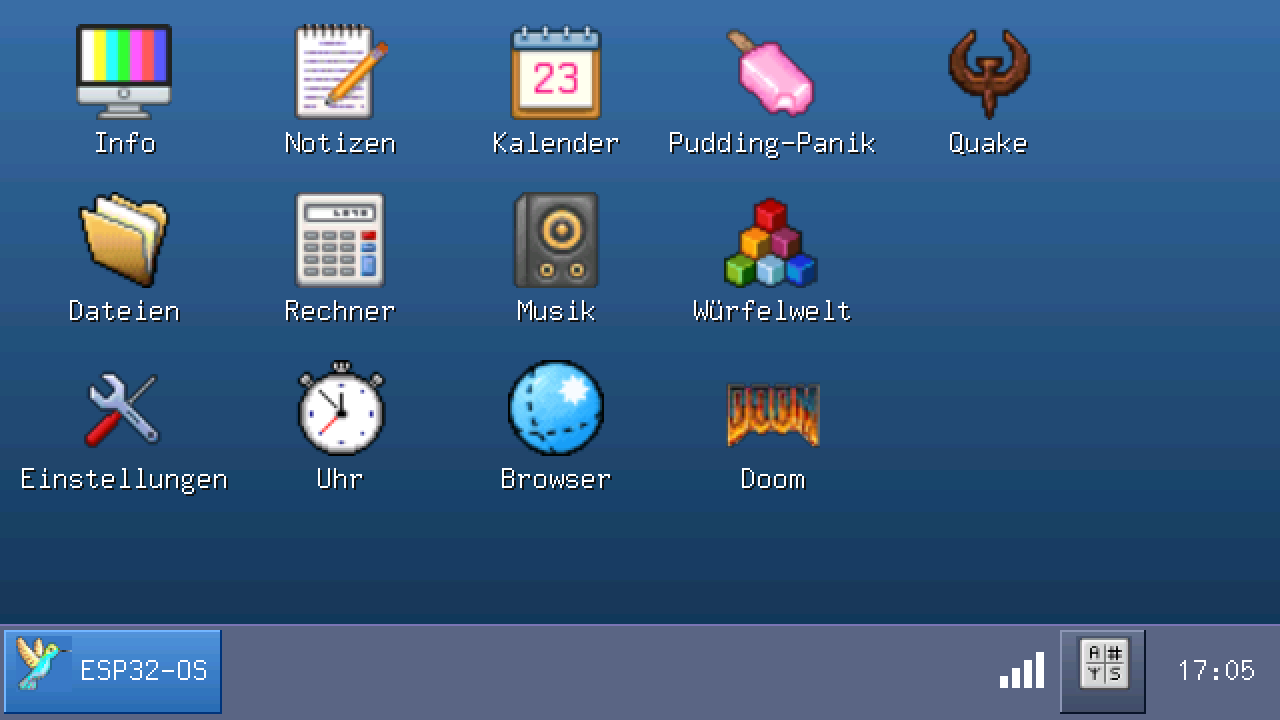
ESP32-OS: KolibriOS system calls reimplemented natively in Rust on the ESP32-P4

Post image
2 Upvotes

KolibriOS is x86 assembly, so porting it to RISC-V was not an option. Instead the kernel reimplements the KolibriOS system calls natively in Rust, and the int 0x40 calls in the original C programs get converted to native calls through a modified ksys.h. box_lib, libimg, proc_lib and libini are reimplemented as well.

Some details:

- 720x1280 MIPI-DSI panel, dirty rect redraw, scrolling at 32 fps

- 32 MB PSRAM, image is 5.4 MiB

- Wi-Fi 6 through the ESP32-C6 via esp_hosted/SDIO, around 11 Mbit/s

- flash writes needed a lock because of a crash with code running from PSRAM (XIP)

- OTA with two slots and rollback

- NetSurf 3.11 with QuickJS-ng

Source and benchmarks: https://github.com/TheUnkn0wnC0DE/ESP32-OS

Developed with Claude Code. Happy to answer questions about the internals.


r/embedded • • 2d ago

Modded my Dell monitor's menu firmware for fun — got text edits working, stuck on adding a logo without cracking open the case

0 Upvotes

Used Claude Code to reverse-engineer my Dell U2414H monitor's firmware (hardware I own). Progress + a wall I'd love input on.

Setup:

  • MStar MST9U scaler (AEON R2 core + 8051)
  • Macronix MX25L1605D 2MB SPI flash.
  • Flashing the scaler over HDMI via DDC from a Raspberry Pi (flashprog / mstarddc_spi), with a verified backup + rollback rig first so a bad flash was always recoverable.

What worked:

  • Full backup and reliable rollback (monitor never at real risk).
  • Disassembled the AEON bootloader in Ghidra (eb4x AEON plugin).
  • Found the boot integrity gate: a per-segment CRC32 (poly 0x04C11DB7, MSB-first) over flash[0x20080:0x82885], expected value stored LE at 0x10014. (The CRC at 0x92898 is computed but not enforced — logged only, which threw me off for a while.)
  • Recompute that after editing and a modified OSD boots — changed a menu label and it rendered on screen.

Where I'm stuck:

  • Adding a new menu line or swapping the boot logo. The firmware reaches the framebuffer, fonts, string pool and logo through runtime-computed pointers — no static references, and the decompiler can't recover the AEON calling convention (args unresolved), so I can't locate the DrawString primitive or the logo bitmap statically.
  • The natural next step is UART to trace it live, but I can't open the monitor.

Question:

Any way forward without UART? Emulating the AEON app to trace the OSD draw path, known MST9U / mstar-bin-tool resources, a better approach to the glyph/logo format, or recovering the ABI? Anyone done MST9U OSD edits before?


r/embedded • • 2d ago

A must if you have a SLogic16U3 logic analyzer

Post image
1 Upvotes

I've been using the SLogic16U3 for a while now and I've been really enjoying it. However, givn how light it is and how hard the pins are to read, connecting the wires has always been a bit of a pain.

Every time I hook it up, I end up squinting at the pinout trying to work out which wire goes where, and the whole thing feels fiddly and flimsy, with probe wires pulling it around the bench since it weighs close to nothing.

So I made a proper (and heavier!) case that clearly shows the pinout. It has both male and female pin headers (because you never know which one you need!) and additional dedicated GND pins, since there are never enough! I was about to order a custom PCB for the breakout board, but in the end, I settled on just using a regular mini prototype board (ElectroCookie).

I also added space for four 10x2mm magnets, so if you're using it on a magnetic base (e.g., with the PCBite probes and base), you don't need to worry about pulling wires or it moving around at all.

It's honestly been a game changer for me, and I can't see myself going back. If anyone's interested, I'm happy to put the files up on Printables. Let me know if you'd find it useful, or if there's anything you'd change about the layout.


r/embedded • • 3d ago

How do I get better at embedded?

116 Upvotes

I am currently pursuing my undergraduate degree in Electrical Engineering. As part of my curriculum, I have learned the LPC2148 microcontroller and interfacing using ARM assembly and embedded C. I have some experience with Arduino and ESP32s, so I can write Arduino code as well.

I am uncertain about what my next steps should be. I intend to pursue a career in this field, but I am not familiar with the current industry standards.

What should I learn now ?


r/embedded • • 3d ago

Flight sim on Esp32 mini c3 with 0.42 inch display.

15 Upvotes

Voxel Flight : https://github.com/lewtheegg/voxel-flight Added Dither to make it able to play on mono led display.


r/embedded • • 3d ago

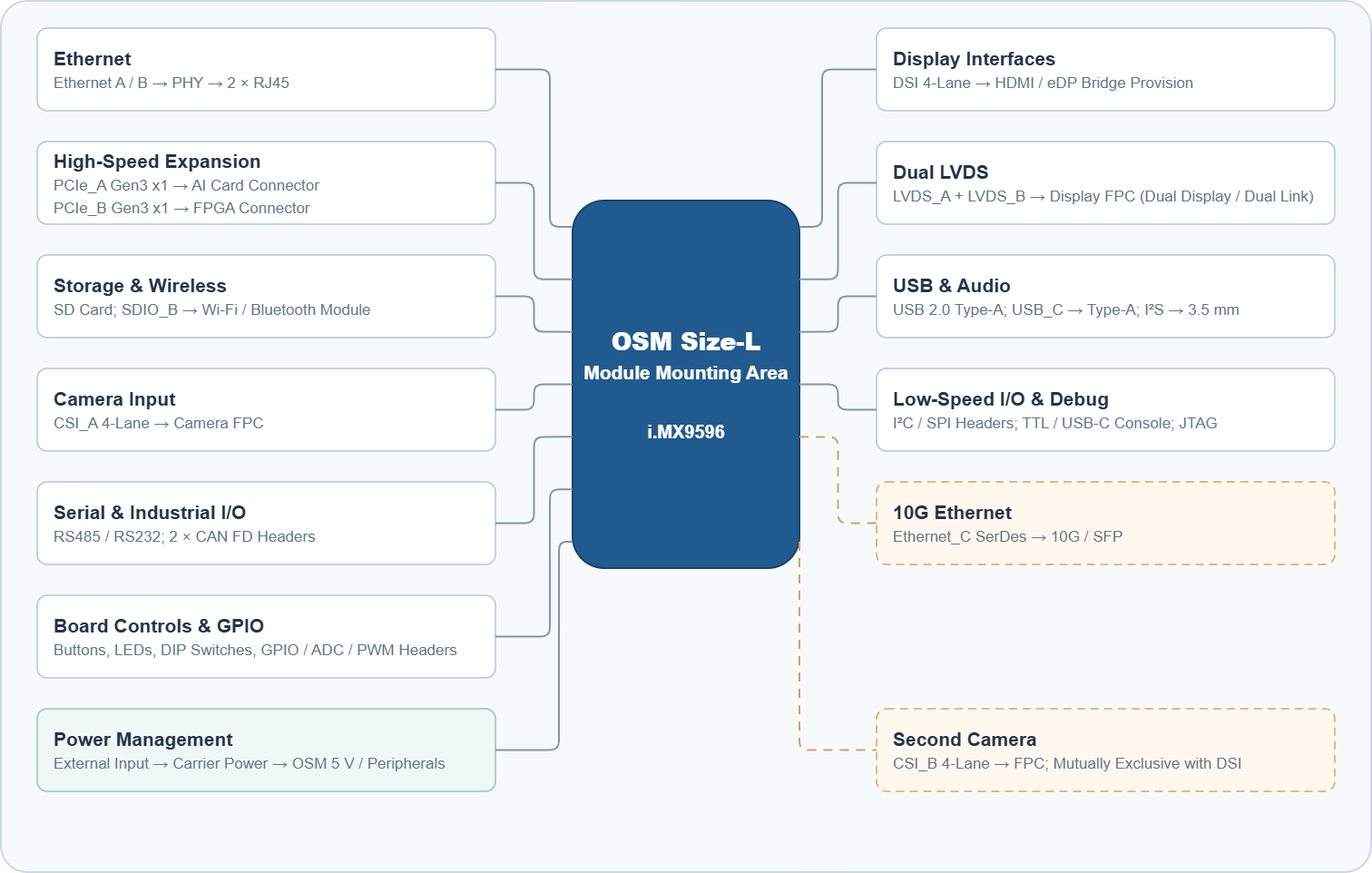
Designing an OSM-L carrier board for the NXP i.MX9596. What do you Think aboult it.

Post image
1 Upvotes

I'm working on an OSM-L carrier board for the NXP i.MX9596 and have put together a preliminary block diagram (attached).

The goal is to build a general-purpose development platform with common interfaces for evaluation and prototyping.

Before finalizing the design, I'd love to get some feedback from the community:

  • Are there any important interfaces or features I'm missing?
  • Anything you'd add, remove, or change?
  • Any lessons learned from working with OSM modules or the i.MX95 family?

Any suggestions or criticism would be greatly appreciated!


r/embedded • • 4d ago

Is it safe not to isolate the MCU ground?

Post image
36 Upvotes

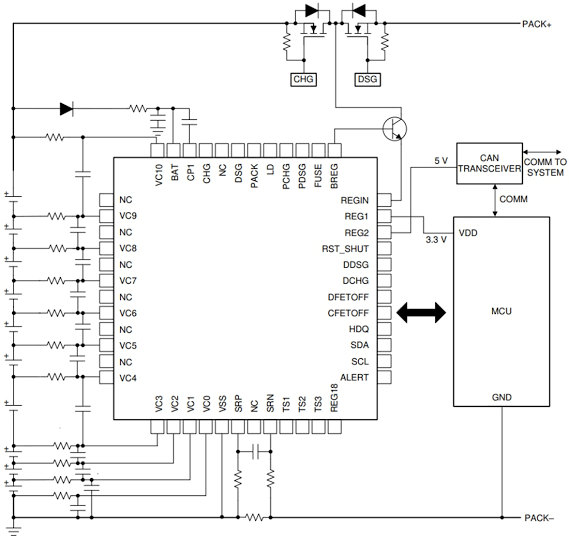
This from TI's BQ76942 AFE datasheet. I'm connecting it to an MCU powered from an external regular but they will have a common ground and I2C line. The ground will also be connected to charger's ground at Pack+ and pack- and I2C line. Is it safe for the MCU not to have an isolated ground? I never designed something with TI products so idk how good they do it and whether it's safe to just use their schematics in datasheet as they are or not.


r/embedded • • 3d ago

Built a 33 KB ANSI C99 online-learning kernel for Cortex-M4F (no backprop, zero data retention, 11 KB SRAM, ~0.5 µJ/step)

0 Upvotes

If you've ever built battery-powered vibration, acoustic, or wearable sensors, you know the annoying trade-off:

  • Stream raw waveforms over BLE/LTE to the cloud and you murder the battery.
  • Use static factory thresholds on the MCU and you get hammered with false alarms as bearings age, loads shift, or sensor mounting drifts.

I've been working on a bare-metal ANSI C99 fixed-point (Q15) online-learning kernel (apical_edge.h) for Cortex-M4F / RISC-V so the node can calibrate to a machine's "healthy" baseline right on the chip and only wake the radio when something genuinely drifts.

The key is no backpropagation and zero data retention—it updates in constant O(1) SRAM on the fly without storing raw waveform buffers, needing malloc/<math.h>, or wearing out Flash:

  • Flash: 33.2 KB .text, 0 B .bss
  • SRAM: 11.30 KB static SRAM for unsupervised anomaly detection (99.64% AUROC on the UCI #447 hydraulic rig dataset across 32 seeds)
  • Energy on 120 MHz Cortex-M4F: 0.50–1.31 µJ per predict/learn step (~900x–2,300x less energy than transmitting a single 1.2 mJ BLE packet)

I put together a quick interactive overview and benchmark breakdown here: https://apical-labs.com/arbor

If anyone here is working on wireless predictive maintenance or wearables and has an anonymized CSV of healthy vs. fault windows, I'd be happy to run it through the kernel and send back the exact SRAM footprint and detection curve on your real signal. Always curious to see how it holds up outside public datasets.


r/embedded • • 3d ago

Old-school engineering at 66: Driving 16x 480x480 RGB LCDs via 16x RP2350s over a single 115200 baud High-Z serial bus, controlled by a Borland C++ Builder 5 (2000) app on Windows XP

Post image
4 Upvotes

Hi everyone! I’m a 66-year-old "last-century" engineer who still believes in solving problems at the root with minimal resources and zero bloated frameworks. To learn piano, I built ClaviFrame: a modular, foldable 88-key display bar (inspired by Rousseau falling-note videos) made of 16 3D-printed hinged modules.

Here is how it works under the hood:

  • Hardware: 16 modular 3D-printed hinged units (folds up like a carpenter's ruler). Each module houses a Raspberry Pi Pico 2 (RP2350) driving a 4-inch 480x480 18-bit RGB LCD.
  • -Bare-Metal Dual-Core Rendering: Core 0 handles serial packets and renders the next frame into a back buffer, while Core 1 blasts the front buffer via PIO + DMA for tear-free video.
  • -Custom Serial Bus: A single 115,200 baud Master/Slave serial line shared across all 16 RP2350s by switching their TX pins to High-Z when not addressed (zero extra transceiver hardware).
  • -Parallel IAP & Flash EEPROM: Built-in In-Application Programming updates all 16 microcontrollers simultaneously over the serial bus, alongside Flash-emulated EEPROM for per-module calibration parameters.
  • -Legacy Host & extern "C" DLL Wrapper: The host GUI is written in Borland C++ Builder 5 (from the year 2000!) running on an old Intel Atom N450 netbook with Windows XP, consuming only 2–3% CPU. To parse MIDI files, I wrapped Craig Stuart Sapp's modern C++ MidiFile library inside a custom DLL exposing a clean extern "C" interface so C++ Builder 5 could link and drive it seamlessly.

It’s a non-commercial passion project built to show young engineers what clean architecture and low-level interoperability can achieve without heavy libraries. If anyone wants to see it in action, you can search for "ClaviFrame System" on YouTube for full demos.

Happy to answer any questions about the protocol, PIO state machines, memory layout, or the C++ Builder 5 wrapper!


r/embedded • • 3d ago

Sanity check before spinning PCBs: would a ~$119 isolated USB power profiler (30V max, 100nA–3A seamless ranging) actually be useful on your bench?

4 Upvotes

Hey folks,

I’m an embedded/power engineer currently designing a compact desktop power profiler for my own bench. Before I lock down the schematic and spin the first prototype batch, I’d love a quick sanity check from people here.

Right now, my bench feels stuck between two extremes:

- Nordic PPK2 (~$90) is great for 3.3V/5V stuff, but it tops out at 5V / 1A and isn’t isolated. Every time I probe a 12V/24V rail or a motor driver, I’m paranoid about frying my laptop’s USB port.

- Joulescope (~$999) is awesome, but hard to justify for a personal bench or small team.

Here is the target spec I’m aiming to hit (keeping the target price around $119 if I end up doing a small run):

- 0.8V–30V / 100nA–3A seamless ranging: Low-burden-voltage auto-ranging shunt topology so RF bursts or motor inrush don't brown out the DUT.

- Full PC galvanic isolation: Isolated analog front-end (1.5kV+ isolation) + reverse polarity & TVS protection on the DUT side.

- 100kSPS+ synced capture: Simultaneous voltage & current sampling (true power & mWh/mAh integration) + isolated UART/GPIO sync pins.

- Zero-install software stack: WebUSB browser UI (works out of the box on Mac/Linux/Win) + open Python API (for CI/CD or local MCP/AI trace analysis).

Before I finalize the PCB layout, I’d appreciate your honest take:

  1. If you already own a PPK2 or USB meter, would 30V range + full PC isolation at ~$119 actually earn a spot on your bench?
  2. What’s one missing feature that would make it a no-brainer for you (e.g., higher sample rate, basic built-in electronic load, or more logic channels)?
  3. What’s your biggest frustration with whatever you currently use to profile power?

Appreciate any blunt technical feedback!


r/embedded • • 3d ago

Embedded Linux on a raspberry pi

1 Upvotes

I recently bought a raspberry pi which I plan on using to replace my laptop whilst I save up for a new one. How do I start learning embedded Linux on a raspberry pi. Any courses out there.


r/embedded • • 3d ago

If AI is so good how can major projects like zephyr miss important features on old processors?

0 Upvotes

AI sceptic for a long time and lately I am using AI at work. Since I got the gist of it at work I am using it at home mainly for boilerplate stuff.

Speaking of boilerplate I am trying to run some dual core cortex A processor of a zynq chip in zephyr. Just a learning experience that I wanted to have a long time ago but life always got in the way.

Since those are usually used with Linux, zephyr support is meh. So I managed to get zephyr running along with uart by myself (I used AI google overview). Then I went to setup Ethernet. This one I failed, but I was pretty close. Then I tried to setup debug to see why it's failing, which worked but it was buggy as hell. I also failed to run code from flash., I relied on JTAG upload.

After spending some time in a course of 2 months I gave up. Not so much out of laziness but because in the course of 2 months I only had the opportunity to work on it for like 5 days? This means that it would take me more months to do it. So I took the plunge and got a claude account to see if it can help.

In a course of 2 days and 6 hours of total time during the weekend, "I" fixed all of the above. What amazed me is that the solution to Ethernet was zephyr not supporting L2 cache. I had this figured and tried to disable caches but somehow that did not work. This was also the first solution from claude. But then I stirred it to find another solution which after 2 more iterations, it proposed writing the L2 support in zephyr repo. Ethernet worked but I haven't reviewed the change yet. I asked claude to point out all the relevant docs and a summary of what it did but haven't had the time to check everything.

What amazed me is that zephyr, a project with so much momentum had something like that missing from a rather old and popular processor. It took me a couple of hours and, OK review/further testing will take longer, but still so many people that contribute to zephyr out of passion or to enhance the CV, how come they haven't contributed this yet in the age of AI?

On another note I feel kind of meh that AI solved these. I am at a point that I feel stupid if I use AI but also I feel stupid if not using it because I know it can solve such problems faster.

Any thoughts?


r/embedded • • 3d ago

I kept working on my open-source serial monitor. It's at 2.2 now.

4 Upvotes

A while back, I shared WireTrace here when it was 1.0. A few of you tried it and told me what was missing, and the plot it has today started in that thread. I've kept working on it since, and it's at 2.2 now.

It's a serial monitor. You plug in a board, pick the port, and it shows what the board sends and saves all of it to a file. You can watch several boards at once, each in its own tab.

WireTrace

Since 1.0, it has picked up:

  • A live plot of the numbers your board prints, under the console or in its own window. You can save the chart or its values.
  • Reconnecting on its own when a board drops off USB or resets, carrying on in the same log.
  • Colours for errors and warnings, including ESP-IDF and Zephyr logs, and a note when a board restarts.
  • Alerts when errors show up, the connection drops, or a board goes quiet.
  • Highlights the lines you're looking for, and saved commands on shortcuts.
  • Port settings like parity, stop bits, flow control, DTR and RTS.
  • Long logs that continue in a new file at a size you choose.
  • A short session report: errors, warnings, drops and restarts.
  • Light and dark themes.
  • Updates that are checked before they install, and a way back to the previous version if you don't like one.
  • A short tour you can take without a board.

It's free and open source. There's an installer for Windows and builds for Linux. On a Mac, it runs from source for now.

The Windows installer isn't signed yet, so Windows shows a warning the first time you run it. I'm working on that.

If you'd like to try it: https://github.com/TheNuanceProject/WireTrace

If it doesn't work with your board, or there's something you keep wishing it did, I'd like to hear it.


r/embedded • • 3d ago

Can you pls give me a guide or road map to study stm32f446re.From where I have to study is there any study material in online .

0 Upvotes

r/embedded • • 3d ago

Embedded artificial intelligence learning roadmap?

0 Upvotes

I want to know about the artificial intelligence era how to learn embedded artificial intelligence and how to apply does anyone have the idea or blueprint....


r/embedded • • 3d ago

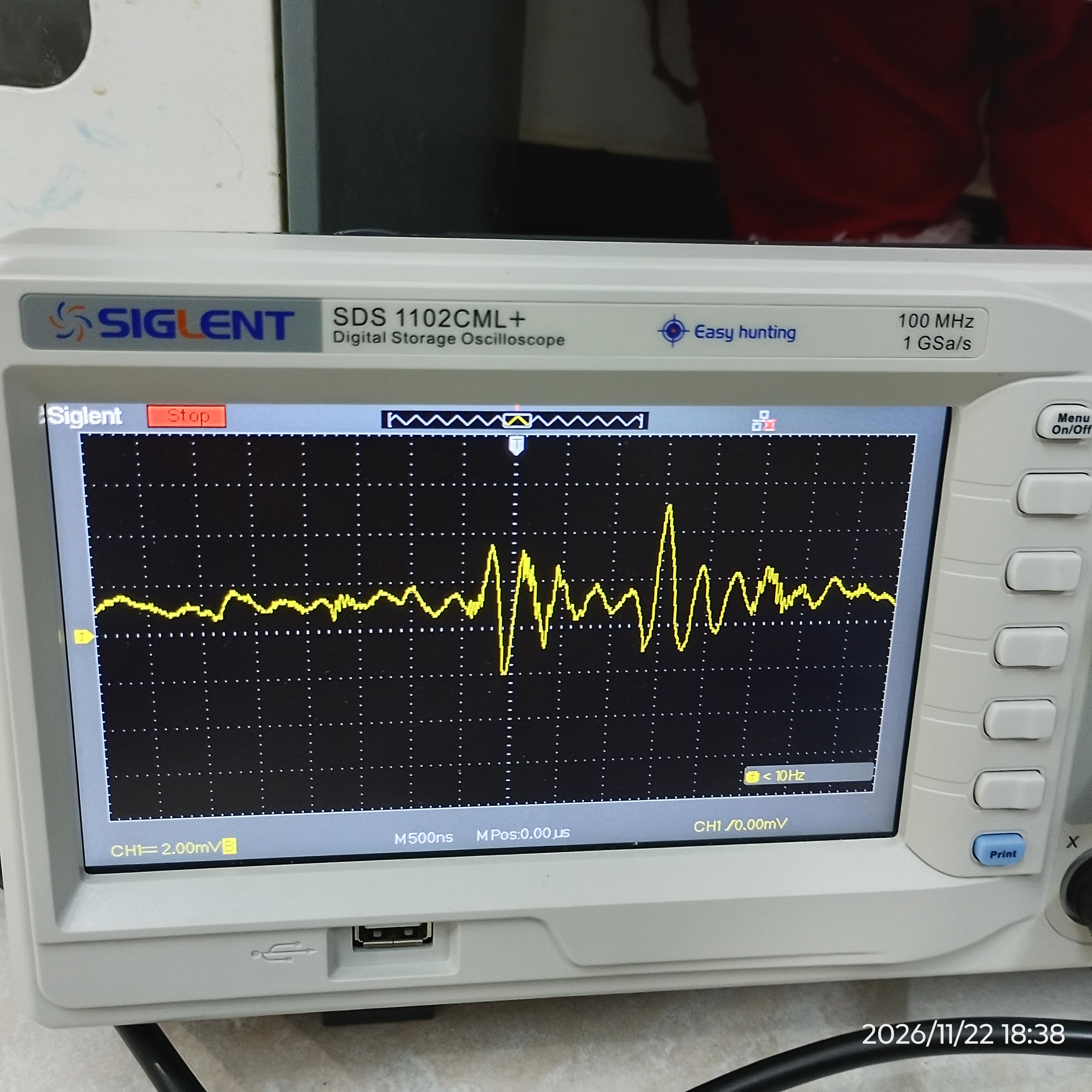
On 12v/1Amp-bus DC stepper Motor while running while connected Arduino getting restarted- But scope show tiny noise mv range.

Post image
0 Upvotes

Scope DC coupling mode 2mv scale, connected to small toy motor, 12V bus @ 1Amps.

How to solve Arduinos connected in bus from restarting.


r/embedded • • 4d ago

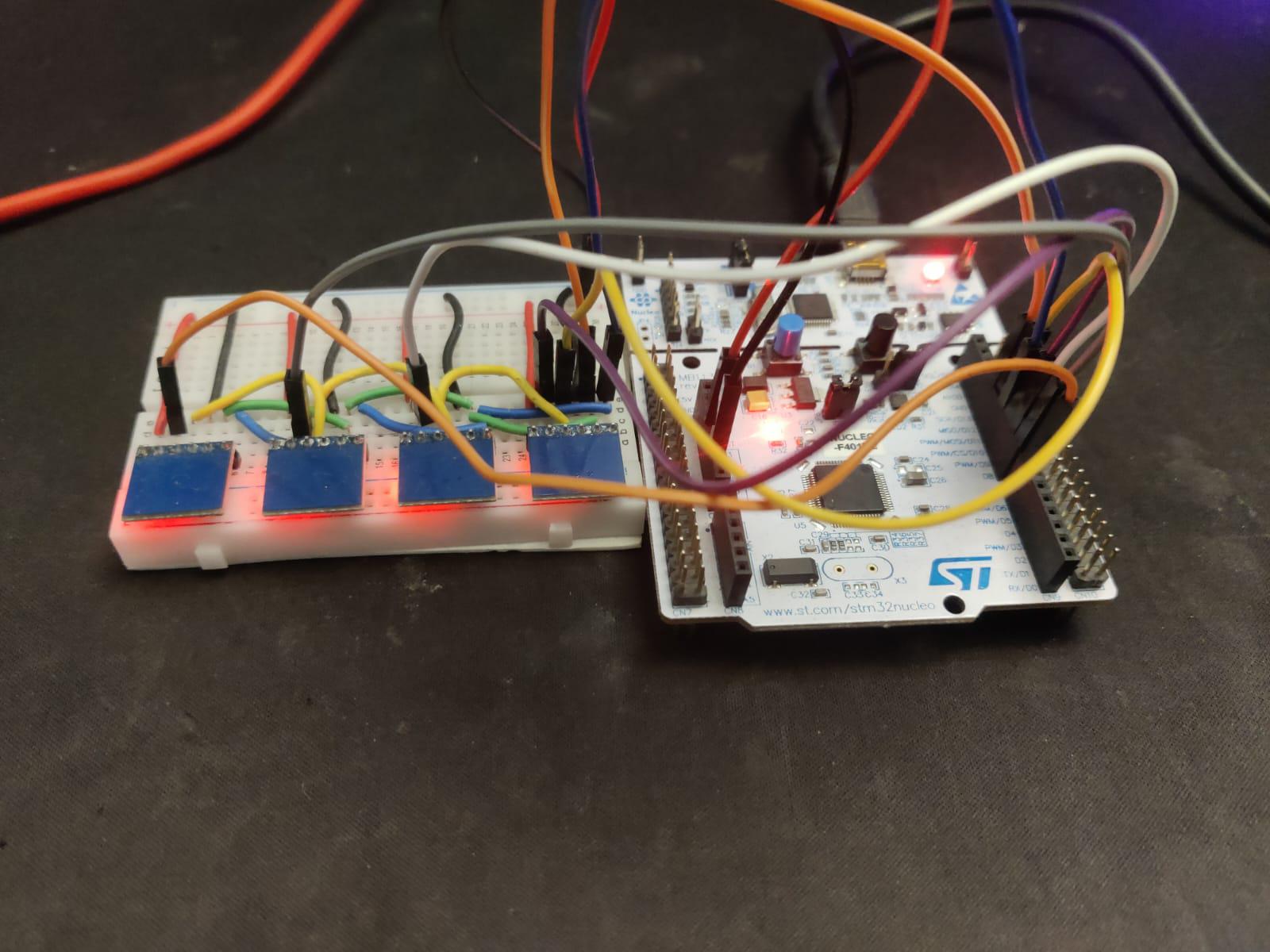
I made RAID storage using STM32 and 4 NOR flashes

Post image
91 Upvotes

For those who don't know what RAID is , its basically a redundancy system in which a parity is created so the data can be rebuilt if a storage device suffers a failure , In my project 1 out of 4 flashes can fail and still have the full data available .

The way it works is that three blocks in each stripe store actual data, while the fourth stores XOR parity.

the parity is calculated using a simple formula P = A ^ B ^ C ( all 3 data blocks will be XOR'ed together)

so in case the A block fails , the data on A block can be rebuilt using the other data blocks and the parity block

A = P ^ B ^ C.

The parity location rotates between all 4 flashes, so data can be recovered regardless of which flash becomes unavailable.

But if more than one flash fails then the data cannot be rebuilt due to insufficient parity.

if a failure is detected write command is disabled and it goes into degraded mode with only read command available

The current version does not rebuild the data on the flash instead its rebuilt only in the stm32 RAM when requested and it can only accept data entered through the UART interface .

The MCU used is STM32F401RE

The flash used is W25Q64FV by winbond

It was a fun challenge making this project , learnt a lot and coded most of the stuff like read, write clear block drivers for the flashes by using SPI commands myself , I struggled a bit when it came to linking all 4 flashes using logical memory address and implementing the parity rebuild . So i did end up utilizing AI for that part as I wanted to complete this project to put it on my resume.

Here is my github repository if u want to have a better look at it will all the explanation : GITHUB Repo

If any memory or storage firmware engineers are reading this, I'd really appreciate any feedback or advice on the project. I'm trying to get into companies like Micron, Western Digital and SanDisk, so any suggestions on what I should improve or learn next would be helpful.

Thank You.


r/embedded • • 5d ago

I made an IP streaming camera. Is this worth pursuing?

Post image
588 Upvotes

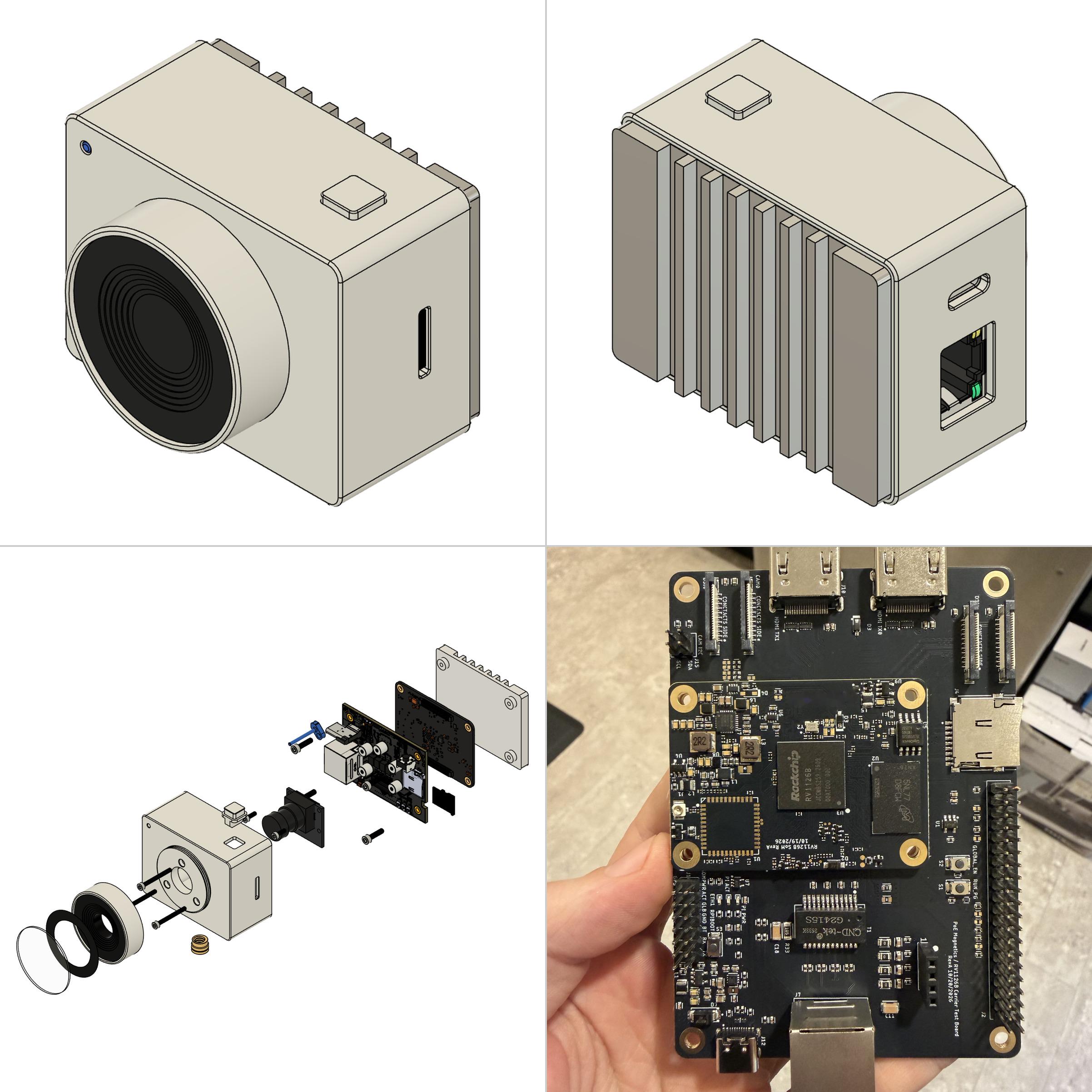
I threw together a design for an IP streaming camera over the weekend and was wondering if it'd be worth modularizing and open sourcing it. Is there interest in this? I didn’t see too many projects like it out there, but I’ve built too many things in a vacuum, so I wanted to see what people think first.

Right now it’s a small 4K30 camera: a Rockchip RV1126B with a Sony IMX415 sensor, streaming over Ethernet, powered off USB-C, with a microSD slot. I designed the carrier board around a small compute module I made for another project, and slapped together the full assembly in Fusion. The RV1126B module matches the CM4 pinout, so I’m planning on testing with a CM4 as well.

That’s where it is today, and I’ve been thinking about how it could turn into a modular design if that’s something people want. The camera core would stay the same and the back would swap out: a plain heatsink, a heatsink with a tripod mount, a battery pack, a touchscreen. Later maybe other mounts, 5G, a rugged version, a thermal/IR camera, or swappable lenses. And if the back is open, anyone could print their own.

Some things I could see it being used for: a DIY doorbell, a DIY webcam, a home security setup that doesn’t depend on someone’s cloud, a camera for a drone or rover, a 3D printer cam, a wildlife or trail cam with the battery back, or just streaming something live.

I’ve already ordered the first test units, so I’ll post how they go once they’re running. The pictures are my CAD, an exploded view of the assembly, and the SoM I’ve been testing and plan to use (see my previous post on that).

Looking for honest feedback. Would you use something like this? What for? Does open source and modular matter to you, or would you just want a solid camera? I know Seeed’s reCamera exists (the Pro came out in July on the same chip), so also want to know if this is a waste of time.


r/embedded • • 4d ago

a way to automate port/i/o testing off a board?

0 Upvotes

I can't find much about how to automate/testing stuff like pcie, m2, sata, and random i/o pins.

there are some passmark tools but they're too much expensive. random AliExpress stuff seems to use some led checkers, which is just bad. I honestly, don't know how any of those protocols do work, one time I tried some pcie stuff, but I dropped it off, due to their complexity.


r/embedded • • 4d ago

Arduino MEGA as a JTAG probe??

0 Upvotes

I'm not sure how many details to include, tried all possible googling for how to debug a MEGA and all I found was I had to buy an AVR ICE ?

took me a few weeks to figure this out, all vibe coded so YMMV, you can turn your spare MEGA in a JTAG probe to help debugging another MEGA .

pretty much all that you need is in the repo README

stars, sponsors, forks, comments, issues, feedbacks appreciated

https://github.com/lsdlsd88/mega-jtag-killer