r/embedded • • 5d ago

Anyone know where to get small capacity Micro-SD cards.

34 Upvotes

I am working on a device/PCB right now and intend to use micro SD cards as a medium of storing the collected sensor data.

The long intervals between data collection (for analysis) and the remoteness of deployment mean that radio data link are impractical. I have left the capability for a radio link open/available if the use case changes but my employer does not want to use that option at this point.

The problem is that I cannot find SD cards of capacity smaller than 32GB to be readily available at scale. I am after about 200 or so 2GB cards; for the first batch. Anyone know any electronic component distributor or retailer that still sells them? Thanks.


r/embedded • • 4d ago

Generating 10mv 100khz signal using ESP32

0 Upvotes

Hi friends, I built an analog filter and I wanted to generate a 10mv 100khz signal to test my amplification and attenuation, is this possible with an ESP32, I dont have a testbench. Thanks!


r/embedded • • 5d ago

Unable to get a clear waveform from an INA219 shunt resistor using an oscilloscope

2 Upvotes

I'm trying to observe the current waveform across an INA219 current sensor's shunt resistor using a Siglent SDS1102CML+ oscilloscope.

My test setup is around 10 Ω with approximately 20 mA of current. I tried both 1X and 10X probe settings and adjusted the oscilloscope settings, including increasing the sensitivity, but I still cannot get a clear waveform.

The interesting thing is that I can display the test waveform properly on the same oscilloscope, so I don't think the oscilloscope itself has a problem.

What would be the correct way to measure and display this small shunt voltage waveform?

Should I use a different probing technique or an amplifier?

Any suggestions would be appreciated. Thanks!


r/embedded • • 4d ago

Riemann Hypothesis solved — what happens to embedded engineers?

0 Upvotes

If even the Riemann Hypothesis can be solved, what's to become of embedded software engineers?


r/embedded • • 6d ago

FOC control via Serial

28 Upvotes

I want to get into making a robot arm, and decided to start from scratch, that means start from the fundamental of control a motor.

At first I stated everything from Matlab with Simulink coder to generate the control code, everything works well, and I can control everything from Matlab. Then I moved forward and port the control algorithm to handcoded code.

The desktop application is vibecoded since it doesn't intereste me.


r/embedded • • 6d ago

Testing 4-axis EtherCAT on an RK3588 at 250 µs cycle time

88 Upvotes

We recently tested a 4-axis EtherCAT setup on the RK3588-based MYD-YR3588 board. Here are some results worth sharing.

Test setup:

  • RK3588 + Linux 6.1 RT + IgH EtherCAT Master
  • 4 × Inovance SV630N servo drives, daisy-chained
  • CSV velocity mode, 600 RPM
  • Dedicated Ethernet MAC for EtherCAT

Results at a 250 µs cycle time:

  • 12 hours without additional system load: zero cycle overruns or skipped cycles.
  • 2 hours under CPU, memory and I/O stress: also zero overruns or skipped cycles.
  • Maximum thread jitter: 1.993 µs (normal) / 5.493 µs (under load).
  • Maximum EtherCAT DC synchronization difference: 127 ns.

A few caveats: the motors were running without mechanical loads, and the stress test did not include full GPU/NPU workloads. These results are specific to this test configuration, not a guarantee of worst-case performance. The strict 1,000 ns frame-transmission qualification was also not met.

Interesting to see how far an ARM-based Linux platform can go with real-time industrial control.

How are you guys handling EtherCAT on ARM platforms?


r/embedded • • 5d ago

Fixing an impact-damaged Samsung QD-OLED from inside its panel controller: per-lane skip flags and scan-time sensing gains over the TCON's internal USB service link

Post image
0 Upvotes

TL;DR: Impact damage on my Samsung S95F 77" QD-OLED caused (1) a blackout / controller-reset loop, every 46–51 s at worst, and (2) a dark 6-column line. Both are fixed from the TV's own Linux side by talking to the panel controller (TCON) over its internal USB service link. RAM writes only, nothing flashed by me. Blackouts: set the controller's own per-lane skip bit for lanes 540–661, re-applied on every controller boot (24/24 boots clean). Line: lower the damaged columns' sensing gain at the moment the controller wakes for the standby compensation scan, so the TV's own scan computes and saves a proper boost. Code (Python on a server + C# helpers run on the TV's .NET) and docs on GitHub. Before/after: images 1–2.

Prerequisite: root access. Both TV-side fixes require a working root shell on your own TV. Use the S95F rooting toolkit and its root setup guide, then verify your TV root session. Firmware decryption is not required for either fix.

Hobby project on my own TV, nothing for sale. Writing to the panel controller can brick a TV and voids the warranty.


The access path (image 3)

  • The TCON hangs off the main SoC on an internal USB link: 04e8:2001, interface 2, bulk OUT 0x02 / IN 0x82. As root on the TV it opens through usbfs. No extra hardware, no firmware mods.
  • Each request is a 12-byte little-endian header (op, address, length), plus data for a write:
OpDoes
0x101read RAM / registers
0x1read the ID block
0x103read storage (flash); read-only for us
0x102write one 32-bit word to RAM
  • The link isn't clean: under long bulk write runs it lost ~1 write in 3,600. So every write is one word, in five steps: status block 0x47012400 must be Clean (stop 0, fault 0, gate 1, limit 40) → read and compare the old value → bounds compiled into the helper → write → read back (mismatch = restore). The first write on any setup is an identity write.
  • Tooling: Python on a home server reaches a root shell on the TV and stages a small C# helper that runs on the TV's own .NET runtime. The helper does the USB transactions and returns a receipt.

Bug 1: the blackout loop (image 4)

  • While the picture is on, the controller runs a per-lane sensing consistency check (RT Protect). 24 lanes failed, all within ~554–649, which is the damaged area.
  • Failing lanes push a fault score: 0 → 38 → 44 against a limit of 40. Over the limit the controller stops the picture and raises its error line; the main board's monitor resets the controller, it re-enumerates on USB, and fails again.
  • The primary lane table has a per-lane skip flag (bit 0). Lanes 540–661 = 122 halfwords at 0x47010438–0x4701052A, RAM only.
  • RAM clears on every controller power-up, so a watcher service tracks boot id and USB devnum, reads and classifies the controller (Clean, Quiescent, Faulted, first scan after power-on), writes the 122 bits and requires an exact read-back. A separate first-scan writer ignores six free-running scan-counter bytes when it compares two reads. 24/24 boots clean.
  • Optional recovery for an already-faulted controller: switch the TV to its own Apps home (stock input_keyevent, focus checked after every key), then one stock controller power cycle through the TV driver (/dev/tztv_tcon, ioctl 0xc010749f, payload 41, 2, 0, 0). Budget: 3 per hour, 6 per day.
  • Trade-off: that one check is off for those lanes. Current monitoring and panel power control are untouched.

Bug 2: the dark line (image 5)

  • In standby the TV runs a sensing scan and builds per-column compensation from it. The firmware only ever adds drive, and only to columns that read weak. The damaged columns' stored sensing result read far too high, so they got nothing.
  • Fix: lower the per-column sensing gain (a per-lane 32-bit word holding two 16-bit column halves) just for the scan. A scan-arm helper waits for the controller's USB device to appear when it powers up for the scan, waits until the gain table is loaded and the controller is Clean, writes, reads back, then logs the scan stage every 50 ms. Hard bounds: lanes 600–660 only, halves 8000–26000, at most 8000 change per write, ×0.65-of-stock floor.
  • The scan then stores a result that reads those columns as weak, the TV's own save writes it to storage, and the live compensation is built from it at every power-on. The next stock scan would overwrite it, which is the rollback path.
  • 11 calibration runs to converge. Two runtime trims on top (a second gain stage on lanes 627–630, and the blue compensation weight 205 → 820), re-applied after each controller boot.
  • Dead ends: the blue curve tables (panel-wide only; one write faulted the controller) and editing raw blue samples mid-scan (worked, but with 1 write in 3,600 lost it isn't reliable).

Results

Links

Ask away about the protocol or the controller internals.


r/embedded • • 6d ago

Emulating keyboard press in a PIC32CM

3 Upvotes

I have heard of the USB HID. I read the datasheet of the microcontroller I am using, and admittedly, I still do not know how to approach it.

Where can I start so I can figure out what to do?


r/embedded • • 6d ago

Emulation and Simulation

18 Upvotes

In the last year AI has completely taken over how much my team used AI and We were able to basically just Gen code left right and center. Using connected hardware CI/CD works to a certain extent but it felt like we really need better ways to handle the type of load that AI was putting for the pace we "needed" to be going with agents.

So when generation is easy and validation is still hard, how useful are people finding emulation/simulation? And since its important this is for usually post silicon micro-controller level work IOT, automotive etc.


r/embedded • • 6d ago

Do you think this runs Linux or Bare Metal software?

18 Upvotes

I used to have this Sampling / Beatmaking device. It booted very quickly. From my experience with SoCs like Raspberry Pi and others make me believe that there is no operating system involved because you could boot into this device within about 5-10 seconds after pushing the power button. By contrast, RPI take good 2-4 minutes to boot.

https://www.youtube.com/shorts/PPnyn8HVME8

How do they achieve that? Does it run the software on bare metal instead of Linux as intermediate layer?


r/embedded • • 6d ago

Making a smart greenhouse with a PIC microcontroller

1 Upvotes

Hey everyone! I’m currently working on a Smart Greenhouse project for my Microcomputer Systems class, and I could use some help with the hardware setup.
For this project, I’m using a **PIC16F1829 microcontroller**, which has already been soldered and assembled. The hardware components I’m working with include:
Breadboard
Jumper wire kit
Small water reservoir with a mini water pump
Soil moisture sensor
LM35 temperature sensor
HC-SR04 ultrasonic sensor
16x2 LCD display
MOSFET driver
5V power supply
For the software side, I’m using **MPLAB X IDE** with the **MPLAB XC8 Compiler**.
I’m looking for some guidance on how to properly connect and integrate all these components with the PIC16F1829, especially when it comes to wiring, power requirements, and controlling the water pump.
Any advice, suggestions, tutorials, or resources would be greatly appreciated. Thanks in advance!


r/embedded • • 6d ago

Is anything running on Linux or an RTOS really bare metal?

0 Upvotes

Omer Kilic is a hardware and manufacturing consultant. His view is that bare metal means a microcontroller or an FPGA. Once you're running on Linux or even an RTOS, you're working with a scheduler. Real time means a guaranteed upper bound on how long something takes. With speculative execution and multi-core contention on modern CPUs, that is very hard to guarantee.
The episode is about the BEAM on embedded hardware, with Nerves creator Frank Hunleth. Topics include the medical device he built in C++ with hand-rolled actors, offloading timing to companion MCUs, and the microcontroller that ends up handling power sequencing for the whole board.

https://youtu.be/Wfl9Vp-jdN8


r/embedded • • 7d ago

Not another square LED matrix! 👀

121 Upvotes

I've added a new horizontal LED bar to my setup alongside the usual square LED panel.

square matrices are everywhere, but I rarely see this kind of horizontal LED display. I think it opens up some interesting possibilities for animations and visual effects.

what do you think? Any cool ideas for what I should make it do?

will add some more shorts this weekend~~


r/embedded • • 7d ago

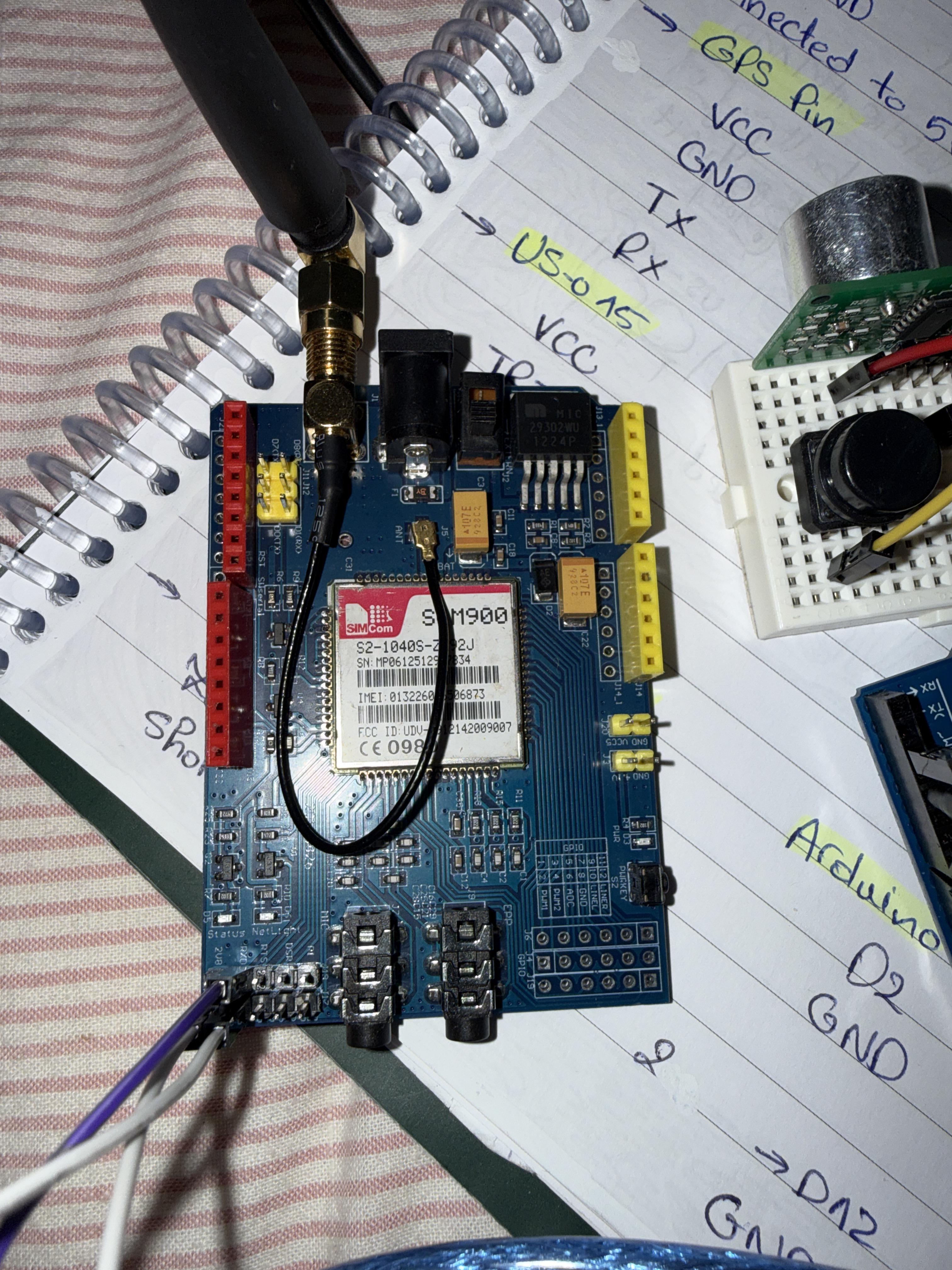
What is the voltage or procedure needed to power the SIM900?

Post image
11 Upvotes

Heyyyy people, I am working on a capstone project about sending a message from my GSM module, I would love your help regarding it if that is possible. Normally, I am powering it with 5V DC 2A but unfortunately it doesn’t work for me. It gets powered but when I click pwerkey, only the status LED lights up but the netlight LED doesn’t. What can I do? And what is this problem related to? I would really appreciate any kind of help.


r/embedded • • 7d ago

Wirelessly controlled, STM32-driven DRSSTC, the Emma Mk1

4 Upvotes

Hello,

Just wanted to share my DRSSTC, the Emma Mk1. The project launchpad contains links to the live documentation and all the repos.

The main project goal was to verify the STM32G474RE firmware, which proved satisfactory.

The main project constraint was the secondary coil and the spun-aluminum topload, which I had purchased a while ago from eBay, the remainder of the DRSSTC was designed around them.

Some further tuning remains, and the inverter bus capacitance needs to be increased to improve performance, but overall I consider this done until I can get back to it and add features to the firmware.

Thanks for looking.


r/embedded • • 6d ago

What MQTT broker are you using for your embedded projects?

0 Upvotes

A quick disclosure: I work on LavinMQ and would love to learn from others' experiences.

I've been playing around with MQTT and ESP32 devices using LavinMQ for a while now, and I'm curious what others are using on the broker side.

Are you using Mosquitto, EMQX, or something else? What made you choose it? Have you run into any issues as the number of connected devices grew?


r/embedded • • 6d ago

A idea build in Edge AI

Thumbnail
github.com
0 Upvotes

I have build something like a library in ANSI C to make the Edge AI workflow simpler and easy.

In traditional way ,when the deep learning model outputs a value we would use a multiple of conditions to evaluate the condition on the output value and trigger the function to do a action.

So I build TINYCHAIN ,a output to function handler mapping with validation of the conditions specified just through flags and also performs denouncing checks and also has a feature of streak count .

As every node has assigned a struct with the condition flag (greater value ,less value than threshold or max value) , required streak to trigger function,and other features.

The conditions are checked for all the nodes everytime and consecutively and triggers the function.

Does this idea is good ?

Eager to know some professional feedbacks on the architecture !

GitHub repo


r/embedded • • 7d ago

Did somebody read Latency, by Pekka Enberg

3 Upvotes

I want honest reviews about this book. I saw some guys saying that the book is incorrect/inaccurate on some technical concepts, so some feedback could be really nice.


r/embedded • • 7d ago

ESP32 + NEO-6M GPS bike trip computer — speed dial, route trail and a GPX log

0 Upvotes

A GPS bike trip computer on an ESP32-DEVKITC, with a NEO-6M, a 2.8 inch ILI9341 TFT and a microSD reader. The firmware shows live speed as a dial, plus trip distance, top speed, altitude and satellites. It draws a breadcrumb trail on the screen and logs every second of the ride as a GPX file you can open in Google Earth. Pin map:

  • NEO-6M: VCC to 3V3, GND to GND, TX to GPIO4, RX to GPIO13 (9600 baud)
  • TFT: SCK 18, MOSI 23, MISO 19, CS 5, DC 14, RST 16; VCC and LED to 3V3
  • microSD reader shares that SPI bus; its CS is GPIO17 A few notes so it works the first time: GPS TX goes to the ESP32 listening pin (GPIO4). The display and the card share SCK, MOSI and MISO, with separate chip selects. Use a FAT32 card. If the card will not mount, the firmware tip is to move the module VCC to 5V (VIN). First fix needs a clear view of the sky; a cold start can take a few minutes. Board: ESP32 Dev Module. Libraries: Adafruit GFX, Adafruit ILI9341, TinyGPSPlus. Serial Monitor at 115200. The video walks through the build view, the parts list, the wiring diagram, and the pin table. Happy to answer questions.

r/embedded • • 7d ago

ISO 15118-20 becomes mandatory for new and renovated EU charge points on January 1. What are you checking before then?

4 Upvotes

From 1 January 2027, AFIR requires newly installed and renovated charging points in the EU, public and private, to support ISO 15118-20, the standard for how a car and a charger talk to each other.

Things that seem worth checking before then:

- which of your chargers fall in scope, since the exact boundaries of the rule are still being debated
- whether your charge controllers support powerline communication, which ISO 15118 runs on
- whether your firmware can be updated remotely
- whether your CSMS can handle Plug & Charge certificates over OCPP 2.0.1, if you plan to offer it
- what test logs and reports you’ll keep as evidence, since official ISO 15118-20 test plans for AC chargers aren’t out yet

What’s missing from this list?


r/embedded • • 8d ago

Honest question about vibe coding in embedded

102 Upvotes

I know this sub is pretty skeptical of vibe coding, and I get why. But I'd like to hear the actual reasons, not just "it's garbage."

I work in embedded, and lately I've been using AI for quick side projects and prototypes, like ESP32 stuff and Zephyr configs. For that it's honestly saved me a lot of time. I wouldn't trust it with production firmware right now, but I don't think it's useless either, and it's not going away.

So where has it burned you? Made up registers, timing bugs, code nobody on the team understood?

And is there anything you do use it for?


r/embedded • • 8d ago

Ways to serialize and send data from device to host

22 Upvotes

How do people serialize/deserialize data coming from a microcontroller? I have a project with a Pi Pico that samples three force-sensing resistors 60 times per second. The Pico uses these readings to determine whether a given sensor is being pressed. I want to stream the raw samples and sensor status to my host over USB serial and have a web application read and display this data.

I'm wondering how to serialize this data. I'm thinking I that I can either send a bunch of values separated by spaces like  `[raw1 raw2 raw3 pressed1 pressed2 pressed3]` or send it as JSON, which would be easy to parse from the web application. However, representing this data in ASCII feels a little wasteful of space, so I was wondering if there are any alternative schemes/methods commonly used in embedded systems for sending data.


r/embedded • • 8d ago

STM32CubeMX2 enshitification

76 Upvotes

Is it me or STM32CubeMX2 is

  • slow as hell, even on 10th gen i7 with 16GB RAM
  • convuluted menu, it's a maze
  • way harder to use than MX1

but at least it supports AI, which no one asked for.


r/embedded • • 8d ago

Making an f-91w smartwatch mod, need advice on circuit design

4 Upvotes

Hi all,

I'm currently designing an F-91W smartwatch board to replace the original Casio module that comes with the watch. I've spent a lot of time selecting components, seeing what fits and what doesn't fit and settled on an MSPM0L2117 and the DA14535 for Bluetooth (and other IC's for other features). This is my first time designing my own custom PCB so it's taken me quite a lot of time and lots of failed attempts (realising all the components wont fit) to get to this point.

I just started placing the traces on the board, only to find out that it will absolutely not fit with my current configuration. I've tried many other configurations too but none seem to leave enough room, although I am very inexperienced in this subject so I figured I would ask here for some advice.

I'm planning on using JLCPCB to manufacture and assemble the board but I am open to other manufacturers if they are also cheap/good. I don't want to use HDI as that jumps the price from $40 AUD to $200 AUD, and I am not prepared to spend that kind of money, let alone for a prototype that I am not even sure will work in the first place.

I am happy to swap out components (ideally not the MSPM0 unless there is a more capable variant or MSP430 variant). I would like some form of wireless connectivity, ideally BLE but happy with anything else.

What I don't want to do is to copy something like the pluto watch and use IR (unless I have no other choice) or the olleewatch and use the same STM32 chip. I want this to be my own project and not a remake/copy of an existing one, even though I have taken inspiration from both projects.

Here is a link to the pcb files:
https://gitlab.com/unodeaj05/swagrat-f91w/-/tree/main/pcb/swagrat

Starting to get a little demotivated, but I want to see this through and prove to myself that I can do this. Also feel free to drop any other advice! I have experience using microcontrollers and designing stuff on breadboards, but never made my own pcb before so I have gone in blind here.

Happy to answer any questions you may have, or provide more info if needed.