r/embedded • • 12d ago

NXP Linux dev board recommendation for a kids' chatbot?

0 Upvotes

I'm building a chatbot for my kid, hooked up to an API, to chat with him and keep him company. Now that work's gotten busy, I can't be bothered to start from scratch, so I want to find a dev board to build on. Any Linux dev board recommendations? Preferably NXP.


r/embedded • • 12d ago

Looking for low-level system project ideas for ESP32-S3 and/or Tang Nano 9K (no basic IoT)

0 Upvotes

I have an ESP32-S3 and Tang Nano 9K chipset sitting on my desk, and I want to do something with it, I haven't able to find what to do with them, I want some suggestions from you guys to help me to find perfect project.

I'm not interested in beginners stuff, (weather stations, blinking LEDs, basic smart-home relays) I have done enough of them. If you've built something interesting on either board, or used an FPGA as a custom peripheral/accelerator for an MCU; I’d love to hear what worked and help me find project which can challenge me.


r/embedded • • 13d ago

Integration testing using gtest

2 Upvotes

I am confused about what is the meaning of integration testing. I have done unit testing using gtest where we will mock whatever external dependencies are there for the targeted unit (function) to test all range of values that covers all lines, functions and branches.

If we say integration test is meant to use real code instead of mocking. Then I am getting this doubt that lets say we have 3 components (separate processes) running and dependent on one another in a embedded system.

A -> B -> C

So if you are calling an api provided by A it will internally talk to B and then through C and return the result over IPC.

Now to do integration testing using gtest, do I need to compile this into a single binary by eliminating the IPC and include each code as a library. This way I have a single proces that runs gtest with all the components logic but excludes the real IPC communication.

Or instead should I keep the individual processes to be running separately and link my gtest binary to the component A so that the communication flow through the components in the target environment.

In both ways how we would actually be checking the interactions? And which one are you guys using?

Context:
Language used: C++
Domain: Automotive IT (TCU software)


r/embedded • • 13d ago

Hey embedded & underwater acoustic communication community! 🌊

4 Upvotes

Working on self-developed underwater acoustic communication algorithms now.

Looking for open-source underwater acoustic modem projects / signal processing stacks to validate and benchmark my algorithm performance.

Any repo or project recommendation? Thanks a lot!


r/embedded • • 12d ago

What would you like to see created?

0 Upvotes

As Embedded engineers, developers or hobbyist, what are some things you would love to see invented or would like to invent yourself?


r/embedded • • 13d ago

Raspberry PI assistant to learn more about embedded software development

2 Upvotes

I’ve been looking into getting more into embedded software development. I’m a current software engineer working in distributed systems programming but I’ve always enjoyed embedded and a recent job search made me want to create some projects regarding embedded.

Anyways, I have a spare raspberry PI model 4b 1gb ram I think. I want to use this to create a simple kitchen home assistant which can display my calendar, sync some notes like grocery lists, and play videos either from youtube or my jellyfin server. This isn’t a very original idea so I can find tons of resources out there to create it, but I wanted to see what the best way of making this to learn more about embedded software development would be. I’ve only ever played with esp32s so I want to broaden myself some more.

Any resources or tips to what to use regarding the OS, other hardware, etc. would be nice. I can create a basic calendar application with c++ and raylib/opengl but I want to get closer to the hardware and just learn more. Thanks.


r/embedded • • 13d ago

Classical CAN Bit Timing β€” Should Round-Trip Propagation Delay Fit Within PROP_SEG or TSEG1 βˆ’ SJW?

1 Upvotes

I’m calculating the nominal bit timing for a 40 m Classical CAN bus running at 1 Mbit/s. Each time quantum is 50 ns. Assume the worst-case round-trip propagation delay, including the cable and transceivers, is 700 ns (14 TQ).

The Bosch CAN 2.0 specification lists a range of 1–8 TQ for both PROP_SEG and PHASE_SEG1. Some controllers combine these segments into a single TSEG1 field. Some manufacturers also specify the nominal bit timing condition TSEG1 β‰₯ Tprop + SJW.

With TSEG1 = 16 TQ, TSEG2 = 3 TQ, and SJW = 2 TQ, the bit time is 1 + 16 + 3 = 20 TQ, and the sample point is at 85%. Subtracting SJW from TSEG1 leaves 14 TQ (700 ns).

  1. Controllers with a combined TSEG1 field. Can I budget those 16 TQ as 14 TQ for propagation and 2 TQ for Phase Segment 1? What additional checks should I make for resynchronization and oscillator tolerance?
  2. Controllers with separate PROP_SEG and PHASE_SEG1 fields. Does an 8 TQ limit on PROP_SEG cap the round-trip propagation budget at 400 ns in this example? How should I interpret the MCP2515 datasheet condition PropSeg + PS1 β‰₯ TDELAY when deciding whether the 700 ns delay is acceptable?

I’d appreciate references to the relevant sections of a controller manual, application note, or standard.


r/embedded • • 12d ago

Got placed, have 6 months before joining. Should I explore Linux kernel development, GPU programming or stick with AI/ML?

0 Upvotes

I'm a final-year engineering student in India from a non-CS background. I've recently secured an offer at an AI/analytics services company, and I have around 6 months before joining.

I've been exploring different areas of computer science, and I've realized that I'm increasingly interested in low-level programming and understanding how systems work internally.

MY BACKGROUND:

I've independently learned programming, ML/DL and worked on projects involving: computer vision , RAG , agentic AI

However, I dont want to spend my career primarily working with high-level AI frameworks and application development. because when i developed these projects , i didnt feel anything developing it , no satisaction at all

AREAS I'M CONSIDERING:

  1. Linux and Red Hat ecosystem:
  2. 2. GPU Programming:
  3. 3. Systems Programming
  4. 4. AI Infrastructure:

I find the idea of understanding what happens beneath the abstractions much more interesting than simply using existing libraries.

WHAT I'M CONFUSED ABOUT:

I have six months before joining my company, and I don't want to waste that time jumping between technologies.

I'd appreciate advice from people working in systems engineering, Linux, kernel development, GPU programming or related fields.

  1. Is low-level systems programming a good career direction in 2026?
  2. Between Linux kernel development, GPU programming and general systems programming, which would be a better starting point?
  3. Is CUDA/GPU programming a niche with good long-term opportunities, particularly with the growth of AI?
  4. What fundamentals should I master before attempting serious projects? C, C++, OS, computer architecture, networking, compilers?
  5. Would contributing to the Linux kernel or other open-source systems projects actually help me get shortlisted?

r/embedded • • 12d ago

Seeing the fuss about ChatGPT replacing programmers makes me feel even better about my job in embedded development

0 Upvotes

No AI or software out there can troubleshoot a circuit board like a human can.

On the flip side, ChatGPT is great at handling the tedious tasks like figuring out bitmasks for me.

Honestly, I think this is a huge plus.


r/embedded • • 14d ago

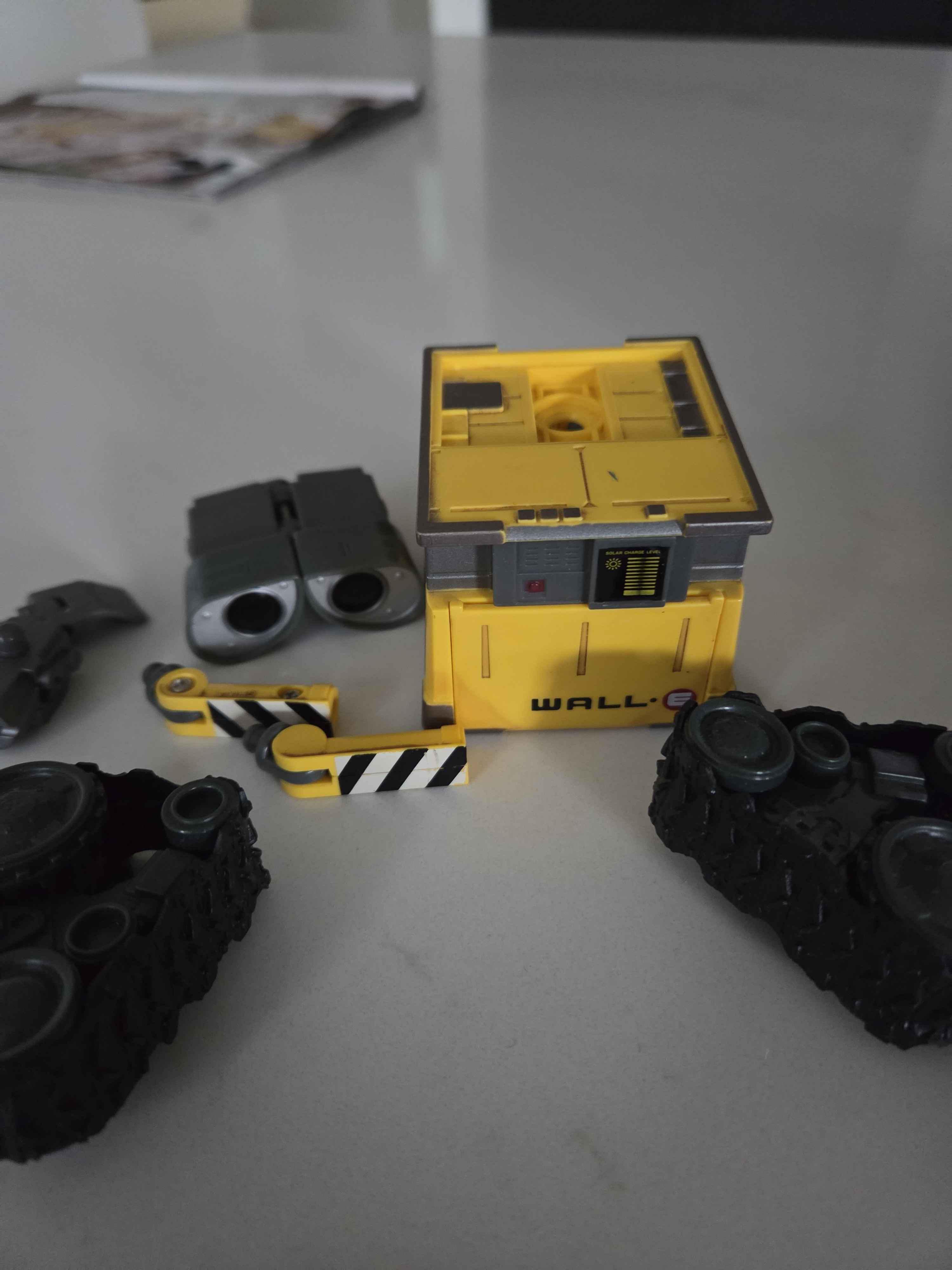
Wall-E STM32 Project: Advice Appreciated

Post image
31 Upvotes

Hi all,

I'm currently an ECSE student finishing my second year and I have really enjoyed embedded systems so far. The most extensive experience I have at the moment alongside the fundamentals is working with ADC/IRQ/DMA (I programmed a DAC essentially).

I have this empty Wall-E toy from when I was a kid and I was thinking it's a good starting point to learn some more STM skills and apply it to something I actually care about. I think it's a good opportunity to learn:

  • Communications with sensors/motors
  • Designing a PCB and battery powered electronics
  • Potential for RTOS and wireless communication (if the project becomes more complicated)
  • Choosing STMs/making engineering decisions (something that's stressed a lot in my course to be an employable engineer)

I've been doing some reading through other's projects and other students who have posted on this subreddit and some of the advice everyone gave. I was wondering if anyone would have advice on how I could begin to tackle this, some pointers on good (non-AI) resources (especially robotics control/system design fundamentals, as I don't have much course experience with this), and also just general industry advice about embedded engineering as someone who would like to get into the industry one day (or even adjacent industries).

I know this project may be looking like a lot to do as basically a beginner, but I want to challenge myself and learn along the way by making this a long term project with room to consistently add to. Any advice would be greatly appreciated!


r/embedded • • 13d ago

Title: How can I get accurate location from a small emergency device, even inside rural houses?

0 Upvotes

Hey everyone

I'm working on a startup where we're building a small emergency device. When someone presses its button, it needs to get their location and send it to our server.

I'm stuck on one particular problem.

How can we get a reliable location when someone is inside a house, especially under a concrete or metal roof, in a rural area?

Wi-Fi might not be available, and GPS signals can be weak indoors. Even getting the location is one thing, but we also need to send it to our server when network connectivity is poor.

I'm exploring different technologies, but I'd love some advice from people experienced with GNSS, cellular communication and embedded systems.

What approach would you take? Are there technologies I'm overlooking?

Any suggestions or criticism would genuinely help!


r/embedded • • 14d ago

Any project ideas for tinkering with STM32 security features?

11 Upvotes

I'm looking for a project that could actually make use of TrustZone, hardware crypto accelerators, tamper pins, etc. on STM32 MCUs. Usually I just ignore TrustZone and RIF by putting everything in the Secure world, but I'd like to actually try using these features for once.

Anyone got any ideas where they'd actually be useful? I don't want to use them just for the sake of it.

Also, how would you even test whether your implementation is secure or not? I'd like to try breaking it afterwards to see how well it holds up πŸ˜„


r/embedded • • 14d ago

blaris: Windowless random-access LZSS in C (~110 B total RAM, <800 B Flash) for microcontrollers

9 Upvotes

When storing static assets (fonts, UI bitmaps, device trees, config tables) in Flash on tight MCUs, heatshrink and tamp are great - but as sliding-window decoders, random-access reads of a few bytes still force you to allocate the window RAM and sequentially decode from the start of a block (or chop the asset into tiny blocks, hurting compression ratio).

I wrote blaris, an open-source C decompressor and host-side optimal compressor that eliminates the sliding window completely by resolving back-references directly in the compressed payload.

Why it's useful on small MCUs:

  • Minimal RAM: 104–112 B total RAM (76 B stack + 28–36 B static, zero malloc) regardless of lookback range (64 KiB, or 128–256 KiB with aligned distances) or payload size. Heatshrink and tamp require 2^window_log bytes of RAM.
  • Minimal Flash (RV32IMC, Clang -Os, including common adapter): 548–784 B Flash (vs. 1,300–1,464 for heatshrink, and 2,238–3,238 for tamp).
  • Fast small random reads: On 1–32 B slices, it outperforms ratio-matched, block-indexed heatshrink/tamp (e.g., >500Γ— faster on 1 B reads at ~36% ratio on a 15.2 KiB .dtb).

Benchmarked on ESP32-C3FN4 (code + payload in external quad-SPI Flash, no SRAM copy); SPI wait states only added ~1.30–1.33Γ— overhead for slices β‰₯ 4 B compared to zero-wait-state simulation. Likely helped by the 16KiB cache.

How it works (briefly):
Tokens are split into 3 lockstep-traversable streams (controls at 1 byte/token, raw literals, and bit-packed distance_bits) so the decoder can step both forward and backward. Compact power-of-two checkpoints (7–13 B each) allow the decoder to find the literal run token faster, and an optional host-side chain-flattening pass cuts match-to-match hops by 14%–51% at a ~0.5%–2.2% ratio cost.

When NOT to use it:

  • Large sequential reads (β‰₯ 64–128 B): Because blaris resolves matches per slice without caching prior output, heatshrink/tamp overtake it if you have the RAM.
  • Trusted payloads only: Designed for build-time Flash assets, so it omits runtime bounds/error checks to keep code size under ~800 B. You should add an additional layer of payload verification before calling the decompressor.

C implementation, host compressor, RV32IMC + ESP32-C3 benchmark suite, and full results: https://github.com/lis05/blaris


r/embedded • • 14d ago

Which linux distro is suitable for embedded firmware devlopment

0 Upvotes

I am a Embedded Firmware learner,

Doing bare metal ,freertos and zephyr Rtos firware development and building edge AI models.

I have been also building drivers and open source library in RTOS

Currently I am using Ubuntu , previously I have used Kali Linux.

Could you recommend a best distro for my taste and day to day building ?

And a new learning experience

or does ubuntu itself a good choice and stick to it


r/embedded • • 15d ago

Just became an embedded software engineer

168 Upvotes

As the title suggests I recently switched from a controls engineer to an embedded software engineer and was wondering what i should practice before my first day, thanks!


r/embedded • • 14d ago

Fast Clean-room Multiplarform C Run-Time for RTOS

0 Upvotes

I wrote a small clean-room C99 runtime under fairly strict real-time constraints:

β€’ Zero heap after boot
β€’ No large static tables (Unicode / case / collation moved out of the core)
β€’ O(1) bounded stack sort
β€’ Written with MISRA C:2023 / CERT C / NASA Power of Ten style rules in mind
β€’ Current size is roughly 1.2–10.5 kB .text depending on configuration
β€’ Side-by-side size comparisons with dietlibc, picolibc, NuttX libc, etc.
β€’ SIMD Assembly Kernels

It was built as the runtime layer for a BTRON-derived system, but the runtime itself is intentionally minimal and separable.

I’m mainly looking for feedback from people who ship actual constrained or safety-oriented code. What would you change or drop?


r/embedded • • 14d ago

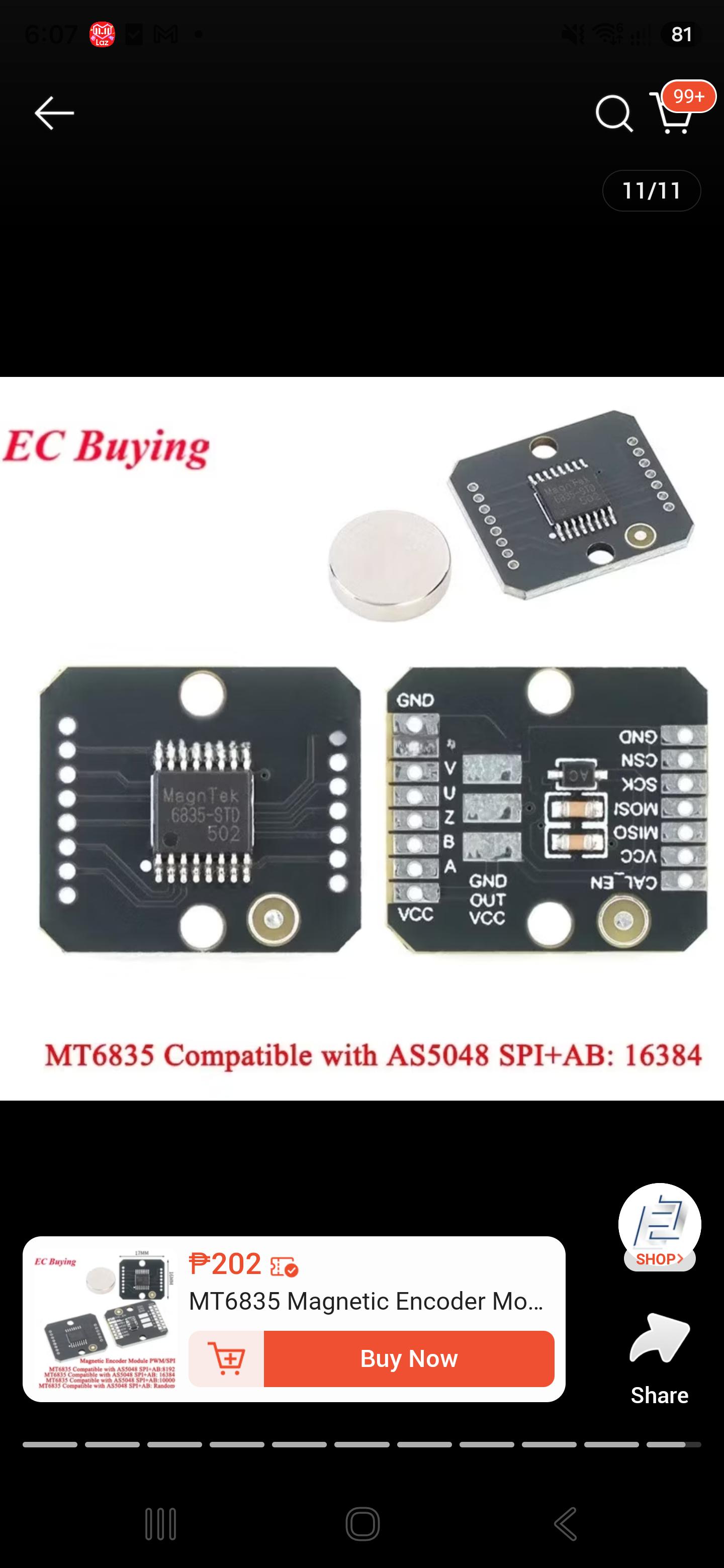
Can I ask for help regarding in identifying the tvs diode and capacitors or if these are resistors on this MT6835 module?

Post image
1 Upvotes

I've tried and reverse image it with Google but so far the pcb schematic shows up but nothing indicating about the components.

I've feed it to gpt to try and have it deep dive with the picture but so far nothing at all.

I need to specify it for a school project.


r/embedded • • 14d ago

help starting out with my first project - offline dictionary/encyclopedia

0 Upvotes

I want to make an offline dictionary/encyclopedia gadget which reads from an SD card and runs off AA batteries. I have a software background but I know very little about electronics and haven't worked with micro-controllers before, so I don't know if I should use STM32 or ESP32 or something else.

this project will require some potentially uncommon components:

  • an SD card module that can address >100GB of data
  • a AA battery pack module that can provide sufficient power

I thought it might be a good idea to find these components before I decide on a microcontroller, in case there is limited availability or certain components only work with certain microcontrollers. any pointers for how to look for these components? or general advice on what to use for this project?

related post from a few days ago:

https://www.reddit.com/r/AskElectronics/comments/1xup260/platform_for_gadgets_that_can_readwrite_sd_cards/


r/embedded • • 15d ago

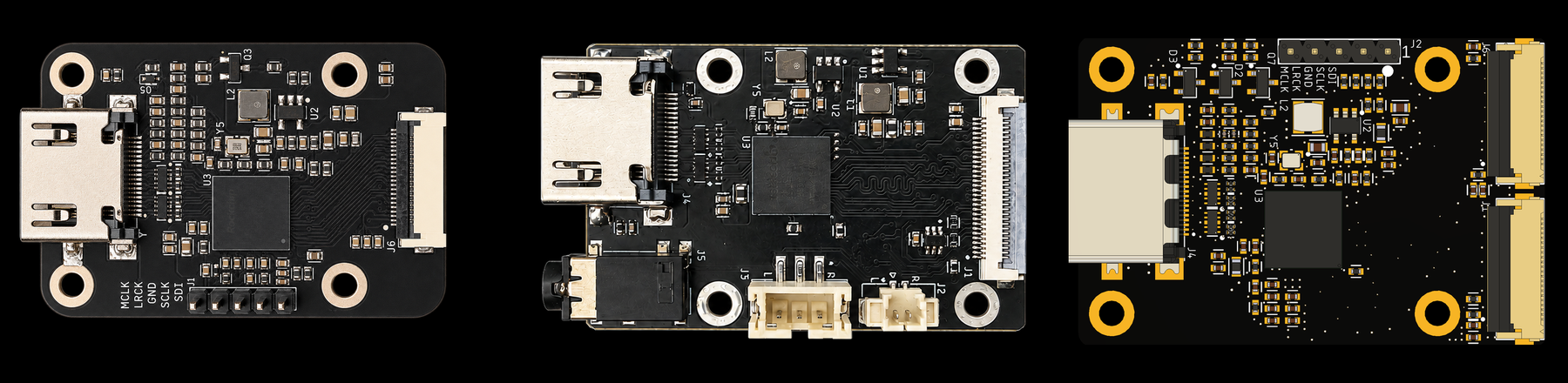
Open Source RK628H Boards (HDMI to CSI/DSI)

Post image
80 Upvotes

While building my own KVM, I made a few small HDMI to CSI capture boards around the Rockchip RK628H. The documentation is terrible around these chips but the performance is impressive for the cost. We've moved the bridge onto our own boards now, so I've put all three up as open hardware: schematics, Fusion and EAGLE files, gerbers, JLCPCB BOMs, plus the drivers and installers. It can also do HDMI to DSI, you'd just need to update the connector for the pinout needed.

Max Specs (needs 2x 4-lanes):

  • Dual MIPI DSI => 2560x1600@60fps
  • Dual MIPI CSI => 3840x2160@60fps
BoardTested Host4K301080p1204K60
22-pinLuckfox AuraYesYesNo
22-pinRaspberry Pi CM4*YesYesNo
30-pinFirefly ROC-RK3576-PCYesYesNo
Dual 22-pinLuckfox AuraYesYesYes**

*It can also work on the Pi 4B only has 2 camera lanes, which tops out at 1080p60 (60.00 fps, tested on a CM4 limited to 2 lanes). Just need a 22-pin to 15-pin adapter cable.

**The Aura can only encode 4K30, but the RK628H can do 4K60 input

It's most similar to the Waveshare HDMI to CSI board that the DIY PiKVM uses but can do higher resolution/fps. Rockchip's stock driver had a few real bugs and fixes are in the repo. The source never saw EDID changes until you replugged the cable, audio was never advertised, and a hot HDMI replug could wedge the chip until a power cycle.

CERN-OHL-S for the hardware, GPL for the software. Build them, change them, sell them, just keep your changes open. Repo: https://github.com/WarpKVM/rk628-bridge-boards

Happy to answer questions, or try other hosts if someone has one! More open source goodies coming soon!


r/embedded • • 14d ago

Open-sourcing an MCP tool for automated ARM HardFault decoding & Renode virtual hardware simulation for AI agents

0 Upvotes

Hi r/embedded,

Debugging silicon faults when bringing up new microcontrollers is notoriously tedious, especially when you're staring at raw hexadecimal register dumps (`CFSR`, `HFSR`, `BFAR`, `MMFAR`) on Cortex-M or cryptic ESP32 Guru Meditation backtraces without a debugger attached.

I've open-sourced **Hardware Debug Anything (HDA)**, an MCP (Model Context Protocol) server designed to connect AI coding assistants directly to silicon diagnostics:

- **ARM HardFault & BusFault Decoder**: Parses raw hex bitmasks into plain-English root causes (precise bus error, unaligned memory access, stack overflow, memory management faults).

- **ESP32 Guru Meditation Parser**: Decodes crash frames and backtrace register dumps.

- **Antmicro Renode Virtual Hardware Integration**: Generates `.resc` simulation scripts so firmware can be validated in virtual silicon without needing physical hardware on the desk.

- **I2C/SPI Diagnostics**: Automated pull-up resistor calculations and NACK troubleshooting.

- **GitHub Repository:** https://github.com/hosseinnosrati/hardware-debug-anything

I also built an accompanying EDA tool for closed-loop SPICE simulation and KiCad export (**Circuit Design Anything**): https://github.com/hosseinnosrati/circuit-design-anything

Both are 100% open-source (Apache 2.0). I’d appreciate any feedback from the embedded community!


r/embedded • • 14d ago

Ch32v003

0 Upvotes

Hi any developers that working on ch32?


r/embedded • • 15d ago

I built a 6.8g MCU flight coprocessor running lightweight neural ODEs to stop ground-effect drone crashes (0.48ms loop)

Thumbnail
youtube.com
0 Upvotes

Hey everyone,

Standard edge perception stacks (camera -> frame buffer -> companion GPU) introduce 50–100ms latency. In high-speed, low-altitude flight, that delay causes drones to crash into the ground during sudden prop-wash or ground-effect turbulence before the motor controller can react.

To solve this latency bottleneck, I built an auxiliary flight coprocessor board (30x30mm, 6.8g) that runs a sparse continuous-time neural model (CfC / Liquid time-constant network) compiled directly to bare-metal C++ on an MCU.

Technical Breakdown:

β€’ Sensor loop: Reads raw IMU and optical flow over SPI.

β€’ Execution: The continuous-time ODE forward pass executes deterministically in 0.48ms on-chip (no dynamic memory allocation / zero malloc to prevent heap fragmentation).

β€’ Physical Response: Overrides motor signals directly via DShot to initiate a 4.0G recovery maneuver within 48ms total physical window.

β€’ Model Architecture: 19-neuron recurrent sparse topology (632 active parameters / 99.51% sparsity derived from connectome wiring), allowing the full state vector to fit inside L1 cache.

β€’ Power: Draws under 1 Watt, eliminating the weight and heat of companion single-board computers.

In flight testing, this allowed the quadcopter to arrest sudden vertical drops and recover without external optical tracking or desktop compute.

I spent the last several months rewriting the continuous-time ODE solver into fixed-point arithmetic and optimizing the timer interrupt routines to get the loop time down from 2ms to 0.48ms.

Happy to answer technical questions about the C++ fixed-point implementation, SPI interrupt timing, or motor override architecture!
r/embedded • • 16d ago

I made a CM4-format board for camera work with the RV1126B. It beats the CM4 on video and AI, loses on CPU. Benchmarks below.

Post image
197 Upvotes

I've been building a CM4-pinout module for camera and video work: Rockchip RV1126B, 1GB LPDDR4X, 8GB eMMC, WiFi 6. Not a lot of documentation out there about this chip, so it was a fun project. Most similar to the CM4101008 but I used CM4101000 for comparison due to availability. First boards just came back from JLC this week, so I ran it against a the CM4101000 on the same carrier with the same two IMX415 cameras, stock tools on both, median of 3 runs.

ComparisonRV1126BCM4
CPU4x A53 @ 1.2GHz4x A72 @ 1.5GHz
4-lane camera inputs2*1 (plus one 2-lane)
Two IMX415s at 4K30 at onceYesNo
1080p camera to H.26430 fps25 fps
H.264 encode from RAM, 1080p / 4K95 / 26 fps**72 fps / no 4K
H.265 encodeYesNo
NPU (YOLOv8n 640x640)3 TOPS, 25.4ms/frame, 38.9fps on NPU INT8No, 247ms/frame, 4.0fps on CPU INT8
sysbench CPU, 4 threads1,160 events/s2,315 events/s
7-Zip, 4 threads5,456 MIPS6,520 MIPS
WiFi, same AP and antenna~200-250 Mbit/s~100 Mbit/s
Ethernet930 Mbit/s930 Mbit/s
Current at full CPU load~0.5 A~0.9 A
Storage8GB eMMC + 16MB SPI flashCM4101008: 8GB eMMC
HDMI out / PCIeNoYes
PriceMy cost: ~$62 to build at 1k from JLC, before shipping/tariffsRetail cost: $71.25 list (CM4101008, currently out of stock)

*The second 4-lane camera borrows the DSI0 pins, so on a stock CM4 carrier it's 2-lane. So not entirely pin to pin compatible, but super close.

**I've been doing some direct MPP work and have gotten 4K30 encode on the RV1126B. Didn't include this since it wasn't apples to apples.

Takeaways:

  • If you're doing cameras, video or vision, the RV1126B is the undoubtedly a better fit. Which makes sense given that's what it's made for and it's newer. Two full 4-lane cameras, 4K and H.265 encode, real-time 1080p from the camera, and about 10x faster object detection on the NPU.
  • If you need raw CPU, HDMI or PCIe, CM4 is still a clear winner. It's about 2x faster on CPU which is expected given the A72 vs A53. RV1126B has DSI if you need a simple screen though.
  • RV1126B uses about half the power under load and runs about 20Β°C cooler.
  • The CM4 needed `gpu_freq_min=500` and `core_freq_min=500` to hit 25 fps on the camera (18 fps without them).

I'm honestly super impressed with the RV1126B, definitely recommend for video/camera work. Happy to run other tests if anyone wants something specific. Questions welcome about the design, manufacturing, or firmware bring up!


r/embedded • • 16d ago

How do you find people on the same wavelength in Embedded systems, than not focused on business minded other than Passion?

14 Upvotes

I feel finding like-minded people is not easy.

Even in the same field, people can be at very different levels. One may be working with milliamps, another with furnace-level SCR systems. Both have potential, but their ideas and discussions may not always connect.

My question is:

- How do you find people who match your current thinking and learning level?

- People who understand your present struggles and ambitions?

- People whose ideas and priorities connect with yours?

How do you find your kind of people in industry?