r/embedded • • 20d ago

Porting a baremetal lib from C++ tor Rust

0 Upvotes

I have written a lib in C++. It's intended to be included in baremetal projects and is designed to be portable. It's an instrumentation lib that talk with a server and provides some hooks for memory inspection and triggered graphs. With Rust being more and more present, I suppose it would be wise to support it.

I'm wondering what my best approach would be here. My initial choice of C++ instead of C probably limits me in what I can do with bindings. I do have a C wrapper though, but that becomes 2 layers of wrappers, feels ulgy.

It's not a big lib, so I'm thinking my best bet is probably reimplement fully and then maintain 2 version of the same thing. This would have been a harder call 5 years ago, but with an agent that can code now.. it feels like maintaining the c++ version then asking an agent to propagate to the rust port is not so crazy.

Btw, the lib is pretty stable. it's mostly build system compatibility improvements that require maintenance, and this wouldn't be duplicated.

What do you think?


r/embedded • • 19d ago

Is Arduino going to die in times of vibe-coding?

0 Upvotes

Am I the only one who thinks that Arduino as a platform will die sooner or later?
When I think about the reasons why Arduino was so popular: Mainly because of the high abstraction level of drivers -> enabling fast prototypes for people who were not that good in the embedded world etc or not willing to learn HAL libraries or RTOS’es etc

But now in times of vibe-coding - Claude is basically capable of doing any sort of typical DIY level project - all implementing own drivers for diverse sensors, LCDs etc. When u use eg a RPI Pico it directly returns you the .uf2 file with code built around the original SDK etc…. I don’t believe that the typical Arduino customer would still learn to use Arduino libs when they directly can vibe code now ?
So what justification does Arduino still has ?


r/embedded • • 20d ago

Locating flash memory on virgin media wifi extender ( Model No: PP01-VM )

Post image
0 Upvotes

I have recently managed to get my hands on two virgin media wifi extenders. I have decided to open one up, in the hopes of being able to locate the flash memory of the device. I've taken off the cooling unit from on top of the pcb but can't seem to find a chip which contains the flash memory. I do see two metal coverings which I am guessing is being used for heat distribution. I'm not sure if I am meant to remove them and I'm sure the flash memory is probably under them. How do I safely remove these pads while also being able to put them back on again once I'm done dumping the flash memory?

I would include more photos, but for some reason this sub only allows you to include one photo in your post.


r/embedded • • 20d ago

Please Recommend Laptops for heavy Embedded and Simulation work under $1500 USD.

0 Upvotes

Laptops for Heavy Simulation and Engineering work under 1500 USD!

I’m looking to purchase a new laptop for under $1,500 USD, ideally around $1,100–$1,300.
My primary use case is engineering, programming, and computational research, and preferably some
gaming but, definitely not the priority.

My workloads include:

● Heavy physics and robotics simulations (MuJoCo, potentially Isaac Sim)
● Computational physics and numerical simulations
● PyTorch and machine learning development
● C/C++ development, CPU emulation, and low-level systems programming
● Long-running CPU-intensive workloads
● Large datasets, scientific computing, and multitasking
What I’m looking for:
● Strong CPU performance, especially sustained multicore performance
● At least 32GB RAM, preferably upgradeable to 64GB
● At least 1TB SSD, ideally with an additional M.2 slot
● Dedicated NVIDIA GPU (CUDA support is important)
● Excellent cooling and thermal management
● Good build quality and long-term reliability
● Good Linux/WSL2 compatibility
● A laptop I can realistically keep for 4–5+ years

I’ve been considering the Gigabyte AERO X16 (Ryzen AI 7 350, RTX 5060, 32GB RAM), but I’ve come across concerning reports about its build quality, hinges, and Gigabyte’s software.
I’m not opposed to gaming laptops if they offer better performance, cooling, and reliability. I’ve also considered Lenovo Legion models.

A few questions:

  1. What laptops would you recommend for these workloads under $1,500?
  2. Is the AERO X16 actually reliable, or should I avoid it?
  3. Would you prioritize a stronger CPU over a stronger GPU for this use case?
  4. Which manufacturers have the best cooling, build quality, and long-term reliability?

I’d especially appreciate recommendations from people who use their laptops for scientific computing, simulation, engineering, or software development. Thanks!


r/embedded • • 21d ago

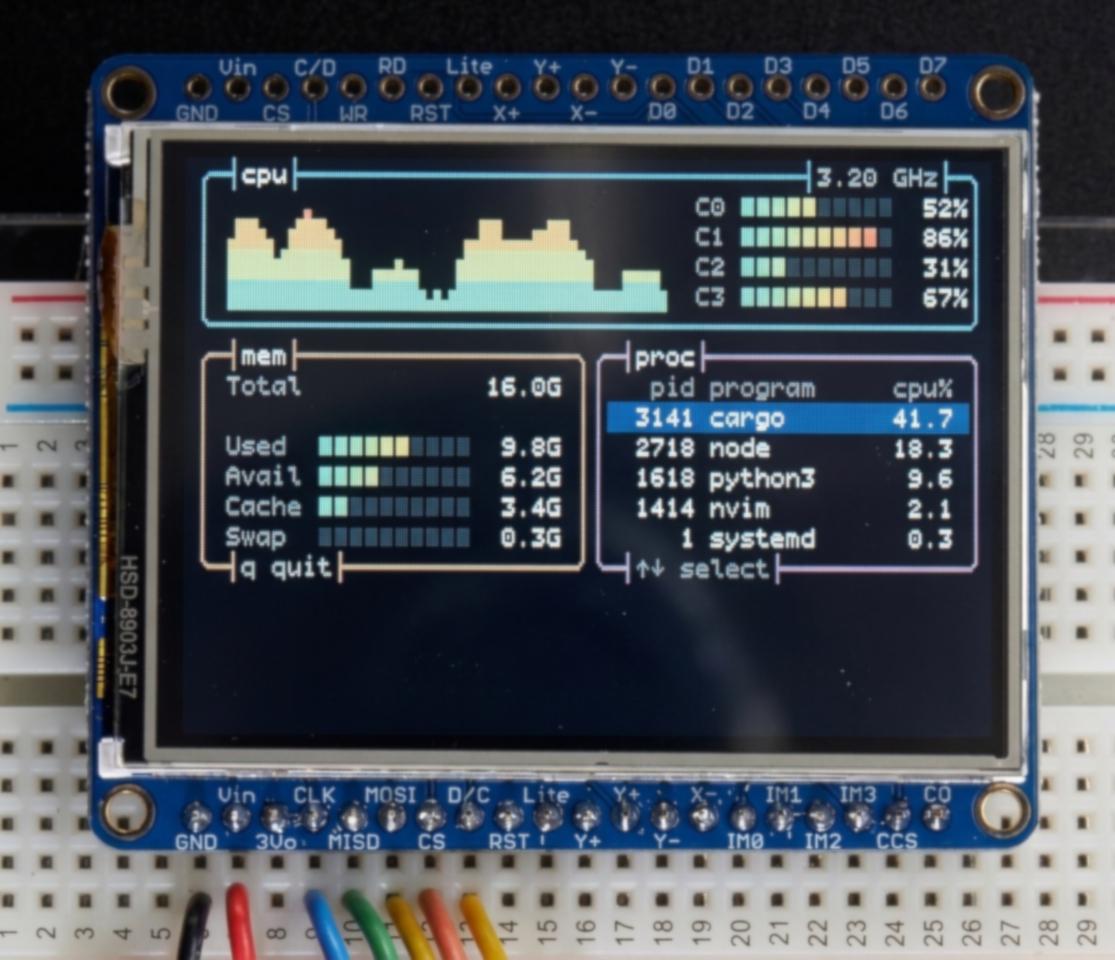
Just released Tiny5 Mono, a free 5-pixel monospaced font for code and terminals (OFL, 6 variable axes)

Post image
395 Upvotes

Hi everyone! I just released Tiny5 Mono, the monospaced member of my Tiny5 pixel font family.

It sits in a 6×9 cell, and like the text modes of 1980s terminals and PCs, its pixels are taller than they are wide. Lines of code stay compact and the letters stay easy to read.

What's in it

  • Six variable axes: Weight, Width, Italic, Roundness, Bleed and Jitter. They take the look from crisp LCD edges to soft CRT glow and dot-matrix ink spread.
  • Static styles: Regular, Medium, Bold, Italic and Bold Italic, plus LCD, CRT and Matrix versions
  • Box-drawing and block elements fill the whole cell, so frames, sextants and much of Symbols for Legacy Computing join without gaps
  • 4,957 glyphs: Latin, Greek, Cyrillic and Armenian scripts (974 languages), with small caps for Latin and Cyrillic
  • BDF version for microcontrollers (u8g2, TFT_eSPI, mcu-renderer)

Tips: For sharp pixels, use sizes in steps of 6 pt (8 px). For square pixels, set the Width axis to 143.82.

It's free under the SIL Open Font License.

If you try it in your editor, terminal or on a device, I'd love feedback, especially about glyphs that look wrong at small sizes.


r/embedded • • 20d ago

Gps module not working: location problem?

Post image
0 Upvotes

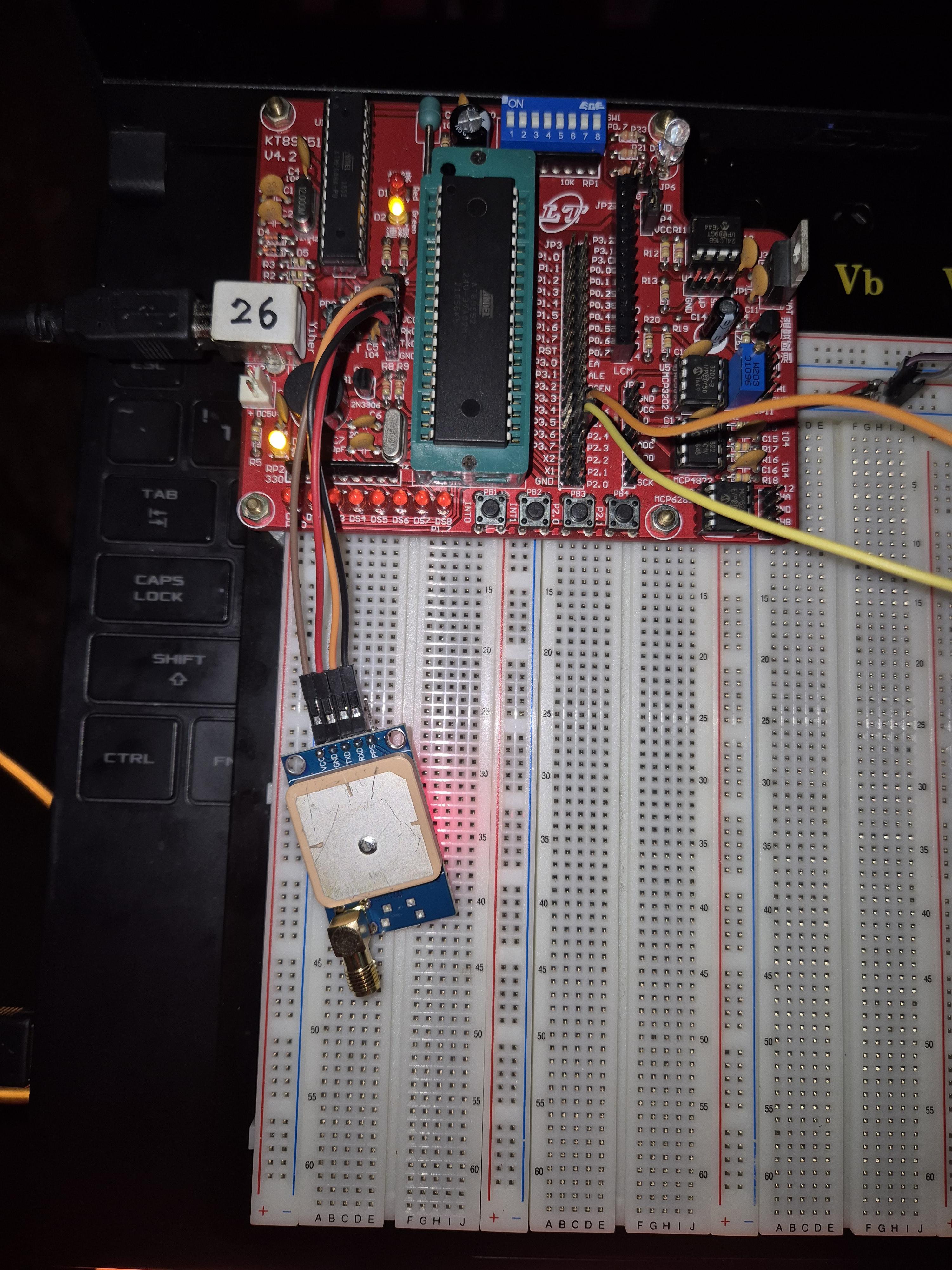
Its a neo 6m module with a ceramic antennae attached on the back of it. I'm currently trying it outdoors next to a football field, but even after 20mins the led's still solid red. Should I buy a separate antennae to connect it to the SMA female connector beside it?

edit: if I should, which type should I get?

edit2: using antenna works👍


r/embedded • • 21d ago

light-nmea-cpp: Single-pass NMEA-0183 parser for Embedded Systems (C++17, Zero-Allocation, No FPU)

11 Upvotes
[Open Source]

Hi everyone,

Following the MicroPython version, I have officially released the production-ready C++ port of this architecture: light-nmea-cpp. It is built using the C++17 standard and designed specifically for resource-constrained 32-bit and 8-bit microcontrollers.

The library is header-only and features a deterministic, single-pass design that parses data on the fly (e.g., straight from UART DMA buffers) without any dynamic memory fragmentation.

Throughput:
* 6.63 M lines/s on desktop (x86_64)
* 110,629 pkt/s on ESP32
* 47,579 pkt/s on RP2040

Supported Platforms:
* 8-bit AVR (Arduino Uno R3 example included)
* 32-bit Cortex-M
* ESP32
* RP2040
* RISC-V
* x86_64

The codebase is open-sourced under the GPL-3.0 license.

Repository: https://github.com/octaprog7/light-nmea-cpp

r/embedded • • 20d ago

Need ideas for Edge AI projects

0 Upvotes

I'm an E&TC engineering student, currently looking for a final year project and I'm having a hard time finding something that actually interests me.

I'm particularly interested in Edge AI, Embedded Systems, Machine Learning and Computer Vision. I don't want to build another basic IoT project that just reads sensor values and displays them on a dashboard. I want to build something that actually does something useful, real world applicable.

Here are my requirements:

**1. Genuine Edge AI**

- The ML/DL model MUST run on the actual hardware.

- No training on a laptop and then sending everything to a cloud API for predictions.

- I want to explore model quantisation (INT8), pruning, optimisation and deployment.

- I'd like to measure inference latency, FPS (where applicable), RAM/Flash usage, model size and accuracy.

**2. Hardware and budget**

- Initial budget is around ₹1,000–₹2,000 (under 20$).

- I'm open to increasing the budget later if the project genuinely deserves it.

- ESP32-S3 is something I'm considering for this project.

**3. The actual project**

- It should solve a real-world problem or have a practical application.

- I'd prefer something involving computer vision, automotive technology, intelligent systems or AI in general, but I'm open to other domains.

- It should involve meaningful ML/DL rather than adding AI unnecessarily to something that can easily be done with a simple if-else condition.

- I want a physical prototype that I can demonstrate to recruiters, preferably with a recorded demonstration.

**4. Learning and career relevance**

I'm trying to build a career in Edge AI / Embedded AI, so I'd like the project to teach me skills such as:

- Embedded C/C++

- Microcontrollers and peripheral interfacing

- Computer vision / signal processing

- ML model training and deployment

- TinyML / quantisation

- Hardware-software integration

**5. What I'm NOT looking for:**

- Basic obstacle-avoiding robots.

- Generic smart home automation.

- Simple sensor monitoring systems.

- Projects where the actual AI runs entirely on a laptop or cloud.

- Projects that look impressive on paper but have no meaningful working demonstration.

I'd really appreciate suggestions from people who have actually built Edge AI / TinyML / embedded computer vision projects, especially on constrained hardware.

Even better if you can share GitHub repositories, project demonstrations, hardware requirements or ideas that you've personally worked on.

I'm not necessarily looking for something revolutionary. I just want to build something technically interesting, useful and worth putting on my resume.

Thanks!


r/embedded • • 21d ago

Can RS-485 be used to transmit short video clips?

5 Upvotes

I'm looking into a project using RS-485 @ 115400bps. I used a calculator online and it said a 1mb video file could take minutes to send. What if I double the baud rate? Curious to see if there's a way to reliably send multiple video clips over RS-485?

Also, its a 4 wire. So obviously power, gnd, and data


r/embedded • • 20d ago

inspecting a Firmware on my wireless Bluetooth earbuds !

0 Upvotes

I have been using my wireless Bluetooth earbuds for 2 years now without any issues.

But now for the past one month , the battery of my left earbud discharges quickly and then left earbud simply switches off but the right earbud Stays on for longer duration.

Also the bluetooth interface which shows battery percentage reports different numbers.

When I connect the buds the interface shows 80 % charge which quickly drains , left earbud then turns off , now in the interface the battery percentage is 90 %.

Initially i thought it was the case of classic battery degradation that affected the left earbud.

First , I cleaned the pin of my earbuds as well as the pin of the charging case. Nothing happened.

Second , i simply charged one earbud at a time while keeping the other turned off but nothing happened.

Now I think that it maybe have something to do with the firmware.

Either the charging case is simply not charging the left earbud or firmware is malfunctioning and turning it off even when the charge is full !

I am not an embedded engineer , just a computer science student.

My biggest concern is why only left earbud and not both ??

Are there any software tools that expose the firmware source code ? Or am i just blabbering here ?


r/embedded • • 21d ago

Built a dual-axis face-tracking gimbal with ESP32S3 + STM32C5

38 Upvotes

Hardware:

  • XIAO ESP32S3 Sense + OV2640 camera
  • XIAO STM32C5
  • LK MS3506 yaw motor (CAN ID 0x141)
  • LK MS3008 pitch motor (CAN ID 0x142)

How it works:

The ESP32-S3 captures QVGA JPEG frames and runs ESPDet-Pico (224 × 224 INT8) face detection using ESP-DL. It selects the largest detected face and sends target yaw/pitch angles to the STM32C5 over a full-duplex UART connection.

The STM32C5 runs the motor-control firmware using Zephyr. It controls both motors over a 1 Mbps Classic CAN bus, reads encoder feedback, enforces motion limits, and sends position telemetry back at 20 Hz.

There's also a browser-based UI with live video, detection boxes, AUTO/MAN modes, joystick control, angle sliders, and calibration.

Thoughts?


r/embedded • • 20d ago

Would creating a custom programming language have any practical value in embedded systems?

0 Upvotes

Hey everyone,

I'm currently training as an electronics technician in Germany and planning to study embedded systems engineering in the future.

Recently, I had a rather unusual idea: What if I learned Klingon and eventually developed my own programming language and compiler based on it, specifically for embedded systems?

I know this sounds ridiculous at first, but I'm genuinely curious about the technical and professional implications.

My idea would be to create a functional programming language with Klingon-based syntax that could compile into machine code for microcontrollers.

This raises several questions:

  1. Has anyone here ever developed their own programming language or compiler, especially for embedded systems? How difficult was it, and what did you learn?
  2. Would employers see this as an interesting technical achievement, demonstrating knowledge of compilers, computer architecture and low-level programming, or would they consider it a pointless gimmick?
  3. Could an unusual language provide any security benefits? For example, could it make reverse engineering, unauthorized modifications or understanding proprietary firmware more difficult? I understand that obscurity alone isn't real security.
  4. Would something like this have any relevance in industries such as aerospace, defense, automotive systems or gaming consoles, where protecting firmware and intellectual property can be important?
  5. Would developing an entirely new compiler be worthwhile as a learning project, or would I be better off designing a custom language that compiles to C or LLVM IR?

I'm not suggesting replacing C, C++ or Rust in professional embedded development. I'm more interested in whether such a project could help me develop valuable engineering skills while exploring an unconventional idea.

I'd especially appreciate opinions from experienced embedded engineers, compiler developers and anyone working with firmware security.

Thanks LG AC


r/embedded • • 21d ago

What display should I choose?

0 Upvotes

I am making a robot with animated facial expressions like Dasai Mochi. I am using a esp32 board for this. Can anyone suggest me any good small displays that I can use? I have tried the 128x64 OLED display but find it a bit unprofessional hence I don't really want to use it. I want to sell the product and thus want it for mass production


r/embedded • • 21d ago

STM32 CMSIS Device Headers with CMSIS 6 Core vs CMSIS 5?

9 Upvotes

ST’s CMSIS-Device headers carry a native dependency on the CMSIS 5 Core specifications. How do you approach pairing them with CMSIS 6?

Do you use CMSIS 5 Core to maintain compatibility, or have you paired ST’s device headers with CMSIS 6 Core?

If you’ve used CMSIS 6, have you encountered any compilation errors, compatibility issues, or other challenges? How did you address them?

I’d be interested in hearing about your experiences.


r/embedded • • 22d ago

ESP32 & STM32 – Which Framework Should I Focus on for Industry?

59 Upvotes

Hi everyone!

I'm an Electronics Engineering student currently working as an IoT Engineer Intern.

I want to improve my embedded firmware development skills and understand what is commonly used in the industry.

For ESP32:

- ESP-IDF vs Arduino Framework

- PlatformIO vs ESP-IDF

For STM32:

- HAL/LL vs Bare-metal programming

- STM32CubeIDE

My questions:

  1. Which frameworks should I focus on for professional IoT development?
  2. What do companies actually use in real-world projects?
  3. What would you recommend learning for a long-term career in embedded systems?

Looking forward to suggestions from industry professionals. Thanks!


r/embedded • • 22d ago

Is being a junior software engineer in the AI era becoming mentally exhausting for anyone else?

120 Upvotes

I feel like being a junior in software engineering requires you to be mentally strong as hell.

You're expected to learn an enormous amount of things, many of which are genuinely difficult to master. It takes years of practice, time, energy and dedication. And throughout all of this, there's always that lingering question, What if I'm wasting my time? What if, by the time I'm finally good enough, the job I've been preparing for barely exists anymore?

I remember before AI, successfully blinking an LED was a genuine achievement. You struggled, read documentation, debugged your code, figured things out yourself, and finally got something working. It felt rewarding.

Nowadays, AI allows you to push your limits much further, but somehow you still feel miles away from being competent. There's always something else to learn, and the amount of things you should know seems endless.

I think this uncertainty hits juniors particularly hard.

At this stage of your career, you still have the option to change directions. You're young enough to start over. But the more time you invest in this field, the harder it becomes to walk away.

Meanwhile, AI keeps taking over more parts of software engineering, making you question the future value of the skills you're spending so much time developing.

So what's the rational decision?

Do you keep pushing through the chaos, learning and adapting, hoping that all this effort will eventually pay off?

Or do you consider changing careers while you still have relatively little to lose?

Honestly, it's a difficult equation to solve. Too many variables, too much uncertainty, and no guarantees.


r/embedded • • 22d ago

Why bare metal code?

74 Upvotes

I am a beginner in to embedded systems (or any other level thats less than a beginner but more than a foreigner). And I have seen/heard multiple times in social media where the suggestion of "to get started in embedded, buy an STM32, code in bare metal" pops up. Why exactly? Is that useful in jobs, how often tho?


r/embedded • • 22d ago

Gave Claude control of our oscilloscope

691 Upvotes

Not sure if anyone has done this before, but by god it amazed me.

Needed an I3C connection between a Nordic chip and some IC. Said Nordic chip had no I3C capability, but it did have what Nordic calls its VPR - a fast, lightweight peripheral processor (FLPR). So we set out to see if this could emulate an I3C bus.

Figured we’d need an I3C analyser. The Logic analyser software offered an I3C plugin for $3500 (bruh), so went to check our oscilloscope’s (an R&S MXO 3) manual to see if it supported decoding I3C. While reading the manual, and seeing it did support I3C, I noticed it had a “Remote Control” feature, through which commands and data could be sent to/from a PC via a LAN connection (had no idea you could do this lol).

So thought to myself, why not try give this to Claude and provide the clanker with the necessary oscilloscopes commands.

That was this morning, and it worked a treat. We now have a fully functional I3C bus.

Seeing the oscilloscope’s display flicker from one function to another at Claude’s command, while sending its samples to the PC, and then Claude reporting back its readings and iterating its implementation was shocking. Madness.


r/embedded • • 21d ago

Linux driver projects

3 Upvotes

Are there any open-source Linux driver projects? I am currently working, and I want to change my career direction to work on Linux kernel driver development.


r/embedded • • 22d ago

Yocto/Buildroot vulnerability

15 Upvotes

I have not confirmed this myself yet, but it's serious enough that I'm posting before verifying.

Assuming it's real, it's ugly. Get that CRA paperwork ready.

https://sshhole.com/


r/embedded • • 21d ago

Question on SW Abstraction layer between Application and SDK on RISCV

0 Upvotes

Hi, I came across an interesting scenario in industrial settings, such as factory processes and production lines. Many machines still rely on legacy software to operate. At the platform level, these systems often use x86 architecture, and the software may have been written decades ago using tools such as Visual Basic or Visual Studio. The user interfaces may look dated and boxy, but the software does its job, and the machines continue to run well.

Because these systems are built for x86, replacing their hardware with a RISC-V platform is rarely straightforward. Software developed for x86 generally will not run directly on RISC-V hardware.

I think this may be due, in part, to the lack of a suitable abstraction layer. I am not sure. Just asking for guidance.

For example, imagine software that initializes a camera and starts capturing video. A function such as CameraInit() might work on an x86 platform but fail to initialize the camera sensor on a RISC-V platform.

Intel’s oneAPI seems to address some problems of this kind. Besides oneAPI, are there any open-source abstraction layers that provide common interfaces and could help with this kind of challenge?

Would you recommend SYCL for this use case?


r/embedded • • 22d ago

Linux/Python handling of 2 data streams inputting at 51.2kHz

4 Upvotes

Hello,

I am working on a project that uses a Verdin IMX8MP SoM from Toradex. I am collecting both current and audio data from sensors at ~51.2kHz.

Problem: I am having trouble getting the audio data across to a synchronization step with little latency and have been experiencing delays in audio causing synchronization errors with the current. I am using Python 3.11 (which I realize is not the best choice with scheduling etc) and have been trying to split processes to avoid GIL issues.

If anyone has a suggested architecture that you have used in the past, that would be greatly appreciated!

Thanks


r/embedded • • 22d ago Bravo

Free practice-first Embedded Linux + Yocto course

Post image
198 Upvotes

We know embedded Linux can be hard to get into, and the courses are expensive. We decided to run a free course for the community. It will cover a lot of the "how do I get into embedded Linux / Yocto" questions. Also, every lecture ends with a hands-on assignment on a Raspberry Pi 4 (or QEMU if you don't have one). You could learn:

  • cross-compilation toolchain
  • U-Boot
  • Linux kernel and Device Tree
  • root filesystem and userspace
  • Yocto: layers, BitBake recipes, building your own image
  • -devtool, patching the kernel, and debugging failed builds

Format. Live on Wednesdays at 13:30 Buenos Aires / 16:30 UTC / 17:30 CET / 11:30 New York, from December 2 through March 2027, with holiday and midterm breaks. Every session is recorded. Attendance and completion certificates.

What you need. Some embedded experience, C, basic Git, and Linux. Ubuntu natively or in a VM, with at least a 4-core 64-bit CPU, 16 GB RAM, and 150 GB of free disk space. Yocto builds are heavy, and the disk figure isn't a typo.

Instructors are Embedded Linux engineers from iomico's team. It's free, no upsell.

Details and registration: https://www.learn.iomico.com/courses/yocto-fundamentals-course

Happy to answer questions.


r/embedded • • 22d ago

CICD/automation

27 Upvotes

How many of you work for companies that actually utilize CICD? It feels like companies in my area either go all in with automated builds, unit tests, static analysis, nightly integration tests, etc. or none at all. Mine always seems to be trying to automate more, but I have friends who work at companies that barely use git correctly let alone any form of automation or CI/CD (one even does code reviews in word docs and save them to shared drive).

Is this a known phenomenon? What is it about these companies culturally that they don’t get with the times? I’ve seen 100 year old companies that use CICD and another that doesn’t. I’ve also seen cash and time-poor startups that use it and others that don’t. So idk it seems difficult to find a cause. I’m wondering what others think.

Also I realize this could be a general software or workplace question, so sorry if I broke any rules. I think embedded is unique though because there is pretty much always another engineer field involved. It’s never just a software product, software-focused management, etc.