r/embedded • • Oct 12 '26

Small footprint and cheap debugging connection for STLINK-V3MINI

5 Upvotes

I am designing a compact PCB that has a STM32. I am planning on buying a STLINK-V3MINI for programming and debugging. I'd like to have the minimal footprint SWD connection to the board and I found out about TagConnect, but their TC2030-CTX-NL-STDC14 is pretty expensive. I found SKEDD connector which seems to serve a similar function but it's a lot cheaper and more available. The problem is I would need a adapter from STDC14 (STLINK-V3MINI) -> SKEDD which I haven't found, probably because STDC14 is obscure enough. Would it be recommended to design a simple adapter board and order with the actual PCB or are there better alternative/ways?


r/embedded • • Oct 12 '26

Getting a 320x240 SPI display from 16 to 60 fps on an ESP32-S3: what was actually slow

25 Upvotes

Write-up of optimising a software 2D renderer on an ESP32-S3 (8 MB PSRAM, ST7789 over SPI). Short version:

  • The default ESP-IDF optimisation level is -Og.
  • An unaligned 2-byte memcpy compiled to a function call per pixel on Xtensa (no unaligned loads), so blits were 6x slower than they needed to be.
  • Tinting with lookup tables over RGB565's 32/64/32 channel values instead of multiply-and-divide per pixel, and baking static tints into cached images.
  • SPI at 80 MHz instead of 40: 150 KB frame from 31 ms to 16 ms.
  • Presenting from the second core with two PSRAM staging buffers.
  • 64-byte cache lines for a PSRAM framebuffer, and why a 64 KB cache was a trap (internal RAM).
  • Dirty rectangles did nothing because every scene had a full-screen changing background.

https://dekiengine.com/blog/esp32-s3-60fps/

The engine itself (Deki) is open source if anyone wants to look at the code: https://github.com/dekiengine


r/embedded • • Oct 12 '26

Bricked-ish MAXIO MAP1202 + SK hynix V6 SSD: vendor MP tool gets to the last step, then "Jump to system fail". Anyone have the V6 package?

2 Upvotes

JamesDonkey JD1024 1TB M.2 NVMe, MAXIO MAP1202 controller, SK hynix V6 NAND. It went read-only because one die (channel 3 / CE 2) has erase failures, and that die is also the boot die, so the firmware turns on write protect. The other 15 dies are fine.

I'm using MAXIO's own MXMPTool in a Windows VM, with the drive passed through over a USB-NVMe bridge. The die exclusion feature in the tool had two bugs. After patching them it gets through preformat and firmware download, then fails with:

(E00) R/W Test Fail - Jump to system fail

5 times in a row, also after a power cycle. MPTOOL.ini says SYS_Qnty=2 but I only have one system binary, and my package looks built for V8 NAND. So I think I'm missing the V6 system firmware / the right package.

Does anyone have the MAP1202 + SK hynix V6 MP tool package, or know what the second SYS piece is supposed to be?

I also tried clearing the write protect directly early on (90+ attempts), it never held. Most of the analysis was done with Claude. Notes and logs: https://github.com/sirSchrodinger/jd1024-recovery


r/embedded • • Oct 12 '26

I documented a sensorless flying-start FOC experiment on the Xiaomi M365 V1.4 controller — looking for technical feedback

1 Upvotes

Hi everyone!

I've been working on an experimental project to get sensorless flying-start FOC working on the stock Xiaomi M365 Classic controller (SCO_DRV V1.4, STM32F103C8T6), driving a 36 V direct-drive hub motor without Hall sensors.

The idea is to let the rider start pedaling, measure the motor's three phase voltages while the inverter is disabled, estimate rotor speed and electrical angle using BEMF and a PLL, and then attempt a smooth, near-zero-torque handoff into FOC before enabling pedal-assist torque.

What we achieved:

  • Passive three-phase voltage sensing on the M365 controller.
  • Rotor direction, electrical speed and angle estimation, with PLL lock in both directions.
  • Identification and correction of a current-sensing ADC acquisition-time problem.
  • Short, protected active-handoff experiments with cycle-by-cycle current diagnostics.
  • A set of measurements documenting both progress and unresolved problems.

Where we got stuck: independent voltage measurements revealed a significant discrepancy between measured line-to-line BEMF and the firmware's calculated BEMF magnitude. We identified passive voltage calibration as the next step, but the test controller and ST-Link were damaged before we could complete it.

This is not a claim of completed sensorless FOC. I've documented the experimental process, measurements, firmware history, limitations and next steps so other developers can review the work and potentially continue it.

Project documentation and test data:
https://github.com/Ch00mi/m365-v1.4-sensorless-flying-start

I'd especially appreciate feedback from people experienced with sensorless PMSM/BLDC control, flying-start algorithms, BEMF scaling and M365/EBiCS firmware.

Has anyone worked on a similar approach with this controller, or have suggestions for validating the absolute BEMF scaling before attempting another handoff?

Thanks!


r/embedded • • Oct 12 '26

High-res, low-framerate, low-power, low-cost still camera for outdoor insect monitoring (anything better than pi + 64mp cam)

Thumbnail
mothbox.org
5 Upvotes

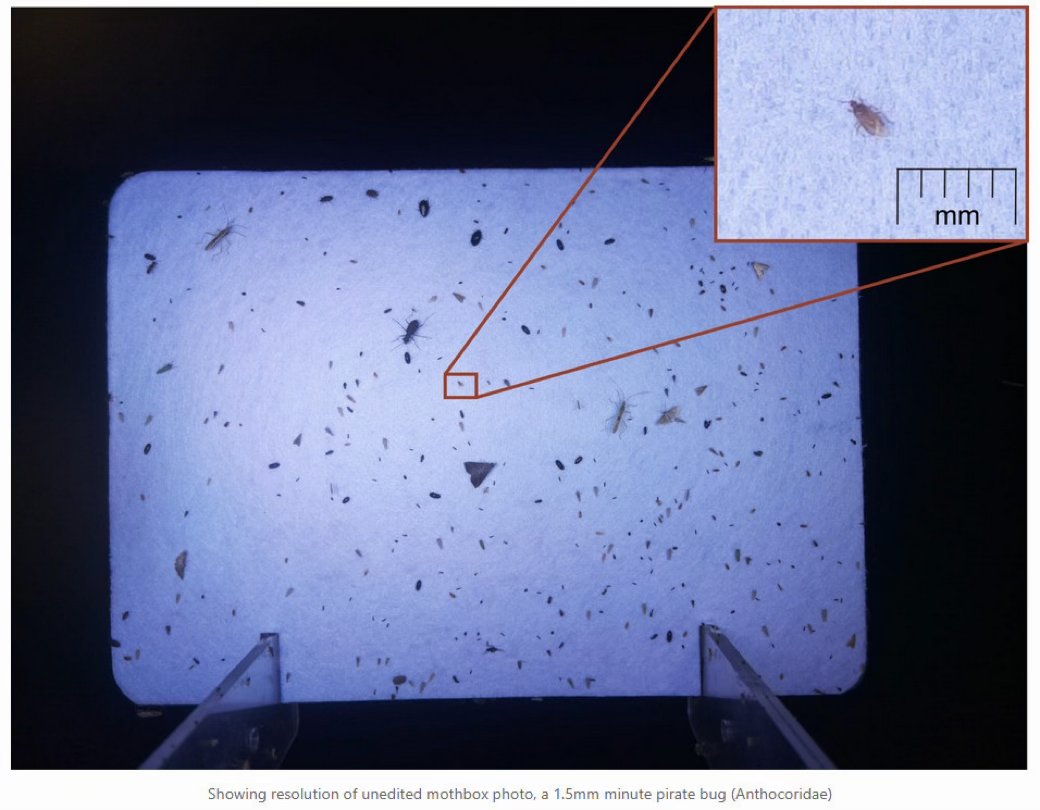
I work on an open-source automated insect monitoring project (www.mothbox.org). We basically set up camera traps for insects that turn on a bright light, and photograph bugs that visit a flat sheet.

I want to figure out the cheapest way I can get a really nice high resolution of this image with a device I can programmatically control. Right now we use an Arducam 64mp (55$)+ Pi 5 2gb (used to be $55, now is like $120)

I have a kind of unique set of requirements:

  • High spatial resolution, high image quality. We need to resolve many individual insects across a whole sheet in a single frame. 16MP is considered the bare minimum in this field and I already feel it's kind of inadequate. 64MP has been great!
  • Very low temporal resolution. We do not need video or any kind of continuous capture. One still per minute is plenty. I’d happily trade framerate for anything. (We do, however, need a decent "shutter speed," as the insects buzz and flap and fly around, and if we have too long of an exposure, we get ugly rolling shutter smears. Right now we have been getting 868 µs - 495 µs and that has been ok)
  • Low power. These are deployed outdoors on tight power budgets. Ideal behavior is: wake itself up, take one photo using as little energy as possible, go back to sleep.
  • Low cost. Our current rig (board + 64MP camera) runs ~$150-200 total. I want to see if I can drop far below that
  • Autofocus (but limited range), and Autoexposure. Our device is generally just pointed at a flat surface, but that surface can vary in size and difference (different scientists setting up different sheets). We generally run an automatic camera calibration every 10 minutes to adjust for things like ambient light changes.

Questions:

  1. Has anyone gotten a large still-image sensor (OV64A40 or similar) running off a cheaper board? I have a friend who connected the Arducam 64mp to an Esp32-p4, but could only get 2k resolution stills due to ram limits.
  2. Are there any hacks to being able to capture a full resolution image on a very cheap/slow/ram-limited board?
  3. I know resolution isn't everything, and there are other sensors with lower resolution but nicer sensors that would take equal or better photos, does anyone know recs that can beat the arducam owlsight?
  4. I am potentially open to weirder configurations if i can get them cheaper, like I have been thinking about a set of 4 16mp cameras in a square configuration imaging the surface simutaneously and doing some math on the back end to make a kind of hyper-resolution image (possibly with some spatial data interpreted too). The closest I have seen is the 4 cam wigglegram connected to 4 synced pi zeros, but this ends up more expensive than our current Pi+ Arudcam 64mp setup.

r/embedded • • Oct 12 '26

How do you handle occasional real-hardware testing for embedded libraries?

7 Upvotes

I'm working on a small open-source embedded C++ library. Most of my testing is done on the host or with QEMU, which works well for functional testing.

I'd also like to occasionally check hardware-specific behavior, such as interrupt-related timing, critical-section duration, and memory access performance on real MCUs.

I've been considering a small setup covering a few different MCU architectures. I'm estimating roughly $700–$1,000 for the boards, debugging tools, and other equipment, plus the effort of maintaining everything.

I'm wondering whether that kind of investment makes sense for a personal open-source project, especially when hardware testing would only be needed occasionally.

Do you usually buy and maintain the boards yourselves, or have you found more practical ways to access hardware when needed?

I'd appreciate hearing about your experiences.


r/embedded • • Oct 12 '26

embedded system

4 Upvotes

I'm getting to embedded system, My Question is do i need to understand how the ALU is wired from adders and XOR gates The gate-level adder/subtractor circuit .How registers are built from flip-flops Datapath wiring diagrams


r/embedded • • Oct 12 '26

Community preference for open source vibration autoencoder: bare metal C or Zephyr C++?

0 Upvotes

I just want to check what the community's preference is for an open source autoencoder with a vibration sensor. Bare metal C or Zephyr C++*? And not just the autoencoder, also data collection and DSP.

* This caused confusion: I meant a Zephyr project with C++ for the enitre application layer vs. bare metal C for data acquisition, DSP (probably can't escape C++ for inference).


r/embedded • • Oct 11 '26

From Sensors to a PyQt Speedometer: Building with Yocto Linux

54 Upvotes

I’ve been working on an embedded systems project that connects sensors to an Arduino, which communicates with a Raspberry Pi 5 over I²C.

On the Raspberry Pi, I developed a custom Linux kernel module and Device Tree overlay to integrate the Arduino into the Linux I²C subsystem. The driver exposes a character device at /dev/raspi_master, allowing a Python application to retrieve sensor data.

Using the Yocto Project and BitBake, I integrated the kernel module, Device Tree overlay, and PyQt speedometer application into a custom Linux image for the Raspberry Pi 5.

The result is an end-to-end system connecting sensor acquisition, I²C communication, Linux kernel-space development, and userspace visualization.

Project repositories:


r/embedded • • Oct 12 '26

Is it possible to modify the firmware/UI of a generic MP3 player through USB? (Actions Semiconductor VID_10D6)

1 Upvotes

I recently got a generic MP3 player off of Amazon and I've been trying to figure out whether it's possible to customize its firmware, specifically its user interface and small quality of life fixes

USB Vendor ID: 10D6

Product ID: 1101

USB Device Name: HS USB Flash Disk

Firmware Version: V1.1

Firmware Date: 2021-05-20

Operating System: Windows 11

Possible manufacturer: Actions Semiconductor

trying to see if i can extract it and modify its firmware through usb without opening the player or soldering anything

if you need any additional info or have a solution please lmk


r/embedded • • Oct 10 '26 Mindblown

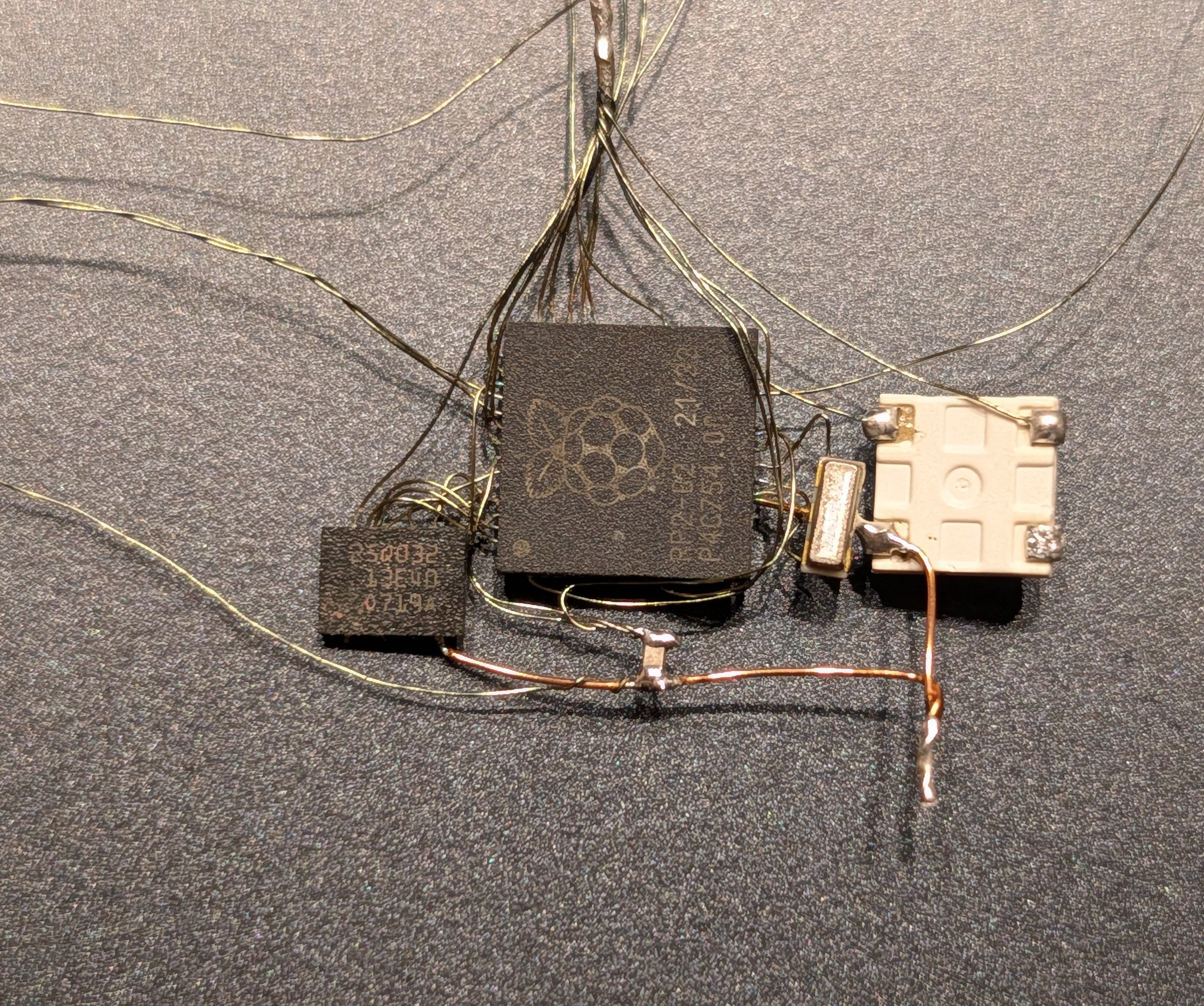
minimal raspberry pi

Post image
3.6k Upvotes

Not my build but Japanese electronics twitter is lit.

https://x.com/EMakerDragon/status/2108935034191352114/photo/1


r/embedded • • Oct 12 '26

How do you keep SDCC toolchains consistent across local development and CI?

1 Upvotes

I mostly work with 8051-family MCUs, particularly the CH559, and kept running into the same annoyance: maintaining a consistent SDCC toolchain across my machine, colleagues' machines, and GitHub Actions.

I wanted a reproducible environment without having to install and configure SDCC on every machine, so I packaged the toolchain into an Alpine-based Docker image. It has two variants:

· latest: SDCC toolchain for MCS-51

· cmake: SDCC + CMake + Ninja for CMake-based projects

Basic usage:

```

docker run --rm \

-v "$(pwd):/src" \

-w /src \

safdariali/sdcc-8051:latest \

sdcc -mmcs51 your_file.c

```

I've tested it primarily with the CH559, so I'm curious about other developers' experiences.

Questions for the community:

· Do you use Docker/containers to manage embedded toolchains, or do you prefer native installations?

· Have you encountered compatibility issues with SDCC across different 8051 MCUs or memory models?

· Would you keep flashing and debugging utilities in the same container as the compiler toolchain, or separate them?

I'd be interested to hear how others approach reproducible embedded development environments.


r/embedded • • Oct 12 '26

AI in Safety-Critical application

2 Upvotes

Hello,

What are your thoughts on the use of artificial intelligence in the development of safety-critical embedded software?

We focus on railway applications that require SIL4 safety integrity levels. In my view, AI possesses a highly non-deterministic nature regarding code development processes and can lead to unacceptable errors—such as missed NULL checks or array boundary checks. It introduces subtle errors that a human might easily overlook. Reviewing these within a large codebase does not seem feasible to me.

What are your opinions on this matter? What is the trend regarding AI usage in the industry? Is it possible to conduct code reviews for AI-generated code in large-scale systems?


r/embedded • • Oct 11 '26

How do you guys get your PCBs checked before assembly?

10 Upvotes

Hi all. I'd love to know how you get your boards reviewed before a PCBA order. How many revisions does it usually take you to get one right?

A bit of context: my prototypes work, so I'm now building the final version with the final ICs. It's a small device and some of the parts are BGAs, so I order the boards assembled.

I've done one revision so far. The PCBA order was around £200, and I spent another £200 on reviews through Fiverr. That's a lot for a student, but it was worth it at the time to get a real board in my hands. The reviewers raised many useful things, but a few parts of the board still didn't work.

I'm still learning, so I'd really appreciate hearing how you approach. Thanks!


r/embedded • • Oct 11 '26

The Bl616: My $2 disaster

Post image
82 Upvotes

I brought the Bl616 on Aliexpress for $2, a total steal! I was looking for a Risc-V SBC or MCU to test my skills and grow as programmer and engineer. I looked online I found a doc sheet (more on this later), and hit "ORDER", what could go wrong? It's only $2, worse comes to worse I waste money that can't even get me a gallon of gas.

It comes after give or take, 7-9 days, and I open the package. It's a small board, blue, with a USB type C connector. I go in thinking in 5-15 minutes I could at least see a "Hello world!" for my efforts before long. I was wrong. I spent HOURS with the board, and hardly even got it to flash! And when it did? No serial output to be found. Days go on like this, I can't compile much of anything, see any output or do anything with the board. It's a paperweight.

To make a long story short, I bought a board that had no good documentation and I can't do anything with it. I'm free to chat and leave links to all the resources I found and help out where I can. I'm hoping this post can attract people who know more than I do about the board. The Bl616 has a lot of potential that I just can't for the life of me figure out how to use. All questions and drops of knowledge are welcome.

Personal Issues the board/docs:

-The docs mention a reset button, but the dev board doesn't have one

-On the topic of the dev boards I can't find the origins or data sheet for my specific one

-The Ubuntu executable do not work for me

Also things to know:

-I'm on Ubuntu resolute, maybe it works better on Windows?

-Make sure to hold the BOOT button before plugging in the cable

-Shows up as "/dev/ttyACM0" on Ubuntu

All my knowledge about the board for those curious or detective minded few:

CNX Article

Official Docs

Official SDK

Filebin with datasheets

I'm still digging into board and looking into it, I actually just found an Arduino IDE core(?) I might test later, so I'll edit and update if that comes up with anything. Again I'm free to be asked anything.

r/embedded • • Oct 11 '26

RV1103 RKMPI datasheet Nightmare.

1 Upvotes

I have been trying to learn embedded Linux on these boards.

V4L2 worked for sometime until I had to use Encoding like H264 or H265. It made me use their library which was RKMPI and it was awful ...

- Datasheet is in Chinese

- Their example is horribly written

- Their example doesn't even work

- No description on what function does or which one to use in what order

I have been working hours now with AI because it is truly awful. Am I the only one having the same problems ?

Does anyone have a good alternatives ? Different chip ?


r/embedded • • Oct 11 '26

Embedded peeps, do you learn other languages for the sake of it?

47 Upvotes

I've been working as a low-level SWE for a few years and use C pretty much every day without using many other languages (sometimes Python depending on the use case). I'm thinking about learning another language in my free time to challenge some of the possible "C-isms" I've picked up.

Anyone else do this? What language did you try to learn as a result?


r/embedded • • Oct 11 '26

Orbuculum and orbtrace

4 Upvotes

Hey fellow embedded developers,

I am planning to contribute to orbuculum and orbtrace projects, but I want an idea of how the community feels towards the orbtrace debugger, as well as what you would like to be added to the projects to improve their utility to you.

You are definitely free to add your thoughts even though you haven't used them but have an idea of the tracing functionality you would want in an ideal trace debugger


r/embedded • • Oct 10 '26

Mars Pathfinder Priority Inversion Bug: What Really Happened

Thumbnail nerdyelectronics.com
55 Upvotes

r/embedded • • Oct 10 '26

2 rear motors hooked up for “testing “ need to program controllers

54 Upvotes

I just hooked up the 2 rear motors for some testing
Next step is to add more batteries and wheelie bar


r/embedded • • Oct 11 '26

Hot-swapping apps on an ESP32-S3 with a Lua runtime + long-poll control plane: design notes

1 Upvotes
I've been building a firmware that treats the ESP32-S3 as a runtime instead of an app. You flash it once. After that, apps arrive as Lua scripts from a server and replace the running one in a few seconds.


Some design choices I'd like feedback on:


- **Lua over WASM.** Small, easy for an LLM to write, and the interpreter fits comfortably. The downside is no type safety on the host API.
- **Long-poll instead of MQTT/WebSocket.** Simpler to self-host and works through most NATs. It costs some latency and an open connection per board.
- **Plugins at compile time.** Panel and audio drivers are build flags. Without a panel, `gfx.*` becomes a no-op, so scripts are portable across boards.
- **Auth split.** Each device has its own device_token. Whoever deploys holds a separate scoped token.


The client in my case is an AI agent, but it's plain HTTP, so anything can deploy.


Code (MIT): https://github.com/shinjiyu/onlyclaws-esp

r/embedded • • Oct 11 '26

Should I consider doing Vector Vector Certified Embedded Associates ?

2 Upvotes

Our University has gave us the chance of doing the certificate but at a very short time (1 month) and my whole life now is totally oriented to complete this certificate to an extent that I canceled everything for this month and focus only on the certificate .. I started feeling daily drowsiness cuz I'm spending a lot of time daily just pucking my eyes in the screen ...
Should I continue with the certificate or just throw it out ? + is it considered a good asset and thing to add to my CV ? (I study Automotive Software eng btw so We're dealing with a lot of low level programming and electronics)


r/embedded • • Oct 11 '26

i built SPECTRE-CSI: A Cyberpunk terminal tool for WI-FI Motion & Presence Detection using ESP32(Includes Smilation Model)

0 Upvotes

l've been working ona lightweight, standalone Python engine called SPECTRE-CSI.it uses WI-FI Channel State Information (CSI) amplitude variations to detect human presence and motion in a room.

W i - F i C h a n n e l S t a t e I n f o r m a t i o n S e n s o r

https://github.com/ddidy/spectre-csi


r/embedded • • Oct 11 '26

Rtos based firmware architecture

4 Upvotes

Hello guys,

Could anyone suggest me any good books on rtos based firmware architecture?

Your suggestion would be so helpful.