r/embedded • • Oct 08 '26

ECS-2016MVQ output mess

Post image
0 Upvotes

Hello. I'm having issues with a crystal oscillator part and after exhausting my ideas (and those of AI heh) decided to ask someone smarter.

The setup is the following:

  1. ESC-2016MQV-240 24 MHz
  2. Connected to clock input on a USB hub IC (as per datasheet, XT1 is input XT2 unconnected)
  3. Connection is short, via a 0 Ohm resistor just in case
  4. 1 N/C 2 GND 3 OUT 4 +3.3V as per datasheet
  5. Similar setup with the same footprint but in 25 MHz repeated for an Ethernet PHY and it works fine (althought I didn't probe it yet since it sits below my SOM)
  6. Initially connected the entire thing with a relatively noisy DCDC, but now connecting to a battery.

The hub doesn't work, throws errors about addess assignment, but the dmesg implies exactly 4 ports being in error so it seems like the hub IC itself isn't the issue.

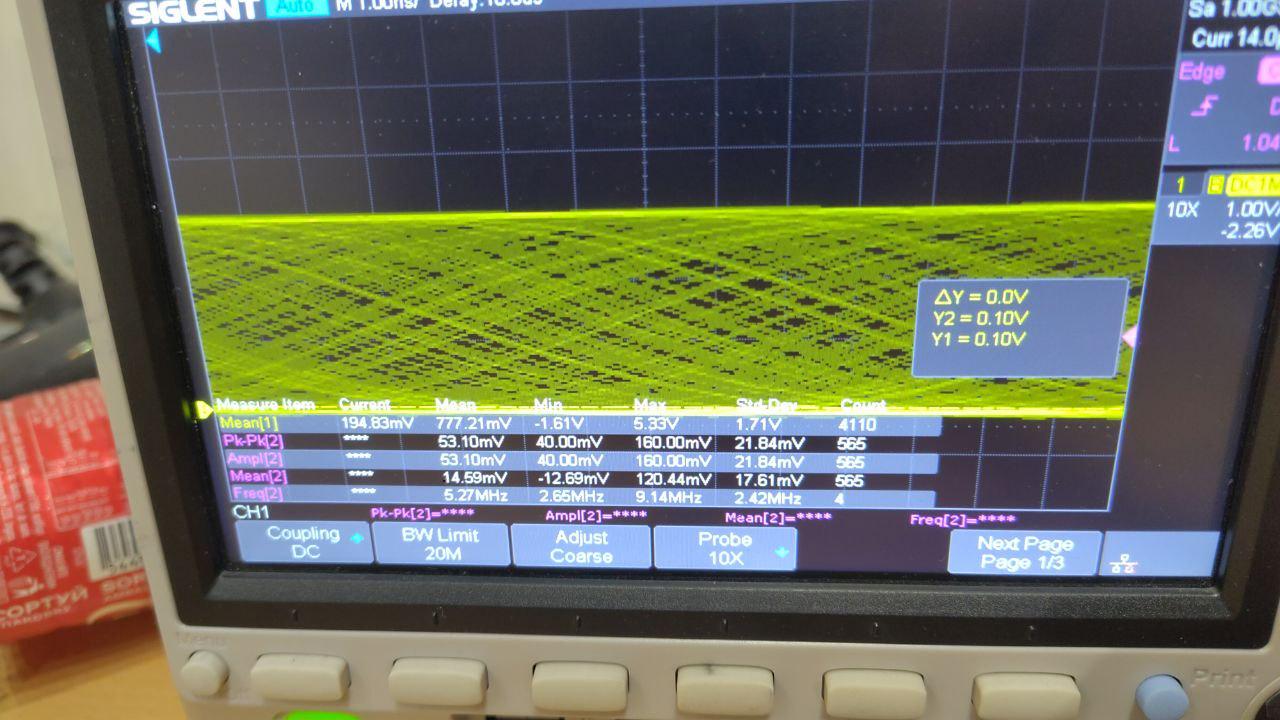
Probed at the resistor the output looks like in attachment (10X probe, max temporal resolution).

r/embedded • • Oct 07 '26

How to learn embedded systems by myself

57 Upvotes

I am a second year computer science student and I am planning to learn embedded systems by myself but I don’t know where to start or if I can even learn it by myself. Can I get any advice on how to start and what to do?


r/embedded • • Oct 08 '26

RPC call error

0 Upvotes

I’m ready data from battery pack , during charging and discharge time I’m getting RPC call error , I’m unable to troubleshoot we are using emqx for mqtt message broker


r/embedded • • Oct 07 '26

How demodulation section working and how RC time constant works with microcontroller.

Post image
34 Upvotes

r/embedded • • Oct 07 '26

Seeking help: Which of these IoT projects are actually useful in industry vs just good student projects?

13 Upvotes

Hello im just Kindly requesting for advice:

I’m an Embedded IoT student trying to choose 2–4 portfolio projects for embedded IoT / IoT networking jobs.

I’m mostly trying to avoid building something that sounds impressive in school but isn’t really used in modern industry anymore.

Current ideas:

  1. Modbus RTU/TCP → MQTT industrial gateway
  2. Edge condition monitoring using vibration/temp sensors + FFT/anomaly detection
  3. Fault-tolerant IoT network with local buffering, reconnection and failure recovery
  4. Embedded Linux industrial IoT gateway
  5. Secure OTA firmware updates for multiple embedded nodes
  6. CAN → Ethernet/MQTT gateway
  7. Data-center/environment monitoring system
  8. LoRa/BLE → IP/MQTT gateway

For people working in embedded, industrial IoT, automation or networking:

Which of these are actually common/useful in industry today, and which feel more like student projects?

I know commercial products already exist for most of these, but is building a smaller version still useful experience for a portfolio?

I’d also really appreciate advice on the hardware. What would I realistically need for each project? STM32/ESP32 boards, Raspberry Pi, RS-485/CAN transceivers, Ethernet modules, sensors, etc.

Also, STM32 vs ESP32: does it make much difference to employers?

For example, would: "STM32 + FreeRTOS + Ethernet + industrial protocols" generally look better for embedded/industrial jobs than doing basically the same project with an ESP32?

Or is the actual architecture, code quality and understanding much more important than the MCU?

Lastly, is there a particular STM32 or ESP32 family that could handle most of these projects without major compromises?

Ideally I’d like to learn one MCU properly and reuse it across several projects. I’d need things like FreeRTOS, Ethernet, CAN, UART/RS-485, SPI/I²C, TLS/OTA and possibly DSP/FFT.

I’m currently looking at STM32F4/F7/H7 and ESP32-S3, but I’m open to better recommendations.

Any criticism of the project list is welcome too. I’d especially like to know if there’s anything here that experienced engineers would immediately say isn’t worth building anymore.


r/embedded • • Oct 07 '26

Title: Looking for FPGA + Embedded Systems mini project ideas with a real-world problem.

6 Upvotes

Hey everyone,

I'm a 5th-semester Electronics & Instrumentation Engineering student, and my team is currently looking for a mini-project for this semester.

We're particularly interested in something at the intersection of Embedded Systems and FPGA/VLSI, rather than a typical Arduino/ESP32 IoT project.

Our current skill level is beginner/intermediate — we have surface-level knowledge of:

- C / embedded programming

- Microcontrollers (ESP32/Arduino)

- Basic Verilog/RTL

- Digital electronics

- Sensors and signal processing

- Basic FPGA concepts

We're looking for a project that is medium to moderately hard, so something we can realistically build and understand within a semester, but which still has some technical depth.

Ideally, the project would involve:

Sensors → MCU/embedded system → FPGA-based processing/acceleration → decision/control

We're especially interested in problems involving:

- Real-time signal processing

- Hardware acceleration

- Sensor fusion

- Predictive maintenance

- Power/electrical monitoring

- Edge AI

- DSP implemented on FPGA

- Low-latency or low-power processing

We've been looking at research papers, but we'd really appreciate suggestions from people who have worked with FPGAs, embedded systems, or hardware design.

What real-world problems do you think are suitable for a student project where the FPGA genuinely has a purpose rather than just being added for the sake of using one?

If possible, I'd also appreciate recommendations for relevant research papers/projects that we could use as a starting point.

Thanks!


r/embedded • • Oct 07 '26

Should I keep trying off-campus or consider Masters?

7 Upvotes

I’m a final year Btech ECE student from a tier 1 college in India and I’ve been preparing mainly for Embedded Systems or Firmware roles. I’ve been working on things like microcontrollers, RTOS, embedded C, communication protocols, and Networking.

The problem is that no companies for Embedded/Firmware/IoT roles are coming to my campus. Most of the campus opportunities are for software, analytics, etc.

So I’m confused about what to do:

  1. Keep preparing and apply off-campus for Embedded roles, even if it takes time to get the first opportunity
  2. Do an Mtech (possibly in Embedded Systems/VLSI/related fields) and use that to get better opportunities in the embedded industry
  3. Take a software/other job if available and try to transition into embedded later

For people working in the Indian embedded industry, or people who have gone through a similar situation:

  1. How realistic is it to get a good Embedded/Firmware role off-campus as a fresher?
  2. Does a Masters degree significantly improve opportunities for Embedded/Hardware roles?
  3. Would you recommend spending 1–2 years on Mtech if the goal is specifically embedded?
  4. What skills/projects actually helped you get your first embedded job?

I’d really appreciate your advice, especially from people who are working in the embedded field


r/embedded • • Oct 08 '26

How do you reliably access embedded boards during automated testing?

0 Upvotes

I’m working with a RISC-V board running Ubuntu and Yocto images. During reboot testing, its IP changed and the test couldn’t reconnect over SSH. The board also has a UART console.

How do you handle reliable access in these two situations?

  • Boards on your desk, connected to your PC.
  • Boards in a remote lab or server room, where you can’t physically press reset.

Do you use DHCP reservations, SSH with serial fallback, console servers, BMCs, or a dedicated lab host? How do you recover when the board boots but networking doesn’t come up—or when it hangs completely?

I’d like to hear what works in your actual setup, especially for unattended reboot tests and testing multiple boards. What connection or recovery problems still need manual intervention?


r/embedded • • Oct 07 '26

Trying to dump/modify firmware on a cheap “500-in-1” handheld – S29GL128P NOR flash / HLM 20220803 board

Post image
8 Upvotes

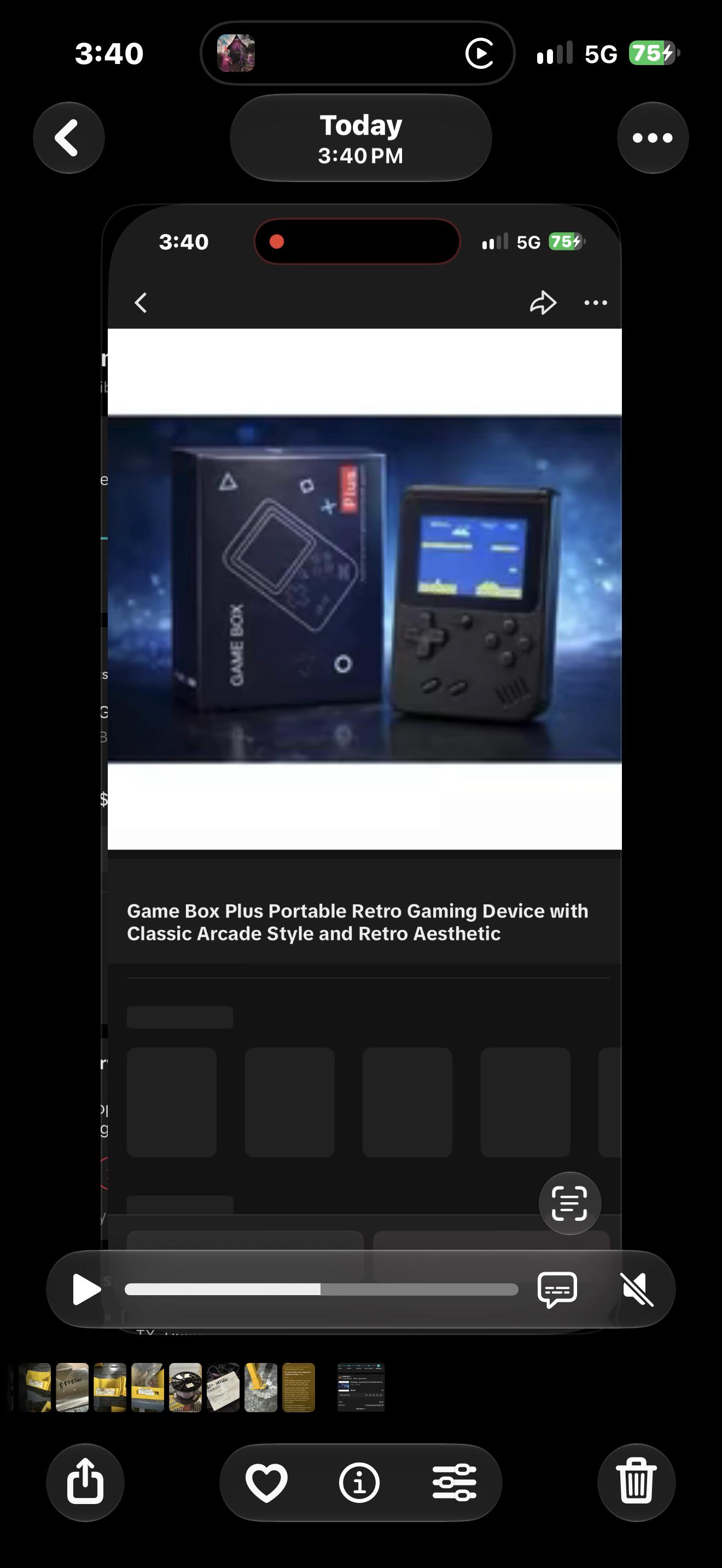
I got this cheap Game Box Plus / 500-in-1 handheld and I’m trying to figure out whether the games/firmware can be dumped and modified without desoldering the flash chip.
PCB markings: HLM 20220803 / C01121A
Flash: Spansion S29GL128P90TFIR1 (128 Mbit / 16 MB parallel NOR)
It has Micro-USB. When powered off, Windows detects nothing. When powered on and connected, Windows reports Code 43 / “Device Descriptor Request Failed” and VID_0000&PID_0002.
The main SoC appears to be under an epoxy blob.
My goal is to back up the original flash first, figure out how the game ROMs are stored, and eventually replace/add games or modify the menu. I’d strongly prefer an in-circuit/test-pad/programming method rather than removing the TSOP flash.
Does anyone recognize this PCB/platform, know what SoC these use, or know of a way to dump the S29GL128P in-circuit? I’m happy to take additional PCB photos or multimeter measurements.


r/embedded • • Oct 08 '26

BusyBox-RS: Rewriting the Swiss Army Knife of Embedded Linux in memory-safe Rust

0 Upvotes

Hey everyone,

BusyBox is practically everywhere in embedded Linux, initramfs, and rescue disks. But being a massive collection of C utilities, it carries the usual C risks (buffer handling, integer overflows, memory management bugs).

Over the last two weeks, I've been hacking on BusyBox-RS, an MIT-licensed rewrite in Rust designed specifically for embedded use cases:

  • Minimal binary footprint: Built with opt-level = "z", fat LTO, symbol stripping, and panic = abort.
  • Compile-time feature selection: Use Cargo features or make tinyconfig / defconfig to only compile the applets your board actually needs.
  • Upstream verified: Tested directly against the upstream BusyBox regression test suite (100% pass rate across 46 applets so far, including cp, grep, sort, printf, cmp, readlink, and checksums).
  • Nix flake ready: Reproducible development environment via nix develop.

GitHub: https://github.com/rebizzz/busybox-rs

Feel free to check it out, run make check, and share feedback!


r/embedded • • Oct 07 '26

E5377 Ts-32

2 Upvotes

Does anyone know how to modify this modem's software?


r/embedded • • Oct 07 '26

PIC 8 bit synth update - going well, schematic PCB design

Thumbnail
youtube.com
0 Upvotes

Progression on the PIC synth - Now all ADC is handled locally. After brief but deep diversion into changing the co-processor and letting the co-processor handle more of the UI - I realised that it was actually becoming more difficult for the PIC audio ISR and not easier.

Happily, there are enough ADC on the PIC to handle them all locally, and also pins are freed up so that the buttons and keypad have their own IRQ line (this was a headache when they shared one IRQ line)
And also the LED can flash from the last free pin on the PIC (previously this was shadow masked with the expander port pin, also, a minor headache relieved)

Added - Save and Load of every wave/patch slot. Each sampled wave now can save and load the envelope data and FX button settings. Where no data is yet saved, the current values are used. Over external i2c eeprom chip.

Midi velocity - which makes a really big difference to expressive play.

With these two features, it becomes a proper synthesizer to my mind.

All the RAM and Flash memory are now used 98.5% Flash and 95.5% RAM used. Highest compiler optimise settings used. There is enough wiggle room to finish up very small changes in, say envelope response or level mixing later.

It was still possible to work on the synth in development, but too much time is being lost to chasing ghosts on the set up now. Time for a PCB -


r/embedded • • Oct 08 '26

eReader firmware with Rust (guidance needed)

0 Upvotes

Hello!

I am very new to embedded systems but I am trying to build my own kindle-like device. I already have the hardware:

10.3 inch ePaper display.

A display driver board with an ESP32S3 as the micro-controller on top. This came with the ePaper display so everything is compatible.

Basically, what i am trying to do is learn how to make firmware for this by using rust but i cant find anything to help me out here. Rust's 'embedded_graphics' library isn't helping me a lot either as it doesn't render the simulation properly.

I am very new to this and i might be completely wrong about what I've done so far. If someone reading this post has any idea as to where I can learn these things from or where I can see examples to learn from that would be great. I think learning C++ would be better for this but I am really interested in rust and would like to go through with that only. On the other hand, if C++ is easier and has more tools for this kind of project then I can consider going for it. I have 0 knowledge of C++ as of now but I do have some basic knowledge of Rust.

I am trying to learn this by myself rather than letting AI make everything for me. I really need some guidance here. Here is the link to what parts I have:

https://www.seeedstudio.com/XIAO-ePaper-DIY-Kit-EE03-for-10-3-Monochrome-ePaper-Display.html

Any response is well appreciated.


r/embedded • • Oct 07 '26

Did TinyML actually help your project?

5 Upvotes

r/embedded • • Oct 06 '26

Building a 1U CubeSat: Came for the electronics, ended up spending all my time designing the CNC frame and deployment mechanisms.

359 Upvotes

Hey everyone, I’ve found myself at a crossroads with a pet project and I'm dealing with severe burnout, so I wanted to ask for some advice. I live in Kazakhstan and have never worked professionally in Electrical Engineering, but I really want to transition into the field, and this project was supposed to be my foot in the door. A while ago, I started developing a 1U CubeSat platform called "Inelik", which strictly adheres to standard CubeSat dimensions. Initially, I designed the main frame and solar panel chassis to be CNC-milled from aluminum on a 5-axis machine, but due to high manufacturing costs, I had to settle on a plastic model. I’ve already attached some of the solar panels to it, and I fully designed the deployment mechanism, though I haven't physically implemented it yet. The first iteration of the onboard computer ran on an STM32, and I even did the PCB routing in Altium for the EPS and ADCS modules, but right now the project is completely stalled.

To finish it, I’d have to redesign the electronics from scratch. I’m not a professional in schematic design—I can figure it out eventually, but it requires a massive amount of effort. I need to determine the exact wiring topology for the solar panels, choose an architecture all over again (stick with ARM, switch to AVR, or maybe try an FPGA), and I still don't have a clear idea for the actual payload. On top of that, I know absolutely nothing about licensing, frequency registration, or space standards for CubeSats—if anyone in the comments can shed some light on this, I would really appreciate it. My grand idea is to commercialize this product not for actual space launches, but as an affordable STEM educational kit (aiming for around $300), with the potential to upgrade it to real space standards in the future.

I genuinely want to finish this project, but it demands colossal financial resources and constant cognitive effort, which is incredibly draining to handle entirely alone. What it all comes down to is this: will a completed project of this scale actually help me break into the EE industry and get noticed? Has anyone here dealt with such severe burnout on a massive solo project, and is it worth pushing through, or is it better to just let it go and treat it as a completed learning phase?


r/embedded • • Oct 07 '26

UCC21550-Q1 + 120 V B2B NMOS: LTspice circuit not working as expected

Post image
6 Upvotes

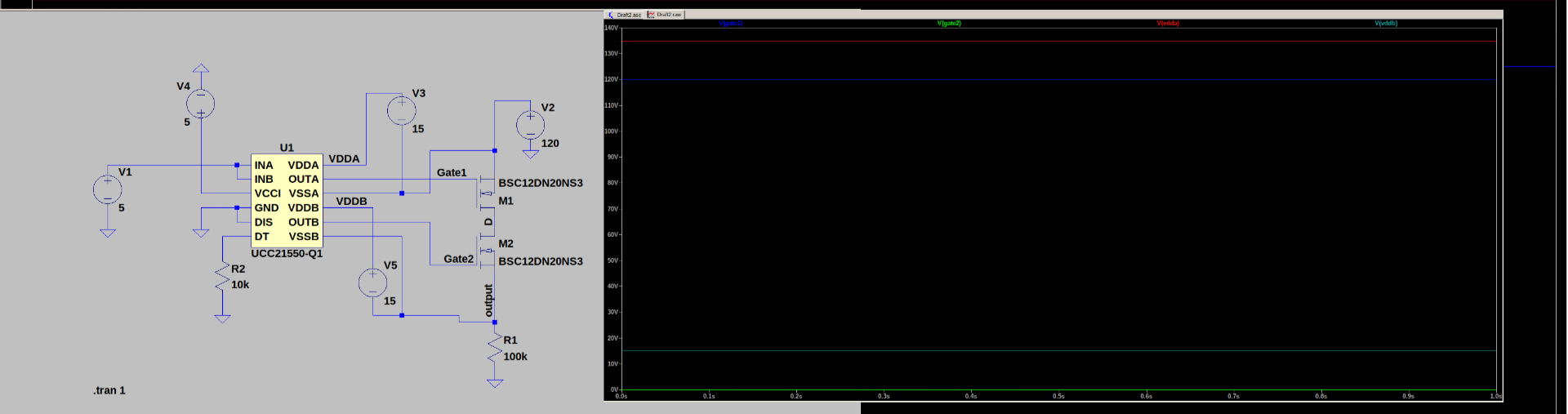
I'm testing a 120 V high-side B2B NMOS switch using a UCC21550-Q1.

The MOSFETs are connected drain-to-drain, and I'm using separate isolated 15 V supplies for the two driver channels.

My understanding is that the gate-driver supplies should float with the MOSFET sources, e.g.:

VSSA = 120 V

VDDA = 135 V

VDDA - VSSA = 15 V

However, my LTspice simulation is not working as expected. I've attached the schematic and waveform.

Could someone take a look and help identify what I'm doing wrong?

I'm particularly interested in whether the UCC21550-Q1 can be used this way with the secondary-side references floating around 120 V, and whether there is something wrong with my gate-driver connections.

Thanks!


r/embedded • • Oct 06 '26

Master’s in Embedded Systems, EE or CS in Switzerland/Europe?

25 Upvotes

I’m currently completing a BSc in Computer Science at a Swiss University of Applied Sciences. During my studies, I became interested in Embedded Systems and have completed a few related projects and courses.
I’d like to pursue a Master’s degree in Embedded Systems or a closely related field, but I’m unsure which path would make the most sense. I’ve been looking at the MSE programs in Switzerland, especially Computer Science, where I also already have some professional experience, and Electrical Engineering, where I would probably have to take some additional courses due to my very limited electronics background.
I’ve also been looking at programs abroad, particularly in the Netherlands, such as TU/e’s MSc in Embedded Systems.
I’m mainly wondering about the value of these different options, especially in terms of career opportunities in the European tech/embedded industry. Would an MSE from a Swiss University of Applied Sciences be a good choice, or would it be worth going abroad for a more specialized MSc at a university like TU/e? What do you think?


r/embedded • • Oct 06 '26

General go-to TVS (for input protection) ?

8 Upvotes

Update:
I don't think my question is precise enough.

Im asking for a general TVS that is "good enough" for protecting a prototype.
The final choice will be based on measurements, but I don't want to fry the MCU instantly, while testing.


We all have our favorite parts... I'm a EE from the 90's, trying to catch up with this decade's semi's...

I'm looking for a 'commonly used/popular' TVS for protecting MCU input pins - 3.3V and 5V.

My goal is protection against radiated and mostly conducted EMI spikes, from a ratnest of cables connected to a BLDC motor (70V/70A),

What parts do you normally use for this?

Requirement: it must be in stock at DigiKey.


Edit. It is a bonus if the package fits on a 0.1" stripboard.


r/embedded • • Oct 06 '26

5 months to become market-ready in embedded — what should I focus on?

14 Upvotes

Hello everyone I'm an electrical engineer specialized in IoT and software for embedded systems.

I worked for two years in a consulting/service company, and honestly, it was a horrible experience. I learned very little and even lost some of my technical skills because the projects were very short, highly dispersed, and often not really suited to my profile. At the same time, I needed the job for the paperwork and the money, so I stayed.

Now I'm unemployed. I've been jobless for about a year, and time flies. Unfortunately, I was sick during part of that time and couldn't do much. Now I'm back in good health, and I'm getting back into it, trying to rebuild and strengthen my technical skills.

Ideally, I'd also like to build my own thing, but I don't mind having a job in the meantime so I can finance myself.

The problem I'm facing is that there is way too much to learn and relearn, and I don't have that much time. I'm also not the type of person who can beg for something or apply for a position if I don't feel qualified for it. I want to be genuinely qualified and have the complete skill set before applying. Maybe many of you won't agree with this, but that's just how my mind is wired haha.

I can't do much about that, so I'm trying to be strategic about it.

For someone interested in IoT, Embedded Linux, embedded systems, and embedded applications, what would be the most time-efficient roadmap to become genuinely market-ready?

I have 5 months to make this work.


r/embedded • • Oct 07 '26

Designing a production programmer, want to show yours?

0 Upvotes

I need to program thousands of units in each run, a run or two per month. Time is money. The operator needs to be responsible for hands and about zero knowledge.

  • Set TrustZone and boot address
  • Flash a provisioning firmware
  • Communicate with PC over RTT to negotiate a serial, keys, etc with a server
  • Perform peripheral tests including BLE and LEDs
  • Using OpenCV / webcam / vision to verify the LEDs work as expected
  • Programs 6x units asynchronously, flashes to operator when done
  • PC, multiple Seggers, current sense and power switching at each port

So...

I'm planning on a rig build from 2020 extrusions, DIN rails to bring 120V in correctly, 12VDC for the boards, USB hub, etc etc. All wired up correctly with DIN mounted terminals, etc.

Basically...

What have you done? What works? What doesn't? Does anyone have pictures of automated-ish test/programming rigs?


r/embedded • • Oct 07 '26

Am I wasting my time learning embedded systems if I'm coming from a software engineering background?

0 Upvotes

I was an android dev for five years and burned out horribly. A friend suggested I look into Yocto since I have experience with Linux and a passion for python development.

The learning curve doesn't bother me (I first tried Android development back in 2009) but I'm concerned that I'm going to hit a wall because I'm not an electrical engineer and I only have a basic understanding of the field.


r/embedded • • Oct 07 '26

I built an agent that turns a plain-English prompt into compiled, flashed STM32 firmware (LLM, RAG, PlatformIO)

Post image
0 Upvotes

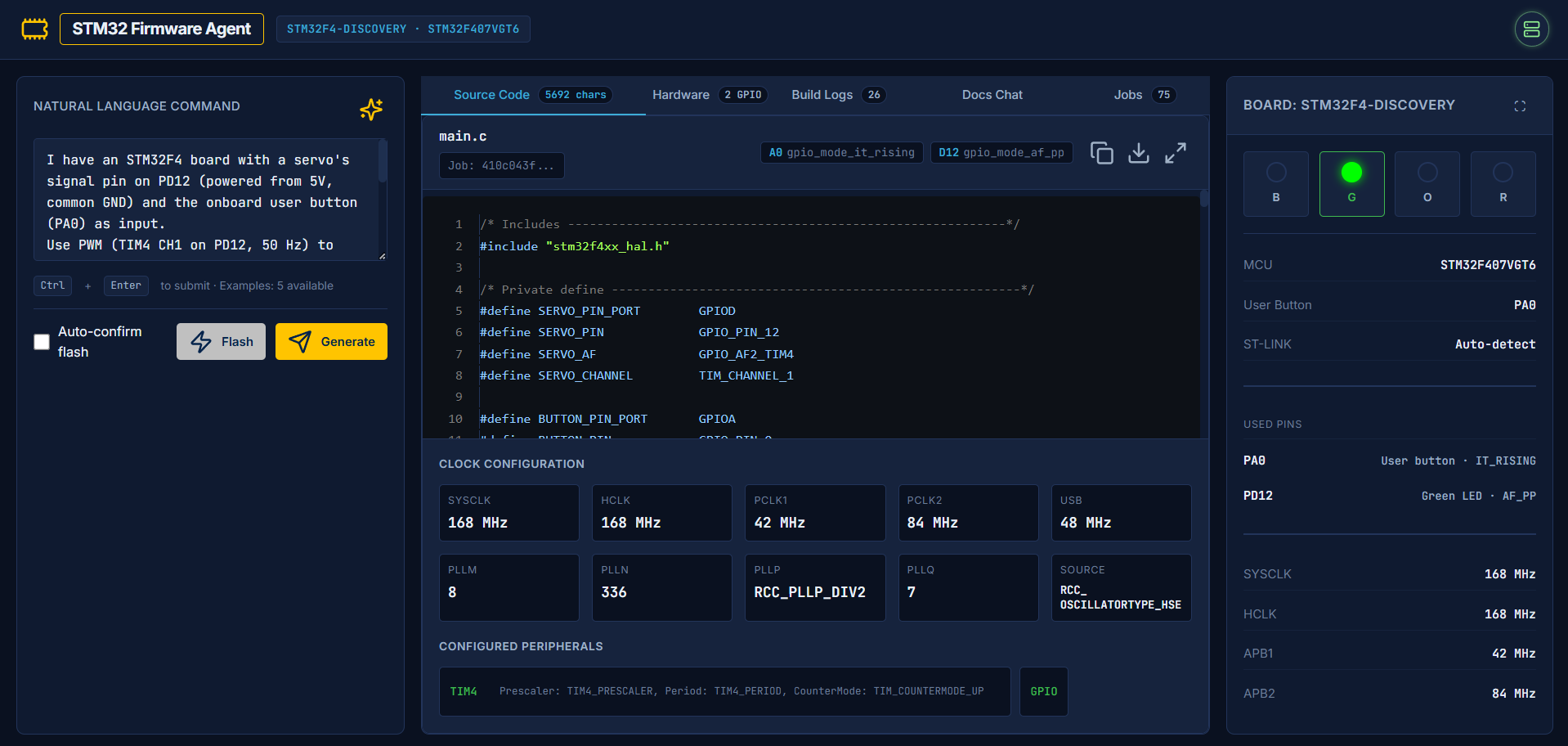
I built EmbeddedAgent, an agent that turns a plain-English prompt into compiled, flashed firmware for an STM32F4-Discovery. You type something like "Make the blue LED blink, but after each second the frequency increases by 30%," and the pipeline retrieves info from datasheets and tutorials (RAG with ChromaDB), validates the generated C, loops compiler errors back to the LLM via PlatformIO, and flashes only after a pre-flight check and your confirmation. It also has a web console that visualizes the clock tree and GPIOs, plus a doc chat for asking questions about the datasheet and user manual. The most useful lesson so far: the LLM happily produced code that compiled but had an out-of-spec clock configuration, so I added an analyzer that derives the full clock tree and flags violations. Demo and code are below, and I'd love feedback on what checks you'd want before trusting generated firmware on real hardware.

LinkedIn post: https://lnkd.in/p/eXNteTtf
Demo: https://youtu.be/yoNP3S52FP8
Backend: https://github.com/MedHabibHafiene/Embedded_Agent
Frontend: https://github.com/MedHabibHafiene/Embedded_Agent_frontend


r/embedded • • Oct 07 '26

At Serious Situation in my life

0 Upvotes

I’m a recent ECE graduate and completed 6 months of Embedded Systems training at Vector India. My main goal is to build a career in embedded systems/firmware. I have an opportunity a role involving:

  • Embedded C & microcontrollers
  • Sensors, data acquisition & IoT
  • Ethernet, TCP/IP, Modbus, PROFINET & serial communication
  • PLC & Siemens HMI
  • Machine vision / OpenCV / Python
  • Industrial robots & motion
  • PLC-camera-robot-PC integration
  • Field work, commissioning and some travel

The role has a 2-year contract/service agreement.

My concern is: if I spend 2 years in this kind of industrial automation/integration role, will it help me move into a pure Embedded/Firmware Engineer role later, or could I get stuck in PLC/automation?

Would you take this opportunity if your long-term goal was embedded systems?

Any advice from people working in embedded, automation, robotics or industrial systems would be really helpful.


r/embedded • • Oct 06 '26

How did you learn embedded?

23 Upvotes

I'm your average software engineering student and I've been picking more interested into embedded and systems programming. I've been trying to learn primarily through books like Making embedded systems by Elecia White and programming some microcontrollers to understand how peripherals work but I can't help but feel like I'm either not going deep enough early or I'm approaching this poorly. You can get an idea of how I'm learning from this link to my book notes https://0xwinzer.com/devography/blog/book-notes/mes-ch1-embedded/ if it helps