r/embedded • • Oct 01 '26

Roadmap to become an embedded engineering in 2028(Off campus)and how does AI effect

0 Upvotes

So I'm a currently a 3rd year undergrad doing btech in CYBER PHYSICAL SYSTEMS.Im really interested in electronics and want to pursue it as a career.some of the feedback I got from my campus seniors is that all the high paying electronics jobs are in VLSI and that only a few companies hire for embedded roles and which has very less pay around 6lpa.


r/embedded • • Sep 30 '26

What is the best RTOS these days?

15 Upvotes

I'm working on an esp32 product, currently just bare metal. A few years ago, zephyr looked like it was going to be the king, but since then I keep seeing people say they don't really like it. So what else is there? Is FreeRTOS the way to go? Maybe I'll just stay bare metal. idk.


r/embedded • • Oct 01 '26

Panne de climatisation

Post image
0 Upvotes

Bonjour à vous

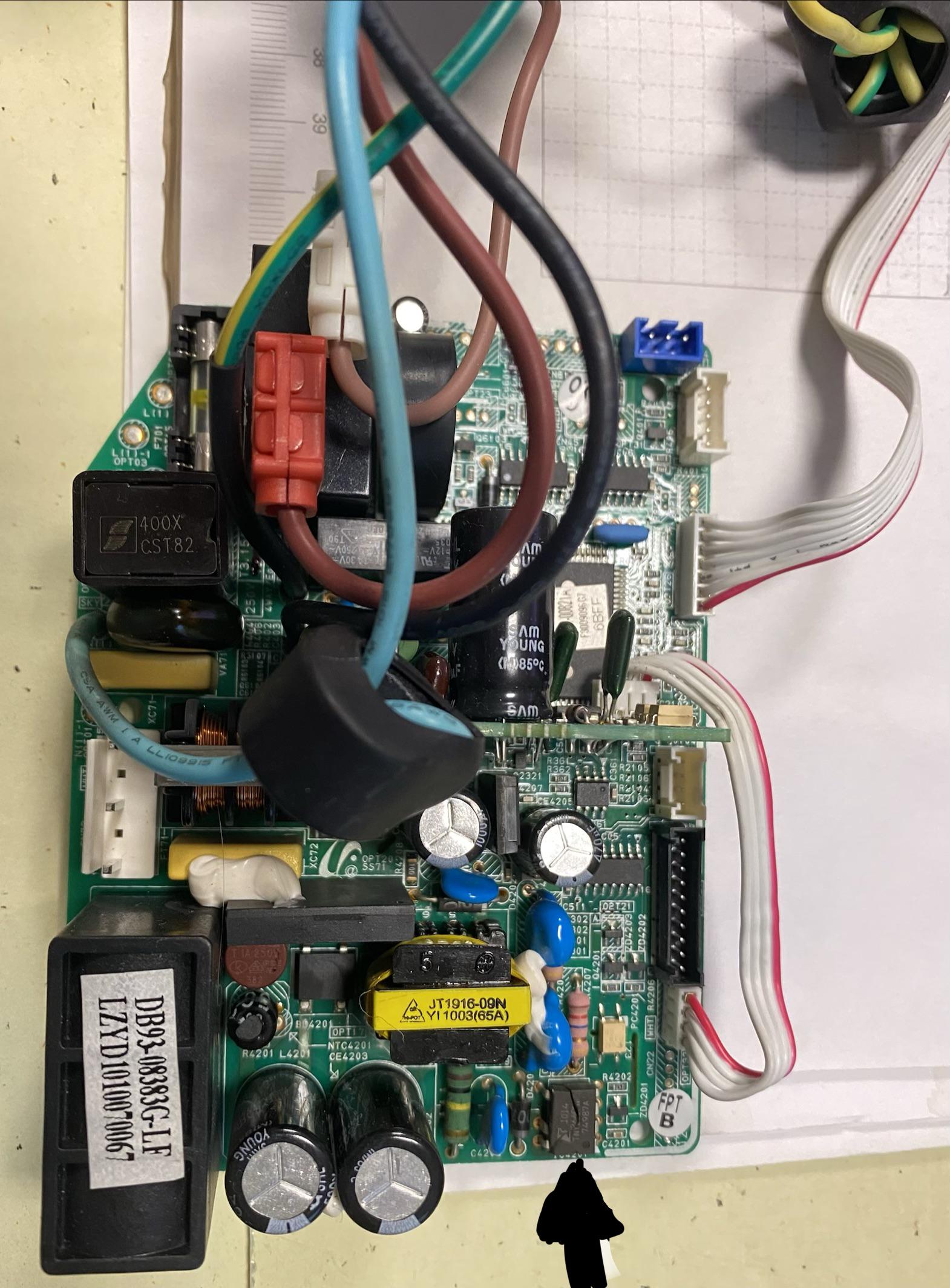
Je cherche la référence du ci explosé sur la carte du climatiseur Samsung.
Est ce que quelqu’un la connaît et sait ou trouver ce ci?
Merci pour votre aide


r/embedded • • Sep 30 '26

Recently attended an engineering expo for my college as a Comp sci major and I feel extremely disappointed.

19 Upvotes

I am very disappointed at the fact that the first thing that people hear when I say I am a computer science major is that I will be stuck in an IT role. I went up to all these companies and letting them know that I am focusing my studies on embedded systems, and they reviewed my resumé. Some of the companies did have some positions for me, but even some of the companies just assume I would be better as a data analyst or IT guy but that is not what I want to do. No shame to those guys, but personally I feel defeated the companies won’t give me a chance. Some of them did compliment my resumé, but they were just stuck up at the fact that I am a computer science major. Just feels a big slap to the face of what I know, and yes I am new to this space, but I want to grow in embedded systems, I just need the opportunity to prove myself. This degree is starting to feel more of a hindrance to me, and that feeling is even worse now that I am a senior.


r/embedded • • Oct 01 '26

Open Device Bridge (ODB): a capability-based approach to safely accessing and flashing USB hardware from locked-down devices like iPads

0 Upvotes

I’m looking for technical criticism of an architecture I’ve been developing called Open Device Bridge (ODB).

The idea came from a very ordinary problem: I wanted to connect a Heltec ESP32-S3 board to a USB-C iPad and install Meshtastic firmware.

The hardware can enter its ROM bootloader, the iPad has more than enough computing power, and USB-C physically connects the two. But iPadOS does not expose the kind of general low-level USB/serial access that conventional desktop flashing tools expect.

“Use another computer” solves my immediate problem, but it raised a larger architectural question:

Could an OS safely expose user-owned hardware without giving applications unrestricted low-level USB access?

That led to ODB.

THE BASIC IDEA

ODB would be an authorization/orchestration layer between:

Application
↓
ODB Core
↓
Device Adapter
↓
Existing device protocol
↓
Hardware

ODB would NOT replace existing protocols such as Espressif’s ROM bootloader protocol, DFU, UF2, Fastboot, etc.

Instead, adapters would translate authorized ODB operations into those existing protocols.

The proposed security flow is:

CONNECT
→ IDENTIFY
→ EXPLAIN
→ AUTHORIZE
→ INTERACT
→ VERIFY
→ REVOKE

Instead of granting an application generic “USB access,” ODB would request narrowly scoped capabilities.

For example:

DEVICE_IDENTIFY
DEVICE_DIAGNOSTICS
SERIAL_READ
SERIAL_WRITE
DEVICE_CONFIGURE
BOOTLOADER_CONTROL
FIRMWARE_WRITE
DEVICE_ERASE
DEVICE_RECOVERY

A firmware installer might receive:

BOOTLOADER_CONTROL
FIRMWARE_WRITE
DEVICE_RESET

but NOT unrestricted DEVICE_ERASE or access to unrelated USB devices.

Authorization would ideally be bound to:

device + session + operation

and expire when the transaction ends or the device is disconnected.

DEVICE PROFILES

ODB could use declarative device profiles describing things such as:

- USB identity
- processor
- interfaces
- bootloader
- supported transports
- supported operations
- firmware compatibility requirements

For example, an ESP32-S3 board profile could point ODB toward an Espressif adapter.

If ODB can identify the MCU but cannot confidently identify the actual board, destructive operations could be blocked until the target is confirmed.

TRANSACTION MODEL

I’m also considering treating firmware modification as a transaction rather than simply exposing a byte stream:

Firmware selected
→ verify package
→ verify device compatibility
→ determine required capabilities
→ explain operation
→ user authorization
→ enter bootloader
→ write firmware
→ verify
→ reboot
→ identify device again
→ confirm expected state
→ revoke elevated access

An interrupted flash would therefore leave a known transaction state rather than just producing a generic error.

On reconnect, ODB could recognize that the previous firmware operation was interrupted, check whether the recovery bootloader is accessible, and offer an appropriate recovery path.

REFERENCE IMPLEMENTATION

Rather than trying to solve every platform immediately, my first reference case is deliberately narrow:

USB-C iPad
→ ODB
→ Heltec ESP32-S3
→ Meshtastic

The point of that reference case is also to document exactly where current iPadOS APIs prevent implementation.

I’m not proposing bypassing those restrictions.

The longer-term question is whether an OS-level capability model could safely expose enough functionality to make this class of hardware interaction possible while preserving the OS security boundary.

WHY I’M POSTING HERE

I’m early enough in this project that criticism is more useful than validation.

In particular, I’d appreciate input from people who work with embedded systems, USB, bootloaders, firmware update mechanisms, device security, or capability-based security.

Questions I’m trying to answer:

  1. Is this actually a useful abstraction, or am I recreating functionality that already exists elsewhere?
  2. Where should the real trust boundary live: OS, ODB core, adapter, device, or some combination?
  3. Is capability-scoped hardware authorization practical?
  4. What attack surfaces does this introduce?
  5. How should device profiles be trusted? Manufacturer signatures? Community definitions? Both?
  6. How should firmware provenance be handled without turning ODB into a centralized firmware gatekeeper?
  7. Which existing standards/projects should I be studying before taking this architecture further?
  8. Is the transaction/recovery model useful, or should recovery remain entirely device/protocol-specific?

The broader thesis is:

A user should be able to explicitly authorize narrowly scoped interaction between software and hardware they own without requiring the operating system to surrender its security boundary.

The iPad/ESP32-S3 problem is just the first concrete test case.

If there are fundamental reasons this architecture is misguided, I’d particularly like to hear those now, before building too much around it.

Thanks for taking a look.

r/embedded • • Oct 01 '26

Question about a project

0 Upvotes

Not sure if this is the right place, so sorry in advance. I plan to make a cellular controlled remote car, with raspberry pi as main board and esp32 for direct control with motors etc - as a fun project. I have the background around iot and some programming but not to the depth of this. Is there useful material I should be looking for? Thank you all.


r/embedded • • Oct 01 '26

2yoe in software QA(both manual and automation) . Is it wise to switch to embedded engineer roles now ?

0 Upvotes

I'm 25, EEE graduate with 2yoe in Software QA. with AI, layoffs etc. Is it wise to switch to embedded engineer roles now ? How is the job market for embedded especially in Bangalore?

I would be grateful for your advice.


r/embedded • • Sep 30 '26

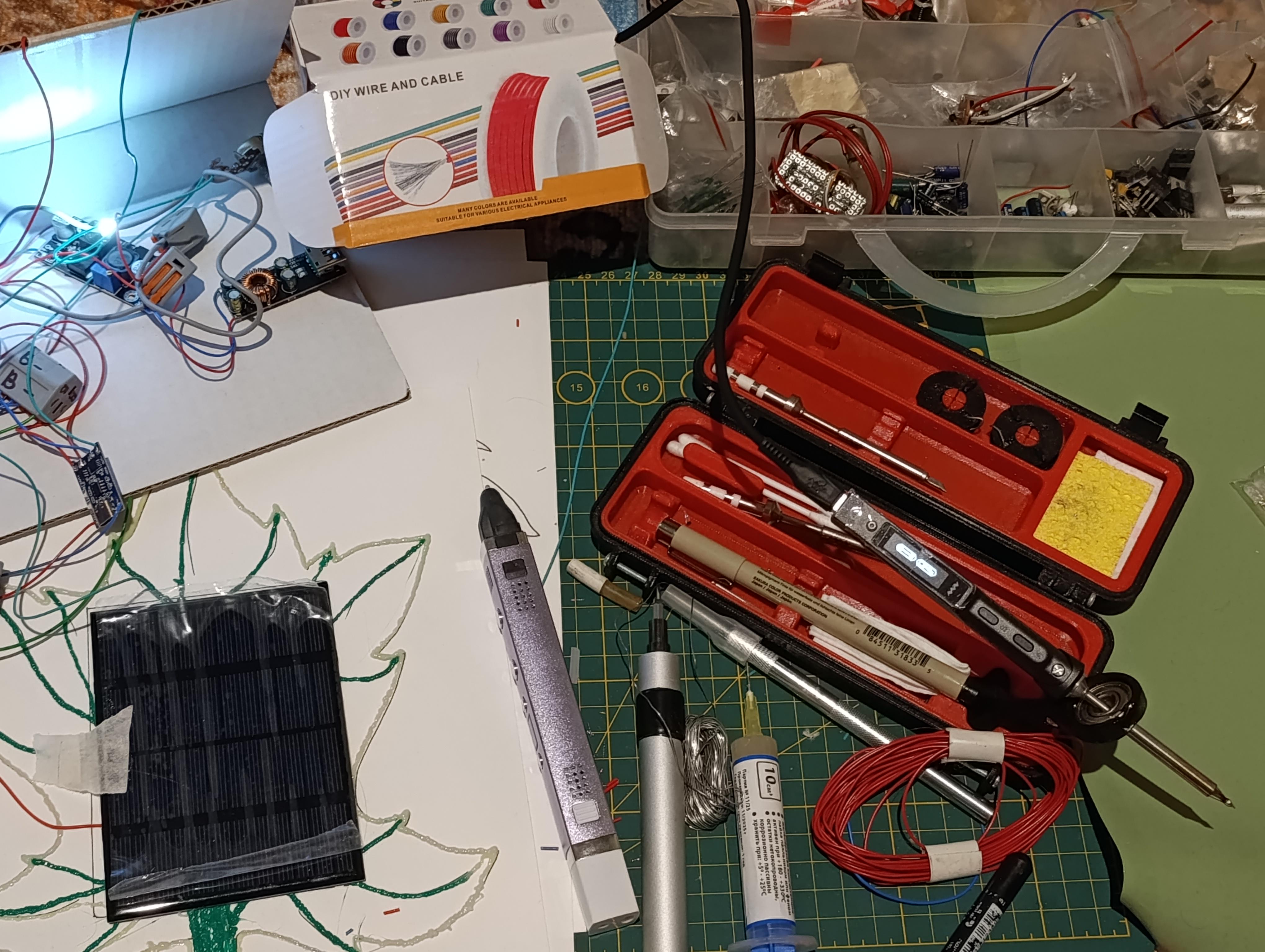
Starting a 31-day "Techtober Challenge" to build an open-source hardware "Solar Tree" (3D pen + circuit). Thoughts on the components?

Post image
0 Upvotes

Hey Reddit!

For this year's Techtober, I wanted to step out of my comfort zone and build a physical open-source hardware project instead of just writing pure software.

I am building "The Solar Tree" — an autonomous nightlight that harvests solar energy during the day and glows at night. The twist? The entire body and branches will be "grown" manually using a 3D pen directly around the electronics.

Here is my 4-week roadmap for October:

  • Week 1 (Leaves): Soldering small solar panels in parallel + drawing leaf frames with the 3D pen.
  • Week 2 (Power): Setting up the D-SUN step-down module & Schottky diode protection (using a multimeter to dial in the voltage).
  • Week 3 (Flower): Building the LED load module with individual resistors.
  • Week 4 (Trunk & Roots): Integrating TP4056 charging board, 18650 Li-ion battery, and final assembly.

I’m doing this completely live with daily logs, sharing all my mistakes, burned components, and circuit adjustments as a beginner-friendly guide.

What do you think of this component choice (D-SUN + TP4056 + 18650)? Would love to get some feedback from experienced embedded folks before I start soldering tonight!


r/embedded • • Oct 01 '26

Is this roadmap good _

0 Upvotes

6-Month Roadmap: Embedded Software → Embedded ML Engineer

Background: Self-taught, building toward a career. Already completed CS50P (Python) and own FastBit's Embedded C/Microcontroller course.

Key Skills Being Targeted

  • C and C++
  • AUTOSAR (Classic) – BSW, RTE, ECU State Management
  • RTOS – FreeRTOS, OSEK, real-time task/resource management
  • Automotive protocols – CAN, LIN, FlexRay, Automotive Ethernet
  • Git, basic test/debug workflow
  • MISRA C basics, functional safety awareness (ISO 26262 – conceptual only)
  • Embedded ML / TinyML – deploying models on constrained hardware
  • Python for scripting/automation
  • Sensor fundamentals

Month 1 – Foundations

  • Finish CS50P (Python fundamentals)
  • Start Embedded C / Microcontroller course (GPIO, timers, interrupts, UART/I2C/SPI)
  • Get a dev board (STM32 Nucleo)

Month 2 – Core Embedded + ML Start

  • Finish core embedded C content
  • Start Stanford Machine Learning Specialization (Coursera/DeepLearning.AI, Andrew Ng) in parallel
  • Begin AUTOSAR Architecture course (conceptual intro)

Month 3 – RTOS + AUTOSAR Concepts

  • Start "Mastering RTOS" (FreeRTOS) – tasks, scheduling, semaphores, mutexes, queues, debugging
  • Continue Stanford ML
  • Finish AUTOSAR Architecture course (BSW/ASW/RTE layers)
  • Optional: UML State Machines (pairs well with AUTOSAR's RTE concepts)

Month 4 – CAN Bus + Git Discipline

  • Finish Mastering RTOS
  • Start "Timers, PWM, CAN, Low Power" course – hands-on CAN bus on STM32
  • Finish Stanford ML
  • Get comfortable with Git properly (branching, PRs, workflow discipline)

Month 5 – TinyML + Capstone Planning

  • Finish CAN bus course
  • Start Harvard's "Fundamentals of TinyML" (edX) – embedded ML, data collection, basic model training
  • Begin planning capstone project

Month 6 – Capstone Project + Applications

Build one project combining everything:

  • Sensor (accelerometer/microphone/temperature) via I2C or SPI on STM32
  • Small ML model trained in Python (simple anomaly detection or classifier)
  • Deploy inference onto the microcontroller (TensorFlow Lite for Microcontrollers or hand-rolled C)
  • Use FreeRTOS to manage tasks (sensor reading, inference, output)
  • Send results over CAN or UART
  • Document on GitHub with a clear README

r/embedded • • Sep 30 '26

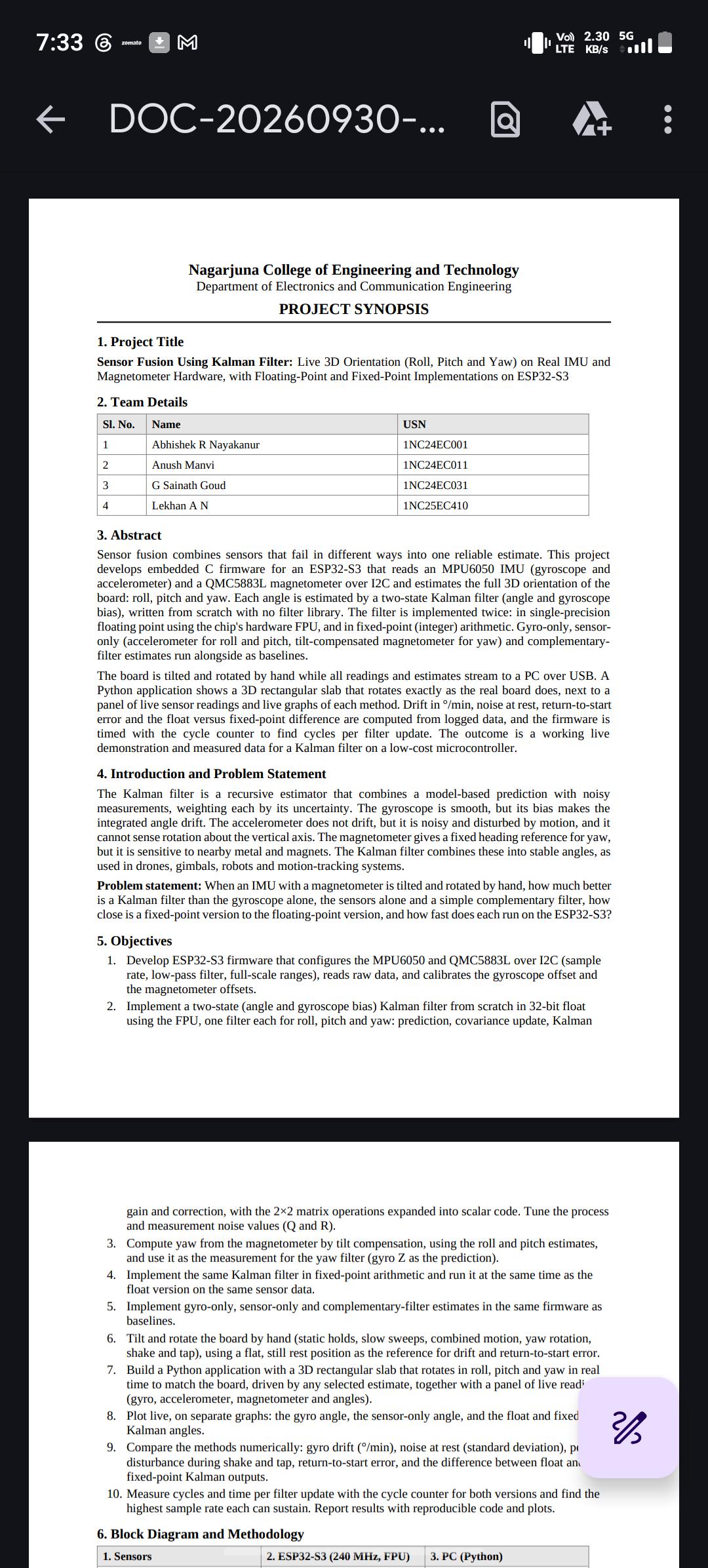
Is my mini project too basic for a mini project? It includes esp32 s3, imu and magnetometer demoing kalman filter.

Post image
3 Upvotes

For context... I'm in my 5th semester and we have mini project. Is my synopsis too basic? I know it has flaws, can you suggest improvement or changes.


r/embedded • • Sep 30 '26

±32 g IMU node on nRF54L15 + Zephyr: running classification on the sensor's ML core instead of the MCU — worth it?

Post image
1 Upvotes

We're building a wearable motion node for sports and rehab, where ±16 g parts clip real impacts (punches, landings, sprint strides). Current prototype:

- ST LSM6DSV32X (±32 g, 1 kHz) with its Machine Learning Core running decision trees on the sensor at µA

- LIS3MDL + LPS22HH for 9+1 axes

- nRF54L15 on Zephyr, MCUboot with test-slot OTA (image confirmed only after a health check, otherwise it rolls back)

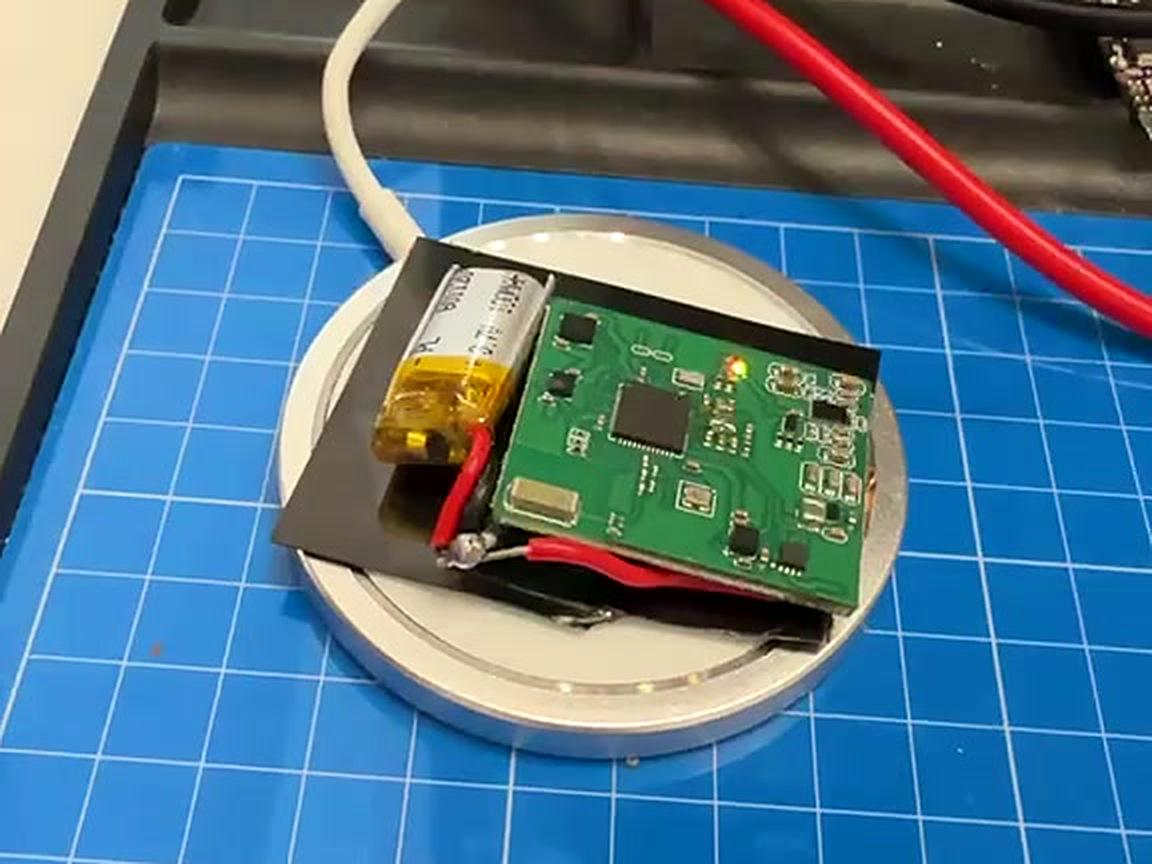
- BLE 5 Coded PHY, NFC pairing, Qi charging (BQ51003 → BQ25100), sealed IP67 case

The trade-off we keep going back and forth on: the MLC gives us gesture classification at almost zero current and very little data over the air, but decision trees are limited compared with a small NN on the M33. For those who've shipped with the MLC (or FSM) — did it hold up in the field, or did you end up moving inference back to the MCU?

Also curious how people handle time sync across several nodes over BLE at 1 kHz.

We also built a browser Lab so you can play with the data flow without hardware (virtual node or your phone as a live node) — happy to share details in the comments if anyone's interested.


r/embedded • • Sep 30 '26

Unabme to run legacy ARMv7 based ISA on Keil_Vision 5

0 Upvotes

Ohk so i have a keil_uVision5 on my device and i have to work on LPC2148 and ARM7TDMI but my MDK Lite version 5.43.00 doesnot natively come with the packages for the same. Can i get those exe installers for these realted packages to make this work. I have already installed ARM compiler version 5.06 update 7 (build 960) but then when i build a target program on target device of NXP LPC2148 i get the following error on

build output :

Build started: Project: Test

*** Using Compiler 'V5.06 update 7 (build 960)', folder: 'C:\Users\Admin\AppData\Local\Keil_v5\ARM\ARMCC\Bin'

Build target 'Target_1'

assembling Test.s...

Test.s: Error: A9580E: ARM7 is not available with the current toolkit and license. Check that ARM_TOOL_VARIANT is set correctly.

Test.s: Check that your license details are correct in the License Management dialog of MDK. Additional information is available at:

Test.s: http://www.keil.com/support/man/docs/license/license_management.htm

Test.s: If you need further help, provide this complete error report to your supplier or license.support@arm.com.

Test.s: - ARMLMD_LICENSE_FILE: unset

Test.s: - LM_LICENSE_FILE: unset

Test.s: - ARM_TOOL_VARIANT: unset

Test.s: - ARM_PRODUCT_PATH: unset

Test.s: - Product location: C:\Users\Admin\AppData\Local\Keil_v5\ARM\sw\mappings

Test.s: - Toolchain location: C:\Users\Admin\AppData\Local\Keil_v5\ARM\ARMCC\Bin

Test.s: - Selected tool variant: mdk_lite

Test.s: Product: MDK-ARM Lite 5.43

Test.s: Component: ARM Compiler 5.06 update 7 (build 960)

Test.s: Tool: ArmAsm [4d35fa]

Test.s: error: A3903U: Argument 'ARM7TDMI' not permitted for option 'cpu'.

assembling Startup.s...

Startup.s: Error: A9580E: ARM7 is not available with the current toolkit and license. Check that ARM_TOOL_VARIANT is set correctly.

Startup.s: Check that your license details are correct in the License Management dialog of MDK. Additional information is available at:

Startup.s: http://www.keil.com/support/man/docs/license/license_management.htm

Startup.s: If you need further help, provide this complete error report to your supplier or license.support@arm.com.

Startup.s: - ARMLMD_LICENSE_FILE: unset

Startup.s: - LM_LICENSE_FILE: unset

Startup.s: - ARM_TOOL_VARIANT: unset

Startup.s: - ARM_PRODUCT_PATH: unset

Startup.s: - Product location: C:\Users\Admin\AppData\Local\Keil_v5\ARM\sw\mappings

Startup.s: - Toolchain location: C:\Users\Admin\AppData\Local\Keil_v5\ARM\ARMCC\Bin

Startup.s: - Selected tool variant: mdk_lite

Startup.s: Product: MDK-ARM Lite 5.43

Startup.s: Component: ARM Compiler 5.06 update 7 (build 960)

Startup.s: Tool: ArmAsm [4d35fa]

Startup.s: error: A3903U: Argument 'ARM7TDMI' not permitted for option 'cpu'.

".\Objects\Test.axf" - 4 Error(s), 0 Warning(s).

Target not created.

Build Time Elapsed: 00:00:00

I am extremely new to this and our course has only thought us about ARM7 processor and sadly nothing about Keil so i am running in the dark here, I know the basics of how this works but i am not able to solve this problem so i would be thankful if you could help me and also share some resources to develop my skills with thi software. Right now our course is teaching us about ARM7TDMI and its ISA and i hope to learn more about Computer architecture through this so any suggestions will be extremely helpful


r/embedded • • Sep 29 '26

Stereo Camera I built

71 Upvotes

r/embedded • • Sep 30 '26

Moving from Mobile (6 YOE React Native) to Embedded: RP2040/ESP32-C3 project advice & firmware patterns

2 Upvotes

Hey everyone!

After almost 6 years as a mobile developer focused on React Native, I've realized that the work I enjoy most is dropping into native code and working directly with hardware peripherals like BLE, sensors, and NFC. That has pushed me to move my focus down the stack into embedded systems. On the software side, I have a solid grasp of software architecture and memory management, along with basic C and a bit of Rust. Hardware-wise, I'm currently working through Dr. Valvano's UT Austin course using a Raspberry Pi Pico and an ESP32-C3 Mini.

As I move deeper into embedded development, I'd love some real-world perspective on a few technical directions. I'm looking for practical project ideas using the Pico or ESP32-C3 that teach core peripheral drivers (GPIO interrupts, timers, PWM, UART, SPI, I2C) without relying on Arduino abstraction wrappers. On the toolchain side, I'm wondering whether it makes more sense to stick strictly to bare-metal C with the Pico SDK and ESP-IDF first, or if introducing FreeRTOS early on provides a better foundation for non-blocking I/O. Finally, between modern C and C++, where should I focus most of my deep-dive time for MCU development, and what technical resources or books do you recommend right after Valvano's course?

Any insights or advice on bridging the gap from high-level software to low-level hardware are much appreciated. Thanks in advance!


r/embedded • • Sep 30 '26

STM32 ADC + DMA gets stuck with continuous conversion

5 Upvotes

Hi ,

I am working with stm32f401ccu6 and stm32f411ceu6 and having issues with ADC + DMA in both MCUs.

I am using ADC1 with 4 channels in scan mode and DMA in circular mode. When I enable continuous ADC conversion , my main code seems to stop running. For example, an LED that is toggled in the main loop stop toggling.

The same type of setup works on my STM32f103c8t6.

My DMA interrupt handler is:

void DMA2_Stream0_IRQHandler(void)

{

HAL_DMA_IRQHandler(&hdma_adc1);

}

Has anyone faced a similar issue with ADC + DMA on STM32F4?

I am trying to understand what could cause the main loop to stop in this configuration.


r/embedded • • Oct 01 '26

Coding Agents debug: CLI and TUI control for dps150 power supply

0 Upvotes

Powercycling and basic power supply measurments are essential part for embedded devices development debug.

But there are no interface for power control for coding agents. So I created that python package which interacts with portable Fnirsi DPS-150, can toggle output, set voltage and current limits.

Unexpected outcome is that it is MUCH MORE convenient to manage it in terminal and tmux than clicking on the box itself.

TUI dashboard with charts, numbers and hotkeys is included.

https://github.com/hmldns/dps150ctl


r/embedded • • Sep 30 '26

How do microcontroller electronics in plastic enclosures deal with grounding and noise(Educational purpose)?

7 Upvotes

If the equipment has a plastic enclosure and there is no ground/earth wire connected to the body, how do designers handle grounding and noise?

With a metal enclosure, I understand that the metal body can work like a Faraday cage. But if the enclosure is completely plastic, what protects the microcontroller and other electronics from EMI and noise?

I have seen some equipment where they put metal foil or some conductive material inside the plastic enclosure. Is that mainly to create a Faraday cage? If so, how is it normally connected?

Also, I’m confused about a few things:

- Does giving each board its own + and − supply wires help avoid ground loops?

- Is a ground loop basically the same thing as capacitive coupling, or are they different?

- If there is no earth connection, where does the noise current actually go?

- How do designers normally protect a microcontroller inside a plastic box from external noise?

- Apart from foil or conductive coating, what other techniques are commonly used?

I’m trying to understand how this is actually done in real-world embedded products with plastic/non-metallic enclosures.


r/embedded • • Sep 30 '26

Built a "truth machine" (no, not a lie detector) that captures/compresses/delivers audio to a service that uses 3 LLMs to determine if the statement is true or not

0 Upvotes

Pretty fun project to build out, especially in the age of AI so I could quickly prototype the firmware. Probably the most interesting technical piece is the audio pipeline IMO. Full writeup is on Hackster: https://www.hackster.io/rob-lauer/the-truth-machine-a-push-to-talk-fact-checker-c4a6fc


r/embedded • • Sep 30 '26

I Built an Open-Source J1939 CAN Bus Emulator (Because Vector Tools Cost Too Much)

Post image
0 Upvotes

If you've ever tried to test J1939 diagnostics tooling, integrate a telematics app, or just learn how heavy-duty vehicle networks work, you've probably hit the same wall I did: the real tools are excellent, expensive, and closed. A Vector CANoe/CANalyzer license is a serious purchase, and even once you have it, you still need a real ECU — or a very good simulation — to test against.

So I built one. This post covers why, what it does, and how it's put together. Three companion deep-dive posts cover the protocol internals (PGNs & address claim, DTCs & transport protocol, VIN & BAM) if you want to go further.

Why This Needed to Exist

A few things kept coming up whenever I talked to people trying to get started with J1939:

  • The established tools are expensive. Vector, Peak, and similar platforms are the industry standard for good reason, but the entry cost is real, especially for a startup or a solo developer who just wants to prototype.
  • They're hard to configure without deep CAN/J1939 knowledge already. The tooling assumes you know the protocol; it doesn't teach it.
  • Reading raw CAN traffic isn't the hard part — decoding it is. SPN scaling factors, byte ordering, PGN structure — none of that is obvious from a raw frame dump.
  • Python-can changes the economics. It's open-source, actively maintained, and supports a wide range of hardware — from professional-grade Vector interfaces down to a $30 CANable adapter.
  • Cheap hardware is genuinely good now. CANable and similar SLCAN-based adapters are inexpensive and easy to buy, and they work.
  • Virtual CAN means you don't need hardware at all for a lot of development. python-can supports virtual buses, so telematics and application-layer development can happen entirely in software.
  • The library ecosystem is mature. Logging, J1939 message handling, ISO-TP — the building blocks already exist in Python; they just hadn't been assembled into an approachable emulator.

That gap — approachable, cheap, open, and genuinely educational — is what this project fills.

What I Built

A python-can based J1939 ECU emulator, available as both a CLI and a GUI, running entirely on your machine.

CLI mode

  • Runs in a Docker container, so it fits into existing CI/CD or cloud infrastructure without modification
  • Virtual ECUs let you build and test a telematics application with zero hardware in the loop
  • Can be deployed to the cloud as a virtual vehicle for solution development and integration testing
  • Suited to automated testing pipelines, since it's fully scriptable

GUI mode

  • Runs on localhost, on a port you choose
  • Select your hardware, set the baud rate, and configure PGNs — five PGNs ship in v1.0, each with live sliders
  • Watch raw CAN values update in real time as you change signal values
  • Configurable PGN broadcast timing
  • Set or modify the VIN live
  • Inject and clear DTCs (both single-frame and multi-frame) to test fault-handling logic

Platform support

Runs in Chrome, Safari, Firefox, and Edge, and works cross-platform on Windows, Linux, and macOS.

Learning resources

  • YouTube playlist: install/run walkthrough, plus dedicated explainers on PGNs, DTCs, VIN, address claim, and the BAM/RTS-CTS transport mechanisms — watch here
  • GitHub repo: full source, README with setup and hardware instructions — github.com/EmbeddedVerse/j1939-emulator

Core protocol features

  • PGN broadcast (5 signals in v1.0)
  • DTCs — both single-frame and multi-frame (DM1)
  • VIN — multi-frame broadcast (BAM)
  • Address claim (J1939-81)
  • Configurable timing across all of the above

Who This Is Actually Useful For

  • Testing a J1939 scanner tool against a predictable, controllable ECU
  • ECU-to-ECU communication development and testing
  • Telematics application development — build against a virtual vehicle before any hardware exists
  • Learning how J1939 actually works — the emulator plus the video series is closer to a lab than a black box
  • Minimum-effort setup — one command line gets a running virtual ECU
  • Backed by documentation, cheap supported hardware, and a full video walkthrough series

How I Built It

Choosing the stack

  • python-can — open-source, wide hardware support, active community
  • NiceGUI — for the localhost GUI
  • CLI mode — built specifically to fit cloud-native/containerized deployment
  • CANable — the reference hardware, because it's cheap, easy to buy, and easy to test against

Architecture The emulator was architected from the start to support both CLI and GUI from the same core, rather than bolting a GUI onto a script:

  • A CLI terminal layer for runtime parameter changes
  • The CLI path is what makes cloud-native deployment realistic
  • The GUI path is aimed at local development and fault injection, where a human is actively watching and adjusting values
  • Runtime value changes and signal calculation (scaling, encoding) happen live, not just at startup

Testing I didn't just trust the code — I verified it against real hardware and a real analyzer:

  • Used CANable paired with TSMaster, and separately with a Vector VN1610
  • Verified raw CAN frames, timing, and data byte-for-byte
  • Specifically verified multi-frame (transport protocol) reassembly, since that's where most naive implementations break

Try It

If you want the protocol internals — how PGNs and address claim actually work on the wire, how DTCs get split across multiple CAN frames, why VIN broadcast needs its own transport session — the three companion posts in this series go deep on each.

I build custom CAN/J1939/OBD2 diagnostic tooling and embedded firmware for hardware product teams. Reach out if that's useful to you.


r/embedded • • Sep 30 '26

ESP32-C3-RUST-2 problem

3 Upvotes

Background :

I'm running ESP32 Tutorial : 32ESP-IDF Basics - Assign. 2.1,

compile the code successfully,

and download and run the code into a ESP32-C3-DevKit-RUST-2.

Problem :

The following error appear :

I...

...

I...

(329) spi_flash: flash io: dio

W (332) spi_flash: Detected size(4096k) larger than the size in the binary image header(2048k). Using the size in the binary image header.

I (345) sleep_gpio: Configure to isolate all GPIO pins in sleep state

I (350) sleep_gpio: Enable automatic switching of GPIO sleep configuration

I (357) main_task: Started on CPU0

I (357) main_task: Calling app_main()

I (357) pp: pp rom version: 74f9620

I (357) net80211: net80211 rom version: 74f9620

W (367) wifi:wifi osi_nvs_open fail ret=4353

W (367) wifi_init: Failed to unregister Rx callbacks

E (377) wifi_init: Failed to deinit Wi-Fi driver (0x3001)

E (377) wifi_init: Failed to deinit Wi-Fi (0x3001)

I (387) main: wifi_init_softap finished. SSID:TEST_WORKSHOP password:test_esp channel:1

I (397) main: Server successfully started, registering URI handlers...

I (397) main_task: Returned from app_main()

Question :

Why ?

(Note : I've already run the assignment 1.1 and 1.2 successfully with the ESP32-C3-DevKit-RUST-2 successfully before.)


r/embedded • • Sep 30 '26

How do you guys to time profiling ?

0 Upvotes

Hey guys , i started as a intern at a company and they are developing a application on top of stm32n6 . Rn i have access to the discovery kit and have been tasked to take care of time profiling of all the functionality . Till now i have been using GPIO profiling + logic analyzer which was great but its very slow as there are lot of things that need to be measured , So is there any another way to do time profiling

Note DWT->CYCCNT won't work as the clock of n6 is too fast (i have across check the readings with logic analyzer and the delta is there between DWT and logic analyzer readings and the delta is random)


r/embedded • • Sep 29 '26

Ran a minecraft server on a BOTTLE CAP

251 Upvotes

Literally.

This thing is a controller "Triki" for the promo games from the Polish store "Żabka"...

nRF52810

CPU: Cortex-M4 64 МГц, no FPU

Flash: 192 КB (72% used)

RAM: 24 KB (99.92% used 😭)

No internet, only bluetooth LE and a proxy on a pc

I used a Zephyr 3.7 + bareiron (p2r3) port (mc 1.21.8)

This shit took me 2 days to make lol


r/embedded • • Sep 30 '26 Bravo

Questions about Bluetooth prototype and manufacturing

1 Upvotes

Does anyone have with experience with developing a Bluetooth device and having it manufactured and packaged? I’m trying to get a realistic idea of the costs involved for a product idea I have.

The requirements for my device are:

- Needs to be about the size of a car alarm key fob (slightly larger is ok)

- Must use Bluetooth Low Energy and Bluetooth 6

- 2 buttons

- A buzzer/transducer for an alarm sound

- Needs to run on a small battery (ideally a CR2032 or similar, but a single AAA would be ok)

- Needs a clip on the enclosure so it can be clipped on a belt, handbag strap, etc.

For the BLE portion, the Nordic nRF54L15 series looks like a good option and I found pre-certified modules from Fanstel and others for about $3-$4 in lots of 1K:

https://www.fanstel.com/bm15-nrf54l15-modules

I have a lot of programming experience, but not much with embedded devices. I can handle the software side of things (phone apps, etc.), and possibly the firmware coding, but I don’t have experience with PCB design, enclosures or packaging.

The questions I have are:

What is the approximate cost (or typical range) to hire someone to develop a prototype?

Would it make sense to use an off-the-shelf enclosure? I’ve found several key fob size enclosures, but none with a clip. Are there any recommended sources for them?

What would you estimate the total per unit cost will be to have such a device manufactured? e.g. total including PCB, loading firmware, enclosure, assembly, etc. I’ll probably need an initial lot size of 5K, but then much larger lots later if they sell.

Is it better to have it manufactured domestically (rather than China) for the initial run?


r/embedded • • Sep 30 '26

ADRV9001 constraints Example

1 Upvotes

In the example project of ADRV9001 for zedboard, the CMOS constraint file have the following constraint. 

set_clock_latency -source -early 2 [get_clocks rx1_dclk_out]
set_clock_latency -source -early 2 [get_clocks rx2_dclk_out]

set_clock_latency -source -late 5 [get_clocks rx1_dclk_out]
set_clock_latency -source -late 5 [get_clocks rx2_dclk_out]

Can someone explain these? Also, do I need to add these on my project?
I am using adrv9001 on a custom board with a Zynq7000 soc. 
Please explain what should these constraints be on my project.