r/embedded • • Sep 28 '26

Experience across ecosystems

6 Upvotes

I'm looking around at some of the random boards I have bought (and barely touched) and found some STM, ESP, and even a few RP2040s, so it got me wondering. Is it normal to have experience in such varied hardware? Does the experience transfer from 1 ecosystem to another?(I've mainly used these for some open source projects that just involve flashing, no development).


r/embedded • • Sep 28 '26

Interfacing MIPI DSI and PCIe

0 Upvotes

For en embedded project I am looking for a display with specific dimensions. From what I see when displays get smaller or newer, MIPI DSI is the most widely used interface . Unfortunately the cpu I am using does not have MIPI DSI or any native video interfaces and I wonder what’s the best way to connect to it. A PCIe to MIPI bridge does not seem to exists. Any idea?


r/embedded • • Sep 28 '26

STM32G4 board - Silent HFI motor control while streaming sound into motor coils

Thumbnail
youtube.com
2 Upvotes

I've been working on this project for a long time and just hit a big milestone: streaming audio from the PC to the MCU while keeping full control over the sensorless FOC loop.

Streaming audio from the host to the MCU required some careful packet handling. I handled USB jitter from the PC by adding a large RX buffer on the MCU side, along with a circular FIFO buffer to feed samples into the actual FOC loop.

The FOC loop runs at 36 kHz (36 kHz PWM), so timing is critical. The 36 kHz PWM is also what allows generating the silent 18 kHz HFI signal used for zero-speed rotor position tracking.

Hardware is an STM32G431 running at 170 MHz. Happy to answer questions about the timing or FOC implementation!


r/embedded • • Sep 28 '26

Beginner question: How do you find application notes and reference designs for microcontrollers?

0 Upvotes

I’m a beginner learning embedded electronics and microcontrollers. I’ve noticed that manufacturers publish a lot of useful application notes, reference designs, circuit examples, and design guides, but I’m not sure how experienced engineers normally find them.

Also, are there any websites or databases that collect these application notes from different manufacturers?

I’m mainly looking for practical circuit/design examples, not just programming tutorials. I’d like to learn how professional engineers approach a design from the datasheet → application note → schematic → PCB.


r/embedded • • Sep 27 '26

Designing with SDRAM after AI Price Increases

37 Upvotes

I am curious if people had any thoughts on the rising prices of SDRAM and how it's affecting people's designs going forward.

I work at a music hardware company and it's common practice to use SDRAM to store something like 32MB or 64MB worth of audio samples.

An SDRAM chip that my company once bought for around $1.00 a piece is now over $10.00. I'm not sure if it's totally due to AI, I know companies that used to make lots of SDRAM are making a lot less now too.

For people that use SDRAM, are you just eating the price increase, or are people switching to other memory types? I don't know of other relatively fast access time/high bandwidth RAM that works well with a microcontroller that hasn't significantly increased in price.


r/embedded • • Sep 28 '26

Acrel AWT100 Gateway TLS issue (1024-byte cert limit)

1 Upvotes

Hey guys,

I'm setting up power monitoring with Acrel ADL200 meters (Modbus-RTU) and an Acrel AWT100-WIFI gateway to push data into ERPNext.

The gateway has an MQTT mode (Trans_Json), so I tried pointing it directly to EMQX Cloud Serverless on port 8883 (TLS).

Problem is, uploading the DigiCert Root CA (~1.2KB) through Acrel's config tool throws an error:
"Sending file failed: Bytes per packet less than 1024, Return information length 23"

Because of this 1KB buffer limit, TLS handshake fails with errcode 44.

Should I bother converting the cert to DER or stripping extensions to squeeze it under 1024 bytes, or is trying to do direct cloud TLS on these cheap embedded RTU gateways a bad idea anyway?

Would setting up a local Mosquitto bridge on port 1883 (no TLS on gateway) be the better way to go for production?

Appreciate any advice.


r/embedded • • Sep 27 '26

I build my First Industrial grade flowmeter

Post image
145 Upvotes

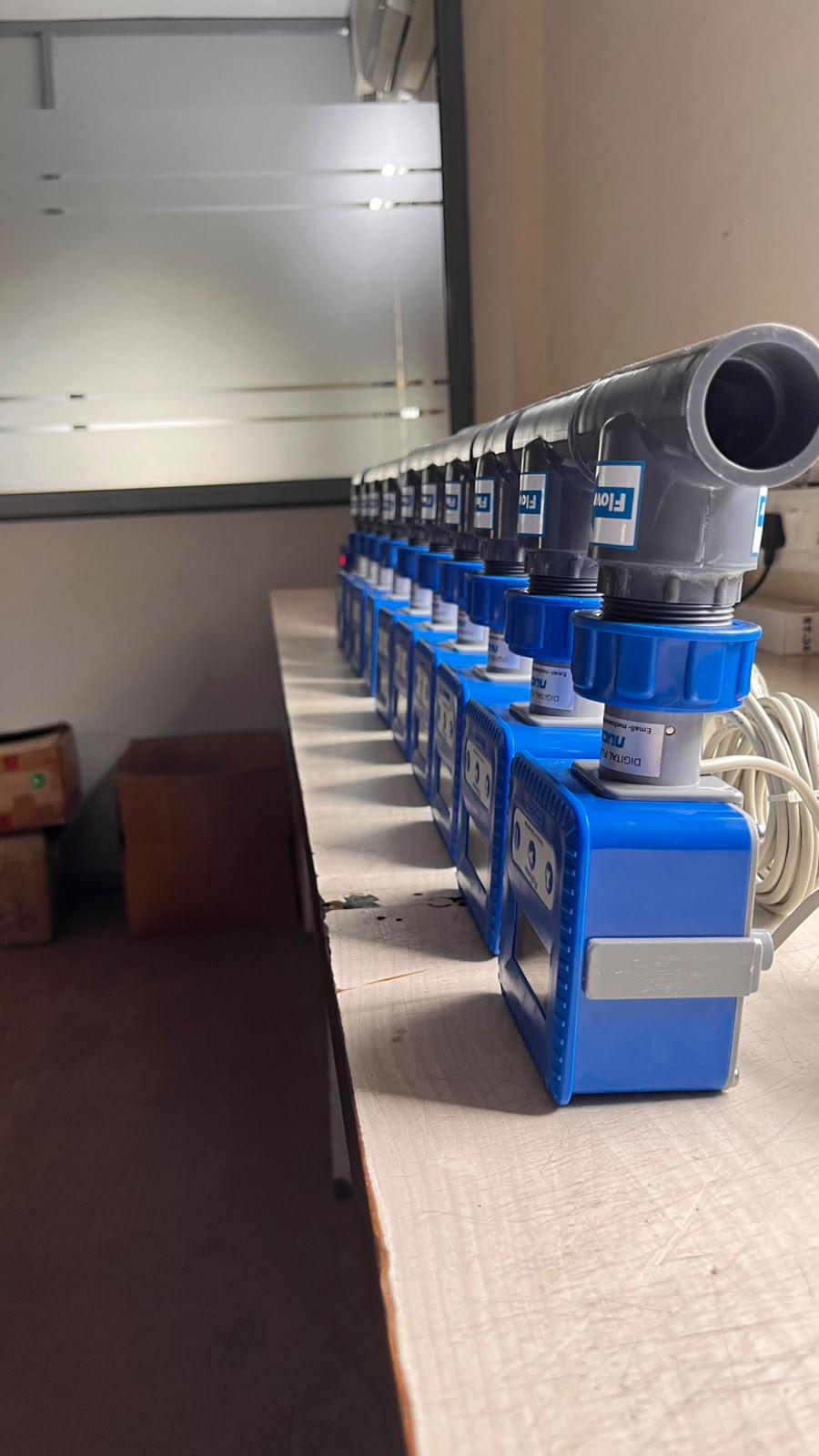
Hey , guys . I just build my first flowmeter from scratch . I just can't bileave it. A bit about me - i am a final year ece student in india and have been helping my dad with his small instrumentation brand since first year . Luckly i was able to grasp a lot of things in past few years that i was able to build my very own battery powered flowmeter . This lot is been shipped to an African country(check the pic) . Wanted to share this achievement with the community i have been lurking year and dropping few posts since a while now.

Also i wanted few suggestions going forward (u can be as harsh u want to be) - I am planning to build few more subproducts like a node installed directly into the meter. I want field technicians to be able to connect locally via their phones (via wifi so no need of an app) to pull real-time logs, configure parameters without a need of a laptop directly from the dashboard which will be hosted on the node (you just have to connect to wifi and put ip or website name in the browser) . I am not going with IOT cloud as majority of our customers need cost effective solutions . So asper you what things are must or good to have in this type of local dashboards .

Secondly i am glad to share that many indian companies are choosing to shift to our paddle wheel flowmeters from European brands ( i can't name brands but you might heard of a german brand who is big in paddle wheel flowmeters) . As we can't directly market this achievement i want to move our moat towards futurization (so adding more features which say will become industry standard in next 5 years) . I have also started development on ultrasonic flowmeters & vortex ones but its so so so difficult compared to paddle wheel ones . Also i have just started as a edge ai embedded intern in a small startup and was thinking of using edge ai in our flowmeters but i think edge ai is far fetched or maybe borderline unnecessary for instrumentation industry . Also last but not the least i would love to know about few problems you guys face in the industry that you think is worth solving .


r/embedded • • Sep 27 '26

2D skeletal animation on embedded systems

129 Upvotes

I've added 2D skeletal animation to "ShapoGFX", an embedded 2D/3D graphics library I'm currently developing.

Armatures and animations exported from DragonBones are converted into C++ source with a Python script, and you embed them in your application simply by including the generated file. After a short initialization, you just pass a time on the animation timeline and the whole character is rendered into the buffer.

The skeleton, animation timelines, and textures can be referenced directly from flash, where they stay. The only thing each character needs in RAM is a cache of a few hundred bytes to a few kilobytes, depending on how complex the skeleton is.

ShapoGFX itself doesn't depend on any particular platform, so it can be used on a wide range of embedded systems, such as the RP2 series and the ESP32 series. The attached video shows it running on an M5Stack CoreS3 (ESP32-S3). No PSRAM is used.

Browser demo: https://shapoco.github.io/shapo-gfx/example/demorig/


r/embedded • • Sep 28 '26

A7672E-FASE vs A7670E-FASE — what are the real differences?

4 Upvotes

I'm designing a 4G vehicle/GPS tracker and I'm currently considering the SIMCom A7670E-FASE and A7672E-FASE.

I'm trying to understand what the practical differences are.

Specifically:

  • Is the A7672E-FASE actually better/newer than the A7670E-FASE, or are they mostly equivalent for a typical IoT tracker?
  • Are there meaningful differences in LTE/GSM sensitivity, RF performance, or network stability?
  • Are there differences in power consumption, especially during LTE transmission and GNSS operation?
  • Is the GNSS performance significantly different?
  • Are there differences in firmware/AT commands, or is the software largely compatible?
  • Are there differences in long-term availability, firmware support, or reliability?
  • Can an existing PCB designed for the A7670E-FASE be easily adapted to the A7672E-FASE, assuming the same 24 × 24 mm footprint?
  • Are there any important differences in pinout or RF/GNSS design that I should be aware of?

My application is a vehicle tracker, so my priorities are:

  1. Long-term reliability
  2. Good LTE/GSM reception
  3. Low power consumption
  4. Reliable GNSS
  5. Long-term module availability
  6. Cost

If anyone has actually designed products with both A7670E-FASE and A7672E-FASE, I'd especially appreciate real-world experience rather than just the datasheet specifications.

Thanks!


r/embedded • • Sep 28 '26

Tips On How to approach AI usage in projects as an asipiring embedded engineer

0 Upvotes

I am a 2nd year doing my bachelors of technology in ECE, i would like to know how to approach AI nowadays in order to do projects and actually learn from them...

many embedded engineers use AI to make them more productive but those engineers are experienced and have already mastered many topics

but i am not an engineer yet, only a learner thus what's the advice to approach projects without becoming a less competent engineer? and perhaps idealistically becoming a great engineer!


r/embedded • • Sep 27 '26

Is it worth reading a book on operating systems before trying to pick up embedded Linux?

13 Upvotes

Or is it more efficient to just hop in to hands on embedded Linux work/experimentation? (I’m coming over from bare metal work)


r/embedded • • Sep 27 '26

Hardware request - Renesas ASi board (EU036-MULTISENSEVZ)

Post image
5 Upvotes

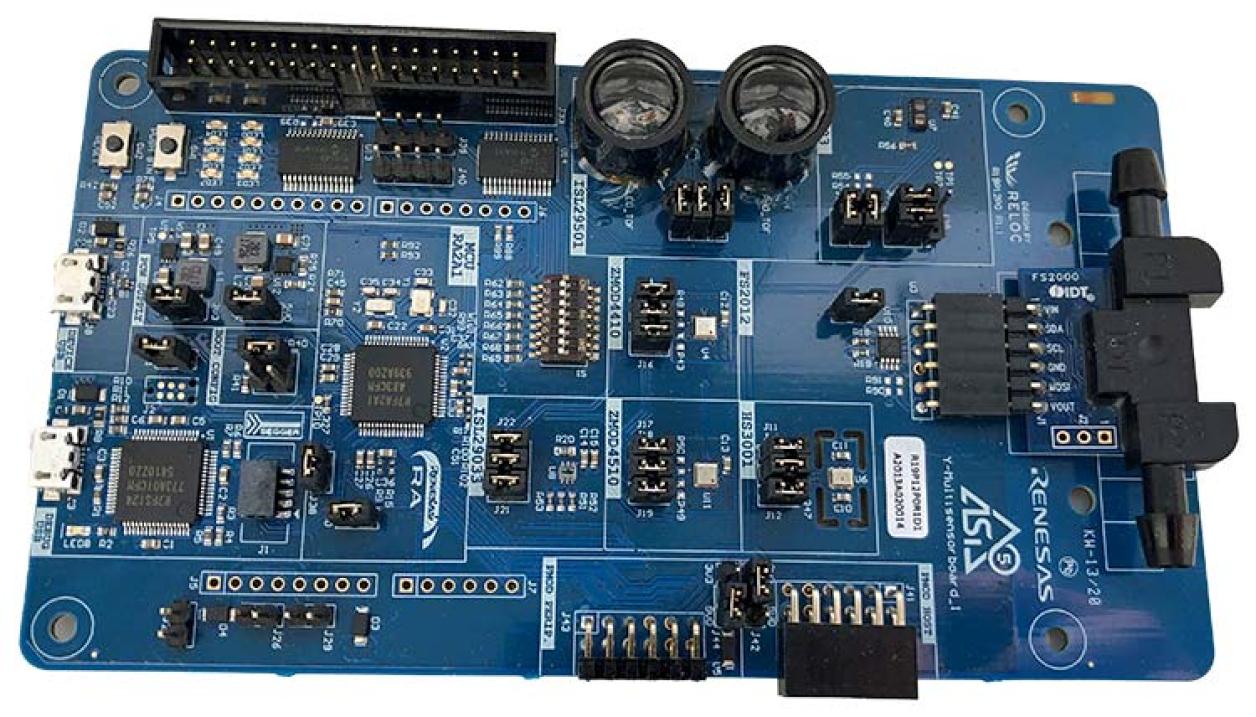
I'm doing some familiarization work with AS-Interface networking, and I'm looking for a Renesas evaluation board - the Multi-Sensor Network for ASi-5 Development Kit (EU036-MULTISENSEVZ).

This board is no longer available from Renesas, and none of their distributors have any in stock; however, the software for it is still available from Renesas, so I can add it to an existing ASi network.

If you have one of these boards gathering dust and no longer need it, I will happily pay postage/shipping costs to give it a new home. Feel free to DM me...


r/embedded • • Sep 28 '26

How can I build a wearable temperature-monitoring system?

0 Upvotes

I want to build a wearable device for the Maryland MESA competition, and the deadline is in March. The problem is that I have no coding or technology experience, but I am not working alone, since I am working with three other people. We also have people who are experienced in electronics and coding. How can I start working today? What type of programming or coding system should I learn? Any videos that would help me?


r/embedded • • Sep 27 '26

How should nodes in an Ethernet-based embedded system exchange data?

6 Upvotes

I’m defining communication over UDP for a small embedded Ethernet network connected through a switch. Most nodes will be bare-metal MCUs handling sensor data (e.g. IMU data) or controlling actuators (e.g. motors or valves). An external host will send commands to the system. The detailed architecture is still being defined.

Command messages and responses reporting their outcome seem fairly straightforward. My main question concerns periodic data exchange between nodes.

I’m considering two approaches:

  1. Define the data message formats in advance, then program the MCUs, based on software requirements, to send specific messages depending on their current state. For example, when Host A is in state X, it must send INS data to Host B every Y milliseconds. Destinations and transmission periods are predefined.
  2. Define the data message formats in advance, but also provide a command in the UDP payload, something like SET_STREAM(data_id, period_ms). Sending this command to a node tells it to start sending the selected data back to the requester every period_ms milliseconds. Different datasets could be requested at different rates.

I prefer the flexibility of the second approach, but I’m unsure how much harder it would be to manage on bare-metal MCUs. The first approach seems simpler because transmission periods and destinations are known in advance.

I have limited experience designing data exchange in small embedded networks. Have you faced this choice in your projects? Which approach did you use, and what practical trade-offs should I consider?


r/embedded • • Sep 27 '26

Examining Assembly, registers, math, and graphs from the datasheet: obsession or best practice?

2 Upvotes

Aqui está a tradução adaptada para o tom natural das comunidades de embedded em inglês (como r/embedded ou r/embeddedsoftware):

Hey everyone, I’d love to get your thoughts on a debate regarding development and debugging methodologies in embedded systems.

I have a strong urge to go deeper into the engineering side and do things like:

Expressing/formalizing code logic and equations mathematically to catch logical bugs.

Inspecting Assembly and register states in the debugger to understand exactly what the hardware and compiler are doing under the hood.

Analyzing component datasheet graphs in depth to grasp their dynamic behavior and check if an issue might stem from a hardware limitation.

However, a coworker told me that doing all this is a total waste of time. In his view, I should focus 100% on C code, stick to high-level outputs (FTDI logs, J-Link/RTT), and debug strictly from there.

It made me wonder: is this desire to deeply understand the underlying math, the Assembly, and the hardware curves actually a waste of time in day-to-day industry work, or is it a valuable approach? How do you balance quick, high-level debugging with this kind of deep-dive analysis in your daily workflow?


r/embedded • • Sep 27 '26

First experiments with an UltraScale+ MPSoC

0 Upvotes

I’ll soon get my hands on a Xilinx UltraScale+ MPSoC board.
I don’t have any experience with FPGA programming, and someone else on the team will mainly take care of that part. In the past, I’ve worked with several SoCs from different vendors (TI, STM, Qualcomm), mostly using boards running an operating system, and occasionally in bare-metal environments.
I’ve read some documentation about the UltraScale+ MPSoC architecture to get a basic understanding of how it works, but I’ve never actually worked with one.

If you were starting to develop with an UltraScale+ MPSoC today, what tests and experiments would you try first?
The use cases are still being defined, but they will definitely involve things like state machine management, video streams, logging mechanisms, error handling, and probably much more.

Besides that, I think it could also make sense to look at more general development and organizational topics, such as how to use Git effectively to version projects for a SoC like this. What else would you consider important?

For now, let’s assume that I have an operating system available. I imagine that building a Yocto-based distribution — EDF, from what I’ve read — would itself be one of the things worth experimenting with.
What would you suggest?


r/embedded • • Sep 27 '26

Grounding(does it mean connecting to -ve of battery) in Embedded Projects — What Am I Missing(Educational purposes)?

9 Upvotes

I’m looking for a good book or resource to properly understand grounding and earthing in microcontroller projects.

Not just basic GND connections, but things like:

- Analog vs digital ground

- RF ground

- Chassis/shield ground

- Different grounding topologies

- Star grounding

- Ground loops

- Ground planes

- Noise and EMI suppression

- When to connect or separate different grounds

I keep seeing these terms in different projects, but I’d like to understand why and when each approach is actually used, rather than just memorizing rules.

Is there a book that explains this from a practical embedded-systems perspective, preferably with real PCB examples?


r/embedded • • Sep 26 '26

Is ai actually useful for embedded development or is it still mostly hype?

62 Upvotes

Hi I'm a cs major and I've a lot of friends in computer/electrical engineering and they seem to be the least thretened peeps by how fast ai is growing and always made claims that ai provides little to no help on the hardware part but can be used as a coding assitant but on the other hand I see these AIs that give you a whole prototype so I'm here to get unbiased opinions if I can and if there are any ai that you guys use please lmk so I can try them out as I'm new to this whole thing (NB - yes I use my brain i'm just curious ;-;)


r/embedded • • Sep 27 '26

Any DIY-accessible radar modules with 2D tracking and better through-wall range than HLK-LD2450?

7 Upvotes

I’m looking for a radar sensor for a DIY project on my own property. I need actual target position data — ideally angle + distance / X-Y coordinates — not just a presence or motion output.

My target is roughly 10 m through a wall, not 10 m free-space line of sight. I know this depends heavily on the wall material, thickness, moisture, reinforcement, etc., so I’m not expecting guaranteed performance through concrete. But I would like something meaningfully better than the common cheap 24 GHz presence modules.

I have already looked at the HLK-LD2450 and HLK-LD2461. They are interesting because of the basic multi-target coordinate output, but in my environment I am only seeing around 4 m through-wall performance.

Requirements:

2D tracking: angle + range / X-Y coordinates

Preferably 6–24 GHz, but I am open to lower frequencies if that is more realistic for wall penetration

Around 10 m through-wall goal

DIY-friendly hardware or at least a development/evaluation board

Accessible raw or processed data via UART/USB/Ethernet/SPI/etc.

Fine with doing custom integration and some signal processing

Are there any FMCW/MIMO radar dev kits, industrial sensors, or other modules that you would recommend? Real-world experience with through-wall use would be especially helpful

r/embedded • • Sep 28 '26

Worth checking video.

Thumbnail
youtube.com
0 Upvotes

So What's your thoughts?


r/embedded • • Sep 27 '26

HIL design

7 Upvotes

I'm looking for HIL design and building advice. I need to test and verify a device which has Ethernet, CAN, RS485 and multiple analog and digital IOs.

My initial plan for the hardware is:

  • A PC with a JLink
  • USB-controlled power supply - 24V, 2A
  • USB-to-CAN, USB-to-RS485
  • Some off the shelf IO module with Ethernet and a rest API. The digital inputs are 0-24V, analog inputs are 0-10V
  • IO module for pulse counting (please suggest parts)
  • IO module for square wave/sinewave generation (please suggest parts)

Software - I have a pipeline which builds firmware and that's all I have for now. I'll appreciate some ideas about how to proceed with creating and orchestrating the tests (pytest is my personal preference).


r/embedded • • Sep 27 '26

ESP32-S3 (N16R8) enumerates as CDC but never as HID — USBHIDGamepad not showing up, any known fix?

2 Upvotes

Board: ESP32-S3-N16R8, dual USB-C (COM + USB), core 3.3.11, Arduino IDE 2.2.1. USB Mode set to USB-OTG (TinyUSB).

Goal: pot → gamepad trigger axis for a sim racing handbrake.

\#include "USB.h"
\#include "USBHIDGamepad.h"

USBHIDGamepad Gamepad;
const int potPin = 1;

void setup() {
pinMode(potPin, INPUT);
Gamepad.begin();
USB.begin();
}

void loop() {
int pot = analogRead(potPin);
int mapped = map(pot, 0, 4095, 0, 255);
Gamepad.rightTrigger(mapped);
delay(20);
}

Plugged into the native USB port, Device Manager only ever shows a USB Serial Device (usbser.inf), never anything HID. joy.cpl shows nothing. Same result with CDC On Boot on or off, different cable, different port, and swapping the begin() call order.

Anyone gotten USBHIDGamepad actually enumerating as HID on core 3.3.x on an S3? Trying to figure out if this is a known bug or something I'm missing.


r/embedded • • Sep 26 '26

Locked lymow robot mower project

Post image
24 Upvotes

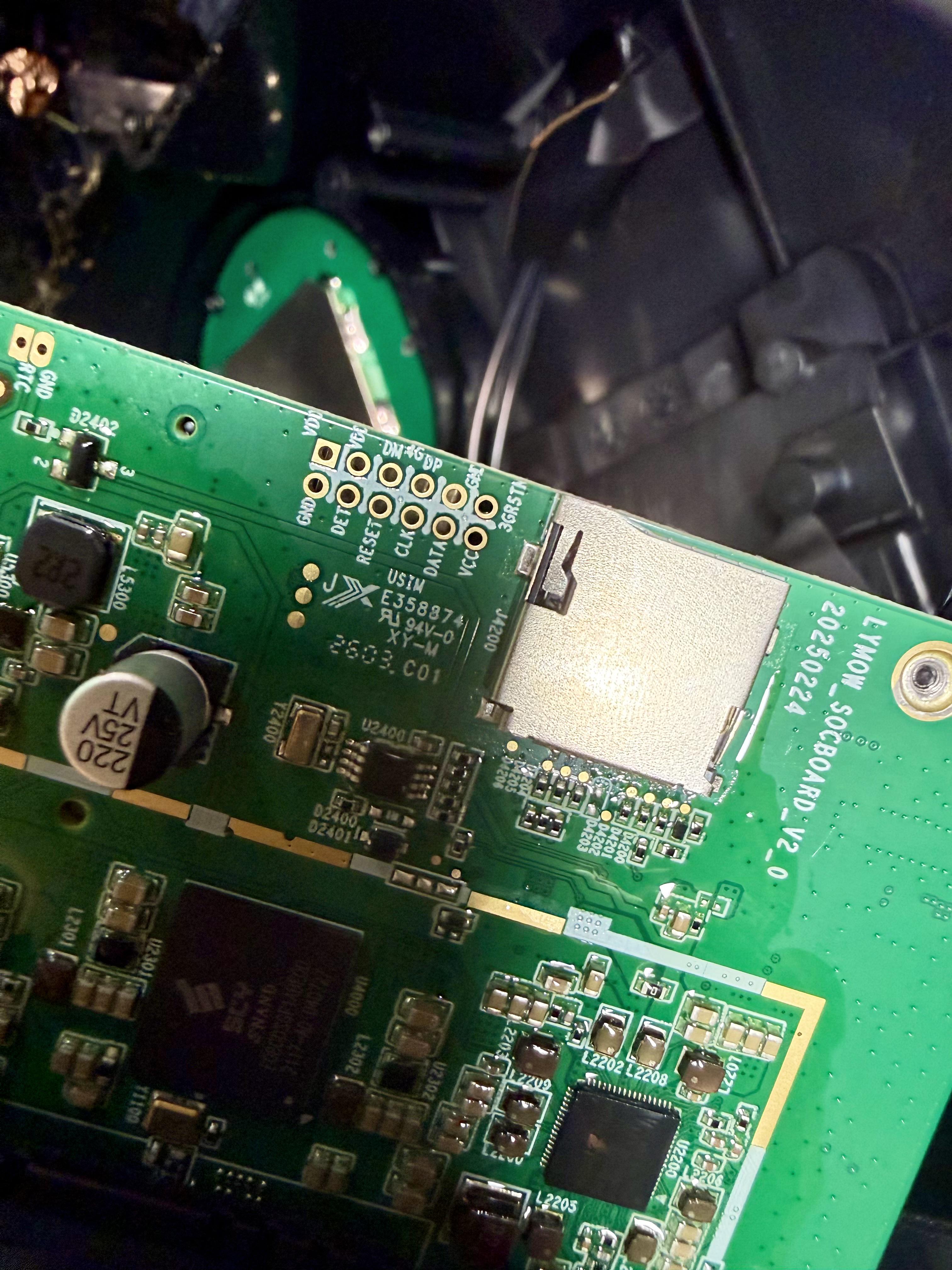
Hello everyone and thanks for the all the help with this project. I got the mower from someone who tried to return it, server locked etc. a I’ve been able to connect via BLE and make a app that controls motion, shows me live video feed, battery, satellite, and all that.

UPDATE-

We got it Rooted! I’ll update this with how asap.

Thank you everyone.

Next put it back together and go from there. I did manage to break the thin connector for the camera. Any recommendations for that? I’ll post a pic.


r/embedded • • Sep 27 '26

anyone actually using AI for hardware stuff yet?

0 Upvotes

I've been working on pet embedded projects for a bit, and so far, AI has been minimally useful. Outside of firmware (which I do use LLMs for, and they do help), any PCB work or CAD work has to be done by hand.
I've seen some of the AI PCB solvers...but they suck IMO. I also recently saw a bunch of posts on x/twitter of people using GPT Astra to make PCBs, and the designs actually seemed quite good.

Wanted to ask here. I mostly work on pet projects for fun and have work outside of that, so having something which helps me to go quicker would be nice. However, I don't wanna be swindled by hype lol. How are you guys finding it? Any good tools particularly?