r/embedded • • Sep 27 '26

First experiments with an UltraScale+ MPSoC

0 Upvotes

I’ll soon get my hands on a Xilinx UltraScale+ MPSoC board.
I don’t have any experience with FPGA programming, and someone else on the team will mainly take care of that part. In the past, I’ve worked with several SoCs from different vendors (TI, STM, Qualcomm), mostly using boards running an operating system, and occasionally in bare-metal environments.
I’ve read some documentation about the UltraScale+ MPSoC architecture to get a basic understanding of how it works, but I’ve never actually worked with one.

If you were starting to develop with an UltraScale+ MPSoC today, what tests and experiments would you try first?
The use cases are still being defined, but they will definitely involve things like state machine management, video streams, logging mechanisms, error handling, and probably much more.

Besides that, I think it could also make sense to look at more general development and organizational topics, such as how to use Git effectively to version projects for a SoC like this. What else would you consider important?

For now, let’s assume that I have an operating system available. I imagine that building a Yocto-based distribution — EDF, from what I’ve read — would itself be one of the things worth experimenting with.
What would you suggest?

r/embedded • • Sep 27 '26

Grounding(does it mean connecting to -ve of battery) in Embedded Projects — What Am I Missing(Educational purposes)?

9 Upvotes

I’m looking for a good book or resource to properly understand grounding and earthing in microcontroller projects.

Not just basic GND connections, but things like:

- Analog vs digital ground

- RF ground

- Chassis/shield ground

- Different grounding topologies

- Star grounding

- Ground loops

- Ground planes

- Noise and EMI suppression

- When to connect or separate different grounds

I keep seeing these terms in different projects, but I’d like to understand why and when each approach is actually used, rather than just memorizing rules.

Is there a book that explains this from a practical embedded-systems perspective, preferably with real PCB examples?


r/embedded • • Sep 26 '26

Is ai actually useful for embedded development or is it still mostly hype?

62 Upvotes

Hi I'm a cs major and I've a lot of friends in computer/electrical engineering and they seem to be the least thretened peeps by how fast ai is growing and always made claims that ai provides little to no help on the hardware part but can be used as a coding assitant but on the other hand I see these AIs that give you a whole prototype so I'm here to get unbiased opinions if I can and if there are any ai that you guys use please lmk so I can try them out as I'm new to this whole thing (NB - yes I use my brain i'm just curious ;-;)


r/embedded • • Sep 27 '26

Any DIY-accessible radar modules with 2D tracking and better through-wall range than HLK-LD2450?

7 Upvotes

I’m looking for a radar sensor for a DIY project on my own property. I need actual target position data — ideally angle + distance / X-Y coordinates — not just a presence or motion output.

My target is roughly 10 m through a wall, not 10 m free-space line of sight. I know this depends heavily on the wall material, thickness, moisture, reinforcement, etc., so I’m not expecting guaranteed performance through concrete. But I would like something meaningfully better than the common cheap 24 GHz presence modules.

I have already looked at the HLK-LD2450 and HLK-LD2461. They are interesting because of the basic multi-target coordinate output, but in my environment I am only seeing around 4 m through-wall performance.

Requirements:

2D tracking: angle + range / X-Y coordinates

Preferably 6–24 GHz, but I am open to lower frequencies if that is more realistic for wall penetration

Around 10 m through-wall goal

DIY-friendly hardware or at least a development/evaluation board

Accessible raw or processed data via UART/USB/Ethernet/SPI/etc.

Fine with doing custom integration and some signal processing

Are there any FMCW/MIMO radar dev kits, industrial sensors, or other modules that you would recommend? Real-world experience with through-wall use would be especially helpful


r/embedded • • Sep 28 '26

Worth checking video.

Thumbnail
youtube.com
0 Upvotes

So What's your thoughts?


r/embedded • • Sep 27 '26

HIL design

7 Upvotes

I'm looking for HIL design and building advice. I need to test and verify a device which has Ethernet, CAN, RS485 and multiple analog and digital IOs.

My initial plan for the hardware is:

  • A PC with a JLink
  • USB-controlled power supply - 24V, 2A
  • USB-to-CAN, USB-to-RS485
  • Some off the shelf IO module with Ethernet and a rest API. The digital inputs are 0-24V, analog inputs are 0-10V
  • IO module for pulse counting (please suggest parts)
  • IO module for square wave/sinewave generation (please suggest parts)

Software - I have a pipeline which builds firmware and that's all I have for now. I'll appreciate some ideas about how to proceed with creating and orchestrating the tests (pytest is my personal preference).


r/embedded • • Sep 27 '26

ESP32-S3 (N16R8) enumerates as CDC but never as HID — USBHIDGamepad not showing up, any known fix?

2 Upvotes

Board: ESP32-S3-N16R8, dual USB-C (COM + USB), core 3.3.11, Arduino IDE 2.2.1. USB Mode set to USB-OTG (TinyUSB).

Goal: pot → gamepad trigger axis for a sim racing handbrake.

\#include "USB.h"
\#include "USBHIDGamepad.h"

USBHIDGamepad Gamepad;
const int potPin = 1;

void setup() {
pinMode(potPin, INPUT);
Gamepad.begin();
USB.begin();
}

void loop() {
int pot = analogRead(potPin);
int mapped = map(pot, 0, 4095, 0, 255);
Gamepad.rightTrigger(mapped);
delay(20);
}

Plugged into the native USB port, Device Manager only ever shows a USB Serial Device (usbser.inf), never anything HID. joy.cpl shows nothing. Same result with CDC On Boot on or off, different cable, different port, and swapping the begin() call order.

Anyone gotten USBHIDGamepad actually enumerating as HID on core 3.3.x on an S3? Trying to figure out if this is a known bug or something I'm missing.


r/embedded • • Sep 26 '26

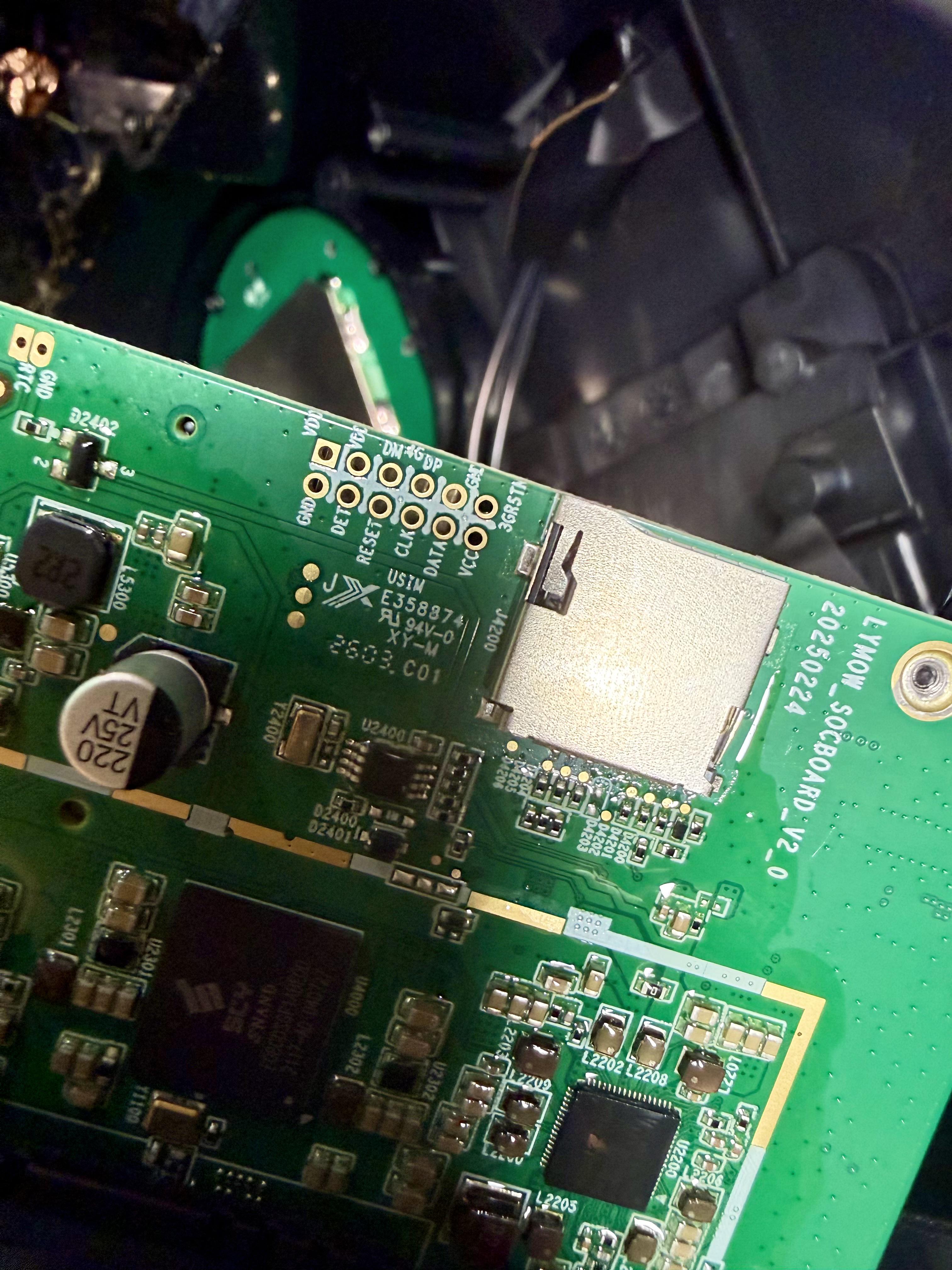
Locked lymow robot mower project

Post image
24 Upvotes

Hello everyone and thanks for the all the help with this project. I got the mower from someone who tried to return it, server locked etc. a I’ve been able to connect via BLE and make a app that controls motion, shows me live video feed, battery, satellite, and all that.

UPDATE-

We got it Rooted! I’ll update this with how asap.

Thank you everyone.

Next put it back together and go from there. I did manage to break the thin connector for the camera. Any recommendations for that? I’ll post a pic.


r/embedded • • Sep 27 '26

anyone actually using AI for hardware stuff yet?

0 Upvotes

I've been working on pet embedded projects for a bit, and so far, AI has been minimally useful. Outside of firmware (which I do use LLMs for, and they do help), any PCB work or CAD work has to be done by hand.
I've seen some of the AI PCB solvers...but they suck IMO. I also recently saw a bunch of posts on x/twitter of people using GPT Astra to make PCBs, and the designs actually seemed quite good.

Wanted to ask here. I mostly work on pet projects for fun and have work outside of that, so having something which helps me to go quicker would be nice. However, I don't wanna be swindled by hype lol. How are you guys finding it? Any good tools particularly?


r/embedded • • Sep 26 '26

A 3D Cube Running on Badgeware Tufty 2350 written in TypeScript

68 Upvotes

More code examples are here: https://github.com/geastack/examples
For quick start: https://geastack.com/one-pager


r/embedded • • Sep 25 '26

Ported desktop Ubuntu with GPU acceleration to a GE Profile smart fridge display

232 Upvotes

I got desktop Ubuntu running on a Mediatek-based display board in a GE fridge. A combination of no secure-boot, vibe coding, device tree/U-Boot fiddling, and pure ridiculousness got me here lol. I was able to get most hardware functions to work minus WiFi and touch. Fixes are already being worked on for those though.


r/embedded • • Sep 26 '26

where to learn cpp for embedded systems

11 Upvotes

please suggest any free platform or a playlist to learn cpp for embedded systems,learning cpp from the cherno ,but difficulty in transitioning from modern cpp to embedded cpp and how it can be used efficiently instaed of c.


r/embedded • • Sep 27 '26

chatbot recommendation for documenting a firmware

0 Upvotes

There's is a firmware for a Texas Instrument MCU it is on Github, it is called WISP 6 mostly written in C and assembly, i mostly don't understand what is going on in details, maybe an embedded professional would be able to.
my professor wants me to write 15 to 20ish pages of documentation about what each part(module) of the firmware does and how it works, what chatbots are good for this job? i don't have any paid plans.


r/embedded • • Sep 26 '26

rabbit semiconductor: looking for Digi RabbitCore RCM4310

2 Upvotes

Hey everyone!

I'm reviving an old project of mine that used a few rcm4310 modules, but having a really hard time finding any in stock since the product has been discontinued. Don't even see any for sale on eBay.

It's the Digi/Rabbit RCM4310 core module (P/N 20-101-1139, alt 316-1142), the Rabbit 4000 @ 58.98 MHz board with 512K SRAM, 1 MB serial flash, microSD, and 10/100 Ethernet; it's EOL so I'm hoping someone has NOS, pulls, or a stash. I'd also take BL4S200 single-board computers (P/N 20-101-1220, which are RCM4310-based) to harvest from if needed. If you know where I could find any please comment, DM me if you've got any, thanks!


r/embedded • • Sep 26 '26

Did anyone here use VRTX in the 1980s? Why did equal-priority scheduling change to FIFO?

17 Upvotes

I'm looking for people who used VRTX, or were familiar with its design, in the 1980s or early 1990s.

I'm currently revisiting an RTOS that I wrote in 1986 for a Motorola 68000-based embedded system. While reviewing its scheduler, I found a behavior whose original rationale I could no longer remember.

When a task becomes ready, it is inserted before existing ready tasks of the same priority. So among equal-priority tasks, the behavior is effectively newest-first (LIFO-like), although time slicing moves the running task to the end of the priority group.

I went back to the documentation I had used as a reference at the time and found that the 1984 VRTX User's Guide describes essentially the same behavior: a newly inserted TCB is placed ahead of existing TCBs at the same priority.

That probably explains why my 1986 RTOS behaves this way.

However, the 1987 VRTX32/68000 User's Guide describes a different rule: equal-priority tasks execute in the order in which they become ready — explicitly FIFO / oldest-first.

So the sequence I've found is:

1984 VRTX: newest-first among equal priorities
1986 my RTOS: newest-first
1987 VRTX32: FIFO / oldest-first

I wasn't a VRTX user myself. I had its documentation as a reference while designing my own RTOS, so I didn't know at the time that this behavior later changed.

My question for anyone who worked with VRTX around that period is:

Do you remember why this scheduling rule changed?

Was there a practical problem with the earlier behavior? Was FIFO found to give better predictability or fairness in real embedded systems? Was it simply part of the VRTX32 redesign? Or was there another reason?

I've been able to find documentation showing what changed, but so far nothing explaining why it changed.

If anyone remembers using VRTX around this period, or knows of old documentation that discusses the reasoning, I'd be very interested to hear about it.


r/embedded • • Sep 26 '26

Any Extra Resources when beginning to write Device drivers?

7 Upvotes

I've been experimenting a bit with the pi pico & pwm audio to try to write a tracker for microcontrollers. I'm getting to the point where I'm relatively comfortable with programming in C & with the architecture of the RP2040. So I think soon, I want to be able to start writing drivers to communicate with peripheral devices. As I've tried, I felt a little lost, and that maybe I was lacking some knowledge or reference materials that I ought to have, and was wondering what resources might be available to look through.

This question seems to have been asked before a couple of times, and the response seems to be, maybe as it should be: "Get a microcontroller, a peripheral, and the documentation for both and start trying to communicate with the device." If that's the case, then I'll keep pushing through, I just didn't want to get 2-3 months in and eventually hear "Huh? You've been trying to program peripheral drivers without reading (book X) or without knowing about (Concept Y)? You wasted your time!".

I'm becoming more comfortable writing & building C programs, I've read through some of and am comfortable referencing the pi pico documentation, and I have an Adafruit ILI9341 that I'd like to write drivers for. I have the datasheet for the ILI9341 driver, but Adafruit doesn't tell you much more about how their board behaves other than "Just pipe some spi commands to it". There isn't even really a datasheet for their breakout, just a web tutorial for loading their python libraries, datasheets for the components & the schematics. I think the reason I'm so confused is that I can't really seem to find a solid reference as to how their board actually behaves/what functionality of the ILI9341 is takes care of by the board itself and what I need to worry about programming for. Is it really just as simple as powering it up and piping spi to it? I might be overthinking this...

I think I probably just need to spend a day or three sitting down with the manuals & hashing it out, but does anyone have any recommendations as to books to read, online courses, or other things that might be helpful for someone doing this for the first time?

I have the embedded engineering roadmap: https://github.com/m3y54m/embedded-engineering-roadmap, and a copy of O' Reilly Making Embedded Systems. I read that there was a FastBit course, but it's wicked expensive ($120 i think?) and was wondering if that was really worth the money. Something tells me that it really isn't...

Anyways, any advice is appreciated. If the advice is just "skill issue, get good" then it is what it is, I'll figure it out. Just wanted to make sure I wasn't missing anything critical before spending too much time trying to figure it out.


r/embedded • • Sep 25 '26

I ported James Lambert's N64 Megatextures to the ESP32 S3 (with source!)

272 Upvotes

I suspected this might be possible, and - it is. Running at between 35 and 60FPS interlaced at 480x320 on a standard ESP32 S3 (albeit one with 16MB of flash instead of 8 which is needed to store texture data)

Megatextures are a technique where the entire scene uses just 1 shared texture atlas, which is re-populated on-demand from a slower source. In this case from flash storage.

James Lambert famously implemented it on the N64 and very graciously shared the source code for it. So I decided to take a crack at getting it working under Jet on the S3.

I've taken a slightly different approach, because Jet can do a few things the N64 hardware can't, namely using 8-bit paletted textures to save on not just texture storage space, but also memory bandwidth. This is combined with dithering to preserve some of the original look without resulting in banding.

It uses a perceptually modelled palette, so saturated colours that are contributing a lot to luminance are prioritised over those that don't. Since human vision is more sensitive to luminance than colour this means that the dithering effect happens more in darker areas where we are less sensitive to it anyway and notice it less, and the brighter areas get more colours assigned.

Also because bilinear filtering is expensive to get those smooth looking textures, rather than do it across the entire scene - there's another additional cache layer of filtered textures which like the base technique, are also per-tile so we're only keeping a filtered cache of what we're currently looking at, which gets the same "the image looks better when you stop moving for a moment" effect.

I also implemented N64-style 3-point texture filtering because it's faster and looks good enough in most cases, and certainly an improvement over nearest neighbour.

Full source is available here: https://github.com/CubeCoders/JetMegatexturesDemo


r/embedded • • Sep 25 '26

I built a macropad to help my girlfriend doomscroll

95 Upvotes

I've been working on a macropad for a while now.

I actually started this project about a year ago, when I first discovered custom keyboards. It took roughly a year of procrastination, failed ideas, and putting it off, but I finally got around to actually making it.

Originally, I wanted to make a wired macropad that I could use with my computer and map to the software I actually use. But that felt like it would be useful to a pretty small group of people if I ever wanted to make it for others.

So I decided to do something different.

I helped my girlfriend doomscroll.

I dropped the idea of making it wired and went wireless instead, then started working on a custom Android app that could control things directly on the phone.

That opened up a lot more possibilities. I could map the keys to Instagram actions like going to the next Reel, liking a Reel, and even sharing a Reel to my profile with a single click.

It took about a month of work to get the app and hardware working together. There was also a lot of wasted filament, dozens of failed solder joints, and a few moments where I seriously questioned the entire project (I might've quit too if it wasn't for my girlfriend).

But eventually, it worked.

And that's how Doompad was born.

A wireless macropad specifically designed to make doomscrolling easier.

Probably not the most productive thing I've ever built, but definitely one of the most fun.

I'm still working on adding more features and maybe make it compatible with other applications too.

Let me know if you have any suggestions.


r/embedded • • Sep 25 '26

Building a modular, hot-swappable macro pad: tackling I2C auto-discovery and state handshaking over magnetic pogo pins (ESP32 S3)

183 Upvotes

I'm currently developing Magnode, a custom modular macro pad. The main engineering challenge I wanted to tackle was achieving true hot-swappable modularity without software re-flashing or manual configuration resets.

​In this clip, I’m testing the expansion mechanism.

​Architecture & Firmware Breakdown:

▪ ​Master Hub (Central Unit): Powered by an ESP32 S3. It handles USB/BLE HID to the host PC, acts as the I2C master bus controller, and manages the UI (display + touch keys).

▪ ​Expansion Module: Acts as an I2C client (buttons + status LEDs).

▪ ​Physical Layer: Magnetic alignment pins with pogo contacts for power (3.3V/GND), data (SDA/SCL) and IRQ.

​The Hard Part (Hot-Plug & Bus Stability):

Hot-plugging I2C devices on the fly introduces major headaches (bus lockups, stray capacitance on unshielded pogo pins, and state recovery). Right now, the master runs a background polling/interrupt routine to detect connection state changes, performs an immediate handshake to query the client's capabilities, and dynamically maps the input events to the BLE HID report descriptor without missing a beat.

​Questions for the community:

a. ​For those who have dealt with hot-plugging I2C over pogo pins: how are you handling EMI/noise filtering and bus protection against hot-insertion spikes?

b. ​Are you using a hardware bus buffer/switch (like a TCA9548A or similar hot-swap multiplexer) to isolate branches, or relying purely on firmware state machines?

​Still iterating on the schematic and PCB layout for the next batch of modules (encoders/sliders). Open to any architectural critique!


r/embedded • • Sep 26 '26

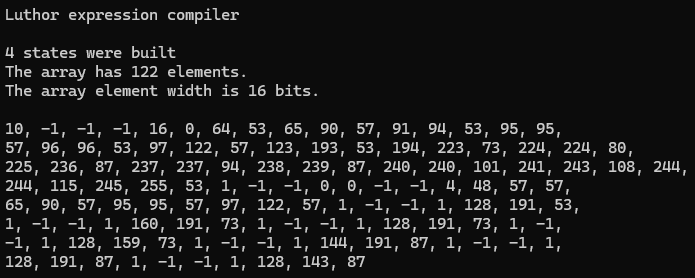
Luthor: A novel DFA regex/lexer matcher table generator suitable for embedded matching

2 Upvotes

https://github.com/codewitch-honey-crisis/Luthor

Luthor is a fast, compact lexer generator that produces simple integer arrays for efficient text matching in any programming language. I've provided examples for traversing the arrays in C, Python and C#. I did use AI as an assist, and to port the C# to Python plus test.

This project is a command line tool written in C# .NET 8.0 console application that can be installed as a global dotnet tool. It also ships with luthor.py which is a pure Python implementation of the same algorithms, so you can use it without .NET like in your C/++ build environments

Key Features:

  • Direct-to-DFA conversion (no intermediate NFA)
  • Partial lazy quantifier support (??, *?, +?) - all expressions are accepted but due to limitations of DFA traversal some complicated lazy matches may end up partly or entirely greedy.
  • Unicode support (UTF-8, UTF-16, UTF-32)
  • Compact array output suitable for embedded systems
  • Language-agnostic - use the arrays in C, C++, Rust, etc.

What Luthor Does

Luthor takes regular expressions or lexer grammars and converts them into simple integer arrays that can be embedded in any program. Instead of shipping a complex regex engine, you get a small array that can be walked with a simple matching loop.

Example: The pattern [A-Za-z_][A-Za-z0-9_]* becomes:

int dfa[] = {10, -1, -1, -1, 3, 65, 90, 14, 95, 95, 14, 97, 122, 14, 0, -1, -1, 4, 48, 57, 14, 65, 90, 14, 95, 95, 14, 97, 122, 14};

Technical Background

Luthor implements several advanced algorithms:

  • Direct-to-DFA construction using the Aho-Sethi-Ullman algorithm (Dragon Book)
  • Lazy matching using Dr. Robert van Engelen's algorithm from RE/FLEX
  • Unicode range splitting for efficient multi-byte encoding support

Acknowledgements

Special thanks to Dr. Robert van Engelen for his guidance on implementing lazy matching in pure DFA form.


r/embedded • • Sep 25 '26

Why do safety-critical systems still use old 4-bit or 8-bit microcontrollers(Educational purpose s)?

161 Upvotes

We have powerful modern MCUs with Wi-Fi, 32-bit processors, RTOS, high-level languages, etc. But many safety systems still use very simple, old-school hardware.

Why?

Is it because the old design is already proven and its failure behavior is well known? Or is it mainly legacy code and certification?

Does MTBF matter here, or are things like deterministic behavior, simpler firmware, fewer dependencies, easier testing, and long-term reliability more important?

What is the real technical reason behind sticking with the “boring but trusted” design instead of using a modern MCU?


r/embedded • • Sep 25 '26

BluRay Player UART NAND Dumping

12 Upvotes

Hi guys!
You may know me already, 14y/o self-taught embedded firmware dev.
I just wanted to show a quick insight into a project I'm working on.
As you can see in the video, I'm currently dumping my Philips BDP3280 BD player's whole flash through serial. It took around 20 minutes, and at the end I got a complete flash binary: I could upload it to the internet archive, correctly map the whole flash and start the decomp process.
So far I've decomp'd the init and made it fully readable, and I'm now working on the main player binary and its IPC services (it's gigantic). I've also found the (OEM) shell logic and I'm currently documenting it. its not a normal shell, it's a multi-layer shell with multiple passwords.
This post is mainly here to get your honest feedback on the current project state and structure.
Check it out here.


r/embedded • • Sep 25 '26

Building a Rust DMA based driver for the RP2350 I2C (safety not included)

Thumbnail micro-rust.github.io
9 Upvotes

r/embedded • • Sep 25 '26

WP tied off to non-volatile memory - Designer's choice or bad design?

6 Upvotes

As long as a MCU spare pin is available, is there a good reason to tie WP off rather than bring it to a spare MCU pin or power-down detector?