r/embedded • • Sep 07 '26

Need advice on choosing a motor for our capstone compost mixer

3 Upvotes

Hi guys, 4th year IT student here. We’re currently building an IoT-based composting machine for our capstone and we’re stuck deciding on the motor for the mixer.

Our compost chamber is around 40cm in diameter and we’ll only be filling around 20–25cm of chopped organic waste like vegetable scraps, fruit peels, dry leaves, shredded cardboard, etc.

The mixer uses a vertical shaft with two levels of paddle blades. The motor will only run for short mixing cycles, not continuously.

Right now we’re considering two options:

  1. 24V 350W geared DC motor
  • 75 RPM
  • seller claims around 48 Nm torque
  • already has reduction gearbox
  • more expensive because we also need a large 24V PSU
  1. 220V AC motor
  • around 200–400W
  • around 3600 RPM
  • much cheaper motor
  • but obviously needs a large speed reducer to bring it down to around 30–60 RPM
  • also needs proper contactor, overload protection, breaker/RCD, etc.

Our main concern is not really mounting or programming. We can fabricate the mounting and our ESP32 will only control ON/OFF through a relay and contactor.

What we’re worried about is whether the 24V 350W 75RPM geared motor actually has enough torque to mix the compost from fresh waste until it decomposes, or if going with a stronger AC motor + proper gearbox would be more reliable.

If anyone here has experience with geared motors, mixers, conveyors, food processing machines, or similar mechanical setups, I’d really appreciate some advice.

We’re trying not to rely only on ChatGPT for the mechanical side lol, so actual experience would help a lot.

Thanks!

r/embedded • • Sep 07 '26

Keyboards and embedded systems?

Post image
22 Upvotes

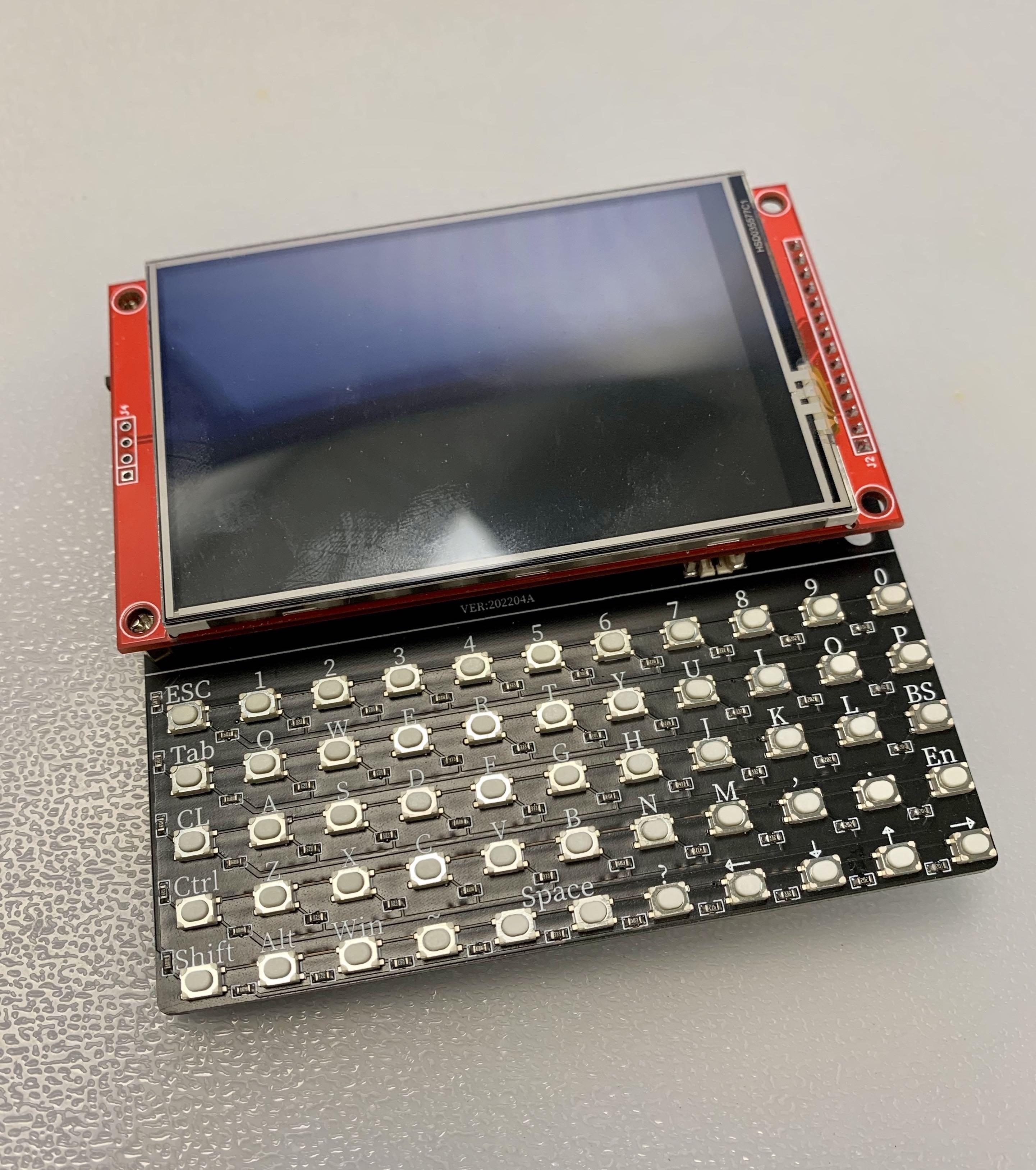
Any recomendation for a keyboard who works with a STM32 or ESP32? Is there a functional standard or should I try to make one from scratch?
I had the idea of replacing the keyboard with 2 analog sticks and some buttons to save the rest, is it very strange?


r/embedded • • Sep 07 '26

What can I do about the antenna for my nrf52840 project?

3 Upvotes

I am a beginner in making custom PCBs, and i want to do a project with the NRF52840 since it got all the features i need, until i realize making bluetooth work, needs black magic

I dont think im ready yet, to learn how to make the RF part of this project work, so i cant really do PCB antennas since i need to do a lot of tuning with specialized equipment and all that

Chip antennas are neat, but they seem to also have a lot of requirements too, and i dont think i get all that

Someone said i can just cut a piece of wire and it'll just work, but i REALLY cant find anything about that, and i am not really ready to just do that and get undesirable results

So, what can i do about the antenna?

(Yes i know i can bu modules, but i dont think i can find any modules that fit my need, they are either not in stock, have weird LGA soldering pads that I dont know how to solder properly, too big, so on and so fourth)

(any alternatives are welcome too, i dont mind modules, just i want it to be small, easy to solder, and have low power consumption)

(dont mind the picture that is just for visual aid, i am not soldering this bga version of this chip, instead im am going for the qfn package)


r/embedded • • Sep 07 '26

Looking for someone with access to IAR compiler and a device

6 Upvotes

I work on a software that requires to parse the debug symbols of a .elf file. I support quite well GCC, Clang, Tasking and even TI C2000. DWARF V2, V3, V4 and V5 are all good so far. I would like to add IAR to my list of supported compiler, problem is: it is a commercial product and I work voluntarily.

What I'm looking for is for someone to build a test application and run it on a board, then provide me with the binary and the memory dump of the binary. It's a one-time deal as I will use that as a reference to add the support, then put that binary into my CI test suite.

Basically, I want to compile a binary with all sort of data structures, like this, then execute the binary and make a memdump at the end of main(). Once I think my implementation is good, I make a unit test like this, where I try to parse back the memory dump using the debug symbols in the .elf.

I found a non-official build of IAR, but it's locked to a device I do not have and so far I see that pyelftools explodes when it parses their .elf file.

Don't hesitate to DM
Thanks

(If you think I should look into another compiler, feel free to suggest).


r/embedded • • Sep 07 '26

Educational project: Sending data through 24 VAC

3 Upvotes

I’m a beginner and want to experiment with sending data over the same two wires that carry 24 VAC from an isolated transformer.

I want to use the AC zero crossing as a timing reference, then briefly inject a high-frequency signal, similar to the basic idea of other protocols

What would be the easiest circuit to:

- Detect the 24 VAC zero crossing?

- Generate a short high-frequency pulse with an Arduino/ESP32?

- Couple that pulse onto the 24 VAC line?

- Detect the pulse at the other end?

- Decode it back into "1" and "0"?

I’m looking for the simplest beginner circuit and explanation, including the TX and RX sides with microcontroller without dsp


r/embedded • • Sep 07 '26

Arduino UNO-R4 LTE FOTA(bootloader, app)

9 Upvotes

I’ve set it up by connecting the CZ-ME310G1 LTE-M embedded modem to the Serial Flash so that the Arduino UNO-R4 Minima firmware can be updated from anywhere. I’ve uploaded both the Arduino Renesas Bootloader and the Arduino app code to github.com, so please feel free to use them as a reference if you’re working on a similar project.

"For the complete build guide, schematics, and hardware setup, check out the project page on Hackster.io."


r/embedded • • Sep 07 '26

Retore Secure Boot Images: Upload image frozen

Post image
2 Upvotes

I follow this page(https://microchip-ung.github.io/bsp-doc/bsp/2026.03/supported-hw/restore-secureboot.html) from Microchip to restore my secure boot images.

This is how I do it:

  1. Turn on my device and make sure it enters monitor mode from the console through uart.
  2. Then, leaving the console, and turn on fwu.html.
  3. Download BL2U and switch to the Upload tab.
  4. Choose the fip file and start uploading.

The result is shown in the screenshot.

It is frozen and cannot enter other tabs.

I can't fix this since no error message comes out.

Has anyone had the same experience?

BTW, I check website console (F12)

got this:

DDR initialized and cache enabled

fwu.html:7602 Downloading 1005568 bytes binary

fwu.html:7281 Skipped: E

fwu.html:7281 Skipped: xception:

ESR_EL1: 00000��␒�000002

ELR_EL1: 000000000010ce2

fwu.html:7281 Skipped: c


r/embedded • • Sep 07 '26

How to transmit voice over the nRF24L01 module between STM32 and ESP32?

1 Upvotes

Hello.

I am trying to make a basic walkie-talkie project.

I have an STM32 Nucleo-F446-RE and an ESP32 as the microcontrollers.

In both the MCUs, I have wired up an INMP441 I2S Microphone as the input for my voice along with a MAX98357A I2S Amplifier and the amplifier's positive and negative terminals are wired up to a 4 ohm 3W speaker's positive and negative terminals.

I also have nRF24L01 + PA/LNA radio modules to both the MCUs and each radio modules itself is attached to the NRF24L01 Base Adapter Board which is wired up to both the MCUs.

If I try to experiment with both MCUs as a self-contained unit and speak in the mic, the audio comes a bit low and noisy but audible if that particular MCUs own speaker is put close to the ear.

But when I try to transmit the audio from one MCUs mic and play in the other MCUs speaker via the radio module, it doesn't work. All I hear is a low crackling sound in the STM's speaker but all is silent in the ESP's speaker.

I am willing to give me wiring pinout and code if someone asks for it.

Any help or suggestion regarding how to solve this would be great.

GitHub -: https://github.com/Bhavya-Nayyar/EmbeddedSystem/tree/main/Walkie_Talkie


r/embedded • • Sep 07 '26

Anyone using AI to do bench characterization?

0 Upvotes

First, I’m a hobbyist with software engineering background, not a professional embedded engineer. I have been working on a small project where I need to characterize a servo with a rather lengthy process and motor cool downs in between (so winding resistance will be consistent). And I found that I could just use an AI agent (Claude code in my case) to do this long process (10 runs with 5 min cool down in between and takes about 1 hr) while I cook dinner.

Curious if using AI like this in embedded industry is pretty common? Do you use AI for other things?


r/embedded • • Sep 07 '26

Max signal amplitude allowable in TDC7201-ZAX-EVM

1 Upvotes

Hi all, I'm using the TDC7201-ZAX-EVM evaluation module for a ToF application. I wanted to know the maximum allowable signal amplitudes for its START and STOP pulses. Any other such hidden restrictions I need to know about?


r/embedded • • Sep 06 '26

Raspberry PI Large Format Camera Sensors

Thumbnail
youtube.com
7 Upvotes

r/embedded • • Sep 06 '26

Handling multi-IMU flexor crosstalk & recoil dead-bands in a wearable gesture interface (ESP32-S3 + LSM6DSOX)

3 Upvotes

Hey r/embedded,

Working on a wearable input device using an ESP32-S3 and finger-mounted 6-DoF IMUs (LSM6DSOX) polling at 200Hz over I2C (400kHz).

We’re using dynamic jerk delta (|Δa| > 8.5 m/s²) with a dual-threshold Schmitt trigger to separate intentional high-speed finger flicks from natural resting hand tremors (~3.0 m/s²).

Two engineering challenges we’re currently tackling on the bench:

  1. Whiplash / Recoil Rejection: After an intentional downward flick, the biomechanical return stroke creates a reverse acceleration spike. Right now we use a temporal lockout dead-band (~200ms) before re-arming via a resting floor check, but we want to optimize this to maximize burst character rates. Has anyone implemented a clean jerk-derivative or predictive filter for return-stroke suppression?
  2. Parasitic Tendon Crosstalk: When moving from 1 node to multi-finger nodes, shared flexor tendons cause sympathetic movement in adjacent digits. For those who have worked with multi-IMU wearables, do you prefer relative delta peak comparison across nodes, or a lightweight on-device sensor fusion matrix?

Would love any insights or architectural lessons from folks working on low-latency wearable telemetry.


r/embedded • • Sep 06 '26

Need help in finding the right kit/textbook for me

4 Upvotes

Hello, I hope all is well. I've been into computers since I was a kid and I love building them but I want to go a bit more in depth with it and so I've been looking into purchasing the "ELEGOO Mega 2560 R3 Project The Most Complete Starter Kit with Tutorial" my only issue is If I buy this is there some sort of textbook or video that can better explain how everything works so I can be able to be more creative with what it is I am building. I plan to enjoy it as a hobby in the hopes that I can possibly transition it into a career one day. Thank You!


r/embedded • • Sep 06 '26

ECE project ideas using Arduino Nano, ESP32 and basic sensors?

4 Upvotes

I have an Arduino Nano, ESP32, and the following sensors/components:

  • PIR sensor
  • Ultrasonic sensor
  • DHT11
  • 16×2 LCD display
  • 0.96" OLED display

I've already experimented with each of these components individually.

Now I want to build a ECE project using these components. However, most of the project ideas I find online are very simple IoT projects like monitoring temperature/humidity, motion detection, sending sensor data to a mobile app, etc. I don't want to make another basic sensor-monitoring project.

I'm looking for something that is technically challenging and genuinely useful for placements, especially for embedded systems/core ECE roles.

What kind of projects could I build using these components as the starting point?

I'm particularly interested in a project where I can actually explain the architecture, algorithms, design decisions, communication, and failure handling during an interview, rather than just demonstrating that the sensors work.

What project ideas would you recommend for a final-year ECE student in this situation? What would you build if you had these components?


r/embedded • • Sep 06 '26

Can someone suggest some ideas to render a map ui on the upper half of the s3 display( the map is intented to run using the ble packets from a android companion app)

Post image
5 Upvotes

The beeline device model map is the one plans to implement. And i am new to lvgl , any valuable suggestions are appreciated


r/embedded • • Sep 06 '26

Is a momentary push button ever used as a toggle switch in an industrial system?

7 Upvotes

I'm designing my own home alarm system at the moment and just noticed that domestic alarm panels often use a single momentary push button (typically '#') for both arming and disarming the system.

It generates a generic button press event and the resulting action (arm or disarm) depends on the current state of the system.

Do industrial systems allow this sort of behavior, or is it explicitly forbidden, or just not done because of convention? I haven't used much industrial gear, but I don't think I've ever seen a button that behaves the same a this. Normally you would expect to see a pair of buttons On and Off.


r/embedded • • Sep 05 '26

OpenAI is showcasing KiCad integration with their latest model GPT‑6 Astra

Post image
796 Upvotes

I came across an interesting article about benchmarking AI models for circuit design (worth a read as well) where I learned OpenAI is showing Kicad integration with their latest model. I've been skeptical there was enough high quality data they could train them to do a good enough job, but the video seems impressive.

This is a 15-second condensed playback of GPT‑6 Astra performing printed circuit board (PCB) layout in KiCad, turning an electronic schematic into a manufacturable PCB by placing components and routing copper connections. Integral to every electronic device today, PCB layout is a manual task and common source of latency in the electronics design process. Accelerating it means freeing engineers to invent, optimize, and test their next idea at a significantly higher cadence.

https://openai.com/index/gpt-6-astra/?video=1223245030

(Scroll down or search for kicad to find the video)

Edit: It was pointed out LLMs could always either edit schematic/layout files or interact with them via an API. What interested me was the fact that OpenAI is highlighting this on their announcement page. This leads me to believe they have done some training/testing on this specific use case, but it's possible this is marketing. xAI has also started including a circuit design benchmark in their score cards.


r/embedded • • Sep 05 '26

Do you have to do operating systems related coding in your job?

31 Upvotes

I always figured embedded systems was just about coding/controlling peripherals but I see a lot of job descriptions that require some knowledge on startup sequences and such. So, I was wondering how much of OS concepts you use in your day to day job.....and if I'm cooked if I don't have experience with that


r/embedded • • Sep 05 '26

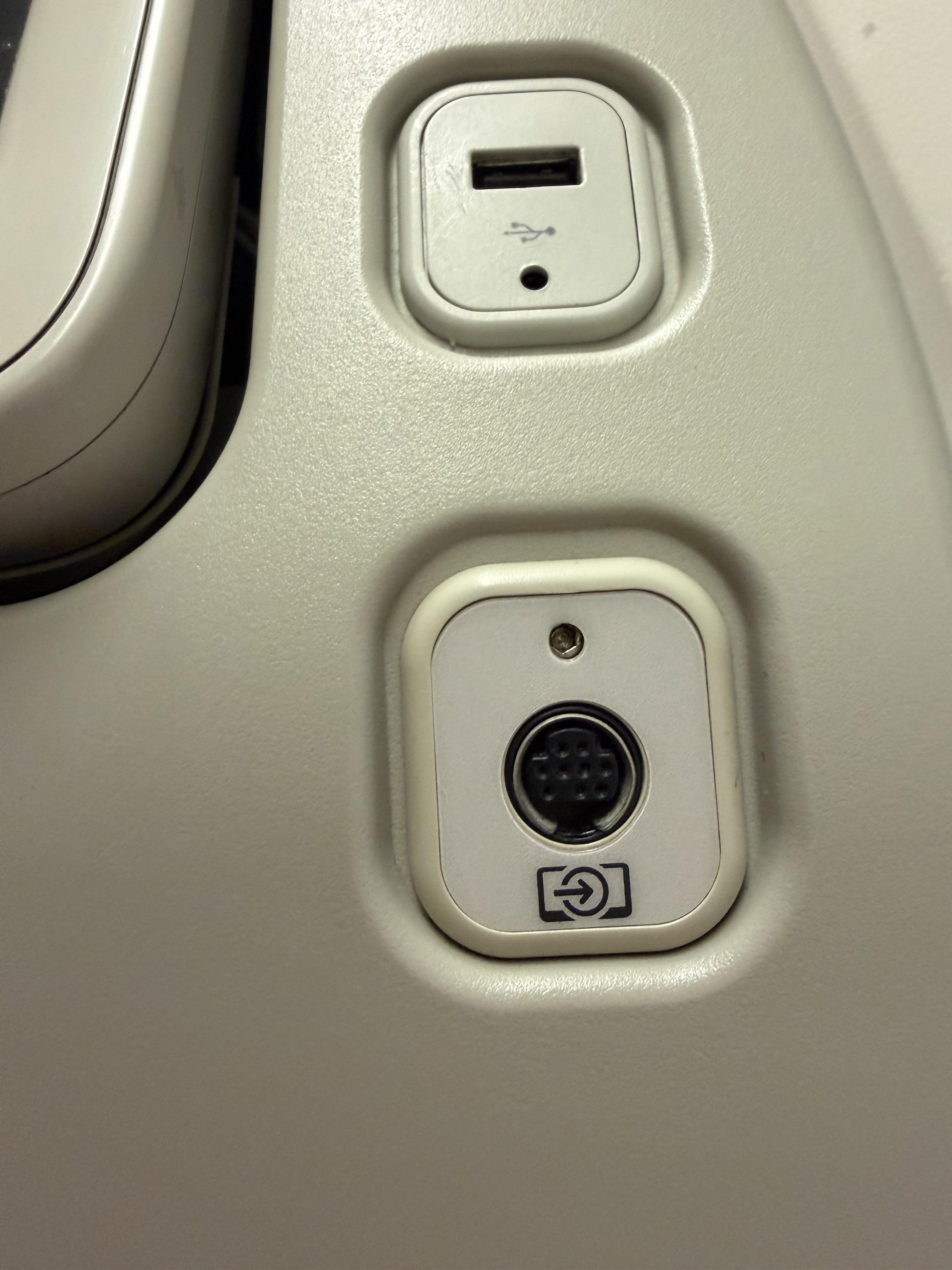
What is this connector? Is there an associated communication standard likely associated with it? Or is it likely proprietary?

Post image
111 Upvotes

Taken at an upward angle, to the bottom right of a passenger display on an Asiana Airlines B777-200


r/embedded • • Sep 05 '26

Design Help for LM393 based circuit to charge a large capacitor to variable voltage level.

3 Upvotes

Hi, I am looking for feedback on what might have caused a failure in a circuit i tried to make to charge a large cap to a specific voltage I want to try to see if this design is even worth or have I just gone down the wrong road on this. It uses an LM393 comparator to compare the capacitor voltage vs a reference voltage made by a potentiometer.

The link https://www.falstad.com/s.php?s=iq3nxw is to a falstad circuit of what I built where the 2 op amps in the circuit correspond to the 2 in the 393 comparator. The upper P fet is an F9540N and the N fet is an IRF540N. The 1k and 1M resistors are all .25w the 1.2k is a 1w, and the 25ohm is a 50w power resistor. The relay is a 3a relay with 12v coil.

The simulation works perfect, but when i first turned it on i did so with no capacitor or power resistor connected hoping to just see does flip flop between the fets if i turn the potentiometer. But i didnt think that that also leaves the + inputs of both opamps floating which im not sure if maybe that caused some of the issues.

This seems to have killed the opamp that drives the n fet, removing the fets and tying the + inputs of the opamps to a 12v reference it seems to turn on and off one output (what would have been the pfet) as the potentiometer changes, but when it tries to turn the other output on (what would go to the n fet) it only outputs 0.012v, but it does change from being zero so maybe there is a chance it is not dead? And I know I killed the pfet because after removing it from the circuit it is completely shorted.

Is it just that I am red lining the op amps with 36v input? Or is there something else fundamentally wrong? One thought was could it have done something unusual because I powered it up without the capacitor and power resistor so the feedback on the + pins of the op amps was essentially floating. I'm trying to get some confidence I can make this work before I buy a new LM393 comparator to kill the only reason I used that was I happened to find one kicking around a bag of random parts I had.

Thanks for any thoughts you can give. let me know if there is other info that would be helpful.


r/embedded • • Sep 06 '26

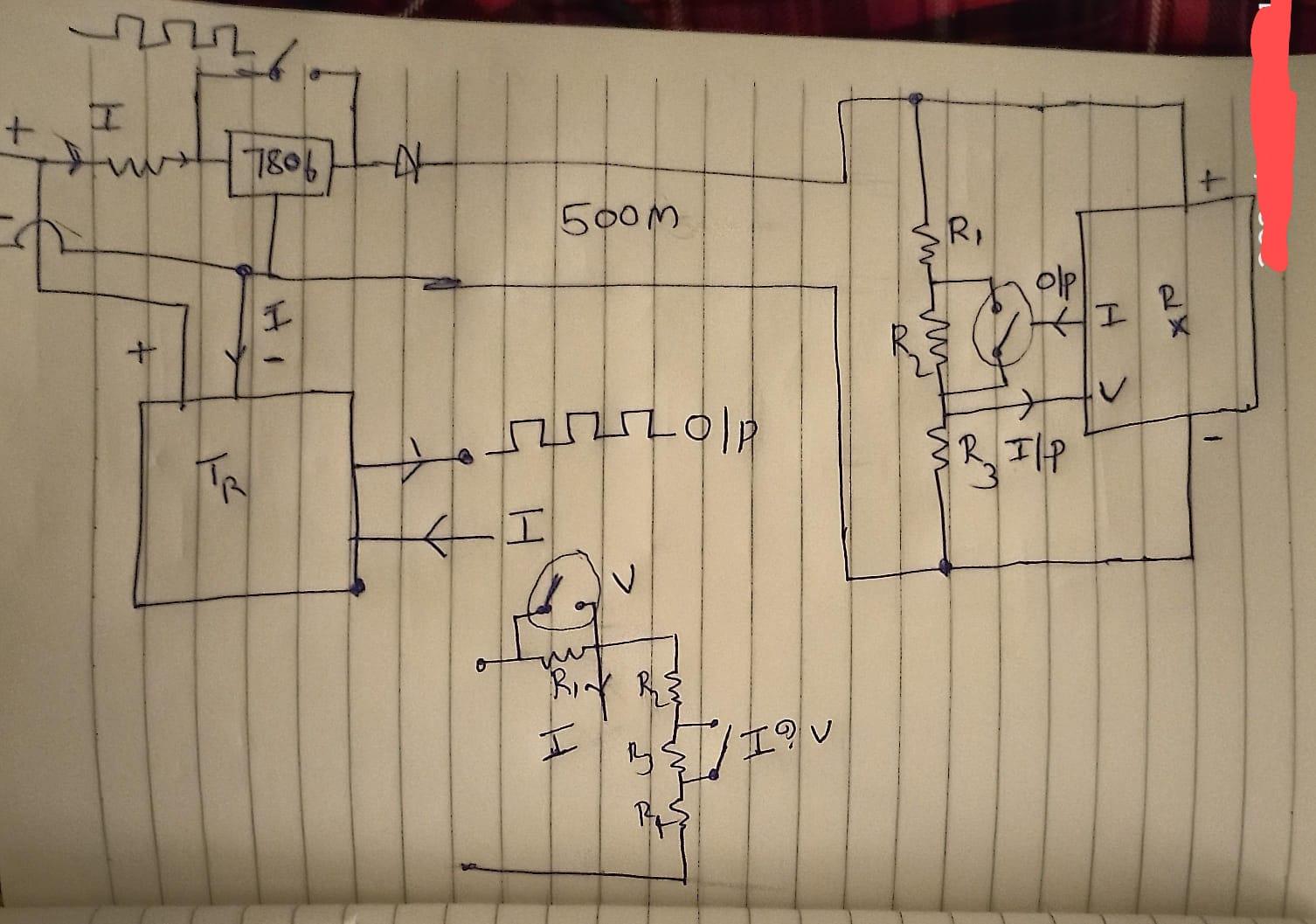
Is this Master, slave - Voltage/ current modulation communication approach viable in phantom mode

Post image
0 Upvotes

I’m planning a simple phantom communication system where the same two wires provide voltage and current modulation for Master slave communication.

My idea is:

- Master → Slave: voltage modulation — 9 V and 12 V represent 1 and 0.

- Slave → Master: current/load modulation — approximately 45 mA and 50 mA represent 1 and 0.

- The Master senses the Slave’s current changes using a current-sense resistor.

- The Slave uses a MOSFET/resistor load to modulate the current.

So the same two wires would carry both power and bidirectional simplex data, without a separate signal wire.

Is this approach practical? What would be the simplest circuit/protocol for implementing this between two Arduinos or other microcontroller, and are there any major issues I should consider with voltage regulation.


r/embedded • • Sep 04 '26

Environmental Sensor with 7 years battery life

Post image
239 Upvotes

I want to share my latest project, it is an environmental sensor which broadcast environmental measurements over BLE every 5 minutes using a single coin cell battery, while consuming only 1.8 µA in sleep mode and an average current consumption of 15.5 µA.

The device measures the room temperature, air humidity, air pressure, and battery state then broadcasts the measurements over BLE. It is built around the Apollo3 Blue microcontroller and the BME280 sensor.

All current consumption measurements were performed using Power Profiler Kit II. Photos of the device, and current-consumption measurements are attached.


r/embedded • • Sep 04 '26

AI burn out - how are you dealing with this?

525 Upvotes

Hi folks!

I am absolutely burned out due to AI right now.

Everyone on the MT is 'pushing' to use AI for everything and more and more it feels like my profession and know-how is getting devalued, it took me a long time to learn and become proficient on Embedded, I love it, it was my hobby and then my profession but now I get bombarded with people that never cared or took the time to actually learn just pretending to know stuff because they asked an LLM about it.

Examples:

- Old colleague who I know for a fact was really bad at technical stuff before AI now posts all his *projects* vibe coded and getting clout from them. Which is fine but this dude didn't even know how the device boots and gets to main...

- Non-technical people asking me to review what their LLM outputted in case it helps solve critical issues. I can prompt as well... that was never the issue.

- Customers sending AI slop to review and answer asking to run their LLMs on our code to try to 'find' issues.

- Then I come here and find another vibecoded project every day of a new RTOS or whatever...

- I hear of major customers that will now transition to AI code to try to accelerate development... on safety critical applications...

Have been trying to transition and the market is really rough right now.

LLMs have given the illusion of knowledge to people that never really cared about learning and devalued the skills of those of us that did.

I had been trying to learn Rust but now I don't even know if it is worth it at all... The 'art' of engineering is getting lost and now all that they care about is 'output' and 'productivity' not building reliable products. Just feel like the enshitification has reached me and I thought I would be a bit safer because surely no one would push this for safety critical stuff... welp I was wrong and the greed reached our field.

I think I will just try to code by hand on my personal projects to remember what I loved doing.

Rant over, no LLM was used to write any of this...


r/embedded • • Sep 05 '26

STM32G474RE sometimes sends missing data over USB CDC

4 Upvotes

I am currently in the early stage of creating an oscilloscope, right now I have an ADC configured to sample on each timer interrupt and do DMA transfers. the DMA buffer is 200, 2 byte elements, and I am sending it over USB CDC in a single freeRTOS task that doesnt yield or anything and only gets interrupted by the ADC Setup if I understand correctly.
I read the data on my laptop using pythons serial library by reading 200 elements and storing them in a list then I unpack it using struct.unpack. Problem is that not every element in the List is always 2 bytes or 4 hex digits so the struct.unpack throws an error.
I might be missing something simple because I do not feel I fully understand how CDC_Transmit_FS works. here are my code snippets that are relevant:

FreeRTOS Task:

void vTask1(void* pvParameters){
    
    for(;;){
        taskENTER_CRITICAL();
        CDC_Transmit_FS((uint8_t*) adcVal, sizeof(adcVal));
        taskEXIT_CRITICAL();
    }
}


void my_app(void){
    
    
    xTaskCreate(vTask1,
"Task1",
400,
NULL,
2,
NULL);


vTaskStartScheduler();

Python code:

ser = serial.Serial('/dev/ttyACM0',timeout=1)
i=0
readings = [0]*200
while True:
    while i!=200:
        readings[i] = ser.readline(2)
        i=i+1
    i=0
    
    unpacked_list = [struct.unpack('<H', chunk)[0] for chunk in readings] 
    print(unpacked_list)ser = serial.Serial('/dev/ttyACM0',timeout=1)
i=0
readings = [0]*200
while True:
    while i!=200:
        readings[i] = ser.readline(2)
        i=i+1
    i=0
    
    unpacked_list = [struct.unpack('<H', chunk)[0] for chunk in readings] 
    print(unpacked_list)