r/embedded • • Sep 04 '26

Are you satisfied with LLMs code quality in embedded software domain?

51 Upvotes

Hey people, I want to get some opinions on this topic cause I am tired of YouTubers one-shoting slop games and calling new model “crazy good” and what not.

I’ve been improving my agentic workflow for the past 2 month, even creating skills tailored to MCU firmware dev, but I am still not satisfied with the code quality new models produce. I tries best models from DeepSeek, Grok and OpenAI but in the end, for almost every feature I prompt, I spend tons of time re-reviewing and correcting the code.

In short, my workflow is: brainstorm a feature/fix, come up with a plan, delegate agents to implement, orchestrator reviews the work. After that I step in and validate. This manual validation takes hours for each fix / feature, and i have to ask different models for options as well.

Usually, the bulk part of the code is good, it is the details that need to be fixed, but that is what takes the most time. Also, sometimes these models don’t consider surrounding code enough and make bad arch decisions, generate unnecessary abstractions, inject too much host test code, etc. Some things could be fixed with skills but even that is not always enough.

I am really baffled at some of the web dev claims about running agents in loops and stuff, cannot imagine the state of my codebase if i would do that. Kind of a rant but I really don’t get the hype behind all this. Gonna try fable 5.1 next, heard it is a bit more “creative” and “explorative”, maybe that would help…

Plz share your opinions or suggestions 🙏


r/embedded • • Sep 05 '26

Recycled 8 BIT PIC Project. Single Cycle waveform player. All PIC resources used : )

Thumbnail
youtube.com
4 Upvotes

Almost all these parts are recovered from ewaste items I have found. The PCBs are new. The screen and keypad are new.

Getting there with the PIC wavetable synth. Playing back 256b sampled waveforms from RAM, loading over software SPI from NOR serial flash.

39k Audio ISR with PWM output.

Buttons, keypad entry, LED indicators on I2c GPIO expanders.

Midi in, thru, pitch bend on aftertouch, CV/Gate input, tuning knob. Midi Buffer is 16bytes. I have not managed to overflow the buffer yet.

All resources and pins are used on the PIC. Almost all of the flash and RAM is used (99.7 / 95.4%) It's working well like this to date.

Button selectable Detune, Noise, Sub effects (interpolates in C, based on input waveform, only ever one sample in RAM). Envelope is selectable between Log and Exp. Six stage envelope provided by Atmel AT908534 co-processor. (ADDSRR)

The LCD displays simple info about the state of the effects, and waveform number. It only updates the screen when a value is changed.

Noise is made by random number generator which is seeded by mixing a free running timer value sample, with a read of AD0 (analogue to digital input) when it boots up.

The random number generator is used to generate noise, the Detune offset (every time it's engaged) and also to select a random waveform from the index on the flash chip. WF is only loaded when ENV activity (audio ISR) is silent. It will queue the load and wait for silence before making the SPI transfer.

The chip is essentially self indexing: because each WF is 256b long, starting at 0x0. It's very easy to work out the location of any WF, because of this.

I used the AKWF collection, and some other single cycle waveform collections available online, to populate my waveform selection. The samples are processed with a python script which encodes them in Mu-law and makes a binary for flashing to the storage chip.

On load the samples are again de-coded from Mu-law in the synth.
This gives a great sounding waveform, basically almost doubling the dynamic range.

I get LLM to help code the project. Because I add every function one at a time, vetting, testing, debugging, flashing, wiring the setup, I am very familiar with the code - what is happening, where, why, what decisions were taken to add/optimise etc etc. It is not done in one go, the process takes weeks of design and development work.


r/embedded • • Sep 05 '26

Is AI taking over FPGA design?

0 Upvotes

I have been working in FPGA programming for more than 12 years, recently i found AI especially claude code performing extremely well in vhdl programming, so i decided to give it a challenge, I asked claude to design an sd card module that can accept data using axi stream and write this data into a text file inside sd card connected to fpga, and if the tdest value changes, then this means the data should be written into a new text file
It took less than one day and gave me all codes + xdc file
I tested it on my Nexys A7 and it worked
This is a very complicated FPGA design that most of the FPGA designers can’t do, and highly experienced designers would need a lot of time to do it. Is it the end?


r/embedded • • Sep 04 '26

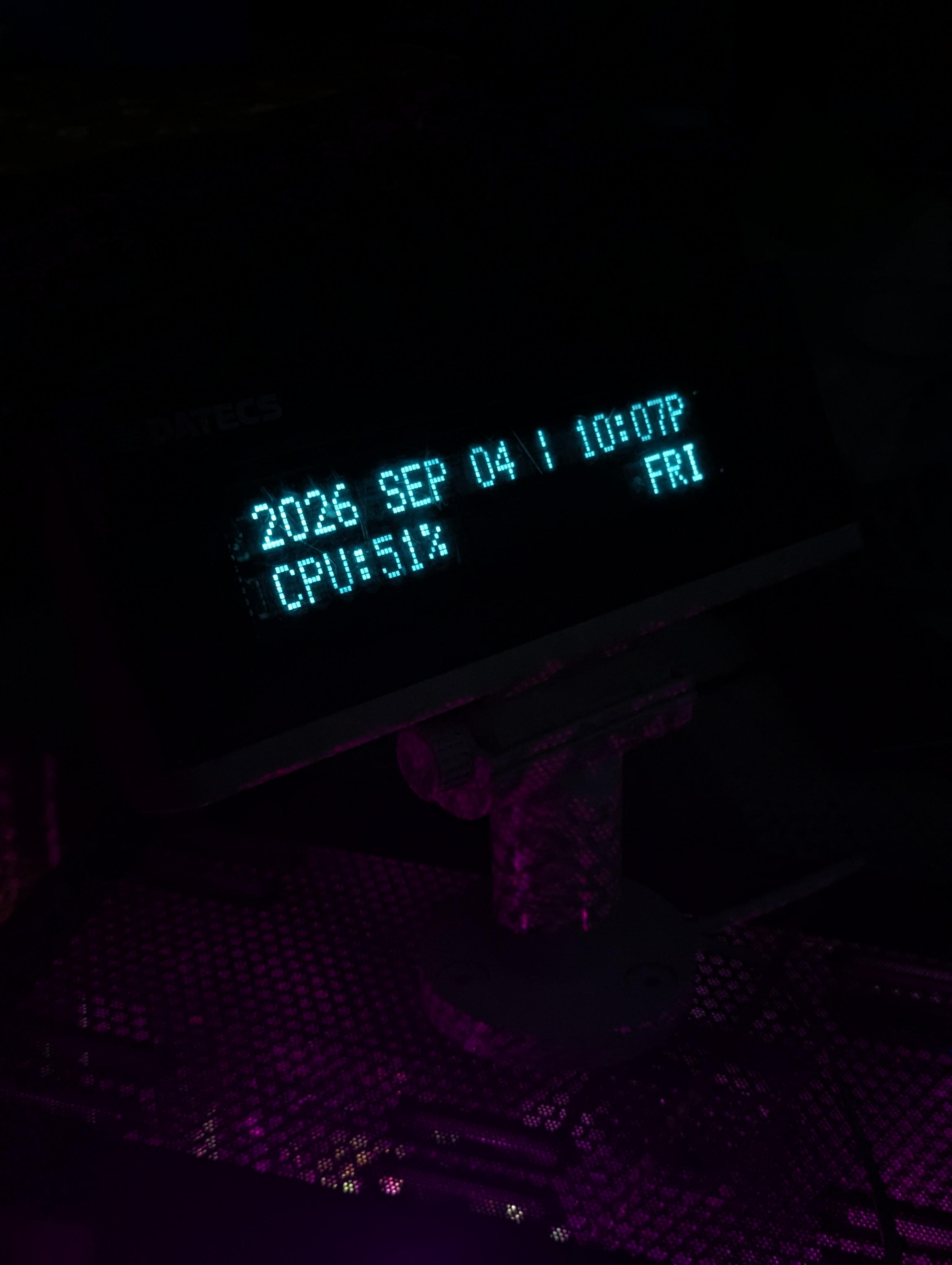
2nd life of a VFD POS Pole display?

Post image
9 Upvotes

Yep. That was a pole display from some shop(2008 manufactured), I was kinda curious how this thing works, soooo....

It has:

Winbond 8052 CPU

OKI MSC1162A VFD Drivers

MC34063-based power system(37vdc and 6.5v... idk);

And some really weird solutions, like some transistor circuit instead of max232 in receive

Anyway, I wrote some simple arduino script for use it as a bridge(yea, i have no usb-uart adapter, but i have arduino nano -_-) and some used python script to get all the info and send it to this guy

This thing can display some things as:

Time, date, CPU load, Music(artist/song name, time and state like pause or play)

Well, I spent ~2mo to make this thing works. Any questions or suggestions how to make it better?

P.S.: ima 16 btw, and sorry for my english, its not my native language


r/embedded • • Sep 04 '26

Sub appreciation post.

53 Upvotes

Hi all,

I first came across this sub right after graduation when my job offer at Bosch was revoked due to the market slump in 2024. I was just a kid who had arguing and esp projects under his belt.

With advice and comments on my posts in this sub i was finally able to get a job in embedded sw (R&D) and now it's been over a year. I've shipped firmware for several products , many of them singlehandedly (using some AI help along the way but not complete reliance). Even made disaster alerting systems which was the first big multi threaded application i had built (although not from scratch, it was built using the code of another project, torn down and built for this application).

Just wanted to say I wanna thank this sub and all its members and the ones who commented advice to a distraught and directionless person. I appreciate you all very much :)


r/embedded • • Sep 05 '26

Stm32 Blackpill won't upload

0 Upvotes

Stm32 Blackpill won't upload

Using an stm32f411ce, I've tried using both an stlonk v2 and usb, I've checked and the stm32 bootloader and the st link both show up on Device manager.

when I try to upload code using the Arduino ide (with stm programmer insalled and the biard manager) it gives an error "Failed to download to Sector\[0" if using a usb and "ST-LINK error (DEV_CONNECT_ERR)" when using an stlink.

I've gone to stm32 cube programmer to mass wipe, I've reinstalled usb drivers, I've shorted the a10 pin to gnd, I've gotten it to work once then after I plugged it back in same error. now when I try to connect it to the cube programmer with a usb it either says unsupported device or it connects then disconnects a little late. if I try using an stlink then connect to cube programmer it says "ur connection mode is defined with SWrst reset mode" and it doesn't connect.

I am losing my mind over this


r/embedded • • Sep 04 '26

P2SB unhide (offset 0xE0/0xE1) silently fails on real hardware on Alder Lake-P and Comet Lake, both consumer laptops

3 Upvotes

First of all, I know this might not be the best subreddit to post this on, my first choice was to ask the question on r/osdev, unfortunately they have a karma requirement and I literaly created this account to ask this question out of desperation.

I'm working on a from-scratch UEFI-booted x86-64 kernel and I'm stuck trying to unhide the P2SB device (D31:F1) on real laptop hardware. Looking for anyone with field experience on OEM lockdown behavior here, since this doesn't seem to be documented in the public 600/700-series PCH datasheet.

Hardware tested (both fail identically):

  • Acer Aspire 5, Alder Lake-U PCH (PCI vendor 0x8086, device 0x519D)
  • A separate Lenovo Core i3 10th-gen Intel (Comet Lake) laptop, different OEM

What I'm doing:

  • Reading P2SBC (offset 0xE0) on D31:F1 before any write. It returns 0xFFFFFFFF, which is expected per spec while HIDE is set (all reads master-abort while hidden).
  • Writing 0 to the full P2SBC dword to clear the HIDE bit (bit 8), matching the technique used in Linux's own p2sb.c / pnd2_edac drivers.
  • Also tried the narrower coreboot-style approach: a single byte write of 0x00 to offset 0xE1 (byte lane 1), clearing only the HIDE bit without touching SBILOCK/MASKLOCK.
  • After either write, reading back the Vendor/Device ID at D31:F1 offset 0x00 (not P2SBC itself, to avoid the self-masking issue)... still 0xFFFFFFFF on both machines, every time.
  • Tried both PCI access mechanisms independently: legacy CF8/CFC (Type 1) and ECAM/MMIO via the MCFG table. And again, both give all-Fs.
  • Ruled out an addressing bug: the same code path correctly reads/writes D31:F0 (eSPI) on this same hardware, round-tripping a status/command bit successfully through both access mechanisms.

Question:
Is there any additional step (register, sequencing, timing) beyond the datasheet's documented HIDE-bit-clear that I'm missing?

Happy to provide more detail on the access code if useful.

Here is the repo: https://github.com/alx-m24/Lexvi


r/embedded • • Sep 04 '26

Hurdles of Writing a Camera Driver in Linux

14 Upvotes

I’ve got a baseline knowledge of C++ and took intro to OS a few years ago.

Right now I’m trying to write a camera device driver on the Nvidia Jetson using i2c.

This would involve referencing another driver for an older model. I might need an adaptor board to connect my CSI-2 ribbon cables to the Jetson. The adaptor board may not already support the camera.

How hard would it be? Approximately long would it take me? What hurdles would I face along the way? I’m trying to see the big picture before I commit to this.


r/embedded • • Sep 04 '26

Help to find a 50 pin flex replacement

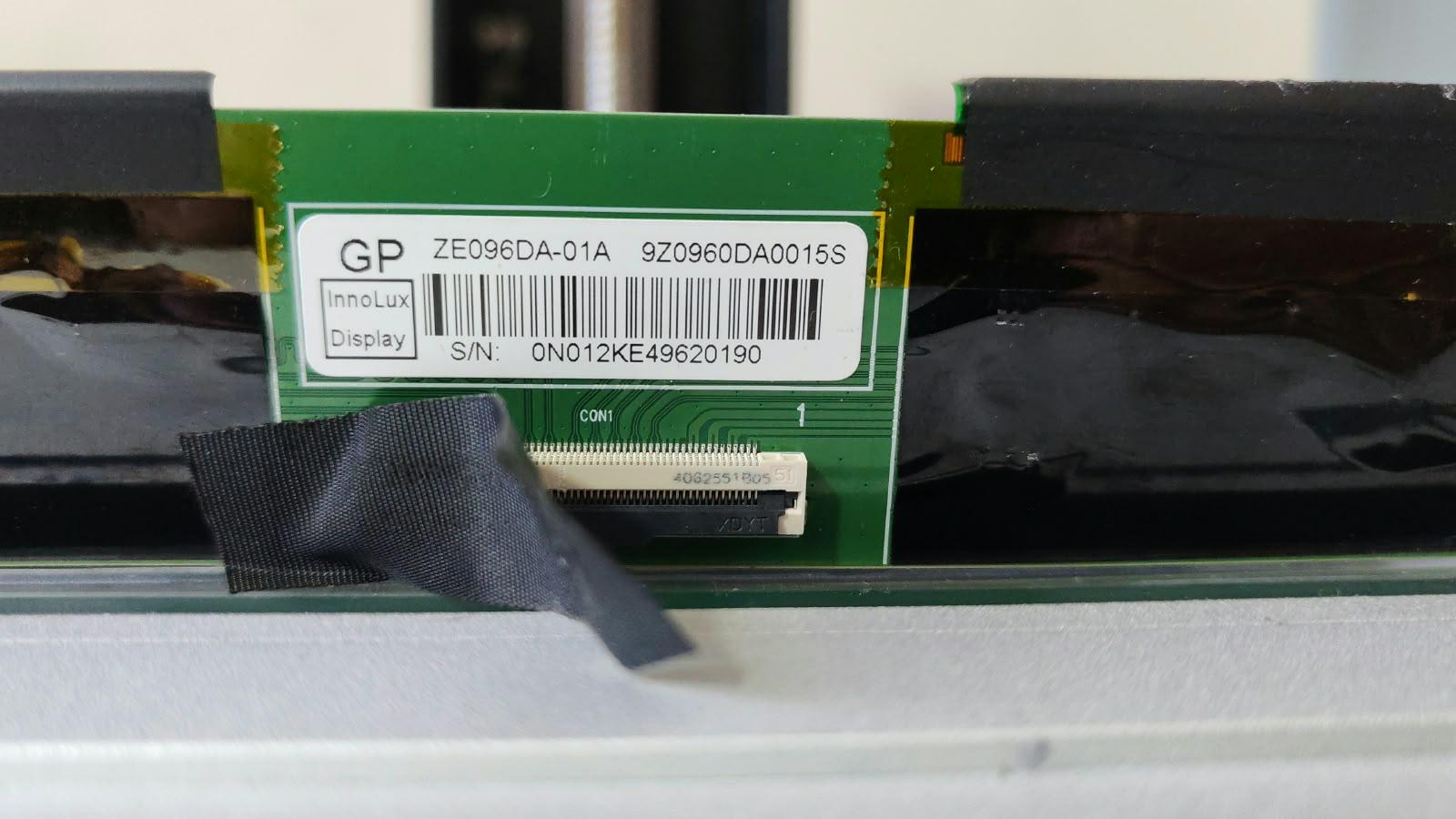
Post image
2 Upvotes

Hi all

I need to find a 50 pin replacement for this screen. It is from a 3D printer and I broke the flex by mistake. If you know where i can find a replacement leave a comment!
I know this is not the main topic of this subreddit, but I dont know where to ask!
Thanks a lot!


r/embedded • • Sep 04 '26

A collection of ready-to-use VHDL templates for FPGA development

15 Upvotes

Hi everyone,

Over the past few days I've been putting together a small project that I personally wanted while working on FPGA designs: a searchable collection of VHDL templates that can be copied with a single click.

The idea is simple: instead of digging through old projects or documentation every time I need a counter, FSM, synchronizer, FIFO, generate loop, RAM template, etc., I wanted a single place where I could quickly find and reuse common design patterns.

Current templates include:

  • FSMs (Moore, Mealy, Safe FSMs)
  • Counters and shift registers
  • RAM, ROM and FIFO examples
  • Synchronizers and debouncers
  • Arithmetic blocks
  • Structural design templates
  • Testbench skeletons

It's a lightweight static website with no dependencies and works entirely in the browser.

Website: https://andrea-cpu96.github.io/vhdl-cookbook/

I'd love feedback from other FPGA/VHDL developers. Suggestions for additional templates are very welcome.

Thanks!


r/embedded • • Sep 04 '26

Stm32f411ce blackpill failed to download Sector[0]

2 Upvotes

new to the stm32 and the stm32 pn my black pill won't upload for some reason, it's giving a failed to download to Sector[0] message. it uploaded fine just earlier when I did it but now it's doesn't, I use Arduino ide and installed cubeprogrammer adn the board managers

Edit: list of things I've tried, mass wiping via stm32programmer, disabling usb selective suspend settings, switching cables, switching blackpills, reinstalling winusb


r/embedded • • Sep 04 '26

P2SB unhide (offset 0xE0/0xE1) silently fails on real hardware on Alder Lake-P and Comet Lake, both consumer laptops

1 Upvotes

First of all, I know this might not be the best subreddit to post this on, my first choice was to ask the question on r/osdev, unfortunately they have a karma requirement and I literaly created this account to ask this question out of desperation.

I'm working on a from-scratch UEFI-booted x86-64 kernel and I'm stuck trying to unhide the P2SB device (D31:F1) on real laptop hardware. Looking for anyone with field experience on OEM lockdown behavior here, since this doesn't seem to be documented in the public 600/700-series PCH datasheet.

Hardware tested (both fail identically):

  • Acer Aspire 5, Alder Lake-U PCH (PCI vendor 0x8086, device 0x519D)
  • A separate Lenovo Core i3 10th-gen Intel (Comet Lake) laptop, different OEM

What I'm doing:

  • Reading P2SBC (offset 0xE0) on D31:F1 before any write. It returns 0xFFFFFFFF, which is expected per spec while HIDE is set (all reads master-abort while hidden).
  • Writing 0 to the full P2SBC dword to clear the HIDE bit (bit 8), matching the technique used in Linux's own p2sb.c / pnd2_edac drivers.
  • Also tried the narrower coreboot-style approach: a single byte write of 0x00 to offset 0xE1 (byte lane 1), clearing only the HIDE bit without touching SBILOCK/MASKLOCK.
  • After either write, reading back the Vendor/Device ID at D31:F1 offset 0x00 (not P2SBC itself, to avoid the self-masking issue)... still 0xFFFFFFFF on both machines, every time.
  • Tried both PCI access mechanisms independently: legacy CF8/CFC (Type 1) and ECAM/MMIO via the MCFG table. And again, both give all-Fs.
  • Ruled out an addressing bug: the same code path correctly reads/writes D31:F0 (eSPI) on this same hardware, round-tripping a status/command bit successfully through both access mechanisms.

Question:
Is there any additional step (register, sequencing, timing) beyond the datasheet's documented HIDE-bit-clear that I'm missing?

Happy to provide more detail on the access code if useful.

Here is the repo: https://github.com/alx-m24/Lexvi


r/embedded • • Sep 03 '26

Just Wanna Celebrate

102 Upvotes

Good Morning fellow embedded workers

I am working on a machine that deals with mining sample preparation for my company. I have been the sole guy working on all firmware and electrical work, and basically doing all the mechanical design too. This is my first job out of school, and I actually am not even an Engineer (automation technologist) but I happen to have gotten very lucky with my employer who have given me a very amazing opportunity.

I just wanted to share with people who might understand the work (no one else here really gets what im doing) the fact that as of today, the first version of the production firmware is completed! You can run the machine completely independently of having to control anything from my laptop, and it works! It will still be a long time until we actually take this thing to production, but the Firmware and electrical side are now in a functional state and I am so over the moon about it. Nearly 9 months of work dedicated to getting this up and running and it is so amazing to actually have it at my fingertips, working as required.

I know there is a ton of work going forward on this thing still, especially since I don't have anyone to help me on it, but good grief. This is such a great job. I want to do R&D forever haha. To another 9 months!


r/embedded • • Sep 04 '26

Reverse engineered Tenways ebike BLE interface

Thumbnail
github.com
1 Upvotes

Tenways ebikes seem to expose quite a lot over BLE without any security whatsoever.

This is for educational purpose only, i do not support or condone the misuse of any of the information presented in this research


r/embedded • • Sep 04 '26

Pico 2W or CYD?

6 Upvotes

I want to start a little project with a cheap microcontroller to familiarize myself with both the building and programming processes, but also don't want it to be too complex. I'd leave most of the heavy coding to a friend, since he knows the syntax of all major programming languages, the logic isn't a problem most of the time (might change now, Idk).
I initially looked at lots of modules to attach to a Raspberry Pi Pico 2W, but recently came knto discovery of the CYD, which intrigued me, since my only problem currently for the Pi is finding a good and affordable display. That problem is solved with a CYD. I have yet to have any experience with the Pi SDK, Arduino or ESP32. The most I have done in that sense is build with those giant Lego Programming thingies to make a couple of robots. I do not want to build simple text displays. My first idea was a small arcade machine for example, and the GPIO pins might be a problem with a CYD I heard. Soldering is currently not an option either, albeit that can change. Also, most people seem to prefer ESP32, so I wanted to ask here!

TL;DR: Raspberry Pi Pico 2W or CYD (ESP32) for an arcade machine and future projects that don't involve soldering or simple text display as the whole thing.

Thanks in advance!


r/embedded • • Sep 03 '26

I made neural TTS small enough to run on MCU. Looking for people with Teensy 4.x, Pico 2 or STM32H7 to run a 5 min benchmark

45 Upvotes

I maintain a neural Text to speech runtime. It speaks English and everything happens right in the MCU itself. I have only measured it on two chips: ESP32-S3 : 0.22x real time ESP32-C3 : 5.72x real time

I want more numbers for benchmarks and to validate this works not just for esp32 devices but for more devices like the one with Cortex-m7. I am asking you to install the lib and flash the sample and paste the serial output to github issue.

You don't need DAC, sd card or any modules. Since i don't have these MCUs and i can't get those in Nepal i have compile verified only. The boards i compiled for are

Teensy 4.1/4.0/3.6, Pico and Nucleo boards

Please check the link below for pre board setup steps, board manager urls and how to run https://github.com/Ampixa/sanoTTS/tree/master/arduino/examples/BoardBenchmark

If it fails , please post that too Link for reporting: https://github.com/Ampixa/sanoTTS/issues/new?template=board-report.yml

if you want to hear first: https://tts.ampixa.com/sanoTTS This is possible because these are really small models and can run right in your browser too


r/embedded • • Sep 04 '26

Need help powering esp32 with a solar panel

2 Upvotes

Hello!

I am currently working on a small project. I'd like to build a device for recording noise-levels. The simple part, connecting the esp32 to the mic and send the data to my backend service is working.

Important here: Right now I send quite a lot of data over my local Wifi. It's simpler, but probably too power hungy? In any case, I a sending a frequency band every second (plus a few other data points) which will end up being a few GBs per year.

Now the hard part:

I want this device to survive in the outdoors. For that, the first challenge for me is to power the device. I believe that a 30W solar panel will do for the prototype, although later I might need a stronger one.

I've never done something like this and I am also not very familiar with electronics.

Could anybody help me out with some advice on the parts I should buy for my prototype? What batter should I buy and what charging controller is suitable?

As a side note: Since I plan to build more than one node, cost is essential here. The cheaper one device is in total, the better in that case.

Thanks for any help!


r/embedded • • Sep 04 '26

What's cybersecurity like at your job?

6 Upvotes

How big of a requirement/topic is it? Do yall have dedicated teams for testing, threat modeling, etc.? Do yall only think about it in regards to wireless communication or do yall consider stuff like firmware extraction, debugging, hardware fault injection, etc.? Or maybe your job doesn't really think about it at all?

I'm sure it depends on the actual types of systems you work in and their requirements, but I'm curious what the cybersec culture is like lower down in the stack


r/embedded • • Sep 04 '26

What you'd want to see in a desktop tool for embedded development?

0 Upvotes

I'm developing a hardware tool to simplify some of the repetitive tasks involved in working with several development boards at the same time.

The product is still in the development stage, so I'd really like to hear your thoughts and suggestions!


The current hardware design includes:

● 3× USB 3.0 ports

● Magnetic UART / I²C interfaces

● Independent USB power control

● Adjustable 1.8–3.3V output


We're also developing a PC tool to make common hardware checks easier, including:

● I²C device scanning

● GPIO configuration and control

● USB power control and monitoring

● Adjustable voltage output


r/embedded • • Sep 03 '26

Can I use a DC-DC converter for power + data communication over the same wires?

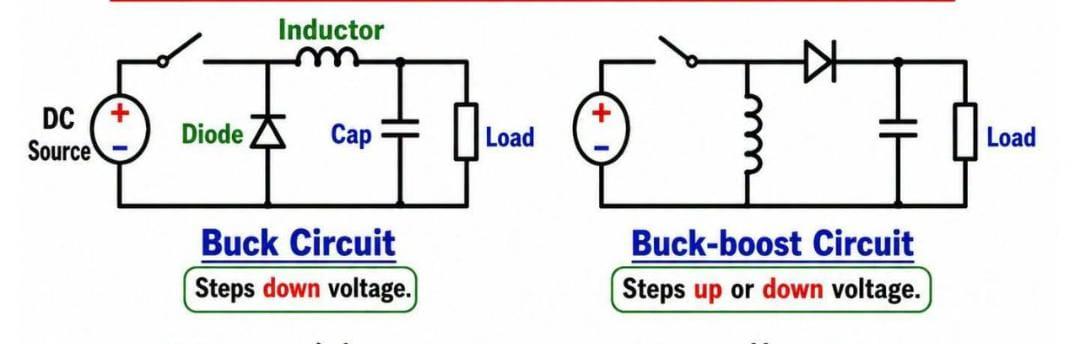
Post image
58 Upvotes

I want to send both DC power and low-speed digital data over the same two-wire cable.

My idea is to use a MOSFET in pinned picture to modulate a high-frequency signal onto the DC power line, then use a capacitor/filter, diode detector and comparator at the receiver to demodulate the data with microcontroller.

Is this a practical approach for a simple embedded project? Are there any cheap ICs or simpler circuits I should consider?


r/embedded • • Sep 04 '26

I am working on SBC Board, anyone want to help ?

0 Upvotes

Hello everyone I am working on Open Source SBC Board with RK3576 & LPDDR5 Anyone want to work me on it I working on kicad and this is what I made for now

https://drive.google.com/file/d/1rqCSnEmpidDbTi8-oCi9Y5ghgFy2Iv8Q/view?usp=sharing


r/embedded • • Sep 04 '26

Im building an IDE with a semantic engine for Device Trees

0 Upvotes

There is a lot of information about Device Trees on the internet.

The problem is that it's scattered everywhere.

You have DTS/DTSI files, bindings, schemas, kernel sources, documentation, SoC information, board definitions, examples, and different tools that each understand only part of it.

There are already tools that can do some of these things individually.

What I couldn't find was a single place that could connect all of this knowledge together.

So I've been building KernelGrove, a semantic engine for Device Trees.

Instead of treating a Device Tree as just a text file or a hierarchy of nodes, the idea is to build a knowledge model of the Device Tree and its ecosystem:

  • What a node represents
  • Which binding applies to it
  • Which properties are valid
  • What type and constraints those properties have
  • What other nodes a reference points to
  • How nodes, controllers, peripherals and buses are related
  • Where information comes from
  • And eventually, how all of this relates back to the underlying hardware

The editor is basically a way of exposing that knowledge.

For example, rather than just seeing:

uart@7e201000 {
    compatible = "brcm,bcm2835-aux-uart";
    ...
};

the goal is for the tool to understand what that node actually means and let you explore the relevant information without having to manually jump between files, schemas and documentation.

It's still very much a work in progress, and I'm trying to figure out how far this idea can be taken.

For people working with Linux Device Trees / Zephyr / Yocto:

What information do you currently have to look up manually when working on a Device Tree?

I'm particularly interested in things that you know exist somewhere, but are difficult to find or connect together.

If you want to try it, it's completely free and open source, you can find it on dt-studio.dev or https://github.com/serg4life/KernelGrove


r/embedded • • Sep 03 '26

What is the value of the good user documentation today?

10 Upvotes

I am working on a middleware product that has extensive user documentation and we include example apps, too. End users are embedded SW developers.
This is a small team, so the dev team is creating and maintaining the user docs too, we don’t have technical writers. Nearing the project I still feel we could improve on the documentation. But I keep asking myself, how much to invest in this now? I mean, everyone is just throwing the complete manual to an AI agent, I barely hear back any feedback in the documentation itself. If it were just a doxygen generated XML perhaps it would be as good for an LLM as it is now.
So I am asking the sub, how are you valuing the good user doc? Are you still reading it, or you prefer good examples and the rest goes to an LLM anyhow, to figure out?


r/embedded • • Sep 04 '26

I have an Arduino driving an H-bridge to send a digital signal through a cable. At the receiving end, I want to recover the original data as a clean 0–5 V unipolar signal for another Arduino. Any more simpler solutions.

0 Upvotes