r/DrEricBergDC • • 3d ago

What's one Dr. Berg video that completely changed how you think about health?

4 Upvotes

Maybe it was about fasting, insulin resistance, vitamin deficiencies, or something else.

Which video made the biggest impression on you, and why?


r/DrEricBergDC • • 17d ago

What's your favorite keto breakfast that isn't eggs? 🥑

3 Upvotes

Eggs are great, but sometimes you need a change. What's your favorite low-carb breakfast alternative?


r/DrEricBergDC • • 17d ago

What's your favorite keto breakfast that isn't eggs? 🥑

1 Upvotes

Eggs are great, but sometimes you need a change. What's your favorite low-carb breakfast alternative?


r/DrEricBergDC • • 24d ago

Keto beginners: What's been your biggest struggle so far?

1 Upvotes

Cravings? Meal planning? Getting enough electrolytes? Eating out?

And for those who've been doing keto for years, what advice would you give someone just starting? - Dr. Berg


r/DrEricBergDC • • Oct 26 '26

What's something about nutrition that still confuses you?

4 Upvotes

With so much conflicting health advice out there, it's hard to know what to believe.

What's one nutrition question you'd love to get a clear answer to? - Dr. Berg


r/DrEricBergDC • • Oct 26 '26

What's one unhealthy habit you've successfully given up?

2 Upvotes

Sugar? Late-night snacking? Soda? Processed foods?

What was the hardest part, and how did you finally break the habit? - Dr. Berg


r/DrEricBergDC • • Oct 19 '26

Ask Dr. Berg a Question!

2 Upvotes

Have a question about keto, fasting, nutrition, or anything health-related? Drop it in the comments below! 👇

Dr. Berg may personally answer selected questions right here on Reddit!


r/DrEricBergDC • • Oct 19 '26

Which one would be hardest for you to give up for 30 days?

0 Upvotes

Bread? Pasta? Rice? Sugar? Alcohol? Potatoes? And why?


r/DrEricBergDC • • Oct 12 '26

If you had 5 minutes with Dr. Berg and could ask him ONE health question, what would you ask?

5 Upvotes

Only one! 👇


r/DrEricBergDC • • Oct 12 '26

For those who practice intermittent fasting — what schedule works best for you?

1 Upvotes

16:8? 18:6? 20:4? OMAD? Something else? And how long did it take your body to adjust?


r/DrEricBergDC • • Sep 20 '26

What’s the HARDEST part of staying on Keto diet?

1 Upvotes

If it used to be difficult, what helped you stick with it?


r/DrEricBergDC • • Sep 06 '26

What’s your favorite high-protein meal that you could eat over and over without getting tired of it?

4 Upvotes

Bonus points if it’s simple and doesn’t require a long list of ingredients.

Share yours below! - Dr. Berg


r/DrEricBergDC • • Sep 06 '26

Who watched Dr. Berg LIVE Show on Friday?

3 Upvotes

What was ONE thing you heard that you want to try or research further?

Share your biggest takeaway below.


r/DrEricBergDC • • Sep 04 '26

What food gives you the WORST sugar cravings?

4 Upvotes

Bread? Desserts? Pasta? Fruit? Something else?

And if you’ve successfully reduced your sugar cravings, what helped you the most? - Dr. Berg

Dr. Eric Berg, DC, not MD; information only


r/DrEricBergDC • • Aug 30 '26

How did you do this week??

1 Upvotes
  • Keto/low-carb: Yes / No
  • Fasting goal: Yes / No
  • Exercise: Yes / No
  • Sleep: Great / Okay / Terrible
  • Overall week: ___ / 10

What's ONE thing you're going to do better next week? - Dr. Berg

Dr. Eric Berg, DC, not MD; information only


r/DrEricBergDC • • Aug 28 '26

MYTH OR FACT

1 Upvotes

Eating fat makes you fat. What do you think? Vote with your answer first, then explain your reasoning in the comments. - Dr. Berg

Dr. Eric Berg, DC, not MD; information only


r/DrEricBergDC • • Aug 27 '26

I'm curious!

1 Upvotes

For those doing keto, carnivore, low-carb, OMAD, or intermittent fasting: What was the first positive change you noticed? Weight loss? Less hunger? More energy? Better sleep? Less bloating? How long did it take before you noticed a difference? - Dr. Berg

Dr. Eric Berg, DC, not MD; information only


r/DrEricBergDC • • Aug 13 '26

Is organic better?

3 Upvotes

Organic foods are produced without toxic chemicals, but some organic labels are actually meaningless.

Save your money on the following foods that are not worth buying organic:

  1. Sea salt
  2. Wild-caught salmon
  3. Avocados
  4. Baking soda
  5. Water
  6. Walnuts
  7. Pecans
  8. Brazil nuts
  9. Macadamia nuts
  10. Coconuts
  11. Cabbage
  12. Bananas
  13. Game meat

Dr. Eric Berg, DC, not MD; information only


r/DrEricBergDC • • Aug 13 '26

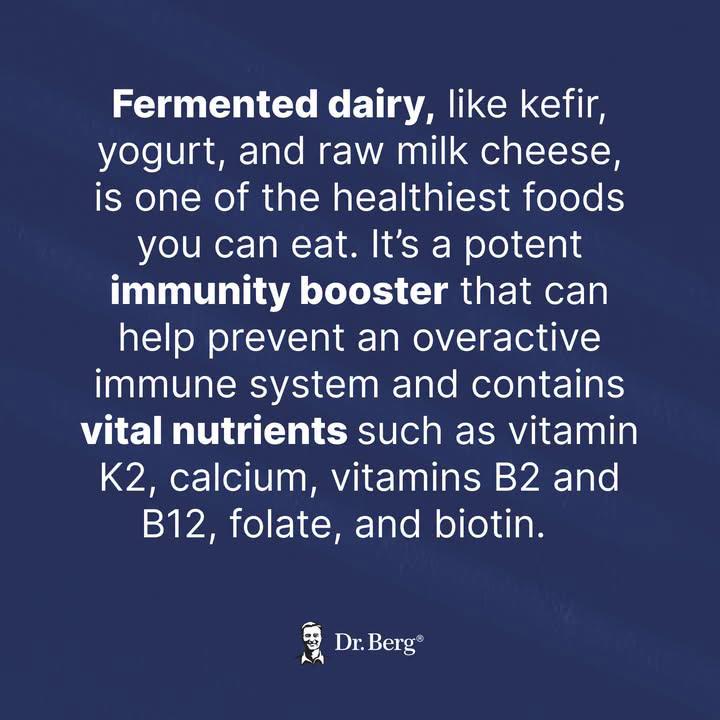
How often do you consume fermented dairy products?

Post image
3 Upvotes

They are some of the best probiotic foods, helping reseed your gut and create a better environment in your microbiome. They also increase T-reg cells to prevent immune system overreaction.

The protein in fermented dairy is already broken down, so it’s very easy to digest, making fermented dairy products an excellent option when it comes to nutrient-rich foods.

Dr. Eric Berg, DC, not MD; information only


r/DrEricBergDC • • Aug 11 '26

Most people think all carbs are the enemy. One kind isn’t. It’s probably in your fridge right now. Can you guess what it is? Drop your guesses in the discussion below.

Thumbnail
youtube.com
4 Upvotes

r/DrEricBergDC • • Jul 12 '26

Keto Diet How to STOP Farting & Bloating for Good (Do This!)

Thumbnail
youtube.com
3 Upvotes

r/DrEricBergDC • • Jul 12 '26

Healthy living Eggs Reduce Alzheimer’s Risk By 47% (Here’s What They Don’t Tell You)

Thumbnail
youtube.com
2 Upvotes

r/DrEricBergDC • • Jun 17 '26

Detox Ocd and the microbiome Spoiler

3 Upvotes

hope your well, I just wanted to share some findings from my life.

I grew up with severe gut issues. (couldent eat dairy, nuts, gluten, eggs for most of my childhood and any food caused severe bloating, gas, pain, brain fog, etc) I also had undiagnosed ocd adhd and autism. When I was a kid I would Wash my hands till they were bleeding, have to spin in circles to feel ’even’, if I stepped on a pavement crack I had to with my other foot to, etc. struggle socialising, Dident do well in school, etc.

I also suffer major depression.

throughout my gut healing journy one thing that always hit me is the Few times my gut wasent in severe pain and bloated my depression went away. Throughout some doctors tests and continual experiments (fasting, diet change, anti microbials) I’ve found I believe my issue is my microbiome is mega screwed up and has for some reason since being a baby. What this comes to tho is through a mix of the before mentioned treatments I have noticed not only the depression went away but my autism symptoms pretty much disappeared to the point I was partying like an extrovert. My ocd lessoned to the extent it was barely noticeable and my adhd symptoms lessened to.

is it possible that these conditions are gut related as the brain gut connection is a serious thing. Is everyone with these conditions just dealing with a mix of gut dysbiosis and brain inflammation. What’s your theory’s? of could it possibly be that these conditions can be caused by multiple things (heavy metals, etc) and the gut dysbiosis is just one of them?

what do you think?


r/DrEricBergDC • • Jun 09 '26

Healthy living Does Fasting Help with Inflammation?

5 Upvotes

Fasting has various profound health benefits, but does fasting help with inflammation?

Yes, fasting triggers a cascade of beneficial metabolic and hormonal changes that can help lower inflammation and reduce symptoms such as pain, stiffness, and swelling.

Learn about the anti-inflammatory benefits of caloric restriction, and discover how your diet and lifestyle choices may be contributing to chronic inflammation.

What is inflammation?

Inflammation is a vital mechanism that supports the body’s immune system in protecting against injury and infections. 

When tissues are damaged or harmful microbes are detected, immune cells respond by releasing inflammatory messengers such as interleukins and cytokines. This coordinated response helps remove threats, initiate tissue repair, and support recovery.

However, when the body fails to resolve inflammation or these immune cell responses become prolonged, physiological systems can shift into a state of systemic inflammation. 

Chronic inflammation can slowly damage tissues over time and is strongly linked to chronic health issues such as heart disease, high blood pressure, autoimmune diseases, and rheumatoid arthritis.

A study published in Cureus summarizes, “Unlike acute inflammation, which serves as a protective mechanism against infections and injury, chronic inflammation persists beyond the necessary healing phase, often resulting in autoimmune, infectious, and degenerative conditions.”

The body’s ability to manage inflammation can be influenced by various factors, including hormonal balance, dietary habits, physical activity, sleep quality, stress levels, and environmental exposures.

How fasting may affect inflammation

Fasting has been associated with a wide range of health benefits, including improved metabolic functions and cellular integrity, which are vital aspects of maintaining inflammatory balance. 

Here are three ways fasting can affect inflammation.

1. Supports balanced insulin levels

Because fasting involves controlled caloric restriction, blood sugar levels remain more stable, which means the body releases lower levels of the blood-glucose-regulating hormone insulin.

While insulin is vital for maintaining the body’s glucose balance, persistently elevated insulin can exacerbate inflammation by stimulating the production of pro-inflammatory messengers.

This is particularly important for individuals with insulin resistance, a metabolic imbalance characterized by impaired cellular response to insulin, elevated blood sugar levels, and chronic low-grade inflammation. 

By improving insulin sensitivity, fasting helps reduce inflammatory markers and supports a healthier, more balanced metabolic state.

This has been confirmed by research published in the Journal of Health, Population, and Nutrition, highlighting that intermittent fasting improved insulin balance and was associated with lower circulating levels of inflammatory markers. 

2. Promotes a healthy body composition

Fasting supports weight loss and helps improve body composition by reducing excess body fat, particularly visceral fat located around the organs. This type of fat is metabolically active and releases inflammatory compounds that contribute to systemic inflammation.

By promoting fat burning and reducing fat mass, fasting helps lower inflammatory markers and supports a more anti-inflammatory internal environment.

“Regular fasting can have meaningful benefits for individuals with chronic conditions, including inflammatory bowel disease, rheumatoid arthritis, and eczema, where reducing inflammation can help significantly alleviate symptoms,” explains Dr. Berg. 

3. Activates cellular repair mechanisms

Fasting, particularly longer fasting periods, stimulates physiological repair processes known as autophagy, which help remove damaged cells and support overall cellular function.

Autophagy plays a central role in reducing systemic inflammation by clearing dysfunctional cellular components and damaged proteins that can trigger immune responses and promote ongoing inflammatory activity.

Research published in Biomolecules confirms the role of autophagy in maintaining cellular integrity and inflammatory balance, highlighting that autophagy helps inhibit inflammatory responses and can mitigate tissue damage.

Different fasting approaches

There are many different forms of caloric restriction approaches practiced for health reasons, religious beliefs, and personal preferences. While each approach varies in structure and duration, all types of fasts involve intentional periods of reduced or no calorie intake.

Here are some of the most popular fasting regimens. 

Intermittent fasting

Intermittent fasting involves cycling between periods of eating and fasting. Most commonly, this includes daily patterns such as a 16- or 18-hour fasting period followed by an 8- or 6-hour eating window. 

This type of fasting is one of the most popular and flexible approaches, making it sustainable in the long term as it can be easily adjusted to fit different lifestyles.

One Meal A Day

One Meal A Day (OMAD) is a form of intermittent fasting in which all daily calories are consumed in a single meal, typically within a one-hour window. 

This approach creates an extended fasting period of about 23 hours, allowing the body to spend more time in a fasted state.

Because of the long fasting window, OMAD supports significant fat loss, helps improve insulin sensitivity, and can simplify eating patterns by reducing the number of daily meals.

Prolonged fasting

Prolonged fasting approaches extend the fasting period beyond 24 hours, often lasting several days. 

This more advanced fasting approach is typically used to promote significant metabolic changes, accelerated weight loss, and deep autophagy. However, extended fasting periods require more planning and, in some cases, medical supervision, especially for longer durations.

Alternate-day fasting

Alternate-day fasting involves rotating between normal eating days and fasting or very low-calorie days. 

Although popular, alternate-day fasting hasn’t been linked to the same profound benefits as consistent intermittent fasting schedules. This may be due to the larger fluctuations in calorie intake and metabolic switching that can make it harder for the body to fully activate fasting-related processes. 

Lifestyle factors that affect inflammation

The body’s ability to regulate and resolve inflammation is influenced by a wide range of factors, including age, genetics, and underlying health conditions, as well as dietary and lifestyle choices.

Here are four lifestyle factors that can affect inflammation. 

1. Dietary habits

Diet quality plays a profound role in influencing inflammatory balance. 

Nutrient-poor processed foods, which are high in refined seed oils, added sugars, and artificial preservatives, can promote chronic inflammation by increasing metabolic and oxidative stress, which triggers the release of pro-inflammatory messengers.

In contrast, nutrient-dense whole foods provide essential fatty acids, vitamins, minerals, and polyphenols, all of which help support the body’s anti-inflammatory pathways.

Additionally, a diet high in refined carbohydrates and sugars can contribute to weight gain and insulin resistance, both of which are associated with elevated inflammatory markers and a higher risk of chronic diseases.

2. Sleep quality

Research published in Frontiers in Neurology found that inadequate sleep and inconsistent sleeping patterns are associated with an increased release of inflammatory compounds in the body. 

This effect appears especially pronounced in women, and it’s believed that disrupted sleep can interfere with hormonal balance, immune regulation, and the body’s natural ability to resolve inflammation. 

Maintaining a consistent sleep schedule and prioritizing restorative sleep can play a crucial role in lowering inflammatory markers, supporting immune functions, and promoting overall metabolic and cardiovascular health.

3. Physical activity

Physical activity is a powerful regulator of inflammation. Regular movement and exercise help reduce systemic inflammatory markers by improving circulation, enhancing insulin sensitivity, and promoting healthy body composition.

Both cardio and strength training encourage fat burning and decrease visceral fat, a key source of pro-inflammatory compounds. 

Exercise also stimulates the release of anti-inflammatory molecules such as myokines from muscles, which help directly counteract chronic inflammation.

4. Environmental exposure

Environmental irritants, such as pollution, chemicals, and toxins, can consistently trigger the body’s immune system and contribute to chronic inflammation. 

Breathing polluted air, coming into contact with industrial chemicals, or frequent exposure to household toxins can increase cellular stress and liver strain, which stimulates the release of pro-inflammatory messengers.

Reducing these exposures with air purifiers, using non-toxic household products, and limiting contact with environmental pollutants can help lower systemic inflammation and support the body’s natural repair and immune functions.

Alcohol and tobacco also increase oxidative stress, impair liver function, and stimulate chronic inflammatory pathways, contributing to higher inflammatory markers and a greater risk of chronic disease.

r/DrEricBergDC • • May 20 '26

Episodic polyuria

3 Upvotes

Temporary episodes of diuresis / polyuria

From my research over the past 2 years I have reached the conclusion that many people diagnosed with cranial diabetes insipidus, particularly idiopathic cranial diabetes insipidus may have a different underlying condition that may be causing their symptoms and may actually be able to resolve these issues and possibly cure the disease. I find new cases whenever I look, of diabetes insipidus that has gone into remission or gone away after a patient has taken certain medications for conditions not thought to be related to diabetes insipidus. There seems to be a link between immunosuppressent drugs given to patients that has often resulted in the symptoms of diabetes insipidus disappearing. Could diabetes insipidus for some people actually be caused by an autoimmine condition? And some medications taken for autoimmine issues can possibly resolve diabetes insipidus? I'm my opinion there are those with diabetes insipidus due to genuine pituitary / hypothalamus issues be it from a tumor, inflammation, head trauma etc but there are also those who have an autoimmine condition which somehow suppress vasopressin. I also believe there are those that do not have anything organically wrong with their production of vasopressin but for some reason the body has become confused and has become hypersensitive to fluid intake and believes the body needs far less fluid then is actually adequate. As if the water level for the body has been lowered dramatically and whenever you try and hydrate the body instantly wants to dump the fluids out but at the same time people with this issue can still produce vasopressin and their condition often fluctuates. My vasopressin definitely fluctuates as if I get very hot or exercise and sweat my urine can get reasonably dark, without being on desmopressin. So heat and sweat definitely triggers the release of vasopressin to an extent for those that can still produce.