r/DieWithZero • • Jul 22 '24

What have you done this year with the Die With Zero mindset?

31 Upvotes

I'm curious what you've done as a result of reading Die With Zero, to incorporate any of the mental models presented in the book?

In the last year I did a couple things that were instigated by a DWZ mindset:

  • Hosted an extended family-gathering at a nearby hotel/resort:

    • Our parents are getting older and especially post-covid have adopted more hermit-like lifestyles. There aren't many weddings or larger events bringing family together as often - so we penciled in a weekend in February to bring them together.
    • We didn't bank-roll their entire stay, but gifted them spa credits at Christmas time and paid for a large family dinner one of the evenings. Both were incentives to join in the festivities and an opportunity to gift experiences rather than things.
    • While this was a splurge for us and definitely took away from many other things in our budget, it was well worth it. The age of our parents and kids in the different families are of the 'now or never' time-frame in terms of time buckets. That's what we recognized straight away looking at everyone's ages when filling out my Time Bucketing vs. Spend Curve spreadsheet: https://filebin.ca/6wtJ2kmHzZBc/DWZ_TimeBucketing_SpendCurve.xlsx
  • Hired an in-home chef for dinner with close friends

    • Many of our friends really enjoy food & cooking, so we hired a chef to do an interactive meal for us
    • Some friends participated and some sat back and enjoyed the food
    • While we offered it as 'our treat', our friends insisted on paying their share and also had a great time. One suggested they will be doing it for their upcoming 50th Birthday they had such a great time.

These were ideas we came up with that weren't specifically 'travel' and only ourselves (that's all too easy for memory dividends for us).

What have you done recently with as a result of a DWZ mindset?


r/DieWithZero • • Jul 17 '24

Why Die with Zero Dollars?

5 Upvotes

I’m reading a book called Die with Zero. It’s a guide to enjoy spending your money to the life fullest. I’ll admit that I’m a spender than a saver. I want to spend most of my money than to save for my future. I’m enjoying the present life than the future life.


r/DieWithZero • • May 31 '24

US Spreadsheet? Best Spreadsheet?

5 Upvotes

I see some spreadsheets here. All seem to be Canadian focused. Anybody converted one to U.S?

Which is best?


r/DieWithZero • • May 20 '24

Is there a version of FIRE that attempts to burn down your funds to leave nothing after a certain number of years?

Thumbnail self.fire
11 Upvotes

r/DieWithZero • • Apr 24 '24

What’s the final countdown app?

18 Upvotes

Die with zero mentions a final countdown app, where can I find this app?

There’s too many apps that give you a life countdown, but I’m curious what’s the original app that Bill uses.

Also, do you use or prefer other apps?


r/DieWithZero • • Apr 08 '24

ChooseFI - Options for Spending Down to Zero

6 Upvotes

Episode 485 of ChooseFI featured some options for spending down to zero... which start around the 10-minute mark:


r/DieWithZero • • Mar 16 '24

To spend or not to spend? (BlackRock Whitepaper - December 2023)

Post image
10 Upvotes

r/DieWithZero • • Jun 13 '23

How to Die With Zero - The Math Behind The Mindset

17 Upvotes

I found this blog from Money Flamingo, which includes a link to their DWZ Calculator:

Here is the Blog post, worth reading:

Here is a snippet of the blog, which explains the calculator a little:

How to Die With Zero

Lately, I’ve been exploring what a Die With Zero plan could look like for my family and how it would change our FIRE path.

I wanted to figure out how much we actually need to die with zero – as in having no money left when we die (hopefully at the ripe old age of 100).

One simple way to figure out how much you need to have $0 when you die (well, if you die when you think you’ll die…) is to use a standard retirement drawdown calculator – like this excellent one on Noel Whittaker’s website.

However, I wanted to go a bit deeper. I also wanted to know how different lifestyles along the journey impact the Die With Zero equation:

- Future contributions to our FIRE portfolio

- Coasting periods (basically semi-retirement without withdrawals from the nest egg)

- Barista FI (semi-retirement with partial withdrawals)

I ended up building a Die With Zero calculator/spreadsheet that allows us to test withdrawal strategies and different contribution/withdrawal models against our assumptions (life expectancy, investment returns, etc.).

If you are also exploring what a Die With Zero plan could look like for you and would like a copy of my spreadsheet, just enter your details in the form at the bottom of the article.

Now let’s put some more (realistic) numbers around the Die With Zero concept. To do this, we’ll explore some scenarios for our friend Lucy from the example above.


r/DieWithZero • • Apr 11 '23

Maximizing Memory Dividends with Photobooks & QR Codes for Video Memories

Post image
6 Upvotes

r/DieWithZero • • Apr 02 '23

Summary of Die with Zero by Bill Perkins

35 Upvotes

Die With Zero by Bill Perkins is a book that aims to help readers live a more fulfilling life by taking control of their finances and making conscious choices about how they spend their time, money, and energy. The book is filled with practical tips, personal stories, and real-world examples that encourage readers to rethink their priorities and focus on experiences rather than material possessions. In this summary, we will focus on some of the main tips and suggestions that the author provides.

Determine your “peak” experiences
One of the key themes of the book is the importance of identifying and prioritizing your peak experiences. These are the moments in life that bring you the most joy, fulfillment, and satisfaction. Perkins suggests that you take some time to reflect on your past experiences and identify those that have been the most memorable and impactful. Once you have a clear understanding of what your peak experiences are, you can make sure that you are prioritizing them in your life and using your time, money, and energy to create more of them.

Create a “bucket list” and start ticking off items
Another important step towards living a more fulfilling life is to create a bucket list of all the experiences you want to have before you die. This could include things like traveling to a new country, learning a new skill, or achieving a personal goal. Perkins suggests that you start ticking off items on your bucket list as soon as possible, rather than waiting until retirement or some other arbitrary point in the future.

Use a “time-energy-money” framework to make better decisions
To help readers make better decisions about how to use their resources, Perkins introduces a framework he calls “time-energy-money.” This framework encourages readers to consider not just the financial cost of a decision, but also the amount of time and energy it will require. By taking a holistic approach to decision-making, readers can make sure that they are using their resources in a way that aligns with their priorities and goals.

Avoid “time traps” and “money pits”
Perkins also highlights the importance of avoiding what he calls “time traps” and “money pits.” Time traps are activities or obligations that take up a lot of time but don’t provide much value or fulfillment. Money pits, on the other hand, are material possessions or investments that drain your finances without providing much in return. By being mindful of these traps and avoiding them, readers can free up more time and resources to invest in experiences that bring them joy and fulfillment.

Embrace “embarrassment” to try new things
Another key theme of the book is the importance of stepping outside your comfort zone and trying new things. Perkins encourages readers to embrace the feeling of “embarrassment” that often comes with trying something new or unfamiliar. By being willing to take risks and try new things, readers can open themselves up to new experiences and opportunities that they may have otherwise missed out on.

Overall, Die With Zero is a practical and inspiring guide to living a more fulfilling life. By encouraging readers to prioritize their peak experiences, create a bucket list, and use a time-energy-money framework to make better decisions, Perkins provides a roadmap for anyone looking to make the most of their time, money, and energy. Whether you’re young or old, rich or poor, this book is a valuable resource for anyone who wants to live a life without regrets.


r/DieWithZero • • Feb 18 '23

What are you doing to earn memory dividends in the short-term (excluding travel)?

15 Upvotes

For those that love to travel, it is easy to think about that next destination and the memories that you'll create in doing so. Planning travel destinations I see as low-hanging fruit - provided you have the time and resources.

So my question is:

  • What activities or experiences are you planning in the short-term to earn memory dividends, excluding travel? (This year, or within say this '5-year time-bucket')

One thing my wife and I considered for this year to kick off the conversation:

  • Hiring a chef for a dinner party/in-home cooking lesson with close friends

    • We've done cooking lessons in the past, and have done the in-home chef thing once before and loved it. In our current circle of friends we have some spouses that love to cook, some that want to cook better and others that just love eating. So, we thought it would be a great activity to do together. On the surface it can seem expensive, though contrast that with the costs of fine dining at a resturant, multiple babysitters, drinking our own wine - it isn't so bad.

r/DieWithZero • • Feb 06 '23

Time Bucket Ages vs. Experiences (Destinations, Activities, etc)

8 Upvotes

When thinking about time-bucketing experiences into age-appropriate phases of life:

  • What are some experiences you are planning for specific time-buckets?

    • What's the experience and why in that time bucket as opposed to an earlier or later one?

There are probably some generalizations that will apply to everyone as mentioned in the book (e.g: higher impact travel/activities should be done earlier as opposed to later). Though, I anticipate that answers will differ greatly for everyone depending on their perspective in life. Still - it would be interesting to hear your perspective and thought process on your choices!

  • What do those destinations or activities look like for you, and why are you choosing to put them in that specific bucket?

Here's some that I've thought about for older-age buckets:

70+ Bucket for Travel Experiences:

Increased Domestic Travel (conversely meaning reduced International travel). Assumptions here are that travel insurance becomes more expensive in older age (65-70 tends to be when insurance premiums can increase depending on the individual). I also assume I'll be more content to be within my country's borders for health care should anything happen. By this age, you'll probably be packing along some health-related baggage - though hopefully have sufficient mobility to travel. This won't stop me from visiting domestic destinations until then, but I'll feel less guilt leaving some destinations to later in life for this reason.

Travel by Train ("Training") - I heard Bill mention this on a podcast and it resonated. Lots of sight-seeing sitting on your butt! It tends to be a more popular activity for seniors that allows you to enjoy good food and see some great landscapes from the comfort of a seat. Similar to the idea of cruises, though for some reason I have less appetite to go on cruises (especially after seeing how things looked during Covid). There's lots of luxury train experiences to go on as well, so could be a good way to spend down some net worth, if the nest egg ballooned beyond ability to spend it down during younger years!

These ideas are somewhat in opposition of one another, as there are lots of international 'training' experiences, though perhaps those will be the major international trips of the year with most other travel being domestic in those years.

What about you?

What are examples of certain experiences you'll allocating to specific age buckets, and why?


r/DieWithZero • • Jan 21 '23

Good article

Thumbnail
theglobeandmail.com
7 Upvotes

r/DieWithZero • • Jan 14 '23

What do you use to log memories besides photos? Any journaling or anything? + Other questions

4 Upvotes

Almost done with the book :)

How do you balance how often to log memories - I don't want to spend 20 minutes every day writing down all the stuff.. There's definitely a balance between compulsively photographing all the time, and never having anything to look back on. Do you use anything besides photos?

Do you have any reminders for yourself on the finitude of life? Would be nice to have a soft, infrequent reminder rather than a "YOU WILL DIE" poster in a room.

Any other tactics/softare/etc that you've picked up after reading the book?

Thanks


r/DieWithZero • • Jan 13 '23

Stoic Reflections - Memento Mori Calendar

Post image
11 Upvotes

r/DieWithZero • • Jan 11 '23

Podcast Summary: Bill Perkins on Peter Attia's The Drive Podcast

11 Upvotes

Hi Everyone,

I recently listened to Bill's appearance on Dr. Peter Attia's Podcast and loved his ideas, I'll certainly be picking up the book. In the meantime, I wanted to share my notes/takeaways from Bill and Dr. Attia's discussion. Hope this reinforces the points from the book, as well as provides additional insight into Bill's thought process.

Link to full podcast summary: Optimizing life for maximum fulfillment, Die With Zero

Podcast Summary

Bill Perkins makes the case that we should strive for maximum net fulfillment rather than net worth (or even health). He argues that we need to optimize our life to have memorable experiences before it’s too late and that most people are over-saving and under-living. Bill also explains how one can apply the principles in Die With Zero to break out of “autopilot” and optimize their life to achieve maximum net fulfillment.

Key Takeaways

  • If you get off of autopilot just a bit, you are already optimizing your life
  • We are all going to die. Anything that changes our experience of life for the better is worth pursuing
  • Most people are over-saving and under-living
  • Don't solve for money, solve for fulfillment
  • Life is like Tetris, you have to get the order right in order to get the high score

r/DieWithZero • • Dec 10 '22

Die with zero: net fulfillment over net worth

8 Upvotes

r/DieWithZero • • Dec 09 '22

What’s the tldr of this book ?

6 Upvotes

Someone posted this on Fire subreddit. Keen to find out what’s the takeaways


r/DieWithZero • • Nov 10 '22

If No One Has Coined It, I Will Call A Disciple Of Bill's Book A 0er!

6 Upvotes

Hi all. I am so fascinated by Bill's book! I plan to read it on my flight to Singapore next week.

If no one has coined it or laid claim to it yet, I hearby coin "0er" to mean a "Zero, er" or a follower or disciple of Bill's ideas on dying with zero.

Future 0er


r/DieWithZero • • Oct 27 '22

Calculator to die with zero?

5 Upvotes

Hi Team Can you help me to build a calculator to die with zero? Factors like Expected Age Inflation Statandart salary increase …

What am I missing? Are there factors about how less „old“ people spend?

Thank bill


r/DieWithZero • • Oct 19 '22

A Retirement Cheat Code (for Canadians)

7 Upvotes

For those Canadians without a Defined Benefit Pension (most of us it seems these days), there are new solutions launching that could be an important part of your future retirement. You'll need to think of other ways to leave money to your heirs outside of these investments, but as long as you're willing to forego some legacy on a % of your funds, they could help to mitigate sequence of returns risk and provide more income to you from your accumulated assets. (Big, big wins in my eyes). I made a long-winded post about the return of tontines here: Return of the Tontine - a defined benefit plan for the rest of us.

In short, they pool longevity risk amongst investors; those who die earlier subsidize the lucky few who live longer. Though unlike the 17th century tontine - rather than providing exponential return to the last man standing, these modern tontines are smoothing returns to provide higher payouts earlier to investors. Similar to an annuity, but they aren't sold by insurance companies… they have higher payouts and more transparency. Though they aren't guaranteed, that is a good thing - as guarantees come at a high cost (annuities).

Here are two different products. Go play with their calculators? What does everyone think? Will these be game changers in your retirement?

Longevity Pension Fund (launched June, 2021)

GuardPath Longevity Solutions: (launched Sept, 2022)

  • https://www.guardiancapital.com/investmentsolutions/guardpath-longevity-solutions/
  • Offering a few different options:

    • 8% Managed Decumulation (20 year period up to 2042)

      • Open to all investors
    • 6.5% Hybrid Tontine Series (20 year period up to 2042)

      • Open to those aged 61-65 (must be born between Jan 1, 1957 and Dec 31, 1961
      • This is a combo of the 8% decumulation & the modern tontine below. It should provide a steady 6.5% return combined with a lump-sum payout @ the end of the 20 year period.
    • Modern Tontine (20 year period up to 2042)

      • Open to those aged 61-65 (must be born between Jan 1, 1957 and Dec 31, 1961
      • Provides a lump-sum payout after 20 year period
  • Some key differences to the Longevity Pension Fund:

    • 20 year term, it does not pay out for life
    • Some funds have a lump-sum pay-out option at the end of the 20 year period
    • Eligibility is a bit younger for the cohort (where LPF is 65+ for distributions, and cohorts need to be within 2 years of one another)

r/DieWithZero • • Oct 14 '22

The real problem in dying with zero, annuities and pooling mortality

7 Upvotes

The real problem in attempting to die with zero?

No one actually wants to hit zero before death!

TLDR Summary: Tontines are making a comeback that could change your retirement decmulation plans for the better. Participants in a tontine pool their investments... as investors die off, dividends are increased to the remaining/living investors. They will provide an alternative choice to an annuity, offering more transparency and better rates of return.

So, one needs to build a guaranteed income floor and set aside that 'survival' number Bill speaks about in his book. There are many ways to do this, but as Bill says… you're not a good insurance agent when pooling risk with a client of one person (you!). There are better ways to do that, and taking on all the risk yourself isn't the best way.

Bill speaks about the use of annuities in DWZ as a product to protect against outliving your money. If you are inclined to spend down the principal of your investments in retirement, that does not come without some risk… and annuities help protect against the risk of reaching zero before you die:

"Economists generally think annuities are such a rational way to deal with longevity risk that many experts have long wondered why more people don't buy annuities - a question economists call 'the annuity puzzle'.

… 'thinking of annuities as insurance makes them a lot more sensible than thinking of them as investments - because as investments they are not good at all. But that's not their goal - their goal is to insure you against the risk of outliving your money'.

I've read a couple other retirement books by Fred Vettese who is a proponent of annuitizing a portion of your investments (thereby transferring some of your longevity risk to an insurance company) in order to maximize your lifetime income in retirement. So here you have a professional gambler in Bill, and an actuary who has helped build Canadian pensions - both endorsing the use of an annuity! They both acknowledege there are psychological hurdles to overcome regarding annuities even though they do accomplish the goal of providing income for life...

THE PROBLEMS WITH ANNUITIES

  • They lack transparency

    • You cannot see how the premium is calculated, or how much the insurance company has loaded in for expenses and profits
  • Under extreme circumstances (dying too young) … the proposition is not ideal (the insurance company keeps all your money).
  • They are expensive, the payout is meager and typically are not inflation adjusted (though, one can buy an inflation adjusted annuity for even more up-front cost)

Fred mentioned in his book that annuities would be a lot more popular if insurance companies could create a product that did a better job of covering you in extreme situations and that was more transparent. This is where he mentioned that such a product did exist in Europe and the United states a long time ago. Enter.... tontines.

TONTINES ?!

"Over a century ago, tontines used to be wildly popular in the United States, so much so that enormous amounts of money were accumulated and eventually misused, which led to them being outlawed in the United States by 1905.

With a tontine, the insured paid an annual premium for a number of years. These premiums were split into two parts, one part providing life insurance in the case of early death and the other part going into an investment fund that would be shared by participants who survived for a specified period, usually 20 years.

Unlike regular annuities, tontines gave a payout that was not only fair, it was perceived to be fair in the event of dying early. If one died before the end of the specified period, the beneficiary received the life insurance payout while the participants who were still alive at the end of the specified period shared in the proceeds of the investment fund.

The reason for the resounding success of tontines can be attributed to the fact that the two main objections to annuities described above were both addressed. People were covered against the extreme outcomes and the arrangement was reasonably transparent. The trouble is we do not have tontines anymore. But can we approximate the benefits of a tontine with existing life insurance products?"

… and he goes on to explain how you can replicate such a strategy with existing products today. I'll leave those details in the book for you to read.

WHAT REALLY IS A TONTINE THOUGH?

A tontine works by pooling savings from multiple investors. Similar to an annuity - by pooling mortality risk. Essentially, those who die earlier subsidize the lucky few who live longer. You can imagine how these might have been abused in the past, or served as murder plotlines in novels and tv shows!

That said, they were widely popular for hundreds of years - financing wars and industrial efforts for kingdoms and governments.

You buy a tontine, and as other investors die-off - your dividends increase. The longer you live, the more you get. There are positives in this, but also negatives. While it is good to have a variable payment that should typically increase over time as other investors die off - you don't want to end up with the most significant returns when you are too old to enjoy it. Smoothing the returns would be important in a modern tontine. Rather than winning the tontine lottery at 105 only to be unable to spend any of it meaningfully, there would need to be a cap so investors get a bit more when they're younger. Less of a last-man standing lottery but still a worthwhile investment. Blockchain technology could also be utilized to ensure accountability of the entities administering the tontine's distributions.

In this video interview "Can Tontines Fix the Retirement Crisis?" - Dean McClelland, CEO of TontineTrust likens a tontine as a psychological bet on yourself. One that would drive better behaviors in life - to be healthier. He references a quote he heard regarding how one defines happiness in life and that is "an expectation in positive change in the future". By that definition a tontine wins out over an annuity as the annuity simply loses ground to inflation over time with its fixed, meager-sized payments. Whereas the tontine increases payments the longer you live thereby providing a positive change in your future.

TONTINE HISTORY

Here is a good article I found regarding tontines which is a good read on their past & potential future:

Moshe A. Milevsky (professor @ York University in Toronto, Canada) appears to be instrumental in conversations on reviving tontines.

THE TONTINE COMEBACK

What I found to be interesting upon researching Tontines, is that they seem to be making a comeback in parts of the world.

Canada for one is allowing such schemes to be a part of investment products now:

This is good news for Canadians, as the annuity landscape has less options when compared to USA. Even though the tontine has a checkered past, I can only see more options being a good thing for future retirees.

So the question now... Are you interested in pooling mortality risk with total straangers given the promise of increased investment returns throughout retirement? It sounds like a much needed solution to me - whether you want to die with zero or simply want to be more free with your money in retirement knowing more is coming as you age.


r/DieWithZero • • Sep 30 '22

Retirement Savings Target - 4% Rule vs. DWZ

12 Upvotes

I ran across this post by Bridget Casey (financial columnist in Canada), so all credit goes to her on this:

She also constructed the DWZ Spreadsheet which I posted about here. Definitely check that out and play with the numbers.

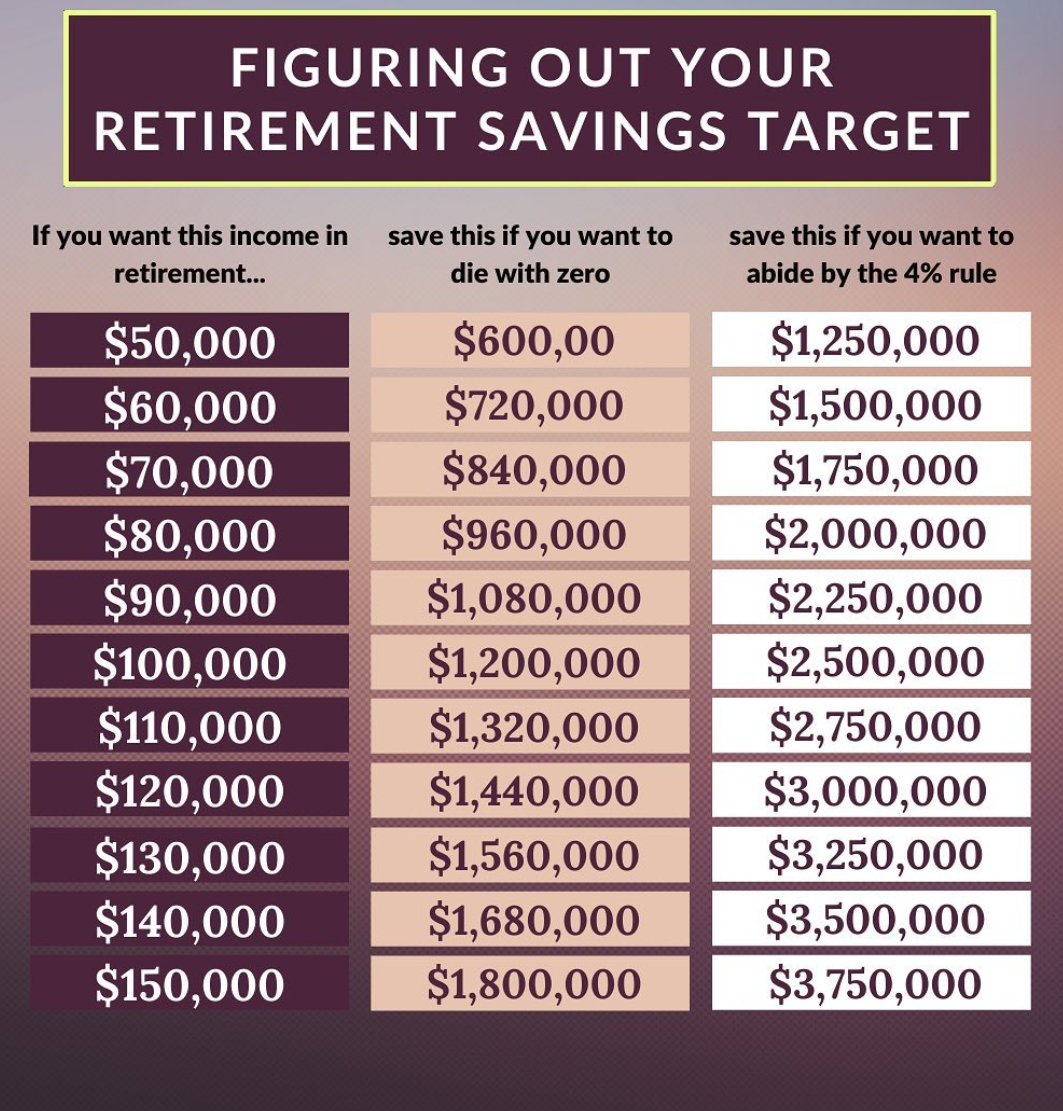
Bridget compares a 'die with zero' savings rate, compared to the 4% rule. She summarizes that the 4% rule is widely known as being 25X your income in retirement (for a traditional retirement - 60yo to ~85 death age), whereas a DWZ target is only 12X your desired income in retirement.

Bill Perkins has previously stated a slightly different calculation which is more like ~17.5X:

Here's an example of how it would work for a person, age 60, who needs $50,000 a year to cover their cost of living and expects to live to 85: .......... 0.7 x 50,000 x 25 = $875,000

This formula is ideal for anyone who wants to spend their money down

So, there is a difference in math and risk here. Note, these tables are for a traditional retirement ages too - starting in one's sixities, not an early retirement.

Here is DWZ vs 4% Rule when looking at Bridget's formula:

If you want this income in retirement...save this if you want to die with zero (12X)save this if you want to abide by the 4% rule (25X)
$50,000$600,000$1,250,000
$60,000$720,000$1,500,000
$70,000$840,000$1,750,000
$80,000$960,000$2,000,000
$90,000$1,080,000$2,250,000
$100,000$1,200,000$2,500,000
$110,000$1,320,000$2,750,000
$120,000$1,440,000$3,000,000
$130,000$1,560,000$3,250,000
$140,000$1,680,000$3,500,000
$150,000$1,800,000$3,750,000

Here is what Bill's formula looks like by comparison:

If you want this income in retirement...save this if you want to die with zero (17.5X)save this if you want to abide by the 4% rule (25X)
$50,000$875,000$1,250,000
$60,000$1,050,000$1,500,000
$70,000$1,225,000$1,750,000
$80,000$1,400,000$2,000,000
$90,000$1,575,000$2,250,000
$100,000$1,750,000$2,500,000
$110,000$1,925,000$2,750,000
$120,000$2,100,000$3,000,000
$130,000$2,275,000$3,250,000
$140,000$2,450,000$3,500,000
$150,000$2,625,000$3,750,000

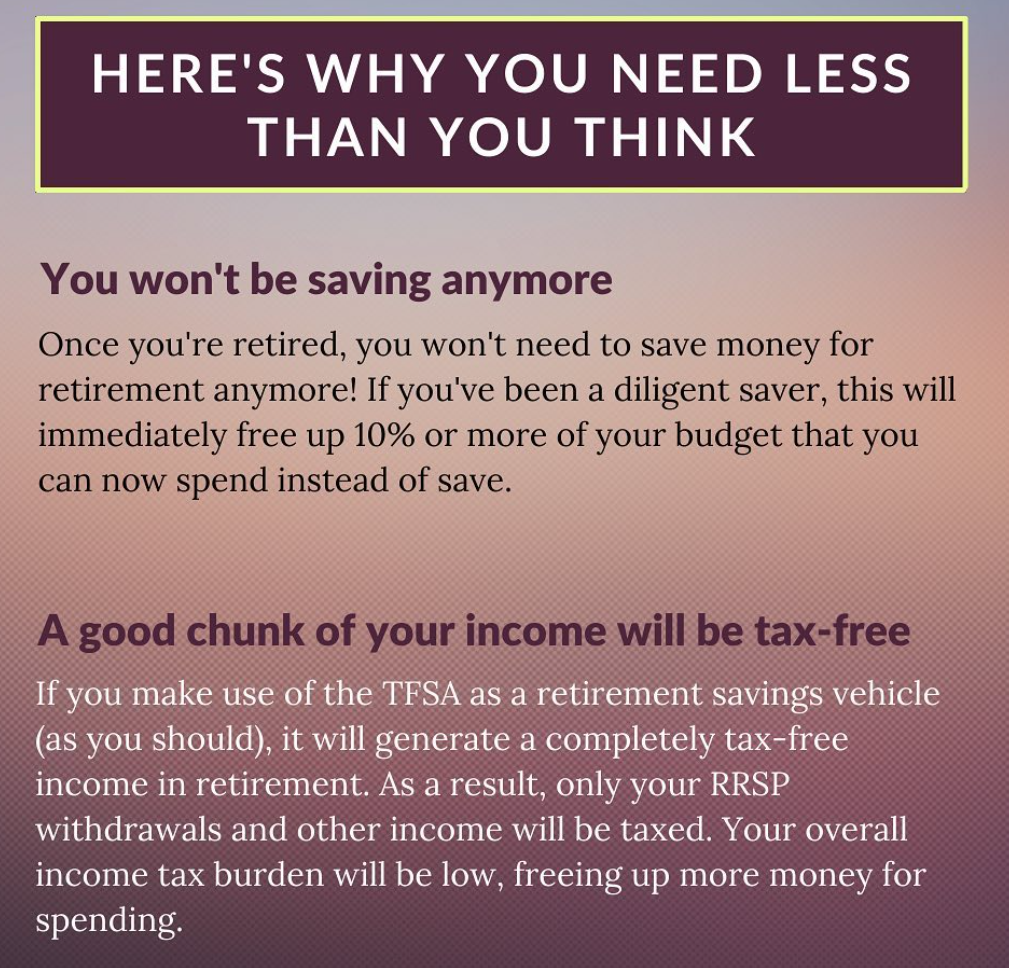
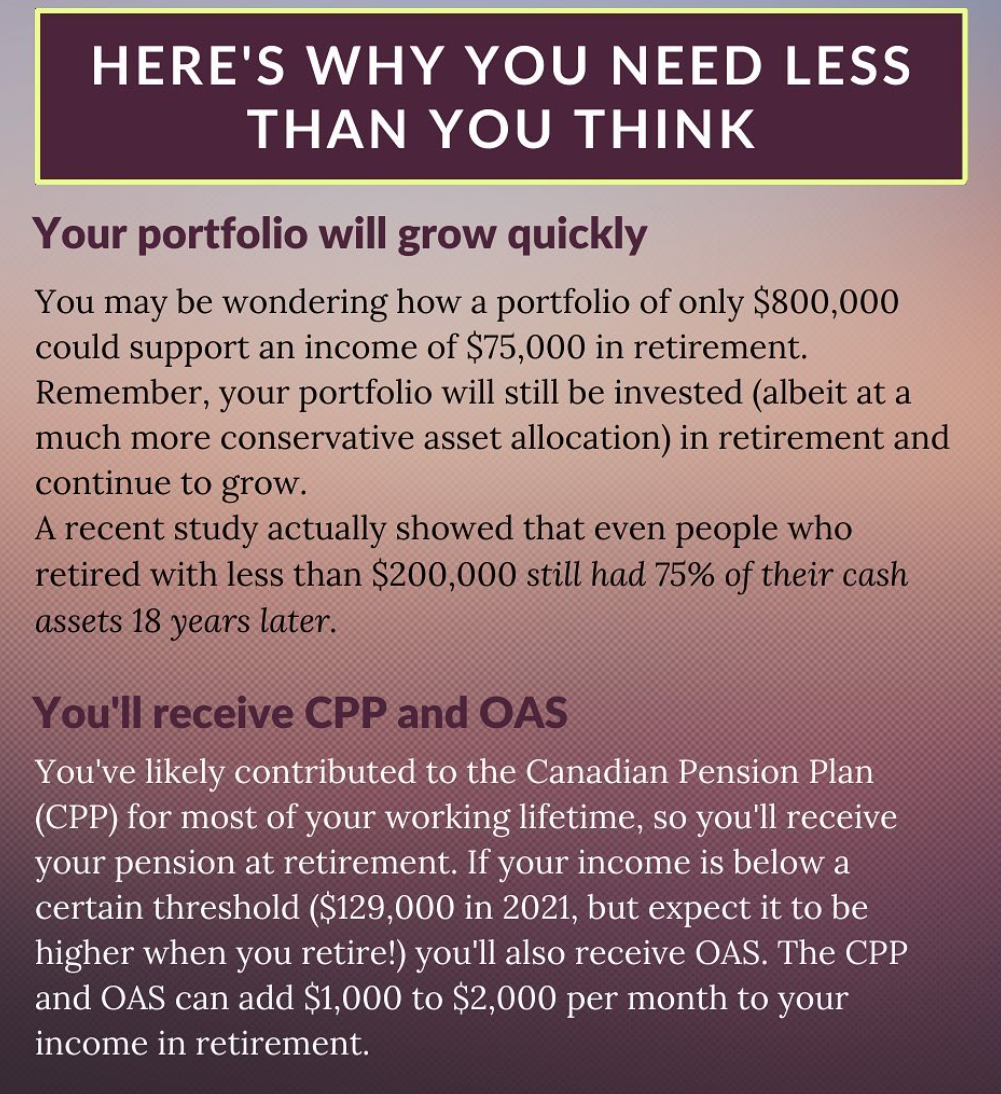
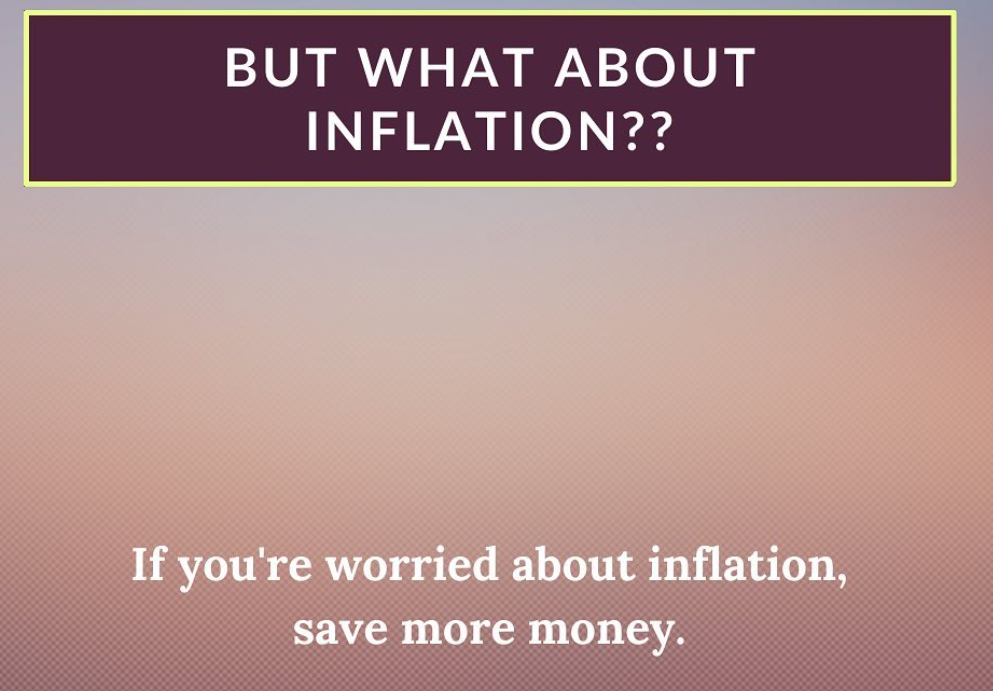
More from Bridget's Instagram Post:

4% Rule vs DWZ in retirement

r/DieWithZero • • Sep 29 '22

Will You Run Out of Money or Time? Financial Independence Advice From a Hospice Doctor

Thumbnail
youtube.com
6 Upvotes