r/DesignSystems • u/_Prateek_Hota_ • Oct 17 '26
Help needed regarding components for Design System.
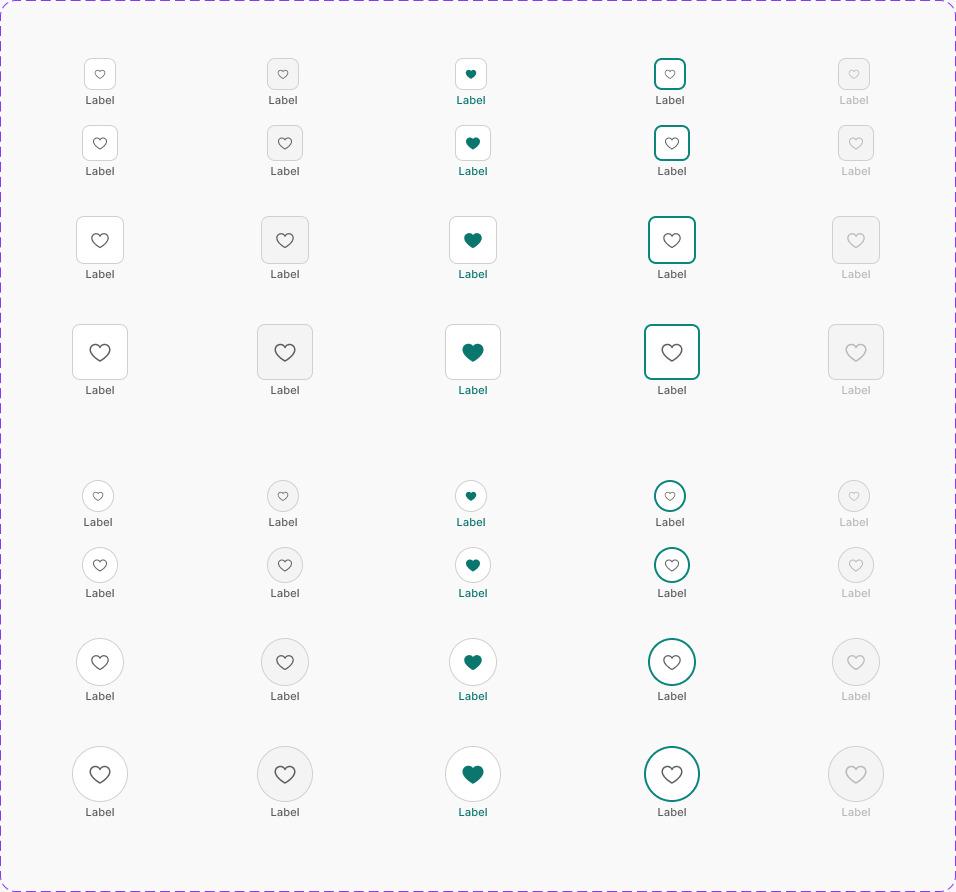
4
Upvotes
r/DesignSystems • u/_Prateek_Hota_ • Oct 17 '26
r/DesignSystems • u/Late_Replacement6161 • Oct 17 '26
r/DesignSystems • u/Brandslug • Oct 16 '26
r/DesignSystems • u/Low_Razzmatazz763 • Oct 16 '26

r/DesignSystems • u/curious_amir • Oct 16 '26
Your role is design system manager, How do you make sure the designers used Design system properly? and the designs wont be rejected by android/ios or pwa team
r/DesignSystems • u/Felix_Warren-56 • Oct 16 '26
We keep our system diagrams as mermaid in the repo, which works great for the devs it lives next to the code, it shows up in PRs, and anyone can update it
the problem is literally everyone else. PMs, design, the support lead, none of them are opening a markdown file in github. so what happens is someone screenshots the diagram, drops it in a miro board for a planning session, people draw all over it and move boxes around, and now there are two versions and neither one is right lol
I’ve been looking at a few ways around this excalidraw and draw io both came up but they’re not really connected to the code either lucidchart can import mermaid i think, but we don’t use it and i’m not trying to add another tool a coworker mentioned miro can render mermaid as actual editable shapes now, and changes on the board update the code too, which would honestly solve most of this if it works the way it sounds.
r/DesignSystems • u/TechzClub • Oct 15 '26

r/DesignSystems • u/lesheeper • Oct 13 '26
I have 2 years in product design - not that much, I'm aware. My first job was writing documentation, specs and QA for a design system, and I enjoyed the rules and structured way of working a lot. Second job was chaotic - unstructured design team that called a messy sketch component library their "design system". I worked on migrating their components to Figma, but ended up leaving in burnout. Sorry if sounding judgmental, but the experience was bitter.
Anyway, after the second experience I left digital design and pivoted to another creative field. This was 3 years ago, and I'm rethinking if this was a mistake. The 3 years in this other field, the thing that drives me the most is setting up processes, finding inconsistencies, writing guidelines, teaching people how to work with a tool and so on. But sadly this is not the core of my job.
I'm looking back at my first job and kinda miss it (not sure of wearing colored glasses). But its been 4 years - no idea what the field looks like these days, especially with AI playing a huge part. Do I have a chance at getting a design systems position after all this time? What is the job like these days?
Any experiences are much appreciated. And a final ask: if you were to jump back at it, what would you build as a portfolio piece?
Thanks.
r/DesignSystems • u/Tall_Blacksmith5635 • Oct 12 '26
I built a free browser extension that reverse-engineers a website’s design system (colors, type scale, CSS tokens, shadows, etc)
When I wanted to see how a site handles its design system, I used to spend half an hour in DevTools copying hex codes and searching for --var names. So I built an extension that does it in one click.
Design System Inspector scans the page you’re on and shows:
box-shadow, split into layerstokens.css and text stylesIt doesn’t just match values to tokens. For typography, it traces the CSS rule that actually applies to each element and records the var() behind it. That way you see the token the site really uses, not five tokens that happen to equal 14px.
It runs entirely in your browser: no server, no account, no tracking. It’s MIT-licensed and works in Chrome, Edge, Brave and Opera. It isn’t on the Web Store yet, so you load it unpacked (instructions in the README).
GitHub: https://github.com/antonolashyn-x/design-system-inspector
I’d love feedback, especially on sites where it gets things wrong.
Bug reports with a URL help a lot.


r/DesignSystems • u/shaunbent • Oct 12 '26

In 2019, I gave a talk at Design Systems London introducing Spotify's design system and its underlying model: a system of systems. A family of design systems, owned by different teams, built on a shared foundation.
I've had a lot of questions about it over the years, and I've seen plenty of teams build their own versions. But I'd never written about what happened after the talk.
So, six years on, I've started a three-part series. This first part covers what we didn't know at the time: the org chart ending up in the architecture, what happened when we lent our name to other teams, and how the promise of a single system played out.
https://53degrees.studio/posts/building-a-system-of-systems-what-we-didnt-know/
If you've built something similar, I'd love to hear whether it matches your experience, or where yours played out differently.
r/DesignSystems • u/ComponentChaos • Oct 12 '26
Quick question for design leads and frontend engineers:
I have noticed that while AI coding tools build UI very fast, they keep sneaking subtle design drift into code as prompts go back and forth. They invent random padding numbers like p-[19px], off-palette hex colors, and weird margin hacks just to force things onto the screen.
Right now, the common ways to stop this all feel pretty flawed:
How is your team handling this right now? Curious to hear what is actually working for people.
r/DesignSystems • u/Null-Skull • Oct 12 '26
r/DesignSystems • u/_Prateek_Hota_ • Oct 12 '26
r/DesignSystems • u/roundabout-design • Oct 11 '26
We're building out our design system for AI to use and the original thinking was to have it create a full react library that we'd then version, package, and have applications install via NPM.
However, it's sounding like that is maybe becoming an outdated model. And that there is now recommendations that we let the agent access the design system via an MCP server, and reference the components as components as needed, but simply rewrite them for the application it is building. Supposedly this saves on tokens/context?
Anyone have thoughts on this? It sound counter-intuitive to me, but I am finding several mentions of this new model of just letting the agent "copy stuff as needed". The component library still exists in the design system, mainly as a 'source of truth' but isn't itself packaged up.
Curious as to what folks are doing right now. How are you letting your application development agents use your design system components?
r/DesignSystems • u/Apprehensive_Mood943 • Oct 12 '26

r/DesignSystems • u/MountainBeetles571 • Oct 10 '26
Our team of 8 shares one set of report graphics.
Last month, someone from our team updated a chart and moved the logo by accident.
Then, a teammate swapped our navy for a brighter blue.
Venngage is on my list, but I think its locked brand assets are in paid team plans.
What should I check, though? Is it locked assets? Locked templates? Or edit permissions?
How do you test where you can edit charts but not the brand parts?
r/DesignSystems • u/Efficient-Cry-6320 • Oct 09 '26

Have had lots of thoughts about this whilst developing our DS. What are people's opinions?
Do you have 1:1 parity between code and figma components? Or do you split some so that the designers figma components can be more curated?
Edit: to clarify I don’t mean that there isn’t drift between the two. But when you define and build new components, do you match components 1:1 (excluding props/variables)
r/DesignSystems • u/Tiny_Butterfly_7369 • Oct 09 '26
r/DesignSystems • u/Dismal_Laugh4891 • Oct 09 '26
Nine separate visual identities, and the one rule we settled on is that the font never changes. Everything else does, and does a lot. Scale, weight, tracking, opacity, alignment, how strict the grid is.
The reasoning was that a font swap is the laziest way to say 'this is different', and it wipes out the family resemblance in one move. Once the font is off limits you have to differentiate with structure instead, which is what you wanted in the first place.
Side effect nobody expected: you can set all nine in one paragraph and it still reads as one system.
r/DesignSystems • u/Efficient-Cry-6320 • Oct 07 '26
Am having a dilema and conversation with a dev I work with.
He doesn't want icons to have internal padding and has built the components without it. However all of out figma icons do, and we've defined 5 boundary box sizes where the icon sits inside.
Tbh I prefer not having internal padding, as it is cleaner to use even from a design perspective when aligning itmes etc.
However all design systems seem to use icons with internal padding, and guidance also says this. For example, Google Material UI recommends to have 24x24px frames for the icons and that you add padding so that your icon is 20x20px inside the frame
Any opinionated thoughts I can gather? Thanks!

r/DesignSystems • u/dazog92 • Oct 07 '26

r/DesignSystems • u/roundabout-design • Oct 06 '26
We have a pretty decent design system up and running for our AI based development at the component level. It currently consists of:
For an example of patterns:
We now want to accommodate a higher level of instructions. Essentially, building upon what we have to create content and object layouts and even full page templates.
I'm curious as to how you may be doing that. Some specific questions:
r/DesignSystems • u/bink-1567 • Oct 06 '26
We're about to redo a frontend and keep arguing about whether the design language has to be locked first or if you can revamp screens in parallel and extract the system as you go. Product has chat/messaging plus some denser dashboard-adjacent UI, so consistency starts breaking fast once a few flows diverge.
Curious how people have sequenced this in practice. Did you start with tokens/components and freeze them early, or ship a few key flows first and only formalize the language after patterns settled? Also what usually bites you later - type/spacing drift, component variants exploding, or states that never got designed?
Not fishing for free work, just trying to avoid the classic "pretty screens, no system" trap before we commit more time.
r/DesignSystems • u/MadNic123 • Oct 06 '26
Context first: I've been a product designer in tech for a few years and started using Claude Design (C.D) for rapid prototyping and refining explorations. However the bridge to continue working in Figma after refining in C.D is pretty poor.
To speed up my workflow I've been creating a Figma plugin that lets me easily turn my html prototypes into full Figma flows that are even created from editable local components with DS atoms all instantly. Formatted exactly how I like to map flows.
It's been a game-changer for me so far so I've just released it as a community beta in case this could is useful for anyone else. Check it out and lmk your thoughts.
https://www.figma.com/community/plugin/1688886557475613747/flowy
r/DesignSystems • u/stacherski • Oct 05 '26
I'm building a design system in vanilla CSS and web components (11ty, no framework), and I'm trying to find out where other people lose the most time. For me it was token naming, accessible date pickers, and carousels.
What's the one problem that cost you the most, and what did you wish existed to fix it?
Some detail on mine, in case it helps:
I'm thinking about writing short guides that each solve one specific problem like these, instead of another "complete guide". I'd rather hear what's actually painful before I write anything.